Monday, July 27, 2009
Monday Ground Up: Greek Architecture
Author: The Ancient Digger
| Posted at: Monday, July 27, 2009 |
Filed Under:
arcaeology,
greek architecture,
greek art,
greeks,
history,
travel
|
Welcome to the July 27, 2009 edition of ancient digger.
Initially, there was a borrowing of Asian ideals which evoked structures that were both wholly and represented simplicity; moreover, the specific design spread from Sicily to India, making the Greeks cultural exporters.
The simplicity and austerity is what sets these structures apart today, being worshiped as magnificent relics of history.
Over time, weathering has stripped away stone, allowing for the beauty of form to be unequaled to emerge from the superficial experience of modern building.
What we do know is that the artistic greatness and skill that outlined these massive feats can never be replicated, although many have tried.
The Colony of Carthage is located in Tunisia and was founded by Phoenicians in 817 BCE. The colony competed against other Greek colonies, some of which became Carthaginian strongholds. It was later raised by the Romans in 2 BCE. The ruins are all that remain.


The Parthenon was constructed from 447 to 432 BE. The left proplylaea entrance to the acropolis was added by Mnesikles from 437 to 432 BCE. The Parthenon is the most important surviving building of Classical Greece, generally considered to be the culmination of the development of the Doric order. The Doric order was three orders or organizational systems of Ancient Greek or classical architecture; the other two canonical orders were the Ionic and the Corinthian.


by Serendigity
The Temple of Athena Nike is located in front of the proplylaea, tiny in comparison to the Acropolis. Citizens worshiped the goddess in hope of a prosperous outcome in the war against the Spartans and their allies. The Temple of Athena Nike was an expression of Athens' ambition to be the leading Greek city state in the Peloponnese.-Wikipedia

The ruins, as well as the foundation , are located in Delphi. The altar was originally in front of the "restored columns". The Great God of Apollo, a deity who lived there and protected the navel of the Earth, was consulted within. His sacred precinct in Delphi was a panhellenic sanctuary, where every four years athletes from all over the Greek world competed in the Pythian Games, one of the four panhellenic (or stephanitic) games, precursors to the Modern Olympics.


Acrocorinth is by far the best example of Greek Military architecture. This structure was built when the demise of the Polis suggested that outer defenses were necessary. Connection to the city of Corinth, as well as long walls, were added in 4th century BCE.

Pergamum was the main sanctuary dedicated to Asclepius, the Greek god that healed the sick. People with health problems could bathe in the water of the sacred spring, and in the patients' dreams Asclepius would appear in a vision to tell them how to cure their illness.


The temple was started in 174 BCE and completed under Hadrian in 2nd century CE. This temple originally had 8 columns on the facade, three rows deep and 20 columns on each side.
It's all Greek to Me! Interesting Links and Articles
Emma CS presents "The Bluffer’s Guide to Greek Art" saying Greek art, especially the art of the Classical period has obsessed many modern artists, designers and architects for many years now. Classical Greek principles of art, such as idealism, realism and perspective indirectly influenced our art all the way through the Roman period, the Middle Ages and beyond, but in the Enlightenment, Renaissance and Georgian eras the influence became far more direct, with artists deliberately copying Classical architectural orders, carving techniques and other styles. Read More
Gin G. presents Museums and Stones posted at Sense Scribe, saying, "Learn a interesting revelation about statues. Read more."
Romeo Vitelli presents Going Berserk posted at Providentia, saying, "When going berserk was all the rage."
ancient digger using our carnival submission form. Past posts and future hosts can be found on our blog carnival index page.
Technorati tags:
ancient digger, blog carnival.
Resources
Roberts, J. (2004). Ancient History: From the First Civilizations to the Renaissance. Oxford University Press.
Initially, there was a borrowing of Asian ideals which evoked structures that were both wholly and represented simplicity; moreover, the specific design spread from Sicily to India, making the Greeks cultural exporters.
The Gift of Geology
The Greeks were gifted, being situated in an area with the highest quality stone. Of course the buildings that were derived from these stones were free of bronzed sculptures, polished monuments, and shrines painted with vivid colors.The simplicity and austerity is what sets these structures apart today, being worshiped as magnificent relics of history.
Over time, weathering has stripped away stone, allowing for the beauty of form to be unequaled to emerge from the superficial experience of modern building.
What we do know is that the artistic greatness and skill that outlined these massive feats can never be replicated, although many have tried.
The Colony of Carthage is located in Tunisia and was founded by Phoenicians in 817 BCE. The colony competed against other Greek colonies, some of which became Carthaginian strongholds. It was later raised by the Romans in 2 BCE. The ruins are all that remain.
Parthenon

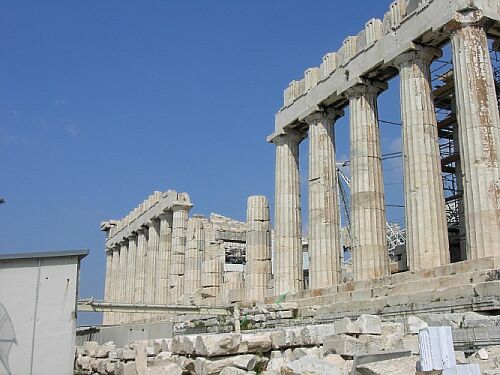

The Parthenon was constructed from 447 to 432 BE. The left proplylaea entrance to the acropolis was added by Mnesikles from 437 to 432 BCE. The Parthenon is the most important surviving building of Classical Greece, generally considered to be the culmination of the development of the Doric order. The Doric order was three orders or organizational systems of Ancient Greek or classical architecture; the other two canonical orders were the Ionic and the Corinthian.
Temple of Athena Nike

by Serendigity
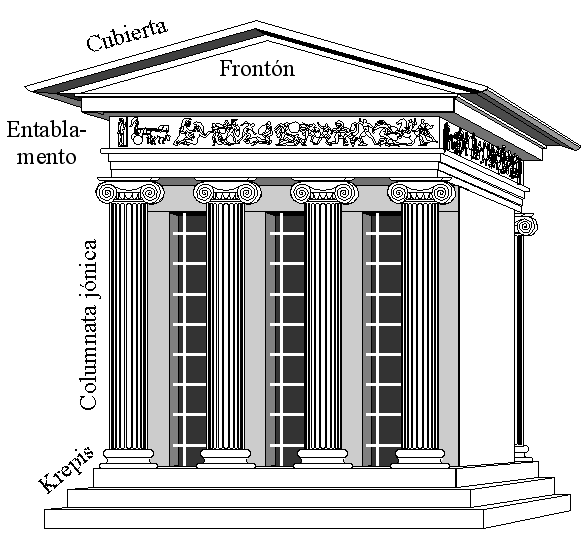
The Temple of Athena Nike is located in front of the proplylaea, tiny in comparison to the Acropolis. Citizens worshiped the goddess in hope of a prosperous outcome in the war against the Spartans and their allies. The Temple of Athena Nike was an expression of Athens' ambition to be the leading Greek city state in the Peloponnese.-Wikipedia
Temple of Apollo Delphi

The ruins, as well as the foundation , are located in Delphi. The altar was originally in front of the "restored columns". The Great God of Apollo, a deity who lived there and protected the navel of the Earth, was consulted within. His sacred precinct in Delphi was a panhellenic sanctuary, where every four years athletes from all over the Greek world competed in the Pythian Games, one of the four panhellenic (or stephanitic) games, precursors to the Modern Olympics.
Acrocorinth


Acrocorinth is by far the best example of Greek Military architecture. This structure was built when the demise of the Polis suggested that outer defenses were necessary. Connection to the city of Corinth, as well as long walls, were added in 4th century BCE.
Sanctuary of Pergamum

Pergamum was the main sanctuary dedicated to Asclepius, the Greek god that healed the sick. People with health problems could bathe in the water of the sacred spring, and in the patients' dreams Asclepius would appear in a vision to tell them how to cure their illness.
Temple of Olympian Zeus

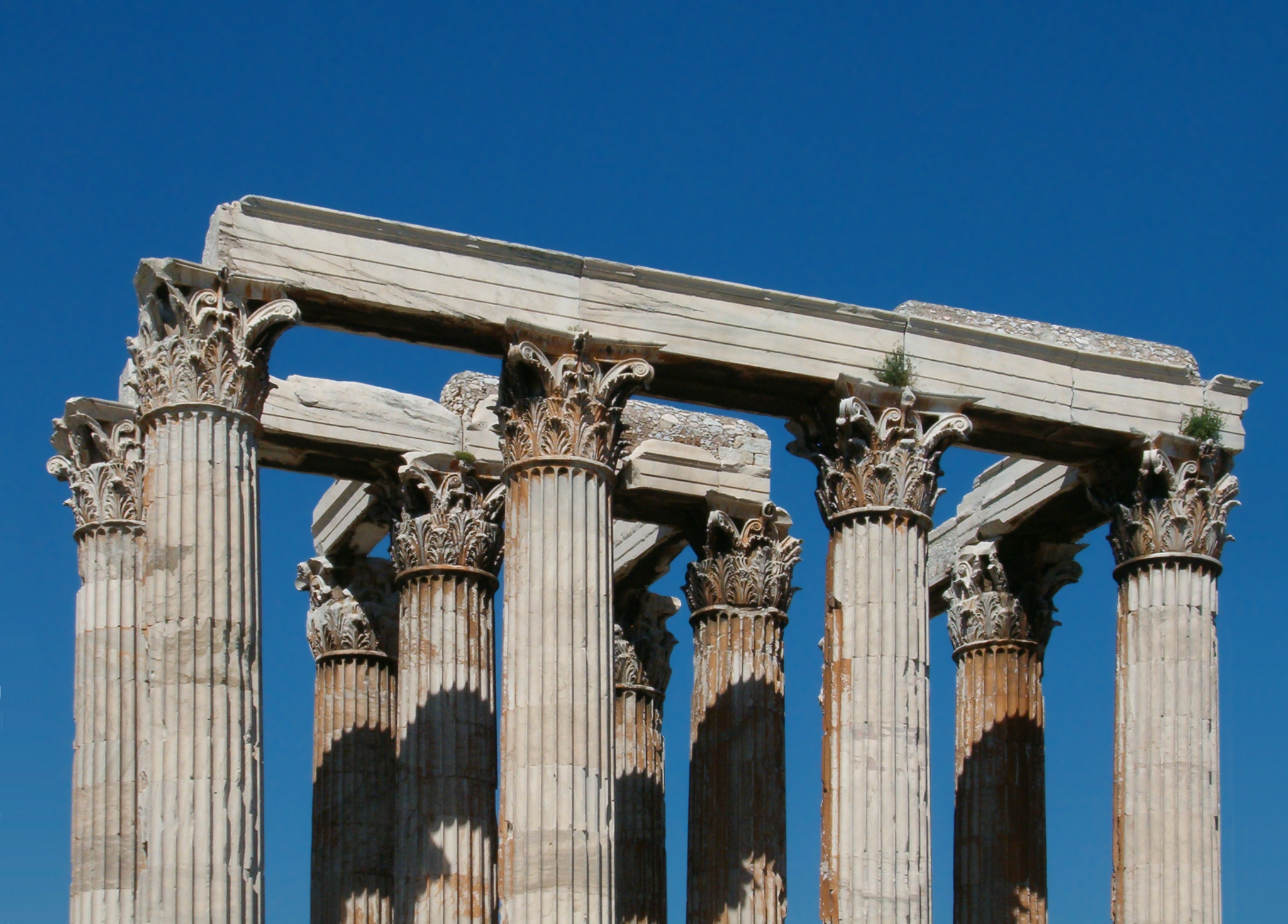
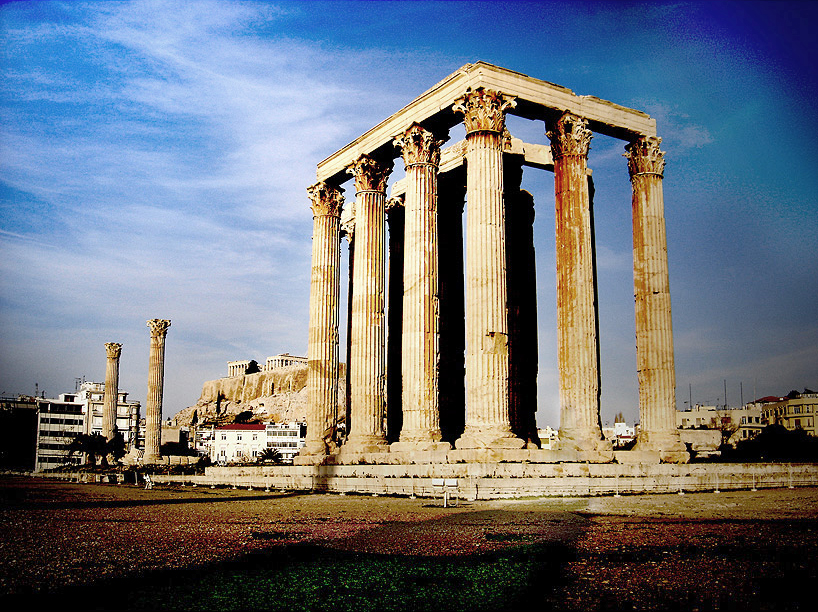
The temple was started in 174 BCE and completed under Hadrian in 2nd century CE. This temple originally had 8 columns on the facade, three rows deep and 20 columns on each side.
It's all Greek to Me! Interesting Links and Articles
Emma CS presents "The Bluffer’s Guide to Greek Art" saying Greek art, especially the art of the Classical period has obsessed many modern artists, designers and architects for many years now. Classical Greek principles of art, such as idealism, realism and perspective indirectly influenced our art all the way through the Roman period, the Middle Ages and beyond, but in the Enlightenment, Renaissance and Georgian eras the influence became far more direct, with artists deliberately copying Classical architectural orders, carving techniques and other styles. Read More
Romeo Vitelli presents Going Berserk posted at Providentia, saying, "When going berserk was all the rage."
- Architecture of Ancient Greece-wikipedia
- Greek Statues: The Classic Forms of Kourous, Kritios Boy, and Discobolus
ancient digger using our carnival submission form. Past posts and future hosts can be found on our blog carnival index page.
Technorati tags:
ancient digger, blog carnival.
Resources
Roberts, J. (2004). Ancient History: From the First Civilizations to the Renaissance. Oxford University Press.
Follow Ancient Digger
If you're new to Ancient Digger and you're not sure what subscribing actually means, I'll make it easy for you. Subscribing is a way to follow your favorite blogs though email or another feed reader service you use, like Google. You'll receive an email letting you know I've updated the website with a new story. Or add Ancient Digger to your reader. Subscribing is a great way to keep all of your favorite blogs in one place. If you love this article and want to learn more, subscribe to Ancient Digger. Subscribe to The Ancient Digger by Email![]() |
NeatoHub
Subscribe to:
Post Comments (Atom)


1 comments:
Looks like I have more places to visit. This summer I was in Salona near Split in Croatia. Salona was "found" 100 years ago and the remains from the Roman times are interesting and impressive.
Post a Comment