• Ancient Digger teaches Archaeology and History to all Ages!

Friday, June 22, 2012

Royal Armouries Conference: The English Civil Wars: the politics, battles, equipment and archaeology


The Royal Armouries, England’s National Museum of Arms and Armour, is holding a one-day conference on the English Civil Wars on the 15th of September, 2012. The English Civil Wars: the politics, battles, equipment and archaeology, will take place from 10:00-6:00PM, in association with The Battlefields Trust, in Leeds.

The conference will examine the causes of the English Civil War and discuss in detail some of the most significant battles plus the social, political and historical impact on the British Isles caused by this tumultuous period of conflict. The conference also seeks to educate people about the arms and equipment of the English Civil Wars and the battles made possible by recent advances in battlefield archaeology.

Speakers from the Royal Armouries include:


---Jonathon Riley (Master of the Armouries),
---Thom Richardson (Keeper of Armour)
---Graeme Rimer (former Academic Director).

Visiting speakers include:


---Chris Scott (English Civil Wars author & histrorian),
---Martin Marix Evans (The Naseby Battlefield Project)
---Natasha Ferguson (National Museums Scotland)
---Brian Godwin (Independent Scholar)
---Micheál Ó Siochrú (Trinity College Dublin)
---Katherine Elliott (Independent Scholar)

TICKETS


---£45 including lunch
---£35 including lunch (60+, students & registered unemployed)

A unique handling session, led by specialist curators, will be held on Friday 14 September, 5-6.30pm. A selection of English Civil War objects will be available for close examination. Numbers are limited please book early.---Tickets £10

To book your spot for the  The English Civil Wars: the politics, battles, equipment and archaeology conference, please printout the booking form and send it back to the appropriate contact.


Monday, June 4, 2012

Animatronic Dinosaurs at Aussie Museum Too Real


The first time I ever went to The American Museum of  Natural History, I was in awe of the dinosaur skeletons. I always thought they would come alive and roam the halls. Childlike curiosities always drove our interests when it came to these prehistoric beasts, but what happens when they actually do come alive? In a technical sense that is.


The Aussie Museum of Natural History's animatronic dinosaur exhibit has adults and children running for their lives lunches. They're snatching coolers out of guests hands and chasing kids around, and they've also been rumored to ride the elevator for fun.

As an adult I find these exhibits thrilling and innovative, but some of the kids in the video got more than they bargained for when they wanted to see a dinosaur up close. Nothing R-Rated I assure you, just some tearful children, unaware these creatures had more of a bite in person than on the movie screen.


Saturday, December 31, 2011

U-boat Exhibits and Museums


So what exactly happened to the U-boats after World War II? Many u-boats were used for scrap metal, however some retired to some of the most recognizable and popular museums in the world. People like you and I can take a gander at the accommodations, walk down the tightly constructed decks, and gaze upon the operational equipment used during submarine warfare, that looks almost too complicated to understand.

U-505 at The Museum of Science in Chicago, Illinois

My first experience with a U-boat was at the Science and Industry Museum in Chicago close to 15 years ago. At that time, the German U-505 German Submarine- Type IXC Long Range Attack u-boat exhibit - was kept inside the main museum. The U-505 Submarine was commissioned in 1941 and from there on out, suffered countless malfunctions and a string of bad luck. One account speaks of a commanding officer who committed suicide on board. The crowning blo, however, came when the US boarded the vessel and took possession on June, 1944, NW of Dakar. The US officers found secret documents and confiscated equipment while on board. The U-boat Submarine is surprisingly in pristine condition, completely intact, and is amongst the few surviving U-boats in the world.

U-534  at The Historic Warships Museum, Birkenhead, United Kingdom


The U-534 German Submarine - Type IXC Long Range Attack U-Boat-was commissioned in December 1942. With only a small amount of time spent at sea, she was already spotted by a British Liberator while sailing in the Kattegat, Denmark on 5th May 1945. She was, of course, sailing on the surface along with three other U-boats, making her demise inevitable. The Liberator attacked and promptly sank her with ten depth charges, this came after the first initial nine misses and then a direct hit. There were 49 survivors.

In 1993, she was raised by a Danish consortium Aage Jensen, with the ceremony being witnessed by her own surviving crew and those of the Liberator who sank her. Rumors were swarming at the time that U-534 held a hoard of Nazi gold, prompting immense media coverage. The uboat was empty, however, much to people’s dismay.

U-995 at The Navy Memorial, Laboe, Germany (Laboe, Strandstrasse 92, Germany)


The U-995 German Submarine - Type VIIC/41i was used for submarine warfare and was commissioned in September 1943 with Oberleutnant Walter Köhntopp in command. The heavy duty “work horse”, she was called, is the last surviving of her kind. The U-995 surrendered to the Allies at the end of the war, and was handed to the British as war booty. During her hay day, the U-995 sunk three ships for 1,560 GRT, one auxiliary warship sunk for 633 GRT, one warship for 105 tons, and one ship a total loss for 7,176 GRT. In 1948, she was transferred to the Norwegian Navy before being returned to her homeland in Germany for the symbolic price of one Deutsche Mark. The U-995 is now a museum ship, as tourists can walk through the entire vessel.

U-61 - World War 1 Attack Boat at The Bayerisches Armeemuseum, Ingolstadt, Germany


The U-61- German Type U-57 submarine warfare attack vessel - was commissioned in December 1916. U-61 sank 33 allied ships, totaling 84,564 tons. She also damaged 7 ships of 23,783 tons and the US destroyer USS Cassin before fleeing the fight. After being forced to the surface by depth charge, she was rammed and sunk in March 1918 by US submarine chaser PC-51 with all hands in the Irish Sea. The 88mm deck gun is all that remains of this boat and is on display in Ingolstadt, Germany.

The U-1 at The Deutsches Museum, Munich, Germany


The U-1 German Submarine - Gasoline Powered Boat-was launched in August 1906, however it was never used for submarine warfare. It was used as a training vessel.  “Testing of the U-1 resulted in a collision while on a training exercise in 1919. The U-1 was sold to the Germaniawerft foundation at the Deutsches Museum in Munich where it was restored and can be viewed on display.”


U-9 at The Naval Museum of the Black Sea Fleet, Sevastopol, Ukraine


The U-9 German Submarine - Type IIB Coastal Attack U-Boat Submarine-was commissioned in August 193. The U-9 was a Type II used for coastal submarine warfare, carrying out 19 patrols and claiming 9 ships before being sunk by Russian aircraft on 20th August 1944 at Constanza, Romania. The emblem of the U-9 was the Iron Cross, welded on the conning tower in memory of the first U-9 under Otto Weddigen. You’ ll remember that on September 22, 1914, commander of the U-9 Captain Otto Weddigen, sank three English vessels in less than an hour. The Soviets raised the U-9 in 1945 and the insignia is now on display in Sevastopol, Ukraine.


Brandtaucher - World’s Oldest Diving Boat

The Brandtaucher is the world’s oldest diving boat on display at the Militärhistorisches Museum. The Brandtaucher was built in 1850 by Wilhelm Bauer and is one of the first submersibles which had all the basic elements of a functional submarine and later became a forerunner of the U-boats that we know of.

On February 1, 1851 BrandtaucherOn 5th July 1887, the boat was recovered and today it is on display in Dresden, Germany.


U-2540 at Deutsches Schiffahrtsmuseum (German Maritime Museum) Bremerhaven, Germany

The U-2540 German Submarine - Type XXI Elektroboat-was used as an advanced u-boat submarine, entering service in February 1945. Less than 3 months later U-2540 was destroyed by her own crew. In 1957, she was raised after spending more than ten years at the bottom of the Baltic Sea and returned to service on 1st September 1960 as the research submarine Wilhelm Bauer.

You’ll remember that in 1850, Wilhelm Bauer was asked to design a submarine for the government, incorporating all aspects of the more modern vessels. The Brandtaucher weighed 70,000 pounds, was 28 feet long, and was powered by two sailors turning a tread wheel. U-2540 served in a civilian role under various research projects before decommissioning on 15th March 1982.” On 24th April 1984, she was transferred to the Deutsches Schiffahrtsmuseum (German Maritime Museum) as the Technikmuseum Wilhelm Bauer. U-2540 is the only floating example of a XXI U-boat.”

UB-46 at The Turkish Naval Museum, Istanbul, Turkey


The UB-46- Type UB II Coastal Attack Boat- was commissioned in June 1916, she operated in Turkish waters and claimed 13 ships before hitting a mine in the Black Sea and sinking with all hands in December 1916. None of her 20 men crew survived. The UB-46 was a little more than 121 feet (37 m) in length and displaced between 270 and 305 metric tons (300 and 336 short tons), depending on whether surfaced or submerged. She was equipped to carry a complement of four torpedoes for her two bow torpedo tubes and had a 5-centimeter deck gun. Today, parts of her hull are on display in the Turkish Naval Museum (Demiz Muzesi) in Istanbul, Turkey.

In conclusion, if you haven't seen one yet, and let's face it, you should, it's a wonderful opportunity to experience an important aspect of our history as a nation, and all over the world.

Related Articles

History of the Submarine and German U-Boat Fleet

Cornelius Drebbel, a Dutch inventor working for the English Royal Navy, tested the first submarine on the Thames River in England. Between 1620 and 1624 Drebbel successfully built and tested two more submarines, each one bigger than the last.


Planes used during World War I

Although Kitty Hawk North Carolina would become home to the first manned flight of human kind, the Germans would take these physical parameters into a whole new realm. As the skies offered another battlefield in which to kill and mame, countries that did not embrace this new arena were quickly left behind. During the first world war, the Germans would gain an early edge over most of the Allies as concerned with WWI aircraft. Planes used during World War I became designed around the many German models, which would help the Allies win many later battles of the global war. There are many WWI planes that were important during the war although some played far greater roles than others.


Sources

U-boat 505 Source
UB-46 U-boat 11 October 2009 (© Patrick Costello / Flickr)
U-534 picture via Wikipedia page U 534
Naval Museum of Black Fleet Picture
U-995 Picture via Wikipedia
Brandtaucher - World’s Oldest Diving Boat  Picture via Wikipedia

**This article was part of a compilation of U-boat articles that managed to get lost within the extensive details of the series. I'm presenting it again for you to enjoy!

Friday, July 22, 2011

Archaeology News: July 22, 2011


Wow, what a great day for archaeology! Ancient Digger brings you the latest archaeology news everyday of the week, and today, it’s hard to keep up. If you’re looking for something to do this weekend, several towns are celebrating archaeology festivals. Check out the headlines below!

Roman jug unearthed at site of new theatre

Archaeologists working on the site of Doncaster’s new civic and cultural quarter, believed to have previously been the site of a Roman cemetery where cremations took place, have unearthed a rare Roman glass jug dating back to around AD150.

Archaeologists Uncover Ruins of Biblical City Shekem in War-Torn Palestine

Archaeologists in Palestine are digging up the ruins of Shekem. The biblical ruin lies inside a Palestinian city in the West Bank, where modern researchers are writing the latest chapter in a 100-year-old excavation that has been interrupted by two world wars and numerous rounds of Mideast upheaval.

Materialism vs. science in archaeology, and the difference it makes

In “First Person: The Bible as a Source of Testable Hypotheses”(Biblical Archaeology Review (Jul/Aug 2011) Hershel Shanks tells a story from Biblical archaeology that explains more than I ever could about how materialism stifles science.

2,000-year-old golden bell Discovered

A tiny, 2,000-year-old golden bell was found in a drainage channel near the Old City of Jerusalem. The bell was probably sewn onto the garment of a high official.

Governor stresses for starting Archaeology Department in HPU

The Himachal Pradesh Governor Urmila Singh today stressed the need to start the Archaeology Department in the state university besides introducing tourist guide course to generate employment avenues for youth. Speaking in the inaugural function of the three day long 42nd Foundation Day celebrations of the Himachal Pradesh University here, she said the state was rich in cultural heritage and Archaeology Department could make people aware about the glorious historical background of the State. Singh, who is also the chancellor of the University, said there were plenty of employment opportunities in the tourism sector and added that introducing Tourist Guide Course could help in guiding the tourists coming to the state.

Archaeological neglect: council fined

A charge of unlawfully modifying and damaging archaeological features was brought by the New Zealand Historic Places Trust which says the council should have know a shell midden was located at Maketu the Western Bay, having earlier commissioned an archaeologist to review the archaeology of Maketu, with a report produced in 2003.

Copperopolis to rise again

The remains of ‘Copperopolis’ – once the epicentre of the world’s copper industry – are to be preserved as a major heritage complex on a currently derelict 12 acre site in Swansea, South Wales.

Tidewater Archaeology Weekend

Historic St. Mary's City's annual event will be held from 10 a.m.-4 p.m. July 23 and 24. Visitors can take guided tours of archaeological sites and the archaeology laboratory and discover how researchers learn about the past.

PORTLAND: Explore the treasures of Portland Museum

The secrets and treasures of Portland Museum could be revealed during a family archaeology day.

Several test pits will be excavated in the museum garden, under the supervision of archaeologist Stella de Villiers, where everyone will get a chance to practice digging. They will be explaining how archaeologists record the things they find and there will be the opportunity to have a go at this yourself.

Slideshow: D.C.'s Ancient History

The artifacts, stored at the D.C. Archives, were unearthed as part of archaeological digs tied to the canceled Barney Circle Freeway project. While the Washington Business Journal wasn't able to see or photograph artifacts from that project, D.C. Archaeologist Ruth Trocolli shared some of the city's other antiquities.

First Nation artifacts discovered, divert highway

Archaeologists have found evidence that proves First Nations people were in New Brunswick more than 10,000 years ago.

What Was Machu Picchu For? Top Five Theories Explained

Now one of the most popular tourist destinations in the world, Machu Picchu's original purpose is still unknown—though many archaeologists think they are closer to finding an answer. (Take a Machu Picchu quiz.)

Scarborough's Festival of Archaeology

If you like the strange and spooky, go to Scarborough's Festival of Archaeology. It should appeal to the whole family, with interactive fun, archaeological trials and making your own reconstructed face.

Saturday, July 2, 2011

History of the Korean War


The Korean War lasted from June 25, 1950 until the signing of an armistice on July 27, 1953. Although the fighting only lasted three years, the events leading up to the war in Korea go back several decades earlier.


The history of the Korean War is long and complex, involving several decades of foreign rule prior to the conflict, and the involvement of dozens of nations during the actual fighting.

Some could argue the history of the Korean War began in 1876, when the Japanese first got involved in the region by forcing the Koreans to sign the Treaty of Ganghwa. Japan made Korea its protectorate in 1905, and officially annexed the peninsula in 1910. Japan then officially ruled the Korean peninsula until September 2, 1945, when they were forced to give up rule by the Allied Powers for losing World War II. Korea was then divided into North and South along the 38th parallel. The Soviet Union occupied North Korea after World War II, while the United States occupied South Korea. Under Allied rule, North and South quickly became divided, and the Korean War became imminent soon after.

War in Korea inched closer to reality in 1948, when a failure to hold democratic elections led to the North installing a Communist government. Tension intensified between North and South, even during reunification talks. The 38th parallel increasingly became a political border, as both sides conducted skirmishes and raids on targets just over the border. Finally, the North invaded the South on June 25, 1950, and the Korean War officially began. It was the first armed conflict of the Cold War.

The Korean War was a "war by proxy" between the United States and the Soviet Union, in which both sides backed opposing forces in a war, instead of fighting each other directly. In the history of the Korean War, however, Soviet and American troops did not fire on each other.

South Korea was officially backed by the United Nations, who aided the effort in repelling the North. The United Nations forces backed the North behind the 38th parallel, nearly to the Yalu River, until the Chinese officially entered the war in Korea. With Chinese aid, the U.N. forces were pushed back near the 38th parallel in 1951. From 1951 to 1953, little ground was gained by either side in the Korean War.

United States involvement in the war in Korea occurred primarily because of the American view of Korea as a strategic ally against the communist Chinese and Soviets. President Truman also viewed non-action in Korea as the beginning of the downfall of the United Nations, where Communism would be free to spread unchecked across the globe. Final approval to send US forces came when an intercepted communication from the Soviets stated that it would not act against US ground troops during the war in Korea. The United States officially entered the Korean War in July 1950.

Both sides ceded territory to the other quite often early in the war, until the front stabilized in 1951 near the original border at the 38th parallel. From then, very little ground was gained by either side and casualties kept rising with little to show for it. American officials raced to discuss an armistice with the North, fearing that increasing tensions with China and the Soviet Union would lead into World War III. The Korean War officially ended on July 27, 1953, after more than two long and frustrating years of negotiations.

The war in Korea led to more than 5 million combat and civilian casualties all told. The history of the Korean war is somewhat forgotten in American history, being sandwiched between the two biggest US conflicts-- World War II and Vietnam. However, the Korean War claimed the lives of more than 54,000 American troops, on par with Vietnam although in a much shorter time. Chinese and Korean casualties were nearly 10 times that of the United States. The war in Korea led to tensions between the North and South which persist to this day, although the history of the Korean War is remembered differently by each side. All-out warfare has not occurred between North and South since the end of the original conflict.

Author bio: This history of the Korean War was written by Erik Allermann. Erik lives in Watertown, Wisconsin with his wife and son. He is a 2004 graduate of the University of Wisconsin-Whitewater.

Tuesday, June 28, 2011

Museum Exhibits: Largest Exhibit On Blacks In Civil War


The African-American Civil War Museum in Washington has been going through a major revamping as 2011 marks the 150th anniversary of the north and south's bitter battle between 1861-1865. To learn about the museum's grand re-opening, which is scheduled for July, and the history of African-Americans in the Civil War, guest host Tony Cox speaks with the museum's founding director Frank Smith.

The African-American Civil War Museum in Washington, D.C. is gearing up for a major festival to mark the 150th anniversary of the Civil War. The museum's interactive exhibits tell of the sacrifices that African-Americans have made for freedom. Many of us have been taught about the history of the Civil War, including the Union's bloody victory at Antietam in September of 1862.

Read More: Largest Exhibit On Blacks In Civil War @NPR

Saturday, June 25, 2011

Early Years of Flight Day 5: Flight Accessories and Bombs


Early years of flight weapons and accessories This is the fifth and final day of our Early years of Flight Series.
 
Our week started with the very early years of flight, along with the Schneider Schulgleiter SG 38 and Halberstadt CL IV and the French built Nieuport 28. We continue our tour of flight’s early years by looking at some of the accessories and bombs used by pilots on aerial attacks.

Before our a short tour, I wanted to share some thoughts about the National Air Force Museum in Dayton, Ohio.

USAF National Museum dates to  around 1923  when the Engineering Division at Dayton's McCook Field first collected technical artifacts for preservation.

In 1927 it moved to then-Wright Field and was housed in a succession of buildings. In 1954 as the Air Force Museum it was housed in its first permanent facility, Building 89 of the former Patterson Field in Fairborn, which had been an engine overhaul hangar, and many of its aircraft were parked outside and exposed to the weather. It remained there until 1971 when the current facility was first opened. Not including its annex on Wright Field proper, the museum has more than tripled in square footage since its inception in 1971.

The museum is completely free, relying on donations from patrons who travel thousands of miles to spend days walking through the history of flight and space. In two days I experienced a fraction of flight’s past, stopping to watch the many videos available, including the Wright Brother’s first flight.

British-Type 20 Pound Cooper Bomb

Bristish type cooper bomb
 
British-Type 20lb Cooper bomb with insignia of 213th Aero Squad. The nose cap was unscrewed from the bomb prior to take off so the small propeller had time to arm the bomb after it was dropped from the airplane.
 

French Roll Map

French metal roll map
This is a French issue metal roll map retrieved from disabled Breguet Bomber, after the plane and pilot were shot down by German planes over Conflans-sur-Jarney, France, September 14, 1918. The pilot was assigned to fly with the Escodrille 131 of French Air Service.

Balloon Attack Authorization

Authorization to attack balloons
 
When scheduled to attack a German Balloon, a United States fighter airplane usually had it’s .30 caliber guns replaced by a .50 caliber gun which fired blunt nose incendiary bullets. This type of dum-dum ammunition violated the rules of humane warfare except for attacking balloons. In this event, the pilot would carry an authorization stating he had illegal ammunition to attack a balloon. The paper would protect the pilot in case he was shot down and captured with the illegal weapons. 
Read the Entire Series:

Thursday, June 23, 2011

Early Years of Flight Day 4: Nieuport 28


Our week started with the very early years of flight, along with the Schneider Schulgleiter SG 38 and Halberstadt CL IV. We continue our tour of flight's early years with the French built Nieuport 28.

 Nieuport 28 early years airplane

The Nieuport 28 was the first fighter airplane flown in combat by pilots of the American Expeditionary Force (AEF) in World War I. The first flight on April 14, 1918 resulted in two victories by  Lts. Alan Winslow and Douglas Campbell of the 94th Aero Squadron. The first victories by an AEF unit in fact.

Nieuport 28

The creativity and super savvy painted body of the the Nieuport 28 was no match for the aircraft’s terrible reputation to shed it’s upper wing fabric on dives.  In 1918, many considered the Nieuport 28 obsolete. Yet, there were many famous pilots who faired quite well in this early years plane.

WWI 26-victory ace Capt. Eddie Rickenbacker flew the Nieuport 28 several times during his career. The Nieuport was soon replaced by a less maneuverable aircraft in March 1918 called the SPAD XIII.

The aircraft on display at the National Air Force Museum in Dayton, Ohio is a reproduction. Like many of the  planes from the early years hanger, it contains wood and hardware from an original Nieuport 28.
 
The aircraft is painted and marked to represent a Nieuport of the 95th Aero Squadron, Third Flight, as it appeared in July 1918. It was placed on display in May 1994.

Read the Entire Series:

Wednesday, June 22, 2011

Early Years of Flight Day 3: Schneider Schulgleiter SG 38


When we think of the fighters and gliders of the early years of flight, we hardly picture a sloped wooden seat, made purposefully to seat a pilot and used by the Luftwaffe for training in the late 1930s and into the 1940s. The SG 38 was appropriately named Schulgleiter or "school glider" and the year it first flew, 1938.

The Germans were facing strict limitations on powered aircraft after World War I therefore they turned to gliders for studying aerodynamics and training pilots. In 1933, the DFS or German Research Institute for Sailplane Flight was forced by the Germans to make all gliding activity in Germany centralized. Training gliders, such as the Schneider Schulgleiter SG 38, were developed for both the Hitler Youth Flyers and Luftwaffe.

The Luftwaffe made its appearance in 1935 after the Nazis began their attempt at a rapid large-scale rearmament program. The expansion created a need for safe gliders used for student pilots in training. The The DFS worked with Edmund Schneider, who had opened a glider factory in 1927 and was producing some of the world's best gliders, to design the Schneider Schulgleiter SG 38.

It would appear that the design of the SG-38 was overtly simply and a bit dangerous looking, however the aircraft had to compensate for inexperienced student pilots. Would you believe that this training glider was actually launched with bungee cords from the hillsides of Mount Wasserkuppe in central Germany? The glider only remained airborne for a short time in order to prevent heavy-handed students from over steering and stalling the glider. Eventually, 9,000 to 10,000 SG 38s were built.

After World War II, Schneider moved to Australia and continued to build gliders. This Schneider Schulgleiter SG 38 came to the USAF National Museum in 2010.

Read the Entire Series:

Related Posts

Planes used during World War I

Although Kitty Hawk North Carolina would become home to the first manned flight of human kind, the Germans would take these physical parameters into a whole new realm. As the skies offered another battlefield in which to kill and mame, countries that did not embrace this new arena were quickly left behind. During the first world war, the Germans would gain an early edge over most of the Allies as concerned with WWI aircraft. Planes used during World War I became designed around the many German models, which would help the Allies win many later battles of the global war. There are many WWI planes that were important during the war although some played far greater roles than others.

Read more: Planes used during World War I

Strategic missiles at The National Museum of the United States Air Force

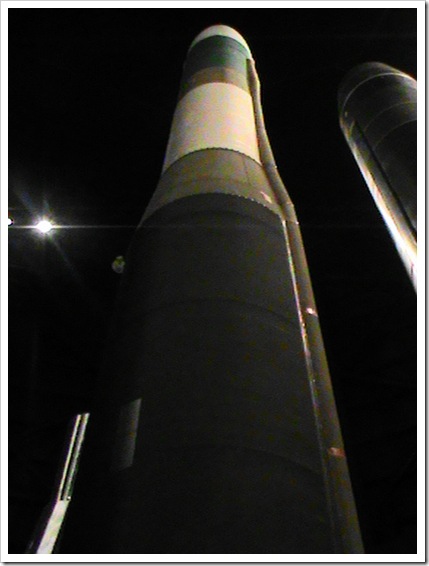
Tourists fly in from all around the world to visit the National Museum of the United States Air Force and who could blame them. The museum is completely free, only taking donations if you’re willing to spare a cent, and all this for a weeks worth of military history. It took me several days to walk the museum, spending most of my time with the Planes from WWI and aircraft from WW2. One of my favorite hangers in the museum is the space gallery, and the focal point is a round room featuring massive strategic missiles.
Read More: Ballistic Missiles at Wright Patterson Air Force Base

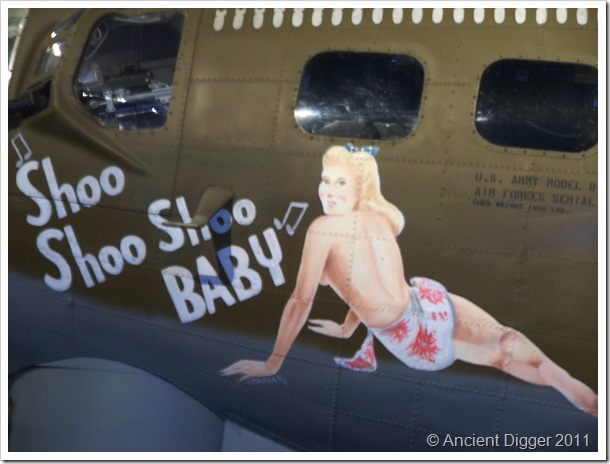
Shoo Shoo Baby: B17G At Wright Patterson Air Force Base

So before I start sharing, I wanted to start off the Wright Patterson Air Force Base Series with the Shoo Shoo Baby B-17G. For those of you plane and aircraft enthusiasts, you already know the B17G Flying Fortress was one of the most famous airplanes ever built. The B17G prototype first flew on June 28, 1935, yet few of the B-17 flying fortresses were flying prior to the United States’ entrance into World War II.

Read more:Shoo Shoo Baby: B17G At Wright Patterson Air Force Base

Tuesday, June 7, 2011

Presidential Hanger at Wright Patterson National Air Force Museum


Only a few hundred people a day have the opportunity to view the Presidential Hanger and Restoration area at the Wright Patterson National Museum of the Air Force in Dayton, Ohio. In fact, you have to arrive quite early to reserve a seat, and when you do, you’ll attend a briefing about procedures and time limits, of which the most important is never taking photographs on the bus in the restricted areas. You will have 45 minutes, no less and no more, to take the tour. It’s not enough time if you ask me. You might have to take three tours just to see the entire area. Although, I was filming and reading the plaques, so it took me a bit longer.

These are the few airplanes and aircraft I was able to see, but there is a virtual tour available on the National Museum of the Air Force which is wonderful if you have a fast internet connection. It took me several days to compile my footage and information on the presidential hanger, so please excuse the missing Monday Ground Up. All of the video footage is mine. Filming inside the planes was a great challenge as the aisles are only 17 inches wide due to the glass enclosures. The majority of the photos were taken with a video camera so please forgive me for the resolution. There’s special lighting inside the hanger for preservation purposes.

Roosevelt’s Douglas VC-54C “Sacred Cow”


Presidential Hanger 1-1 Presidential Hanger 1-2

Presidentil Hanger1


 The C-54 Skymaster was built for President Roosevelt in 1944 and was called the Sacred Cow. The name Sacred Cow was bestowed upon on the C-54 by the ground crew because of the restrictive nature during the war. Any person without access to the plane would refer to it as the “sacred cow”.  White House Press gained knowledge of the term and started using it in their writings about the president. It was never an official name and the press actually discouraged its use, however it became a sign of loyalty and admiration, so most individuals referred to it as the “sacred cow” even still.

Roosevelt's wheelchair
The various modifications made to the exterior of the aircraft made it the first purpose-built presidential plane. A victim of polio, a special elevator was created for FDR behind the passenger cabin to lift him in and out of the aircraft. Roosevelt traveled in the C-54 only once to Yalta in the USSR in 1945 for an international wartime conference.

After Franklin D. Roosevelt died, the Sacred Cow remained in service for 27 months during the Truman administration. In 1947, President Truman signed the National Security Act of 1947 while on board. This act established the Air Force as an independent service of the armed forces. Therefore, the Sacred Cow became the “birthplace” of the US Air Force.

SAM 26000


Pres 2 SAM 26000
Seal Presidential Hanger 2

 The U.S. Air Force Boeing VC-137C aircraft took me close to 20 minutes to go through, as I stopped at every nook and cranny to take a gander at the furnishings. The Boeing VC-137C aircraft was the first jet made specifically for use by the President of the United States. Popularly known as "SAM 26000" (Special Air Mission; tail number 26000), the aircraft has also been called "Air Force One" -- though this designation was used officially only when the president was aboard. SAM 26000, built in 1962, has carried the world’s most esteemed presidents, heads of state, diplomats and other dignitaries and officials, on many historic journeys.


During the 1950s, the call sign of the presidential aircraft was the prefix SAM followed by the aircraft's tail number, and the name "Air Force One" was later chosen to ensure there was no question as to where the president's aircraft was and whether the president was aboard. This aircraft carried eight presidents: Kennedy, Johnson, Nixon, Ford, Carter, Reagan, George H.W. Bush and Clinton. N 1972, the Boeing 707-320 aircraft 27000 became the primary presidential aircraft and 26000 became a back-up, flying vice presidents and other high-ranking government officials.

Most memorable flights


  • SAM 26000 carried President Kennedy to Berlin in 1963, where he declared to West Berliners, "Ich bin ein Berliner," assuring them of continuing United States support in the face of Communist threats and the construction of the Berlin Wall.
  • In 1990, prior to the Gulf War, Secretary of State James Baker went abroad for talks with Iraqi leaders about removing their troops from Kuwai.
  • SAM 26000 flew Kennedy to Dallas, Texas, where he was assassinated on Nov. 22, 1963.
  • Vice President Lyndon B. Johnson was sworn in as the new president aboard SAM26000.
  • SAM 26000 carried John F. Kennedy's body and President Johnson back to Washington, D.C.
  • President Johnson used SAM 26000 to visit U.S. troops in Vietnam during the Southeast Asia War.

Lockheed VC-140B Jetstar


 Presidential Hanger 3The C-140 Jet Star was first flown on Sept. 4, 1957, only 241 days after design completion. Production began in 1960. The USAF bought 16 Jet Stars as C-140As and Bs, the first of which was delivered in late 1961.

“Five C-140As were assigned to the Air Force Communications Command for use in evaluating military navigation aids and operations. Eleven C-140Bs were assigned to the Military Airlift Command for operational support airlift. Six of them were flown as VC-140Bs on special government and White House airlift missions by the 89th Military Airlift Wing at Andrews Air Force Base, Md”.

I didn’t actually get to tour the VC-140B on display, but it has quite a rich history even though it was never the primary presidential aircraft. The VC-140B aircraft carried Presidents Richard Nixon, Gerald Ford, Jimmy Carter and Ronald Reagan. Whenever the President was aboard, it flew under the radio call sign Air Force One.

Harry Truman’s C-118 Independence


Independence C-118 Independence C-118 Truman

Douglas Aircraft  began building Harry Truman’s C-118 Independence  in 1947 as an American Airlines DC-6. The Air Force and White House were demanding a replacement for President Roosevelt’s C-54 Sacred Cow. The name Independence was coined by Sacred Cow pilot Lieutenant Colonel Henry Myers. The name, of course, represents Truman’s hometown of Independence, Missouri, and the patriotism of the United States. The plane’s most historic flight occurred when it carried President Truman to Wake Island in October 1950 to discuss the Korean situation with Gen. Douglas MacArthur.


“Beginning in 1951, the USAF purchased 165 C-118A “Liftmasters” that were about six feet longer than the Independence. C-118As played a key role in “Operation Safe Haven” when 14,000 Hungarian refugees were airlifted to the United States in 1956-1957 {1}.

Lockheed VC-121E “Columbine III”


Columbine

One of my favorite aircraft in the presidential hanger at Wright Patterson was the VC-121E, which was President Dwight Eisenhower’s personal airplane between 1954 and 1961. Eisenhower’s better half  christened it Columbine III in honor of the official flower of Colorado, her adopted home state, in ceremonies on Nov. 24, 1954. The VC-121E Columbine III served as the presidential aircraft until President Eisenhower left office in January 1961. It remained in service transporting government officials and visiting foreign dignitaries throughout the world until it was retired to the museum in 1966.

U-4B Aero Commander


U-4B Aero Commander (1) President Dwight D. Eisenhower used the U-4B from 1956 to 1960 for short trips. In fact, it was the smallest Air Force One, and the first presidential aircraft to have only two engines. The U-4B was also the first presidential aircraft to carry the familiar blue and white paint scheme.

 After President Eisenhower left office in 1961 the aircraft was used for transporting high-ranking government officials. In  1969, it was transferred to the Air Force Academy, where it was used for cadet parachute training and the Academy’s skydiving team. In November 1977 the U-4B was sent to the Nebraska Civil Air Patrol. It was obtained by the museum from a private owner in 1996.

Beech C-45H Expeditor

BEECH C-45 The C-45 was the World War II military version of the popular Beechcraft Model 18 commercial light transport.
A total of 4,526 of these aircraft were built by Beech during World War. There were four versions including the AT-7 Navigator navigation trainer, the AT-11 Kansan bombing-gunnery trainer, the C-45 Expeditor utility transport and the F-2 for aerial photography and mapping.

The AT-7 and AT-11 versions were well-known to WWII navigators and bombardiers, for most of these men received their training in these aircraft. Thousands of AAF pilot cadets also were given advanced training in twin-engine Beech airplanes.

Bell Helicopter XV-3: World’s First Successful Tilt Rotor Aircraft

Tilt Roller Aircraft One of my last stops on the presidential hanger tour, before I was conveniently escorted to the bus, was the Bell XV-3. The Bell XV-3 was the product of a 1951 joint U.S. Air Force-U.S. Army initiative, becoming world's first successful vertical takeoff and landing (VTOL) tilt-rotor aircraft.

By combining the vertical takeoff and hovering capabilities of a helicopter with the speed and range of a fixed-wing aircraft, the XV-3 offered great military potential, but it never went beyond the testing phase.


American Helicopter Co. XH-26 Jet Jeep


American Helicopter Co. XH-26 Jet Jeep (1)

In 1951, the U.S. Air Force initiated the development of a one-man, pulsejet-driven helicopter for observation, liaison and reconnaissance purposes. This aircraft was collapsible and unarmed, and capable of aerial delivery to troops in rugged terrain, and assembled quickly with simple tools. The American Helicopter Division of the Fairchild Engine and Airplane Corp. won the design competition and produced the rugged and uncomplicated Model XA-8. Under the military designation XH-26, the aircraft first flew in January 1952.

Also check out:


Strategic missiles at The National Museum of the United States Air Force

Tourists fly in from all around the world to visit the National Museum of the United States Air Force and who could blame them. The museum is completely free, only taking donations if you’re willing to spare a cent, and all this for a weeks worth of military history. It took me several days to walk the museum, spending most of my time with the Planes from WWI and aircraft from WW2. One of my favorite hangers in the museum is the space gallery, and the focal point is a round room featuring massive strategic missiles. Read More: Ballistic Missiles at Wright Patterson Air Force Base

Caesar’s Creek Ordovician Fossil Hunting

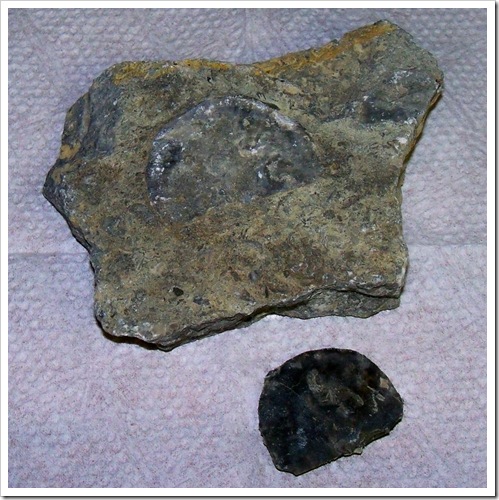
When I was a child growing up in Ohio, my class would take yearly fieldtrips to the Caesar’s Creek Spill off to go fossil hunting. As a child, it was hard to stay focused on the task at hand. We would never read the signs stating we had to leave behind the fossils bigger than our palms, and now that I’m older, I can appreciate why the signs were posted. Read more: Caesar’s Creek Ordovician Fossil Hunting
Shoo Shoo Baby: B17G At Wright Patterson Air Force Base

So before I start sharing, I wanted to start off the Wright Patterson Air Force Base Series with the Shoo Shoo Baby B-17G. For those of you plane and aircraft enthusiasts, you already know the B17G Flying Fortress was one of the most famous airplanes ever built. The B17G prototype first flew on June 28, 1935, yet few of the B-17 flying fortresses were flying prior to the United States’ entrance into World War II. Read more:Shoo Shoo Baby: B17G At Wright Patterson Air Force Base Sources

  • C-140 Jetstar info
  • Lockheed VC-121E “Columbine III” info
  • U-4B Aero Commander info
  • Beech C-45H Expeditor info
  • American Helicopter Co. XH-26 Jet Jeep info

Friday, June 3, 2011

Strategic Missiles At Wright Patterson Air Force Base


Tourists fly in from all around the world to visit the National Museum of the United States Air Force and who could blame them. The museum is completely free, only taking donations if you’re willing to spare a cent, and all this for a weeks worth of military history. It took me several days to walk the museum, spending most of my time with the Planes from WWI and aircraft from WW2.

One of my favorite hangers in the museum in the space gallery, and the focal point is a round room featuring massive strategic missiles.

Check out the entire post over at my travel site The Travelsphere: Strategic Missile Gallery at the National Museum of the Air Force

Like Ancient Digger? Why Not Follow Us?


Subscribe Via RSS Feed Follow Ancient Digger on Facebook Follow Ancient Digger on Twitter Subscribe to Ancient Digger Via Email

Get widget

Search


Ancient Digger Archaeology Copyright © 2015 LKart Theme is Designed by Lasantha