• Ancient Digger teaches Archaeology and History to all Ages!

Saturday, September 18, 2010

Photography of Dunkeld Cathedral in Scotland


Dunkeld emerged as a centre of Christianity during the 7th Century, when Columba came over from Iona, and much work was carried out by his successors. In the 9th Century, Kenneth MacAlpin, the first King of Scots, made Dunkeld head of the Celtic Church and capital of the newly-formed nation created by the union of the Scots and the Picts.


Dunkeld Cathedral sits on the north bank of the River Tay in Dunkeld, Perth and Kinross, Scotland. Built in square-stone style of predominantly gray sandstond, Dunkeldt stands on the site of the former Culdee Monastery of Dunkeld.


The Church grew in power and wealth and the Cathedral, started in 1325, was extremely important in ecclesiastical terns until the Reformation in the 16th Century, when it was destroyed.


The Choir of the Cathedral was re- roofed in 1600 to serve as the parish church, and there was relative peace until 1689, when there was a short, but extremely violent Battle between the Jacobites and the Cameronians (a newly-raised regiment supporting William of Orange) and most of Dunkeld was burned to the ground. ~History of Dunkeld By DunkeldCathedral.Org


Want To See More of Landon Walker's Work?


Resources:

All images © Landon Walker

Ancient Digger secured copyright privileges from the photographer prior to publishing.

Copyright : Images are subject to copyright and may not be used without consent of the photographer. Images copied off Ancient Digger are monitored and can be traced, so please keep this in mind.


Wednesday, September 15, 2010

A Week With Photographer Landon Walker and 1149 Productions in Scotland Continues


Ancient Digger has had an amazing response to Landon Walker's black and white photography. I plan to share his work throughout the week, as it's a glorious breath of fresh air, and a break for me as I have several exams this week. *smile*

Landon is also the drummer for 1149 productions, a band I met maybe close to a year ago on Twitter. I have to confess, every time I'm studying for a test, I usually slip in their CD "Infinite Garden", featuring my favorite song At the Gates of Rossyln. It's just another reason why I have such a fascination with Scotland and its history.


Courtyard in Iona Abbey


Inside Iona Abbey


Inside Kilmore Church


Altar Inside Kilmore


Stain Glassed Window in Kilmore Church Depicting Christ and Mary Magdalene


This picture, of course, creates a lot of controversy. Christ is depicted in a loving embrace with his wife, Mary Magdalene. Many, however, believe this to be his mother. Although the woman is already pregnant in the panel. Open to interpretation I suppose.

Castle on an island on route to Mull


Druid Stone Circle more than 3000 yrs old


Who is Landon Walker?

My name is Landon Walker and I have lived in the U.S. Pacific Northwest my whole life with dreams of moving to Scotland someday. I first picked up photography in my late teens and simply ran with it. Through school courses, ample amounts of reading and online research, I have developed (and still am developing) a skill and passion that I will pursue my whole life.

My dream is to travel the world with my camera and to capture life in the many different lifestyles that God has blessed our diverse world with.

I seek God in all areas of my life and my love of photography and traveling comes nowhere near the love I have for the Father. I am blessed that He has given me an eye for photography and I thank Him for allowing me to pursue my passion for spirituality and art. I am a God fearing artist who loves life and will continue to capture its beauty not only through my lens, but through my very being as well.


Meet 1149 Productions


My hope is to see 1149 become multi-faceted to promote all the sacred arts and use such giftings to bless others. ~Mary Gunderson

Vocals/Composition: Mary Gunderson
Composition/Piano: Shaun Poore
Vocals: Nicole Walker
Drums/Photography: Landon Walker
Bass Guitar: Colin Walker
Video/Graphics: Rachael Gunderson

These inspiring individuals are the Worship team for "The Oneness Foundation" in NW Washington. Their beliefs are all-encompassing of all truths found in all religions.
Also check out

Resources:

All images © Landon Walker

Ancient Digger secured copyright privileges from the photographer prior to publishing.

Copyright : Images are subject to copyright and may not be used without consent of the photographer. Images copied off Ancient Digger are monitored and can be traced, so please keep this in mind.

Monday, September 13, 2010

Monday Ground Up: The Brilliance Of Scotland Captured By Photographer Landon Walker


I have the honor and esteemed pleasure of introducing Photographer Landon Walker to Ancient Digger.  This is the first time Landon's work has been featured on the web, so I am truly humbled he has allowed me to share his art with all of you.

I found out about Landon Walker, the drummer for 1149 productions, from Mary Gunderson, the gifted and inspiring lead singer of the band. Mary, Landon, Shaun, Nicole, Colin, and Rachael just spent a few weeks in Scotland marveling at the landscapes unrivaled by so many in the world. I can't say I wasn't jealous of their trip. In fact, I can only imagine gazing upon a place with so much history and I hope I get to experience it firsthand one day.

It's hard to capture this kind of perfection on film, but Landon has managed to do so in his shots of Scotland. The imagery is perfection. The historical significance is present. I was awe struck and enamored, and just couldn't tear myself away from these shots. One can only imagine seeing Scotland through the eyes of an artist. Welcome Landon Walker.

Who is Landon Walker?


My name is Landon Walker and I have lived in the U.S. Pacific Northwest my whole life with dreams of moving to Scotland someday . I first picked up photography in my late teens and simply ran with it. Through school courses, ample amounts of reading and online research, I have developed (and still am developing) a skill and passion that I will pursue my whole life.

My dream is to travel the world with my camera and to capture life in the many different lifestyles that God has blessed our diverse world with.

I seek God in all areas of my life and my love of photography and traveling comes nowhere near the love I have for the Father. I am blessed that He has given me an eye for photography and I thank Him for allowing me to pursue my passion for spirituality and art.
I am a God fearing artist who loves life and will continue to capture its beauty not only through my lens, but through my very being as well.

Landon Walker's Brilliant Scotland Photography


Blair Castle


Cemetary outside of The Church of the Holy Rood


The Streets of Stirling


Cannons along the Outer Wall of Stirling Castle


The Ferry at the Isle of Mull


Lighthouse along the Ferry Route to the Isle of Mull


Iona Abby on the Isle of Iona


Cave Entrance to Ancient Site of Meditation


Pathway to Mt. Schiehallion


Altar made of Crystal Quartz upon Mt. Schiehallion

Highland Sheep


Panoramic View from atop Mt. Schiehallion


Meet 1149 Productions

My hope is to see 1149 become multi-faceted to promote all the sacred arts and use such giftings to bless others. ~Mary Gunderson

Vocals/Composition: Mary Gunderson
Composition/Piano: Shaun Poore
Vocals: Nicole Walker
Drums/Photography: Landon Walker
Bass Guitar: Colin Walker
Video/Graphics: Rachael Gunderson


These inspiring individuals are the Worship team for "The Oneness Foundation" in NW Washington. Their beliefs are all-encompassing of all truths found in all religions.

Final Thoughts:

I find it incredible that everyone of these individuals has a very special gift to share with all of us. Whether through photography, music, or the arts, I think 1149 will change the world. How often can you say that?

Resources:

All images © Landon Walker

Ancient Digger secured copyright privileges from the photographer prior to publishing.

Copyright : Images are subject to copyright and may not be used without consent of the photographer. Images copied off Ancient Digger are monitored and can be traced, so please keep this in mind.

Tuesday, June 1, 2010

Why I Love Edinburgh Scotland


As many of you know medieval history, as well as the middle Ages, are both subjects that fascinate me. This time period is brimming with war, religious disputes, and men that fought with honor for their homeland on their own soil. For that reason, the city of Edinburgh is one of my favorite subjects, filled with stories and legends of some of the most well-known and infamous figures in history. What I wouldn’t give to live down one of those quaint side roads, maybe on the West End, in one of those lovely Edinburgh apartments overlooking the Edinburgh Haymarket Railway Station. To live on the sidelines of history has always been something that I have craved, and I’m jealous of the residents in Edinburgh that get to do this every day.

Edinburgh was well established by the 12th century, founded on the infamous castle rock, a 2 million year old geological formation. I had read about it previously in a geology class, which is where my interest started to peak. A town that was fixed upon a formation created by millions of years of glacial shifting is just too hard to fathom. Not to mention that Edinburgh castle sites up on the volcanic plug of castle rock and was the seat of the first Scottish Parliament around the middle of the 12th century.

Edinburgh flourished throughout the Renaissance period, both economically and culturally, producing some of the most famous figures in history. I’m familiar with the exploits of Mary Queen of Scots, the most talked about of the Scottish Monarchs. This is partly because of my love of Queen Elizabeth, whom Mary Queen of Scots tried to assassinate on three attempts. She was tried and executed for treason for her involvement in all three plots against her first cousin, Queen Elizabeth.

It would take me years to explain why I love every aspect of Edinburgh history. It could be the stories of Robert Wallace and Robert the Bruce, or maybe even the fact the English occupied Edinburgh Castle for over 10 years, up until it was made part of a dowry for Ermengarde de Beaumont, a woman chosen for King Henry.

I’m sure many of my readers are from Edinburgh, so why do you love it? What aspects of Edinburgh’s history do you appreciate the most?

Monday, February 1, 2010

Monday Ground up: Legendary and Haunted Glamis Castle


Source

Glamis Castle in Forfar, Scotland was the family home of Elizabeth Bowes Lyons, the late Queen Mother, and the birthplace of Princess Margaret. It's set in the "lowland valley of Strathmore, near Forfar, county town of Angus, which lies between the Sidlaw Hills to the south and the Grampian Mountains to the north, approximately 20 kilometres inland from the North Sea."


Source

Aside from the obvious charms of this lusciously landscaped abode, it does have a another side to it. Glamis Castle, which was constructed in a Gothic inspired Baronial Style, is the home to some of the most illustrious ghost stories and chilling tales, one of those stories being William Shakespeare's Macbeth. The real Macbeth was actually the Thane of Glamis.

So does the story unfold. King Malcolm II was murdered at Glamis in 1034 and the bloodstain left on the floor has never been removed. Even with extensive cleaning, it still remains, yet it's boarded over to hide the gruesome act that occurred.


Source

The most famous of all the ghost stories at Glamis Castle is the Monster of Glamis. The Monster was a horribly deformed child that was locked away in a secret room, bricked up after his death. However, there was once other sealed room that many don't speak about, and it's there that the lords of Glamis would sit and play a hand of cards.

On one Sunday afternoon, the lords wanted to play a game of cards, however they knew playing cards on Sunday was strictly forbidden. They chose to anyway. When they settled in, a stranger appeared and sat down at the table. The stranger was legend to be the Devil.

In that same room, the Ogilvies had come to seek protection from enemies, however they were left in the room to starve to death. Among some of the more kindred spirits is the "Gray Lady" who haunts the chapel, while the "White Lady" who was a member of the family, was suspected to be burned at the stake in the 16th century for being a witch.

The History of Glamis Castle

The later house at Glamis began as a hunting lodge and a fortification coated with red sandstone. In 1372, Robert II-the first monarch of the House of Stewart, gave the building to Sir John Lyon, who was married to the king's daughter, Joanna.

Their son was named Lord Glamis in 1445, and it was rumored that he had constructed the original castle. The castle was then renovated and enlarged during the 17th century when the family acquired the earldoms of Strathmore and Kinghorne.


Source

Today, Glamis is open to the public, including the castle itself and the grounds and gardens. The Italian Garden was created in 1910 by Cecelia, mother of the late Queen Mother.

More Related Destinations:

Dunstaffnage Castle is one of Scotland’s oldest stone castle, having been originally built in the 13th century five miles north of Oban, Scotland. This castle is in a remote location along the coast and is surrounded by water on three of its sides. Read more about Five Haunted Castles in Scotland By jharmon


In 1689, John Grahame of Claverhouse attempted to re-establish the Stuart monarchy against that of the Dutch King William. The coup wasn’t very successful and resulted in the occupation of Braemar Castle by government troops. But John Farquharson of Inverey, also known as the Black Colonel, managed to escape, returned to the castle, attacked the garrison and burned down the building. Read more about Castles to Visit in Scotland By Patrick Bernauw

Most visitors to St. Andrews Cathedral and Castle take interest in the hauntings believed to be present this historical site. Is it true that this is the most haunted town in Scotland? What were the spooky stories surrounding this town? Read more about The Haunted Town of St. Andrews, Scotland By historigal

Wednesday, January 13, 2010

Photography of Rosslyn Chapel in Scotland


I was pleasantly surprised to see that they had allowed photography Rosslyn Chapel, or rather, that the person that took all of these shots got away with it. As far as what I have read about the curators at this site, photography is no longer allowed inside. I will, however, take this moment to say I'm thrilled to see another side of it considering, everything I've seen thus far is from Wikipedia.

12th Century Templar at Rosslyn Chapel

The Master Mason

Rosslyn Chapel Roof

The Stained Glass Windows at Rosslyn Chapel


The Entrance of Rosslyn Chapel

Sunday, January 3, 2010

The Bass Rock: A Mysterious Volcanic Plug


How cool is this?

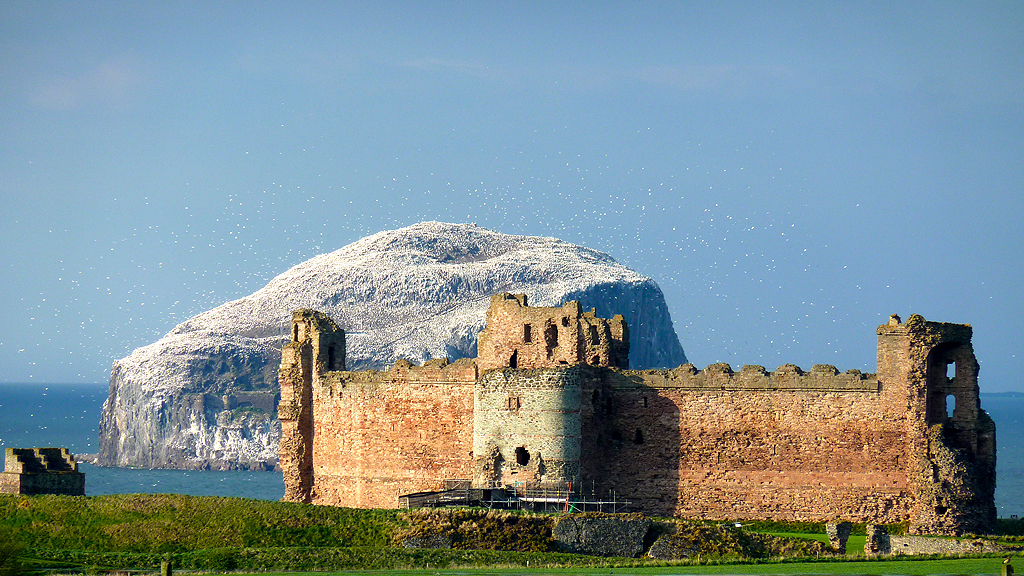
The Bass Rock is an island located in Firth of Forth in the east of Scotland. The Bass Rock is currently uninhabited, however at one time is was the site of a royal castle, often used as a prison. In fact, some pretty infamous people had the pleasure of spending a few nights on this volcanic plug of phonolite due to the orders of James I during the 15th century.

I think what really intrigues me the most about this area was the fact that the castle, although the island is quite amazing in the background, was entirely built of rubble and the local basalt. Every part of the castle was dated in such a sporadic way, which leads me to believe that this structure went through an evolution of sorts of war and the turning of hands.

I know when we speak about medieval castles that the construction materials included timber, local stone, mortar, or any other material that were available. I just find it so fascinating that they used the basalt, possibly from the eruptions beneath Bass Rock Island, to construct the castle.

So why is this so fascinating to me? I want to know how old the castle really is. We can all agree that the castle was built around the 16 or 17th century. However, how old is the rock that was used to actually construct the castle?


Tuesday, December 15, 2009

Semi Wordless Wednesday: Eilean Donan castle


I just finished up my last final 5 minutes ago and I can finally relax and take joy in the fact that today is a day to just reflect and look at Eilean Castle in Scotland, a fortress built in the 13th century as a defense against the Vikings.

Picture is compliments of Eusebius@Commons


Wednesday, November 25, 2009

Inveraray Castle in Scotland


From a distance, Inveraray castle appears to be a Gothic and Baroque style structure, which is most certainly is. However, before this castle ever stood still in western Scotland, the original city of Inveraray was torn down as a result of Archibald Campbell, 3rd Duke of Argyll. His ideal of his perfectly constructed abode did not include a rustic and aging town that impeded on the structure itself.

The castle was constructed in a square like fashion with four castellated towers at each corner, each of which bears a conical spire.

The gardens occupy two acres and the rest of the grounds is parkland and forests. Unfortunately, the castle suffered some loses due to two fires in the 18th and 19th century; however most of the decor and furnishings have been restored since the fires.


Source

The elaborate paintings in the castle's State Dining Room were completed in 1784 by two French painters Girard and Guinard, who were also commissioned by the then Prince of Wales to decorate his London residence, Carlton House. The work of these painters only survives at Inverary, so make sure you take some extra time to admire the brilliance of the atmosphere that these paintings create.

Developed in keeping with Vanbrugh's original sketch dated 1720 and using a similar concept which he used at Castle Howard & Blenheim Palace, the dramatic Armoury Hall soars to 21 metres in height, the highest ceiling in Scotland.


Source

Inveraray Castle is home to Torquhil Campbell, 13th Duke of Argyll and his family, but they have graciously opened up the castle to visitors at certain times of the year.

If you'd like to learn more about Inverary, visit their website. There is so much history to be learned and so much to see.

Wednesday, September 2, 2009

Coupar Angus


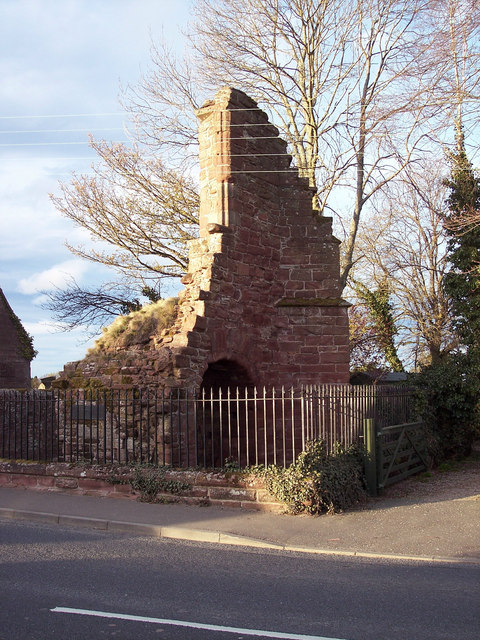
This is a spectacular and scenic view, not far from the town of Coupar Angus where Scotlands first monastery, the Cistercian abbey of Coupar Angus, was founded by Malcolm IV in the 12th century. There are only bits and pieces left from the monastery, which seemingly is being used in parts of the present parish church.

Old Railway Bridge over the River Isla

0.63m • © Snaik

The River Isla near Coupar Angus

0.01m • © Val Vannet

Coupar Angus Abbey


Source

In the 19th century women found the Ley tunnel of Coupar Angus Abbey near the entrance to the churchyard. One went in and was never seen again, however in 1982 a local mason found the entrance again and went in some distance before finding a cave in. It is said that the tunnel ran a further two and a half miles to a souterrain at Pitcur.~ Geoff Holder

Saturday, May 30, 2009

Mysterious Scottish Island and Its History


In Scotland's cold sea waters lay several islands with castles, stone circles, ruins, and plenty of folklore.

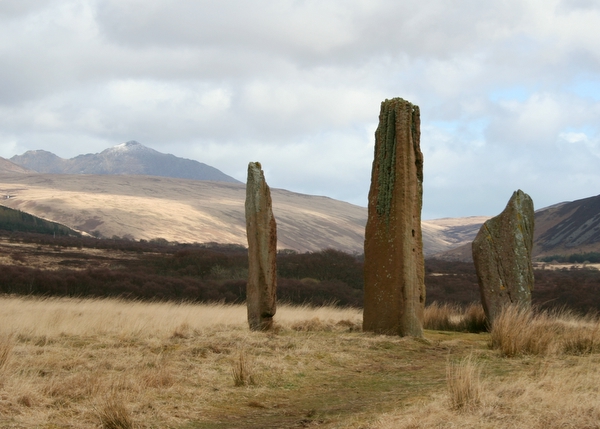
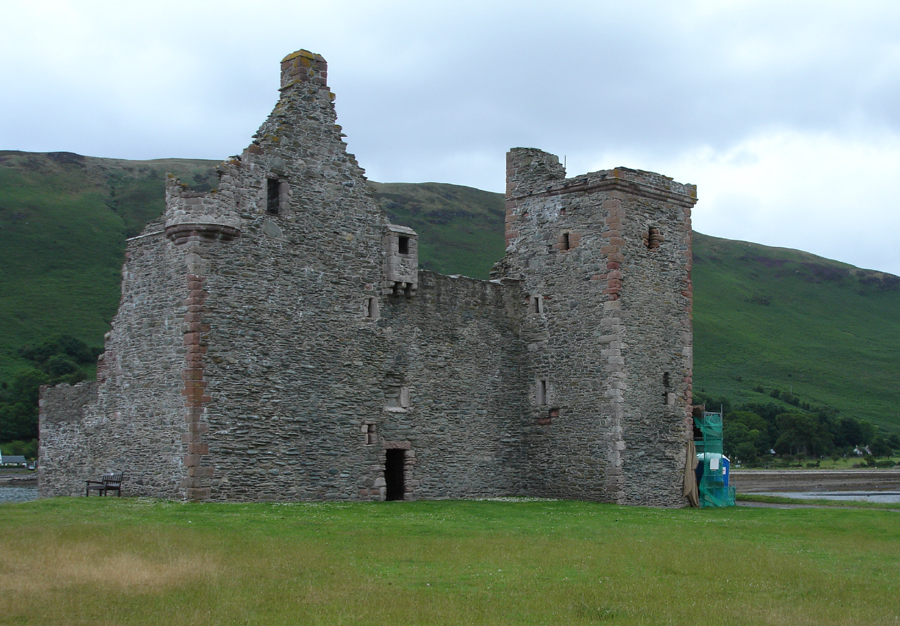
On the Isle of Arran, located off Scotland's southwest coast, travelers can visit Machrie Moor, which boasts several stone circles and some free-standing 18-foot-tall stones. Adding to the island's appeal and mystery is the 16th-century Brodick Castle, which still houses furnishings and art from its many inhabitants; the ruins of Lochranza Castle; and Culzean Castle & Country Park, which features an armory, ruins, and extensive grounds.

Arran is a small island, 20 miles long and 56 miles round, located off the south-west coast of Scotland. Ferries run from the Scottish mainland to the Isle of Arran. Most people reach the island via Ardrossan which has a direct rail service from Glasgow.

History

The first people on Arran to leave visible signs of their life and times here were the Neolithic people, who lived on the island in the period between 4,500BC and 2,000BC. They were farmers, and traces of their field systems have been found on Arran. However, they have left their most distinct legacy on Arran in the form of stone circles, standing stones and cairns. We do not know what these monuments were used for, but it is safe to assume that they had some kind of ceremonial function.


Machrie moor standing stones is a small ancient circle protected by a stone wall. Continue on the footpath and you will reach the main site, three-quarters of a mile across the fields.


Robert Pollock has produced an excellent guide with diagrams which details these and other circles on this site. Two of the circles have recently been excavated, and the amount of peat growth over the original prehistoric ground surface can be seen as a tidemark on the stones. Indeed one of the circles had completely disappeared under the peat.

Druid Stone is likely to be a Neolithic or Bronze age stone, despite its local association with the Iron Age priesthood. A druid was a member of the priestly and learned class in the ancient Celtic societies of Western Europe, Britain and Ireland.

The Ruins of Lochranza Castle are located north of Brodick. The castle was a former hunting lodge of the Scottish Kings. It has been claimed that Lochranza Castle has literary connections, being used as the basis for the castle in the Tintin adventure "The Black Island".


Brodick Castle is made up of red sandstone and it lies at the foot of Goatfell Mountain 1.5 miles out of Brodick; the main port on the Isle of Arran off the west coast of Scotland.

The name Brodick comes from the Norse words, meaning 'broad bay'. Arran means 'peaked island' in Gaelic.


Like Ancient Digger? Why Not Follow Us?


Subscribe Via RSS Feed Follow Ancient Digger on Facebook Follow Ancient Digger on Twitter Subscribe to Ancient Digger Via Email

Get widget

Search


Ancient Digger Archaeology Copyright © 2015 LKart Theme is Designed by Lasantha