• Ancient Digger teaches Archaeology and History to all Ages!

Wednesday, May 15, 2013

Study provides insight into nesting behavior of dinosaurs


A recent university study into the incubation behavior of modern birds is shedding new light on the type of parental care carried out by their long extinct ancestors.

The study, by researchers at George Mason University and University of Lincoln (United Kingdom), aimed to test the hypothesis that data from exisiting birds could be used to predict the incubation behaviour of Theropods, a group of carnivorous dinosaurs from which birds descended.

The paper, out today in Biology Letters, was co-written by Geoff Birchard from the Department of Environmental Science and Policy at Mason and Charles Deeming and Marcello Ruta from the University of Lincoln's School of Life Sciences.

A 2009 study in the journal Science suggested that it was males of the small, carnivorous dinosaurs Troodon and Oviraptor that incubated their eggs. However, by taking into account factors known to affect egg and clutch mass in living bird species, the authors found that shared incubation with mature young was the ancestral incubation behavior rather than male-only incubation, which had been claimed previously for these Theropod dinosaurs.

"The previous study was carried out to infer the type of parental care in dinosaurs that are closely related to birds," said Birchard. "That study proposed that paternal care was present in these dinosaurs and this form of care was the ancestral condition for birds. Our new analysis, based on three times as many species as in the previous study, indicates that parental care cannot be inferred from simple analyses of the relationship of body size to clutch mass. Such analyses have to take into account factors such as shared evolutionary history and maturity at hatching.

The group decided to repeat the Science study with a larger data set and a better understanding of bird biology because other palaeontologists were starting to use the original results to predict the incubation behavior of other dinosaur species.

"Irrespective of whether you accept the idea of Theropod dinosaurs sitting on eggs like birds or not, the analysis raised some concerns that we wanted to address," said Deeming. "Our analysis of the relationship between female body mass and clutch mass was interesting in its own right, but also showed that it was not possible to conclude anything about incubation in extinct distant relatives of the birds."

The project has helped in understanding the factors affecting the evolution of incubation in birds. More importantly it is hoped that the new analysis will assist palaeontologists in their interpretation of future finds of dinosaur reproduction in the fossil record.

Wednesday, May 1, 2013

What Happened to Dinosaurs' Predecessors After Earth's Largest Extinction 252 Million Years Ago?


According to fossil records in South Africa and southwest Russia, the predecessors to dinosaurs may not have have missed the evolutionary race to take over dinosaur habitats left during Earth's largest mass extinction 252 million years ago.

It turns out that scientists may have been looking in the wrong places all along.

Newly discovered fossils from 10 million years after the mass extinction reveal a lineage of animals thought to have led to dinosaurs in Tanzania and Zambia.

That's still millions of years before dinosaur relatives were seen in the fossil record elsewhere on Earth.

"The fossil record from the Karoo of South Africa, for example, is a good representation of four-legged land animals across southern Pangea before the extinction," says Christian Sidor, a paleontologist at the University of Washington.

Pangea was a landmass in which all the world's continents were once joined together. Southern Pangea was made up of what is today Africa, South America, Antarctica, Australia and India.

"After the extinction," says Sidor, "animals weren't as uniformly and widely distributed as before. We had to go looking in some fairly unorthodox places."

Sidor is the lead author of a paper reporting the findings; it appears in this week's issue of the journal Proceedings of the National Academy of Sciences.

The insights come from seven fossil-hunting expeditions in Tanzania, Zambia and Antarctica funded by the National Science Foundation (NSF). Additional work involved combing through existing fossil collections.

"These scientists have identified an outcome of mass extinctions--that species ecologically marginalized before the extinction may be 'freed up' to experience evolutionary bursts then dominate after the extinction," says H. Richard Lane, program director in NSF's Division of Earth Sciences.

The researchers created two "snapshots" of four-legged animals about five million years before, and again about 10 million years after, the extinction 252 million years ago.

Prior to the extinction, for example, the pig-sized Dicynodon--said to resemble a fat lizard with a short tail and turtle's head--was a dominant plant-eating species across southern Pangea.

After the mass extinction, Dicynodon disappeared. Related species were so greatly decreased in number that newly emerging herbivores could then compete with them.

"Groups that did well before the extinction didn't necessarily do well afterward," Sidor says.

The snapshot of life 10 million years after the extinction reveals that, among other things, archosaurs roamed in Tanzanian and Zambian basins, but weren't distributed across southern Pangea as had been the pattern for four-legged animals before the extinction.

Archosaurs, whose living relatives are birds and crocodilians, are of interest to scientists because it's thought that they led to animals like Asilisaurus, a dinosaur-like animal, and Nyasasaurus parringtoni, a dog-sized creature with a five-foot-long tail that could be the earliest dinosaur.

"Early archosaurs being found mainly in Tanzania is an example of how fragmented animal communities became after the extinction," Sidor says.

A new framework for analyzing biogeographic patterns from species distributions, developed by paper co-author Daril Vilhena of University of Washington, provided a way to discern the complex recovery.

It revealed that before the extinction, 35 percent of four-legged species were found in two or more of the five areas studied.

Some species' ranges stretched 1,600 miles (2,600 kilometers), encompassing the Tanzanian and South African basins.

Ten million years after the extinction, there was clear geographic clustering. Just seven percent of species were found in two or more regions.

The technique--a new way to statistically consider how connected or isolated species are from each other--could be useful to other paleontologists and to modern-day biogeographers, Sidor says.

Beginning in the early 2000s, he and his co-authors conducted expeditions to collect fossils from sites in Tanzania that hadn't been visited since the 1960s, and in Zambia where there had been little work since the 1980s.

Two expeditions to Antarctica provided additional finds, as did efforts to look at museum fossils that had not been fully documented or named.

The fossils turned out to hold a treasure trove of information, the scientists say, on life some 250 million years ago.

Other co-authors of the paper are Adam Huttenlocker, Brandon Peecook, Sterling Nesbitt and Linda Tsuji from University of Washington; Kenneth Angielczyk of the Field Museum of Natural History in Chicago; Roger Smith of the Iziko South African Museum in Cape Town; and Sébastien Steyer from the National Museum of Natural History in Paris.

The project was also funded by the National Geographic Society, Evolving Earth Foundation, the Grainger Foundation, the Field Museum/IDP Inc. African Partners Program, and the National Research Council of South Africa.

[Source: National Science Foundation]

Monday, October 29, 2012

Archaeology, Paleontology, and Anthropology News: October 29, 2012


Easter Island’s gargantuan stone statues walked. That is the controversial claim from archaeologists who have demonstrated the feat with a 4.4-tonne model of one of the baffling busts. They describe their work in the Journal of Archaeological Science.

Nearly 1,000 statues litter Easter Island's 163 square kilometers, with the largest weighing 74 tons and standing 10 meters tall. Much about the megaliths is mystery, but few of the enigmas are more perplexing than how the statues were shuttled kilometers from the rock quarries where they were carved.

Theirs was the immortal battle: a fierce tyrant battling a defender armed with three lethal horns and protected by a bony frill around its neck. Yet the violent fight between Tyrannosaurus and Triceratops is hardly the stuff of Hollywood hype. Tyrannosaurus bite marks are well known on the fossil bones of Triceratops but, so far, such fossils have always been studied in an isolated manner.

Researchers from Guatemala uncovered the grave of King K'utz Chman, a priest who is believed to have reigned around 700 B.C., at the Tak'alik Ab'aj dig in Retalhuleu in western Guatemala. Packed with jade jewels and other artifacts, K'utz Chman's grave is the most ancient royal Mayan burial ground found to date, investigators said.


On the banks of the Danube, in the northwest corner of Bulgaria, lie the remnants of an ancient Roman settlement called Ratiaria, host to a priceless cultural heritage. Craters pockmark the huge site, evidence of a scourge threatening one of the world's great troves of antiquities: looters digging for ancient treasure to sell on the black market. Archaeologist Krasmira Luka, who heads a team excavating part of the 80 hectare (200 acre) site, says the area has been repeatedly raided by thieves who dig pits looking for ancient coins and jewelry. Everything else, including precious ceramic vessels and other historically significant artifacts, is smashed to pieces.

Twenty-six pieces of ancient Mexican pottery has been recovered in Bigfork as part of a crackdown on smuggling involving more than 4,000 artifacts in several states. U.S. Immigration and Customs Enforcement (ICE) agents announced the seizures Thursday morning. ICE agents tell us the 26 objects have a total value of: $3,245, who add the items were found in Big Fork, and that the gallery assisted ICE with the investigation. No charges were filed.

Iraqi police have confiscated scores of artifacts and arrested two smugglers in the southern Province of Dhiqar, al-Zaman news reported on Monday. The stolen items include rare statues and coins from different periods in Iraq’s ancient history. The two smugglers in question have long been dealing in stolen relics. One police source was quoted as saying on condition of anonymity: “Interior Ministry forces in coordination with the Iraqi army seized 64 archaeological pieces as well as 114 bronze coins in a district of al-Fajir.”

In the course of the excavation process in Can Sadurní cave (Begues), members of the Col-lectiu per la Investigación de la Prehistòria i l'Arqueologia del Garraf-Ordal (CIPAG), together with the University of Barcelona Seminar of Studies and Prehistoric Research (SERP), found the torso, with one complete arm and the initial part of the other, of a human figurine made of pottery. Its chronostratigraphic unit makes it, until now, the most ancient human figurine of the Prehistory in Catalonia; it is dated 6500 years ago.

A new chemical analysis of modern diets suggests Stone Age humans ate less meat than previously thought. The findings, published in the November issue of the American Journal of Physical Anthropology, may explain why many archaeologists estimate that prehistoric people got most of their calories from lean meat or fish when modern humans would be literally poisoned by such a protein-heavy diet.

Giant German hippopotamuses wallowing on the banks of the Elbe are not a common sight. Yet 1.8 million years ago hippos were a prominent part of European wildlife, when mega-fauna such as woolly mammoths and giant cave bears bestrode the continent. Now palaeontologists writing in Boreas, believe that the changing climate during the Pleistocene Era may have forced Europe's hippos to shrink to pygmy sizes before driving them to warmer climates.

With domed heads and thick, bony skull protuberances, pachycephalosaurids are well known by seven-year-olds and paleontologists alike. The dinosaurs are thought to have used their thick domes to headbutt each other, perhaps as part of courtship behavior. But whereas children recreating these vicious displays simply ram plastic models of the animals together in a straight line, a study now suggests that pachycephalosaurs may have bashed one another in a number of different ways.


Thursday, July 5, 2012

Megalosaur Fossil: First Feathered Dinosaur Not Closely Related to Birds


Skeleton of Sciurumimus
Skeleton of Sciurumimus as found on a limestone slab.
(Credit: H. Tischlinger\Jura Museum Eichstatt) 
A new species of feathered dinosaur discovered in southern Germany is further changing the perception of how predatory dinosaurs looked. The fossil of Sciurumimus albersdoerferi,which lived about 150 million years ago, provides the first evidence of feathered theropod dinosaurs that are not closely related to birds.

The fossil is described in a paper published in the Proceedings of the National Academy of Sciences on July 2."This is a surprising find from the cradle of feathered dinosaur work, the very formation where the first feathered dinosaur Archaeopteryx was collected over 150 years ago," said Mark Norell, chair of the Division of Palaeontology at the American Museum of Natural History and an author on the new paper along with researchers from Bayerische Staatssammlung für Paläontologie und Geologie and the Ludwig Maximilians University.

Theropods are bipedal, mostly carnivorous dinosaurs. In recent years, scientists have discovered that many extinct theropods had feathers. But this feathering has only been found in theropods that are classified as coelurosaurs, a diverse group including animals likeT. rexand birds. Sciurumimus -- identified as a megalosaur, nota coelurosaur -- is the first exception to this rule. The new species also sits deep within the evolutionary tree of theropods, much more so than coelurosaurs, meaning that the species that stem from Sciurumimus are likely to have similar characteristics.

"All of the feathered predatory dinosaurs known so far represent close relatives of birds," said palaeontologist Oliver Rauhut, of the Bayerische Staatssammlung für Paläontologie und Geologie. "Sciurumimus is much more basal within the dinosaur family tree and thus indicates that all predatory dinosaurs had feathers.”

The fossil, which is of a baby Sciurumimus, was found in the limestones of northern Bavaria and preserves remains of a filamentous plumage, indicating that the whole body was covered with feathers. The genus name ofSciurumimus albersdoerferirefers to the scientific name of the tree squirrels,Sciurus, and means "squirrel-mimic"-referring to the especially bushy tail of the animal. The species name honours the private collector who made the specimen available for scientific study.

"Under ultraviolet light, remains of the skin and feathers show up as luminous patches around the skeleton," said co-author Helmut Tischlinger, from the Jura Museum Eichstatt.

Sciurumimusis not only remarkable for its feathers. The skeleton, which represents the most complete predatory dinosaur ever found in Europe, allows a rare glimpse at a young dinosaur. Apart from other known juvenile features, such as large eyes, the new find also confirmed other hypotheses.
"It has been suggested for some time that the lifestyle of predatory dinosaurs changed considerably during their growth," Rauhut said. "Sciurumimus shows a remarkable difference to adult megalosaurs in the dentition, which clearly indicates that it had a different diet.”

Adult megalosaurs reached about 20 feet in length and often weighed more than a ton. They were active predators, which probably also hunted other large dinosaurs. The juvenile specimen of Sciurumimus, which was only about 28 inches in length, probably hunted insects and other small prey, as evidenced by the slender, pointed teeth in the tip of the jaws.

"Everything we find these days shows just how deep in the family tree many characteristics of modern birds go, and just how bird-like these animals were," Norell said. "At this point it will surprise no one if feather like structures were present in the ancestors of all dinosaurs.
The study was financed by the Volkswagen Foundation and the American Museum of Natural History.

References
  1. Oliver W. M. Rauhut, Christian Foth, Helmut Tischlinger, and Mark A. Norell. Exceptionally preserved juvenile megalosauroid theropod dinosaur with filamentous integument from the Late Jurassic of Germany. Proceedings of the National Academy of Sciences, July 2, 2012 DOI: 10.1073/pnas.1203238109
  2. American Museum of Natural History (2012, July 2). Newly discovered dinosaur implies greater prevalence of feathers; Megalosaur fossil represents first feathered dinosaur not closely related to birds. ScienceDaily. Retrieved July 5, 2012, from http://www.sciencedaily.com­ /releases/2012/07/120702210225.htm

Monday, June 4, 2012

Animatronic Dinosaurs at Aussie Museum Too Real


The first time I ever went to The American Museum of  Natural History, I was in awe of the dinosaur skeletons. I always thought they would come alive and roam the halls. Childlike curiosities always drove our interests when it came to these prehistoric beasts, but what happens when they actually do come alive? In a technical sense that is.


The Aussie Museum of Natural History's animatronic dinosaur exhibit has adults and children running for their lives lunches. They're snatching coolers out of guests hands and chasing kids around, and they've also been rumored to ride the elevator for fun.

As an adult I find these exhibits thrilling and innovative, but some of the kids in the video got more than they bargained for when they wanted to see a dinosaur up close. Nothing R-Rated I assure you, just some tearful children, unaware these creatures had more of a bite in person than on the movie screen.


Tuesday, January 31, 2012

Significance of Darwin Fossils Recently Discovered


Dr. Howard Falcon Lang from the Royal Holloway, University of London, has stumbled upon 314 slides belonging to Charles Darwin and several other member of Darwin’s inner circle, including John Hooker. Several of the slides were from Darwin’s expedition aboard the HMS Beagle. These missing slides hold the clues to a range of species scientists, and the public, never knew existed. Evidently, the slides were lost due to the lack of curatorial care, and the fact the Hooker never numbered and organized them into a registry.

On Tuesday, January 24, the slides were made available to the public for viewing via an online museum exhibit. The significance of this discovery is the fact that we now have specimen samples collected by Darwin during his expedition on the HMS Beagle.

"To find a treasure trove of lost Darwin specimens from the Beagle voyage is just extraordinary," Falcon-Lang added. "We can see there's more to learn. There are a lot of very, very significant fossils in there that we didn't know existed."

We do have samples from Darwin’s expedition, but these specific slides ultimately changed the way that Darwin looked at evolutionary processes. They were a platform for Darwin’s future work on human history. Furthermore, the specimens on the slides date to a time in which we know little about. J.D. Hooker’s specimen was found mixed in with the Darwin slides and was dated to 400 million years ago. What surprised me about this slide, or the reaction to it, was the fact that it was described as “bizarre”. Darwin’s slides were more so described as evolutionary.

The change I see here, considering Darwin was not a household name in the early 19th century, is the fact that he is still widely associated with the creation of this process, even now during the 21st century. His friends, however, have taken a somewhat backseat. Suffice it to say, Hooker’s specimen doesn’t receive the attention it deserves in this article.

Falcon Lang stated that, "There are some real gems in this collection that are going to contribute to ongoing science." Furthermore, now that the slides will be available to the general public for reviewing and research, anyone interested in fossil hunting, geology, paleontology, or earth sciences and biology, can use the new material in many different areas of daily life. Perhaps discussion about evolution and creation will have a new twist due to some of the specimen finds. Students and teachers can also implement the findings into their lectures, in the classroom, or in a more public venue.

Click on the Picture to see the original discovery!

Friday, August 19, 2011

Archaeologists Do NOT Do Dinosaurs


The problem with archaeology is that most people have no idea what it is or what it entails. There are no fedoras or leather whips and no dinosaurs chasing us around dinosaur alley. So what is the difference? Well, before I let you lose on this hilarious video, I’ll clue you in on the differences between paleontologists and archaeologists.
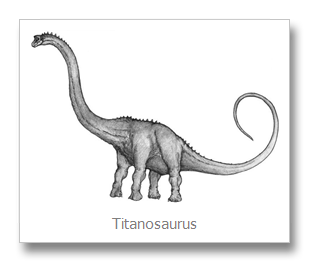
First I’ll ask you one question. How many of you have seen or heard the Payless commercial about being a paleontologist? You may have noticed those large skeletal beasts in the background. Those are dinosaurs and archaeologists don’t study them, paleontologists Do.

Paleontology is the study of the history of life on Earth, as reflected in the fossil record. They don’t just study dinosaurs, however.

Like Indiana Jones, archaeologists study artifacts. Artifacts are things like tools and pots and other implements made and used by people. Ecofacts are the remains of plants or animals that were used by or eaten by people. Archaeologists also study landscapes, and there is a particular field called Landscape Archaeology, which allows the study of the modified landscapes and the behavior put forth to alter it.

Without further ado, here’s “We Don't Do Dinosaurs!” (The Archaeology Song). Raise your Trowels or a pint a beer, because this is a great ending to a hectic week.

Happy Friday!

Wednesday, June 29, 2011

Head-butting Dinosaurs


The on-going debate about whether some dinosaurs engaged in the head-butting dominance behavior seen in modern animals got another push this week. A paper published by the Public Library of Science ONE journal suggests that one specific species had a cranial structure that would have allowed it to withstand head-butt blows. The German shepherd-sized dinosaur called a Pachycephalosaurs is the subject of interest.

[Read the article on USAToday: Head-butting dinos that turned on a dime?]

Sunday, June 26, 2011

Monday Ground Up: Dinosaurs in Madagascar


Many children enter a phase one time in their life of being dinosaur fans. The shear size and strength that these creatures held is a fascinating draw that makes researching these creatures, not only educational but fun. While not everyone retains their fascination with Paleontology, those who do are the ones to later be found in the field of Archaeology, putting their love of dinosaurs to practical use.


For those dedicated to the fields of Paleontology and Archaeology there is one event that can be an affirmation of the reasons they chose those fields in the first place and that event is the discovery of a new species of dinosaur in Madagascar.


Facts About Madagascar

  • Madagascar is the world's fourth largest island after Greenland, New Guinea, and Borneo.
  • Environmental degradation is a major concern as damaging agricultural practices cause deforestation, soil erosion, and desertification.
  • The island of Madagascar broke away from the African continent 165 million years ago.
  • The first settlers of Madagascar were of African and Asian origin, and 18 separate ethnic groups emerged, derived from an African and Malayo-Indonesian mixture.
  • The island of Madagascar is heavily exposed to tropical cyclones.
  • Most of the population depend on subsistence farming, based on rice and cattle, with coffee, vanilla, and seafood being important exports.
  • French colonial rule began in 1896 and Madagascar gained independence in 1960.
  • About 80% of the animals found in Madagascar do not exist anywhere else on Earth.
  • Over 30 different species of lemurs, including aye-ayes, live in Madagascar. They can travel up to 25 feet in one leap!

Dinosaurs in Madagascar

Just when the idea that all of the species of dinosaur had been discovered, a graduate student from Stony Brook University in New York, Kristina Curry Rogers, made a discovery that would unearth more than a fossil in Madagascar. While discovering the bones was excitement in itself, the final revelation after they were sorted was definitely a bonus. The skeleton was that of a young dinosaur that had lived approximately 70 million years ago which was about the time of the height of the last giant dinosaurs’ development.


While most Paleontology students consider making a discovery such as this a potential career boosting find, this particular discovery was only the beginning. Dinosaur research in Madagascar has yielded the discovery of several new species of prehistoric animals.


David Krause of Stony Brook University and his team have several of these discoveries under their collective belts. Along with the discovery described above, there has been several other species discovered by Krause and his team. Finds such as the Majungasaurus crenatissimus,  Rahonavis, an extinct bird, a Simosuchus or short-bodied crocodile like creature and the Beelzebufo which is a toad that is exactly like the modern day toads, the only difference being they weigh in at a hefty 10 pounds.

The discovery of the Majungasaurus crenatissimus by David Krause was an enormous boost to the field of Paleontology. Majungasaurus crenatissimus was a 70 million-year-old meat-eating theropod dinosaur from the Late Cretaceous period and is a very distant relative of Tyrannosaurus rex. The skull is one of the best-preserved and most complete dinosaur skulls ever found. The replica is approximately 21 feet long and stands about seven feet high.


The find was featured on the  Science Magazine cover on May 15, 1998 and allowed Krause and his colleagues to explain new conclusions about the plate tectonic history of the southern super-continent of Gondwana (a composite continent, made up of South America, Africa, Antarctica, India, and Australia, and Madagascar); and that dinosaurs, like many living animals, were cannibals.

On May 17, Stony Brook University celebrated the installation of an exact replica, the only ne in North America, of the fossil skeleton of Majungasaurus crenatissimus.


"Majungasaurus was clearly the top predator of its time on Madagascar," said Krause. "Interestingly, numerous bones of Majungasaurus exhibit tooth marks that can be attributed only to Majungasaurus itself. This provides the most conclusive evidence ever discovered for cannibalism in dinosaurs," he said.

Although Krause’s team certainly garnered more than their fair share of new species among the dinosaurs in Madagascar, these were not the only new species that were discovered.

Through their hard work and efforts in dinosaur research in Madagascar, Scott Sampson (a dinosaur paleontologist, evolutionary biologist, and educator who divides his work time between scientific research and a variety of education-related projects) and his colleagues from the University of Utah unearthed the Masiakasaurus. While this particular species might have seemed like somewhat of a featherweight among the dinosaurs so far discovered in Madagascar, this 80 pound fellow proved to be a rather formidable opponent, especially since he was a carnivore.

While the discovery of these dinosaurs in Madagascar are definitely important finds for the Archaeology community, the dinosaurs in Madagascar also help give further credence to the long help theory that all of the lands of Earth were once connected.

The dinosaurs that were found may be new species, however, they share certain specialized characteristics with other known predators from other continents. This is more evidence to the idea of a giant connected land mass.


Dinosaur research in Madagascar has helped to yield vital pieces of evidence to support the theory that all of the Earth's land was once one giant land mass. The truly amazing part is that the area of Madagascar has only recently begun to be researched. Considering the wealth of discoveries that have been made so far just imagine the possible discoveries that Madagascar may yet hold.


While the dinosaur research in Madagascar is far from over, the discoveries that have been made at this point hold the possibility of opening up new research in other areas of the Paleontology and Archaeology fields. Among those will, of course, be the theories of a giant land mass. although this is the main theory it will certainly not be the only one to be examined.


Also check out:


Sources


Sunday, June 5, 2011

Fossils 101: Caesar’s Creek Ordovician Fossil Hunting


Written in Stone: Evolution, the Fossil Record, and Our Place in NatureWhen I was a child growing up in Ohio, my class would take yearly fieldtrips to the Caesar’s Creek Spill off to go fossil hunting. As a child, it was hard to stay focused on the task at hand. We would never read the signs stating we had to leave behind the fossils bigger than our palms, and now that I’m older, I can appreciate why the signs were posted.

I was lucky enough to find a sample of every fossil that ever lived in this area. Rather the fossils that archaeologists are aware of. Some of them are quite small and some are broken in pieces, nonetheless, I was lucky to find the samples that I did.

Wednesday, December 1, 2010

Dinosaur Exbibits in America


One of my first recollections of a dinosaur exhibit has to be the American Museum of Natural History when I was a child. Of course, you can never forget the large whale floating above your head as you peruse the natural history that surrounds you on every side, but something just draws you in to the dinosaur exhibit. I think this is the case with many natural history museums. It's a childlike fantasy to come face to face with one of these dinosaurs, and as adults, we can still understand the fascination, as we peer into the eyes bones of these massive creatures.

1. Museum of the Rockies T-Rex Dinosaur Exhibit


Source

Located in Bozeman, Montana, the Museum of the Rockies hosts an impressive dinosaur fossil collection, found in the mountains of Montana from the Jurassic and Cretaceous periods. Jack Horner, a paleontologist and curator who served as the science advisor for the Jurassic Park films, leads the area dinosaur digs and restoration process at the museum. The exhibit has on display a T-Rex, Triceratops, and Deinonychus, among others.

2. Natural Museum of Los Angeles County Saber-Toothed Tiger Exhibit


Source

Currently, the Natural Museum of Los Angeles County hosts a well-regarded dinosaur collection, but it will soon expand its exhibit when its Dinosaur Hall opens this coming summer. According to a Business Wire article, the new Hall will make the Los Angeles museum a world leader in dinosaur exhibits, featuring over 300 fossils and 20 full-body specimens. The museum endeavors to make the public more aware of the process of excavation and preparation, as well as to shed light on how dinosaurs lived, by way of interactive media. Especially notable is its T-Rex adult, Thomas, one of the most complete specimens on the planet.

3. Cincinnati Museum Center A View From The Front


source

Although only on display until January, Cincinnati Museum Center debuted an awe-inspiring collection of dinosaur fossils found in the north-central region of China by Chinese paleontologists in 2006. The most exciting part of the exhibit is a rare nest of fossilized dinosaur eggs. For more information, check out this Washington Post article

4. Utah Museum of Natural History Dinosaur Exhibit


source

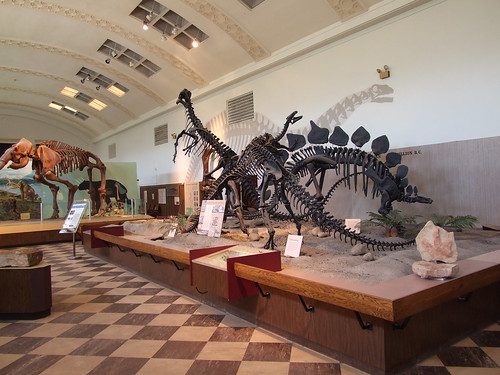
UMNH has a wonderfully diverse range of dinosaur specimens, mostly from the Late Jurassic period. Many of its fossils were found in the Cleveland Lloyd Dinosaur Quarry in Emery County, Utah, which possesses the densest concentration of Jurassic fossils in the world. The latest additions to its stunning collection are two new species of iguanadonts—a Hippodraco and an Iguanacolossus. Iguanadonts are large, beaked, herbivorous dinosaurs from the Cretaceous period. The skull of the Hippodraco will be on display at UMNH early next year.

5. Smithsonian Institution National Museum of Natural History


The Smithsonian is the veritable granddaddy of American dinosaur exhibits. It dinosaur collection was begun way back in the 1850s. Some of the museum's more interesting and complete dinosaur fossils are its Triceratops, which was for a long time one of the most complete fossils of its kind in the world, its tyrannosaur Gorgosaurus, and a saurapod, Diplodocus.

By-line:

This guest post is contributed by Alvina Lopez. She welcomes your comments at her email Id: alvina.lopez @gmail.com.

Like Ancient Digger? Why Not Follow Us?


Subscribe Via RSS Feed Follow Ancient Digger on Facebook Follow Ancient Digger on Twitter Subscribe to Ancient Digger Via Email

Get widget

Search


Ancient Digger Archaeology Copyright © 2015 LKart Theme is Designed by Lasantha