• Ancient Digger teaches Archaeology and History to all Ages!

Tuesday, August 3, 2010

Hattusha (Hattusa) Archaeological Site In Bogazkoy Turkey


Arial View of Hattusha Archaeological Site in Bogazkoy Turkey
Source

The archaeological site of Hattusha is situated in Anatolia, now modern day Turkey. Hattusha sits 90 miles east of Ankara, first occupied in the third millennium BCE.

The Hittites arrived at Hattusha during 1700 BCE and were one of the greatest powers of the ancient world. Ruled by King Hattusili , ruled from 1650-1620 BCE. The Hittites conquered Babylon, overshadowed Troy, and constructed an empire that rivaled the Assyrians and Egyptians.
Hattusha remained a site of great importance for the Hittites until its destruction in 1190 BCE. Later it was occupied by Galatians and Phrygians.

The archaeological site of Hattusha, although smaller is scale as opposed to its counterparts in neighboring areas, does outline several achievements.

Hattusha archaeology site, discovered in the early 19th century, did not gain significant importance until the 20th century when Hugo Winckler and Theodor Makridi Bey conducted the first excavations in 1906, 1907, and 1911–13.

Later, archaeological excavation resumed in 1933 under Kurt Bittel, followed by Peter Neve (site director 1963, general director 1978–94).

One of the most important discoveries at the site has been the cuneiform royal archives of 10,000 clay tablets. One of the clay tablets inscribed included a peace treaty, one of the oldest ever found.

The site at Hattusha also consisted of official correspondence and contracts, as well as legal codes, procedures for cult ceremony, oracular prophecies and literature of the ancient Near East. 

Excavations by archaeologists at Hattusha revealed the size of the city. The city spanned over 450 acres and included seven temples, the largest containing shrines to the weather god, Hatti, and sun goddess Arinna.

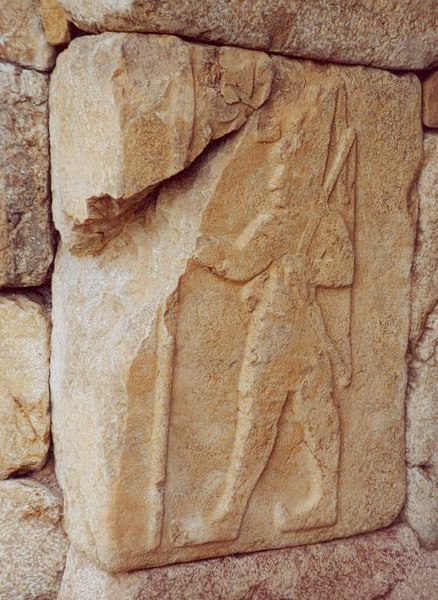
The Hittites excelled at sculpture, taking immense care at crafting the massive guardian spirits which flanked the gateway. These include lions, warriors, and sphinxes.

Hattusha: the Hittite Capital, became a UNESCO World Heritage Site in 1986.

Saturday, July 10, 2010

Hospital Chef Unearths Hoard of Roman Coins


Dave Crisp, a hospital chef, came across the buried treasure while searching for "metal objects" in a field near Frome, Somerset in southwestern England. The hoard contains 766 coins bearing an image of the Roman general Marcus Aurelius Carausius, who ruled Britain independently from AD 286 to AD 293 and was the first Roman emperor to strike coins in Britain.

All together there are close to 52,000 coins  worth $1 million dollars, discovered in an enormous pot used for storing food around 286AD.The hoard was transferred to the British Museum in London where the coins were cleaned and recorded.

Read the story:  Amateur unearths 52,000 Roman coins worth $1m

Thursday, June 17, 2010

Oldest remains of English Royalty Finally Confirmed


Archeologists dug up the 1,000 year-old skeleton in 2008 in one of the most exciting historical founds of recent years.

They believed they belonged to Queen Eadgyth, the great granddaughter of Alfred the Great, but could not prove it. Now scientists using hi-tech radioactive analysis of the remains have been able to prove that the bones belong to someone who grew up in Wessex before moving to Germany.

Read more about Oldest remains of English Royalty

Friday, November 27, 2009

The Ohio Decalogue Stone: The Ten Commandment Rendition


How odd to find out that a rare tablet was discovered not far from where I used to live in Ohio. The Ohio Decalogue Stone, sometimes called the Ten Commandment Stone, was discovered in Ohio by archaeologists during the excavation of a cairn in 1860.

They also found a wooden casket with a skeleton inside, however when they opened up the casket, the skeleton crumbled into pieces. Inside the casket was the stone, enclosed in a cemented casing with the Hebrew language carved along the edges.

This video is both bizarre and surprising, especially when you take into account that some of the Archaeologists that discovered the stone deemed it as a fake, and others believed it was tied to Moses. Their explanation, although seemingly it might have made sense to them, was that no one was in Ohio before Christopher Columbus discovered it. For that matter, why would a Hebrew artifact be buried in Ohio in the first place?


Wednesday, August 26, 2009

Forts, or rather Fortifications in Florida


I went on a huge manhunt today, looking for another site to explore nearby, but I failed miserably. Instead , I found myself at the local library reading about the forts I can't find.

Do you really want to know what started all of this?


When I was about 10 years old, my mother brought me to the Castillo de San Marco's in Saint Augustine where I found myself crawling on my knees into the dungeon that was sealed up for 100 years, only to be opened up by American soldiers in 1819. Really Creepy! It was this fortification that made me love Archaeology.

So today, I thought it would be a great idea to embark on a new location, but like I said, I couldn't find one nearby. Even the ones that I did find were virtually impossible to navigate or the remnants of the structures were completely gone, so I would have needed a land surveyor or historian with me to know what is was I was looking at.

I even rummaged through Wikipedia pages and couldn't find one that had any information. And when I say no information, the page was empty. What happened and why are these places not being excavated?

Your thoughts on this?

Read more about the Castillo de San Marco's

Florida Forts

Friday, July 17, 2009

Silchester: Exciting Pre-Roman Finds From an Archaeologist’s Point of View


New discoveries are always amazing for any Archaeologist, and Emma CS shares one of her personal experiences in Silchester where she was able to explore Calleva Atrebatum, a Roman town from 1st century AD. However, after years of digging in the dirt, which both Emma and I love, there has been a new discovery of Iron Age pieces.

Since 1997 archaeologists from Reading University, lead by Micheal Fulford, have been digging on a windswept hill near to the modern village of Silchester as part of the extraordinary “Silchester Town Life project. In 2007 I was lucky enough to be involved in the dig myself, as the project also serves as an opportunity to teach students the processes necessary in practical archaeology. When the local news reported some exciting new finds at the site I was intrigued. So what have they found and why is it important? Read More

Saturday, June 27, 2009

An Archaeological Look at Bog Bodies: Tullund Man


Ima Write brings us the story of the Tullund Man, found in a peat bog in 1950 in Denmark. His 2,000+ year body was unbelievably preserved, and the contents of his last meal were found in his stomach! Find out how the bog preserved this amazing piece of the past.

In Northwest Europe the peat bogs tell an interesting tale. Most bodies found in the bogs are remarkably from the Iron Age. The bodies that were preserved were usually victims of sacrifice, or were executed criminals. Their lifeless bodies were not given the traditional burial or cremation of the time, but instead thrown into the peat bog. Read More

Friday, March 13, 2009

Exorcism Skull Found in Italy


March 10, 2009—Among the many medieval plague victims recently unearthed near Venice, Italy, one reportedly had never-before-seen evidence of an unusual affliction: being "undead."The partial body and skull of the woman showed her jaw forced open by a brick—an exorcism technique used on suspected vampires.

It's the first time that archaeological remains have been interpreted as belonging to a suspected vampire, team leader Matteo Borrini, a forensic archaeologist at the University of Florence, told National Geographic News.

Read More: Exorcism Skull Found in Italy

Like Ancient Digger? Why Not Follow Us?


Subscribe Via RSS Feed Follow Ancient Digger on Facebook Follow Ancient Digger on Twitter Subscribe to Ancient Digger Via Email

Get widget

Search


Ancient Digger Archaeology Copyright © 2015 LKart Theme is Designed by Lasantha