• Ancient Digger teaches Archaeology and History to all Ages!

Saturday, March 19, 2016

Promoting Global and Cultural Awareness through Private School Programs


For the past 4 years, I have had the pleasure of working as an Academic Director at an international private school. The position has allowed me to experience the general nuances of international schools, particularly their curriculum. While I am a product of public schools, and I’m aware of the AP program, I was slightly less familiar with IB and its benefits. Both programs allow students to excel well beyond their potential in college, however few schools actually offer both program. From my experience, the main reasons for this are space constraints, and also the cost to educate teachers and coordinators to implement the program.

The American School in Paris is a prime example of a private institution who excels in providing both programs to students. Their IB curriculum is global, stressing serious academic research, critical thinking and oral presentation. Their AP allows students to pursue coursework equivalent to first-year American college courses, thus allowing student to earn college credit and/or advanced placement in American universities and gain admission to many non-American universities. While the ASP AP/IB programs are pristine and well formed, they also have so many more resources for all types of leaners that very few schools provide.

ASP offers an intensive English program that allows students to fully integrate into the classroom, thus promoting inclusion. Their learning support services support a diversity of documented mild learning differences. The program is designed to support Grade K-12 students in need so that they can be successful in our mainstream classrooms. Additionally, they offer service-learning opportunities, which I am a great proponent of as this is something I completed prior to my position working with internationals.

The key component of a successful international program and/or curriculum is creating opportunities. As an anthropologist and student of life myself, I want my students to become more culturally aware and globally minded, and let go of their ethnocentric mindsets. We desire schools that promote personal excellence and inclusion, and also provide a compassionate environment that allows students to feel at home and comfortable to explore their potential. ASP is a prime example of a school that satisfies this need.

Friday, November 18, 2011

Anthropology Study: Pierre Bourdieu


There is no singular argument I can posit from Bourdieu’s research. It’s evident that Bourdieu believes that anthropology is filled with diabolically obsessing theoretical forces and that culture is neither the “exclusive product of free will nor of underlying principles” (Moore 2009: p326). Culture is not the exclusive product of any such code or rule, but a dynamically changing force, which meets the needs of those who construct the boundaries. I do, however, have several observations.

First, Bourdieu explains the “game”, which is not the individual’s actions or a sole strategy. A game is, in my opinion, a practice and can have such codes and rules. Furthermore, a game can only be won using strategy, and the person who created the rules in the first place often enforces that strategy. Is there confusion in the game? There’s always some level of confusion within strategy, but Bourdieu postulates that strategy exists without confusion. No game, strategy, or practice is without its obstacles in my humble opinion.

Second, Bourdieu had a structuralism agenda. That agenda allowed him to observe Algerian society by contrasting the rudimentary structures of the phenomena in a system of binary opposition. There is nothing wrong with this approach, but it does create contradictory social observations within society. These contradictory results forced, or rather, irked Bourdieu is such a way, that he sought for “perfect coherence in the system” (Moore 2009: p330). He took opposing ideas in structuralism, rather than using ethnographic evidence from Kabyle society.

In actuality, Bourdieu should have used his ethnographic evidence to understand the meanings of east and west and north and south. There were clearly contradictions in the way the Kabyle observed direction and what it meant, from a ritual and social aspect. Yet, Bourdieu believes that the creation of systems of knowledge is always politically based and this is hardly the case, especially when you read the geographic details of specific situations within Kabyle culture. What are some examples of this?

Why is it that seating a guest on the eastern wall is an offense? The Kabyle call this “the wall of darkness” (Moore 2009: p337). You would think, since east is associated with the sun rise, the source of all prosperity and the cardinal direction for ritual, that east would we associated with a completely alternative meaning that Bourdieu has explained. Furthermore, is there an assumption that guests who sit on the eastern wall, which is associated with a sinister area of the house, can remove or derail prosperity from the homeowner?

In essence I believe the Kabyle are a society who make their culture through practice, but I don’t believe that Bourdieu understands the opposing strategies that the Kabyle use to explain simple rituals or rules, because he was seeking equilibrium outside of structuralism. I also believe that Bourdieu is misusing the concept of culture because contradictory situations like the geographical explanations for sharing one’s abode, is not recognized as a masking of a society member’s actual objectives.

Wednesday, September 21, 2011

Franz Boas: Rejecting Change But Accepting Static Cling


The first thing I look for when reading articles by past anthropologists is an agenda. While it did take me several pages to figure out Franz Boas’ agenda, it pained me to disagree with some of his assertions as I respect Franz Boas and his research. “My parents had broken through the shackles of dogma”. It was this line that led to my argument. I knew his religious upbringing, coming from a wealthy Jewish family, would force him to strike down all ideas of evolutionary processes. Yet, his concentration on the science of anthropology made me realize he was a positivist. Not completely, but partially.

In “Methods of Ethnology”, Boas attacks evolutionary theorists because in reality he supports method without theory, and to my understanding, one cannot exist without the other. Boas supported the Darwinian model of biological evolution but was hostile to its application to social evolution. The term “social organism” comes to mind once again, which combines both evolution and societal issues in one. Why such a favoritism towards the scientific? Can’t anthropology be scientific and unscientific?

Boas believes in “human equality” which essentially explains his attacks on evolutionists. In theory, however, all things are subject to change. Boas’ methods of characterizing anthropology as static undermines what cultural evolution stands for and represents. Furthermore, attacking American anthropological students interested in the “dynamic phenomena of cultural change” is like saying the earth is flat and stays still. Contradicting this statement, Boas believed “the whole problem of cultural history appears to us as an historical problem. In order to understand history, it is necessary to know not only how things are, but how they have come to be”.

In order to study how things have changed, would it not be necessary to study evolution in some aspects? Biological and cultural? If Boas truly believes that society is in flux and is subject to “fundamental modifications”, why does he confuse dynamics in society, rejecting the fact that society changes, instead of attempting to solve fundamental problems in developing civilizations?

While I see there is a method to Boas’ understanding of society as a whole, I don’t see how he could reject the use of theory, which is based on the collection of data. Yes, theory depends on data and analysis, yet Boas implies that theorists are not using it.

Boas seems to be the victim of static cling. Although he’s aware that there are other methods at correcting an assumption, he seems to cling too tightly to his own ideas, which he believes cannot be changed.

Wednesday, September 7, 2011

The Social Organism: A Brilliant Account of Societal Comparison or Purely a Disguised Agenda?


Herbert Spencer associates an organism, which forms a continuous mass, to the formation and separation of society which has dispersed itself over the surface of the earth. While I believe the comparison seems to be purely organic, I can’t help but oppose the underlying agenda of Spencer.

Spencer’s explanation of society as a morphing organism experiencing its own evolution is stymied by the notion that man’s capacity for cerebral thought assigns them a position in complex society. Morgan and Tylor believed in the fundamental similarity of human thought around the world termed the “psychic unity of man”. Subsequently, Spencer, clearly by my understanding, inserts his classifications of mental capability throughout the book albeit perhaps unintended.

Human beings are all wired in the same manner. Cells react to certain stimuli just as the wires in our brain allow for us to watch and learn. There is no computer technician adding extra nerve bundles to create more rapid fire synapses to the upper classes. Does this relate to Spencer’s notion of mental thought? Yes. Spencer goes on to say that “classes engaged in agriculture and laborious occupation in general, are far less susceptible, intellectually and emotionally, than the rest; and especially less so than the classes of higher mental culture”. I disagree with this statement unreservedly. This is like saying any profession which involves physical aptitude is completely excluded from the likes of high society or mental reasoning. Would this imply that people in professions such as anthropology or archaeology are just trained blue collar construction workers with no intellect? Yes, it seems to me, that is exactly what Spencer is alluding to.

Spencer was brought up amongst the “rising middle class”. He never attended a prestigious institution for higher learning and was considered an intellectual outsider. Do I think this upbringing afforded Spencer some sort of agenda into the idea of society as a living organism? This statement merely suggests Spencer’s ethnocentric views on higher society, and I seem to think, that this idea was brought forth because Spencer’s idea of society was “self-taught”. He firmly believed that society could exist without the intrusion of government or the higher powers so to speak. This may be some consensus to this idea, as we all are familiar with one man who was notoriously recognizable because of his socialist views of government and their interference. In essence, Marx and Spencer both agreed that society’s separation of the mentally capable bourgeois was built upon the backs of the less intellectually proficient lower class.

I firmly believe that Spencer did have an agenda with the Social Organism as he fails to confront the fact that societies don’t have a tissue or membrane that can be identified by scientific means. You can’t place a society under a microscope, albeit some individuals might use hypothetical means. You are capable, however, of doing so with organisms.

Sunday, July 24, 2011

Madagascar Unmasked and Mystifying


© WildJunket

See, now this is why I love Twitter. It’s amazing, the kind of people you can meet and the places they’ve been around the country.

This particular shot of a dugout boat in Madagascar was taken by Nellie Huang, the founder of WildJunket. As a professional travel writer, she travels around the world with her notebook and camera in hand, to seek out adventurous and quirky corners.

Madagascar is the world's fourth largest island after Greenland, New Guinea, and Borneo. The island of Madagascar broke away from the African continent 165 million years ago. The first settlers of Madagascar were of African and Asian origin, and 18 separate ethnic groups emerged, derived from an African and Malayo-Indonesian mixture. About 80% of the animals found in Madagascar do not exist anywhere else on Earth.

Nellie Huang just visited the island of Madagascar and here’s a snippet from her travelogue,

Over the past few days, we experienced the wilderness of Madagascar – sleeping in the forest, watching lemurs and chameleons in their natural habitat and flowing down rivers on dugout canoes. In the Kirindy forest, we saw the adorable grey mouse lemur upclose and personal and watched sifakas leap from one tree to another. At the Tsingy de Bemahara, we climbed sharp karst rock faces to get a awestriking view of the jungle from above. Back in the town of Belo-sur-Tsiribihina, we wandered through the colorful and bustling central market, taking in Malagasy culture. By the time we got to Morondava, we were thrilled to be feasting on cheap and delicious seafood at Chez Maggie.

Read more: Madagascar Unmasked: Wildlife, Nature and Beautiful People

Thanks Nellie Huang from Wild Junket

More Madagascar articles:

Dinosaurs in Madagascar

Monday, March 21, 2011

Monday Ground Up: Nonverbal Ethnography With Aritra Dutta From Kolkata, India


I met Aritra through my fiancé, as he’s in the graduate program at UCF for mathematics. He gained a Master’s Degree in India, but has been placed in the same classes he had already completed back home, giving him both an edge over his classmates and sense of our own education system. Although culturally, Aritra and I came from the same middle class background, our customs, languages, and view of the world, in retrospect, are slightly different. We spoke about family, work, education, UCF, holidays, American and Indian culture, and their differences, traditions, and religion. I informed him I would be reading his body language as opposed to the details of his answers. I also asked if I could use his name in my research, and he humbly replied with “of course” and a delightful grin, as if he nothing to hide and he was proud of his heritage.

We sat down at a table facing each other, about an arm’s length away. He sat up straight and looked positive, as the sides of his mouth shaped into a crescent, delighted to oblige.

I asked Aritra why he came to America. He immediately shifted in his seat side to side and his posture was a bit slumped. “I felt isolated”, as he lowered his head to his feet, shuffling his body in uncertainty. Was you’re upbringing an influence of your decision to move to America? A concrete “yes” and a serious expression translated that he had very little choice, but he was steered this way because his parents ultimately always wanted what was best for him.

I asked “what is the biggest difference you’ve noticed about American culture as opposed to Indian culture?” Aritra immediately put his hand to his brow and with a squint his eyes, looked to the right in deep contemplation. His eyes were down and as he looked up to make eye contact, his posture was more upright. “It’s hard to decide” he replied. He rested forward, as closer social distances are customary in India, and described the use of space and how Americans are uncomfortable about their personal distance with strangers.

I then asked if there was any aspect of American culture that he preferred over Indian culture. He immediately leaned back and with delicate smile and ease stated “independence”. He gestured and illustrated his point with his right hand, making a wave like motion. Why? Perhaps because the independence he perceives watching American culture is not set in stone. It’s always fluctuating and moving. He added, “There’s space in thinking in America.” He then placed his elbows on the table and looked into my eyes with certainty, explaining that “work is different in India”. The boss’s opinion is the only opinion and there’s no room for a personal voice. He then took his elbows off the table and his proximity to me once again shifted as he reclined back.

The last question I posed in our culture discussion was, do you feel you’ve lost any of your cultural identity (a sense of your own culture unique to India) since you’ve been in America? He shook his head immediately and replied “no”. He crossed his hands and reached for his metaphorical batons ready to lead his orchestra. He had music in him, and like a classical piece of Mozart playing in the background, waved his hands like a conductor. Music was a large part of his heritage and it flowed through his veins, even now while I sat in awe of his musical dance.

As I informed Aritra that we were shifting topics to school, he peered over at a friend and gave him a great smile of appreciation. I then asked Aritra about his favorite things about UCF. As his shoulders raised and the corners of his mouth turned upwards, he said his friends. He became quite animated, smiling and shaking his head, and started using both hands to communicate the social aspect of working with a group of such diverse individuals. “What do you like least about UCF?” I asked. “Nothing”, Aritra replied, with a fixed grin. I knew, judging from his proxemics as he stood up straight and beamed about his friends, that they should feel the same way about him. I asked Aritra how his classmates typically perceived him. “Happy”, he replied. “Always laughing”, as the corners of his mouth stretched as high as his eyebrows. Twisting in his chair as if dancing to a James Brown song.

Aritra’s persona was infectious as I felt myself laughing and smiling so hard my eyes closed tightly. His demeanor changed as he described what he had no tolerance for. Although people usually perceive Aritra as a happy go lucky person most of the time, there is one type of behavior that is not tolerable to him, that being humiliation. He leaned towards me, changing our proximity once again, and started to point his finger and shake his head. He explained that professors who shame students when they answer a question incorrectly or a person openly degrading others is just not an acceptable behavior. To some people this may be a trait common to Aritra’s culture, respect I mean, but in all honesty, this is and should be universal in all cultures.

As I wrapped up my school discussion with Aritra I asked if he noticed differences in universities in America as opposed to India. He confidently sat up straight and with a sense of self described his dormitory days in India. Dorms were often referred to as hostels in India, and it was in these places that bonds would grow strong. As he smiled he described the jokes they would tell in the hostel and the long talks they conducted. It was a brotherhood of men, much like the fraternities we have here in America. There is, however, a big difference. As he crinkled his brow and looked slightly away from me, as if to understand why others are so bothered when people impede on personal distance, or even touch in a platonic way. “There is no concept of gay” in this scenario. If you’re in a hostel and a brother puts a hand on your shoulder, no one thinks anything of it. Looking me straight in the eye and leaning forward, Aritra exclaimed that “when you’re distressed you need this type of brotherhood”. He shook his head in disbelief and explained that a situation such as this would be very different in America. I had to agree.

Aritra and I moved on to our next topics which were traditions, religion, and family. I asked him about his family and what they did in India. His composure and posture immediately changed, as he started to describe his parents. As I mentioned before, Aritra’s father was a chief person in politics and the union while his mother worked at home.

He placed his finger to his temple, squeezing his brow as he spoke about motivation and how his parents, especially his mother, always pushed him to be the best at anything he ever did. “She did a good job raising me”, Aritra replied with a delicate smile. His family suffered a lot, but they were always able to confide in each other about everything. No subject was off limits. As he spoke about his mother and how she would scold him, he leaned forward in his seat and pointed his finger at me. A display or representation of the act in progress I suppose.

I followed with a series of questions pertaining to traditions, asking how he typically celebrated his birthday. He calmly said “with family”. It was hard for him to answer, as he looked down at his hands resting on his legs. “Sometimes there was a cake and a big meal”, and waving his right hand, using it as an illustrator, spoke about his twenty-fourth birthday. When Aritra was a teenager his near and dear ones presented him money on his birthday. When I asked how Aritra used his money, he shook his head in disbelief. He would never think to keep the monies and always told his parents to keep it at the end of the day, as they needed it more than he did. To Aritra, this was the true bondage between him and his parents and which does not hover around the daily mundane material needs.

As we spoke about the traditions of Christmas, he slouched in his chair, with arms on his legs and smiling, described how his mom would bake a cake and make coffee in the morning. The westernized view of Christmas was not observed in India, as Aritra described the lack of Christmas trees, tinsel, and presents. I figured this would be the right time to discuss his religious views and philosophy and Aritra certainly had a brilliant outlook on the matter.

He sat up straight and spoke about every religion. There was light in his eyes and passion in his gestures and voice. He appreciated and treasured all religions. He had a great respect for all facets of the inner workings. However, when we started discussing Christianity, Aritra’s posture and manner was much more serious. He shook his head and looked down as he spoke of the crusades. He pointed his finger and spoke of how religion kills because people were “misguided”. He became a bit more animated, using his hands to draw a circle of life in both directions. It was at this time that my posture and overall perspective changed as he described gods.

Aritra explained that if someone worships water; a certain tree; a beach; a mountain, then they may consider these objects their god. He kept drawing a circle on the table, pressing harder into the wood, as his eyes traced the outline he was making. He then looked up and with an overwhelming sense of clarity, spoke of the spirit of self, meaning we really invent what we want our god to be. Sometimes, we are the gods. Aritra became engulfed in this present conversation and focused on an outward showing of prayers as he leaned backwards and forwards with his eyes closed. I allowed him to finish, as he was in his element, and I was almost in a trance like state, trying to decipher the words.

I asked Aritra about his name and what it meant. The Bengali translation means “one who saves someone from the enemy”, he replied proudly with a smile. He fervently spoke of Krishna, which his name is derived from. He created a bow and arrow with his arms, shooting the arrow, and I asked what it represented. He told the story of Arjuna’s, whose arrow struck Karna’s Chariot, and in turn, Karna strikes Arjuna’s chariot. Krishna praises Karna for his abilities and asks Arjuna to compare Karna’s chariot with Arjuna’s own which consisted of the Universe in the form of Lord Krishna. The moral of the story is that neither held an upper hand in the battle.

I then asked Aritra, if there anything else he’d like to add about Indian culture? Its uniqueness? Aritra pondered for a moment and with complete calmness, opened his eyes widely and with a glimpse of absolute conviction replied that India was the oldest civilized country in the world. India had never invaded another country and his voice, as it calmly fluttered, was in awe of this notion. “Everyone has an oath or an existence to that debt. People need to contribute to the goodness of the world and keep pace with everyone else”, Aritra replied. I was perplexed with this answer, as I lowered my eyelids in slight misperception for a moment. Aritra eyes read like he was aware of the state of my uncertainty, and for clarity sake, he spoke of the history.

He described Alexander the Great in detail, making charging arm motions of a leader. Alexander entered India and noticed a monk, rather a “Gymnophist”. Alexander asked him “what are you doing?” The Gymnophist answered, “I am experiencing nothing” then the Gymnophist asked Alexander “What are you doing?” and he came to know that Alexander is a great conqueror. Each one thought that the other was the fool. The Gymnophist thought why is he conquering the world? It’s pointless and Alexander thought why is he experiencing nothing? Why waste time? Aritra then described that to understand the difference in their viewpoint we have to understand the subjective truth of Alexander. He lived his life by simple works, as simple to him was controlling the army, life, women, etc. With light in his eyes and clarity in his words, Aritra continued to explain that Alexander had been told to be a spectacular winner since his childhood and a man of destiny. Like Greek heroes, he always desired to live an extraordinary life and wanted to enter in the heaven of heroes. Aritra drew a river with his finger, and as he crossed the river, he made a fist. “Grab everything”, he replied and “Life is one”, he added, with optimistic and passionate eyes. That was the belief of Alexander because that was the way he developed the idea of his mythology. On the other hand the Gymnophist had this belief from his childhood, developing from his mythology, that life is an infinite journey.

Aritra included much of his philosophy in his interview with me, which was illuminating and rousing, as shown by his gentle body sway.

You have to cross the river of life to and fro again and again and again because nothing lasts for ever in India not even the death so what goes around always comes around and this rule is applied not just to man but also to the God. Not you will get infinite life but the same life lived an infinite number of times to get the point of it all. Two different mythologies and two different ways of looking at the life, one linear and other cyclical. So the denominator of Alexander’s life was one and the value of his life was the sum total of his achievement. The accomplishment and the denominator the Gymnosophist’s life was infinity so no matter what he did the outcome is nothingness or an absolute zero. Their belief was influenced by their behavior and you cannot say which one is the absolute truth. So all we can do is develop the realization of every religion and experience the light in the different forms which enlightens the heart of everyone.

As we started to finish our conversation, Aritra contracted his face and spoke of Rama and the pain in his life, but his prayers that he spoke in his native tongue, were like musical notes dancing off the page. He started to chant about Krishna and Atman Brahman, which is a representation of our true self and our soul that resides in the spirit within our bodies. Aritra closed his eyes and once again moved his body delicately to the words, describing whole love of the gods, reaching out with his right arm, and grabbing at life with his hand. “AUM pUrNamadaH pUrNamida.n, pUrNAt.h pUrNamudachyate, pUrNasya pUrNamAdAya, pUrNamevAvashiShyate”, he chanted. In English, this translates to “That is whole; this is whole; From that whole this whole came; From that whole, this whole removed, What remains is whole.

My conversation with Aritra opened my eyes to a philosophy I’ve always deeply appreciated and aspired to attain. We share the same middle class background, a positive and happy outlook on our lives, and the love of family and friends. Aritra is full of life and animated by nature and culture. Although I believe I am as well, he projects this with every word and gesture that comes from his spirit within. The minor differences I did observe were trivial at best.

There was lack of a Christmas tree during the holidays, which I don’t attest to be a Christian tradition, but for me, a love of the season. Aritra’s holiday affairs were certainly lacking in pretension, where westerners flaunt their material wealth instead of partaking in a humble existence. The Bengali language was an obstacle, even I understand that. However, I reverted back to Chomsky’s beliefs in this instance. The human brain contains a limited set of rules for organizing language, what he calls “universal grammar”. The structural basis of all languages is the same; so to say a divide exists in communication between Aritra and myself, would be an untruthful statement. Why? Even though he spoke his prayers in Sanskrit, his body language translated into the words of my native language. To me that’s inspiring!

Picture Sources
  1. Kolkata - Kalighat Red Light Area
  2. Victoria Memorial
  3. Man in street doing laundry in Kolkata
  4. Hindu temple in Kolkata

Wednesday, February 9, 2011

"The President's Speech": An odd reaction to the President's Speech


The Man Who Mistook His Wife for a Hat by Oliver SacksYou gotta love how language and culture collide especially when reading Oliver Sack's article, The Man Who Mistook His Wife For a Hat (And Other Clinical Tales). Yes, the title had be rolling for a bit since I'd never really read the story per se. I had certainly never heard about aphasia before this witty piece.

The basis of this amusing yet educational article was how and why aphasia patients started to laugh as one of the most prolific speakers in presidential history, Ronald Reagan, spoke to the American public on television.

Aphasia.org defines aphasia as an acquired communication disorder that impairs a person's ability to process language, but does not affect intelligence. Aphasia impairs the ability to speak and understand others, and most people with aphasia experience difficulty reading and writing.

The President's Speech: the reaction


There he was, The Old Charmer, the Actor, with his practiced rhetoric, his histrionisms, his emotional appeal . A typical American would have reveled in the president’s keen words and delighted in the fact this president was able to inspire a nation.

On the other hand and in another realm, so to speak, the aphasia ward, filled with “crazies”, exploded with laughter. Why he or she may ask?

Albeit these eccentric individuals couldn’t see the meaning of words, they could understand prose and body language and they couldn't believe the fantastic lies they were being told live on by the President.

Aphasia patients can understand natural speech, as most men and women speak this way every day. Natural speech, the meaning, is somewhat detectable and understandable to patients. Mannerisms and simple utterances flow naturally, and to an aphasia patient, they are more normal. Contrived hand gestures and body movements seem robotic, as seen in the president’s speech.

Furthermore, the tone of the speech most definitely set the patients off, so much so, their laughter flooded the room. Henry Head mentions “he speaks of “feeling tones” in his treatise aphasia, and stresses how it is preserved, and often enhanced, in aphasiacs.”

What does this mean?
 
You cannot lie to aphasiacs. Body language and expression are much more powerful because words have no meaning. Therefore a slight smirk or wink will immediately set aphasiacs off, as a light bulb in your head goes off when you have an idea. It’s immediate sometimes and it acts on reactions, which are normally the right ones the first time you have them.

Therefore the aphasiacs are laughing at the falsified gestures and cadences and the abnormal tone of the speech.


Have you read The Man Who Mistook His Wife For a Hat by Oliver Sacks? Look at page 80 (Chapter 9). Once you have, tell me what you're interpretation was?

Leave comments below. 

Thursday, February 3, 2011

Linguistic Study: Speakers of Vietnamese and An Age Referent's Obligation


Another semester is upon me as I tackle new anthropology classes and gain greater insights into the field. In my Language and Culture class, we've been debating several issues including the hegemony of English as a global language, nonverbal cues used by past and present politicians, and understanding Shakespeare in the African Bush (I know you've heard of that study).

I intend to share with you my experiences in this challenging and fascinating class. To begin, I wanted to discuss the Vietnamese language.

Part of acquiring Vietnamese language and understanding their culture is by making a distinction between the father's side of the family and the mother's. A distinction constantly reinforced by the terms that must be used when referring to these people. There are also differing expectations of these people as a result of the way Vietnamese reckon kinship and descent.

What is the world do you mean? Simply, there's a way in which to approach or speak to someone, as this works about the same way in American culture.

In Vietnamese society, the predominant sentiment in the relation between members of a social group is respect.

Speakers of Vietnamese must choose the appropriate word depending upon relative age, social status, gender, degree of acquaintance, respect, and affection between speakers and hearers who are not related to each other by blood or marriage.

This form of respect, so to speak, has its roots in the teachings of Confucianism, whereby the Vietnamese describe a position of a person in society. Their behavior towards age and seniority is an obligation or form of respect they must pay to one another, based upon their relationship. Not showing this respect for elders or persons of higher position shows an insolent attitude.

Example and Possible Consequences:

Americans, when writing letters to individuals they don’t know, will address the person as “Dear NAME”.  Vietnamese people, by contrast, use only terms expressing respect such as “kính”, “kính thưa” and never address the person by name, for this would convey a disrespectful attitude.

A parallel can be seen with the use of family names. A father’s name is typically used in Vietnamese and American households.

As a show of respect, Vietnamese use their father’s name first, not last like Americans. Family name always comes first in Vietnamese and the individual name second, followed by the middle name, if one exists
Do you share this similar distinction in your own household? Please share with the readers.

Picture © marleen1951

Friday, January 28, 2011

Archaeologist Aaron Levinthal Digging Up Ocean City's Culture


Have you ever wondered what lurks beneath those lovely flowers in your garden? Perhaps an odd mound is present on your 10 acre farm.

Aaron Levinthal thinks about that all the time. But he doesn't just wonder; he digs down to discover, but more importantly, to gain a better understanding of those who lived here before us.

His carefully trained eyes see things differently than most of us do. "The coolest thing, really, is that most people don't realize what's under the grass in their own backyard," says Levinthal. "With a little education, you gain a new perspective. 15,000 years of culture is only inches away."

Aaron Levinthal has been spending his summers in Ocean City since he was a teenager. Over the years, he has come to appreciate the character, the culture, and the rich history of the region. What may simply be identified as an arrowhead is, to Levinthal, a reflection of an entire culture which relied on a subsistence strategy which we can only begin to understand.

Read the Entire Article about Aaron Levinthal via DemarvaNow

Monday, January 3, 2011

Monday Ground Up: Evolution of Culture, Genetic Anthropology, and the “Eve Theory”


Guest Post By Lima

clip_image001
Image via Sweet Trade Photography

For decades, anthropologists have debated “The Eve Theory” – the theory that world cultures migrated and evolved from a single source – Eve, a reference to Adam and Eve mentioned in the Bible’s Book of Genesis as the first man and woman and the progenitors of all human life.

Monday, December 13, 2010

Monday Ground Up: Cultural Innovation and Imitation-Historic Roads to Economic Stability


This is a guest post contributed by Lisco Johnson.

clip_image001

Throughout the millennia there have been thousands of individual cultures – from small tribal groups to cultures that spread across the globe. Just 100 years ago, “The sun never set on the British Empire” with Britain’s expansive commonwealth spread from Australia to India to South Africa across the Atlantic to Canada. Today, the UK, while still an chief player on the world stage, no longer maintains a global empire.

Breaking the Maya CodeCultures are born, grow, thrive and die out for numerous reasons. Between 1000 and 1300 AD, the Mayan culture covered most of current-day Central America and large portions of modern Mexico. The Maya, it could be argued, were the greatest world culture during its Golden Age, yet the magnificent temple cities constructed by the Maya were deserted by the time Europeans arrived in the region in the mid-1400s.
There are many theories why this one-time cultural innovator disappeared – dispersed into the jungles, and then into villages and cities where modern day Mayans still live today. Cultures rise and fall.

Cultures evolve and devolve. All we have to do is glance at the history of humankind to see that even the greatest civilizations rise and fall.

Is there a single characteristic anthropologists turn to attempting to decipher what makes great societies thrive? 

What makes a culture great? In fact there are many, but when given careful scrutiny, we can see case after case of great societies that were innovators of new ideas and new technology, and societies adapting the ideas and technology of “outsiders” for the benefit of the people who comprise the imitative society.

Innovation


Mayan astronomers created a calendar so precise that, once decoded, amazed modern day science. This culture studied the heavens, charted movements of celestial bodies and developed an intricate system of mathematics to record time and events.

At about the same time, European culture was mired in the Dark Ages when innovation was replaced by the simple need to survive. Indeed, there were learning centers in London, Paris and other medieval cities but innovation wasn’t part of the culture in general.

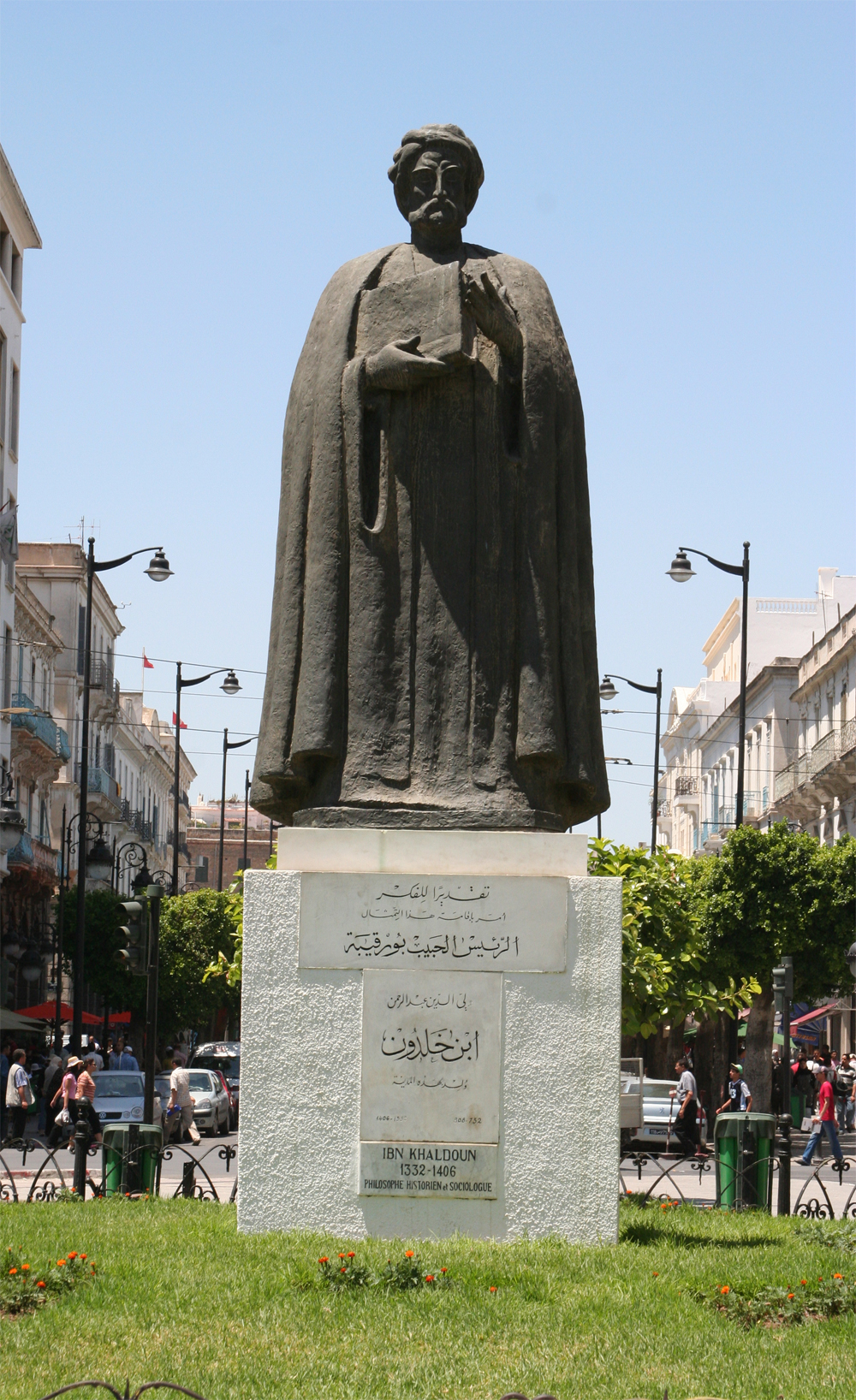
Instead, innovation was taking place on the Yucatan Peninsula and throughout the Middle East where innovative thought led to the creation of algebra (al-jabria) and fundamental social sciences. Idn Khaldun (1332-1406 AD), a great thinker of the time, is credited with the creation of the sciences of economics, the philosophy of history and the scientific method itself.

Khaldun, in his most important writing, The Muqaddimah (1377), lays out testing standards that are still used today in modern research. While Europe was studying pseudo-sciences like astronomy and alchemy, the Middle East was laying the foundation for the work of Sir Isaac Newton in moving forward the world’s body of science.

Innovation occurs during the early days of the great Greek Empire. This was a culture that valued learning and pondered the things its members saw around them. Archimedes defined “displacement” while sitting in a public bath and ran through the streets shouting, “Eureka. EUREKA!” that translates into “I found it.”

Aristotle, Plato, Socrates, Aristophanes and other great minds and great artists moved world culture forward during Greece’s Golden Age of Learning. However, de facto, innovation alone does not sustain a society. And all societies are not innovators. Some have mastered the art of imitation to create sustainable and even robust economies.

Imitation


For centuries Japanese culture demanded of its people an unquestioning acceptance of a strong social contract. The people obeyed orders. They followed instead of led. Individuality was frowned upon. “Fitting in” was woven into the fabric of Japanese society for thousands of years.


The leaders of Japan discouraged innovation and even feared it. This can be demonstrated by the strained history of Japan’s early engagement with the West. In 1853, Commodore Matthew C. Perry arrived in the land of the Shogun. The Japanese referred to these ambassadors as “hairy barbarians.” Instead of embracing the innovation engagement with the West would deliver, Japan remained a closed society until the outbreak of World War II.

After the war, the U.S. pumped billions of dollars in building new factories for the Japanese economy. The U.S. also sent its most innovative, creative minds to Japan to teach this isolationist society modern manufacturing and business development techniques. The Japanese took these assets and, in a single generation, built an economy that provides high-tech electronics, automobiles, heavy equipment and ships to a global market.

However, the Japanese continue to discourage innovation. Fitting in and not making waves is still the centerpiece of Japanese culture. Japanese universities, for example, lag in the implementation of technology on their campuses. Few universities have local access networks in place, though other innovative societies have LANs in secondary schools to encourage the exchange of information essential for innovation.

When China Rules the World: The End of the Western World and the Birth of a New Global OrderChina serves as another example of a nation that imitates rather than innovates. Prior to engagement with Europe and North America, China was a society based on a cult of personality. The Red Guard, the hope for China’s future, waved Mao’s Red Book as they marched in unison before the reviewing stands. Mao’s Great Leap Forward sent university professors to work in the rice paddies. Innovation was absent.
Today, 35 years later, China’s economy ranks just below the U.S. economy in gross domestic product (GDP) and some economists project that China will overtake the U.S. in GDP by the year 2015.

Yet, China does not innovate. It imitates. It adapts business practices employed in Western business communities. It employs technology imported from the EU and U.S. to build computers, manufacture clothing, build consumer electronics and, soon, Chinese- made cars will be sold in the U.S., adding to an already competitive market. In 2009 the U.S. government had to prop up one-time car giant, Chrysler, to prevent one of the “Big Three” auto makers from collapsing under its own weight.

A Country’s Greatness Is Defined By Innovation


China is certainly a powerful country. However, can it be called a great country?

The Chinese government discourages dissent, thus lessening the free exchange of ideas. Search engine giant, Google, no longer serves the Chinese market, pulling out after government censorship became more than Google would tolerate.

Indeed, foreign investment and foreign innovation is welcome throughout China. Many innovative companies from innovative cultures maintain a business presence in this major influence on global economics.
However, China’s government has also declared “internet addiction” to be a mental disorder and has established over 300 “re-education” camps to treat the illness called curiosity. The Chinese people follow. They don’t lead.

China’s power comes from its endless supply of low-cost labor, NOT from its learning centers or cultural centers. The cultural mores of the past remain firmly in place and the government functions in constant fear of another Tiananmen Square uprising among the people.

Countries that foster innovation will continue to grow, though at a slower rate in difficult economic times. These countries produce the tools of tomorrow while those countries that discourage innovation are destined to follow through imitation.

Both innovation and imitation have led to successful, expanding economies. However, looking back through history from an anthropologic perspective, clearly those cultures that encouraged innovation lasted longer and moved the body of world knowledge forward.

Imitation-based cultures have always lagged. They may be powerful. However, it is the fostering of innovation that makes a culture great.

This is a guest post contributed by Lisco Johnson, a history & fitness lover who owns a website offering free tips & articles on how to build muscle

Picture sources


 ©Kassus Statue d'Ibn Khaldoun sur l'avenue Habib Bourguiba à Tunis (Tunisie)

Monday, November 22, 2010

The Unseen World


In an unseen world, I believe nature is in full control and nature is clearly a phenomenon which was originally derived from the supernatural to the galactic universe. The supernatural is almost impossible to investigate outside of empirical thinking. The idea immediately caused the term “supernatural” to be placed with the context of “cults”, as many individuals may belief mystical thinking means we can control nature. Instead, nature controls us.

From: Anthropology Study: Do You Believe In The Unseen World?

Wednesday, November 3, 2010

Secondary Burials of Berawan


Western society views funerary practices of non-westerners as odd, bizarre, and unnecessary. However, let's turn the tables and see what the Berawan think is so bizarre about American funerary practices.

Berawan secondary burials involves a sort of storage, if you will, of the remnants of the deceased above ground in a longhouse or upon a platform in the cemetery. The family of the dead will store the corpse in a valuable glazed jar or the coffin left over from the first stage. The entire process usually “lasts at least eight months and sometimes for several years if the close kin cannot immediately afford to complete the expensive final stages.”

Read the full story about the Bizarre Berawan secondary burial @Friends revolution.


Tuesday, October 26, 2010

Ngangas: Who Are They and What Are They Capable Of?


Upon reading "Eyes of the Ngangas: Ethnomedicine and Power in Central African Republic", I was posed to very important questions. If you've never heard of this article, and I'm sure many of you have not, I'll clue you in to the author's background.

Dr. Arthur C Lehman has extensively researched the ngangas, who are traditional healers, acting as the source for Aka Pygmy hunters and their horticultural neighbors, the Ngando of Central African Republic. Lehman traces the mystical powers of the nganga and their ability to reduce tensions in villages, thereby punishing Ngando who have caused the hunters harm.

Monday, October 18, 2010

Monday Ground Up: Phylogenies And Evolutionary Biology in Anthropology:


Contributing author Maria Rainier

In biology, a phylogeny is the historical evolution of an organism as understood by ancestor and descendant relationships. Phylogenies help biologists plot and understand how a given organism has arrived at its present condition, giving valuable insight into the evolutionary process. By now, you're probably wondering whether or not you've arrived at the Ancient Digger page, but you're right – this is an anthropological blog. So how does evolutionary biology fit into the picture?


Cultural Phylogenies


As discussed in Wired Science, anthropologists Thomas Currie and Ruth Mace of University College in London decided to address the issue of complex society evolution with the phylogeny approach, borrowed from evolutionary biology. The evolution of post-ice age complex societies has long been a topic of fierce contention and inconclusive tests in anthropological circles, and although Currie and Mace haven't designed the perfect study, its innovative design has a lot of potential for future inquiry.


The Pacific Islands Case Study


Currie and Mace set about using cultural phylogenies to determine whether a sample of complex societies evolved and dissolved incrementally and linearly, or in a more haphazard and unpredictable fashion. They chose an area of the Pacific Islands between Madagascar and Easter Island to conduct their study, gathering information on inhabitants who lived up to 5,200 years ago. The main indicator of cultural development in this study was the bifurcation of language, which often coincided with moves from one island to the next. This led researchers to construct a solid chronological history of 84 island societies based primarily on language comparison techniques.


Findings: Steps to Progress and Leaps to Dissolution 


The patterns of political differentiation that were discovered as Currie and Mace constructed a phylogeny-inspired tree diagram were consistent with linear development. These researchers found that, by comparing their tree to computer-generated versions that mimicked both linear and nonlinear development, they could demonstrate their tree's strong similarities to the linear model. In other words, their cultural phylogeny tree showed that societies develop in small, consistent steps rather than in unpredictable leaps.

However, to complicate matters, the linear model didn't fit their data in terms of direction: not all Pacific Island societies had made consistent progress. Some had regressed, and that happened at a different pace. Societies that had dissolved were shown to have done so at an alarmingly fast rate, demonstrating that the complex society evolution debate is still in need of high-quality and innovative research to reach a resolution.

While it can be reasonably stated that these societies progressed linearly in small, consistent increments and dissolved in large regressive steps, there's no solid evidence that this was the case in all situations. The study conducted by Currie and Mace can also be criticized for its generalizations and lack of specificity in categorizing political differences. But these small faults are no reason to dismiss the conclusions of the research. In fact, it's likely that other anthropologists will adopt the cultural phylogeny strategy to map trees of societies in southern and central Africa, where well-preserved chronological language patterns would allow for lucrative comparisons and strong conclusions.

Bio: Maria Rainier is a freelance writer and blog junkie. She is currently a resident blogger at First in Education, researching various online programs and blogging about student life issues. In her spare time, she enjoys square-foot gardening, swimming, and avoiding her laptop.

Resources

Photo of Easter Island Statues: Public Domain
Haeckel tree

Sunday, October 17, 2010

Anthropological Study: Krill Oil May Change The Face Of Dietary Habits


Close to 100 years ago, humans were consuming, as well as using the Omega 3 oils as cures. Diets of children and adults consisted primarily of foods high in Omega 3, however today that’s not the case. Historically, what does this mean? It means the majority of the population is not getting the nutrients they need to survive the next 100 years. Children diets today primarily consist of chips, soda, fast food, hotdogs, macaroni and cheese, and chicken fingers. Studies have shown 86% of children are not receiving a balanced diet at school. So would an increase in Omega 3 using krill oil make a difference for these youths? Absolutely!

Upon researching krill oil as opposed to fish oil at krilloil.com, I came to an alarming discovery. First, you’re probably wondering why I was on the site in the first place and what this has to do with history? For me, I’m in the process of losing a substantial amount of weight and I also suffer from intracranial hypertension. This has been caused by years of eating foods rich in fat and tons of carbohydrates. I’ve always had an issue working fish into my diet, however my father swears by it. The history of diets and food has always fascinated me, especially considering I initially went to school to be a chef. So from an anthropological standpoint, I want to learn what people were eating years ago and why they were so much healthier than we are now.

If you are used to fish or fish oil in your diet, you may not be aware of the benefits or lack thereof you’re actually getting. Fish being raised on farms for oil is pumped with chemicals and dyes, which explains the rose or peach color of many fresh fish you see in the market. It’s completely artificial. Furthermore, most fish seen in superstores like cod, orange roughy, salmon, herring, and tuna, are filled with mercury and metal.

If you’re like me and you don’t consume fish, taking a supplement can take the place of the fish lacking in you daily diet. The issue now, however, is when I started taking fish oil pills, I had horrible pains in my lower abdomen. As soon as I stopped, the pains stopped. When I looked into krill, tiny shrimp-like crustaceans found abundantly in the pristine icy waters around the South Pole that make up the largest biomass on earth, I thought these must be more beneficial. I don’t think there’s another place on earth that’s more clean and pure than the waters of Antarctica, and this is where krill these days is coming from.

If you’re still not buying it, let me explain it to all of you that are familiar with the anatomy of the body and how we digest these oils. Krill Oil is structured in phospholipid form and NOT triglyceride form. Our bodies have a difficult time breaking down triglycerides, however the phospholipids in Krill Oil are the exact same types of fats cells in the human body. Therefore Omega 3s can directly enter your body without any additional work or conversion!

It may not be archaeology like we at Ancient Digger usually talk about, however these findings are based upon years of sociocultural history. Our diets have changed and altered out lives, and for me, I’m making a huge change in my dietary habits. Every little bit of knowledge helps.

Monday, September 27, 2010

Monday Ground Up: Characteristics Distinguishing Priests, Prophets, Shamans, and Mediums


The symbolism and structure of ritual can be a confusing subject for anyone. As a culture, if we subscribe to a particular religion, it's often hard to put our ethnocentric views in our pocket and appreciate religion for what it is. What is religion you ask?

According to the Dictionary,

"Religion is a set of beliefs concerning the cause, nature, and purpose of the universe, esp. when considered as the creation of a superhuman agency or agencies, usually involving devotional and ritual observances, and often containing a moral code governing the conduct of human affairs."

Is this accurate? Would you agree with this statement?

My goal with these questions is to access how you view the world of religion and the religious specialists guiding you through your religious path. If you have one that is. My views are based upon a recent article by Victor Turner, noted for his contributions to the study of symbolism and the structure of rituals.

Turner refers to the most commonly used terns for religious specialists, although in the case of the word "shaman", anthropologists disagree about the use of this word in different contexts.

What Are The Distinguishing Characteristics of Priests, Prophets, Shamans, and Mediums


Priest


The priest’s calling is by sacred tradition, ordained by God, and highly structured. Using published literary texts to administer sacred rites and the word, once established by their own predecessors. The enterprise of a religion governed by a priest is permanent and influences the gods, where as a prophet is distinguished by a personal calling or a message from their god. A priest is an institutional messenger, whereas his words may not be, in fact, to inspire, rather to teach or manipulate symbolic objects in view of his congregation.

Prophet


A Prophet is concerned, not so much with appeasing the gods, but with the individual (person to person). The prophet’s calling is derived from revelation and personal “charisma”.  A prophet then delivers himself as a charismatic vessel (seeking to inspire), rather than a representative (priest) of the sacred tradition (a manipulator of symbolic objects). Weber explains prophets are often rational and use a “systematic and distinctively religious ethics based upon a constant and stable doctrine which purports to be a revelation”.

Shaman


A shaman connects with the spiritual world on a face to face to basis. Shamans can alleviate traumas affecting the soul or perform curing rites for a family or individual depending on the illness. Shamanism is regarded as a type of spirit medium who can exert power or control over spirits. He can become possessed or controlled by a spirit and communicate the word of those spirits to the human world.

Medium


Shaman and Mediums are one in the same, although a spirit medium does not exert control or power over spirits, rather they are the “vessel of the transhuman identity”.  Communication is via person to person. A priest can communicate with transhuman entities (similar to a medium), although he uses objects and materials to convey this message.

What is the relationship between the scale of society & the type of religious specialist likely to be found?


Turner's methodology seeks to understand religious beliefs which seems to correspond with the nature of reality itself. Therefore the small scale community almost always represents a breaking in social norms and institutionalized religious rituals.

In this regard:

The shaman is often found in small scale multifunctional societies of food gathers (foragers), who are flexible and mobile. There’s a belief in a multitude of gods, deities, nature spirits, or ancestral shades, making a shaman a perfectly suited vessel for societies with low moral density and segmental organization. Whereas the shaman is found in small scale, loosely structured, societies, the prophet is found in diminishing large-scale societies, incapable of cross cultural relationships with small scale communities. This does, once again, represent a person who resides in a large scale society who breaks from the accepted institution to represent the small scale society. In that aspect, inspirational functionaries can reside in large scale societies.

In simple societies, there’s a tendency towards a specialization is herbal remedies, trance like states, communication with spirits, and bleeding. Therefore, many women and elders are responsible for their own religious capacity. This means, of course, we can see shamans and spirit mediums present in socially fragmented and unsophisticated societies. This can be seen in Michael Gelfand’s research with the Shona nganga, translated as “medicine man” or “witch doctor”, who is an herbalist, diviner, and medium. This exemplifies the sociocultural situation of similar practitioners in very many preliterate societies.

Priests can be found in complex and literate societies, which have the resources to support a non-working class. Not everyone has to devote themselves to getting or producing food. (Mod 2.3) In this particular setting, the individuals have the right to opt out of an affiliation with the organized religious sector. The structure is highly impersonal and includes several religious specialists, perfect example being the Catholic Church.

Consequently, this is not to say Priests cannot be found in medium scale societies who often recruit mediums, or rather they control the medium’s experience of possessions. This can be found in several West African cults. Of course you have to consider, if there are national gods, then there will be national priests, found in temples or shrines.

Final Thoughts

Religion can be viewed in different historical and social contexts, leading us to question the roles of religious specialists over the centuries. Do they have a defined status? Do they hold power, whether supernatural or personal? All these questions are interpretive, so what's your opinion?

Related Articles

In a recent Religion class, I was asked to take a quiz on the site Belief.net. The idea was to compare and contrast one of the top five and one of the bottom five religions assigned to me by the quiz. To be quite honest, I was a bit surprised at the results. I wasn’t expecting my religious beliefs to be packaged up in one perfect little box, however this site claims to do it with only 20 questions.

Belief.net Religion Quiz 

The Cro Magnon people left no written records about themselves, however they replaced the Neanderthals over 30,000 years ago. So what do we know about this prehistoric forerunner to the Homo sapiens?

The Cro Magnon Religion

In the late 14th century and after the death of Pope Gregory XI, the college of cardinals met to elect a new pope. The citizens of Rome feared the return to a French Papacy if a Frenchman were elected. Not only that, the cardinals would open themselves up to attacks if they didn’t choose an Italian.

Causes of the Great Schism

Resources

"Victor Turner." MNSU. MNSU, n.d. Web. 11 Sep 2010. .

Moro, Pamela, and James Myers. Magic, Witchcraft, and Religion. 8th ed. New York, NY: McGraw Hill, 2010. 142-148. Print.


Priest Picture
Prophet Picture
Medium Picture

Sunday, September 5, 2010

Introducing Ancient Digger's Video TellTales Week


I’m come to the conclusion-I do that often-readers want more than just articles. If you’re like me, sometimes reading a thousand word articles can be a drag when you haven’t had you’re morning coffee. Am I right or am I right?

I want to get you involved as much as possible, as my goal is to make Ancient Digger a multimedia site. What better way to see who my readers are then to start accepting travelogues and video showcases of you on location at a historical site.

Sometimes it’s easier to understand a site or aspect of history when it’s described in another fashion by a different person. Consequently, I can’t be all over the world at all times, but all of you are. This means many of you have access to sites, maybe even a couple miles away from your home.
I want to hear you’re perspectives. You don’t have to be experts. You don’t even have to put yourself on film. I do, however, want to hear some commentary.

My goal is to receive seven videos. I would like to run a new video every day for a week once a month.

Along with the video, I would like you to provide me:
  • A short bio about yourself
  • An introduction for your video
  • A link to your own website or blog
You can send this information to ancientdigger@gmail.com.

I can’t accept every video sent to me and I do apologize ahead of time. Remember I only need seven, so the sooner you can get your video sent to me the better. I may choose to use your video for a later date. If that’s the case, I’ll let you know via email.

This is something I’m trying and if it works, I would like to devote one week out of every month for your travel videos. Just remember, although the videos are about travel destinations, I still need to hear the history. Don’t give me a commercial. Make it personal!

Now you’re probably wondering what you get out of this deal. Am I right? If you said no, I thank you for your generosity. However, I would like to give you something back.

I will be devoting a page just for you. My video tour guides. Your name and a link to your site will reside there permanently, divided by month submitted and the name of your video.

For Example:

September 2010

Lauren Axelrod “Natives of Florida

Rules For Video Submission

  • Original work only.
  • Video Format needs to be compatible with Vista, Windows 7, and XP. If I can’t upload or embed your video to the site, I can’t use it.
  • No profanity in the video. Keep it friendly to all ages.
  • Please keep the commentary easy to understand.
  • Topic of the video should be about travel, archaeology, anthropology, culture, or history. You know what this site’s about, so stick to the format.
  • Length of the video must be no less than 2 minutes and no longer than 10 minutes.
  • I encourage you to film the video in English. However, if you'd like to film in your native language, I will need the translation for the video or you can add subtitles to the video itself.
  • Please do not submit videos already published to YouTube. I want originals.
  • Submit all videos to ancientdigger@gmail.com. In the subject line put "Video TellTales Week Submission".

Helpful Tips and Extras

  • If you’d like to include friends in the video or family members, it’s entirely up to you.
  • You can use music.
  • You can use a rendering service like Animoto to create your video. I use them all the time. In that aspect, they will provide you en embed code. Copy and Paste. Very easy.
  • Creativity is encouraged. So if I see you in an Indiana Jones hat with a whip, most likely I’ll love it.
  • Videos can be made in Windows Live Movie Maker, Animoto, from a video camera, Webcam, or other video software you may have.

Voting

You are more than welcome to comment on the videos once they are published, however voting will not commence until all seven videos have been posted.

To vote, just sign into the comment system and write vote under your favorite video. You will have until the end of the month to vote and you can only vote once. You can, however, encourage your friends and family to vote and comment.

On the first of the month I will announce the winner.

Rewards


The winner will receive a free Ancient Digger T-shirt, 2 Free months of advertising (banner 125 x 125 or link), and an announcement page with a link back to your site.

For all of my six runner ups, you will still receive a spot on the video tour guide page. Your name, link to your video, and a link to your site will reside there permanently.

Ladies, you can chose a shirt from these pages:


T-shirts
Tank Tops

Gentlemen, you can chose a shirt from these pages:


T-shirts Page 1
T-shirts Page 2

Important Dates:

September 11th Videos Due
September 20th Voting Starts
September 30th Voting Stops
October 1st Winner Is Announced


Please Note: This is an off week for the Monday Ground Up Edition. I'm trying to promote the new Video TellTales Week, so make sure you tell your friends and remember, September 11th will come quite soon.

If you have any further concerns or questions, please don't hesitate to use the contact form.

I'm looking forward to seeing the submissions.

Lauren Axelrod
Owner Ancient Digger

Wednesday, September 1, 2010

Florida's Native People


Image via Wikipedia

Hunter gathers arrived in Florida close to 12,000 years ago when the Florida land mass was much larger and drier. Mega fauna and mammoths were hunted in great herds and grains, nuts, and berries were gathered during seasonal roving. Spears were used to hunt and leather bags were used to cook what was captured, using hot stones. You may know these early tribes as the Paleo-Indians.

Close to 8000 years later, the ice caps started to melt and Florida became what it is today. The Native Peoples started to develop new technology, like the atlatl, a s... Read this article about Native Peoples of Florida

Wednesday, August 11, 2010

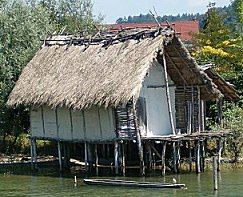
The Lake Dwellers of the Lake of Zurich and Fiave, Italy


In the winter of 1853-1854, Swiss archaeologist Ferdinand Keller examined a ghostly cluster of wood posts protruding through the top of the Lake of Zurich. A drought had lowered the water level, exposing the bizarre beams.

Were these posts the supports for lake houses centuries ago? Keller’s assessment fascinated the public, stating the homes belonged to a long lost society, or lake dwellers, of early Europeans.

The idea of prehistoric people living above the water on stilts was just as captivating to scholars as tree people. Once investigations began on western lakes in the region, eyebrows began to raise.

Scholars didn’t believe these so called “huts” were situated where Ferdinand Keller had believed. In fact, the opinion was that no houses were built on the lake on stilts, even though piles of wood were found under the water. There was a clear explanation for this, as water levels had risen since prehistoric times and submerged the homes.

Fiave, Italy Bronze Age Dwellings


An archaeological dig took place from 1974-1975 on a small island in Lake Carera in Faive, Italy. Archaeology digs unearthed several Bronze Age dwellings dating to 2000 BC. They were constructed all over the water and  on the sloping shores of Lake Carera. On dry land, the dwellings sat upon piles, the same as they do today to protect against rising waters.

Modern scientific analysis and dating have shown that the settlements were slightly different from what had been supposed earlier. Specialists now prefer to talk about ‘lake people’, who actually built on land (in marshy areas). 

At that time, between 4,300 BCE and 800 BCE, the water level in the lakes was much lower and varied from year to year. There were no platforms, only individual houses standing apart from one another. And the hundreds of poles that had led to the platform theory were, in fact, from other periods. The question as to why the lake peoples chose to live in muddy environments remains to be answered. ~EVELINA RIOUKHINA, UNECE

Also Check Out:


The Bantu speaking Baganda people created the state of Uganda from a small territory during the late 19th century, under their kabakas, or Buganda kings. The territory had little or no contact with the outside world until the middle of the 19th century, when Arab slavers penetrated the interior.

History of The Kasubi Hill Tombs of the Buganda Kings 

The Spear Masters of the Dinka Tribe of the upper Nile are a hereditary priesthood, and according to mythology, their presence is reinforced by political and religious ideals. There are several legends of the origins of these spear using masters, one in which includes a lion and a man dancing.

The Spear Masters of the Dinka Tribe 

The Cro Magnon people left no written records about themselves, however they replaced the Neanderthals over 30,000 years ago. So what do we know about this prehistoric forerunner to the Homo sapiens? Similar to the Neanderthals, they buried tools, weapons, and ornaments with their dead.


The Cro Magnon Religion


Picture Sources

Source Fiave, Italy)
Prehistoric reproduction Lake Dwelling

Like Ancient Digger? Why Not Follow Us?


Subscribe Via RSS Feed Follow Ancient Digger on Facebook Follow Ancient Digger on Twitter Subscribe to Ancient Digger Via Email

Get widget

Search


Ancient Digger Archaeology Copyright © 2015 LKart Theme is Designed by Lasantha