I'm a Buckeye at heart so I had to share. It's important to share what's going in the smaller community museums as well as the world.
The Campus Martius Museum was filled on Saturday with people wanting to learn the history of the Mid-Ohio Valley through the "Digging the Past," an archaeology-centric event.
"I am a wannabe archaeologist and I love being part of things like this," said Jerrel Anderson, of Vienna.
The retired research scientist for DuPont worked on a number of research archaeology digs in Wood County for his job and brought a number of artifacts from a couple of sites, including in the Marrtown area and near the Memorial Bridge.
Archaeologists Annette Erickson, director of Archaeology Studies at Hocking College, and Stephen House speak with amateur archaeologist Jerrel Anderson, of Vienna, on Saturday in the main room of Campus Martius Museum during the “Digging the Past” Archaeology Day.
"I will be working this summer doing an archaeological dig on Blennerhassett Island with geophysical surveys and things," Anderson said. "It is exciting and I look forward to looking through the island because I'm sure there is a treasure trove of things yet to be found."
Along with a display of colorful Flint Ridge flint, the museum also hosted flintknappers and an identification clinic from the Ohio Historical Society.
Bill Reynolds, organizer of the event and historian at the museum, said he was pleased with the event.
"We have many ages of history on display here," he said. "We have items from prehistory and objects all the way to the Civil War, which is a long span."
The prehistoric items, such as arrowheads, are as old as 9,500 years while other items include pottery that dates a little more than a century.
"This is a great program that I think we need more of in this area," said Brian Kesterson, of Parkersburg, who had an extensive display of Civil War artifacts related to the local area from his collection.
Many of Kesterson's items came from the Fort Boreman area and included bullets, buttons and other items.
"There are historic items around us every day and people should have a knowledge of what they are looking at and how to find it," Kesterson said. "Living in the Mid-Ohio Valley, many of us could find artifacts in our back yards, if we knew what we were holding in our hands."
During the event, speakers included retired Ohio Department of Transportation archaeologist Wes Clark who spoke about the Temples at Ankor Wat, Cambodia, and in Thailand; Bill Pickard with the OHS who talked about Fort Laurens, Ohio's only Revolutionary War fort; Annette G. Erickson, director of Archaeology Studies at Hocking College, who talked about being an archaeologist and opportunities within the field; and Reynolds discussed the Deming site with a study of the material culture of the New England family from 1796 through 1890.
"Everything in this museum is a part of our history," Reynolds said. "It is all around us and is part of our everyday culture; to know that there were people living here thousands of years before we were even thought of is amazing and through the items they left behind, we can get a glimpse of the daily lives of people long gone."
As Turkey’s capital, Ankara is already home to some of the country’s best hospitals. For those tasked with protecting Turkey’s heritage, however, one stands out from the others: the restoration and conservation atelier at the Ankara Museum of Foundational Works – an “old artifact hospital.”
This place is for “the healing of old artifacts,” said Özlem Erdem, one of the specialists that helps restore old artifacts from around the country. “We heal manuscripts from Turkey and even Turkish Cyprus, as well as carpets, kilims and wood artifacts and [artifacts] that are returned to the country after being smuggled abroad.”
Ultimately, the atelier helps clean and preserve Turkey’s ancient heritage for subsequent generations.
Artifacts in the atelier are first documented and photographed before being strengthened according to need, Erdem said. “We complete the work with proper materials and methods and prepare them for exhibition.”
The restoration specialist said many important artifacts from Kütahya, Antalya, Cyprus, Sivas, İzmir, Gaziantep and Kastamonu were undergoing restoration in the atelier, adding that the wood carving works of the Diviriği Ulu Mosque, which is included on the UNESCO World Heritage List, were restored at the atelier.
Erdem is one of the restorers, along with Derya Şan and Ceyda Cüceloğlu.
Foundations Ankara Regional Director Aslan Yıldız said they were proud of having such an atelier to keep historical artifacts alive.
“We can restore all types of historical products here. In this way, we make a big contribution to the budget of the General Directorate of Foundations. We don’t procure services from anywhere else; we restore everything in our own atelier,” Yıldız said.
Yıldız said the establishment of a wider atelier was very important for Turkey because the country is very rich in terms of historic artifacts.
He also said the atelier had acquired a new washing tube for carpets and kilims that can be converted into a desk.
The Ankara Museum of Foundations Works features various examples of carpets collected from all around the country, as well as many other historical pieces. The museum building served as a law school from 1928 to 1941. In 2004, the building was restored to serve as a museum.
Paintings restored in Istanbul lab
Earlier this year in March, Türkiye İş Bankası opened the first painting conservation and restoration laboratory in Turkey as part of Mimar Sinan University with the aim of both supporting art and painting and conserving the country’s cultural heritage.
While the laboratory serves as a scientific base for the conservation and restoration of paintings, it is also becoming a base to raise professional restorers, according to cultural officials.
Weeks after a 15-20 feet pit was dug up inside the Mecca Masjid complex for building a water tank and local complaints of how it has become an eyesore, the Department of Archaeology and Museums (DAM) which protects the structure, said it has not given any permission.
Any excavation at the Mecca Masjid needs permission of DAM while the Archeological Survey of India which protects Charminar does not usually allow any construction near 300 meters of the historic structure. It has recently issued notices to several groups after finding constructions taking place without permission.
"We will depute an officer tomorrow to check the status of this excavation and will take appropriate action," GV Ramakrishna, director of DAM told TOI, when asked about the dug-up pit at the masjid.
Authorities are building a sump with a capacity of five lakh litres at an estimated cost of Rs 35 lakh to cater to the routine maintenance of the mosque and needs of worshippers. The need for water at the mosque remains critical which was not addressed due to technical problems and the recent spate of communal incidents.
Surprised observers including heritage activists pointed out that despite the plans for the sump being drawn a year ago and execution work starting in September this year, the DAM still remains either indifferent to development activity in the mosque or has been caught napping while cranes and bulldozers are clearing soil and boulders near the proposed tank area.
Officials of the HMWS&SB had no answers when they were asked if they sought permission from DAM but pushed the blame on the roads and buildings department. "We are not certain if permission has been sought from the archaeology department. This is because the work was allotted to us when the R&B department had failed to take it up," an official from the HMWS&SB said, on the request of anonymity.
The official added that he would have to sift through documents to check if DAM's permission was sought in the first place.
After excavation, a concrete bed would be laid which would be followed by laying a steel base for reinforcement.
Meanwhile, chemical conservation of the Mecca Masjid has resumed with fungus, moss and lichen being removed from the maqbara. The marble lattices will also be cleaned using preservatives. According to deputy director Trimurthy Raju, the maintenance work is supposed to be completed by December 20.
"Around 3,600 square metres of the monument will be chemically cleaned. The delay is on account of the more than 100 feet height of the facade and walls. Further, it is required that we carry out work carefully and not at breakneck speed," he said.
Times View
It is surprising that officials of the Department of Archaeology and Museums (DAM) and Archaeological Survey of India ( ASI) were completely in the dark about the dug-up pit inside Mecca Masjid even after weeks of work. The monuments in the Old City, especially the Charminar are not just structures of brick and mortar but entities which narrate true tales of events which have shaped the city and the country and should be protected in a much more serious manner. Authorities should carry out regular trainings of staff on protection of such monuments.
It was the skeletons that apparently had four legs or three arms that startled the archaeologists, not the mere fact of finding masses of human bones in the back yard of one of London's most famous teaching hospitals.
In 2006 archaeologists from Museum of London Archaeology stumbled on evidence of a grim chapter in the history of the London Hospital and other hospital – the decades when the corpses of executed criminals were the only legal source of bodies to teach surgeons anatomy. In the early 19th century there was a problem: the number of crimes meriting a death sentence fell sharply. The gap was filled by corpses dug up by grave robbers, or in the case of the London Hospital the unfortunate poor who died in its wards, and in the most infamous cases by murder.
In the 19th century the London Hospital had had a burial ground, neatly marked on later maps, but the archaeologists were digging in unmarked ground where there was no record of burials. The bones had been neatly buried in long since rotted coffins, in the Christian east-west alignment, but they were a bizarre jumble of skulls with the crowns neatly cut through like the top of a hard boiled egg, bones wired for teaching, or bones clearly dissected rather than cut through in operations, and animal bones including dogs, tortoises and a guinea pig.
Altogether they uncovered 262 burials, but in the confusion of different remains in the same coffin, layers of burials which had slumped down together into the ground, and many missing skulls, hands and feet, they may have found the remains of up to 500 individuals.
It took the archaeologists years of poring over hospital records – those for the London on either side of a crucial date, the Anatomy Act of 1832, were missing – and contemporary newspaper accounts, pamphlets, medical and social history collections, even ballads and broadsheets, to understand what they had found. The site was a covert burial ground where the unfortunates who died in the hospital, having been dissected illegally in the adjoining anatomy school, were buried by night.
The excavation has inspired the new exhibition at the Museum of London, as gruesome as any Halloween horror film.
The terror inspired by grave robbers is vividly reflected in objects such as an extraordinary patented locking iron coffin, from the vaults of St Bride's church, designed so that once it was closed it was almost impossible to open again. Few were wealthy enough to afford such protection.
The exhibition includes some of the bones found at the London, and also remains of grave robbers who themselves ended by being executed and handed over to the medical schools. There is a fragment of the brain of William Burke, partner of William Hare – the legendary Edinburgh grave robbers who turned to murder to obtain bodies more conveniently. There is also tattooed skin of either Thomas Williams or John Bishop, whose case was even more notorious in London. The case of "the Italian boy" – probably a poor young cattle herder whom they captured at Smithfield – provoked such outrage that it helped bring about the Anatomy Act which ensured a supply of legal bodies. This introduced a new terror for the poor who knew that if they died in hospital and their families could not afford to claim and bury them, the anatomists would have them.
In the 1820s the London Hospital's surgeons would have regarded themselves as fortunate. They did not need to buy from the body snatchers. Enough of their patients died, including previously healthy strong men in the prime of life injured on ships or at the nearby docks, far from home and unclaimed, to provide them with a ready supply.
The hospital evidently had so many bodies that they were able to sell the surplus to other hospitals, but their own burial ground was targeted by body snatchers. In 1823 the prison governor, William Valentine, reported that patients were woken by strange sounds in the night, and saw men trying to dig up a body buried immediately below their ward windows: the terrified patients raised enough uproar to frighten off the grave robbers.
In 1832 one of the most intriguing characters in the story, a man called William Millard, was arrested in the burial ground. He was charged with vagrancy – since he had not actually got around to digging up any bodies – and eventually died in prison. His enraged wife Anne was a formidable character who petitioned parliament, and not only published a pamphlet called "An account of the circumstances attending the imprisonment and death of the late Mr William Millard" but bought a printing press to do so. She continued to insist after his death what he claimed in life, that he was not a grave robber but had been transporting bodies with the tacit sanction of the hospital. Millard, it seems, may not have come to dig up a body, but to collect one from the back door.
The Crossrail archaeology programme has now reached its half-way point with several valuable discoveries going on display in Westminster.
Rare and priceless finds giving a glimpse of London life through the ages will be shown on Saturday (7) from 10am to 5pm at the Music Room at Grays Antiques, South Molton Lane.
The programme began in 2009 with archaeologists beginning their investigations at Tottenham Court Road, where they excavated the former Crosse and Blackwell factory site.
Since then, they have uncovered finds dating from prehistoric times to the industrial revolution, including Roman artefacts, medieval ceramic wig curlers and more.
Jay Carver, Crossrail's lead archaeologist, said: "Over the past few years we have worked in a range of challenging and constrained sites including busy London streets and abandoned wharves along the Thames.
"This exhibition consists of a selection of our oldest, rarest and most peculiar finds. It will show visitors how life has changed in the capital as well as helping people to understand how archaeologists plan and execute digs."
Eastbourne Terrace at Paddington will be one of the next sites to be studied later this year.
All items uncovered will be donated to the Museum of London or to the Natural History Museum.
Governor Rick Scott caused quite a stir when he questioned the value of an anthropology major. His point was, with rising college costs and weak employment, students might be better off with a major that could land them a job. Not to mention that our tax dollars would be better spent in public education that's relevant to the times.
James Marquez, a White Mountain Apache and board director for MACT — a nonprofit providing services to Indians in Mariposa, Amador, Calaveras and Tuolomne counties — says his organization has both a building and a “pretty spectacular collection” of 250 Indian-made baskets and other cultural artifacts. Recognizing the enormous challenges and myriad details involved in developing, operating and curating a full-blown museum, however, he and his fellow board members are “trying to figure out whether to take the next step” into serious fundraising.
A recently discovered mysterious "winged" structure in England, which in the Roman period may have been used as a temple, presents a puzzle for archaeologists, who say the building has no known parallels.
A silver-gilt Roman cavalry helmet of international importance has been pieced together at the British Museum, from thousands of fragments of corroded metal lifted in a block of mud from a Leicestershire hillside more than 10 years ago.
The Harappan Civilization was spread over large parts of western region of the Indian Subcontinent. Its earliest roots can be found from 7000 BC in Mehrgarh but its peak urban period is around 2500 to 1900 BC.
Mexican archaeologists have discovered in the southern part of the country a kiln used by the ancient Zapotecs to make ceramics more than 1,300 years ago, the National Anthropology and History Institute, or INAH, said.
Any doubts about the existence of mass graves at the Treblinka death camp in Poland are being laid to rest by the first survey of the site using tools that see below the ground, writes forensic archaeologist Caroline Sturdy Colls.
The remains of the first HMS Victory are to be raised from the sea bed nearly 300 years after it sank, it was reported today. The vessel, predecessor of Nelson's famous flagship, went down in a storm off the Channel Islands in 1744, taking more than 1,000 soldiers to their deaths.
In the dark depths of an underwater cave in eastern Mexico, archaeologists uncovered the ancient remains of four prehistoric bears in the Yucatan Peninsula. Officials believe they could date back to the ice age.
The Mithras temple is being dismantled by a team from the Museum of London and will be rebuilt on its original site 90 metres away. One Saturday afternoon in September 1954, a handsome, faintly smiling god looked up from the London mud. His name was Mithras, and the rediscovered Roman temple to his cult became a sensation in a gloomy postwar capital pitted with bombsites and still recovering from rationing.
A group of amateur archaeologists working under the guidance of professional archaeologists discovered eight 6th century gold coins in a potato field near Biesenbrow in Uckermark, northeast Germany, last November.
Theresa McDonald, Managing Director of the Achill Archaeological Field School, voiced her objections over the Achill-Henge structure which was built at Pollagh (Achill Island, County Mayo, Ireland) in November by Joe McNamara. The archaeologist believes that a prehistoric site could be less than half a kilometer from where Achill-Henge is now standing.
‘Seeing beneath Stonehenge’ has been developed as part of the Stonehenge Riverside Project, using data gather by the combined team from the Universities of Sheffield, Manchester, Bristol, Southampton and London.
The horrors of tunnel warfare are key to Sebastian Faulks's first world war novel, Birdsong. Much of the action is set beneath no man's land in a terrifying world where soldiers dug, listened for the enemy and laid explosives in the hope of helping their compatriots above ground.
Department of Archaeology and Heritage in Umm Al Qaiwain has announced new discoveries at al-Dur archaeological site, north eastern of the emirate.
Archaeologists will carry out a three-week excavation at Birley Fields in Hulme before a new university campus is built on the land.One aim of the project is to find remains of a farm that could date back to the late Medieval period – thought to be the first time people lived in the area.
It is the only tomb of a woman not related to the ancient royal families ever found in the valley, said Mansour Boraiq, the senior official at the Antiquities Ministry in Luxor.
The Field Museum plans a rare display of mummies from its own collection, many of which haven't been seen by the public since the World's Columbian Exposition held in Chicago in 1893.
The complete H.L. Hunley was unveiled in South Carolina after a decade of conservation work that has kept most of it hidden from view. In 1864, the Confederate submarine torpedoed the Union warship Housatonic, but then sank, killing its crew of eight. “The submarine was a perfect time capsule of everything inside,” said archaeologist Ben Rennison.
Archaeologists are investigating the site of a future Irish Cultural Museum, which will be built in the French Quarter of New Orleans.
The Northern Tutchone people did not become dependent upon Fort Selkirk, a fur trading post in the Yukon, according to research conducted by Victoria Castillo of Yukon College and the University of Alberta. She found few First Nation artifacts at the fort, indicating that not much trade took place.
The contents of a bathroom dating to the late 1850s have been removed from Dunleith Plantation in Natchez, Mississippi, and will be reassembled in a Greek Revival mansion in Natchez National Historical Park. Jeff Mansell of the National Park Service says that there are fewer than 20 such bathrooms left in the country.
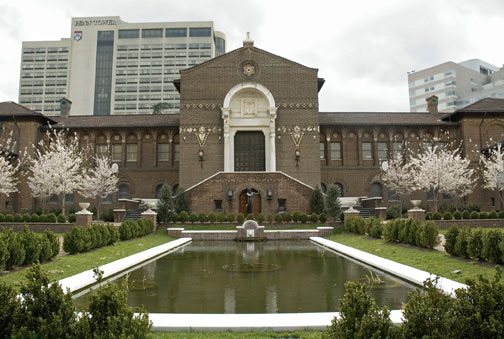
The University of Pennsylvania Museum of Archaeology and Anthropology on the Penn campus in Philadelphia dates its official founding to December 6, 1887. On that date, the Trustees of the University of Pennsylvania resolved to send “an exploring expedition to Babylonia”—with the stipulation that the University would build “suitable accommodations” to house any artifacts that the first expedition team, and others, would bring back.
A400-year-old metallurgical furnace and irons for printing cylinder seals, discovered in Russia for the first time, are unique finds for Russian archaeologists in 2011. Archaeologists are convinced that these artifacts, which help us to understand life in Russia in the olden days, are interesting to everyone and not only to experts.
When two hikers came across a human corpse in the Ötztal Alps 20 years ago, speculation raged over the age of the body, and the life and death of the man who became known as Ötzi – the name coined by an Austrian journalist. The oldest, most well-preserved, frozen Neolithic mummy soon became a world sensation. Francesca Vella recently visited the special exhibition ‘Ötzi20 – Life. Science. Fiction. Reality’ at the South Tyrol Museum of Archaeology in Bolzano, Italy, which was set up to mark the 20th anniversary of the discovery and which has been extended by a year
A Roman coin that was probably used by a lustful legionary has washed up on the banks of the Thames. Made from bronze and smaller than a ten pence piece, the coin depicts a man and a woman engaged in an intimate act.
"Before, China had a large number of valuable ancient tombs and although it was really depressing to see a tomb raided, it was still possible to run into a similar one in the future, said Professor Wei Zheng, an archaeologist at Peking University. "Nowadays too many have been destroyed. Once one is raided, It is really difficult to find a similar one.
Jerusalem archaeologist Gabriel Barkay announced this week that the Temple Mount Sifting Project has discovered a fragment of a seventh-century B.C.E. clay bulla impressed with the ancient Hebrew inscription [g]b’n lmlk, or “Gibeon, for the king.”
Two teams of Michigan State University researchers -- one working at a medieval burial site in Albania, the other at a DNA lab in East Lansing -- have shown how modern science can unlock the mysteries of the past. The scientists are the first to confirm the existence of brucellosis, an infectious disease still prevalent today, in ancient skeletal remains.
The Bulgarian Government is to give 120 000 leva (about 60 000 euro) each to 14 archaeology sites along the country’s Black Sea coast for "preliminary research" into archaeological sites, it was announced on January 4 2012.
The discovery of a Stone Age temple on Orkneylooks set to rewrite the archaeological records of ancient Britain with evidence emerging it was built centuries before Stonehenge.
One hundred forty-six years ago today, a violent storm lashed the Tampa Bay area, imperiling two U.S. Navy warships — tugboats with cannons — that had seen Civil War action in the Gulf of Mexico and were headed for peacetime duty after the war ended. One survived the storm. The other, the USS Narcissus, which had participated in the Battle of Mobile Bay, been sunk and refloated, did not. It ran aground on a shoal northwest of Egmont Key and sank in 15 feet of water after its boiler exploded. No one survived.
The Campus Martius Museum located at 601 Second St., Marietta, is inviting kids and adults to come in an learn about archaeology. On January 21, Participants will take part in an artifact identification clinic, lectures, and flint knapping demonstrations. The Marietta College Geology Club will also be showing fossils and dinosaur collections throughout the day, and private collections of historic and prehistoric artifacts will also be on display.
If you're in the area on January 21, check out the schedule at the Campus Martius Museum:
11-noon: Jerry Anderson, archaeologist for the Blennerhassett Historical Foundation, will speak on early archaic people of the Ohio Valley.
1-2 p.m.: William Picard, archaeologist for The Ohio Historical Society, will speak on recent discoveries at Pickawillany, a native village and trading post circa 1750.
2-3 p.m.: Doug Angeloni and Tom Hornbrook will speak on record keeping of historic materials from the Great Trail in the Tuscarawas Valley.
Cost
Admission is $7 for adults, $4 for students and free for children 5 and younger. For more information or if you would like your artifacts displayed, contact Bill Reynolds at 740-373-3750.
The Ministry of Communications and Works, Department of Antiquities, announces the completion of a short season of archaeological investigation conducted by the Department of History and Archaeology of the Aristotle University of Thessaloniki (AUT) at the pre-Neolithic site of Vretsia-Roudias in the Troodos mountains (Pafos District). The project is carried out under the direction of Prof. Nikolaos Efstratiou.
When it's 3,000 B.C. and your drinking water comes from the crocodile-filled Nile River, a brewed beverage can be a form of health food. That's why the ancient Egyptians got so good at making beer. Modern Milwaukeeans can learn the Egyptians' brewing secrets at a special Discovery World workshop at 6 p.m. Thursday called: "Ale through the Ages: The Anthropology & Archaeology of Brewing."
They are the jewels in Norfolk’s crown, attracting thousands of visitors every year. However, a debate has begun into exactly how Norfolk’s museums should be managed – as well as by whom – with the final decision likely to impact the way they are run for years to come. With the Norfolk Joint Museums and Archaeology Committee, made up of county, city and district councillors set to discuss the recommendation when they meet on Friday, January 13, today the EDP looks at both sides of the important issue.
The National Historic Preservation Act (NHPA) of 1966, as amended, is Federal legislation developed to ensure that our Nation's historical and archaeological properties are not lost through neglect or inadvertently damaged by activities permitted or funded by Federal agencies. Specifically, BOEM and BSEE, as Federal bureaus, are required under Section 106 of the Act to institute procedures to assure that Federal plans and programs contribute to the preservation and enhancement of non-federally owned sites, structures and objects of historical, architectural or archaeological significance.Archaeological sites on the OCS are most likely to be either prehistoric Native American sites dating from the time at the end of the last Ice Age when sea levels were about 200 feet lower then they are today, or historic shipwrecks.
A tsunami-damaged ancient Hawaiian stone platform used for worship has been restored. Ahuena Heiau, Inc. is a nonprofit organization of volunteers from West Hawaii serving as primary caretakers of the heiau. The group says the year-long effort to restore the heiau in Kailua-Kona on the Big Island involved 3,000 hours of volunteer service. The heiau is on the grounds of King Kamehameha's Kona Beach Hotel, which suffered damage from the tsunami triggered by the March 11 earthquake in Japan. The heiau is also on the national and state registers of historic places. Many believe it to be one of the most culturally significant sites in Hawaii. The project was funded in part by the Hawaii Tourism Authority.
There's a big controversy over a landfill scheduled to open in the new year, near one of Italy's most treasured sites, Hadrian's Villa, where a legendary emperor lived more than 18 hundred years ago. Many Romans are upset that tons of waste could be buried so close to the historic complex, and about the odors and pollution the waste could generate.
The College of Central Florida's enrollment boom has proven a boon for students interested in archaeology. Two new courses have been added, including a popular field study option. Last spring, adjunct professor Willet Boyer III submitted a proposal to the curriculum committee to expand the archaeology/anthropology program from a pair of introductory classes to a quartet of courses.
AN archaeologist who has helped promote an historic South Tyneside attraction has been honoured with an OBE. Paul Bidwell has led significant excavations at Arbeia Roman fort in Baring Street, South Shields. Mr Bidwell, who has lived in North Shields for the last 10 years, also wrote the standard guide to the site. He and his team were honoured when the fort took the title of Best Archaeological Research Project, at the 2009 Current Archaeology Awards.
Hannah Simpson, pictured, 22, from Hedge End, was given the Jack Parsons prize for local studies research as she picked up her degree from Bournemouth University, where she achieved first class honours in her BSc archaeological and forensic sciences course. Her undergraduate thesis studied the Cluniac monastery, which she discovered, in the small parish of East Holme, Dorset. It was founded around 1107 but fell into disrepair and was slowly forgotten and dismantled, and its exact location had been lost for more than 250 years until Hannah rediscovered it in 2008 using near surface geophysics. The work won Hannah an academic scholarship for a postgraduate thesis, for which she is now researching and surveying the Roman villas of Dorset. She said: “I am very proud that my hard work has been acknowledged.”
Those with an interest in Flagler County history and the rich historical traditions in St. Augustine have a lot to choose from in the coming month. Charles "Bub" Robson will give a presentation on his experience as a law enforcement officer in Flagler County from 1967 to 1990. Robson is a 1960 graduate of Bunnell High School. The U.S. Navy veteran also had a 37-year career in law enforcement with the Bunnell Police Department -- serving as chief from 1975-1978 and again from 1981-1984 -- as well as chief of the Flagler Beach Police Department from 1985 to 1990. He also had stints with the Flagler County Sheriff's Office and the Ormond Beach Police Department.
The Department of History and Archaeology of the Aristotle University of Thessaloniki conducted an archaeological project at the pre-Neolithic site of Vretsia-Roudias in the Pafos district of Cyprus. Under the direction of Professor Nikolaos Efstratiou, the team discovered important findings about the island of Cyprus during the end of the Pleistocene and beginnings of the Holocene period.
n 2009, during the excavations to install new storm sewers along Ohio 4 in downtown Bucyrus, a segment of a historic corduroy road was discovered. Corduroy roads were normally constructed by placing rows of logs across the width of the road. These were called the tread logs and were often laid across stringer logs which were positioned parallel to the direction of the road. Although quite bumpy to travel, a corduroy road was considered to be a great improvement when compared to the problems that a wagon mired in mud would present.
In late July and early August 2011, a team of almost one hundred enthusiastic volunteers from Boston in Lincolnshire got a once-in-a-lifetime opportunity to excavate within the town’s historic market place.
More than 500 years ago, the now-desolate Inka city of Huánuco Pampa, located high up in the Andes Mountains in Peru, periodically bustled with tens of thousands of people. But despite its large palace, temples, and public halls, the city was home to only a few hundred year-round guards, administrators, and religious specialists who prepared the massive complex for religious and political festivals that attracted swells of visitors from the surrounding area. A selection of findings from one of the most ambitious archaeological excavations of this unique type of urban center are published in a book recently released by the late Craig Morris, a former curator of South American archaeology and dean of science at the American Museum of Natural History, and his colleagues, R. Alan Covey, an associate professor of anthropology at Dartmouth College, and archaeologist Pat Stein.
The European Museum of the Year Award (EMYA) was established in 1977 under the auspices of the European Museum Forum within the framework of the Council of Europe. It was founded by Kenneth Hudson. This year, the coveted nomination has gone to the Archaeological Museum of Ioannina, which is located in Litharitsa Park in the centre of Ioannina, Greece.
The award, which seeks to promote innovative museum practices and quality services to visitors on a national and European level, will be announced in a special ceremony in Penafiel, Portugal, on May 19, 2012.
The Archaeological Museum of Ioannina showcases exhibits with a wide time- span, ranging from the first appearance of humans in Epirus during the Lower Paleolithic era, to late Roman times. In addition, artifacts from the Dodoni sanctuary feature prominently in its collections. If the Ioannina museum wins, it will not be the first time a Greek museum is awarded; the Peloponnesian Folklore Foundation - Museum in Nafplio was bestowed the EMYA in 1981 while the Museum of Byzantine Culture in Thessaloniki received the Council of Europe Museum Prize in 2005.
The former bassist for rock'n'roll's most legendary band is anything but retired.
A rolling stone, to coin a phrase, gathers no moss--it’s certainly true of Bill Wyman. The renowned bassist and original member of rock’s most enduring band no longer tours with the Stones, partly because he has interests that extend beyond pop stardom: He’s an amateur archaeologist, author, restaurateur, inventor, and wicked table tennis player.
Understanding underground Jerusalem
Experts and hundreds of visitors attended the 12th annual City of David Archaeology Conference dedicated to research on Jerusalem and the city of David.
Smugglers rob KP of archaeological wealth
Recently, a probe team, headed by Museums and Archaeology Director Nidaullah Sehrai and comprising members of Tourism Corporation Khyber Pakhtunkhwa (TCKP) and archaeology department officials, visited various archaeological sites in Mardan and Swabi districts to substantiate reports that relic hunters were engaged in unlawful digging at Gandharan Buddhist sites in these antiquity rich districts.
Petrified Forest National Park Expands by 26,000 Acres
The federal government is gaining control over an even larger expanse of rainbow-colored petrified wood, fossils from the dawning age of dinosaurs and petroglyphs left by American Indian tribes who once lived in eastern Arizona.
Georgian architecture: examples from the era
The Georgian era reveled in the classical form, applying it liberally to terraces, bridges and crescents
Lanyon vault baffles experts
The 2sqm brick vault, hidden for decades, was recently uncovered by gardeners clearing a thick tangle of vines.The materials for the bricks and mortar structure are thought to have been sourced locally and resemble other brickwork on the site dating from the 1800s.
Exhibition marks end of archaeology stint
SHEFFIELD photographic artist Bill Bevan is marking the end of his residency at the University of Sheffield’s Department of Archaeology with an exhibition entitled Diggers.
Experts hail Pictish royal monastery find
AERIAL photographs showing a faint line in fields around a village in Highland Perthshire have mystified archaeologists for decades. Crop marks in the village of Fortingall, famous for its 5,000-year-old yew tree, seem to indicate an ancient boundary long since buried and forgotten.
History brought to life as Battle of Marathon re-enacted
BUILDING work on a new village hall for Holy Island is finally about to start - nearly a decade since the project was first mooted. Hall trustees have had to jump numerous hurdles to reach this stage, not least the archaeological concerns which have taken eight years to overcome.
The Directorate of Archaeology and Museums, Khyber Pakhtunkhwa, in collaboration with Tourism Corporation will hold a four-day international historical coins exhibition from September 27 at Gor Gathri Archaeological Complex.
Lewis Moody: I always wanted to be an archaeologist - I think I watched too many Indiana Jones films!
The unlikely interest that engages your curiosity… Archaeology. As a boy I’d spend hours digging holes in our garden and get really buzzed finding clay pipes and old bottles. I watch Time Team with Tony Robinson religiously.
Lee University Contributes To Archaeology Dig
This summer Lee University faculty, students and alumni participated in a rare archaeological excavation. The field work included exploring a Central Western Colorado rock shelter and compiling documentation of Native American rock art.
Malla-era archaeological marvel retrieved after two years
KATHMANDU: Art lovers and historians have something to cheer about, for the country has got back one of its lost treasures — a beautiful idol of Laxmi-Narayan dating to the 1640s — which ‘vanished’ during the renovation of the Sundari Chowk, a part of the Patan Durbar, on November 5, 2009.
Va history museum curator to study tavern food
The curator of archaeology at the Virginia Museum of Natural History in Martinsville is studying the food eaten by guests visiting an 18th century tavern. Elizabeth Moore will study the Golden Ball Tavern in Petersburg. It served as an important meeting venue for America's founding fathers and later British officers during the American Revolution.
Forgotten archaeological gems: The ancient turquoise mines of South Sinai
Rock inscriptions left by ancient Egyptian miners in South Sinai are rich with details of working conditions and weather, as well as praise for the pharaoh and the gods. They present a lively narrative of daily life that can be easily compared to modern business reports, or even a diary.
The Last 3 Million Years at a Snail's Pace: A Tiny Trapdoor Opens a New Way to Date the Past
Scientists at the University of York, using an 'amino acid time capsule', have led the largest ever programme to date the British Quaternary period, stretching back nearly three million years.
England's western-most Roman town uncovered
The discovery of 100 Roman coins by local men using metal detectors has led archaeologists to England’s western-most Roman town. “It is the beginning of a process that promises to transform our understanding of the Roman invasion and occupation of Devon,” said Sam Moorhead of the British Museum.
E. Africa grasslands influenced human evolution: study
A new study suggests that open grasslands dominated East Africa for six million years, influencing the evolution of human ancestors. It had been thought that the region was forested up until two million years ago. “This study shows that during the development of bipedalism – about four million years ago – open conditions were present and even predominant,” said Thure Cerling of the University of Utah.
University to uncover cistern below campus
The Cibali Cistern is located near Istanbul’s Golden Horn, beneath the campus of Kadir Has University. The university wants to restore the cistern, which was built in the eleventh century with columns taken from other structures.
Capt. Morgan's lost fleet found?
Archaeologists and divers from Texas State University have found a seventeenth-century wooden ship, or what could be traces of privateer Captain Henry Morgan’s five lost vessels at the mouth of Panama’s Chagres River.
Archaeologists Use a Hacked Kinect To Create 3-D Scans of Dig Sites
Archaeological digs are a painstaking process even after the earth has been excavated — artifacts must be carefully catalogued so researchers know exactly where they were found, which tells information about their past. On an upcoming dig in Jordan, a modified Kinect could serve as a 3-D scanner, making this process simpler — and decidedly more high-tech.
Beer and wine archaeologist studies ancient, revealing stains
Archaeologist Patrick McGovern discovers details about ancient cultures -- their trade routes, agricultural practices and more -- by chemically analyzing stains on pot shards, a specialty he innovated, according to a recent Smithsonian profile.
UDOT Archaeologists Transport the Public Through the Past and the Future
The Utah Department of Transportation (UDOT) is nearing successful completion of archaeological fieldwork on a portion of Southern Utah’s newest road following a rare firsthand view of archaeology-in-action by the public two months ago.
DORCHESTER: Builders working with local archaeologist
The town's heritage is extremely important and due to the potential archaeological sensitivities of the site, Cowlin has appointed Wessex Archaeology to ensure this important development receives the specialist attention it needs.
Museum, archaeological site looks for volunteers
The Deer Valley Rock Art Center, an archaeology museum in northwest Phoenix, is inviting individuals to a new volunteer orientation 9 to 11 a.m. Saturday, Sept. 17. Learn about Phoenix's rock art site, and explore opportunities to meet new people, share talents, and engage the community in the preservation of the past.
Dagestan archaeologists share their recent successes
Dagestan Scientific Center of the Russian Academy of Sciences held a meeting with participation of journalists and archaeologists, devoted to the Archaeologists’ Day, celebrated on August 15. The event was attended by the deputy director for research work of the Institute of History, Archaeology and Ethnography DSC RAS, Doctor of Historical Sciences Omar Davudov and the leading researcher DSC RAS Ludmila Hmyrya.
WEYMOUTH: Visitors are 'Diggin' the Museum'
VISITORS had a chance to join a garden “excavation” when Portland Museum held a hands-on archaeology day. Diggin' the Museum included a series of holes being dug in the garden to see what archaeology could be found in the museum's own grounds.
Spain’s Guardia Civil seized more than 9,000 antiquities and arrested in the Mediterranean region of Valencia 12 people who dedicated themselves to looting archaeological sites using metal detectors.
Last week of summer finals and the archaeology headlines are rolling in. While you’re reading the archaeology news for the day, I’ll be catching up on the Medieval torture weapons used on those who dared challenge the party line of local government authorities or the church with “abnormal” gender behavior. Sex and Gender class is a hoot!
Archaeological bicycling tour begins at Fort Pickens
The Destination Archaeology Resource Center (DARC) and the Gulf Island National Seashore will launch a new program, “Tour de Fort,” on Saturday, Aug. 27. “Tour de Fort” is a bicycling tour of the archaeological sites along the Florida National Scenic Trail near Fort Pickens as part of the national campaign “Let’s Move Outside!”
Tomb of Jesus' Apostle Found In Turkey?
The tomb of Saint Philip, one of the 12 apostles of Jesus Christ, might have been unearthed in southwestern Turkey, according to Italian archaeologists who have been excavating the area for decades.
Project to map ancient landscape of England may reveal burial grounds under your house
The School of Archaeology at the University of Oxford is to compile a map of prehistoric England for the first time.
Sign of Advancing Society? An Organized War Effort
Some archaeologists have painted primitive societies as relatively peaceful, implying that war is a reprehensible modern deviation. Others have seen war as the midwife of the first states that arose as human population increased and more complex social structures emerged to coordinate activities.
Ancient Anasazi site excavated along new highway route
Archaeologists working with the Utah Department of Transportation are nearing completion of the excavation of a significant archaeological site outside of St. George. Five Virgin Anasazi habitations at one of the sites located within the new Southern Parkway corridor have been found, including one which may have been built as early as 2,000 years ago.
Agency archaeology: Dig near Absarokee reveals Crow history
For nine years, from 1875 to 1884, the Crow tribe set down roots even as it grappled with a new way of life and a shrinking homeland. Shifting from a nomadic existence to a sedentary, agricultural one, tribal members battled disease and wrestled with the loss of their main food source, the buffalo.
Prince Charles visits Nybster broch in Caithness
Archaeologists and volunteers have been uncovering the remains of the stone roundhouse that could date back to 700 to 500 BC at Nybster in Caithness. Prince Charles stopped off at the site and visited Caithness General Hospital in Wick on a tour of the far north.
Archaeologist confirms 2,000-year-old relics safe in Phuket
The Thaland National Museum in Phuket, Thailand responds to allegations that beads excavated in 2005 are missing – they were taken off the display stands for research.
Two partially mummified bodies discovered at Mexico’s Giant’s Cave
Two partially mummified bodies were discovered at the burial ground located in Mexico’s Giant’s Cave. The remains are thought to be between 800 and 1,000 years old.
Archaeology Headlines From Archaeology Magazine
The York Archaeological Trust continues to study the skeletons unearthed between 2004 and 2005 at Driffield Terrace. “Arguments continue as to whether they were trained fighters, soldiers who died in battle, whether they were executed or whether the unusual aspects of their burial reflect a group with unusual religious views,” explained Sarah Maltby.
Here’s some information on Delphi and its oracle from the Greek newspaper E Kathimerini.
England’s “Portal to the Past” project will compile all available data into a digital archive of maps and information from the Bronze Age through 1086. “We hope this project will provide an in-depth analysis of the whole of England, so we can glean new insights into how the landscape has changed and developed,” said Chris Gosden of the University of Oxford.
Archaeologists from the University of South Alabama have surveyed the Old Federal Road, which connected Augusta, Georgia, to Mobile, Alabama, 200 years ago.
The fossilized skull of a 20 million-year-old primate, Ugandapithecus major, has been found in Uganda.
South Africa’s Pinnacle Point was the home to a few surviving Homo sapiens between 164,000 and 120,000 years ago, according to Curtis Marean of Arizona State University. He says that Stone Age people tracked the moon’s phases in order to harvest shellfish and that they engaged in ritual activities. “Our excavations may have intercepted ancient people who shadowed the shifting shoreline and are the ancestors of everyone on the planet,” he said.
Professional archaeologists may have finally solved the mystery behind a sunken steamboat in Bayou Bartholomew that has intrigued local residents for decades.
Kids playfully fought over shoebox-sized containers filled with sand and hidden artifacts before settling down to examine their treasures at the Archaeology and Ancient World day camp's Mystery Dig Friday.
Archaeological dig planned for Mountwood
Members of the public will have the chance to participate in an archaeological dig at the former home of oil and gas pioneer WC Stiles Jr. Friends of Mountwood.
Team visits ancient archaeological site in San Fulgencio
OVER 1000 people turned up at an archaeology open day on the site of Doncaster's Civic and Cultural Quarter, at Waterdale. Visitors were given guided tours of the archaeological site and looked at displays.
OCEANSIDE: Library offers archaeology program
The Friends of the Oceanside Public Library hosts Annemarie Cox, education program coordinator of the San Diego Archaeological Center, presenting stories and photos of archaeological sites in North County.
Lewis expert to face ‘bear necessities’ in Viking research project
An expert in North Atlantic Viking settlements, Dr MacLeod Rivett is joining the Helluland Archaeology Project at Cape Tanfield, Baffin Island, on a site occupied over 1000 years ago by Paleo-Eskimos.
From Day of Archaeology’s Bristol Office
I am amazed, really very pleased, by just how many people embraced the idea of Day of Archaeology. Right now we have just under 360 posts published, with the promise of more to come. I’m told the #dayofarch hashtag was used over 900 times on Twitter during the day.
Many people are just not satisfied by a photo of historical, natural or artistic items, which is why they visit museums. For those with a strong interest in history and unearthing it, there is nothing quite like the experience of archaeology museums. These museums focus on the field, including archaeological exhibits as a regular part of their offering to the public. Traveling to archaeology museums around the world may not be the easiest task, but the most popular of these museums offer extensive or unique collections, well worth your time.
The National Archaeological Museum of Naples
The National Archaeological Museum of Naples in Italy has one of the world's top archaeological exhibits of Greek and Roman antiquities, particularly those from nearby Pompeii and Herculaneum. Some of the exhibit's features include mosaics, sculptures, glass and silver.
At the museum in Naples, a visitor could expect to see a number of items from or about the historic city of Pompeii that was destroyed by the eruption of Vesuvius in 79 A.D. Among these are the Temple of Isis, which is a special exhibit that includes wall paintings removed from the temple as well as artifacts from it, and a Pompeii model that was created in the 19th century to give an accurate representation of what the city would have looked like prior to the eruption. Additionally, there is a section called the "Secret Cabinet," which contains erotic and sexual items that through archaeology were discovered and preserved, but for some time, such items were deemed inappropriate for the public to view. The "cabinet" was re-opened in 2000, though visitors must be at least 11 years old.
Istanbul Archaeology Museums
The Istanbul Archaeology Museums in Turkey feature a wide array of tools and artifacts through the region's history. The museums' archaeological exhibits include the Kadesh Peace Treaty -- dating to 1258 B.C. and considered the oldest peace treaty in the world -- that was signed between Ramesses II of Egypt and Hattusili III of the Hittite Empire, and the Alexander Sarcophagus, a late fourth century B.C. stone sarcophagus adorned with bas-relief carving of Alexander the Great.
Traveling to archaeology museums around the world, it is uncommon to find one that technically includes three interconnecting museums. The Istanbul Archaeology Museums consists of the Archaeological Museum, the Museum of the Ancient Orient and the Museum of Islamic Art. Together, they house over one million objects that represent nearly all eras and civilization in recorded history.
Peabody Museum of Archaeology and Ethnology
The Peabody Museum of Archaeology and Ethnology in Cambridge, Mass., is one of the oldest museums in the world devoted to anthropology. Affiliated with Harvard University, the museum contains one of the most comprehensive collections of human cultural history in the Western Hemisphere. The museum's archeological exhibits focus on the native people of North America as well as displaying casts from Mesoamerican monuments and objects from the Pacific Islands.
Though some of the museum's artifacts are permanent fixtures, like the Louis and Clark and Hemingway collections, others are part of a rotating schedule of exhibitions. Without traveling to archaeology museums throughout the Americas, a visitor to the Peabody has the opportunity to see one of the largest and most extensive collections of indigenous people of North America and Mesoamerica. Additionally, because of the museum's close connection with Harvard, the collections at Peabody are available for teaching, publication and artistic purposes. Given notice, the museum may grant approval for limited access.
Qin Shi Huang Terracotta Warriors and Horses Museum
Though this may not fit into the same definition with other archaeology museums, the Qin Shi Huang Terracotta Warriors and Horses Museum, which features the now-famous Terracotta Warriors depicting the armies of Qin Shi Huang, the first emperor of China, is a unique type of archaeological museum in its own right. The museum, rather than focusing on numerous archaeological exhibits, centers on the warriors. As the figures remain in the trenches where they were first found by a farmer in 1974, the museum in Shaanxi Province, Xi'an City, Lingtong County, Qinling Town gives the feel of an archaeological dig still in progress.
Devoted to the figures that date from 210 B.C., the pits once held more than 8,000 soldiers, 130 chariots with 520 horses and 150 cavalry horses. Traveling to archaeology museums like Qin Shi Huang can be difficult, which is why a small number of the warriors and a number of artifacts discovered in the area tour countries around the world, giving those of us who have difficulty traveling to archaeology museums in other countries the opportunity to view the life-size figures that guarded the emperor's tomb.
Penn Museum
Penn Museum (The University of Pennsylvania Museum of Archaeology and Anthropology) in Philadelphia, Pa., features a variety of exhibits from cultures around the world. A site ideal for those with trouble traveling to archaeology museums in all the countries they may like to explore, long-term archaeological exhibits at Penn Museum include features on Africa, Egypt, Buddhism, Islam and ancient Greece and Rome.
One of the prominent archaeological exhibits at the museum features more than 100 ancient artifacts from the Amarna period in Egypt and the time of Tutenkhamun, some of which have never before been on display. For this ancient culture, this period was a time of religious and cultural experimentation. Another long-standing exhibit contains nearly 25,000 artifacts from excavations in the Levant, which includes areas in modern Israel, the West Bank, Jordan and Lebanon. The collection is the largest from the region in any of the museums in the United States and Western Hemisphere.
The National Archaeological Museum in Athens
The National Archaeological Museum in Athens includes artifacts from a variety of locations in Greece important to archaeology, such as Santorini, Mycenae, the Aegean islands, Delos and the Sanctuary of Artemis Orthia in Sparta. The collection of artifacts from Greek antiquity is considered the richest such collection in archaeology museums worldwide.
Among the 11,000 archaeological exhibits at the museum is the wrongly-named Mask of Agamemnon, one of the most famous pieces in the collection. The museum encompasses sculpture, metalworks and pottery, among other collections, from the archaic period through classical Greece and the Hellenistic era. Like a number of other museums, it does not focus just on the culture of its own country, but has collections of Egyptian and Cypriotic antiquities that were presented to the museum from various donors.
The Petrie Museum of Egyptian Archaeology
Located in London, U.K., the Petrie Museum of Egyptian Archaeology has an estimated 80,000 objects, making up one of the largest collections of Egyptian and Sudanese items in archaeology museums worldwide. It may come as a surprise when traveling to archaeology museums that such a large number of Egyptian artifacts are housed in London, but much of the Petrie Museum's collection comes from documented excavations.
Among this extensive collection are one of the earliest pieces of linen from Egypt, two lions from the temple of Min at Koptos and the earliest example of glazing. Much of the collection consists of firsts, or at least earliest, archaeological finds of their kind.
Kelsey Museum
If your a Classic's buff or love the lives of the ancients like I do, the Kelsey Museum in Ann Arbor, Michigan is a trip you just can't miss. Kelsey Museum "houses a collection of nearly 100,000 ancient and medieval objects from the civilizations of the Mediterranean and the Near East in the William E. Upjohn Exhibit Wing. Aside from the permanent collection, new exhibits are presented on a regular basis at Kelsey.
I'm a bit partial to the seal artifacts found in Iran, such as the Stamp Seal showing Ibex from Tepe Giyan, Iran. Kelsey has an amazing collection of these which I've only begun to investigate.
Visitors are always welcomed if you'd like to check out their visitor information page for more details.
Definition: An Ancient Digger is anyone, not just an archaeologist, who digs for knowledge, truth, reason, science and education, and strives to share that knowledge with everyone.