• Ancient Digger teaches Archaeology and History to all Ages!

Monday, March 19, 2012

Barbary Wars – when the US tangled with Libyan pirates


Libya has loomed in American minds for a generation. Colonel Qaddafi's erratic flirting with terror organizations left him a marked man by the US government, long before the Libyan people finally meted out their own justice. But that tangling-together of US interests, with a Libya eagerly testing its power, goes back much further than the 'mad dog' and 'line of death' insults first hurled back in 1986. In fact, names of Tripoli and Derna are etched deep into the military history of the United States during the Barbary Wars. Both the US Navy and the US Marines owe their genesis to the Libyan pirates who called the Libyan coast home some two hundred years ago.

Back in the 18th century, the Barbary pirates were the scourge of the seas off the coast of Africa and the Mediterranean. But this was no 'Pirates of the Caribbean' privateering. It was piracy as an instrument of state, The countries of Berber North African – the fiefdoms of Morocco, Tunisia, Algiers and Tripoli – were using their fleets to siphon money into the coffers of their rulers. And there was a long and profitable history from the kidnapping of merchant ship crews, and extracting ransom – a practice that various European powers had long acquiesced to. But the young United States nation was not about to play ball.

In the years immediately after the War of Independence, the nascent US state was weak. Trade was important to help rebuild the war-worn economy. But Americans ships, plying their trade across the Atlantic, quickly fell foul to the Barbary pirates. With no navy to speak of, the United States was forced to pay crippling tributes – sometimes amounting to more than a million US dollars. It was that humiliating drain on the American nation that spurred the setting up of the US Navy in 1794.

And in 1801, with Thomas Jefferson at the helm as newly-elected President, the US government decided it had had enough. It flatly refused the demands of the Pasha of Tripoli, Yusuf Karamanli, for a tribute of $225,000. Instead a fleet of 6 modern warships was dispatched to deal with the Barbary problem during the Barbary Wars. The Libyan pirates were to be blockaded. So the first gunpowder smoke wafted across the waves near Tripoli on August 1 1801, as the USS Enterprise confronted the Tripoli, a Tripolitan corsair: the First Barbary War had begun.

This first skirmish during the Barbary Wars proved a good omen for the US Navy, which was involved in its first-ever engagement. The 12 guns of the USS Enterprise were handled far more adeptly than the Tripoli's 14 guns, and the Barbary vessel eventually holed, and defeated decisively. While this was only a small engagement, the dramatic victory-in-arms galvanized the American public, and its Navy. The Libyan corsair fleet, by contrast, had its morale knocked sideways. But this was only the start of the naval skirmishing, which was to last several years. Final victory would only come when US Marines stepped ashore – again for their first-ever action.

In 1805, concerned at the way the naval blockade was dragging on during the Barbary Wars, the US hatched a deal with Hamet Karamanli, the legitimate ruler of Tripoli who had been displaced by the current Pasha – his younger brother Yussif Karamanli. Hamet would be re-installed on the Tripolitan throne, the US said, if he gave his blessing to an attack on Libya from Egypt. A mixed bag of Berbers, Arabs and mercenaries from Greece was then put together for the assault, which was to be led by the US Marines.

In April 1805, the US-led force cut through Libya from Egypt, to the city of Derna. While the US Navy pounded Derna's defenses, a three-pronged assault probed, and then took the city. In another dramatic first, the US Marines had taken part in their first land battle outside of the US – and a Marine legend was born. Countless generations of Marines-to-come were now destined to holler out ′to the shores of Tripoli' in the now-fabled Marines' Hymn.

But while the US Navy and US Marines were bathed in glory, double-dealings were at hand. The threat of a US march to Tripoli bought a change of outlook from the Pasha – and a betrayal of erstwhile allies by the American State Department. A peace treaty was signed with Yassif Karamanli, and his brother unceremoniously dumped. The mercenaries were never paid.

This wasn't the end of the rumbling conflict with the Barbary states – the war was to flare up again after renewed attacks on merchant vessels, this time by Algerians. But the first round of this Libyan-US discourse was to prove to be the forging of the American military, and of its ability to project its power around the world.

A superpower was stirring.

This is a guest post provided by Chee Seng, a blogger who writes about freeware reviews at Bestfreeonline.net/

Monday, November 28, 2011

The Melian Dialogue: Its Place in Thucydides' History of the Peloponnesian War


Thucydides has fundamentally represented his personal view of policy, while keeping to his chosen convention of objective narrative in the History of the Peloponnesian War. The notes on Athenian intervention in the Peloponnese in support of Argos, which Thucydides has woven into the narrative of the last stages of the Melos affair, show that the Athenians were consciously following a policy which carried the risk of war with Sparta-a policy which was carried even further when Athens was already fully engaged in the war in Sicily . Essentially, the Melian Dialogue takes place against this backdrop of growing political polarization in the Greek world. It’s a classical dispute consisting of a false sense of honor and uncertainties over imperial expansion. However, the speech and form is comparable to Alcibiades' in Book Six; it may be tragically contradicted by events like the Pericles’ Funeral Speech; it may, like the Plataeans' speech, be a miserable attempt to avert a predetermined doom .

There is, however, an interesting diversion from the narrative, yet consistent with the oligarchic political Spartan character. The Melians "did not invite [the Athenian] representatives to speak before the people [as would be the custom in a democratic state like Athens], but asked them to make the statement for which they had come in front of the governing body and the oligarchic few" . Subsequently, A.B. Bosworth explains that Athenians use highly traditional arguments and the Melians who chose a position of sophistication. The language of the Melian Dialogue comes quite close to that used in “Thucydides’ criticism of the wisdom of the cities which swallowed Brasidas' propaganda and revolted after his capture of Amphipolis” .

The parallel within the text seems to be a false sense of honor and neorealism. Thucydides is not seen as a champion for neorealism but he does approach the Melian Dialogue using critical approaches to international relations theory. The Melians assume they can look into the future or cling to their liberty, which their city has enjoyed from its foundation for 700 years. Uncertainties had led the Melians to falsified realities, and thus, they are “judging the issue by the clouded eye of volition rather than calculations based on security, and following the human tendency to back their desires with uncritical hope and use sovereign reason only to reject what they find unpalatable” .

Thucydides’ Melian Dialogue shows us the eminent failure of the Melians to avert destruction through appeals to justice, essentially dramatizing the confrontation between naked power and morality. The Athenians have essentially made clear that if they are remain on friendly terms with the Melians, their subjects would regard it as a sign of weakness. Therefore, the hatred the Melians show towards the Athenians only solidifies the power that the Athenians have. In verse 89, the Athenians state, “since you know as well as we do that, when these matters are discussed by practical people, the standard of justice depends on the equality of power to compel” . Thus, power and the individuals who possess it defined what justice and morality represented. Those that had the power used it and those that didn’t accepted it. Consequently, power is actualized in political environments "where word and deed have not parted company, where words are not empty and deeds are not brutal, where words are not used to veil intentions but to disclose realities, and deeds are not used to violate and destroy but to establish and create new realities" .

The first conversation of the Melian Dialogue shows the interchange of practical realism and emotive moralizing. The Melians accept the Athenian invitation to discuss the crisis step by step but protest against their situation. It was hardly a humanitarian discussion. A.B. Bosworth argues that the Melian Dialogue was not humanitarian at all because of the brutality the Athenians used against Melos. However, he also argues that it could be humanitarian because, "they could only confront them with the reality of their position in the bluntest terms” . The dialogue initially steers the Melians into quite a predicament. They have to choose to surrender or have their nation destroyed for the sake of independence. It would seem that Thucydides’ point of view during the Melian Dialogue was biased in favor of the Melians because of his exile from Athens. W. Liebeschuetz, however, argues that the Athenians were fundamentally deluded because of their lack of morality in Melos’ destruction but also because the Athenians were perfectly right that the Melians’ own interest required that they should yield to the Athenians since they had not the strength to resist successfully .

The Melians came to the conclusion that, in order to win the debate between the Athenians, they had to appeal to justice. There’s no hope of survival based upon their resources, so calling upon justice as their defense in lieu of the Athenians potential, and expected attack, is amusing to the Athenians. The Athenians explain, “in our opinion you are unique in taking from these deliberations the conviction that future events are plainer than the situation before your eyes and viewing what is uncertain as a present actuality in your volition” . The Melian’s opinion of their own status according to the Athenians represents the ultimate triumph of hope over expediency, and the appeals to justice are simply an evasion of reality . The Athenian’s approach in the Melian Dialogue sets the stage, or rather deters the Melians from asking for justice. They have cunningly represented themselves and the Melians as equal parties, creating an illusion in the face of brute facts. This misconception cannot hide the fact that Athens holds the power whereas the Melians only hope is surrender, and they must simply endure this fact.

The Melian Dialogue, like many of the speeches within The History of the Peloponnesian War, allows readers to understand the way in which Athens created their empire. It’s not about the morality of the event or the confrontation, but about the Melian response to the Athenians’ first demand, that Melos should submit. Thucydides wants the reader to understand the contemplation and arguments between the parties, instead of the actual aftermath of the affair. Also, he wrote it in this manner simply because a dialogue really took place. In so doing, Thucydides deliberately used a sophistic dialectic in the writing of this dialogue. AB Bosworth doesn’t recognize the sophistic form and content, but he does explain that the dialogue allowed Thucydides to juxtapose the two perspectives more subtly than was possible in a single pair of contrasting speeches . Additionally, it enabled him to emphasize the weakness of the Melian position, as “every argument is dismissed as irrelevant, and the folly of resistance is illuminated from a variety of perspectives. Practicality not sophistry governs the debate” .

In Melian’s weakness they professed that “we who are still free would show you ourselves great cowards and weaklings if we failed to face everything that comes rather than to submit to slavery” . This statement, while poetic and prolific in its own right, is meant to convey a point or reinforce the Melian’s ideas of independence, pride and power. Their idea of power was the ability to face any such obstacles of politics and war, and they saw this as good enough reason for the Athenians to take haste and leave them be. The fact of the matter is that the Melians were weak. Their weakness compels Athens to incorporate them in her empire. There is no sanction they can invoke and no alliance or treaty to give them protection. Under such conditions justice is an irrelevancy and there is no point invoking it .

More Related Articles

Greek Week: Pericles 101
Aristocratic Life and Values in Homeric Greece
The Ionian Cultural Revolution

Resources

  1. Alker, Hayward R. Rediscoveries and Reformulations: Humanistic Methodologies for International Studies. New York: Cambridge University Press, 1996.
  2. Arendt, Hannah. The Human Condition. Chicago: University of Chicago Press, 1958.
  3. Bosworth, A. B.. "The Humanitarian Aspect of the Melian Dialogue." The Journal of Hellenic Studies,. 13. (1993): 30-44. http://www.jstor.org/stable/632396 (accessed November 20, 2011).
  4. Liebeschuetz, W. "The Structure and Function of the Melian Dialogue." The Journal of Hellenic Studies. 88. (1968): 73-77. http://www.jstor.org/stable/628672 (accessed November 20, 2011).
  5. Macleod, C.W. "Form and Meaning in the Melian Dialogue." Historia: Zeitschrift für Alte Geschichte. 23. (1974): 385-400. http://www.jstor.org/stable/4435410 (accessed November 20, 2011).
  6. Rustin, Jeffrey S. Oxford Readings in Classical Studies: Thucydides. New York: Oxford University Press, 2009.
  7. Thucydides. History of the Peloponnesian War. London: Penguin Books Ltd, 1972.

Friday, July 8, 2011

Vietnam War


Image Vietnam Memorial

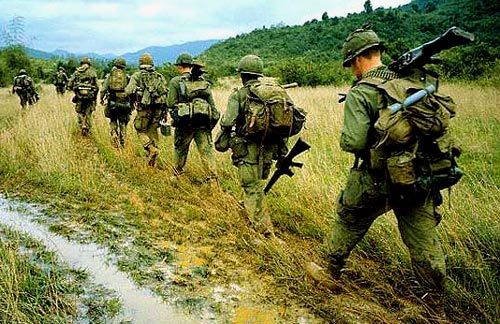
When the United States Congress first allowed the American military to send advisers to Vietnam in Southeast Asia, Americans knew very little about the history of Vietnam. Though Americans soon became acquainted with the history of Vietnam and its culture after the United States escalated its involvement in the country’s affairs, the roots of the Vietnam War began during French occupation several years before American involvement.

The French defeated and colonized Vietnam in the nineteenth century and maintained control of Vietnam’s government for approximately sixty years. When Japan invaded Vietnam in 1940, while Vietnam was still under French occupation, Ho Chi Minh rallied support in the northern part of the country and established the Viet Minh, a communist group dedicated to ending the foreign occupation that had existed for much of the history of Vietnam.


After losing an important battle, the French government pulled out of the conflict and ended its occupation. As part of the agreements that took place at the conference in Geneva, Switzerland, in 1954, Vietnam was divided in half, creating North and South Vietnam, and elections were scheduled to take place to determine who would gain control of the country’s leadership.


Image Forgotten Heroes

In the 1950s, the United States was involved in an extended conflict with communist Soviet Union to prevent communism from spreading to other countries, including Vietnam. The United States feared that if elections were allowed to take place, the communists would gain control of Vietnam and represent a new threat to America. With assistance from America, South Vietnam elected Ngo Dinh Diem. During his eight-year term, tensions in Vietnam grew, and North Vietnam organized the National Liberation Front, also known as the Viet Cong, to establish communism in the south following Diem's assassination.

In 1964, the North Vietnamese and a major American naval vessel engaged in a conflict called the Gulf of Tonkin incident. In response, the United States Congress gave President Lyndon B. Johnson the authority to send American troops to Vietnam. The American military’s goal was to provide enough military support to South Vietnam to stop Viet Cong aggression and prevent the spread of communism in Vietnam during the war.

Though the American military gradually increased its troop presence, the Vietnam War did not progress as the American government anticipated. The Americans chose not to attack the communists in the north during the war in Vietnam. While this policy limited America’s involvement in the Vietnam War, it also allowed the communists in the north to maintain their strength and supply the Viet Cong with weapons and food.


Image Vietnam Memorial

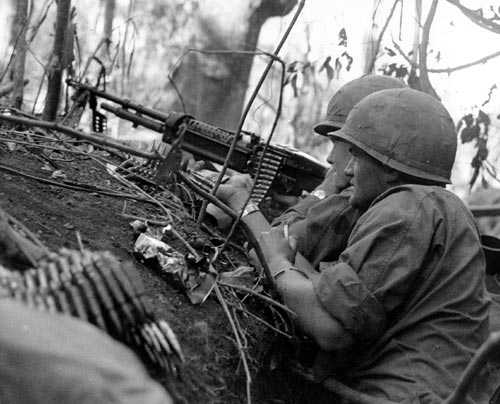
Life in Vietnam during the war was unpredictable and often deadly for the Vietnamese people and American troops. Unlike previous wars, the American army fought in thick jungles against an enemy that was well supplied. Many booby traps were placed around Vietnam during the war, and the American troops, who had difficulty locating the Viet Cong in the jungle, were often captured and fired upon by surprise.

As the war in Vietnam continued through the 1960s, the American public became increasingly uneasy. It was clear to many Americans that Vietnam during the war would not change and neither America nor South Vietnam would win. They argued that a lack of military victories during the war in Vietnam did not justify the large number of American military deaths. While few voiced their discontent when America first entered the war in Vietnam, public protests grew louder and more intense in the late 1960s.

In 1968, the communists carried out one of the most organized military campaigns in the history of Vietnam. In the Tet Offensive, the communists simultaneously attacked the American and South Vietnam forces in about one hundred cities and villages across the south. While the Americans rallied to force the communists’ retreat, Americans were no longer willing to maintain a military presence in Vietnam. Shortly after Richard Nixon became President of the United States, he withdrew troops and ended the Vietnam War even though America did not achieve its goal of halting communist advances.

About the author: She majored in history and international relations in college and loves to travel, read, and learn about other countries.

Monday, April 25, 2011

Weapons Used During the Civil War


The middle of the nineteenth century was a time of great change in America. The industrial revolution was in full swing, especially in the North. This brought about rapid change in both manufacturing capacity and in technological development. This would be put to deadly use during the American Civil War, where advances in Civil War guns and cannons would revolutionize centuries-old military tactics. The weapons used during the Civil War were far more accurate than previous weapons and old strategies would lead to countless casualties as generals slowly and painfully learned new ways of fighting in a world of industrial warfare and Civil War weapons.

Smoothbore Musket


Prior to the Civil War, the standard weapon of choice for infantrymen was the smoothbore musket. These guns would fire round balls out of barrels without any grooves inside of them. Due to their design, muskets were generally only accurate for short ranges. This characteristic determined military strategy for the time period, where infantry units were grouped together for maximum firepower. To do this, battles were often fought over open ground in columns. This in turn influenced the development of both artillery and cavalry tactics. For instance, cavalry units could only effectively maneuver over open ground, where they could use their superior speed to overtake enemy positions. And since smoothbore muskets were generally inaccurate at long ranges, cavalrymen could charge without the threat of such fire.

Minie Ball


But the development of a new type of Civil War gun and ammunition, rifled guns and the Minie Ball, changed the weapons used in the Civil War. With this new Civil War gun, bullets would rotate has they moved through the air, greatly increasing their accuracy. Now, infantrymen were far more accurate with their shots, greatly increasing their effectiveness.

CW Arty Confederate Napoleon

Unfortunately for many of the soldiers at the time, military tactics were still in use based on the assumption of the old, smoothbore muskets and not the new weapons used during the Civil War. With these new Civil War weapons, there was a much greater value for defensive fortifications. Charging a defended position over open ground was essentially a suicide mission, especially if the other side was further protected by cannons. Perhaps most importantly, cavalry units became a lot less useful in this new military world. And as the war progressed, generals slowly but surely began to use their cavalry more for reconnaissance and supply duty than for actual battles.

Civil War Last Photo Of General Robert E Lee Portrait Picture Art PrintBut it was a slow and painful process to adapt to the new weapons used during the Civil War. Time and time again, generals would send their units over open ground to charge entrenched positions with the new Civil War weapons. And the results, predictably, were grim. Perhaps the most notable example of this was Pickett's Charge during the Battle of Gettysburg, where General Robert E. Lee marched his army over a mile of open ground to attack the center of the Union lines. But thanks to those new Civil War weapons, the charge was an epic failure. Indeed, many call that moment the “high tide of the Confederacy” and that the South was never able to fully recover from that tragedy.

Hawkin Rifle


The amazing thing was that this was not the first time General Lee encountered such a situation. During the Seven Days Battle in 1862, the Confederate army was pushing the Union away from the capital of Richmond and towards the James River. Towards the end of the week, the South reached Malvern Hill, where the North had a powerful defensive position in order to protect the flank as they retreated towards the river. General Lee, seeing an opportunity to split the Union army in two, charged across the farm fields into the Union cannons and infantry equipped with a new Civil War gun. They were easily repulsed with much loss of life. Fortunately for Lee, Union General George McClellan did not press the advantage and continued to retreat. But despite this painful loss, General Lee apparently did not learn his lesson when he ordered that famous charge across the fields of southern Pennsylvania. It took him a long time to realize that the new weapons used during the Civil War required a new way of fighting, since these new Civil War weapons were best utilized in different capacities.


As the two sides slowly came to realize how unsuitable the old tactics were with the new weapons used during the Civil War, trench warfare became the standard tactic for protection from the enemy. Combined with the new Civil War weapons and cannons, frontal assaults became even more deadly. But by 1864, the Union was now led by General c. He was determined to use the North's numerical superiority to overwhelm the armies of Lee. And thus he continually attacked well-entrenched Confederate positions using the modern Civil War gun. He did achieve his goal of keeping the pressure on the South, but only at a tragic cost in lives lost. Perhaps the most devastating of these moments was at the battle of Cold Harbor, where an early morning assault on the morning of June 3 led to 7,000 Union casualties in less than a half-hour of fighting.

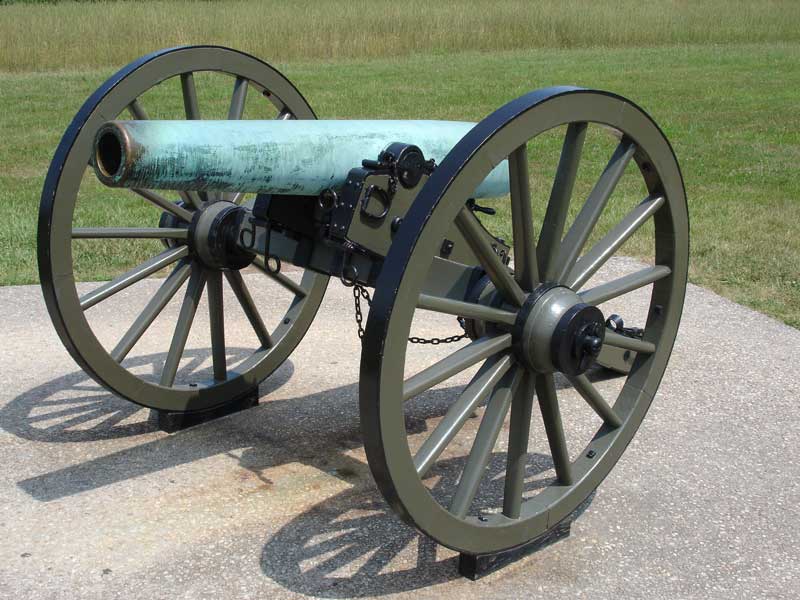
Napoleon 12-Pound gun

Napoleon 12-Pound gun
(In 1853, France introduced the Canon-obusier de 12, a 12-pounder capable of using either shells, shot or canisters. Napoleon cannon remained in service during the Victorian period seeing action in the American Civil War)

These casualties were further multiplied by the extensive use of cannons during the war. Although advances with cannons were not as far along as they were with the new Civil War gun, they were still extremely effective in countering frontal charges. Unlike the Civil War gun, most cannons used in the Civil War were still smoothbores, not rifled. The most popular of the Civil War artillery was definitely the Napoleon 12-Pound gun, named for the famous French general. These cannons could fire a variety of ammunition, depending upon the situation. Solid shot was a typical ammunition used to batter advancing enemy columns. Cannon shells, on the other hand, were exploding ordinance that was particularly effective against fortified units. But perhaps the most devastating of all artillery ammunition was the canister shot. This type of shell contained hundreds of miniature balls inside of it and could absolutely mow down advancing infantry units at close range. Artillery firing canister shells stopped many infantry charges during the Civil War.

There is no doubt that the weapons used during the Civil War, including the new Civil War gun and other Civil War weapons, led to a far more deadly type of warfare and a complete reevaluation of military tactics. The ultimate consequences was a civil war with 600,000 casualties and a country nearly torn apart in the process.

Tuesday, April 5, 2011

Planes used during World War I


Although Kitty Hawk North Carolina would become home to the first manned flight of human kind, the Germans would take these physical parameters into a whole new realm. As the skies offered another battlefield in which to kill and mame, countries that did not embrace this new arena were quickly left behind. During the first world war, the Germans would gain an early edge over most of the Allies as concerned with WWI aircraft. Planes used during World War I became designed around the many German models, which would help the Allies win many later battles of the global war. There are many WW1 planes that were important during the war although some played far greater roles than others.

AEG C IV Fighter


One of the first planes to enter into actual combat during the first world war was the AEG C.IV Fighter plane. This small plane was excellent in the air and provided pilots with a lightweight aircraft that was easily maneuverable during dogfights. This plane was outfitted with an inline engine produced by Mercedes that was capable of pushing 160 horsepower and generating speeds of over 95 miles per hour. This quick and small aircraft was also pretty quiet, which added an increased element of surprise to ground forces that were still unfamiliar with aircraft weaponry. The plane was equipped with two machine guns, one for the rear passenger, and a small gun outfitted to the side of the pilot's seat. Another amazing invention was a synchronized gear, which was also created by the Germans. The synchronized gear would allow the machine gun to be fired through the revolutions of the propeller without damage. At the end of its time, the AEG C.IV Fighter would have over 600 planes contributed to WWI aircraft.

Aeromarine 40 Flying Boat


The US Navy needed a boat to train its servicemen in the reconnaissance and fighting that took place over the world's many oceans. Out of the many planes used during World War I, the Aeromarine 40 Flying Boat was one of the most unique. The body of the plane was fashioned in a similar design to that of a boat, while the propeller was fitted on the top wing facing toward the back of the plane. The aircraft would be used to train unfamiliar sailors and servicemen who wanted to be a part of the air battles beginning to take place throughout the world. The US Navy would contract a number of these aircrafts although only 40 would be used. The Curtiss engine would provide up to four hours over the water without the need of refueling.

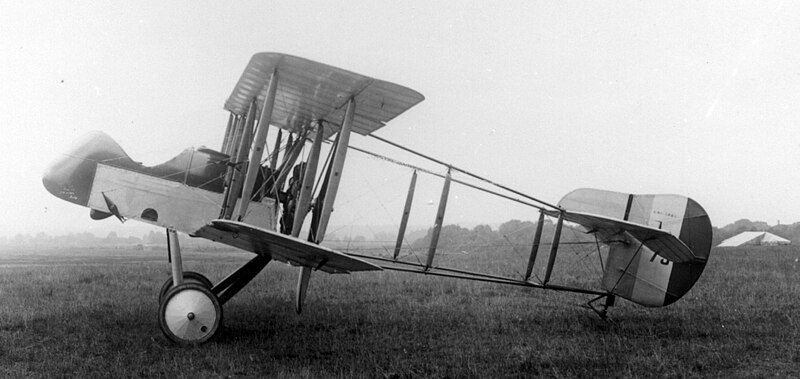
Airco DH 2 Biplane


One of the major services provided by an air force during World War I were scout missions. There were many planes used during WWI that were designed solely for this purpose. However, one of the most popular was the Airco series designed by Geoffrey de Havilland. This small but useful plane flew many missions over Axis territory to discover positions and enemy movement. This plane was designed by Allies before the discovery of synchronization. For this reason the propeller was rear mounted in order to allow for defense in case the need should arise. This plane would have a number of up-grades in the form of complete overhauls. There would be four more designs that would succeed the DH 2.

Albatross C I Biplane


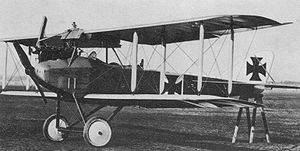
Out of the many WW1 planes used for scouting, the Albatross C.I was by far one of the most popular. The Albatross C.I was an upgraded design manufactured by the Germans. These were the most maneuverable planes used during World War I and was said to have taught many young Germans how to fly. WW1 aircraft fighting techniques would be changed with the invention of the synchronization gear, which would turn this seemingly harmless plane into a WWI aircraft to be reckoned with. The Albatross line also incorporated water-cooled Mercedes engines and could stay in the air for two hours. The Albatross line of planes would be continually modified for many years to come with over ten upgraded designs that would eventually be manufactured.

Armstrong Whitworth FK 8


As with most planes used during World War I, the Armstrong Whitworth FK 8 was originally created as a scout plane. It was equipped with a 7.62 mm machine gun in the front, which proved to be very useful in the event that the scout plane was spotted by patrolling enemy aircraft. WW1 planes similar to the Armstrong would be scrapped although the Armstrong series would be modified to include bombing runs during both the day and night. The Armstrong was one of the few World War I planes that would continue to be produced up until the end of the war.

Breguet Bre 14


In 1917, the French would produce their most versatile plane of World War I. The Breguiet Bre would prove to be worthy of the skies with a Renault engine that would eventually make this plane a legend. The Breguit would continue its production well past the end of the war. The total number of this aircraft was somewhere above 7500 models, which made it one of the most mass produced WWI planes. This plane would also lend itself to many modifications including a smaller fighter plane as well as what was referred to as the first air ambulance.

Sopwith Pup


To combat the fighting power of the German Fokker, the English designed a plane that would compete both in speed and durability. The Sopwith Pup would become one of the leading fighter planes during World War I, and some people would even hail it as a hero in itself. The Sopwith Pup would prove to be the most useful airplane the Allies would have during World War I as it not only functioned as a highly stable fighter but was also used on bombing runs as well. This little fighter was equipped with a single 80 horsepower engine but was made from lightweight materials, which allowed it so speed through the air. The Sopwith Pup was also the first airplane to land on a moving ship.

More related articles:


The world’s oceans, seas, rivers, and lakes hold some of war’s most hidden and well kept secrets. From the time the Vikings sailed their small but powerful craft from the fjords of Scandinavia to the mighty aircraft carriers and battleships used during World War I by the United States, boats have helped champion the freedom of nations across the globe. The Spanish Armada and the Queen’s Fleet would bring about change in the depths of the Atlantic by arming their hulls with mortar shattering cannons and crews with muskets. However, one of the largest changes in maritime warfare came with the invention of the large aircraft carriers and WWI battleships equipped with the capability of long distance shelling during the early 1900s.


Also check out

In 1620, Cornelius Drebbel, a Dutch inventor working for the English Royal Navy, tested the first submarine on the Thames River in England. Between 1620 and 1624 Drebbel successfully built and tested two more submarines, each one bigger than the last.

Near the end of World War II, Germany took a direct approach to hide and even completely destroy its fleet of U-boats before their surrender to the allies. Operation Deadlight was the code name for the destruction of more than 121 U-boats in abysmal water off Lisahally, Northern Ireland or Loch Ryan, Scotland in late 1945 and early 1946. The remaining 145 U- boats were surrendered to the allies.
Read more: What happened to the U-boats after World War II? Part II


Picture sources

AEG C IV Fighter
Aeromarine 40 Flying Boat
Armstrong Whitworth FK 8
Breguet Bre 14


Author:  Owner Lauren Axelrod

Saturday, October 16, 2010

The Kohistani: The Road to Thull


This published article is based on a case study I'm reading about death enmity amongst the Kohistani Community. This particular discussion is about the road built to the isolated villages and how it changed the community.

Interestingly, you would think with the addition of a new info structure, organized vengeance would fade to some sort of degree. This was not case, as the first highway system actually promoted it, linking villagers with a more modern economy and a new political system. Therefore, this new highway triggered sociocultural transitions in Thull that ultimately resulted in Dushmani.

Consequence 1

On the positive side, religious leaders were now able to travel on bus routes to Mardan and Peshawar to further their Islamic studies with Pathan scholars and educators. In turn, the religious leaders...

From: Anthropology Study: The Road to Thull

Wednesday, September 1, 2010

Florida's Native People


Image via Wikipedia

Hunter gathers arrived in Florida close to 12,000 years ago when the Florida land mass was much larger and drier. Mega fauna and mammoths were hunted in great herds and grains, nuts, and berries were gathered during seasonal roving. Spears were used to hunt and leather bags were used to cook what was captured, using hot stones. You may know these early tribes as the Paleo-Indians.

Close to 8000 years later, the ice caps started to melt and Florida became what it is today. The Native Peoples started to develop new technology, like the atlatl, a s... Read this article about Native Peoples of Florida

Tuesday, August 31, 2010

The Madara Rider of Bulgaria


The Madara Rider sits 246 feet above ground, on a cliff face in the Madara Plateau of northeastern Bulgaria. The relief is inaccessible, adding to its mystery. How were they able to create it?  Either way, the relief is extraordinary.

Including the inscription in Medieval Greek, the rider covers close to 1400 square feet on a vertical 328 foot cliff face. The horseman is depicted in a hunting scene, spearing a lion. The lion is being trampled by the horse and a dog is trailing behind the rider.

Read this article on the Madara Rider: The Mysterious Stone Horseman of Bulgaria

Tuesday, August 10, 2010

Holocaust Cartoon On Iranian Site


I'm not accustomed to putting politically incorrect text on the Ancient Digger, but this made me very angry, especially considering my personal heritage.

Over the course of one year, I have attended several Jewish Heritage Festivals and I've also done in depth studies on the History of the Holocaust, several times throughout my schooling. I appreciate my family history and I certainly know enough about it to to view this story as a complete fallacy.

One Iranian website has taken it too far, once again calling the Holocaust a complete fabrication. I thought we were past this and I though there was enough evidence to prove that the Holocaust actually happened. Am I naive in thinking this?

The version of the slaughter of six million Jews by their Nazi persecutors during World War II is called "the great lie" by the site, which recounts its version of events in cartoon form.
Displaying images of bearded large-nosed figures, the site aims to denounce the Holocaust as a "lie with which the Palestine occupier Zionists have justified their occupying of Palestine and lots of other crimes for years." In one image, A Jew is tied to a chair on a movie set as a canister of Zyklone-B is dropped through the roof of the gas chamber.

The site is sponsored by the Khakriz Cultural Institute, and is "dedicated to those killed under the pretext of the Holocaust." The imagery is like taking a trip back to Nazi occupied Germany and seeing the hundreds upon thousands of propaganda. It's unsettling and unnecessary!

I refuse to link to the site, as I can not and will not agree with their approach on the matter.

I want to hear from you? What are your opinions about this?

Sited Info (adnkronosinternational) This is not the Iranian Site


Iran's Ahmadinejad Interview With Peter Jennings on Holocaust


This is an interview between Peter Jennings and Ahmadinejad about whether the Palestines believe the Holocaust actually happened. It's about anger, jealousy, self determination, safety, and women's rights. It's about recognizing an event that meant so much to so many Jews and so little to Palestinians.

Tuesday, July 27, 2010

Gothic Cathedral of Sainte Cecile in Albi, France


During the fourth century a structure existed, not a proven house of worship, but nonetheless burned down in 666AD. In 920, a building by the name of Saint Celicila, patroness of musicians, found its home upon the foundations of Albi. The last recorded structure before the Cathedral of Sainte Cecile was a Romanesque cathedral in stone.

Read More: Gothic Cathedral of Sainte Cecile in Albi, France

Tuesday, July 20, 2010

Memphis Belle: A Tribute to the crew of the United States Air Force's 324th Squadron, 91st Heavy Bomber Unit


The Memphis Belle Deluxe EditionThis archived film, "The Memphis Belle," directed by William Wyler  is a tribute to the crew of the United States Air Force's 324th Squadron, 91st Heavy Bomber Unit,an airplane more familiarly known as the Memphis Belle.

Several years ago, I remember watching the movie with Matthew Broderick and becoming immersed in the history of the Belle's crew, who successfully completed twenty-four missions in the toughest theater of the air war in Europe, flying bombing raids deep into Nazi territory.

Cameras accompany the Belle on its twenty-fifth mission. If the crew returns with its mission accomplished, they will qualify for release from active duty, to be sent home as teachers and heroes. The film provides a first-person perspective of a World War II bombing raid, showing how it feels to be threatened by "flak [enemy fire] so thick you can get out and walk on it." Much of the film salutes those less fortunate than the crew of the Memphis Belle, who wear the weight of their experience in "faces [that] have watched their comrades die."

Tuesday, May 18, 2010

Pearl Harbor and World War II Footage


Please be forewarned, this short film contains images of a delicate nature. This is footage of the aftermath of Pearl Harbor, as well as some European war scenes. In all actuality, this film is an impressive combination of clips and images including the people of Japan, bombing, and the war itself. The video is from the national archives.

Friday, March 19, 2010

How Did the Peninsular War, the Continental System and the Invasion of Russia lead to Napoleon's downfall?


History Today gives an interesting and thorough examination, written by Graham Goodlad, about the fall of Napoleon. Napoleon's character, as well as the nature of his entire empire, led to his decline.
Some historians have detected a falling off in Napoleon’s abilities as a general from about 1809. He himself privately reflected in 1805 that ‘I will be good for six years more; after that even I must cry halt.’ Before that time had elapsed, contemporaries noted that his reactions were deteriorating and his health was often poor. A corresponding decline in the quality of his army also began to have an effect. Yet the logic of conquest drove him to embark on more or less continuous warfare. A powerful case can be made for the claim that Napoleon was ultimately responsible for his own downfall.
Read along as Graham Goodlad examines the controversial reputation of Napoleon Bonaparte as a military commander.

Wednesday, February 24, 2010

The Art of Dueling


Source

A couple weeks ago, I discovered a new gem in the online writing world called Inna Tysoe. In her latest article, she tackles the subject of dueling, or "to duel", by way of using a psychological approach as to why the act of dueling actually happens. What's the motivation for each person involved?
Dueling has been around for a very long time and is still prevalent today despite its quite obvious uselessness. If you win a duel, all it really proves is that you are better (or luckier) with the gun or knife than I. And still people duel. Why is that? The three authors who grappled with this subject (and whose answers to this question I shall briefly summarize) all agree that dueling is a form of costly signaling. I have written about Zahavi’s concept of the costly signal elsewhere but to reiterate: according to Zahavi defines “signals as traits whose value to the signaler is that they convey information to those who receive them” (Zahavi, 58).

Read more about the Art of Dueling and Why it Occurs

Like Ancient Digger? Why Not Follow Us?


Subscribe Via RSS Feed Follow Ancient Digger on Facebook Follow Ancient Digger on Twitter Subscribe to Ancient Digger Via Email

Get widget

Search


Ancient Digger Archaeology Copyright © 2015 LKart Theme is Designed by Lasantha