• Ancient Digger teaches Archaeology and History to all Ages!

Monday, May 20, 2013

Archaeologists uncover Pagan skeletons at housing development near Stonehenge


Six Pagan Saxon skeletons dating back over 1,000 years have been discovered by archaeologists just a few miles from Stonehenge.

The discoveries, which also include round barrows dating back to the Bronze Age 4,000 years ago, were unearthed at a redundant brownfield development site in Amesbury, Wiltshire, which is also famous for the Amesbury Archer – an early Bronze Age man found buried among arrowheads.

The remains are thought to be those of adolescent to mature males and females. Five skeletons were arrayed around a small circular ditch, with the grave of a sixth skeleton in the centre. Two lots of beads, a shale bracelet and other grave goods were also found, which suggest the findings are Pagan.

The site is now being excavated for other artefacts by Wessex Archaeology, led by Phil Harding, known for his work on Channel 4’s Time Team, while colleagues back at the unit’s laboratory examine the remains and jewellery, which have already been removed.

Phil said: “Given that the Stonehenge area is a well-known prehistoric burial site, it was always very likely some interesting discoveries would be made here. The fact that these round barrows were previously unknown makes this particularly exciting.

“Finding the skeletons also helps us to get a clearer picture of the history of this area. To my knowledge these are the first Pagan Saxon burials to be excavated scientifically in Amesbury. “

Landowner Aster Group is building 14 affordable homes at the redundant brownfield site, which will be available to rent from 2014.

Anna Kear, Aster’s regional development director for Hampshire and Wiltshire, said: “Wiltshire is a treasure trove of archaeology, drawing people from across the world.

"Discovering a burial site in this beautiful county is always a possibility when building affordable homes. We’re working with everyone involved to ensure Phil and his team can investigate this exciting find while the build continues.”

Contractor Mansell, a Balfour Beatty brand, was preparing the site for the build when it made the discovery.

Site manager Brian Whitchurch-Bennett, of Mansell, said: “When we’re working in an area of historical importance we always undertake archaeological investigations to make sure that our construction works don’t damage hidden remains or artefacts. The findings within this particular site really are a one off, we’ve been amazed by the number of discoveries and the level of preservation. It’s certainly a project to remember.”

The archaeologists are expected to be on site for six weeks in total. Footage from the site may also be included in an archaeological production for ITV’s History Channel, due to be aired in January 2014.

[via 24dash]

Monday, December 24, 2012

Crowd Gathers at Stonehenge for Winter Solstice


More than 5,000 people have gathered to mark the winter solstice at Stonehenge.

The attendance was equivalent to five times the number that turned out at Salisbury Plain for last year's event.

More people had been predicted to congregate, as the date coincides with the end of the 5,125-year "long count" cycle of the Mayan calendar.

Druids and pagans are among those who head to Stonehenge each December to watch the sunrise on the shortest day of the year in the Northern Hemisphere.

Wiltshire Police said "well over" 5,000 people had gathered to watch the sunrise over the giant stones at 08:05 GMT. The force said one person was arrested for being drunk and disorderly, and given a fixed penalty notice.

BBC Wiltshire reporter Annie Weston, at the scene, said: "This is the only time when people are allowed into the circle of stones.

"It is absolutely packed. People are cheering and chanting and everybody was looking towards the sun for that special moment.

"There are flags flying, druids here too and people of various religions and faiths."

She spoke with Shelby McCabe, from Honolulu in Hawaii, who said it was "the perfect day".

"All my friends are very jealous that I am here. They would love to be here. They told me to take 1,000 photos which I think I've done," she said.

Donna Nicholson, from Swindon, woke up at 03:00 GMT to get to the stones on time.

She said it was "exciting" to be there for the "new birth of a new era".

This year's solstice date also marks the conclusion of the long count cycle of the Mayan calendar, which some people believe indicates the end of the world.

Although the exact time of the solstice this year - when the Earth's axial tilt is farthest away from the sun - is at 11:11 GMT, English Heritage provided access to the stones earlier in the morning.

Source: BBC

Thursday, April 19, 2012

A Child’s Visit to Stonehenge Inspired a Quest for Knowledge About Man and God


As a young girl I visited Stonehenge with my family and I remember asking my uncle with great excitement did god build all this just for us to play on? My uncle (who was an academic at Southhampton University) barked back at me ‘don’t be silly girl this is a product of man’s inquiring mind’. I remember just standing there in bewilderment as I couldn’t begin to fathom that man and not god had built this incredible playground as I saw it back then. The visit was in 1974 a few years before the general public’s direct access was understandably restricted to stop erosion and vandalism but luckily for me I was able to run around this huge and imposing cromlech freely touching and hugging and climbing all over it. That precious experience had a profound influence on me as it ignited a curiosity about history and archaeology and also about religion and the question of 'is there a god' that has never left me and it all started with that innocent question about whether god built Stonehenge.

I soon learnt the true history and purpose of Stonehenge. These ruins (which themselves are awe inspiring) are the remains of a circle of upright stones that was constructed anywhere from 3000 BC to 2000 BC. The stones were aligned almost perfectly with the sunrise on the summer solstice and it is almost certain that Stonehenge was built as a sacred place of worship. It is thought that the Neolithic people of Britain began this massive undertaking by using deer antlers as picks to dig a circular ditch. The diameter of the circle is 320 feet (97.5 meters) and the ditch itself is 20 feet (6m) wide and 7 feet (2.1m) deep. Even though Stonehenge has been the focus of archaeological investigations since the 17th century still more is being discovered about it even today. In 2011 using the latest geophysical imaging techniques two previously undiscovered pits were found which suggest that the site was already being used as an ancient place of ritual before Stonehenge was constructed which is more than 5,000 years ago.

For me Stonehenge symbolises so much about the human journey to find knowledge and self-understanding. A journey of championing ignorance and superstition through discovering the workings of our world and mastering our intellect. We have travelled so far and yet we are so fortunate to have such a rich archeological history to allow us to stay connected to our origins and the marvel of the natural world. I still remember driving away from Stonehenge and not taking my eyes off it until I could no longer see it. I remember that feeling of absolute awe and enchantment and even though as an adult I have a first principle understanding of what is god places like Stonehenge will always inspire that primal awe and wonder in children and adults alike - thank god!

Author Bio: Fran splits her time between work, travel and giving back to the internet through numerous article pages. She enjoys discovering our world and the ceaseless journey of ideas. Fran finds herself increasingly reading biologist Jeremy Griffith's ideas presented at World Transformation which contains rational, biological explanations to the deeper questions.

Monday, May 16, 2011

Monday Ground Up: 5 Archaeological Sites That Changed The Face of History


To some, archaeology is merely the study of past worlds. Some may say that sifting through broken remains of decimated cities and exploring relics of forgotten peoples only provides us with interesting (and pointless) souvenirs from a time now inconsequential. While these artifacts and architectures are mere glimpses of the past, archeology provides us with a lens into what has been and could be. By exploring the material culture and environment of past human societies we are able to illuminate generalities about human civilization and social evolution. With most of human history occurring within prehistoric cultures without written language or record studying the material remains of those civilizations is the only way to learn about them. To be far too cliché, as Pearl Buck puts it, "if you want to understand today, you have to search yesterday." These five archaeological sites changed the face of history.

Machu Picchu

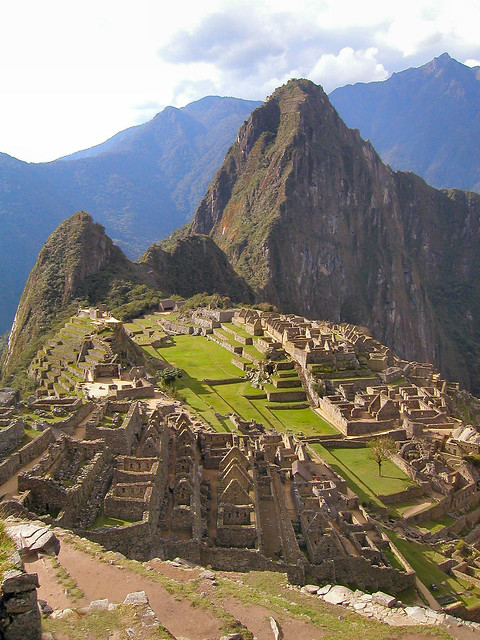
Machu Picchu

More widely known as the "Lost city of the Incas", this extensive archaeological site is located in southern Peru. Set atop a mountain that is only accessible by train or foot, this ancient city was the center of the Inca civilization. Discovered in 1911, Machu Picchu was built by the Inca around the year 1450, but was abandoned when the Spanish came. While many other Incan sites were defaced and plundered by Spanish conquistadors, Machu Picchu seemingly escaped discovery. Serving as a prime example of Incan civilization, Machu Picchu provided historians with new information about early indigenous society in South America. The site was made a UNESCO World Heritage site in 1983 and was named one of the New Seven Wonders of the World in 2007.

Petra

Petra

Known for its rock-cut architecture, Petra is Jordan's most visited tourist attraction. Carved into the side of a canyon in Arabah, Petra was originally discovered and made known in 1812. This site is believed to have had settlers as early back as the 6th century BC, but experienced rapid decline while under Roman rule. Petra was abandoned by the late 4th century. There are records of Petra in Egyptian military accounts as well as being part of the land mentioned in the Bible. Petra's complex water system provides compelling knowledge into ancient innovations for dealing with drought and flooding. The city has been a UNESCO World Heritage Site since 1985, has had award winning sonnets written about its magnificence, and was named one of the "most precious cultural properties of man's cultural heritage" by UNESCO.

Tikal

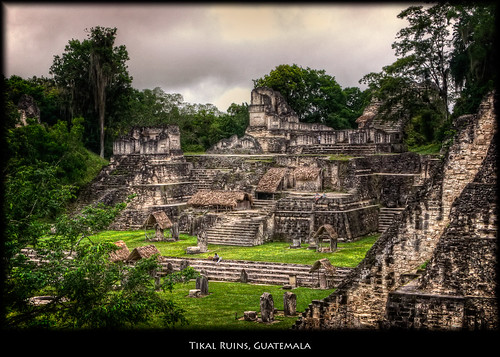
Tikal

As the best-preserved ruins of the Mayan civilization, Tikal is one of the most important archaeological monuments in history. Located in Guatemala, Tikal was the capitol of one of the most powerful ancient Mayan kingdoms. Dating back to the 4th century BC, the city hit its peak from 200 to 900 AD as the center for Mayan politics, economy, and military. Because Tikal has been so well preserved, it has provided the most thorough insight into this ancient mega-civilization.
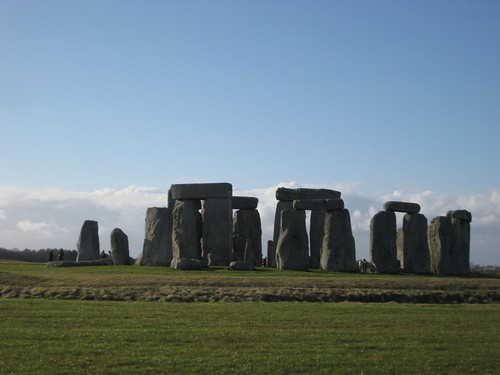
Stonehenge

Stonehenge

Located near Salisbury, England, this structure is over 3,000 years old. Like the Egyptian Pyramids, Stonehenge remains one of the most mysterious archaeological discoveries in history. With stones originating all the way from Wales, scholars are still unsure how the builders of the site transported the gigantic stones over such a great distance. One of the most famous sites in the world, Stonehenge is a circular setting of large stones. It is believed that the iconic site was erected sometime around 2500 BC, though historians and archaeologists are not completely certain. Added to the UNESCO list of World Heritage Sites in 1986, Stonehenge has become a national monument for England. Archaeologists believe that Stonehenge served as a burial ground; however its true function and construction remain a mystery.

The Pyramids at Giza

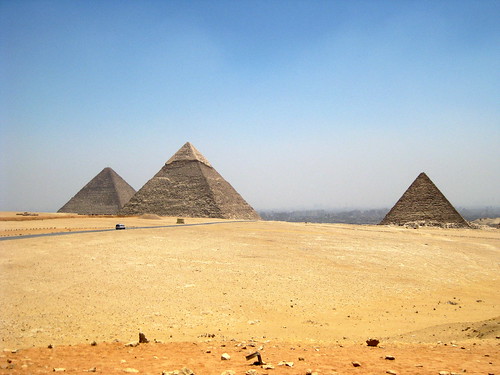
The Pyramids at Giza

No list of ancient archeological sites is complete without a discussion of the infamous Pyramids. Built over 3,000 years ago, the Egyptian Pyramids remain among the most mysterious and aw- inspiring structures in the world. The Pyramids align to the stars and the solstices, containing vast chambers and rooms that are yet to be explored. As a true tribute to human engineering, scientists, historians, architects, and engineers still have no idea how the Egyptians made the Pyramids so precise. Built for ancient Egyptian Pharaoh's, the Pyramids of Giza in the outskirts of Cairo include three giant pyramids, known as the Great Pyramids, and the massive sculpture, the Great Sphinx. The Egyptian Pyramids have become an eminent part of popular culture as well as a telling story into a world of mystery and greatness.

About the Author:

Mariana Ashley is a freelance writer who particularly enjoys writing about online colleges. She loves receiving reader feedback, which can be directed to mariana.ashley031 @gmail.com.

Photo Credits

Tuesday, January 5, 2010

Prehistoric Solar Calender at Mnajdra Temple


A complete calendar in stone, Mnajdra Temple on Malta (ca. 3,500 BC) tracked the location of the sun's first rays more than a thousand years ahead of the standing ring at Stonehenge.

Friday, October 16, 2009

BBC StoneHenge Timewatch Dig


For many of you, the archaeological site of Stonehenge has always been shrouded in mystery and we always want to learn more about its mysterious background. I have found the perfect tool to allow you to stay up to date, as well as entertained by the latest discoveries at the site.

Professors Tim Darvill and Geoff Wainwright are the world-renowned archaeologists who believe they have cracked the conundrum of Stonehenge's original purpose. If you's like to learn about about the dig and the research going on at Stonehenge check out this wonderful page at BBC.

Like Ancient Digger? Why Not Follow Us?


Subscribe Via RSS Feed Follow Ancient Digger on Facebook Follow Ancient Digger on Twitter Subscribe to Ancient Digger Via Email

Get widget

Search


Ancient Digger Archaeology Copyright © 2015 LKart Theme is Designed by Lasantha