• Ancient Digger teaches Archaeology and History to all Ages!

Wednesday, December 19, 2012

Truth of Words: A Historical Museum Exhibit


Last year I created a museum exhibit based on a letter written by Moses Seixas and the answer that one congregation received after George Washington visited Newport in August 1790, three months after Rhode Island joined the United States.

Although it's not archaeology, it is history and heritage, and here at Ancient Digger I like to share both.

If you have questions after you take a look, please feel free to leave comments below.

Truth of Words: How One Congregation Spoke and Every Listened


Credits

  1. Chernos Lin, Rachel. "The Rhode Island Slave-Traders: Butchers, Bakers and Candlestick-Makers." Slavery & Abolition: A Journal of Slave and Post-Slave Studies. 23.3 (2002): 21-38. Print. 
  2. Diner, Hasia R. The Jews of the United States. London: University of California Press,2004.
  3. Haas, William P. "Touro Synagogue." Community Scholar Publications. Paper 7 (2010):1-7. Web. 13 Apr. 2012. 
  4. Haynes, Charles C. Religion in American History: What to Teach and How. Alexandria: Association for Supervision and Curriculum Development, 1990. eBook. 
  5. "History of Touro Synagogue." Touro Synagogue. Congregation Jeshuat Israel, TouroSynagogue Foundation, and George Washington Institute for Religious Freedom, n.d.Web. 17 Mar 2012. 
  6. Main Street, Westerly, Rhode Island, 1900s. N.d. Photograph. Family Old Photos, Westerly.Schor, Esther H . Emma Lazarus . 1st ed. New York: Random House, Inc, 2006. 5. Print.
  7. Seixas, Moses. “Address to the President from the Hebrew Congregation.” The Papers ofGeorge Washington. University of Virginia, 18 August 1790. Web
  8. Sephardi Jews. 2009. Photograph. Wikipedia.
  9. Tombstone of Moses Seixas at Newport, R. l.. N.d. Photograph. Jewish Encyclopedia.
  10. Washington, George. "GW's Reply to the Hebrew Congregation." The Papers of George Washington. University of Virginia, 18 August 1790. Web. 16 Mar 2012.

Monday, August 29, 2011

Petra and the Bible


The highly publicized area of Petra has more significance than its modern-day use as a beautiful tourist location that many refer to as the rock-built “rose red” city. Although famously portrayed in such movies as Indiana Jones and the Last Crusade, Arabian Nights, and Sinbad and the Eye of the Tiger, the red city has deep roots in Biblical archaeology. Even so, it continues to be of high interest to many, including world travelers, Biblical Archaeologists and historians.

The city is known for its beautiful rock cut architecture that dates back to the BCE late century. As a semi-fortress, it was attractive to kings because it was easier to control and protect than other nearby geographic locations. The Edomites, Nabataeans and the Romans found it to be of significant economical and archaeological advantage, because of its close 80-kilometer proximity to the Dead Sea and narrow entrance.

The Edomites Run the Red City


Although some historians believe that the actual rose red city may not have been included within Edomite rule, the surrounding area of the city was called Edom, and was ruled by the Edomites beginning near 1200 BCE. The Edomites were a resourceful people and they controlled the majority of the spice trade from South Arabia to the northern area of Damascus. Their society was described as one of distinction and sophistication with creative outlets that included writing, textile production, ceramics and skilled-metal products.

Nabataeans Take Over and Rule


When an Arab tribe called the Nabataeans migrated to Edom in 312 BCE, this forced the wise Edomites into the southern Palestinian area. When this occurred, the Nabataeans began to increase the economic and archaeological advantages that the Edomites had begun. Working to create a flourishing capitol, the Nabataeans extended spice trade acquisition, by lengthening the route to include Northwest Gaza, Palmyra and the Syrian Desert, and the Aqaba area.

They also began to build some of the famous tourist monuments that are now protected as a UNESCO World Heritage Site. The Nabataens began to utilize the red rock as the main resource for territorial expansion. Today, tourist can see the evidence of Nabataen and Roman architecture, including the famous Colonnaded Street, the Temple of Winged Lions, and the great Treasury building.

Other famous sites that are connected to the planned complex include the famous East and West Propylaeum, the upper and lower Temenos and the Great Temple. Yet, one of their most significant advantages in their society was the development of a hydraulically engineered system that helped control winter water, and helped to provide an adequate means of water conservation.

Roman Empire Influences


General Pompey of the Roman Empire was the first in Roman succession to take over the rose red city and surrounding areas. Through his rule, the Romans began to expand the red city capital, and they made it official by calling the provincial area Arabia Petraea. It is estimated that the Roman takeover began between the years of 64 to 63 BCE.

The majority of monuments and tombstones within the red city were primarily made of limestone and sandstone. Although the Romans had their own cultural influences that they brought to the area, they added a mix of both Roman and Nabataean influences to renovate buildings and to add new architectural additions to enhance the city. The King’s Highway or Via Traiana is one of the most fascinating contributions to the rose red city that was left by the Romans.

Herod the Great and other Bible Connections


The red city has held both Christological influences from the Bible and pagan aristocratic influences. With the unearthing of rock-cut monuments and mosaics, these influences have become highly connected with biblical archaeology. Yet, many of the references to the Bible are obscure.

However, many historians of biblical archaeology have connected the red city with the biblical passages found in the 16th and 42nd chapters of the book of Isaiah. In these passages, historians believe these Biblical mention of Selah are actual references to the red city. Yet, there are similar references to the red city in the biblical books of Obadiah and Amos.

Herod the Great ran the Roman Empires and there was strong biblical reference that stated his desire to kill the baby Jesus. Even so, Herod I, as he was known, had familial roots in the red city. He was the second born son, and his father provided service under a high-ranking Nabataean public official. However, Herod's mother, Cypros, was the princess of the red city, Jordan and Nabatia.

Further still, his father was called Antipater the Idumaean, and the Idumaeans were historically considered a direct lineage of the Edomites, which were forced out of the area because of the Nabataeans. Ironically, the biblical passages that historians use to compare the rose red city and Selah as the same city, encouraged those that were persecuted to hide in the Siq, or the very same place where Herod I acquired his familial lineage.

Furthermore, biblical reference to the Siq, the entrance to the red city, describes the location as a dusty sand-prone area. Even today, the Siq is known for its loose sandstone and limestone deposits that are still of great value to archaeologists and scientists that hope to uncover more hidden treasures from Roman, Nabataean and Edomite culture.

Rose Red City Architecture


Rock architecture was the main way that Romans and other ancient societies built structures like Petra. Rock cut architecture is an ancient building process that uses existing rock formations to build living quarters, religious temples and specific-use buildings. Although some forms of this architectural process is still used today to build cliff-hanging houses, the Romans built theaters, cave dwellings and tombs using this method.

Besides the Great Temple and the Treasury building, they also lived among many other astonishing rock buildings as a part of the Colonnaded Street plan. Building construction along this street included the East Exedra with its famous niche of seating, the vaulted chambers and arches of the Theatron and the modern-like Roman-Byzantine Bathing House with its drainage pipes. The city building plan also included the creation of the Great Cistern, the East Triple Colonnade and the Baroque Room Complex. Influences from the Roman Empire and Nabataeans are often blurred within Petra, but what remains is a beautiful contribution to human creativity and perseverance in an area that was unlikely to support life.

All pictures © evkr

Author Bio:

Ms. Leah L. Logan enjoys all types of writing, including article writing, journalism, and ghostwriting. Ms. Logan is a two-time international author with the release of the co-authored books “Removing the Mask: Living an Authentic Life” and “Self Architect: Redesigning Your Life” both edited by Linda Ellis Eastman.

Related Article

Monday, August 15, 2011

Unveiling the Kings of Israel Review


Unveiling the Kings of Israel: Revealing the Bible's Archaeological History by David Down is clearly written in an unbiased fashion. Although contemporaries may argue this notion, it seems abundantly clear in the introduction. Down explains that when “Correctly interpreted, the historical records of Egypt and Israel show a remarkable consistency with the Bible records which we can accept as not only inspiring but entirely reliable”. Down uses the statements reliable, significant, clues, does not prove, reference was made, and revealing, throughout the entire book.
Views of monotheism or godly manifestations are never thrown in your face, rather, they are presented to the reader so that they may ponder their significance in the historical record. Down explores the chronological history of Israel’s Kings and the archaeological evidence left to describe their journey throughout history. David Down never states that history should only be based upon the Bible. He only wants the reader to understand that Bible history does have credence. He further explains that archaeological support has to be present to arrive at conclusions about our past.

Unveiling the Kings of Israel guides the reader from the earliest civilization in Ur to the land of the Pharaoh and the New Testament. Yet, there is a significant amount of archaeological evidence throughout the book which details the significance of the find, compared to what details are stated in the Bible. What I did find fascinating is the fact that Down clearly mentions that “There may have been more involved than the Bible record spells out”. This statement, of course, pertains to a marriage involving a Pharaoh and Abram, nonetheless, it carries over throughout the rest of the book.

So what can you expect from Unveiling the Kings of Israel?

Readers will learn more about:
  • The scientific and mathematical advancements in Ur and where those advancements transitioned to and by who.
  • Chronological clues are investigated to determine the birth date of Abram using excerpts from the Bible and the year of Solomon’s accession.
  • A brief explanation of the ship, believed at one point to be Noah’s Ark, discovered in lesser Mount Ararat.
  • Tablets excavated at Nineveh which were written in ancient Assyrian, and later translated by Henry Rowlinson.
  • Thousands of archaeological items stored in museums that have yet to be tested against Bible history.
  • The significance of Petra and its Biblical past.

Final Thoughts on Unveiling the Kings of Israel

This eye opening and provocative assemblage of literary history and effervescent illustrations, creates a book that you just can’t put down. For years to come, this book will be an enduring resource for children, scholars, students, or anyone interested in learning more about biblical archaeology and its place in history.

Unveiling the Kings of Israel was simply a joy to read and review. I was honored to have the opportunity, so thank you to Master Books, a division of the New Leaf Publishing Group.

About David Down

David DownDavid Down is a field archaeologist and an expert in Middle Eastern and Biblical Archaeology. He publishes a monthly archaeology newsletter called Diggings, and the magazine ArchaeologicalDiggings, which is distributed by newsagents throughout Australia. You can also connect with David on his website: Archaeological Diggings. Interview with David Down at Creation.com

You might also enjoy
  • Jericho Unearthed - Bible Confirmed Once Again--Can archaeology prove the accuracy of the Bible? In this video, we hear from archaeologists about what is required to make an honest and intelligent assessment about the accuracy about the Bible. The video begins in Jericho.
  • Uruk Period Kings --After priests, who held economic and political powers, still retaining their religious mystique of course, Uruk period kings emerged as dual rulers in an effort to combat warfare and forge sociocultural bonds with their people.
  • Sumerian Cities --The Sumerian cities were surrounded by walls, much like the Forbidden City, as a way to keep their culture secret and sacred. Sumerian city dwellings were constructed out of sun-dried bricks, including peasant quarters and the larger dwellings of priestly and civic officials.
If you would like to read Unveiling the Kings of Israel: Revealing the Bible's Archaeological History, or use it as a resource in your classrooms, pick it up today on Amazon.

Saturday, August 13, 2011

Jericho Unearthed - Bible Confirmed Once Again


Can archaeology prove the accuracy of the Bible? In this video, we hear from archaeologists about what is required to make an honest and intelligent assessment about the accuracy about the Bible.

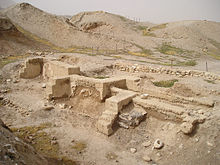
Jericho Unearthed is a new documentary which assesses the validity of the Biblical record and the archaeological evidence, using incites from Garstang, Kenyon, and many other experts.

In the 1920’s archaeologist John Garstang concluded that he had matched evidence at the site to the stories in the Bible. His conclusions were challenged by archaeologist Kathleen Kenyon who explained that when the Israelites attacked Jericho as described in the Bible, there were no walls and no city.

Historian Sharon Woods explains that there has never been any archaeological evidence of the Bible in Jericho. For that matter, the wall that does exist is Middle Bronze Age and not Late Bronze Age.
Archaeologist Bryant Wood explains that “you have to come to a conclusion based on the evidence, not on what the authority figure says”.

What all of these archaeologists, scientists, and historians seen to have in common is that, you have to use concrete evidence and not the stories in the Bible to arrive at your conclusions.

Monday, October 4, 2010

Monday Ground Up: A Brief Overview Of The Unique Culture of the Hutterites


The Hutterites have established a strict colonized community where, if given the chance and opportunity, larger cultures would fail at infiltrating the communal surroundings. Why you ask? The main reason is because of isolation. The Hutterites have gone to great lengths to section themselves off and give outsiders no reason to interfere.

The Hutterite.Org website has a fascinating history of the Hutterites coming to North America. Trace the entire migration and learn more about their culture. It's a great resource.

Monday, April 26, 2010

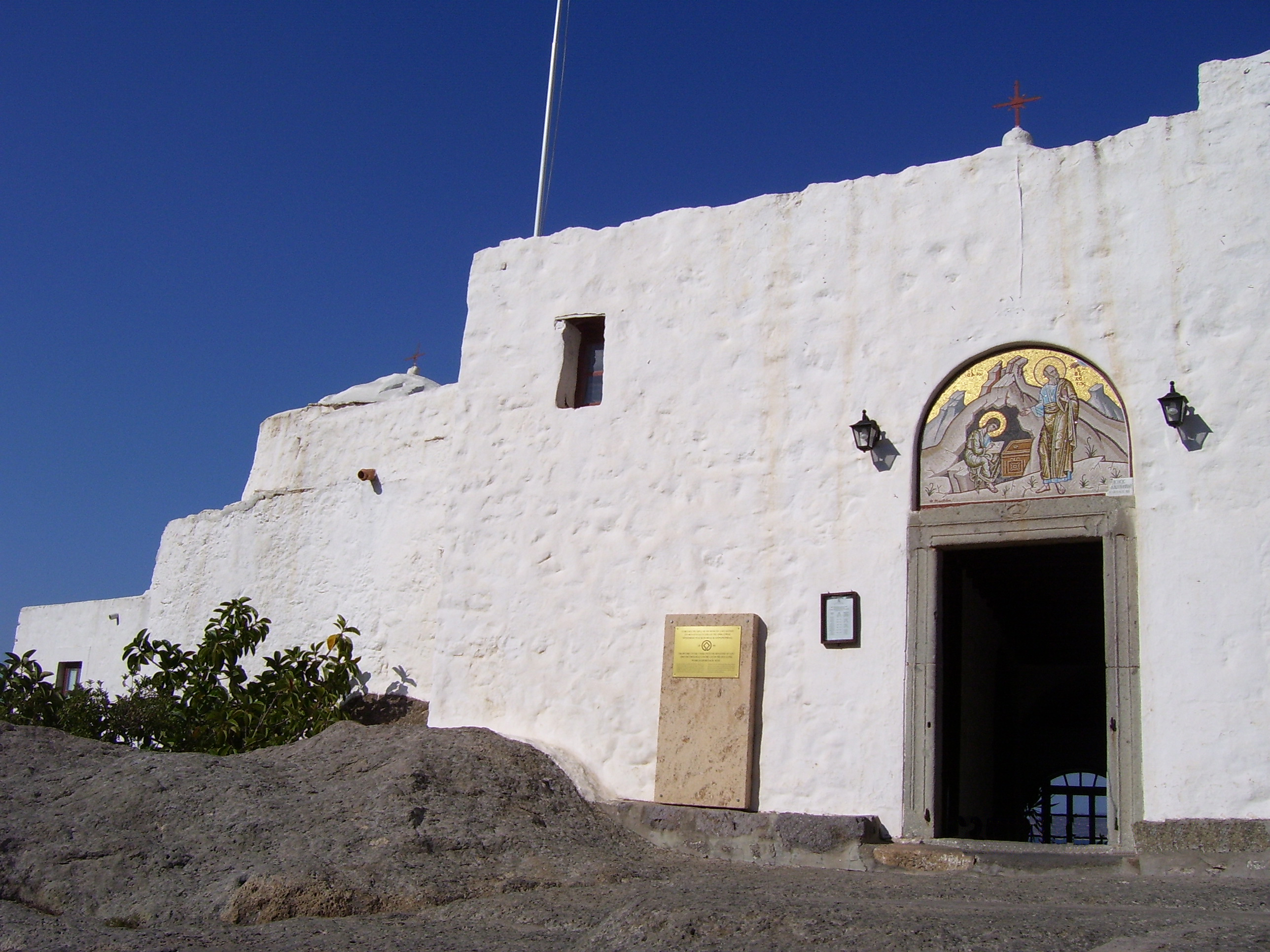
Monday Ground Up: The Cave of the Apocalypse


The Cave of the Apocalypse can be found on the rocky island of Patmos, deep within the monastery that surrounds it. Patmos is located north of the Greek Islands, off the southwest coast of Turkey. Many believe that St. John or John the Apostle as most people know him, lived here between Chora and Skala.

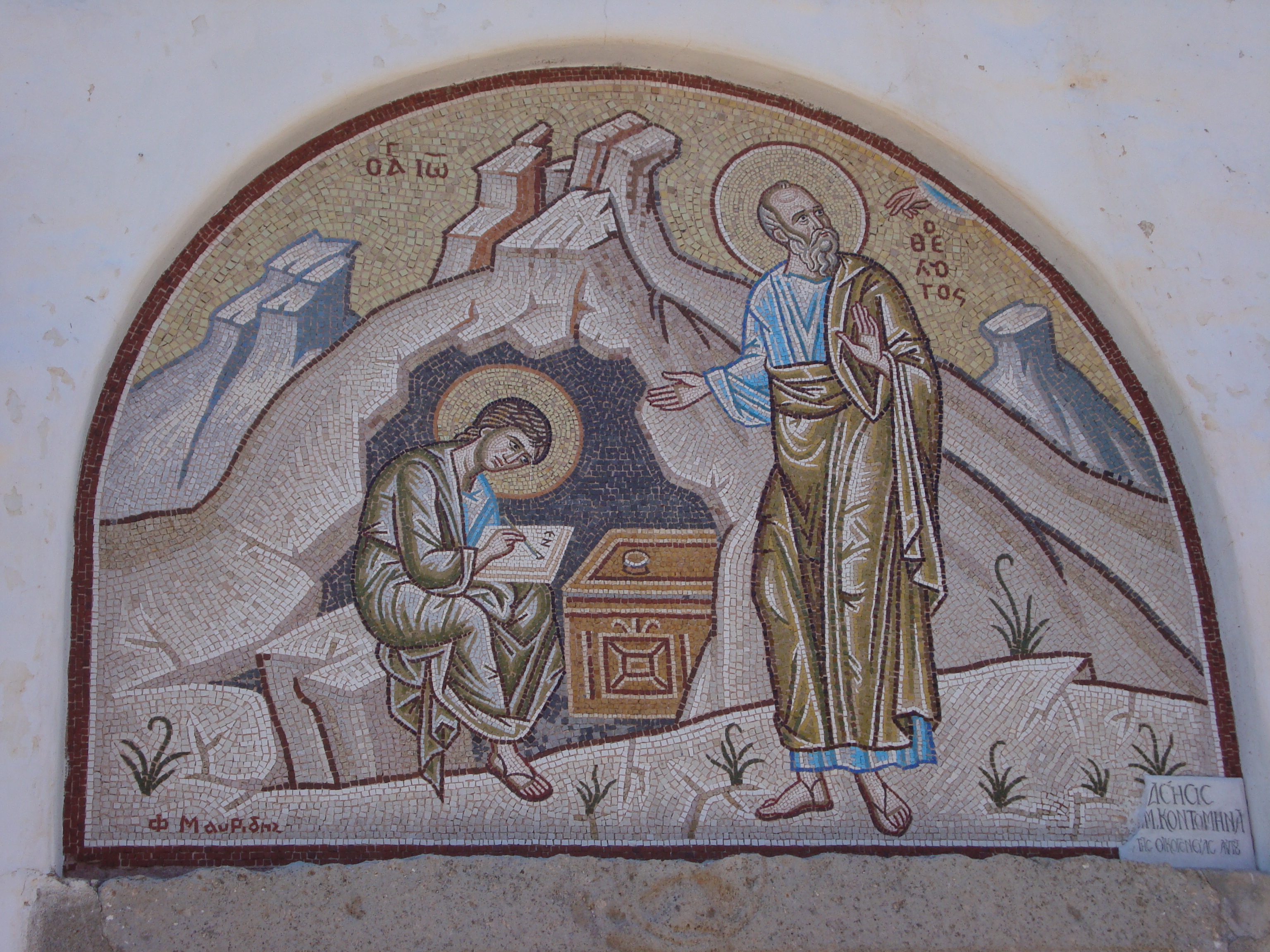
John the Apostle was exiled to Patmos in 95 CE and was there until 97 CE. It was said that he inhabited this cave where he dictated his Gospel and Apocalypse to Prochorus, his disciple. Prochorus later became Bishop of Nicomedia. The Apocalypse, along with its peculiar revelations, was the last book of the Bible to be written.

During the 10th century, the cave became enclosed by a Greek Orthodox monastery to guard its spiritual importance, and of course, to ensure its overall condition and protection. The Cave of the Apocalypse is now a center for Christian pilgrimages.

From an archaeological standpoint, there are indentations in the rock where John may have laid his head. These indentations are now the home of seven silver lights, one which hangs over where he slept. The entrance to the cave boasts an extraordinary mosaic depicting the visions John had seen while in the cave.

Evidence about the history of the Cave of Apocalypse is not, however, conclusive. It is a place that amasses a strong sense of spiritual worship and a feeling that some say is unshakable.

The Cave of the Apocalypse was recognized in 1999 as a UNESCO World Heritage site, and it remains one of the most historically important sites of the Christian world.

Photography and Video of the Cave of the Apocalypse


Picture Sources

Wikipedia

Saturday, April 17, 2010

Evidence In Archaeology: Humans Have been Around Longer Than What's Being Taught


Hosted by Charlton Heston, one of my favorite old time actors, this video dives into a widely controversial subject. Were humans present during the age of the dinosaurs? Are the origins of Man supported by the latest information found? Watch the video and judge for yourself.

Wednesday, March 10, 2010

How Does Archaeology Help Us Understand The Bible?


Archaeology and the Bible from CPX on Vimeo.

John Dickson interviews Karin Sowada, an Australian archaeologist and former politician, on the subject of archaeology. What evidence in the past few years has given rise to several passages within the Bible and what does this mean?

Sunday, December 27, 2009

The Many Misconceptions About the Bible: A Video Outlook


Modern people have many misconceptions about the Bible, which was a social commentary written and revised over a considerable period of time. I must admit, I am one of those modern thinkers, part of the time at least, who believes that ideals dealing with faith can sometimes be skewed when it comes to written texts.


So what do you think about these interpretations in the video? Do you believe what is written or do you rely on reason to form your ideals?

Monday, October 12, 2009

Monday Ground Up: The Contributions and Legacy of the Hebrews


I grew up with a great sense of pride in my heritage and my family. My father's side was Jewish and my mother's side was Polish. Of course lately, I have been experiencing a a bit of unrest considering it seems as though I don't know as much about my heritage as I thought I did. It's important for me, and I suspect for you as well, that culture is important to who we are, how we see things, and ultimately how we make decisions. I think that's why I have chosen to focus on the contributions of the Hebrews for this latest edition.

The major contributions of the Hebrews to Western Civilization were the law, philosophy, and the covenant.

The Law


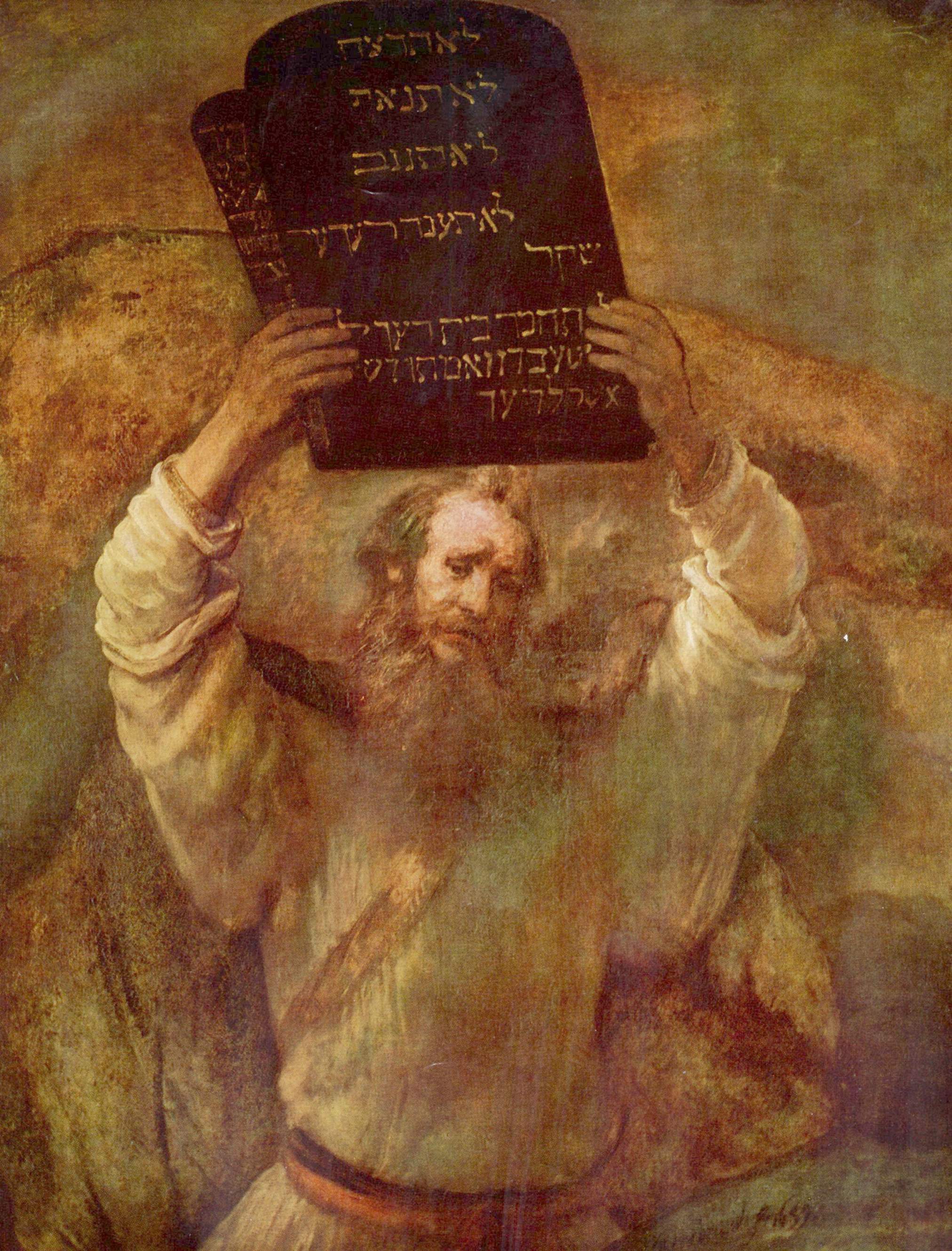
Moses with the Ten Commandments by Rembrandt (1659)

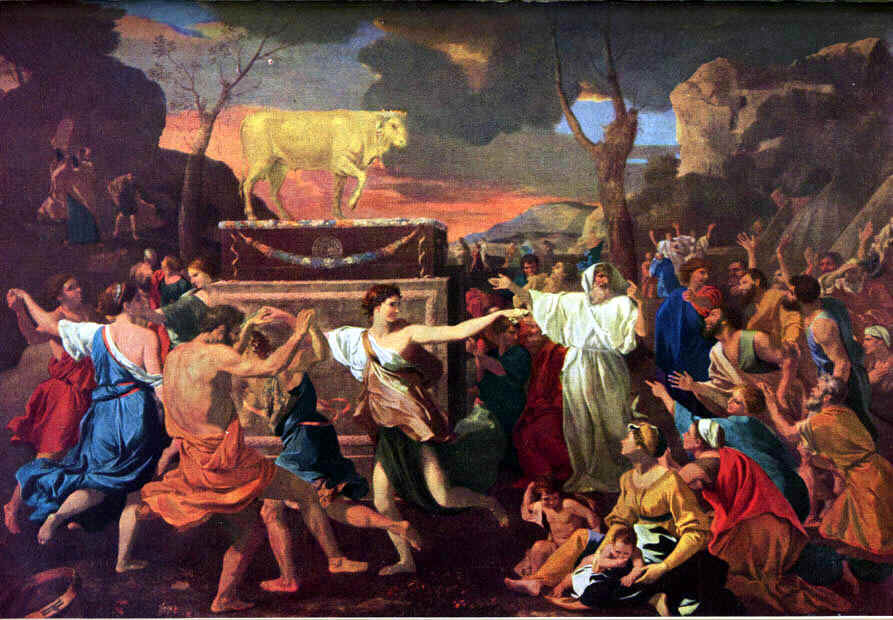
The law would not exist without Moses, who leads the Jews out of Egypt and a 40 year tradition of slavery. Moses walks into the mountains of Sinai and then returns with the Ten Commandments, presenting them to the Israelites. At the time, they are partaking in immoral and godless acts. Moses does not turn his back on his children of Israel, rather he makes it clear that the commandments brought to them originally by Yahweh are the law. The first documented and written laws.

The Philosophy

The Hebrews emphasized the use of temperance which resulted in a man being rewarded with prosperity, long life, and a good name. Although, it was up to the individual themselves to maintain these ideals. In addition to temperance, there is mechanism which stresses the power of the universe and the sporadic nature of the machine. The use of skepticism which simply means you question whether true knowledge is possible or what others believe to be true may not be.

Fatalism states that your life is built on fate and can not be controlled, so accept it. Pessimism is the belief that riches, knowledge, and fame are overrated and constant suffering. Moderation, as the Epicureans believed, meant that you restricted the desire to be indulgent or partake in scrupulous acts.

The Covenant


Source

The Hebrews used a monotheistic religion which was governed by the Old Testament. The religion stressed the belief in one God called "Yahweh". This god was reserved for the "chosen people" and came in a physical body with emotions of the common man. Yahweh gave the law to Moses and maintained a sense of moral code.

When Moses gave the Hebrews the ten Commandments there was an agreement, or rather a Covenant, made between God and the Hebrews. As the long as the Hebrews obeyed God through his Ten Commandments and laws, He would promise to protect them.

Between the 7th and 8th centuries BC, the Hebrews were worshiping other gods and thus breaking their covenant with Yahweh. The Hebrew prophets warned the Israelites of God's displeasure, and that he would bring wrath and misfortune upon them.

The Bible and Archaeology


Archaeological discoveries and the Bible account coincide, adding credibility to the Bible. This is a fantastic account of the discovery by Flinders Petrie in 1896.

Archaeological Finds and Historical Data
The Merneptah Stela (or stele-places Israelites in Canaan)


Flinders Petrie


Why was the Merneptah Stele a significant archaeological discovery? Merneptah was a Pharaoh who ruled over Egypt in the late 13th century B.C. The son of Ramesses the Great (Ramesses II), Merneptah was the fourth Pharaoh of the 19th Dynasty. The “Merneptah Stele” is the name given to a stone slab engraved with a description of Merneptah’s military victories in Africa and the Near East. It was discovered by renowned British archaeologist Flinders Petrie at Thebes in 1896. Read more about the Merneptah Stele

The Old Testament


THE Old Testament is a collection of selected writings composed and edited by members of the Hebrew-Jewish community between the twelfth century B.C. and the beginning of the Christian era. It includes such diverse materials as prophetic oracles, teachings of wise men, instructions of priests and ancient records of the royal courts. Some material is historical, some is legendary; some is
legalistic, some is didactic. For the most part the literature was written in
Hebrew, but a few passages were written in Aramaic, a kindred language which
came into common usage among the Jews during the post-Exilic era (after the
sixth century B.C.). Read more about the Old Testament Life and Literature by Gerald A. Larue

Beersheba Altar


©Tim Bulkeley

As one enters the site today the first stones that one notices are not ancient, but a reconstructed large sandstone horned altar. The stones on which the reconstruction is based were found in the walls of the storehouses from stratum II. Since most of the stone used in these buildings was limestone the excavators noticed the anomalous blocks. Eventually it turned out that three of them had projections (like the "horns" of a horned altar) and a fourth looked as if a horn could have been chipped off. One of these stones had a serpent deeply cut into its surface. Other, similar stones were found in the repairs made to the glacis in this stratum. ~Tim Bulkeley

She-Shaman Burial

The Hebrew University of Jerusalem made a discovery on November 4, 2008 of a pair of tortoise shells. They were part of the funerary offerings recovered from the grave of a she-shaman from the Natufian period, some 12,000 years ago, at the Hilazon Tachtit archaeological site in the Western Galilee in northern Israel. Read more about the She-shaman

The Tombs of the Family in Law of King Herod


Ehud Netzer of Jerusalem's Hebrew University unearthed what he believed were the 2,000-year-old remains of two tombs which had held a wife and daughter-in-law of the biblical King Herod.

Thursday, April 30, 2009

Biblical Archaeology


Post removed

Like Ancient Digger? Why Not Follow Us?


Subscribe Via RSS Feed Follow Ancient Digger on Facebook Follow Ancient Digger on Twitter Subscribe to Ancient Digger Via Email

Get widget

Search


Ancient Digger Archaeology Copyright © 2015 LKart Theme is Designed by Lasantha