• Ancient Digger teaches Archaeology and History to all Ages!

Sunday, May 6, 2012

This post has been deleted


Sorry. This post has been removed.

Monday, March 19, 2012

Barbary Wars – when the US tangled with Libyan pirates


Libya has loomed in American minds for a generation. Colonel Qaddafi's erratic flirting with terror organizations left him a marked man by the US government, long before the Libyan people finally meted out their own justice. But that tangling-together of US interests, with a Libya eagerly testing its power, goes back much further than the 'mad dog' and 'line of death' insults first hurled back in 1986. In fact, names of Tripoli and Derna are etched deep into the military history of the United States during the Barbary Wars. Both the US Navy and the US Marines owe their genesis to the Libyan pirates who called the Libyan coast home some two hundred years ago.

Back in the 18th century, the Barbary pirates were the scourge of the seas off the coast of Africa and the Mediterranean. But this was no 'Pirates of the Caribbean' privateering. It was piracy as an instrument of state, The countries of Berber North African – the fiefdoms of Morocco, Tunisia, Algiers and Tripoli – were using their fleets to siphon money into the coffers of their rulers. And there was a long and profitable history from the kidnapping of merchant ship crews, and extracting ransom – a practice that various European powers had long acquiesced to. But the young United States nation was not about to play ball.

In the years immediately after the War of Independence, the nascent US state was weak. Trade was important to help rebuild the war-worn economy. But Americans ships, plying their trade across the Atlantic, quickly fell foul to the Barbary pirates. With no navy to speak of, the United States was forced to pay crippling tributes – sometimes amounting to more than a million US dollars. It was that humiliating drain on the American nation that spurred the setting up of the US Navy in 1794.

And in 1801, with Thomas Jefferson at the helm as newly-elected President, the US government decided it had had enough. It flatly refused the demands of the Pasha of Tripoli, Yusuf Karamanli, for a tribute of $225,000. Instead a fleet of 6 modern warships was dispatched to deal with the Barbary problem during the Barbary Wars. The Libyan pirates were to be blockaded. So the first gunpowder smoke wafted across the waves near Tripoli on August 1 1801, as the USS Enterprise confronted the Tripoli, a Tripolitan corsair: the First Barbary War had begun.

This first skirmish during the Barbary Wars proved a good omen for the US Navy, which was involved in its first-ever engagement. The 12 guns of the USS Enterprise were handled far more adeptly than the Tripoli's 14 guns, and the Barbary vessel eventually holed, and defeated decisively. While this was only a small engagement, the dramatic victory-in-arms galvanized the American public, and its Navy. The Libyan corsair fleet, by contrast, had its morale knocked sideways. But this was only the start of the naval skirmishing, which was to last several years. Final victory would only come when US Marines stepped ashore – again for their first-ever action.

In 1805, concerned at the way the naval blockade was dragging on during the Barbary Wars, the US hatched a deal with Hamet Karamanli, the legitimate ruler of Tripoli who had been displaced by the current Pasha – his younger brother Yussif Karamanli. Hamet would be re-installed on the Tripolitan throne, the US said, if he gave his blessing to an attack on Libya from Egypt. A mixed bag of Berbers, Arabs and mercenaries from Greece was then put together for the assault, which was to be led by the US Marines.

In April 1805, the US-led force cut through Libya from Egypt, to the city of Derna. While the US Navy pounded Derna's defenses, a three-pronged assault probed, and then took the city. In another dramatic first, the US Marines had taken part in their first land battle outside of the US – and a Marine legend was born. Countless generations of Marines-to-come were now destined to holler out ′to the shores of Tripoli' in the now-fabled Marines' Hymn.

But while the US Navy and US Marines were bathed in glory, double-dealings were at hand. The threat of a US march to Tripoli bought a change of outlook from the Pasha – and a betrayal of erstwhile allies by the American State Department. A peace treaty was signed with Yassif Karamanli, and his brother unceremoniously dumped. The mercenaries were never paid.

This wasn't the end of the rumbling conflict with the Barbary states – the war was to flare up again after renewed attacks on merchant vessels, this time by Algerians. But the first round of this Libyan-US discourse was to prove to be the forging of the American military, and of its ability to project its power around the world.

A superpower was stirring.

This is a guest post provided by Chee Seng, a blogger who writes about freeware reviews at Bestfreeonline.net/

Saturday, December 31, 2011

A Film Unfinished: The Making of a Nazi propaganda film


Last semester I watched several documentaries and films including the "The Kings Speech", "The Linguists", "The Ax Fight", "The Birdcage", amongst many others. Documentaries allow use to gain a perspective through the eyes of the filmmaker. It's true. Sometimes there is an agenda, yet sometimes, the footage is entirely raw and leaves you feeling a bit uncomfortable and perplexed. This is certainly my reaction to the documentary, "A Film Unfinished".

A Film Unfinished, by Yael Hersonski, explores the making of a 1942 Nazi propaganda film of the Warsaw Ghetto two months before its liquidation, in a Nazi operation known as the Grossaktion Warsaw. It premiered at the 2010 Sundance Film Festival, where it won the "World Cinema Documentary Editing Award".


The footage is highly disturbing.  Hitler had an extensive collection of these propaganda films stashed in what appears to be a vault. It's ironic really that so much was documented, and yet, so many individuals still question the validity of the events that occurred under Hitler's turbulent reign. In this lost footage, the Nazi's have presented their subjects in such an odd way. It looks staged to be honest. They've made these people look like they were carrying on everyday tasks, not bothered by their condition of living. Pulled in rickshaws to local shops for goods and dancing on the streets.

A Jewish Council was set up in the Ghetto by the Nazis, just like it had always been done before. Adam Czerniaków, the head of the Jewish Council, was set up in the inside, to manage what was essentially "a holding pen" for the final destination. He wrote extensively about his role in the film, documenting the details in his journals.

The documentary also features many of the survivors, watching the footage in a theatre, and sighing at the staged antics of the Nazis.

One survivor remarked, "I keep thinking that among all these people I might see my mother walking".

Germans would often show up in the Ghetto, "usually for unpleasant reasons and usually shooting.  So when they were filming it was much more positive". 


For years, the identity of the filmmakers went undiscovered, until a lead in the 1960's lead to the name Willy Wist. Willy was one of the cameramen for Das Ghetto, but he took great pains to cover his tracks.

If I had to chose one scene or one moment in the film that stopped my heart, it was the filming of the cookies on a neatly placed tray, in the middle of a feces pile. Starving residents were handed cookies in their bed, and you could plainly see, they were near death. Starving. The sight of a cookie was all together surprising. Another facade of this staged propaganda film.


It's difficult to watch A Film Unfinished and not have an immediate reaction to the footage. You may remember where you were the day the events took place. You may have even had relatives there at the time. This is a film that certainly demonstrates a false sense of security.


If you'd like to watch A Film Unfinished, it's available on Netflix for streaming. It's also available for sale on Amazon.

Credits

Film by Yael Hersonski
Edited by Joelle Alexis

Friday, September 30, 2011

Ask Ancient Digger a Question: What Did the First People in North America Eat?


Every so often I receive an email from a student looking for information pertaining to history or archaeology for a research paper. My latest question is about the first inhabitants of North America and what kind of subsistence system they had.

The Answer to: What Did the First People in North America Eat?

The first early Paleo-Indians migrated into North America around 13,000BC. Archaeological evidence suggests they were hunting megafauna like mammoths, mastodons and large game using Clovis points attached to a longer spear and fishing. There is also evidence of deer hunting as the Clovis points discovered where smaller and more narrow and streamlined for smaller game animals. Consequently, Pleistocene hunter-gatherer societies didn’t rely on one resource and remained diversified in the event conservation had to take place.

Also check out:
Native Peoples of Florida
Hunter-Gatherers, Agriculture, and Global Warming


Thursday, April 21, 2011

Rome: Romulus and Remus Story


One of the most famous stories of Rome, the history of Romulus and Remus continues to captivate to this day. The history of Romulus and Remus tells the story of how Rome was first founded, and modern archaeology provides tantalizing clues to the legend of these brothers as well.


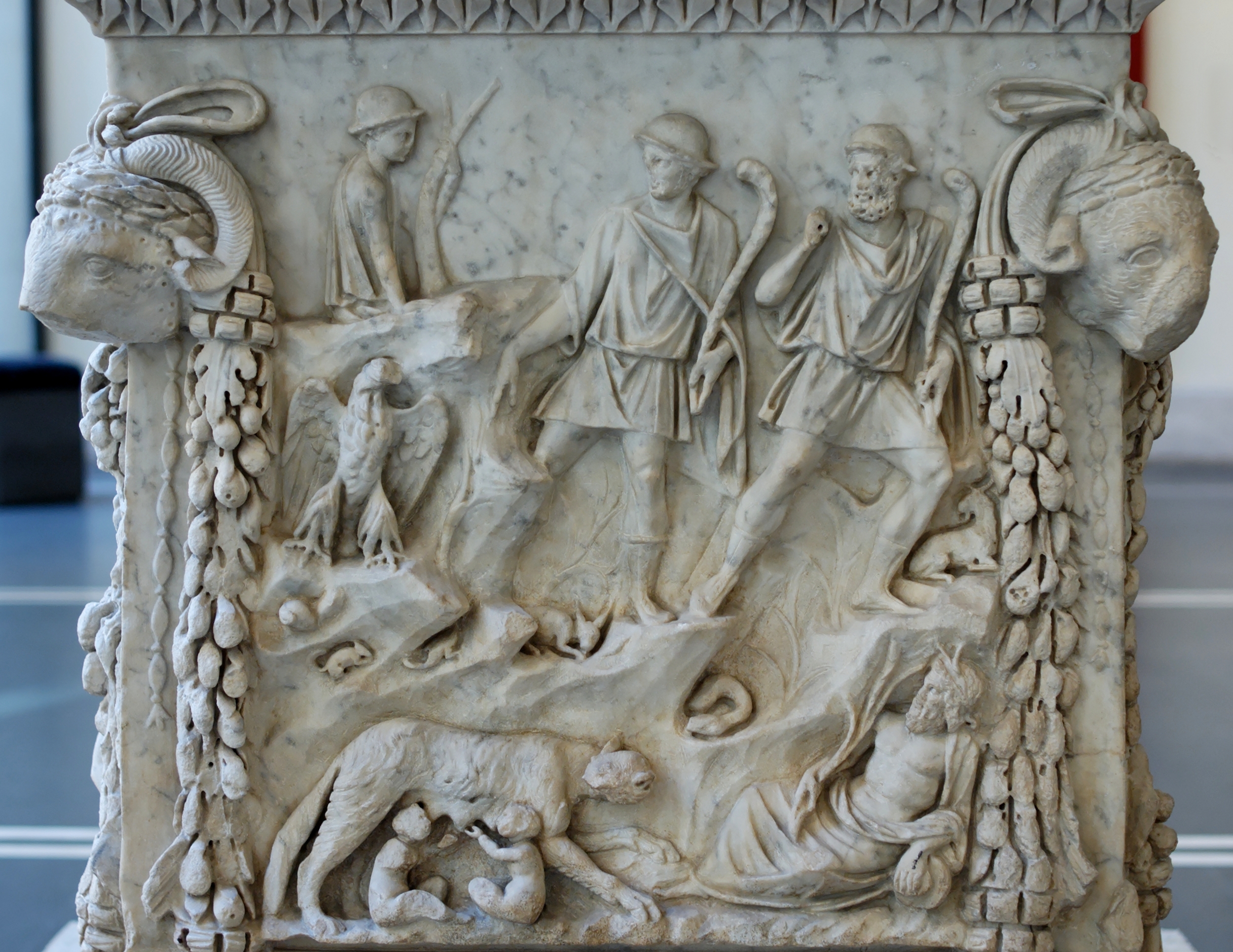
The story begins in the city of Alba Longa. The Romulus and Remus legend contends that they were the twin grandsons of Numitor, rightful king of the land. The twins appear to be divinely conceived, with a human priestess mother and the god Mars. The history of Romulus and Remus begins with strife, when Numitor’s brother Amulius disposed of him and left the twins to die in the Tiber River as infants. The fates were on the side of the twins, and they survived due to one miracle after another. Instead of drowning, a she-wolf discovered the twins and nursed them as infants, along with the help of a woodpecker that would bring the babes food. Then, they came under the care of a kindly shepherd and his wife, who raised them to adulthood. By another incredible twist of fate, they ultimately ended up being brought face to face with Amulius and were told of their real identities. As natural leaders, the brothers were able to amass a strong following and dispose of Amulius, restoring their grandfather, Numitor to the throne. With their grandfather at his rightful place on the throne, the brothers then decided to found a city of their own.

SHE WOLF nursing her Twins: REMUS and ROMULUS. Roman Commemorative 330 AD.
When faced with the task of locating the site of their city, the brothers were conflicted. Romulus was in favor of building their city on Palatine Hill, but Remus favored Aventine Hill. They decided it would be up to the gods to decide the location of the city and began to look for divine signs. According to the history of Romulus and Remus, each brother saw signs in the form of birds. While Romulus saw more birds than Remus, Remus contended that he saw his first and therefore was in the right. Eventually, work began on the site that Romulus selected, while disputes between the brothers continued to grow. Eventually, these disputes led to brother turning on brother. According to the Romulus and Remus legend, Romulus murdered Remus after his brother mocked a wall that he had built on the site. The city was then named Roma after Romulus and he went on to create the Roman Senate and Roman legions.

Archaeologists and scholars often see the Romulus and Remus legend as an analogy for Roman citizens and the history of the city itself. Although there is little doubt that the city itself garnered its name from Romulus, there is great speculation about his brother Remus and the circumstances of his death. In addition, there is great speculation about whether or not the brothers actually did exist. Scholars commonly accept that the brothers were a myth themselves, and that the city gained its name from the fictional character of Romulus, and the evidence presented by archaeology lends credence to this belief.

For modern visitors, Rome offers up tantalizing archaeology, which hints at the history of Romulus and Remus. Symbolism showing a she-wolf with two infant children abounds throughout Rome. Pliny the Elder even described a statue of the she-wolf that once stood in the Roman Forum. A bronze statue that closely represents the original is on display in the Capitol Museum. Although this statue has been dated to the middle ages and not the antiquities, it is still fascinating to gaze upon a modern reminder of Romulus and Remus legend.

Ancient Rome: The Archaeology of the Eternal City (Monograph, 54)Another recent find in Roman archaeology is commonly recognized as a memorial to the Romulus and Remus legend. Located under Palatine Hill, the site discovered in 2005 has yielded rich finds pointing to the location serving as a memorial dedicated to the brothers during the Roman age. Among the artifacts found were painted seashells, pumice stones and even mosaics. Archaeologists working on a renovation project centered on Emperor Augustus’ palace discovered the cave, which has been closely tied to the Romulus and Remus legend.

Other finds in Modern archaeology have heralded other tantalizing glimpses that support the Romulus and Remus legend as well. In 1988, a wall dating back to the appropriate period was unearthed, fitting nicely into the history of Romulus and Remus. At least one modern archaeologist has even gone so far as to claim it is the very wall depicted in the history of Romulus and Remus.


The history of the city of Rome is closely entwined with the history of Rolumus and Remus. The story of the rise of Rome seems to echo the themes found in the history of Rolumus and Remus, and modern archaeology has found clues that ancient Romans embraced these brothers as their city founders, regardless of fact or fiction.

In addition to these finds by modern archaeology, the theme of Rolumus and Remus has appeared in many different forms of Roman art. From mosaics to coins, the imagery of twin boys being nursed by a wolf has appeared in a vast array of mediums.

The history of Romulus and Remus may be only a legend, but it has been woven into the deep fabric of Roman history and provides an interesting tale to demonstrate the origin of this majestic city.

Wednesday, March 16, 2011

Critical Role The Irish Had In The West


Montana-based historian David Emmons' new book offers a different portrait of the often idealized American West.

Beyond the American Pale: The Irish in the West, 1845-1910"Beyond the American Pale: The Irish in the West, 1845-1910" examines the role of the Irish in westward expansion.

The Irish didn't fit into the western myth or image, Emmons says during a recent phone interview. "There aren't any cowboy movies where John Wayne plays a hard rock miner in Lead, S.D., or a meat packer in Sioux Falls or South Omaha."

Read More about the Critical role Irish had in West

Sunday, September 5, 2010

Introducing Ancient Digger's Video TellTales Week


I’m come to the conclusion-I do that often-readers want more than just articles. If you’re like me, sometimes reading a thousand word articles can be a drag when you haven’t had you’re morning coffee. Am I right or am I right?

I want to get you involved as much as possible, as my goal is to make Ancient Digger a multimedia site. What better way to see who my readers are then to start accepting travelogues and video showcases of you on location at a historical site.

Sometimes it’s easier to understand a site or aspect of history when it’s described in another fashion by a different person. Consequently, I can’t be all over the world at all times, but all of you are. This means many of you have access to sites, maybe even a couple miles away from your home.
I want to hear you’re perspectives. You don’t have to be experts. You don’t even have to put yourself on film. I do, however, want to hear some commentary.

My goal is to receive seven videos. I would like to run a new video every day for a week once a month.

Along with the video, I would like you to provide me:
  • A short bio about yourself
  • An introduction for your video
  • A link to your own website or blog
You can send this information to ancientdigger@gmail.com.

I can’t accept every video sent to me and I do apologize ahead of time. Remember I only need seven, so the sooner you can get your video sent to me the better. I may choose to use your video for a later date. If that’s the case, I’ll let you know via email.

This is something I’m trying and if it works, I would like to devote one week out of every month for your travel videos. Just remember, although the videos are about travel destinations, I still need to hear the history. Don’t give me a commercial. Make it personal!

Now you’re probably wondering what you get out of this deal. Am I right? If you said no, I thank you for your generosity. However, I would like to give you something back.

I will be devoting a page just for you. My video tour guides. Your name and a link to your site will reside there permanently, divided by month submitted and the name of your video.

For Example:

September 2010

Lauren Axelrod “Natives of Florida

Rules For Video Submission

  • Original work only.
  • Video Format needs to be compatible with Vista, Windows 7, and XP. If I can’t upload or embed your video to the site, I can’t use it.
  • No profanity in the video. Keep it friendly to all ages.
  • Please keep the commentary easy to understand.
  • Topic of the video should be about travel, archaeology, anthropology, culture, or history. You know what this site’s about, so stick to the format.
  • Length of the video must be no less than 2 minutes and no longer than 10 minutes.
  • I encourage you to film the video in English. However, if you'd like to film in your native language, I will need the translation for the video or you can add subtitles to the video itself.
  • Please do not submit videos already published to YouTube. I want originals.
  • Submit all videos to ancientdigger@gmail.com. In the subject line put "Video TellTales Week Submission".

Helpful Tips and Extras

  • If you’d like to include friends in the video or family members, it’s entirely up to you.
  • You can use music.
  • You can use a rendering service like Animoto to create your video. I use them all the time. In that aspect, they will provide you en embed code. Copy and Paste. Very easy.
  • Creativity is encouraged. So if I see you in an Indiana Jones hat with a whip, most likely I’ll love it.
  • Videos can be made in Windows Live Movie Maker, Animoto, from a video camera, Webcam, or other video software you may have.

Voting

You are more than welcome to comment on the videos once they are published, however voting will not commence until all seven videos have been posted.

To vote, just sign into the comment system and write vote under your favorite video. You will have until the end of the month to vote and you can only vote once. You can, however, encourage your friends and family to vote and comment.

On the first of the month I will announce the winner.

Rewards


The winner will receive a free Ancient Digger T-shirt, 2 Free months of advertising (banner 125 x 125 or link), and an announcement page with a link back to your site.

For all of my six runner ups, you will still receive a spot on the video tour guide page. Your name, link to your video, and a link to your site will reside there permanently.

Ladies, you can chose a shirt from these pages:


T-shirts
Tank Tops

Gentlemen, you can chose a shirt from these pages:


T-shirts Page 1
T-shirts Page 2

Important Dates:

September 11th Videos Due
September 20th Voting Starts
September 30th Voting Stops
October 1st Winner Is Announced


Please Note: This is an off week for the Monday Ground Up Edition. I'm trying to promote the new Video TellTales Week, so make sure you tell your friends and remember, September 11th will come quite soon.

If you have any further concerns or questions, please don't hesitate to use the contact form.

I'm looking forward to seeing the submissions.

Lauren Axelrod
Owner Ancient Digger

Friday, August 6, 2010

The Last Stronghold of Paganism at Old Uppsala in Sweden


 Background of Old Uppsala

Old Uppsala is situated in the valley of the River Flyris, surrounded by working homesteads on cultivated plains. The story of Old Uppsala, featured in the medieval writings of Adam of Bremen, was described as the last stronghold of paganism.

The center of Uppsala was framed by an enormous temple called the Temple at Uppsala , in it containing magnificent idols of the Æsir gods. The temple was removed during the 11th century when Christianity arrived and a Christian church was constructed on the archaeological site instead. It later became the archbishopric of Sweden from the latter part of the 12th century to the end of the 13th century.

Old Uppsala’s most distinctive feature, although there are many, is the burial mounds amounting to 3000 in number. Many of the mounds have been covered by farmland. Among these mounds are the Royal Mounds, situated in close proximity to the Christian church.

History of Old Uppsala


During pre-historic times, the Kings of Sweden were said to call Old Uppsala their home. In fact, according to Scandinavian history, Old Uppsala was said to be the original home of the Yngling Dynasty.

The site thrived until the Middle Ages, boasting political meetings for the “Ting of the Swedes (general assembly). The general assembly convened annually so that the king could summon individuals to war. Later on during the 13th and 14th centuries Old Uppsala became a significant economic, trade, and religious center.

Archaeology at Old Uppsala

Thousands of artifacts have been excavated in the mounds by archaeologists, thus explaining many questions about the people that once called Old Uppsala their home. Archaeologists and Historians believe that the Royal Mounds were the burial site for the kings during the 6th century, established as a “symbol for divinity and power”.

When the West Mound was excavated in 1874, a shaft was dug down to the bottom of the mound. Picture Courtesy of  Swedish National Heritage Board

Today in Uppsala

Old Uppsala is a wonderful site for exploration, even today. You can look around the mounds, explore the Gamla museum, and look inside the church that stands today. The museum itself is a wonderful avenue to experience the history of Old Uppsala, as it represents the last stronghold of paganism.

Monday, August 2, 2010

Monday Ground Up: Diving the Titanic in Newfoundland


She hit an iceberg and sank, in one of the most epic tragedies of all time. Nearly 100 years later tales of the RMS Titanic remains legendary. Perhaps the work of James Cameron and Leo Di Caprio can be credited for bringing the story of this ill-fated trip to mainstream popular culture. Or perhaps, even without a multi-billion dollar blockbuster our morbid human curiosities would still keep us entranced by this sunken piece of history.

Friday, July 16, 2010

Discovery Of An 18th Century Ship at Ground Zero


The remains of an 18th century ship have been found at Ground Zero. Archaeologists believe the vessel sunk due to the expansion of  Manhattan  more than 200 year’s ago.

Molly McDonald, archaeologist: 

“It was apparently somewhat common to sink ships in landfill as people were building land further out into the Hudson river and the East river, but only a handful of these ships have been found so far, so it is really quite rare. It is just exciting to find it here on the World Trade Centre site.”

Read More about the Discovery of an 18th century ship found at Ground Zero

Wednesday, July 14, 2010

History of Libraries


Anytime I find myself at a library, I tend to migrate to the darkest, dungeon like area, filled with leather bound books and quiet enough to hear a pin drop. However, did you ever stop and wonder how those books surrounding you got there is the first place? The History of Libraries never really dawned on me until I checked out a book that hadn't left the library since 1956.

This particular article by Louise Baker about the History of Libraries Through the Ages is definitely the  most extensive history I've seen on the net, so for that, thanks Louise.

Archeologists have spent centuries pulling together bits and pieces of history about our past. As a result of their research, they have managed to find what seems to be proof of the first libraries located in ancient Egypt. Most of their conclusions were drawn from the information gathered by previous thinkers, philosophers and scientists who visited Egypt and were able to gather proof of documents found throughout the country in safe places equipped to store the documents.

In the paper, The Library in Ancient Egypt, Cairo University professor Dr. Abdel-Halim Nureddin explained that these safe places could only be described as libraries in that they required “classification, presentation and staff (librarians and many others)” just as modern libraries do today.

Read MoreHistory of Libraries Through the Ages By Louise Baker

Site: ZenCollegeLife
Picture Source

Sunday, July 4, 2010

Rise of the World's First Hominids


The Middle Awash Area of Ethiopia

Development, Growth and Evolution, Volume 20: Implications for the Study of the Hominid Skeleton (Linnean Society Symposium)The Middle Awash area of Ethiopia is the most persistently occupied place on Earth. Members of our lineage have lived, died, and been buried there for almost six million years. Now the bones of hominids are eroding out of the ground.

In the Afar desert of Ethiopia, there are a lot of ways to bite the sand so to speak. There is disease, of course. One can also perish from wild animal attack, snakebite, falling off a cliff, or in a shoot-out between one of the Afar clans and the Issa people across the Awash River to the east.

But life is fragile all over Africa. What is special here is the occasional durability of the deceased’s remains. The Afar Basin sits smack atop a widening rip in the Earth’s crust. Over time, volcanoes, earthquakes, and the slow accumulation of sediments have conspired to bury bones and then, much later, disgorge them to the surface as fossils. The process is ongoing. In August 2008 a young boy was taken by a crocodile in Yardi Lake, in an area of the Afar known as the Middle Awash.

Read More:  The Middle Awash Area of Ethiopia and the Rise of the World's First Hominids.

Courtesy of Auron from Edutainment

Sunday, June 27, 2010

The Royal Ontario Museum Hosts the Terracotta Army


TORONTO.- The Royal Ontario Museum (ROM) hosts the Canadian premiere of The Warrior Emperor and China’s Terracotta Army from June 26, 2010. Prior to its embarking on a Canadian national tour, the exhibition will be displayed in the Garfield Weston Exhibition Hall on Level B2 of the ROM’s Michael Lee-Chin Crystal until January 2, 2011.

The Warrior Emperor and China’s Terracotta Army showcases one of the most significant archaeological finds in history: the 1974 discovery, in Shaanxi province in north-central China, of thousands of life-sized terracotta sculptures of Chinese warriors.

Saturday, June 26, 2010

Differences Between Buddhist and Hindu Religion


Religion gives people a sense of hope and a purpose in life. There are many differences in the two major religions in East Asia. The most significant difference between Hinduism and Buddhism is in the Hindu religion, the people believe in many “Gods”. The Hindu “Gods” seemed to be created in stories and in people’s images. There were never any accounts of actually being able to see the “Gods” as humans.

Chris Stonecipher shares his view in the article Spiritual Differences Between Buddhist and Hindu Religion @Factoidz

Image Via Wikipedia

Thursday, June 24, 2010

112 Year Old Lost Shipwreck Found in Lake Michigan


My mom and stepfather have a home right on the water in Lake Michigan, so imagine their surprise to be right in the middle of some good old fashion archaeology, with a huge chunk of missing history. The 112 year old shipwreck discovered was the result of a century old storm in Lake Michigan.

The discovery of the L.R. Doty, a 300 foot-long steamship, is a monumental event  for Brendon Baillod, the president of the Wisconsin Underwater Archaeology Association. The 112 year old ship is the largest wooden boat unaccounted for and was carrying corn from South Chicago to Ontario, Canada in October 1898. The boat disappeared after 30 foot waves combined with heavy winds engulfed the entire ship.

Monday, June 21, 2010

Monday Ground Up: Archived Photography of the White Star Line and Her Ships


The White Star Line was a British shipping company most famous for its ill fated flag ship the RMS Titanic and World War I sister ship, Britannic.

The White Star Line was originally founded in Liverpool in 1845 by John Pilkington and Henry Wilson. The company's initial focus was on the Australian gold mine trade. In the early 1850's if you had sound ships and ran the Australian route, it would almost be difficult to not succeed. In one month of 1853, no less than 32,000 "get rich quick" hopefuls left port in Liverpool bound or Australia to strike their fortunes in gold. Australia's colony population jumped from 430,000 to 1.7 million in just 3 years after gold was discovered.

Thursday, June 10, 2010

The Buganda Kings: The Resting Place At the Kasubi Hill Tombs


(Source Laser scan used for reconstruction of the Kasubi Hill Tombs)
The state of Uganda was created from a small territory during the late  19th century by the Bantu speaking Baganda people under their kabakas,  or Buganda kings. The territory had little or no contact with the  outside world until the middle of the 19th century, when Arab slavers  penetrated the interior.

The Kasubi Hill Tombs of the Buganda kings were built with organic  materials in a traditional style of Ganda architecture and palace  design, reflecting years of technical advancement. The domed  construction and thatched circular building is said to be the largest of  its kind. The Baganda people used reeds and "bark cloth", supported by  wooden poles and reed fences with a reed gateway, to support the massive  structure.

Read the entire story about the History of The Kasubi Hill Tombs of the Buganda Kings  

Latest News: Unfortunately, a fire destroyed the Kasubi Hill Tombs on March 16, 2010.

Also check out:

Wednesday, June 9, 2010

Cooler Pacific Ocean Affected Medieval Europe, North America


Using cores of fossil coral from the Palmyra Atoll in the central Pacific Ocean, Burgman and a team used reconstructed sea surface temperatures from the period 1320 to 1462 to simulate medieval climate conditions with a state-of-the-art climate model. When the differences between medieval and modern climate simulations were compared with paleo-records like tree-rings and sediment cores from around the globe, the authors found remarkable agreement.

Monday, June 7, 2010

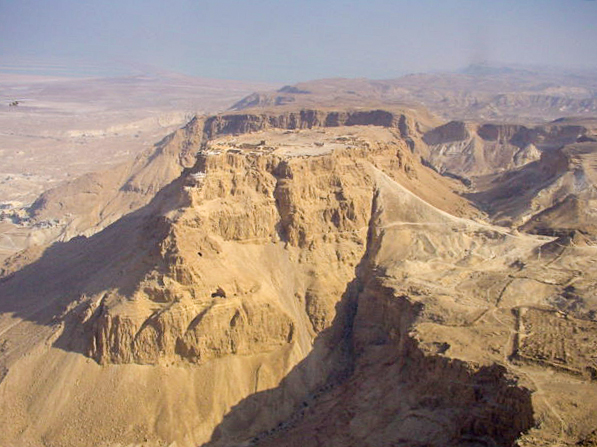
Monday Ground Up: The Masada Palace in Israel


Masada in Israel was built by Herod the Great in 37BC overlooking the Dead Sea. Masada, which is actually a fortified palace, was occupied by a Roman garrison following the death of Herod the Great. It became a refuge for zealots, or Sicarii, who revolted against the Romans and returned to Jerusalem around 66 CE.

Thursday, June 3, 2010

The Mummified Bubastis Cat


Cats were highly venerated in Egypt thousands of years ago. In fact, when they were trapped in a burning building, Egyptians would rescue them before fighting the fire.

Mummified Bubastis Cat


This particular mummified cat lived in Egypt over 2000 years ago. Mummified in bitumen resin, this cat lived a life of luxury in the royal temple of Bubastis, the city devoted to Bast, the cat goddess of pleasure, dancing and music. Worshippers invoked Bast to protect them from contagious diseases. Anyone killing a cat, even accidentally, was instantly put to death.

Photographs taken were in a room with protective lighting and casing.

Also check out:

The World Encyclopedia of Archaeology: The World's Most Significant Sites and Cultural TreasuresArchaeology For DummiesDiscovery!: Unearthing the New Treasures of Archaeology

Like Ancient Digger? Why Not Follow Us?


Subscribe Via RSS Feed Follow Ancient Digger on Facebook Follow Ancient Digger on Twitter Subscribe to Ancient Digger Via Email

Get widget

Search


Ancient Digger Archaeology Copyright © 2015 LKart Theme is Designed by Lasantha