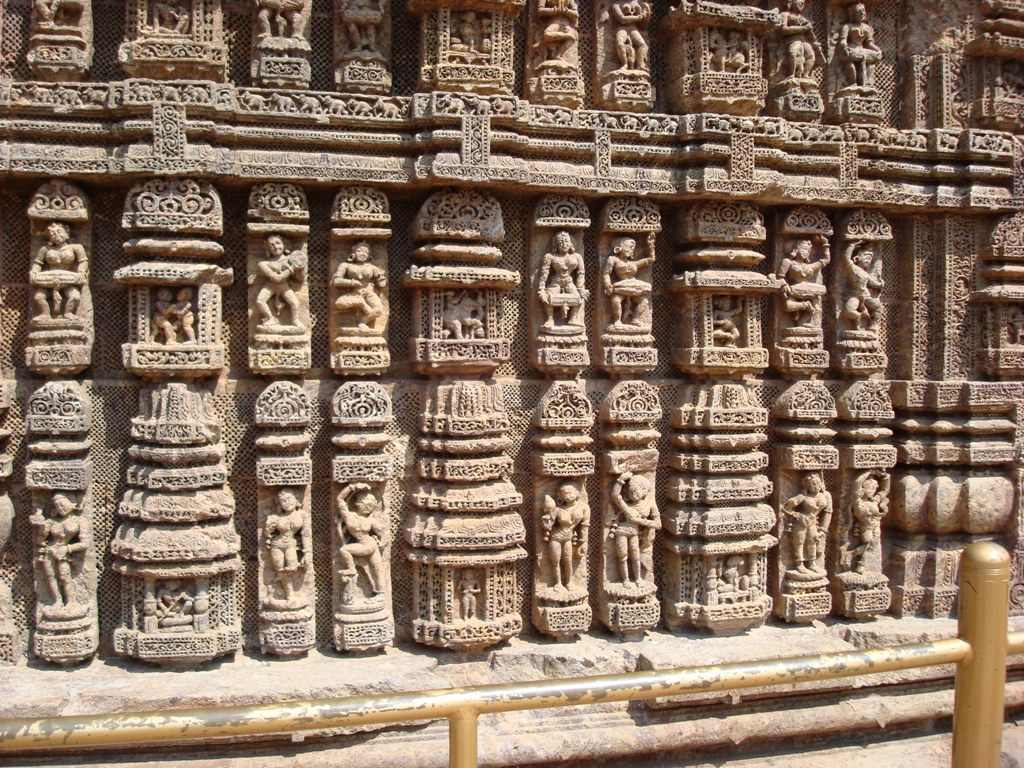
If you missed the documentary on eros and erotic art in Pompeii , make sure you do before taking a look at this in depth study into Pompeii's sexual past.
Pompeii is an archaeological site, which was destroyed around AD 79 by Mount Vesuvius. It was a town full of aristocrats and artisans. Artisans who were previously slaves, who gained freedom in Pompeii and became wealthy merchants.

Pompeii was a place for the super-rich! The Palm Beach of the Roman world. It was a place known for sexual indiscretions. One could choose his or her desires from a list of murals, pointing in the direction of their sexual preference.
You would hang your belongings on a peg, a peg conveniently located near an erotic scene, a reminder of where you left your things. Then you would proceed with your indiscretions in secret rooms or bathhouses.
Sex was a completely normal and fulfilling experiencing in Pompeii, and most of what we know about the eroticism that took place there was left on the walls. For 1700 years, this Greco Roman town lay buried in a blanket of ash and pumice, until archaeologists unearthed a town home to 20000 people. Beginning excavations were haphazard and damaging, yet while methods of archaeology were more refined, more artifacts more discovered. Some of the most recognizable and erotic art and archaeological finds in Pompeii were statues, large pools, and several murals of Priapus.
It is important to remember that all of the artwork in Pompeii discovered thus far has a much deeper meaning for the people that lived there. The Pompeians were enamored with eros and this obsession drove them to experiment with love, take risks with questionably clean prostitutes, and often drove men to partake in lewd acts with anything with a pulse. Is this the reason for the amount of sex that took place at Pompeii? Possibly.
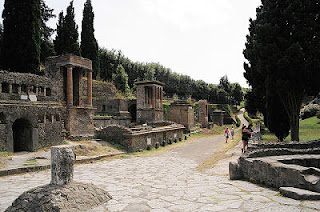
Sex and pornography in Pompeii were looked at as a completely normal aspect of human nature, and yet many modern cultures were ethnocentric in their own ideals and portrayals of what was sexually accepted out in the open. So what did the people of Pompeii think about the power of eros, sex, and pornography, what did modern cultures think, and why were sexually explicit items created?
Eros is the son of Aphrodite who essentially meddles in the affairs of gods and mortals, causing bonds of love to form, often illicitly. In early Greek art, Eros is depicted as a adult male with sexual prowess, but later becomes cupid, the blindfolded and childlike boy who flies around, shooting his arrows at unsuspecting individuals destined for love, with a little push of course. Eros draws one thing to another by attraction or even gravity. Hesiod, one of the earliest poets, writes a book called Theogony. He explains that Eros existed long before the goddess of love, Aphrodite. According to many philosophers, Eros was an awe-inspiring universal force. Eros (Love), is the fairest among the deathless gods, who unnerves the limbs and overcomes the mind, and counsels of all gods and all men within them. Pre-Socratic philosophers believed Eros was a natural force responsible for creation. It was not just good or bad, but destructive. Eros was vital because it operated as a social concept, yet it had moral implications. It was hard to control because in many cases, individuals would become slaves to it. This may have been the case in Pompeii.

Sex was less inhibited in Pompeii than it is today in most countries. There were few prohibitions and sex was just one aspect, albeit a very significant one, of human nature. The motto in Pompeii, which could be found on the erotic art and walls, drinking vessels, as well as plaques, read "enjoy life while you can for tomorrow is uncertain". Sex ranked as a great way to enjoy oneself and others, and while the stereotypical Roman orgies were most likely not part of daily life, certainly sex was acceptable, practiced, and celebrated.
Sarah Robinson writes:
There may have been a wide variety of sexual images on display in Pompeii, but it was incredibly unlikely that they were used to sexually excite spectators. Sexually explicit art was found among landscapes and other mythological art in rooms off kitchens, slave quarters, and other common areas. From the Roman point of view, the sex may have been noticeable, but it was not noteworthy and it did not set these pictures apart from landscapes and ordinary mythological depictions. The Romans seemed proud of their paintings, displaying them in full view of the public because of this pride. Sometimes the pictures were meant to give a sense of life’s pleasures1.
Loth notes that, “Among the ancients, sex was unashamedly joyous, in reading as in practice. The subjects carried no more taboos than food or sports, family quarrels or international wars.” These taboos were much more than modern cultures like the Victorians could endure, with their prudish ways and undeniable attitude of perfection. The Victorians believed the art at Pompeii was “obscene” by their own standards. There were depictions of sexual acts in almost every home and bathhouse, as well as many public spaces. There were other scenes on display in Pompeii depicting homosexuality, oral sex, and variety of sexual positions. The sexually explicit pictures found all over Pompeii were, “Proper pictures to have around your house. If you have a proper picture collection, you must have some really good pictures of people doing it, and if you don’t well you just don’t have any taste and don’t understand the proper values of your society”
7.
One such sculpture dating to the 1st century AD caused quite a stir in the Victorian community. The Pompeian sculpture of Pan having sexual intercourse with a goat touched very deeply on the topic of bestiality. The intention of the Romans and Roman sexuality was to create an amusing sculpture that was admirable for its wit and skill, and it was most likely displayed in full public view. The irony behind the attitudes of the Victorians towards this particular piece of art is the fact that undeniably racy subjects engulfed in a heat of passion were just an example of how unlikely it was that this act could have happened. The fact of the matter is that modern individuals, or more specifically modern American cultures, believe that all thoughts pertaining to sex or sexual acts are inappropriate. Nudity is taboo and it is taught very early on that one’s body should only be used in a biological context and not for display, especially in sexually explicit images. These images go even further when the subject of those images is children and nudity. Showing a child in this form is considered as terribly offensive but the pictures make an impact. American culture does not like to admit to the impact of sexual imagery, but every time a conversation is started about pornography, it sparks an intense reaction, which continues to prove the power of sexuality.
The 1864 edition of Webster's dictionary defined pornography as "licentious painting employed to decorate the walls of rooms sacred to bacchanalian orgies, examples of which exist in Pompeii”
4. These ideas of pornography were not so much the reflection of everyday Roman life but a way to show how sex was acceptable. No matter the amount of people who engaged in the activity or the object of those pleasures, sex was always conveyed as both a pleasurable and humorous act. This is certainly the reason why we see so many phalluses in Pompeii. Not only was the phallus a symbol of fertility, but also it was used in the form of an icon, its main purpose being to ward off evil. Today, the image of a phallus is completely taboo. The erect or semi-erect penis continues to be considered utterly unacceptable in any form of media other than pornography while female nudity in various forms is rapidly becoming acceptable even in media
6 . The people of Pompeii displayed and revered the phallus and were not ashamed of its meaning, because the meaning was never to be perceived as only a sexual object. In the age of “size does matter”, many often prefer a larger penis. Was this the case for Pompeians? Hardly. In Pompeii, a smaller penis was considered more attractive. A larger penis, like the one we see on Priapus, was usually found on an individual with characteristics unusual to the Roman ideal, which was amusing and worthy of a good laugh. It was never meant to cause distaste, but it demonstrates how the Pompeians were able to laugh at themselves and not take things, such as the size of ones manhood, too seriously.
Robinson described the Pompeian’s ideas about the size and meaning behind the phallic symbol:
Laughter was one way to dispel the anguish of the evil eye. Humorous, erotic art displayed around town and in your household was one way to employ the protection of laughter, and was probably the reason behind its prevalence in Pompeii. Protection against the evil eye could also be found in the many images of the phallus commonly depicted in Roman art. These phallic images range from unobtrusive stone reliefs carved into paved walkways to winged and belled hanging phalluses. Power, status, and good fortune were expressed in terms of the phallus. Hence the presence of phallic imagery in almost unimaginable varieties all around the town . . . . There are phalluses greeting you in doorways, phalluses above bread ovens, phalluses carved into the surface of the street and plenty more phalluses with bells on-and wings6 .
There are several examples around every turn in Pompeii displaying the phallus, the most notable depiction, considered to be the most obscene, is located on a life-sized fresco in a doorway into the House of the Vettii. The god Priapus holds a set of scales that weighs his phallus while he looks outward, brazenly meeting the eyes of all who pass by. If you dare walk past him or even catch a glimpse at the relative size of his not insignificant maleness, you cannot help but be impressed. This portrayal would often spark laughter to the Romans, and mere shock to the Victorians, but the meaning is so much more significant. Priapus was thought to bring luck and plentiful harvests in the garden and the bedroom. He was also a protector of the flocks and the bees and he protected people from harm and evil. As with any phallic culture, anxieties were probably created as men tried to keep up with the strength society expected of them. Mary Beard explores how these sexual anxieties manifested themselves in homophobia, “In fact, many of the insults that scholars have sometimes taken as signs of Roman disapproval of homosexuality as such are directed only at those who played the passive part”
1.
Check out:
The Fires of Vesuvius: Pompeii Lost and Found Continue Reading..................
One’s first impression of Pompeii upon arrival is mostly likely embarrassment. Perhaps your heart starts racing or the images of well-endowed males throws you into doubt about your own manhood. The streets of Pompeii are a clear detour from the 20th century ideas of standards and moralities, and for the most part, the erotic art and images of Pompeii have, since its rediscovery, caused both outrage and appreciation. It is important to remember, however, that the Pompeian artifacts are valuable since they provide a source of information, and the knowledge from that information requires dissemination. These artifacts might just hold a key to understanding not only the Pompeian citizens, but also ourselves. Therefore the archaeological artifacts need to be interpreted by someone besides an archaeologist or historian in order for their true importance to be realized. Even before the world stood still in Pompeii in AD 79, the inhabitants were using these objects routinely. There was not a person alive that did not have access to them, yet when the first obscene artifacts were finally unearthed, people recognized a collision of worlds. In order to truly understand these ancient relics, one had to dive into the world of Roman sexuality to understand why they were preserved.
It is easy to imagine a Victorian digger discarding an object considered obscene in their circle. However, thankfully they realized that these items could never be destroyed. Had they been of recent manufacture, this would have been the obvious expedient; but any relic of the ancient world possessed, merely thanks to its survival, a value that superseded the nature of the relic itself. The relics of Pompeii had no rivals, no copies, and their likeness could not be found in any surrounding areas. This added value accrued principally to two classes of relics, the trivial and the obscene. Though both kinds had presumably been distributed throughout the Roman Empire, trivial things had mostly vanished in centuries of neglect, while obscene ones had succumbed to the zealous progress of Christianity. When it came to obscene objects, the more obscene an object was, the more likely it would have been destroyed anywhere but at Pompeii. Thus Pompeian preservation became a necessary evil
4.
Depending on their inclinations, early critics condemned the one as immoral or the other as prudish, but all agreed that the ancient system of organizing Pompeii’s images would never do in modern times. A new taxonomic classification system was born out of Pompeii's priceless obscenities. They were to be systematically named and placed, and the final name chosen for them was "pornography," and they were housed in the Secret Museum. No one was ever allowed access to the Secret Museums’ indelicate collection, except for the archaeologists, who created one of the first pornographic experiences, in which sexually explicit portrayals of Roman sexuality were separated from all social contexts.
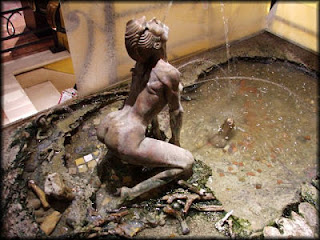
The Secret Museum, or the “
secret chamber”, as many refer to it, is located in the Naples National Archaeological Museum, Naples, Italy, and contains some of the most erotic and unadulterated archaeological finds from Pompeii, too explicit and unsuitable for the general public. Most of what the public is allowed to see today was locked up in the beginning of the 19th century because it did not fit into the taxonomic classification of erotic. Instead, these pornographic materials were essentially locked behind a brick wall. The museum was temporally opened in the 60’s when free love laid a foundation for acceptable promiscuity, and then it was closed until 2000. Today it is open to the public. When you buy your ticket to the museum you have to ask about the secret chamber. You will then be assigned a visitation time, which is usually only 45 minutes. All tours are free and guided by someone who speaks your language but who is not necessarily knowledgeable about the artifacts.

The artifacts that are housed in the Secret Museum derived their characteristics from ritual and human nature, found to be open subjects in Pompeii. One such scene may have evolved from a location owned by Emperor Nero’s second wife, Poppaea Sabina. Poppaea owned a villa there, in which a large pool was constructed, and while her husband was away she indulged in orgies with females and males of all ages. The villa was discovered during excavations carried out by Francesco La Vega in the eighteenth century, however the swimming pool, which measures 60 by 15 meter, can only be imagined by the existence of some foundational walls, unearthed during the 1970s. This meeting place brought about a party that represented the many Bacchanalian Scenes displayed in the Secret Museum.

The abundant libations drunk in honor of the gods and the frenzy of the rituals freed the participants from moral restraint, and the ceremonies took on a licentious character
2. These ceremonies of lust grew even more uncontrolled and lewd, but at the time of the Imperial period, and during the time of Christ and the early Christians, this behavior was seen as acceptable. Grant explores the modern views of sexual orgies and what exactly changed as far as acceptance of ritual, “Christian views on sex would definitely not support such iconography (and define it as the “worst” kind of evil), but Christians who chronologically lived closer to Christ did, and these were the Christians who emanated into the Catholic Church. So, something “changed.”
2
If we think about this logically it is clear that Church leaders today would never admit than Christ allowed sexual orgies, but they would admit that the Early Church in Rome, and especially in Pompeii, did. When Christ began to teach his word and promote a life of servitude and morality instead of debauchery, supposedly he spoke against sexual orgies. Regardless of what initially changed in the church to dissolve these immortal ideas of what was acceptable in the bedroom or out in the open, we still have relics in the Secret Museum to prove that at one time sex was celebrated.
Not every relic in the Secret Museum is grounded in sexual indiscretions. At some point the artifacts started to reflect different ideas about gender. A ritual basin housed in the museum is a prime example of this notion. The basin is made of multiple layers of metal (bronze, copper, or sometimes tin). Archaeologists described this large ritual basin, or lebes, from Pompeii, as a representation of "Satyr and Nymph". The nymph has evident, even if a small, male genitalia, therefore the most likely sex of this individual is a hermaphrodite or more probably an adolescent male. This was hardly a sexually explicit piece; rather it was a representation of changing attitudes towards gender. Any artifacts depicting mixed sexual orientation, however, were always placed behind closed doors when they were first discovered. This was not a subject that modern individuals were ready to face, but nonetheless, in keeping with the tradition of preserving distinctive sexual relics, the basin found its home in the Secret Museum.
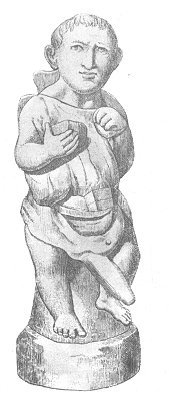
Several more fascinating statues were discovered at Pompeii, many in great number, most notable is the Drillopota. The Drillopota was a vessel, or obscene vase, used by the ancients to drink libations. Most undoubtedly they were used in honor of Venus, or perhaps Bacchus. Many of the vases depict men of little stature with a shaved head, shaved in fact to make them appear more ridiculous. The arms would sometimes hold tablets, which the children used at school. Some of these Drillopota are shown wearing a golden bulla around their necks, which distinguished the sons of the nobles and senators. The origin of this distinction dates from Tarquin the Elder, who awarded this mark of honor to his son for having conquered his opponent in single combat. The bulla could be opened at pleasure and was used to keep talismans in
3.
Another artifact housed in the Secret Museum is a Tripod with Ithyphallic Young Pans holding up a lebes, or basin, and it is made entirety out of bronze and stands 90 centimeters high. The tripod is a pristine example of Hellenistic art. The overt pornographic nature of these young pans with their phalluses in plain view was the main reason this object was never displayed to the public. The tripod is significant because it does represent a triad of three youths. In Roman history, we see the use of a triad with Caligula’s sisters on a silver sestertius representing Agrippina as
Securitas, Drusilla as
Concordia, and Julia as
Fortuna 8. This trinity of deities is not only associated with the number three, but it is common knowledge throughout folklore; the number three has a long history of mythical associations. Therefore the classification of the Tripod with Ithyphallic Young Pans is more so ritually based than sexual in nature.
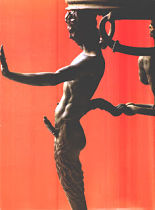
In closing, there are several more explicitly sexualized examples of Pompeian life in the
Secret Museum including but not limited to erotic art and bas reliefs. Many of the bas-reliefs and paintings contained within the walls of the Secret Chamber offer no explanation as to their representations. The limits of pornographic explanation allow visitors to garner their own opinions about the nature of the art. One’s perception of sexual imagery is dependent on how that individual was socialized to perceive Roman sexuality. In today’s modern culture, sex and gender are not subjects perceived to be outside the realm of a person’s innate sexual nature. Roman sexuality was on display in the public realm and domestic spaces as well as a prominent part of Roman art, folk culture, superstitions, and humor. While the eruption of Mount Vesuvius may have destroyed this sophisticated Greco Roman town, it did not destroy the history. Pompeii not only provides us an eye opening and revolutionizing approach to gender studies in the ancient world, but also it tells us about our own human nature.
I wanted to take the time to thank the publishers for the recent mention of this article in their books. "Pompeii: Erotic Art and Roman Sexuality" was cited in
Pornography and The Criminal Justice System
, by Carmen M. Cusack, and
The Roman Gaze: Vision, Power, and the Body (Arethusa Books)
by David Frederick.
Also check out:
Works Cited
- Beard, Mary. Pompeii: The Life of a Roman Town. London: Profile Books, 2008.
- Grant, Michael. Eros in Pompeii-The Secret Rooms of the National Museum of Naples. New York: William Morrow & Company, Inc, 1975.
- Hare, John B. Sacred Texts, "Drillopota." Accessed February 11, 2012. http://www.sacred-texts.com/sex/rmn/rmn12.htm.
- Kendrick, Walter. The Secret Museum: Pornography in Modern Culture. London: University of California Press, Ltd, 1987.
- Loth, David. The Erotic in Literature: a historical survey of pornography as delightful as it is indiscreet. New York: Dorset Press, 1994.
- Robinson, Sarah L. "Defining Pornography." Social Sciences Journal. 10. no. 1 : 1-8.
- Rodley, Chris, Milgrom, Marilyn, Williams, Linda, and Camille Paglia. "Pornography – The Secret History of Civilisation." Koch Vision. 2000. DVD.
- Wood, Susan E. "Diva Drusilla Panthea and the Sisters of Caligula." American Journal of Archaeology. 99. no. 3 (1995).
Photos
- Mary Harrsch
- Wikipedia
- The Golden Rule
- The Naples Archaeological Museum
- scruff monkey (flickr.com/photos/cathalm/)