• Ancient Digger teaches Archaeology and History to all Ages!

Tuesday, May 23, 2017

Archaeology News: May 23, 2017


ARCHAEOLOGY NEWS – Ancient Digger brings you the latest archaeology news and headlines everyday of the week!

Washington's birth site more mysterious than thought

On Popes Creek in Westmoreland County, park rangers tell visitors that “George Washington slept here first.” It’s a riff on that old line encountered at innumerable Mid-Atlantic historic sites, but if any place has bragging rights, it’s here—George Washington Birthplace National Monument in Virginia’s Northern Neck. Here on this acreage, the first U.S. president came into the world.

Stone Age 'cult' henge site and human remains discovered near Stratford

A STONE Age ‘cult’ henge site and human remains – which could belong to some of south Warwickshire’s earliest residents – have been discovered close to Stratford. Archaeologists have found the 4,000 year-old remains at a new housing development in Newbold-on-Stour, on fields at Mansell Farm. Experts say it is an ‘important discovery’.

Medieval brewery used by monks discovered by archaeologists on the outskirts of Lincoln

A medieval brewery has been discovered by archaeologists along the route of Lincoln Eastern Bypass.

Ancient Egyptian Pharaoh Carving Found in Looting Hole

Egyptian authorities say they caught looters digging up an ancient stone block carved with an image of a pharaoh. In the city of Abydos, antiquities authorities say they were inspecting an old two-story, mud-brick house when they found that the owner had excavated a hole in the floor.

Space Archaeology 

Archaeologists often spend years digging and hoping they'll find the remnants of ancient civilizations. There's a lot of ground yet to be uncovered. Archaeologist Sarah Parcak says less than 10 percent of the Earth's surface has been explored, so she's leading the way to speed up the search. Parcak uses satellite photos to locate ancient sites and she's finding them -- thousands. It's called space archaeology and it's transforming the field. Sarah Parcak is a professor at The University of Alabama at Birmingham. We met her in Egypt doing what she loves most: digging in the dirt.

Noah’s Ark discovered? Researchers '99.9 per cent certain' of astonishing Biblical find

A team of evangelical Christian explorers found what they claim is “99.9 per cent” certainly evidence of Noah’s Ark beneath snow and volcanic debris on Mount Ararat in Turkey. Noah's Ark Ministries International, a Hong Kong-based documentary team, claim to have found wooden pieces from a structure which carbon dates back 4,800 years and was found around 13,000 feet above sea level.

Tuesday, August 2, 2016

Archaeology News: August 2, 2016


ARCHAEOLOGY NEWS (August 2, 2016)– Ancient Digger brings you the latest archaeology news and headlines everyday of the week!

Prehistoric Native American Fishing Camp Found in New Jersey

Ancient hearths and some 1,300 artifacts, including unglazed ceramics and pieces of soapstone, have been found at an industrial construction site along the South Camden waterfront.

Roman Cooking on Display in Restored Pompeii Kitchen

The Local, Italy, reports that cooking equipment, such as metal grills, pots, pans, and earthenware crocks, have been returned to the kitchen in the Fullonica di Stephanus, a three-story launderette where the garments of wealthy Romans were washed some 2,000 years ago. The equipment was discovered in the launderette in 1912, but had been moved to other areas of Pompeii over the years. The grills were placed over troughs where charcoal fires were lit. Meat, fish, and vegetables were then placed on the grills. Soups and stews were cooked in pots and pans on tripods placed in the coals. “We’re delighted the pieces have finally been put back on display where they were found,” said Massimo Osanna, archaeological superintendent of Pompeii. For more on Pompeii, go to "Family History."

Dark Ages royal palace discovered in Cornwall – in area closely linked to the legend of King Arthur

The mysterious origins of the British archaeological site most often associated with the legend of King Arthur have just become even more mysterious. Archaeologists have discovered the impressive remains of a probable Dark Age royal palace at Tintagel in Cornwall. It is likely that the one-metre thick walls being unearthed are those of the main residence of the 6th century rulers of an ancient south-west British kingdom, known as Dumnonia.

1,000-Year-Old Human Remains Uncovered in Northern Ireland

Excavations on the grounds of an eighteenth-century country house known as Hillsborough Castle have uncovered a skeleton thought to have belonged to a young woman who lived 1,000 years ago.

Illegal structure in Mathura to be razed

Acting on the recommendations of the Archaeology Department of Uttar Pradesh, district authorities have directed police to demolish an illegal structure being constructed by a man close to the heritage memorial of the Bharatpur dynasty.

UTSA students and staff make historic discoveries in Belize

Kathryn Brown, associate professor of anthropology, has been directing a team of researchers at the site of Xunantunich since 2008, investigating the site’s origins and political history. One target of those investigations is El Castillo, a 39 meter tall acropolis which served as the site’s royal palace for decades. Team member and UTSA doctoral student Leah McCurdy has focused her dissertation research on El Castillo, examining the architectural history of this impressive acropolis.

More 1066 artefacts found in York


AN EXCAVATION at Fulford, which precedes the 950th anniversary of the 1066 battle, is turning into the "best imaginable" dig, says archaeologist Chas Jones. He said the dig on the Germany Beck site had led to further finds of tools which were he believed to have been used by medieval armourers to repair dents in helmets and shield-bosses.

Mexico finds water tunnel network under tomb of Pakal

© INAH/AFP

Archaeologists at the Mayan ruin site of Palenque said on Monday they have discovered an underground water tunnel built under the Temple of Inscriptions, which houses the tomb of an ancient ruler named Pakal. Archaeologist Arnoldo Gonzalez said researchers believe the tomb and pyramid were purposely built atop a spring between AD 683 and 702. The tunnel led water from under the funeral chamber out into the broad esplanade in front of the temple, thus giving Pakal’s spirit a path to the underworld.

Oldest Known Evidence of Tobacco Use in North America Found in Ice Age Hunting Camp


Oldest Known Evidence of Tobacco Use in North America Found in Ice Age Hunting Camp
An Ice Age Hunting Camp replete with the bird bones and tobacco has been found in Utah, USA. It is the oldest known evidence of tobacco use found so far.

8,000-year-old cave paintings found in Turkey’s Balıkesir


A number of cave paintings dating back some 8,000 years have been found in Baltalıın and İnkaya caves in the Marmara province of Balıkesir during a field study conducted by Associate Prof. Dr. Derya Yalçıklı from Çanakkale (18th March) University, the Arkeofili website has reported.

The paintings, which date back to the Late Neolithic era, were located in two caves five kilometers apart and were said to be 8,000 years old, marking one of the most important archaeological discoveries made in Anatolia in recent years.

Friday, May 6, 2016

22 Archaeology Books every Future Archaeologist should be reading


Even before I began my education in anthropology and archaeology, I had read several books on theory and method, as well as researched diverse cultures and multiple religions. However, once I started taking classes, the required course books became some of the most impactful resources and tools I had at my disposable. Granted, Indiana Jones would say "If you want to be a good archaeologist, you have to get out of the library". However, what if you also love the research aspect of this discipline, which does require you to sift through hundreds of good and bad books, trying to decipher what's fact and what's opinion?

These books, all of which I have either read cover to cover for classes, or read out of pure enjoyment, all have something to offer archaeology students looking to get into the field.  The book that changed my focus from archaeology to anthropology is the first in my list.  The professor that taught from this book attend University of Pennsylvania and had a curious and sometimes confusing way of approaching the class, and yet, I learned more from his class than any other during my graduate work.

22 Archaeology Books every Future Archaeologist should be reading


Visions of Culture: An Introduction to Anthropological Theories and Theorists – I've read this book from cover to cover several times. This book made me love Herbert Spencer, and even today, I still reference the social organism every chance I get. This new edition of Jerry D. Moore's Visions of Culture presents introductory anthropology students with a brief, readable, and balanced treatment of theoretical developments in the field. (Ancient Digger's Top Pick, and favorite anthropology book

Archaeological Theory: An Introduction – Archaeological Theory, 2nd Edition is the most current and comprehensive introduction to the field available. Thoroughly revised and updated, this engaging text offers students an ideal entry point to the major concepts and ongoing debates in archaeological research.

The Bible Unearthed: Archaeology's New Vision of Ancient Israel and the Origin of Its Sacred Texts
– In this groundbreaking work that sets apart fact and legend, authors Finkelstein and Silberman use significant archeological discoveries to provide historical information about biblical Israel and its neighbors.

Patterns in Prehistory: Humankind's First Three Million Years, 5th Edition (Casebooks in Criticism)
– Patterns in Prehistory, Fifth Edition, is a comprehensive and engaging survey of humanity's past three million years ago. It brings together theories and archaeological examples to pose questions about who we are and the means by which humanity evolved into what it is today. Ideal for introductory courses in world prehistory and origins of complex societies, Patterns in Prehistory, Fifth Edition, offers a unified and thematic approach to the four great transformations--or patterns--that characterize humanity's past: the origins and evolution of culture; the origins of modern humans and human behaviors; the origins of agriculture; and the origins of complex societies, civilizations, and pre-industrial states. Integrating theoretical approaches with archaeological data from the Middle East, Mesoamerica, North and South America, Egypt, China, the Indus Valley, and temperate Europe, Patterns in Prehistory, Fifth Edition, reveals how archaeologists decipher the past. It demonstrates how theory and method are combined to derive interpretations and also considers how interpretations evolve as a result of accumulating data, technological advances in recording and analyzing data sets, and newer theoretical perspectives.

Friend by Day, Enemy by Night: Organized Vengeance in a Kohistani Community (Case Studies in Cultural Anthropology) – This particular discussion is about the road built to the isolated villages and how it changed the community. Interestingly, you would think with the addition of a new info structure, organized vengeance would fade to some sort of degree. This was not case, as the first highway system actually promoted it, linking villagers with a more modern economy and a new political system. Therefore, this new highway triggered sociocultural transitions in Thull that ultimately resulted in Dushmani.

Life in the Pueblo: Understanding the Past Through Archaeology – Within the effective format of a nontechnical case study, Life in the Pueblo provides an understanding of the basic methodologies in modern archaeology, including the formation of archaeological sites, dating, the role of ethnographic analogy, and analytic techniques like trace element sourcing, use-wear analysis, and carbon isotope determinations of diet. The archaeological interpretations are put into perspective by the inclusion of Hope and Zuni history and myth and the liberal use of ethnographic information from the Hopi and other historic and modern puebloan groups. A short fictional reconstruction of life in the village invites the reader to reflect on the fact that the past was a period occupied by people, not just potsherds. Based on four years of excavation and ten years of analysis of a puebloan site near modern Flagstaff, Arizona, this profusely illustrated volume captures readers' interest and imagination as it explores some of the fundamental principles of archaeology.

Native Religions of North America: The Power of Visions and Fertility – The diversity and continuities in American Indian spirituality! The religious life of Native Americans is a panorama featuring an immense diversity of beliefs, ceremonies, and ways of life. Native Religions of North America reflects this rich tradition as it admirably distills a complex subject in a practical and engaging manner. Through concise expression and careful choice of examples, Hultkrantz identifies the diversity and continuities in American Indian spirituality. He introduces the hunters and farmers, the past and present, and the physical contexts and the sublime speculations of tribal religions, even the subtle shades of meaning within an Indian community.

Ancient Egypt: An Introduction – This book provides an introduction to one of the greatest civilization of all time - ancient Egypt. Beginning with a geographical overview that explains the development of Egyptian belief systems as well as its subsequent political development, it examines methodology, the history of the discipline of Egyptology, religion, social organization, urban and rural life, and death. It also includes a section on how people of all ranks lived. Lavishly illustrated, with many unusual photographs of rarely seen sites that are seldom illustrated, this volume is suitable for use in introductory-level courses on ancient Egypt. It offers a variety of student-friendly features, including a glossary, a bibliography, and a list of sources for those who wish to further their interest in ancient Egypt.

Sexuality in Greek and Roman Culture – "Sexuality in Greek and Roman Culture" is the first comprehensive survey of ancient Greek and Roman sexuality. This title covers a wide range of subjects, including Greek pederasty and the symposium, ancient prostitution, representations of women in Greece and Rome, and the public regulation of sexual behavior. It introduces readers to the bitter theoretical debates that have been fought about gender and sexuality in the classical world. The material is ordered chronologically. This title draws parallels between ancient sexual ideology and contemporary culture. It also draws on literary, artistic and archaeological sources, as well as secondary scholarly sources. It was theoretically sophisticated and skillfully argued, yet accessible.

Lives in Ruins: Archaeologists and the Seductive Lure of Human Rubble – History is recorded in many ways. According to author James Deetz, the past can be seen most fully by studying the small things so often forgotten. Objects such as doorways, gravestones, musical instruments, and even shards of pottery fill in the cracks between large historical events and depict the intricacies of daily life. In his completely revised and expanded edition of In Small Things Forgotten, Deetz has added new sections that more fully acknowledge the presence of women and African Americans in Colonial America. New interpretations of archaeological finds detail how minorities influenced and were affected by the development of the Anglo-American tradition

In Small Things Forgotten: An Archaeology of Early American Life – History is recorded in many ways. According to author James Deetz, the past can be seen most fully by studying the small things so often forgotten. Objects such as doorways, gravestones, musical instruments, and even shards of pottery fill in the cracks between large historical events and depict the intricacies of daily life. In his completely revised and expanded edition of In Small Things Forgotten, Deetz has added new sections that more fully acknowledge the presence of women and African Americans in Colonial America.

A History of Ancient Egypt (Blackwell History of the Ancient World) –Outlining the major political and cultural events, A History of Ancient Egypt is an authoritative and accessible introduction to this fascinating ancient culture. An accessible chronological narrative that draws on a range of historical sources. Offers an up-to-date survey of ancient Egypt’s history from its origins to its domination by the Roman Empire. Considers social and economic life and the rich culture of ancient Egypt
Places Egypt’s history within its regional context, detailing interactions with Asia and Africa. Engages students with various perspectives on a range of critical issues with the Key Debate section included in each chapter. Makes the latest discoveries and scholarship accessible to a wide audience

The Quest for the Historical Israel: Debating Archaeology and the History of Early Israel (Archaeology and Biblical Studies) – Three decades of dialogue, discussion, and debate within the interrelated disciplines of Syro-Palestinian archaeology, ancient Israelite history, and Hebrew Bible over the question of the relevance of the biblical account for reconstructing early Israels history have created the need for a balanced articulation of the issues and their prospective resolutions. This book brings together for the first time and under one cover, a currently emerging centrist paradigm as articulated by two leading figures in the fields of early Israelite archaeology and history. Although Finkelstein and Mazar advocate distinct views of early Israels history, they nevertheless share the position that the material cultural data, the biblical traditions, and the ancient Near Eastern written sources are all significantly relevant to the historical quest for Iron Age Israel. The results of their research are featured in accessible, parallel syntheses of the historical reconstruction of early Israel that facilitate comparison and contrast of their respective interpretations.

Archaeology 6th Edition – This text pairs two of archaeology's most recognized names: Robert L. Kelly and David Hurst Thomas, who together have over seventy years of experience leading excavations. The sixth edition of ARCHAEOLOGY reflects the most recent research and changes in the field, while covering core concepts in an exceptionally student-friendly fashion using personalized examples and high-interest topics. This edition continues a tradition of combining academic rigor with an engaging writing style that has made ARCHAEOLOGY one of the most well-respected and best-selling texts in the discipline. A rich array of supplemental resources is available for purchase, including a book companion website, as well as a CD-ROM developed by the authors entitled DOING FIELDWORK: ARCHAEOLOGICAL DEMONSTRATIONS.

1177 B.C.: The Year Civilization Collapsed (Turning Points in Ancient History) – A compelling combination of narrative and the latest scholarship, 1177 B.C. sheds new light on the complex ties that gave rise to, and ultimately destroyed, the flourishing civilizations of the Late Bronze Age—and that set the stage for the emergence of classical Greece.

Archaeology Essentials: Theories, Methods, and Practice – This new brief version of the best-selling textbook was carefully rewritten to provide a readable and compact introduction to archaeology for those new to the field. No other book of this length can match its range of essential information and explanation. The vocabulary and the use of technical terms have been carefully reviewed. The amount of detail has been considerably reduced, and coverage of difficult or cutting-edge topics is made more accessible for students in courses that treat such subjects briefly. In particular, the coverage of archaeological theory and science has been substantially rewritten to provide a convenient overview without overwhelming the student. 220 black-and-white illustrations

The Complete Pompeii (The Complete Series) – With its lavish illustrations, covering monumental architecture and inscriptions, shops, graffiti, wall-paintings, and mosaics, plus its numerous box features ranging from theatrical entertainments to water supply, The Complete Pompeii is the ultimate resource and inspirational guide to this iconic ancient town.

The Last Days of the Incas–The epic story of the fall of the Inca Empire to Spanish conquistador Francisco Pizarro in the aftermath of a bloody civil war, and the recent discovery of the lost guerrilla capital of the Incas, Vilcabamba, by three American explorers.

Visions of Culture: An Introduction to Anthropological Theories and Theorists – I've read this book from cover to cover several times. This book made me love Herbert Spencer, and even today, I still reference the social organism every chance I get. This new edition of Jerry D. Moore's Visions of Culture presents introductory anthropology students with a brief, readable, and balanced treatment of theoretical developments in the field. (Ancient Digger's Top Pick, and favorite anthropology book

Archaeology for Dummies – This is the perfect archaeology for beginners book. Archaeology For Dummies offers a fascinating look at this intriguing field, taking readers on-site and revealing little-known details about some of the world's greatest archaeological discoveries. It explores how archaeology attempts to uncover the lives of our ancestors, examining historical dig sites around the world and explaining theories about ancient human societies. The guide also offers helpful information for readers who want to participate in an excavation themselves, as well as tips for getting the best training and where to look for jobs.

The Archaeology Book (Wonders of Creation) – Developed with three educational levels in mind, The Archaeology Book takes you on an exciting exploration of history and ancient cultures. You'll learn both the techniques of the archaeologist and the accounts of some of the richest discoveries of the Middle East that demonstrate the accuracy and historicity of the Bible.

Archaeology: Theories, Methods, and Practice (Sixth Edition) – Since its first edition, Renfrew and Bahn’s Archaeology: Theories, Methods, and Practice has been the leading academic source on what archaeologists do and how they do it. This indispensable resource is a comprehensive introduction to archaeology’s theories, methods, and practices in the field, the laboratory, and the library.

Gods, Graves & Scholars: The Story of Archaeology – C.W. Ceram visualized archeology as a wonderful combination of high adventure, romance, history and scholarship, and this book, a chronicle of man's search for his past, reads like a dramatic narrative. We travel with Heinrich Schliemann as, defying the ridicule of the learned world, he actually unearths the remains of the ancient city of Troy. We share the excitement of Lord Carnarvon and Howard Carter as they first glimpse the riches of Tutankhamen's tomb, of George Smith when he found the ancient clay tablets that contained the records of the Biblical Flood. We rediscover the ruined splendors of the Hanging Gardens of Babylon, one of the wonders of the ancient wold; of Chichen Itza, the abandoned pyramids of the Maya: and the legendary Labyrinth of tile Minotaur in Crete. Here is much of the history of civilization and the stories of the men who rediscovered it.

Friday, February 19, 2016

Begole Archaeological Research Grant


For those of us researching grant opportunities, particularly prehistory,  here's a great opportunity to get dusty. Something we all love!

The Begole Archaeological Research Grant (BARG) program grant opportunity that supports research in the  Colorado Desert District (CDD) parks and in other areas of the California and Baja California Desert regions that may have direct connections with or scientific applications to CDD parks.

Two grants are available annually. Funds requested can be up to $5,000 for each research project. The deadline for proposal submissions is Tuesday, May 31, 2016 . Submit complete applications by email to info@theabf.org (link sends e-mail). Successful applicants will be notified by July 1, 2016. 

Please direct questions on the grant and application process to Chuck Bennett (link sends e-mail), Begole Archaeological Research Grant Committee at 760-485-2984.

There are no restrictions on the topics of the research proposals, as long as they are archaeological in scope and/or focus. Priority may be given to original research dealing with the earliest periods of prehistory. Applicants may be registered undergraduate or graduate students, faculty and/or titled researchers at academic institutions, staff of federal, state or county agencies, employed in the private cultural resource management sector or independent scholars. The BARG is funded through an endowment created by pioneering Anza-Borrego Desert State Park archaeologist Robert S. Begole.


Previous BARG Recipients

Saturday, February 6, 2016

Archaeology News: February 6, 2016


Ancient Digger brings you the latest archaeology news and headlines everyday of the week!

Roman Fresco Unearthed by London Archaeologists

© New Historian
Archaeologists conducting fieldwork ahead of the construction of a new office development have come across an ornate Roman-era fresco six meters below ground. Museum of London Archaeology (MOLA) remarked in a recent press release that a team of its field archaeologists working at 21 Lime Street had made the discovery, which dates to the late first century CE and was likely created during the first few decades of London’s existence. MOLA note that the ornate fresco, which would have doubtlessly been part of a residence for an affluent Roman citizen at the time, is one of the earliest of its kind to survive from the time period.

Archaeologist to discuss cultural resources of Big Flat Area

MOAB — Colin Ferriman, an archaeologist with Cultural Resources Analysts, will present findings from a study of the archaeology and cultural landscape of the Big Flat area at 3 p.m. on Friday, Feb. 19.

Archaeologists investigate land around Botetourt County slave houses

DALEVILLE Va. -Botetourt County is moving forward with the plan of relocating two slave houses on the former Greenfield Plantation.

Archaeologists discover one of Roman Britain's earliest surviving frescos beneath City of London street


An ornate Roman wall painting buried at the start of a huge city construction project nearly 2,000 years ago has been discovered by Museum of London Archaeology experts near the city’s historic Leadenhall Market.

The decorative fresco, buried in AD 100 by Roman builders flattening land to make way for London’s main civic centre, the second Forum Basilica, was found at 21 Lime Street. Small fragments of Roman wall plaster have previously been found in London, but complete collapsed wall paintings are extremely rare.

Discovery by archaeologists of bashed skull of Queen of Egypt sparks end-of-the world speculations
By Vittorio Her


Archaeologists who are investigating an apparent desecration of the burial site of an ancient Egyptian royal family are warning of the consequences on earth. Among the consequences they warned of are disasters, hinting of end-of-the-world scenarios.

One museum’s tribute to the murdered Syrian archaeologist, Khaled al-Asaad


The days that followed ISIS’s savage murder of the distinguished and widely admired archaeologist Khaled al-Asaad last August were filled with shock and outrage. At the Museum of Fine Arts, Boston, which possesses a world-class collection of ancient art, including 10 funerary sculptures from Palmyra, a group of colleagues sat down to discuss ways we could respond to this horrific crime.

Ancient Egyptian Funeral Boat Unearthed by Archaeologists


Archaeologists from Charles University in Prague have begun to excavate a funerary boat that dates back to the Third or Fourth Dynasty of ancient Egypt, circa 2550 BC. The Abusir region, where the boat was found, is an extensive necropolis of ancient tombs amidst a large pyramid field that lies to the south of Cairo. The sand and lack of moisture have helped preserve a number of artifacts in the Abusir area, but the discovery of a complete funerary boat is extremely rare. A press release from Charles University states:

Archaeologists Find Pool of Siloam, Confirm Gospel of John Accurate


Like so many such finds, it was almost by accident. During construction work to repair a water pipe near the Temple Mount, Israeli archaeologists Ronny Reich and Eli Shukron found "two ancient stone steps." According to Biblical Archaeology Review, "Further excavation revealed that they were part of a monumental pool from the Second Temple period, the period in which Jesus lived." The pool was trapezoidal in shape and 225 feet long.

Wednesday, December 30, 2015

Archaeology News: December 30, 2015


Ancient Digger brings you the latest archaeology news and headlines everyday of the week!

Diplomatic delay in historic church’s restoration

The historic Georgian Osvank Church in the
Turkish province of Erzurum
© Hurriyet Daily News
The Osvank Church, which was built nearly 1,000 years ago in the eastern province of Erzurum, is ready for restoration but still waiting for steps to be taken by Georgian officials before work can begin. The largest church in the region, Osvank was built by the sons of a Georgian king, Bagrat and Davit, in the second half of the 10th century. The church hosts a large number of local and foreign tourists every year.

Roman-Period Altar in Turkey Features Mythical Battle Scene

According to a report in Live Science, villagers discovered an altar dating to the second century A.D. near Turkey’s Akçay River. Hasan Malay of Ege University and Funda Ertugrul of the Aydin Museum wrote in the journal Epigraphica Anatolica that the Greek inscription at the top of the altar says Flavius Ouliades dedicated it to the river god Harpasos. They think the image on the altar—a nude warrior wearing a helmet—may represent Hercules’ son Bargasos battling a many-headed serpent monster with a dagger and a shield.

IS destroyed this ancient monument, so archaeologists are 3-D printing a new one


Giant replicas of an ancient arch in the Syrian city of Palmyra attacked by Islamic State (IS) jihadists will go on show in London and New York next year, organizers said Monday. The full-size recreation of the arch from the 2,000-year-old Temple of Bel will reportedly made using the world's biggest 3-D printer and put on display in London's Trafalgar Square and Times Square in New York in April. IS seized Palmyra, a UNESCO World Heritage Site northeast of Damascus known as the "Pearl of the Desert", in May and beheaded its 82-year-old former antiquities chief three months later.

VU archaeologists discover location of historic battle fought by Caesar in Dutch riverarea

The location of this battle, which Caesar wrote about in detail in Book IV of his De Bello Gallico, was unknown to date. It is the earliest known battle on Dutch soil. The conclusions are based on a combination of historical, archaeological, and geochemical data.

Holme Fen Spitfire archaeologists making 'world first' models

An ill-fated Spitfire and the crater formed when it crashed will to be recreated as 3D models to help archaeologists study what happened. Parts of the plane were excavated from Holme Fen in Cambridgeshire in October, where it crashed 75 years ago. Lead archaeologist Anthony Haskins said a new technique called "photogrammetry" was being used to create the models.

Ancient shepherd's hut dating from more than 4,500 years ago discovered by chance

REMAINS of an ancient shepherd’s hut dating from the Bronze Age – around 4,500 years ago – have been discovered in a Blaenau Gwent valley. The prehistoric hut was discovered on a private farm at the top of the Cwmcelyn valley, near Blaina, and is the first Bronze Age hut to be found in Blaenau Gwent.

Archaeologists Find ‘Impressive’ Ancient Statue That Could Symbolize Jesus or the Flock of the ‘Good Shepherd’

Israeli archaeologists announced Sunday the discovery of a ram statue in the ancient port city of Caesarea they believe may have been meant to depict either Jesus or the Good Shepherd’s flock. “In ancient Christianity Jesus was not portrayed as a person. Instead, symbols were used, one of which was the ram,” excavation directors Dr. Peter Gendelman and Mohammad Hater said in a joint statement announcing the Christmas Eve discovery of the marble ram.

Polynesian Migration Examined With Vanuatu Skulls


A study of the few skulls found among the mostly headless skeletons discovered in 68 graves in a 3,000-year-old Lapita cemetery in Vanuatu suggests that the first Polynesians migrated from Southeast Asia and into Polynesia with little mixing with others.

Archaeologists discover ruins of an ancient Greek port

Recent excavations taking place in an ancient partially-submerged harbor town has led to the surprising discovery of well-preserved wooden caissons, as well as the revelation that the port’s entrance canal was far larger than previously believed. Researchers from the University of Copenhagen have been using cutting-edge techniques to investigate the Lechaion, one of two Corinthian ports active from the 6th century BCE to the 6th century CE. The goal of their expeditions has been to discover the layout and scale of this once bustling harbor town.

Saturday, July 25, 2015

Archaeology News: July 25, 2015


Ancient Digger brings you the latest archaeology news and headlines everyday of the week!

Skeleton of necklace-wearing adolescent child will help archaeologists discover "frenzied" Stonehenge of 4,000 years ago

© University of Reading
Scientists hope to reveal diet, pathologies and date of burial after discovering 4,000-year-old skeleton. The remains of an amber necklace-wearing adolescent child who died 4,000 years ago have been found placed in a fetal position at the bottom of a Neolithic henge near Stonehenge.

Lodi archaeologist sets the record straight on Vikings


Armed with piles of books, Scandinavian-themed T-shirts and dozens of questions, more than 70 Viking enthusiasts crowded into the Lodi Public Library’s Bud Sullivan Community Room on Thursday. They were there to hear Lodi’s Dr. Dayanna Knight, an archaeological illustrator and Viking specialist, give a presentation about the archaeology and history of the Viking age. In a wide-ranging talk filled with information about identity, trade, technology, the History Channel show “Vikings” and Icelandic sagas, Knight took the time to debunk a few myths about the Vikings...

Archaeologists find possible evidence of earliest human agriculture


Israeli archaeologists have uncovered dramatic evidence of what they believe are the earliest known attempts at agriculture, 11,000 years before the generally recognised advent of organised cultivation. The study examined more than 150,000 examples of plant remains recovered from an unusually well preserved hunter-gatherer settlement on the shores of the Sea of Galilee in northern Israel.

Archaeologists May Have Been Wrong About Where Alexander The Great's Father Was Buried

The mystery of where Alexander the Great's father, King Philip II of Macedon, is buried just got more mysterious. Philip II was assassinated in 336 B.C., and his young wife Cleopatra Eurydice -- who was not Alexander's mother -- and their newborn child were killed shortly after.

18th century village discovered underneath Montreal interchange

Archaeologists have discovered the remains of an 18th-century village buried beneath Montreal's busiest highway interchange. Over the past few months, construction crews working on the Turcot Interchange have excavated dozens of artifacts. Construction has since been put on hold. Archaeologists say that the crews revealed Saint-Henri-des-Tanneries, a village that was originally formed in the late 1700s and whose economy revolved around the leather trade.

Guatemala: Archaeologists uncover intact Mayan hieroglyphic panels

Ancient Mayan panels dating as far back as the seventh century have been discovered in northern Guatemala, shedding new light on the mysterious civilisation. In total, three ancient Mayan pieces were excavated at the La Corona and El Achiotal archaeological sites in May. The largest of the pieces measures a metre high and features well-preserved ancient Mayan script and stone carvings.

Tuesday, June 30, 2015

Archaeology News: June 30, 2015


Ancient Digger brings you the latest archaeology news and headlines everyday of the week!

Archaeologists keep digging where potentially 2,000-year-old mummy was found

Archaeologists are continuing to search the site of a proposed stone quarry in south Lake County where they found a mummy that could be 2,000 years old. They have secured the mummified human remains and kept them in place while continuing work around them at the construction site, according to the Indiana Department of Natural Resources

Azhagankulam was in the big league

Renewed excavation from May at Azhagankulam village in Ramanathapuram district, Tamil Nadu, has thrown up fresh evidence that it was an important trading post between the Sangam Pandyas and the Romans from circa 50 BCE to circa 500 CE.

Rare ceramic of second century BC found in Chhattisgarh mud fort

Rare ceramic pieces of northern black polished ware (NBPW) dating back to second century BC was unearthed from a 2000-year-old mud fort site at Damroo in Baloda Bazaar-Bhatapara district of Chhattisgarh.

Archaeologists dig in as quarry site search continues

Archaeologists are continuing their investigation of the human remains found at the site of the planned Singleton stone quarry in Eagle Creek Township. Marty Benson, assistant director of communication with the Department of Natural Resources, said Monday there is not much to tell at this point regarding the remains, their origin or age, or how they came to rest on the property.

Countdown starts for Diyarbakır’s World Heritage site bid

Site preparations have finished in Turkey’s eastern province of Diyarbakır, whose ancient sites may soon receive world heritage status. The 5,700-meter long and 12-meter high historical walls, along with the 700-hectare Hevsel Gardens, which are a like an open-air museum and symbol of the city, are waiting for UNESCO’s World Heritage status decision.

Indiana Joneses run hi-tech race against Islamic State

Some of the Middle East's most highly prized archaeological treasures are under threat from the extremist militants of Islamic State (IS). So archaeologists are desperately trying to record as much of these sites as they can. And, in contrast to Indiana Jones and its low-tech bullwhip, they're using the latest technology to do it.

Saturday, May 2, 2015

Archaeology News: May 2, 2015


Ancient Digger brings you the latest archaeology news and headlines everyday of the week!

Stone Age axemen used "complicated thinking", say archaeologists using brain scanning

The craftspeople who made Stone Age hand axes would have required far greater skill than their predecessors needed to create the oldest known tools, according to archaeologists who have concluded that prehistoric practitioners were more than “ape-men banging rocks together”.

The Happisburgh Hand Axe 
© Norfolk Museums and Archaeology Service

Recreating Lower Palaeolithic tools by teaching a group to strike stones, researchers examined brain activity during knapping, which was once carried out by skilled prehistoric people using pieces of bone, antler or stone.

Magnetic Resonance Imaging showed that the process is “complicated” and “nuanced”, says Dietrich Stout, the experimental archaeologist who led the project

Belgian archaeologists discover 4,400-year-old statue of Egyptian pharaoh

A team of Belgian archaeologists unearthed a rare statue dating back over 4,400 years, Egyptian news site Mada Masr reported Tuesday. The statue of Pharaoh Sahure who was the ruler of the ancient Egyptian Kingdom's Fifth Dynasty, was found in the southern Egyptian governorate of Aswan and dates back to between 2487-2475 BC.

Archaeologists Dig Deep At George Washington’s Boyhood Home


When many people think of Washington’s home, they think of Mt. Vernon in Alexandria. But that’s only where he lived lived later in life. Our nation’s first president spent most of his childhood at Ferry Farm in Fredericksburg, Virginia.

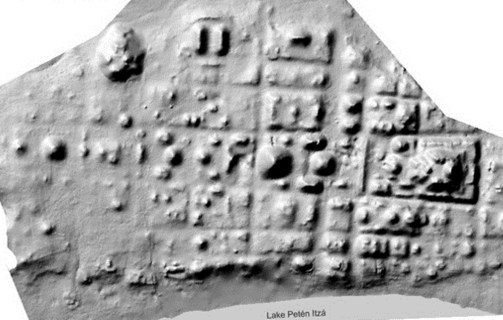
Archaeologists Find Ancient Maya City With a Modern Grid Layout


Timothy Pugh / Queens College
An ancient Mayan city followed a unique grid pattern, providing evidence of a powerful ruler, archaeologists have found. The city, which contains flat-topped pyramids, is being excavated at Nixtun-Ch'ich' in Petén, 
Guatemala.

It was in use between roughly 600 B.C. and 300 B.C., a time when the first cities were being constructed in the area. No other city from the Maya world was planned using this grid design, researchers say.

Archaeologists find ancient skeleton of a man buried with a shield in England


Archaeologists have unearthed the ancient remains of a man buried with a shield in England, which is characteristic of an Iron Age burial belonging to the Arras culture, a civilization that existed in what is now Yorkshire and is known for its impressive burials and grave goods.

Archaeologists Use Digital Technology to Excavate Famous Burial Pit Guarded by Terracotta Warriors


Chinese archaeologists excavating the legendary burial pit of the country's first emperor in the ancient capital of Xi'an are using a digital scanning device to examine the mausoleum where thousands of terracotta warriors stand guard.

Archaeologists Reconstruct Jamestown Church Where Pocahontas Got Married


Instead of digging up remains, archaeologists in Jamestown, Virginia are working on a reconstruction project in bringing back the church believed to be the place where Pocahontas got married. Five years ago, the discovery of Jamestown colony footprint was discovered, and now archaeologists are rebuilding the structure that witnessed the wedding of John Rolfe, a tobacco planter, and Pocahontas, daughter of a Native American chief, in 1614.

Archaeologists Excavate Waterloo Battlefield


Soldiers recovering from post-traumatic stress disorder have joined a ground-breaking archaeological project at the site of the Battle of Waterloo.  British Army veterans and serving soldiers, some wounded in recent campaigns, are working alongside archaeologists to unearth the history of the Battle of Waterloo 200 years on.


Old Kingdom Statue Base Unearthed in Upper Egypt


Met Museum

The Luxor Times reports that the lower part of a rare statue carved with the name of King Sahure, the second king of the Old Kingdom’s Fifth Dynasty, has been discovered at El-Kab. The excavation, conducted by the Belgian mission, is directed by Dirk Huyge of the Royal Museums of Art and History in Brussels.

The statue base was carved from fine-grained sandstone. The complete statue would have depicted King Sahure seated on a throne. There are only two known statues of King Sahure—one of them is at the Metropolitan Museum in New York, and the other is at the Egyptian Museum in Tahrir. For another recent Egyptological discovery, see "18th-Dynasty Tomb Discovered in Luxor."


Wednesday, December 19, 2012

Prehistoric Humans Cared for Their Sick


Lorna Tilley, The New York Times
While it is a painful truism that brutality and violence are at least as old as humanity, so, it seems, is caring for the sick and disabled. And some archaeologists are suggesting a closer, more systematic look at how prehistoric people — who may have left only their bones — treated illness, injury and incapacitation. Call it the archaeology of health care.

The case that led Lorna Tilley and Marc Oxenham of Australian National University in Canberra to this idea is that of a profoundly ill young man who lived 4,000 years ago in what is now northern Vietnam and was buried, as were others in his culture, at a site known as Man Bac.

Almost all the other skeletons at the site, south of Hanoi and about 15 miles from the coast, lie straight. Burial 9, as both the remains and the once living person are known, was laid to rest curled in the fetal position. When Tilley, a graduate student in archaeology, and Oxenham, a professor, excavated and examined the skeleton in 2007 it became clear why. His fused vertebrae, weak bones and other evidence suggested that he lies in death as he did in life, bent and crippled by disease.

They gathered that he became paralyzed from the waist down before adolescence, the result of a congenital disease known as Klippel-Feil syndrome. He had little, if any, use of his arms and could not have fed himself or kept himself clean. But he lived another 10 years or so.

They concluded that the people around him who had no metal and lived by fishing, hunting and raising barely domesticated pigs, took the time and care to tend to his every need.

"There's an emotional experience in excavating any human being, a feeling of awe," Tilley said, and a responsibility "to tell the story with as much accuracy and humanity as we can."

This case, and other similar, if less extreme examples of illness and disability, have prompted Tilley and Oxenham to ask what the dimensions of such a story are, what care for the sick and injured says about the culture that provided it.

The archaeologists described the extent of Burial 9's disability in a paper in Anthropological Science in 2009. Two years later, they returned to the case to address the issue of health care head on.

"The provision and receipt of health care may therefore reflect some of the most fundamental aspects of a culture," the two archaeologists wrote in The International Journal of Paleopathology.

In the case of Burial 9, Tilley says, not only does his care indicate tolerance and cooperation in his culture but suggests that he himself had a sense of his own worth and a strong will to live. Without that, she says, he could not have stayed alive.

"I'm obviously not the first archaeologist" to notice evidence of people who needed help to survive in stone age or other early cultures, she said. Nor does her method "come out of the blue." It is based on and extends previous work.

Among archaeological finds, she said, she knows "about 30 cases in which the disease or pathology was so severe, they must have had care in order to survive."


Source: The New York Times, The Denver Post

Thursday, July 5, 2012

Megalosaur Fossil: First Feathered Dinosaur Not Closely Related to Birds


Skeleton of Sciurumimus
Skeleton of Sciurumimus as found on a limestone slab.
(Credit: H. Tischlinger\Jura Museum Eichstatt) 
A new species of feathered dinosaur discovered in southern Germany is further changing the perception of how predatory dinosaurs looked. The fossil of Sciurumimus albersdoerferi,which lived about 150 million years ago, provides the first evidence of feathered theropod dinosaurs that are not closely related to birds.

The fossil is described in a paper published in the Proceedings of the National Academy of Sciences on July 2."This is a surprising find from the cradle of feathered dinosaur work, the very formation where the first feathered dinosaur Archaeopteryx was collected over 150 years ago," said Mark Norell, chair of the Division of Palaeontology at the American Museum of Natural History and an author on the new paper along with researchers from Bayerische Staatssammlung für Paläontologie und Geologie and the Ludwig Maximilians University.

Theropods are bipedal, mostly carnivorous dinosaurs. In recent years, scientists have discovered that many extinct theropods had feathers. But this feathering has only been found in theropods that are classified as coelurosaurs, a diverse group including animals likeT. rexand birds. Sciurumimus -- identified as a megalosaur, nota coelurosaur -- is the first exception to this rule. The new species also sits deep within the evolutionary tree of theropods, much more so than coelurosaurs, meaning that the species that stem from Sciurumimus are likely to have similar characteristics.

"All of the feathered predatory dinosaurs known so far represent close relatives of birds," said palaeontologist Oliver Rauhut, of the Bayerische Staatssammlung für Paläontologie und Geologie. "Sciurumimus is much more basal within the dinosaur family tree and thus indicates that all predatory dinosaurs had feathers.”

The fossil, which is of a baby Sciurumimus, was found in the limestones of northern Bavaria and preserves remains of a filamentous plumage, indicating that the whole body was covered with feathers. The genus name ofSciurumimus albersdoerferirefers to the scientific name of the tree squirrels,Sciurus, and means "squirrel-mimic"-referring to the especially bushy tail of the animal. The species name honours the private collector who made the specimen available for scientific study.

"Under ultraviolet light, remains of the skin and feathers show up as luminous patches around the skeleton," said co-author Helmut Tischlinger, from the Jura Museum Eichstatt.

Sciurumimusis not only remarkable for its feathers. The skeleton, which represents the most complete predatory dinosaur ever found in Europe, allows a rare glimpse at a young dinosaur. Apart from other known juvenile features, such as large eyes, the new find also confirmed other hypotheses.
"It has been suggested for some time that the lifestyle of predatory dinosaurs changed considerably during their growth," Rauhut said. "Sciurumimus shows a remarkable difference to adult megalosaurs in the dentition, which clearly indicates that it had a different diet.”

Adult megalosaurs reached about 20 feet in length and often weighed more than a ton. They were active predators, which probably also hunted other large dinosaurs. The juvenile specimen of Sciurumimus, which was only about 28 inches in length, probably hunted insects and other small prey, as evidenced by the slender, pointed teeth in the tip of the jaws.

"Everything we find these days shows just how deep in the family tree many characteristics of modern birds go, and just how bird-like these animals were," Norell said. "At this point it will surprise no one if feather like structures were present in the ancestors of all dinosaurs.
The study was financed by the Volkswagen Foundation and the American Museum of Natural History.

References
  1. Oliver W. M. Rauhut, Christian Foth, Helmut Tischlinger, and Mark A. Norell. Exceptionally preserved juvenile megalosauroid theropod dinosaur with filamentous integument from the Late Jurassic of Germany. Proceedings of the National Academy of Sciences, July 2, 2012 DOI: 10.1073/pnas.1203238109
  2. American Museum of Natural History (2012, July 2). Newly discovered dinosaur implies greater prevalence of feathers; Megalosaur fossil represents first feathered dinosaur not closely related to birds. ScienceDaily. Retrieved July 5, 2012, from http://www.sciencedaily.com­ /releases/2012/07/120702210225.htm

Wednesday, July 4, 2012

Utah Archaeologists Strike Gold


Archaeologists have struck gold at a dig near the town of Goshen about 35 miles south of Provo: the largest Fremont Indian structure ever excavated.

Brigham Young University anthropology professor Jim Allison says the 850-square-foot structure is unique because it served as a communal area that brought the entire village together.

He says it has yielded "a layer of prehistoric trash" that included common items such as arrowheads, broken pottery, corn cobs and animal bones. Allison, who oversees students' work at the site, says radiocarbon dating shows it probably was occupied between 1025 and 1100.

The Fremont Indians inhabited sites in what are now Utah, Nevada, Idaho and Colorado between 700 and 1300. They're known for pottery, figurines, moccasins and their use of farming.


Associated Press
Photo ©  BYU

Wednesday, June 13, 2012

Adrianne Daggett Researches Prehistoric Kalahari Desert Settlements


If you’re an archaeologist or anthropologist and you have never heard of Petridish.org, well, you may have perhaps missed out on an opportunity to fund your research. This site is making great strides towards fulfilling the goals of many PhD candidates and Master’s students. Additionally, the site involves the public, that’s you, in the research. Interested science enthusiasts, anthropologists, families, archaeologists and educators are all investing their own personal interests in several projects.

You can back your favorite projects now with small donations, and in exchange, researchers will provide insider updates on their progress, acknowledgements and unique rewards. The researchers may provide you souvenirs from the field or naming rights, but these perks are at the sole discretion of the researcher. Make sure you read the details of their pages carefully.

One project has caught my attention called the ‘Prehistoric Kalahari Desert Settlements”. Adrianne Daggett is a PhD candidate in the Department of Anthropology at Michigan State University, specializing in Later Holocene southern African archaeology. She is conducting research on farmers and how they survived in the Kalahari Desert.


Daggett’s project will seek to understand the way the unique resources of the Makgadikgadi Pans, a giant salt pan complex in northeastern Botswana, may have contributed to the social and economic development of the community in this area that grew cereals, kept sheep and goats, and traded with other regions of southern Africa for a century or more.

For question regarding how Petridish.org works, check out the FAQ.

Photo © Africa Tours & Safaris

Also checkout

Hunter and Habitat in the Central Kalahari Desert
Smithsonian Folkways FW-04487-CCD Music of Kung Bushmen of the Kalahari Desert- Africa

Monday, June 4, 2012

Animatronic Dinosaurs at Aussie Museum Too Real


The first time I ever went to The American Museum of  Natural History, I was in awe of the dinosaur skeletons. I always thought they would come alive and roam the halls. Childlike curiosities always drove our interests when it came to these prehistoric beasts, but what happens when they actually do come alive? In a technical sense that is.


The Aussie Museum of Natural History's animatronic dinosaur exhibit has adults and children running for their lives lunches. They're snatching coolers out of guests hands and chasing kids around, and they've also been rumored to ride the elevator for fun.

As an adult I find these exhibits thrilling and innovative, but some of the kids in the video got more than they bargained for when they wanted to see a dinosaur up close. Nothing R-Rated I assure you, just some tearful children, unaware these creatures had more of a bite in person than on the movie screen.


Sunday, May 6, 2012

This post has been deleted


Sorry. This post has been removed.

Friday, April 20, 2012

Lascaux Cave: Deciphering the Chinese Horse


The species of animal that captured my attention in the Lascaux cave was the Third Chinese Horse. Judging from the anatomical positioning of the limbs and the contours of the mane and thigh region, I am positive that the animal can be contributed to the equine family. However, I do not believe this animal in an ordinary horse, but possibly a wild hybrid or zebra. The problem is that zebras evolved in Africa and they are typically not the type of species roaming around France. Furthermore, the website designates this species as a Chinese Horse. I grew up with horses and my extensive knowledge of the species leads me to believe that this creature did not evolve in China. The Chinese Horse is more of a myth associated with the Samurai than an actual breed. There are Chinese horses like the Mongolian ponies, which have a likeness to the Third Chinese Horse painting at Lascaux cave, but the evolutionary time frame is completely inaccurate.

The Third Chinese Horse is located in the Axial Gallery on the right wall and is included with the Panel of Chinese Horses. The panel is located to the right of the Panel of the Falling Cow and The Red Panel. There are three Chinese Horses in total, one red cow facing left with the First Chinese Horse posterior to its rump, and another red cow appears to be upside down, located overhead the Third and Second Chinese Horses. Oddly, the Black Stag, which appears to be a reindeer, seems out of place with its curling antlers and coloration. There are also eleven dots below the finished stag, which are clearly some type of ideogram. There are twelve months in a year, but on the eleventh month, some type of ceremony or hunt must have taken place.

The Axial Gallery is inaccessible to individuals unless they know exactly where particular panels are located. The people who created the panel on the right wall must have realized this, which indicates that the scene was meant to represent a religious ceremony or a type of hunting magic. The horse is nestled behind another prehistoric equine and they are both facing the right direction. A red cow is facing left and appears to be in stride, as well as the Black Stag, that appears to be trotting. All the animals depicted in this panel have several characteristics in common. They are all quadrupeds, mammals with hooves, vegetarian, and they all require a certain amount of speed to escape predators, with the exception of the cow. The red cow is an interesting addition to this panel. Indians considered the red cow to be sacred and historically used its excrements for ritual purification. This is similar to the Hebrew Bible, which describes the ashes of a “red heifer” being used for purification (Hebrew Bible Num. 19:2). This animal may have been used in the same context during the Paleolithic.

The Third Chinese Horse does exhibit some remarkable contours as far as coloration and muscle exposure. There are thick yellow and black stripes, which reach from the back to the withers. There is also a dark coloration from the loins to the stifle and some spotting on the thighs, rump, and gaskin. This is not typical of the breed standard rumored to exist over 17,000 years ago, however DNA evidence is now suggesting otherwise. Several professors from the University of York have analyzed horse remains from several species originating in Europe and Asia. The gene that codes for the spotted horse was present over 35,000 years ago. Furthermore, the colors we see in Lascaux including the black and bay colors are clearly representative of the prehistoric species that existed during the completion of these paintings (Swift, 2011). The Third Chinese Horse is a realistic portrayal of the spotted equine during the Paleolithic period but there are some proportions on the spotted equine that are represented abstractly, or rather inaccurately, including the barrel. The barrel of a spotted horse tapers off near the elbow of the horse, and in the Lascaux cave depiction the barrel is tapered near the stifle. Every spotted horse is different of course, but anatomically this is how spotted horses appear today, and most likely appeared during the Paleolithic.

Moreover, the tail is decoratively braided high on the croup and there appears to be a tail bandage located posterior to the mid-thigh, leading me to believe this may have been an Arabian or Stallion. These horse breeds typically have tails, which reach higher on the croup, thus allowing for more flexibility in hairstyles and decorations, so the bandage makes sense in that aspect. The Romans, Greeks, and Native Americans applied tail bandages on long trips and during cavalry wars to prevent the tail from snagging on weapons. It also allowed the horse to stay cool on long marches during the hotter months.

The Third Chinese Horse is facing in the right direction. Its ears are pointed in one direction and its tail is down. This is extremely significant behavior. Horse’s ears always point in the direction in which they are paying attention to. It is not unusual for a horse to have one ear facing back and one facing forwards because their eyes allow them to look in two different locals. The Third Chinese Horse in looking forward and appears to be escaping an attack. There are two feathered arrows painted on the wall, only a few inches away from plunging into the animal. Consequently, it could represent a horse being used to trample another animal during a hunting party. We see this with Native Americans during Buffalo hunts, yet the horses do have riders, and they are more so used to coral the buffalo. The Chinese Horse is clearly a representation of power over another species using agility and intelligence.

The Upper Paleolithic peoples who painted in the Lascaux cave had a common ideology about hunting magic or religion. The culture was engrossed in ritual symbolism, and by creating some of these symbolic images, they believed that what they drew on the walls was the result of their endeavors, and not what they hoped would happen. It was a prediction in a sense, made true by writing it down and drawing it out. At Altamira in Spain, the bulls are strategically painted on the contours of the wall, making it seem like the bulls are alive. We see these parallels in artistic expression in The Great Hall of Bulls at Lascaux. The idea behind this, and the reason why only some Upper Paleolithic peoples painted on cave walls, is because there was a shared culture between them. This act of expression may not have permeated to other cultures, and if it did, their shared knowledge allowed them to produce artwork using different materials. This artwork may or may not have survived, which explains why we do not have archaeological evidence to prove geographical diffusion of particular styles of art.

It is clear to me, after viewing the cave art in Lascaux that people during the Upper Paleolithic moved about and spread out over the geographical landscape in caves, outside shelters, as well as open-air camps. The environment was exploited in various ways during the Upper Paleolithic because the amount of resources available to some cultures was vast. We find many examples of cave paintings in both France and Spain because the Upper Paleolithic people who made them chose to go underground, possibly to make them inaccessible to others. In China, Europe, and Africa, the paintings may have just disappeared, especially if they were susceptible to earth’s elements. Moreover, other cultures may have been invested more time in portable art, which has yet to be discovered.  

Take a virtual tour of Lascaux cave


Monday, March 26, 2012

Road Trip to the Ancient Pueblos In Flagstaff, Arizona


© Allison Carlton 

Some of the most interesting archaeological sites I studied in Archaeology Theory and Method last semester was that of the Pueblos. The Pueblos constructed some of the most fascinating and complex building structures in history in my opinion.

The buildings were typically constructed out of stone walls and clay mortar with wooden support beams. Many pueblos were multi-level, forcing the residents to use ladders to reach the roofs where they could then enter the rooms through the ceilings.

Allison Bard from Traveling Bard is lucky enough to have direct access to this ancient world of multilevel homes and outbuildings. She recently took a self guided tour within Wupatki National Monument - roughly 30 miles outside of the city – which allows you to visit five prehistoric pueblos that are some of the finest preserved in the world.

Enjoy Ride the Road to Ruins from our friend Allison Carlton

Wednesday, July 20, 2011

“The Sounds of Prehistory”


“The Sounds of Prehistory” is a performance that took place at the XXIV Valcamonica Symposium, using Paleolithic musical instruments.

 paleolithic instruments

The Valcamonica Symposia brings out the most skilled specialists in prehistoric and tribal art, but it’s also a platform to share skills and knowledge in an interdisciplinary context, which often includes prehistory, archeology, anthropology, ethnology, story of the art, story of the religions, psychology, philosophy and linguistics. 

The video is in Italian, but the samples of prehistoric music are relatable to all art and music lovers. Enjoy!

Tuesday, March 15, 2011

1100 Year Old Saltwater Dugout Canoe Discovered


Saltwater canoes usually don't survive as drifting up on shore allows the elements to take hold or the ocean simply chews up the vessel.

Harry Koran found the canoe after walking up the shorline of Pinellas County in Tampa Bay. Koran knew it was man made because of the straight lines, slopped sides, and evidence of burning. Dug our canoes were made by the Native Americans by using controlled burns inside the tree. Afterwards, the remains are dug out.

Archaeologists underwent exploratory excavations and sent a piece to the lab for radio carbon dating. The resulting date was 890 AD.

Watch the full video of the history of this vessel and where it's future will be.

Saturday, August 7, 2010

Prehistoric Cave Paintings: What They Mean and Why They Have Survived


Guest Blurb By lisa leverton

Image Via Wikipedia

In 1994 by way of radiocarbon dating the oldest Prehistoric cave paintings to date were found in Grotte Chauvet (Chauvet Cave) in France and are dated from 30,000 BCE. But much evidence of repeated paintings found in what were called cave studios some of which span over thousands of years of use, with varying styles and techniques from different artists may mean cave painting is older than initially thought.

What was there purpose?


Why these beautiful works of art were actually sketched or painted is still not entirely clear. From archaeological... From: Prehistoric Cave Paintings And Their Survival Into Modern Day.

Also check out:

The Cro Magnon people left no written records about themselves, however they replaced the Neanderthals over 30,000 years ago. So what do we know about this prehistoric forerunner to the Homo- sapiens?The Cro Magnon Religion and People

Petroglyphs are simply carvings in stone largely associated with Pre-historic civilizations. The word originally came from the Greek words petros meaning "stone" and glyphein meaning "to carve" (it was originally coined in French as pétroglyphe)."Ancient Digger: The Evolution of a Petrograph

In a recent music class, my professor gave the class a glimpse in the first sandskrit, found over 6000 years ago. I sat puzzled, thinking that this piece of history couldn't possibly been the first evidence of a written language. In fact, many depictions of language was presented on the walls of caves over 16,000 years ago. Macrophotography of Massive Cave Art

Like Ancient Digger? Why Not Follow Us?


Subscribe Via RSS Feed Follow Ancient Digger on Facebook Follow Ancient Digger on Twitter Subscribe to Ancient Digger Via Email

Get widget

Search


Ancient Digger Archaeology Copyright © 2015 LKart Theme is Designed by Lasantha