• Ancient Digger teaches Archaeology and History to all Ages!

Friday, November 18, 2011

Anthropology Study: Pierre Bourdieu


There is no singular argument I can posit from Bourdieu’s research. It’s evident that Bourdieu believes that anthropology is filled with diabolically obsessing theoretical forces and that culture is neither the “exclusive product of free will nor of underlying principles” (Moore 2009: p326). Culture is not the exclusive product of any such code or rule, but a dynamically changing force, which meets the needs of those who construct the boundaries. I do, however, have several observations.

First, Bourdieu explains the “game”, which is not the individual’s actions or a sole strategy. A game is, in my opinion, a practice and can have such codes and rules. Furthermore, a game can only be won using strategy, and the person who created the rules in the first place often enforces that strategy. Is there confusion in the game? There’s always some level of confusion within strategy, but Bourdieu postulates that strategy exists without confusion. No game, strategy, or practice is without its obstacles in my humble opinion.

Second, Bourdieu had a structuralism agenda. That agenda allowed him to observe Algerian society by contrasting the rudimentary structures of the phenomena in a system of binary opposition. There is nothing wrong with this approach, but it does create contradictory social observations within society. These contradictory results forced, or rather, irked Bourdieu is such a way, that he sought for “perfect coherence in the system” (Moore 2009: p330). He took opposing ideas in structuralism, rather than using ethnographic evidence from Kabyle society.

In actuality, Bourdieu should have used his ethnographic evidence to understand the meanings of east and west and north and south. There were clearly contradictions in the way the Kabyle observed direction and what it meant, from a ritual and social aspect. Yet, Bourdieu believes that the creation of systems of knowledge is always politically based and this is hardly the case, especially when you read the geographic details of specific situations within Kabyle culture. What are some examples of this?

Why is it that seating a guest on the eastern wall is an offense? The Kabyle call this “the wall of darkness” (Moore 2009: p337). You would think, since east is associated with the sun rise, the source of all prosperity and the cardinal direction for ritual, that east would we associated with a completely alternative meaning that Bourdieu has explained. Furthermore, is there an assumption that guests who sit on the eastern wall, which is associated with a sinister area of the house, can remove or derail prosperity from the homeowner?

In essence I believe the Kabyle are a society who make their culture through practice, but I don’t believe that Bourdieu understands the opposing strategies that the Kabyle use to explain simple rituals or rules, because he was seeking equilibrium outside of structuralism. I also believe that Bourdieu is misusing the concept of culture because contradictory situations like the geographical explanations for sharing one’s abode, is not recognized as a masking of a society member’s actual objectives.

Friday, June 10, 2011

UCF Forensic Anthropologist Dr. John Schultz Takes the Stand in Casey Anthony Trial


University of Central Florida Professor Dr. John Schultz took the stand today in the Casey Anthony trial. As an Anthropology student at UCF with an Archaeological Methods class scheduled for next Fall semester, I was interested to see Dr. Schultz’s testimony.

Forensic Recovery of Human Remains: Archaeological ApproachesDr. Schultz attended University of Florida for his PhD and University of Indianapolis and University of Stonybrook, New York. Dr. Schultz is an associate professor who specializes in biological anthropology. His research interests include forensic anthropology, taphonomy, and ground-penetrating radar methods for forensic and archaeological contexts. Recent publications have focused on the application of ground-penetrating radar for detecting controlled forensic graves, taphonomy of commercial cremations, and taphonomy of skeletal remains from historic contexts. Dr. Schultz also works with local law enforcement agencies on the search, recovery and identification of human skeletal remains. He recently published a book titled Forensic Recovery of Human Remains: Archaeological Approaches (with co-authors T. Dupras, S. Wheeler and L. Williams, CRC Press, 2005). Dr. Schultz was recently featured on the Discovery Channel's series, "Mummy Autopsy".

Dr. Schultz Testimony

Dr. Schultz assisted the Medical Examiner in the case findings. Schultz describes how Caylee's bones were dispersed at the scene.

Some bones of the arm, hand bones and lower legs were found in Area A along with the left foot. Chest and humorous bones were found in Area B. In Area F we see the trunk of the body showing that the lower legs were dragged to this area. Carnivore damage was evident on clavicles, shafts of femurs (proximal), and parts of the pelvis found in this area. The trunk evidently was deposited in that area because of carnivores.

At this point the trunk was carried away from Area A to Area F. In Area D we found the right foot with carnivore damage. One hand bone was found in Area E and in Area G the spinal columns with ribs detached from distal end were discovered. When we started to separate out the bottom of spinal column we discovered it was consistent with animal damage. That part of the spinal column is attached to the pelvis.

Ribs, which were dislocated, were found in Area H. At this point we haven’t seen most of the spine. In Area I, Dr. Schultz found Cervical Vertebrae #12 and Lumbar Vertebrae #5. Overall, Dr. Schultz explains that 20 vertebrae were found.

The bones were dispersed in several areas, leading Dr. Schultz to concur that “As the trunk was being dragged, bones were not being held on by certain ligaments and they dropped to the ground. Some vertebrate are in two parts because the bones have not fused yet in the body.”

The Skeleton Dispersals

When the skeleton was deposited in Area A, it may have been relatively intact. “We did not see any use of tools to dismember the body prior to dumping”, Schultz explains.

The hip bone, known as the “Ilium”, was buried in such a way that would allow for a significant amount of time for it to dry out completely.

Schultz explains, “Many of the bones were located under the leaf fall. It was a swampy area, so it’s quite possible that when the area was filled up with water, actions from the water, silt suspended in the water, would have buried the bone. The bone was found close to palmetto trunk.”

Dr. John Schultz was also surprised to find the mandible still attached by some hair fragments.

Response From Findings

“When we were trying to figure out the time of death, overall the bones were dry with no marrow or tissue. This process would take time.” Schultz replied.

The importance of this testimony means the body had been there since mid summer.

“The body must have been there for at least 6 months for that type of decomposition to take place.” Dr Schultz explains.

The Defense then asked about x-rayed bones and whether or not Dr. Schultz x-rayed the bones. The findings were that there was no evidence of trauma. No childhood fracture or abuse. This doesn’t of course rule out the use of Chloroform, to slowly and lethally kill the child over time.

Defense: “Any evidence to you that the child had traumatic evidence prior to death?”

Dr. Schultz : “No.”

Defense: “How far was Area A from the paved road? Did you participate in the measurement at all.”

Dr. Schultz: “A 3D scanner was brought in and the measurements were provided to me by Ronald Murdock”.

The Defense was trying to explain that the majority of the bones in the bags recovered were from Area A. However, there was no way to determine if there were bones missing since field crews were surveying different areas at different times, and all results had not been compiled.

The discussion of duct tape concluded that the tape was not covering the entire nasal aperture. The nose was decomposed, therefore it was impossible to determine whether that particular area was covered by the tape. Dr. Schultz explains that the mouth would have been covered.

After a review of the dispersal of bones in the various areas Dr. Schultz was dismissed for the day.

Sunday, January 23, 2011

Sunday Round Up: Top Archaeology and Anthropology News 1/23/2011


Archaeology

Anthropology

Sue Alcock From Brown University Discusses Petra at University of Texas

As stated by the University of Texas 'Archaeologist Susan Alcock will deliver a talk titled "Putting Petra in Landscape Mode: Alternative Archaeologies at a World Wonder," as part of the fourth annual William J. Battle Lecture Series. Alcock, director of Joukowsky Institute for Archaeology and the Ancient World, is Joukowsky family professor in archaeology and professor of classics at Brown University.

Read more: Sue Alcock From Brown University Discusses Petra at University of Texas

Chinchorro Mummies On Display in Santiago

A group of Chinchorro mummies are on display in 2008 in the cultural centre of the La Moneda presidential palace in Santiago. Switzerland has returned four mummies to Chile, including two of them among the world's oldest, after their private owner agreed to their restitution.

Read more: Chinchorro Mummies On Display in Santiago

Military Archaeology in Russia ww2

Simple Machines for Detachment 14th exploratory season in the "Valley" was going to be easy, but effective. Thanks to colleagues from Demyansk, under the leadership of Anatoly S. Pavlov, as well as in advance to visit the area scout and an experienced search engine Vadim Antonov, found a mysterious unaccounted dumping of Soviet soldiers being in combat strewn ditch full profile. Why mysterious? Will become clear later...

New Colonial Fort Discovered in St. Augustine

Only miles form where I live, there's always archaeological digs going on in St. Augustine, one of my favorite cities on earth. Of course, the greatest attractions for tourists, historians, and archaeologists alike in St. Augustine are the Castillo De San Marco and Fort Matanzas. Imagine my surprise to hear that a new colonial fort may be uncovered in the next few weeks, as archaeologist Carl Halbirt and a team of volunteers is uncovering the remains.

Read more:New Colonial Fort Discovered in St. Augustine

Following Johns Hopkins Egyptologist Betsy Bryan at Mut Temple

Johns Hopkins Egyptologist Betsy Bryan and her team of students, artists, conservators and photographers have returned to their investigation of Mut Temple, focusing their attention on the area south of the temple’s Sacred Lake. Bryan and her crew are resuming their excavation in Luxor, Egypt, and are sharing their work via “Hopkins in Egypt Today,” their popular digital diary offering a virtual window into day-to-day life on an archaeological dig. New posts will appear through the end of January at www.jhu.edu/egypttoday.

Read more: Following Johns Hopkins Egyptologist Betsy Bryan at Mut Temple

Destruction of Arizona's Heritage: Rock Art Vandalism

The defacing of rock art sites in Arizona has become a distressing and persistent reality, which must be addressed swiftly. To promote public awareness and debate about the preservation of rock art sites, a panel of archaeologists will discuss a variety of topics, including recent vandalism at Keyhole Sink; debates over rock art conservation models; Native American concerns about the destruction of cultural heritage; and stewardship of archaeological sites.

Read more: Destruction of Arizona's Heritage: Rock Art Vandalism

Saddleworth's Archaeology Collection on Display

The historical collection of a WWI officer from Saddleworth has gone on display, showing how ordinary people helped progress modern archaeology. 'The Story of Francis Buckley' at Gallery Oldham gathers together many of its titular archaeologist's treasures. Born in 1881, the former barrister became an expert on subjects such as English glass and Stone Age flints. Senior curator Dinah Winch said Francis "amassed the most amazing collection" in his lifetime.

Read more: Saddleworth's Archaeology Collection on Display

Finding Would Reveal Contact between Humans and Gomphotheres in North America

Mexican Archaeologists discovered 3 Clovis projectile heads associated to remains of gomphotheres with an age of at least 12,000 years, in the northern region of the Mexican state of Sonora. The finding is relevant because these are the first evidences in North America of this extinct animal linked to the human species. The finding opens the possibility of the coexistence of humankind with gomphotheres, animals similar to mammoths, but smaller, in this region of America, which contrasts with theories that declare that this species disappeared 30,000 years ago in this region of America and did not coexist with humans.

Read More: Finding Would Reveal Contact between Humans and Gomphotheres in North America

Smart Drug Dealers Know Their Target Audience’

Thomas "Biggie" Zenon and Miguel "G" Guzman were drug dealers. Specifically, they sold weed and high-grade cocaine. "Who in this city uses those kinds of drugs?" they asked themselves. White folks, they decided. College students and graduates with a higher-than-average median income who hate Rudy Giuliani but love Lady Bunny, spicy foreign foods, and movies in the original Swedish. Aha! Village Voice readers!

Read More: Smart Drug Dealers Know Their Target Audience’

Neoliberalism alive and well

Acknowledging that there are different kinds of "capital" -- e.g. cultural -- anthropologist David Harvey denotes that the principal property is that of circulation, the analogy being to life blood. As the ideal, he speaks of 3 percent compound growth and 50-year cycles -- but which is limited for finite resources. We can assume we are here talking mainly about "money" and wealth or the equivalent, even if only as bookkeeping or computer entries.

Read More: Neoliberalism alive and well


A mother struggles to see past herself

Lucy” is a rare event in the theater – a play told from the point of view of an autistic girl who, at 13, is getting to know her mother, a gifted and frustrated anthropologist once solely focused on advancing her career.
It’s an idea that makes Lucy into a modern missing link, and suddenly her name has resonance with another Lucy, the almost 4-foot-tall hominid skeleton from 3 million years ago. Through this comparison with hominid Lucy, Vivian’s daughter becomes a modern miracle – someone worthy of a mother’s love.

Read More: A mother struggles to see past herself

Scientists model ancient bog woman's face

German researchers have shed light on life during the Iron Age after examining the ancient remains of a woman found in a bog in what is now Lower Saxony. The body dates back to the pre-Roman era, more than 2,600 years ago.
A team of experts presented their findings on Thursday in Hannover, including facial simulations of the bog woman dubbed “Moora.” Archaeologists first began studying the find six years ago, according to news magazine Der Spiegel.

Read More: Scientists model ancient bog woman's face

Archeologists discover ancient ruins along Tanzanian coastal area

Tanzanian archaeologists and historical experts have announced the discovery of dozens of ancient ruins along the coastal area, dating back to as far as the 13th century. The new finds will shed new light on life as it was then, the identity of coastal dwellers, and possible trade with other seafaring nations across the oceans, in particular the Gulf area. It is believed from initial assessment that Arabic traders, and also the Portuguese in later centuries, had made landfall in what is now Tanzania and established settlements able to provide water and food to the ships and also trade for commodities in demand back then.

Read More: Archeologists discover ancient ruins along Tanzanian coastal area

Professionals Explain Rock Art Etiquette At Gold Butte Meeting

Around 1,500 years ago, a group of people lived and survived on the land presently called the Virgin Valley. People today know this because they left behind phenomenal petyroglyphs, commonly known as rock art, on sandstone. Although archaeologists gather theories as to exactly who these people were or what these markings mean, the truth is no one knows for sure who they were, where they went or why they documented their lives on stone.

Read More: Professionals Explain Rock Art Etiquette At Gold Butte Meeting

Sunday, January 16, 2011

Sunday Round Up: Top Archaeology and Anthropology News 1/16/2011


Archaeology and Anthropology Latest Headlines

Chemical analysis confirms discovery of oldest wine-making equipment ever found

Analysis by a UCLA-led team of scientists has confirmed the discovery of the oldest complete wine production facility ever found, including grape seeds, withered grape vines, remains of pressed grapes, a rudimentary wine press, a clay vat apparently used for fermentation, wine-soaked potsherds, and even a cup and drinking bowl.
The facility, which dates back to roughly 4100 B.C. — 1,000 years before the earliest comparable find — was unearthed by a team of archaeologists from Armenia, the United States and Ireland in the same mysterious Armenian cave complex where an ancient leather shoe was found, a discovery that was announced last summer. ~UCLA Newroom, From Stone Pages

2011 Excavation List For Excavation In Israel Just Published

Israel's Foreign Ministry posted a preliminary list of archaeological excavations scheduled for 2011. The ministry updates the posting periodically as new digs are notified to them. For ant one who wants to dig in Israel this is a vital piece of information.

This list of archaeological expeditions which accept volunteers is compiled by the Israel Foreign Ministry as a service to the public, and is not an endorsement of any of the projects listed. The excavation details below been published by the archaeologists in charge of the individual expeditions, who bear responsibility for their contents. ~ArchNews

Major Archaeological Project Examines Interactions That Changed China

The Oxford Centre for Asian Archaeology, Art and Culture, based in Oxford University’s School of Archaeology, has received its first major research award since its launch in October last year.

The Leverhulme Trust has awarded a grant of almost half a million pounds for the research project ‘China and Inner Asia (1,000-200 BC): Interactions that changed China’. The project, led by Dame Jessica Rawson, Professor of Chinese Art and Archaeology at the University of Oxford, will look at how the early Chinese societies made use of different foreign materials and technologies. Researchers will track how the Chinese, with their highly organised, relatively dense population, were able to react fast and on a large scale. ~Advert.co.uk

Antiochus VII, Antioch, January 17, 121 BC - Coining an eclipse of Jupiter by the moon

An unusual Greek coin, minted around 120 BC, may have marked a moment in time when people in ancient Syria saw Jupiter being blocked out by the moon.

On one side is a portrait of Antiochos VIII, the king who minted it. On the reverse is a depiction of Zeus, either nude or half-draped, holding a sceptre in his left hand.  Above the god’s head is the crescent of the moon, and his right arm is outreached with a star like figure (that may in fact be Jupiter) hovering just above his palm.

“Nobody ever re-used this iconography again – it was a one off,” said Professor Robert Weir, of the University of Windsor in Canada, who presented his research recently at the annual meeting of the  Archaeological Institute of America.

Culture thrived on future Iowa soil

About 800 years ago, an American Indian culture was concentrated in the Loess Hills near here.

Little is known about the people of what archaeologists call the Glenwood culture. They dwelled in earth lodges, lived on both sides of the Missouri River, and sometime around 1300 A.D. left — possibly being absorbed by the Pawnee or other tribes.

But two new grants from the Iowa Department of Transportation may help scholars and archaeologists learn more about the Glenwood culture people. ~Omaha World Herald

Primitive Peoples of Matto Grosso 1941

This awkwardly narrated black and white film from 1941 shows Anthropologist George Rawls interacting with the Bororo people of Brazil.

This movie is part of the collection: University of Pennsylvania Museum of Archaeology and Anthropology Films at http://www.archive.org

Monday, October 11, 2010

Monday Ground Up: Psychological Approach to Religion and Primitive Thought According To Clifford Geertz


Clifford Geertz argued for a broader psychological analysis of religion. He approaches the subject using sociology, history, and semantics to arrive at the notion, religion should be studied using a mature theory of religion. Thus, this will integrate certain approaches into a more comparative and conceptual system. He relates his findings to "primitive thought", making comparisons to western and non-western societal groups, thus concreting the subject's influence in the anthropological approach to religion.

Geertz explains:
Two characteristics of anthropological work on religion accomplished since the Second World War strike me as curious when such work is placed against that carried out

Wednesday, September 29, 2010

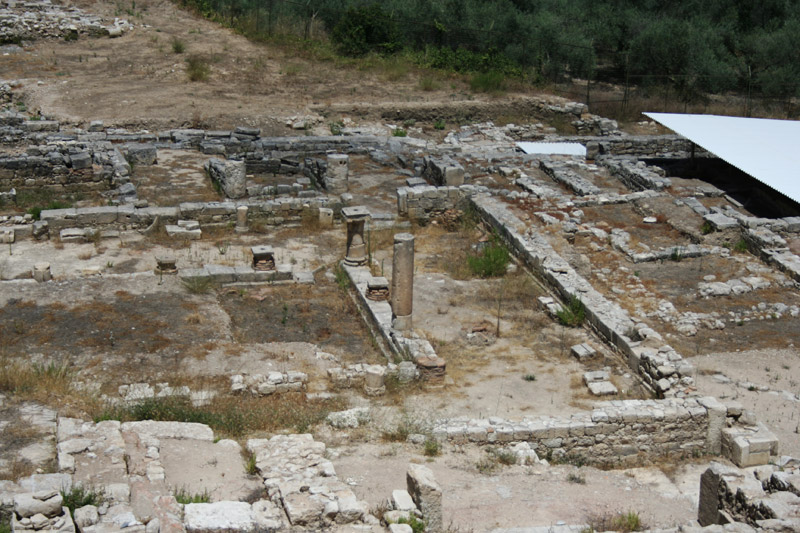
Archaeological Discovery: Gold Adorned Remains of Archaic Woman in Crete


Small gold plaques, 1-3cm-thick, in different forms (square, triangle, and diamond-shaped) were found next to the remains of the woman, discovered a few weeks ago by the team led by archaeology professor Nikolaos Stampolidis. The findings were inside a 2,700-year-old twin tomb, the only one in ancient Eleftherna, located very close to a necropolis of fallen warriors.

Read the full story of this Archaic golden woman

Wednesday, September 22, 2010

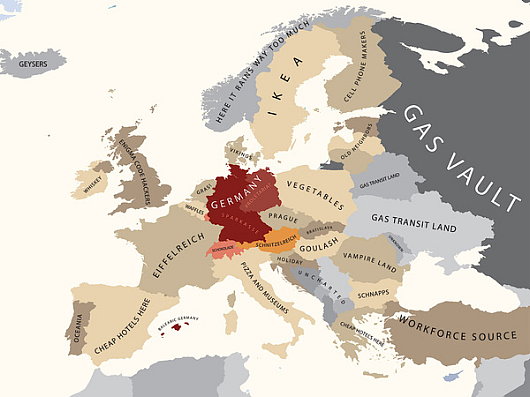
Stereotypes Capture Europe in Color


A big part of what anthropologists learn has to do with culture. Culture is learned, not biologically determined. It's hard to put aside ethnocentric views, as what we learn is the only way.  I think this is the reasoning behind these stereotypical maps of Europe. This is how the majority of the world views Europe, reminding us that our personal bias has once again gotten in the way.

Yanko Tsvetkov, a Bulgarian living in Great Britain, created the first map in 2009 in the midst of the energy dispute between Russia and the Ukraine.

“I just created it to amuse my friends but when I put it up on my website so many people liked it that I decided to really focus on the project of mapping the stereotypes based on different places in Europe. I was surprised by the reaction because I never really expected it to take off like this.”

You must see all of those maps at Andrew Cusack's site

Like Ancient Digger? Why Not Follow Us?


Subscribe Via RSS Feed Follow Ancient Digger on Facebook Follow Ancient Digger on Twitter Subscribe to Ancient Digger Via Email

Get widget

Search


Ancient Digger Archaeology Copyright © 2015 LKart Theme is Designed by Lasantha