• Ancient Digger teaches Archaeology and History to all Ages!

Friday, November 18, 2011

Anthropology Study: Pierre Bourdieu


There is no singular argument I can posit from Bourdieu’s research. It’s evident that Bourdieu believes that anthropology is filled with diabolically obsessing theoretical forces and that culture is neither the “exclusive product of free will nor of underlying principles” (Moore 2009: p326). Culture is not the exclusive product of any such code or rule, but a dynamically changing force, which meets the needs of those who construct the boundaries. I do, however, have several observations.

First, Bourdieu explains the “game”, which is not the individual’s actions or a sole strategy. A game is, in my opinion, a practice and can have such codes and rules. Furthermore, a game can only be won using strategy, and the person who created the rules in the first place often enforces that strategy. Is there confusion in the game? There’s always some level of confusion within strategy, but Bourdieu postulates that strategy exists without confusion. No game, strategy, or practice is without its obstacles in my humble opinion.

Second, Bourdieu had a structuralism agenda. That agenda allowed him to observe Algerian society by contrasting the rudimentary structures of the phenomena in a system of binary opposition. There is nothing wrong with this approach, but it does create contradictory social observations within society. These contradictory results forced, or rather, irked Bourdieu is such a way, that he sought for “perfect coherence in the system” (Moore 2009: p330). He took opposing ideas in structuralism, rather than using ethnographic evidence from Kabyle society.

In actuality, Bourdieu should have used his ethnographic evidence to understand the meanings of east and west and north and south. There were clearly contradictions in the way the Kabyle observed direction and what it meant, from a ritual and social aspect. Yet, Bourdieu believes that the creation of systems of knowledge is always politically based and this is hardly the case, especially when you read the geographic details of specific situations within Kabyle culture. What are some examples of this?

Why is it that seating a guest on the eastern wall is an offense? The Kabyle call this “the wall of darkness” (Moore 2009: p337). You would think, since east is associated with the sun rise, the source of all prosperity and the cardinal direction for ritual, that east would we associated with a completely alternative meaning that Bourdieu has explained. Furthermore, is there an assumption that guests who sit on the eastern wall, which is associated with a sinister area of the house, can remove or derail prosperity from the homeowner?

In essence I believe the Kabyle are a society who make their culture through practice, but I don’t believe that Bourdieu understands the opposing strategies that the Kabyle use to explain simple rituals or rules, because he was seeking equilibrium outside of structuralism. I also believe that Bourdieu is misusing the concept of culture because contradictory situations like the geographical explanations for sharing one’s abode, is not recognized as a masking of a society member’s actual objectives.

Monday, February 7, 2011

Monday Ground Up: Hunter-Gatherers, Agriculture, and Global Warming


Hunter Gatherers: Brief Beginning

Hunter Gatherers are traditionally described as being highly nomadic individuals that traveled with very  few possessions in a marginal environment. Of course, the factors of the environment directly influenced the ability to be mobile. However, up until the Last Age, we can agree hunter gatherers were highly mobile.

Subsistence

Hunter gatherers were either practicing a specialized or generalized subsistence system. In case you don’t know the difference, specialized diets depended on one or a small number of resources, an example being corn or acorns. Generalized diets consisted of any resources available. Both approaches were efficient depending on resources readily available.

Formation of Complex Society

Hunter gather societies were egalitarian, with very limited authority or inequality, others were highly unequal. For instance, slavery was a historically-documented practice of some Northwest Coast and Alaskan hunter-gatherers.

Technologies of Hunter Gatherers

Hunter gatherers are responsible for some of the most widely known technologies, those being ceramics, fired pottery, and domesticated dogs and plants.

Domestication


Complex societies are directly affected by their agricultural subsistence systems, and highly complex societies always rely on domesticated plants and animals.

New World chronologies of domesticated species are poorly understood. The dating problems are due in part to the humid environments of Mesoamerica, where preservation is generally poor compared to the arid Levant. In addition, New World research is at least a generation “younger” than Old World research on domestication. Scholarly attention on plant domestication in the New World did not begin until the 1960s, compared with the 1940s in Southwest Asia.[1]

Domestication occurred all over the world, with no animals to speak of in the Americas, major reliance on domesticated animals and highly productive grasses in the Old World, and tubers, legumes, and fruits in much of the Americas.


Hunter Gathering During the Pleistocene


During the Pleistocene most of the world’s water was locked in ice. Globally, the climate was windier and dryer even nearest to the ice sheets. Hunter gatherers saw the first flora and fauna communities with the climatic shift.

Tropical forests like the Amazon or in Florida were once savannah environments, with spaced trees and shrubs in an open grassland. Even with the abundance of plant life, hunter gathers still preferred meat, as it provided them the most calories with the lest energy output.

Tropical forest hunter gathers had to work much harder than hunter gathers in other environments. Why? Although there was an abundance of plant resources in tropical forests, the plants were scattered, thus taking more time to collect what was needed.

Hunting was just as difficult. Tropical forests yielded smaller species of animals, and usually they were found in the trees due to the lack of ground cover. Hunter gatherers would exert much more energy traveling longer distances to procure plant and animal stuffs as opposed to hunter gatherers living on the savannah.

For example, the tropical Americas had an abundance of large terrestrial animals on the savannah. There’s no evidence for Pleistocene occupations of tropical forest environments.

Most archaeologists now believe that Pleistocene Americans were specialists who emphasized the hunting of terrestrial herd animals like horses, mammoths, and giant bison.  This is not to say that early Americans did not eat smaller mammals and plants, but that their lifeway and technology were focused on acquiring an abundant meat resource.[1]


Temperature Changes in the Pleistocene Tropics


Roughly 20,000 years ago global warming caused a shift in ocean currents, wind patterns, and rainfall. Forests started to expand as well as the plant resources already growing there. Large terrestrial animals started to die out. Hunter gatherers had to adjust their techniques of gathering resources. Specialized communities turned towards a more generalized subsistence system in order to survive.

Hunter-gatherers all over the world made this transition in the early Holocene; it is sometimes called the “broad-spectrum revolution.”

Horticulture to Agriculture

There’s been a debate about the transition to agriculture. Some assume agriculture happened at the exact same time all over the world and others hardly agree with this coincidence.

Archaeologically there was a disappearance of spear heads for hunting and an appearance of grinding technologies. Slash and burn like methods were used to clear forests to encourage the growth of fruits and tubers. Areas were manipulated to create islands of plant resources which hunter gathers returned to periodically to take advantage of the foods growing there.

Over time, individuals spent much more time near the garden plots and started to build semi and permanent settlements nearby. Wild foods started to grow and manipulated plants started to become more dependent on human intervention (ie squashes, sweet potatoes, and several kinds of fruit tree).

Hunter gatherers eventually decreased their mobility and started settling near rivers where they domesticated wild plants and fished. They practiced swidden agriculture; a temporary agricultural plot formed by cutting back and burning off vegetative cover.  Forest farmers’ fields could only be used for a few seasons before it was necessary to move to a new plot of land.

Almost all explanations for the shift from hunting-gathering to farming rely on climate change in some way, even Childe's Oasis Hypothesis.

The Oasis Theory (or Propinquity Theory) is a core concept in archaeology, referring to one of the main hypotheses about the origins of agriculture. First put forward by V.G. Childe in his 1928 book, "The Most Ancient Near-East", the oasis theory argues that the reason people starting living in settlements was because during a dry spell, the only livable place was near oases. .[4]

Agriculture developed in most temperate or sub-tropical parts of the world at the beginning of the Holocene, leading scholars to infer that climate change must have influenced the process. If people living in many environments, with access to very different resources all began domesticating plants at about the same time, was agriculture inevitable? [1][3]

Modern Hunter gatherers - Tribe – BBC


The Babongo of Gabon used to be known, derogatively, as pygmies. They're still treated as second-class citizens by their neighbours. But their expertise and knowledge of the forests is unique and their use of Iboga, a powerful hallucinogenic which lies at the heart of Babongo culture, makes them famous throughout Gabon.

Is global warming in some way responsible for the development of complex societies?

At the end of the late glacial conditions, as mentioned in the article Was Agriculture Impossible during the Pleistocene but Mandatory during the Holocene? A Climate Change Hypothesis., agriculture was impossible. [2]

However, following the conditions, plant intensive resource use was immediately utilized, leading me to believe an action forward approach was instigated by the hierarchical powers that be.

Since intense agriculture is a characteristic of complex societies, and agriculture is indeed sensitive to severe weather conditions, evolution like subsistence characteristic of complex systems could not take place during the Pleistocene. Consequently, in warmer and wetter conditions during the Holocene, evolution of agriculture was made easy, with due access to irrigation.

Population is set, due to the environment and societies with the abilities to obtain resources to acquire and maintain intensive subsistence strategies. Those having the key resources to outmaneuver the smaller societies with less intensive agricultural systems in place will out-compete the weaker of the two.

So was global warming in some way responsible? Evolution of subsistence systems in complex societies was relatively slow during the Pleistocene because of the impeding climatic conditions. However, glacial advances and retreats are not directly relevant to the origins of agriculture because population size grows faster and is able to adapt to cultural evolution. This is not to say global warming didn’t have any effect on complex societies.

Due to the extreme variations in climatic temperatures, evolution of plant use would have been extremely difficult. Consequently, hunting and farming communities would have been able to cope with catastrophic climate events. Complex systems seen within Pleistocene hunter gatherer societies didn’t rely on one resource and remained diversified in the event conservation had to take place.

Pleistocene America saw a rapid change in the environment when global warming altered rainfall amounts, wind, and ocean currents, thus leading to terrestrial animals dying out in masses. Americans were forced to adjust their lifestyles in order to survive. South Americans dealt with the climate change by becoming generalists, thus following all hunter gathers in what was called the “broad spectrum revolution”.

In an essence, although global warming did cause ocean levels to rise resulting in less arid land, complex societies turned to alternative methods of subsistence.


If global warming can cause such incredible changes in human social organization, will the present era of global warming bring about equally massive changes in human society?

As the human population continues to grow, so does the addition of carbon, causing the Earth’s climate to warm further. As we’ve seen from history, life has found a way and survived even the harshest of climatic changes. However, there have been some major re-distributions of species and extinctions associated with this climate shift as well.

Most of the world’s population is concentrated in coaster cities, as opposed to small nomadic tribes, and if sea levels were to rise even a few meters, the geographic landscape would be completely altered, and many cases, destroyed.

Years ago, if sea levels rose a few meters, it would have had very little effect. Consequently, such a sudden change in climate is hard to prepare for.

“Equally, it seems likely that as warming continues some areas may experience less precipitation leading to drought. With both rising seas and increasing drought, pressure for human migration could result on a large scale”. [3]

Also check out:


For decades, anthropologists have debated “The Eve Theory” – the theory that world cultures migrated and evolved from a single source – Eve, a reference to Adam and Eve mentioned in the Bible’s Book of Genesis as the first man and woman and the progenitors of all human life.

Sources

  1. Dr. Sarah Barber. UCF. Anthropology of Complex Societies
  2. Robert Boyd, Robert L. Bettinger, Peter J. Richerson
    2001 Was Agriculture Impossible during the Pleistocene but Mandatory during the Holocene? A Climate Change Hypothesis. American Antiquity Vol. 66, No. 3, 2001j, pp. 387-411. Society of American Archaeology.
  3. "Climate change: evidence from the geological record ." The Geological Society. The Geological Society of London , November 2010. Web. 30 Jan 2011.
  4. Oasis Theory
  5. Picture Cro Magnon
  6. Hunter Gatherer picture
  7. Global Warming GIF

Sunday, January 23, 2011

Sunday Round Up: Top Archaeology and Anthropology News 1/23/2011


Archaeology

Anthropology

Sue Alcock From Brown University Discusses Petra at University of Texas

As stated by the University of Texas 'Archaeologist Susan Alcock will deliver a talk titled "Putting Petra in Landscape Mode: Alternative Archaeologies at a World Wonder," as part of the fourth annual William J. Battle Lecture Series. Alcock, director of Joukowsky Institute for Archaeology and the Ancient World, is Joukowsky family professor in archaeology and professor of classics at Brown University.

Read more: Sue Alcock From Brown University Discusses Petra at University of Texas

Chinchorro Mummies On Display in Santiago

A group of Chinchorro mummies are on display in 2008 in the cultural centre of the La Moneda presidential palace in Santiago. Switzerland has returned four mummies to Chile, including two of them among the world's oldest, after their private owner agreed to their restitution.

Read more: Chinchorro Mummies On Display in Santiago

Military Archaeology in Russia ww2

Simple Machines for Detachment 14th exploratory season in the "Valley" was going to be easy, but effective. Thanks to colleagues from Demyansk, under the leadership of Anatoly S. Pavlov, as well as in advance to visit the area scout and an experienced search engine Vadim Antonov, found a mysterious unaccounted dumping of Soviet soldiers being in combat strewn ditch full profile. Why mysterious? Will become clear later...

New Colonial Fort Discovered in St. Augustine

Only miles form where I live, there's always archaeological digs going on in St. Augustine, one of my favorite cities on earth. Of course, the greatest attractions for tourists, historians, and archaeologists alike in St. Augustine are the Castillo De San Marco and Fort Matanzas. Imagine my surprise to hear that a new colonial fort may be uncovered in the next few weeks, as archaeologist Carl Halbirt and a team of volunteers is uncovering the remains.

Read more:New Colonial Fort Discovered in St. Augustine

Following Johns Hopkins Egyptologist Betsy Bryan at Mut Temple

Johns Hopkins Egyptologist Betsy Bryan and her team of students, artists, conservators and photographers have returned to their investigation of Mut Temple, focusing their attention on the area south of the temple’s Sacred Lake. Bryan and her crew are resuming their excavation in Luxor, Egypt, and are sharing their work via “Hopkins in Egypt Today,” their popular digital diary offering a virtual window into day-to-day life on an archaeological dig. New posts will appear through the end of January at www.jhu.edu/egypttoday.

Read more: Following Johns Hopkins Egyptologist Betsy Bryan at Mut Temple

Destruction of Arizona's Heritage: Rock Art Vandalism

The defacing of rock art sites in Arizona has become a distressing and persistent reality, which must be addressed swiftly. To promote public awareness and debate about the preservation of rock art sites, a panel of archaeologists will discuss a variety of topics, including recent vandalism at Keyhole Sink; debates over rock art conservation models; Native American concerns about the destruction of cultural heritage; and stewardship of archaeological sites.

Read more: Destruction of Arizona's Heritage: Rock Art Vandalism

Saddleworth's Archaeology Collection on Display

The historical collection of a WWI officer from Saddleworth has gone on display, showing how ordinary people helped progress modern archaeology. 'The Story of Francis Buckley' at Gallery Oldham gathers together many of its titular archaeologist's treasures. Born in 1881, the former barrister became an expert on subjects such as English glass and Stone Age flints. Senior curator Dinah Winch said Francis "amassed the most amazing collection" in his lifetime.

Read more: Saddleworth's Archaeology Collection on Display

Finding Would Reveal Contact between Humans and Gomphotheres in North America

Mexican Archaeologists discovered 3 Clovis projectile heads associated to remains of gomphotheres with an age of at least 12,000 years, in the northern region of the Mexican state of Sonora. The finding is relevant because these are the first evidences in North America of this extinct animal linked to the human species. The finding opens the possibility of the coexistence of humankind with gomphotheres, animals similar to mammoths, but smaller, in this region of America, which contrasts with theories that declare that this species disappeared 30,000 years ago in this region of America and did not coexist with humans.

Read More: Finding Would Reveal Contact between Humans and Gomphotheres in North America

Smart Drug Dealers Know Their Target Audience’

Thomas "Biggie" Zenon and Miguel "G" Guzman were drug dealers. Specifically, they sold weed and high-grade cocaine. "Who in this city uses those kinds of drugs?" they asked themselves. White folks, they decided. College students and graduates with a higher-than-average median income who hate Rudy Giuliani but love Lady Bunny, spicy foreign foods, and movies in the original Swedish. Aha! Village Voice readers!

Read More: Smart Drug Dealers Know Their Target Audience’

Neoliberalism alive and well

Acknowledging that there are different kinds of "capital" -- e.g. cultural -- anthropologist David Harvey denotes that the principal property is that of circulation, the analogy being to life blood. As the ideal, he speaks of 3 percent compound growth and 50-year cycles -- but which is limited for finite resources. We can assume we are here talking mainly about "money" and wealth or the equivalent, even if only as bookkeeping or computer entries.

Read More: Neoliberalism alive and well


A mother struggles to see past herself

Lucy” is a rare event in the theater – a play told from the point of view of an autistic girl who, at 13, is getting to know her mother, a gifted and frustrated anthropologist once solely focused on advancing her career.
It’s an idea that makes Lucy into a modern missing link, and suddenly her name has resonance with another Lucy, the almost 4-foot-tall hominid skeleton from 3 million years ago. Through this comparison with hominid Lucy, Vivian’s daughter becomes a modern miracle – someone worthy of a mother’s love.

Read More: A mother struggles to see past herself

Scientists model ancient bog woman's face

German researchers have shed light on life during the Iron Age after examining the ancient remains of a woman found in a bog in what is now Lower Saxony. The body dates back to the pre-Roman era, more than 2,600 years ago.
A team of experts presented their findings on Thursday in Hannover, including facial simulations of the bog woman dubbed “Moora.” Archaeologists first began studying the find six years ago, according to news magazine Der Spiegel.

Read More: Scientists model ancient bog woman's face

Archeologists discover ancient ruins along Tanzanian coastal area

Tanzanian archaeologists and historical experts have announced the discovery of dozens of ancient ruins along the coastal area, dating back to as far as the 13th century. The new finds will shed new light on life as it was then, the identity of coastal dwellers, and possible trade with other seafaring nations across the oceans, in particular the Gulf area. It is believed from initial assessment that Arabic traders, and also the Portuguese in later centuries, had made landfall in what is now Tanzania and established settlements able to provide water and food to the ships and also trade for commodities in demand back then.

Read More: Archeologists discover ancient ruins along Tanzanian coastal area

Professionals Explain Rock Art Etiquette At Gold Butte Meeting

Around 1,500 years ago, a group of people lived and survived on the land presently called the Virgin Valley. People today know this because they left behind phenomenal petyroglyphs, commonly known as rock art, on sandstone. Although archaeologists gather theories as to exactly who these people were or what these markings mean, the truth is no one knows for sure who they were, where they went or why they documented their lives on stone.

Read More: Professionals Explain Rock Art Etiquette At Gold Butte Meeting

Sunday, January 16, 2011

Sunday Round Up: Top Archaeology and Anthropology News 1/16/2011


Archaeology and Anthropology Latest Headlines

Chemical analysis confirms discovery of oldest wine-making equipment ever found

Analysis by a UCLA-led team of scientists has confirmed the discovery of the oldest complete wine production facility ever found, including grape seeds, withered grape vines, remains of pressed grapes, a rudimentary wine press, a clay vat apparently used for fermentation, wine-soaked potsherds, and even a cup and drinking bowl.
The facility, which dates back to roughly 4100 B.C. — 1,000 years before the earliest comparable find — was unearthed by a team of archaeologists from Armenia, the United States and Ireland in the same mysterious Armenian cave complex where an ancient leather shoe was found, a discovery that was announced last summer. ~UCLA Newroom, From Stone Pages

2011 Excavation List For Excavation In Israel Just Published

Israel's Foreign Ministry posted a preliminary list of archaeological excavations scheduled for 2011. The ministry updates the posting periodically as new digs are notified to them. For ant one who wants to dig in Israel this is a vital piece of information.

This list of archaeological expeditions which accept volunteers is compiled by the Israel Foreign Ministry as a service to the public, and is not an endorsement of any of the projects listed. The excavation details below been published by the archaeologists in charge of the individual expeditions, who bear responsibility for their contents. ~ArchNews

Major Archaeological Project Examines Interactions That Changed China

The Oxford Centre for Asian Archaeology, Art and Culture, based in Oxford University’s School of Archaeology, has received its first major research award since its launch in October last year.

The Leverhulme Trust has awarded a grant of almost half a million pounds for the research project ‘China and Inner Asia (1,000-200 BC): Interactions that changed China’. The project, led by Dame Jessica Rawson, Professor of Chinese Art and Archaeology at the University of Oxford, will look at how the early Chinese societies made use of different foreign materials and technologies. Researchers will track how the Chinese, with their highly organised, relatively dense population, were able to react fast and on a large scale. ~Advert.co.uk

Antiochus VII, Antioch, January 17, 121 BC - Coining an eclipse of Jupiter by the moon

An unusual Greek coin, minted around 120 BC, may have marked a moment in time when people in ancient Syria saw Jupiter being blocked out by the moon.

On one side is a portrait of Antiochos VIII, the king who minted it. On the reverse is a depiction of Zeus, either nude or half-draped, holding a sceptre in his left hand.  Above the god’s head is the crescent of the moon, and his right arm is outreached with a star like figure (that may in fact be Jupiter) hovering just above his palm.

“Nobody ever re-used this iconography again – it was a one off,” said Professor Robert Weir, of the University of Windsor in Canada, who presented his research recently at the annual meeting of the  Archaeological Institute of America.

Culture thrived on future Iowa soil

About 800 years ago, an American Indian culture was concentrated in the Loess Hills near here.

Little is known about the people of what archaeologists call the Glenwood culture. They dwelled in earth lodges, lived on both sides of the Missouri River, and sometime around 1300 A.D. left — possibly being absorbed by the Pawnee or other tribes.

But two new grants from the Iowa Department of Transportation may help scholars and archaeologists learn more about the Glenwood culture people. ~Omaha World Herald

Primitive Peoples of Matto Grosso 1941

This awkwardly narrated black and white film from 1941 shows Anthropologist George Rawls interacting with the Bororo people of Brazil.

This movie is part of the collection: University of Pennsylvania Museum of Archaeology and Anthropology Films at http://www.archive.org

Sunday, January 9, 2011

Sunday Round Up: Top Archaeology And Anthropology Stories For 1/9/2011


Iran to Keep British Museum’s Cyrus Cylinder Three More Months


The British Museum said it will prolong its loan to Iran of an ancient artifact for three more months, meeting a request by the Iranian authorities.

The Cyrus Cylinder, which went on show at the National Museum of Iran in September and was due back Jan. 16, will stay in Tehran until April 15 -- after late March celebrations of the Iranian New Year (Norouz), the museum’s press office said in an e-mailed statement.~Bloomberg

New technology gives on-site assessments in archaeology


The ability to tell the difference between crystals that formed naturally and those formed by human activity can be important to archaeologists in the field. This can be a crucial bit of information in determining the ancient activities that took place at a site, yet archaeologists often wait for months for the results of laboratory tests.

Now, however, an international team of physicists, archaeologists and materials scientists has developed a process that can tell in a matter of minutes the origin of samples thousands of years old. ~Spero News

Monday, December 13, 2010

Monday Ground Up: Cultural Innovation and Imitation-Historic Roads to Economic Stability


This is a guest post contributed by Lisco Johnson.

clip_image001

Throughout the millennia there have been thousands of individual cultures – from small tribal groups to cultures that spread across the globe. Just 100 years ago, “The sun never set on the British Empire” with Britain’s expansive commonwealth spread from Australia to India to South Africa across the Atlantic to Canada. Today, the UK, while still an chief player on the world stage, no longer maintains a global empire.

Breaking the Maya CodeCultures are born, grow, thrive and die out for numerous reasons. Between 1000 and 1300 AD, the Mayan culture covered most of current-day Central America and large portions of modern Mexico. The Maya, it could be argued, were the greatest world culture during its Golden Age, yet the magnificent temple cities constructed by the Maya were deserted by the time Europeans arrived in the region in the mid-1400s.
There are many theories why this one-time cultural innovator disappeared – dispersed into the jungles, and then into villages and cities where modern day Mayans still live today. Cultures rise and fall.

Cultures evolve and devolve. All we have to do is glance at the history of humankind to see that even the greatest civilizations rise and fall.

Is there a single characteristic anthropologists turn to attempting to decipher what makes great societies thrive? 

What makes a culture great? In fact there are many, but when given careful scrutiny, we can see case after case of great societies that were innovators of new ideas and new technology, and societies adapting the ideas and technology of “outsiders” for the benefit of the people who comprise the imitative society.

Innovation


Mayan astronomers created a calendar so precise that, once decoded, amazed modern day science. This culture studied the heavens, charted movements of celestial bodies and developed an intricate system of mathematics to record time and events.

At about the same time, European culture was mired in the Dark Ages when innovation was replaced by the simple need to survive. Indeed, there were learning centers in London, Paris and other medieval cities but innovation wasn’t part of the culture in general.

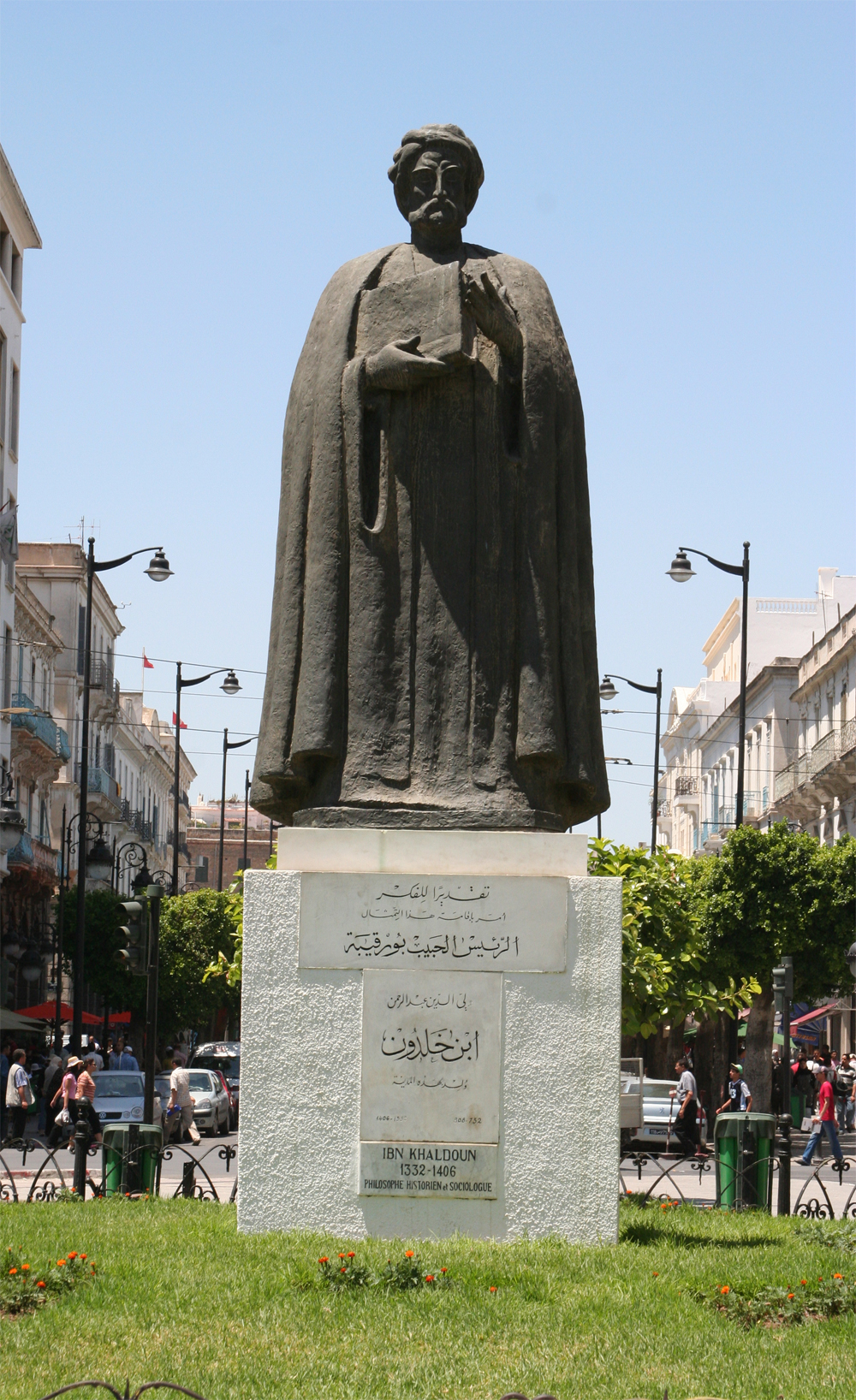
Instead, innovation was taking place on the Yucatan Peninsula and throughout the Middle East where innovative thought led to the creation of algebra (al-jabria) and fundamental social sciences. Idn Khaldun (1332-1406 AD), a great thinker of the time, is credited with the creation of the sciences of economics, the philosophy of history and the scientific method itself.

Khaldun, in his most important writing, The Muqaddimah (1377), lays out testing standards that are still used today in modern research. While Europe was studying pseudo-sciences like astronomy and alchemy, the Middle East was laying the foundation for the work of Sir Isaac Newton in moving forward the world’s body of science.

Innovation occurs during the early days of the great Greek Empire. This was a culture that valued learning and pondered the things its members saw around them. Archimedes defined “displacement” while sitting in a public bath and ran through the streets shouting, “Eureka. EUREKA!” that translates into “I found it.”

Aristotle, Plato, Socrates, Aristophanes and other great minds and great artists moved world culture forward during Greece’s Golden Age of Learning. However, de facto, innovation alone does not sustain a society. And all societies are not innovators. Some have mastered the art of imitation to create sustainable and even robust economies.

Imitation


For centuries Japanese culture demanded of its people an unquestioning acceptance of a strong social contract. The people obeyed orders. They followed instead of led. Individuality was frowned upon. “Fitting in” was woven into the fabric of Japanese society for thousands of years.


The leaders of Japan discouraged innovation and even feared it. This can be demonstrated by the strained history of Japan’s early engagement with the West. In 1853, Commodore Matthew C. Perry arrived in the land of the Shogun. The Japanese referred to these ambassadors as “hairy barbarians.” Instead of embracing the innovation engagement with the West would deliver, Japan remained a closed society until the outbreak of World War II.

After the war, the U.S. pumped billions of dollars in building new factories for the Japanese economy. The U.S. also sent its most innovative, creative minds to Japan to teach this isolationist society modern manufacturing and business development techniques. The Japanese took these assets and, in a single generation, built an economy that provides high-tech electronics, automobiles, heavy equipment and ships to a global market.

However, the Japanese continue to discourage innovation. Fitting in and not making waves is still the centerpiece of Japanese culture. Japanese universities, for example, lag in the implementation of technology on their campuses. Few universities have local access networks in place, though other innovative societies have LANs in secondary schools to encourage the exchange of information essential for innovation.

When China Rules the World: The End of the Western World and the Birth of a New Global OrderChina serves as another example of a nation that imitates rather than innovates. Prior to engagement with Europe and North America, China was a society based on a cult of personality. The Red Guard, the hope for China’s future, waved Mao’s Red Book as they marched in unison before the reviewing stands. Mao’s Great Leap Forward sent university professors to work in the rice paddies. Innovation was absent.
Today, 35 years later, China’s economy ranks just below the U.S. economy in gross domestic product (GDP) and some economists project that China will overtake the U.S. in GDP by the year 2015.

Yet, China does not innovate. It imitates. It adapts business practices employed in Western business communities. It employs technology imported from the EU and U.S. to build computers, manufacture clothing, build consumer electronics and, soon, Chinese- made cars will be sold in the U.S., adding to an already competitive market. In 2009 the U.S. government had to prop up one-time car giant, Chrysler, to prevent one of the “Big Three” auto makers from collapsing under its own weight.

A Country’s Greatness Is Defined By Innovation


China is certainly a powerful country. However, can it be called a great country?

The Chinese government discourages dissent, thus lessening the free exchange of ideas. Search engine giant, Google, no longer serves the Chinese market, pulling out after government censorship became more than Google would tolerate.

Indeed, foreign investment and foreign innovation is welcome throughout China. Many innovative companies from innovative cultures maintain a business presence in this major influence on global economics.
However, China’s government has also declared “internet addiction” to be a mental disorder and has established over 300 “re-education” camps to treat the illness called curiosity. The Chinese people follow. They don’t lead.

China’s power comes from its endless supply of low-cost labor, NOT from its learning centers or cultural centers. The cultural mores of the past remain firmly in place and the government functions in constant fear of another Tiananmen Square uprising among the people.

Countries that foster innovation will continue to grow, though at a slower rate in difficult economic times. These countries produce the tools of tomorrow while those countries that discourage innovation are destined to follow through imitation.

Both innovation and imitation have led to successful, expanding economies. However, looking back through history from an anthropologic perspective, clearly those cultures that encouraged innovation lasted longer and moved the body of world knowledge forward.

Imitation-based cultures have always lagged. They may be powerful. However, it is the fostering of innovation that makes a culture great.

This is a guest post contributed by Lisco Johnson, a history & fitness lover who owns a website offering free tips & articles on how to build muscle

Picture sources


 ©Kassus Statue d'Ibn Khaldoun sur l'avenue Habib Bourguiba à Tunis (Tunisie)

Sunday, December 12, 2010

Sunday Round Up: Top Archaeology and Anthropology Stories


An archaeologist takes an animal bone out of an unearthed bronze tripod on Friday, December 12, 2010. 2400-year-old Bone Soup Unearthed in China. Humans May Have Lived in the Persian Gulf, Study Says "Submerged under the waters of the Persian Gulf may have been where humans once lived about 8,000 years ago, when it was still above sea level, a study found."
Mexican Archaeologists Say Tonina Ballgame Court may Be the One Described in Popol Vuh . When development meets the past: Just outside the church’s large, arched, multi-colored 19th-century stained glass window lies William C. Cleland.
Rescued USS Monitor steam engine returns to Civil War appearance. New exhibition offers healthy dose of philosophy. Åžen, who left Turkey only months before the 1980 coup, confesses that his art was not understood or appreciated in his home country at that time.
First Yule Lad Arrives at National Museum of Iceland. Today, December 12, the first of the 13 Yule Lad brothers, Stekkjastaur (Sheep-Cote Clod), comes to town. His first stop is the National Museum of Iceland where he will entertain visitors at 11 am. Software engineer Andy Carol has constructed a Lego device that performs the same calculations as the Antikythera Mechanism, dubbed the world’s oldest computer. The Guardian has You Tube video of the Lego device in action, in addition to information on the original Greek instrument. ~Archaeology.org

Do you have Archaeology or Anthropology news? Are you a professor hosting a new field school? A website with a new discovery or exhibition? Let me know and it will be featured here on Sundays.

Tuesday, November 9, 2010

Anthropologists Debate: Neanderthal and Human Brains No Longer Similar


I was watching a movie today in an Anthropology class called Neanderthal The Rebirth featured on BBC. Two individual sets of bones were fused together to form an almost complete skeleton of a Neanderthal.

The legs, of course, were a bit shorter, the rib cage flares at the bottom, an indication of the lung capacity and the ability to survive cold climates.

The cranial capacity, however, was compared very closely to modern humans. A endocast was created to study the indentations or imprints left by the brain to study cognitive abilities. There was barely any debate in the mental processing abilities of both modern humans and neanderthals.


Imagine my surprise and disbelief after finding a video today stating neanderthal and human brains are not as similar as once thought.

This video explains the development and research by Svante Paabo of the neanderthal genome at the Max Plank Institution of Evolutionary Anthropology in Leipzig, Germany.

Among humans, however, the internal organization of the brain is more important for cognitive abilities than its absolute size is. The brain's internal organization depends on the tempo and mode of brain development.
Website of the Neandertal Genome project

Friday, November 5, 2010

A Scary Archaeological Trip


No, it's not a new discovery, it was just an eye opening experience for me while I was fossil hunting today with the puppies. Like any normal day, I got on my Columbia hiking shoes (no this is not an ad, they're new and I love them *smile*), grabbed my water bottle, and headed down the trail.

I found this area brimming with fossilized bones from animals a few weeks ago and thought, why not explore the evidence a bit further. I had my trowel in hand and the dogs pulling my other arm in another direction. Why, I'm not sure. Imagine two dogs wanting nothing to do with animals bones. It's a bit bizarre to tell you truth, but to be honest, I'm not sure why there are so many in one place. There could be someone living in the forest and this is their so called pit of bones.

No sooner then I tried to start picking around, I felt like I was shot in the shoulder. I've had bee and wasp stinks, but this was worse. I could feel the pain rush down my arm and the right shoulder blade was killing me. I immediately grabbed my shoulder to try and dull the pain. I was looking behind me at the same time and saw nothing and nobody. Needless to say, I started I turned around and started running back home and I don't run.

I just got home an hour ago and looked at my back. There's a huge welt but no stinger inside the wound, as I tried to scrape it with a butter knife. I'm at a loss and a bit freaked out. Either someone doesn't want me near those bones and shot me with a pellet or it was something supernatural.

What do you think? Isn't it strange?

Wednesday, November 3, 2010

Secondary Burials of Berawan


Western society views funerary practices of non-westerners as odd, bizarre, and unnecessary. However, let's turn the tables and see what the Berawan think is so bizarre about American funerary practices.

Berawan secondary burials involves a sort of storage, if you will, of the remnants of the deceased above ground in a longhouse or upon a platform in the cemetery. The family of the dead will store the corpse in a valuable glazed jar or the coffin left over from the first stage. The entire process usually “lasts at least eight months and sometimes for several years if the close kin cannot immediately afford to complete the expensive final stages.”

Read the full story about the Bizarre Berawan secondary burial @Friends revolution.


Thursday, October 28, 2010

Archaeology News: Thursday October 28, 2010


Paleontologists have revealed the earliest known African anthropoids found to date - three previously unknown kinds of the primates from Dur At-Talah in central Libya that apparently date back 38 million to 39 million years ago. The diversity and timing of the new anthropoids raises two scenarios. Anthropoids might simply have emerged in Africa much earlier than thought, and gone undiscovered by modern paleontologists. Or they could have crossed over from Asia, where evidence suggests that anthropoids lived 55 million years ago, flourishing and diversifying in the wide-open ecological niches of an anthropoid-free Africa.

Niah Caves Should Be A World Heritage Site. The Niah Caves, located some 120 kilometres from Miri city, should be another world heritage site in Sarawak for its uniqueness, Chief Minister, Tan Sri Abdul Taib Mahmud said here.

Italy: DNA tests may reveal true fate of Sicilian 'Robin Hood'. - The tomb of one of Italy's most legendary bandits was due to be opened on Thursday in Sicily to gather forensic evidence that will either fuel or put to rest suspicion that the body inside doesn't match the name on the sarcophagus: Salvatore Giuliano.

Archaeologists solve mystery of Silbury Hill (maybe) It is one of England's most mysterious monuments. Just a short walk from the massive stone circle complex of Avebury, Silbury Hill is a giant, flat-topped mound rising 120 feet above the surrounding countryside. Researchers have proposed dozens of theories over the years to explain its purpose, suggesting everything from a giant burial mound to a platform for religious music. 

Archaeologists find pre-historic migrants "This is of great regional significance, and it will generate national interest", said Edward Biddulph, senior project manager with Oxford Archaeology which conducted the dig.

Cornell Archaeologist Makes Neolithic Era Discovery. A project led by a Cornell professor is helping to re-write the early prehistory of Cyprus, the island nation in the eastern Mediterranean Sea. By taking a new approach to examining human civilization, Prof. Sturt Manning, classics, and his team of undergraduate and graduate students from Cornell, the University of Toronto and the University of Cyprus, have uncovered new evidence that agricultural settlements had been formed up to half a millennium earlier than previously believed. 

Ayodhya verdict based on ASI report: Archaeologist. The Lucknow bench of the Allahabad High Court relied heavily on  the ASI report  in its verdict on the Ram Janmabhoomi-Babri Masjid dispute, says Dr AK Mishra, one of the three observer-archaeologists appointed by the high court for their vigil during the excavation by ASI at the disputed site in Ayodhya.

Tuesday, October 26, 2010

Top Archaeology News: Tuesday October 26, 2010


An Armenian archaeologist says that scientists have discovered a skirt that could be 5,900-year-old. Pavel Avetisian, the head of the Institute of Archeology and Ethnography in Yerevan, said a fragment of skirt made of reed was found during recent digging in the Areni-1 cave in southeastern Armenia.

Learn what archaeologists found under and around the 263-year-old house of the Rev. John Hancock in a program to be held Sunday afternoon at Buckman Tavern in Lexington.

Silbury Hill mysteries are unravelled in new book.

Egyptian pyramids are one of the seven wonders of the world. However, a study conducted by UK’s Truprint Photo Company, a digital photo printing service, has also revealed that Egypt’s Giza Pyramids are photographed the most by British tourists.

The mausoleum was created about 2,200 year ago and served as a tomb for Qin Shi Huang – the first emperor of China. While the emperor’s tomb is largely unexcavated, archaeologists have found thousands of life-size terracotta figures nearby. It’s believed that this army was created to serve the emperor in the afterlife.

The Shakers were known for their simple, economical ways. But as archaeologists discovered Monday, even their dirt was clean. 

Click on the links for more information and the full story. Have a wonderful week from Ancient Digger!

Saturday, October 23, 2010

Top Archaeology News: Saturday October 23, 2010


A team of Chinese archaeologists dedicated to the excavation and study of the world famous terracotta warriors in northwest China's Xi'an City on Friday received the Prince of Asturias Award for Social Sciences in Spain.

Archaeologists have found remains of five females who may have been ritually sacrificed in a 1,400-year-old flat-topped pyramid in the Lamayaeque region's southern Jequetepeque Valley.

Her life has been celebrated in song, story and a Disney cartoon, but no one knew where Pocahontas tied the knot with a tobacco farmer—until now.

Archaeologists unearth 10,000 year old camp site along US/Canada border. A team of archaeologists has spent the last several weeks gathering and collecting artifacts along the banks of the Saint Croix River on property owned by the federal government behind the U.S. Customs Port of Entry in Forest City.

Hundreds gathered for the annual meeting of the North American Sea Glass Association, to celebrate a hobby that seems an odd mix of amateur archaeology, environmental monitoring and antique collecting, with a little chemistry thrown in. 

The discovery of starch remnants on stone tools indicates that our ancestors were making flour out of starchy roots 30,0000 years ago. Karen Hopkin reports.

Russian Submarine SC-213 discovered by divers from Black Sea Wreck Divers near the coast of Constanta, Romania (Black Sea)

A group of archaeologists from Queensland University have discovered the oldest known high altitude human settlement.

Click on the links for more information and the full story. Have a wonderful weekend from Ancient Digger!

Friday, October 22, 2010

Top Archaeology News: Friday October 21, 2010


Groton's rolling hills are vestiges from ice-age glaciers of long ago. Life was non-existent until the age of glaciations ended and five-thousand feet of ice in our region slowly melted, approximately 15,000 years ago.

Magdeburg, Germany - Hundreds of Germans paid their last respects Friday to an English queen born 1,100 years ago, during a reburial ceremony in the cathedral of the eastern city of Magdeburg.

Peruvian archaeologists have unearthed four perfectly preserved mummies at an ancient burial site in the capital city, Lima.

More skeletal remains been uncovered at the Gisborne District Court extension site.

A 400-year-old village of 10 longhouses has been uncovered in Ontario, on the banks of Strasburg Creek. Some artifacts from the site are even older, dating back 4,500 and 9,000 years. “The descendants of the people from that site are now among the Six Nations today,” said contract archaeologist Paul Racher. ~Archaeology News


After yesterday's site visit, archaeology team says passageway is around three centuries old; blueprint of GPO building may be available at British Library in the UK

Many ancient artifacts have been curated at the Sunshine Coast Museum, but very little information exists around the meaning and function of these items.

Thursday, October 21, 2010

Top Archaeology News: Thursday October 21, 2010


Most victims of Mt. Vesuvius' massive eruption in 79 AD probably died from thermal shock, rather than the previous generally accept theory of suffocation, according to a new study.

Nearly 3,000 of those once-buried treasures are kept at the Siegfried H. Horn Archeological Museum & The Institute of Archeology at Andrews University just outside Berrien Springs.

The University of Winchester’s archaeological excavations at St Mary Magdalen, on the outskirts of Winchester, have revealed evidence for what may be Britain’s earliest known hospital.  

It has been 100 years since excavations started on the Madinat Al Zahra, the magnificent 10th century palace city near Cordoba in southern Spain.

Archaeologists think they've found the site of a cabin that belonged to southern Oregon pioneer photographer Peter Britt

The mummies of a woman and three children from the Huari culture have been discovered in Lima, Peru, in an intact tomb at the top of a pyramid. The tomb is estimated to be 1,150 years old.  ~Archaeology News

East Contra Costa road work unearths more Indian graves. Shea Homes construction crews have found 30 sets of human remains over the past couple of months while widening a stretch of Marsh Creek Road just west of where it intersects the Highway 4 bypass.

Cornell archaeologists are helping to rewrite the early prehistory of human civilization on Cyprus, with evidence that hunter-gatherers began to form agricultural settlements on the island half a millennium earlier than previously believed.


Make sure you click on the links for the entire story. Have a great day and thanks for visiting Ancient Digger.

Wednesday, October 20, 2010

Top Archaeology News: Wednesday October 20th, 2010


Archaeologists and Middle Tennessee State University students believe the remains of a mastodon are behind a Franklin home, about 20 miles south of Nashville. Mastodons are prehistoric, elephant-like creatures, believed to have weighed up to 12,000 pounds.

Swiss archaeologists find 5,000-year-old door that may be one of the oldest ever found in Europe.

Egypt's top archaeologist has shown off a newly discovered tomb of a pharaonic priest, a find he says could point the way to a new necropolis to be excavated near the famed Giza pyramids.

When freelance artist Ben Wood and archaeologist Eric Blind heard about a hidden 18th-century mural at Mission Dolores in 2004, they wanted to see it. With permission from the church, they lowered a camera into a 3-by-3-foot trap door in the attic.

One of the stars of the Oriental Institute’s new show, “Visible Language: Inventions of Writing in the Ancient Middle East and Beyond,” is a clay tablet that dates from around 3200 B.C. On it, written in cuneiform, the script language of ancient Sumer in Mesopotamia, is a list of professions, described in small, repetitive impressed characters that look more like wedge-shape footprints than what we recognize as writing.


This Thursday evening, Oct. 21, Verde Valley residents will have their first opportunity to hear about the recently proposed Verde Valley Archaeological Center, during the monthly meeting of the Verde Valley Chapter of the Arizona Archaeological Society.

A World War II-era bomb crater was spotted in Darwin, Australia. The city was subjected to 63 bombing raids during the war.

Make sure you click on the links for the entire story. Have a great day and thanks for visiting Ancient Digger.

Sunday, October 17, 2010

Anthropological Study: Krill Oil May Change The Face Of Dietary Habits


Close to 100 years ago, humans were consuming, as well as using the Omega 3 oils as cures. Diets of children and adults consisted primarily of foods high in Omega 3, however today that’s not the case. Historically, what does this mean? It means the majority of the population is not getting the nutrients they need to survive the next 100 years. Children diets today primarily consist of chips, soda, fast food, hotdogs, macaroni and cheese, and chicken fingers. Studies have shown 86% of children are not receiving a balanced diet at school. So would an increase in Omega 3 using krill oil make a difference for these youths? Absolutely!

Upon researching krill oil as opposed to fish oil at krilloil.com, I came to an alarming discovery. First, you’re probably wondering why I was on the site in the first place and what this has to do with history? For me, I’m in the process of losing a substantial amount of weight and I also suffer from intracranial hypertension. This has been caused by years of eating foods rich in fat and tons of carbohydrates. I’ve always had an issue working fish into my diet, however my father swears by it. The history of diets and food has always fascinated me, especially considering I initially went to school to be a chef. So from an anthropological standpoint, I want to learn what people were eating years ago and why they were so much healthier than we are now.

If you are used to fish or fish oil in your diet, you may not be aware of the benefits or lack thereof you’re actually getting. Fish being raised on farms for oil is pumped with chemicals and dyes, which explains the rose or peach color of many fresh fish you see in the market. It’s completely artificial. Furthermore, most fish seen in superstores like cod, orange roughy, salmon, herring, and tuna, are filled with mercury and metal.

If you’re like me and you don’t consume fish, taking a supplement can take the place of the fish lacking in you daily diet. The issue now, however, is when I started taking fish oil pills, I had horrible pains in my lower abdomen. As soon as I stopped, the pains stopped. When I looked into krill, tiny shrimp-like crustaceans found abundantly in the pristine icy waters around the South Pole that make up the largest biomass on earth, I thought these must be more beneficial. I don’t think there’s another place on earth that’s more clean and pure than the waters of Antarctica, and this is where krill these days is coming from.

If you’re still not buying it, let me explain it to all of you that are familiar with the anatomy of the body and how we digest these oils. Krill Oil is structured in phospholipid form and NOT triglyceride form. Our bodies have a difficult time breaking down triglycerides, however the phospholipids in Krill Oil are the exact same types of fats cells in the human body. Therefore Omega 3s can directly enter your body without any additional work or conversion!

It may not be archaeology like we at Ancient Digger usually talk about, however these findings are based upon years of sociocultural history. Our diets have changed and altered out lives, and for me, I’m making a huge change in my dietary habits. Every little bit of knowledge helps.

Monday, October 11, 2010

Monday Ground Up: Psychological Approach to Religion and Primitive Thought According To Clifford Geertz


Clifford Geertz argued for a broader psychological analysis of religion. He approaches the subject using sociology, history, and semantics to arrive at the notion, religion should be studied using a mature theory of religion. Thus, this will integrate certain approaches into a more comparative and conceptual system. He relates his findings to "primitive thought", making comparisons to western and non-western societal groups, thus concreting the subject's influence in the anthropological approach to religion.

Geertz explains:
Two characteristics of anthropological work on religion accomplished since the Second World War strike me as curious when such work is placed against that carried out

Like Ancient Digger? Why Not Follow Us?


Subscribe Via RSS Feed Follow Ancient Digger on Facebook Follow Ancient Digger on Twitter Subscribe to Ancient Digger Via Email

Get widget

Search


Ancient Digger Archaeology Copyright © 2015 LKart Theme is Designed by Lasantha