Image Vietnam Memorial
When the United States Congress first allowed the American military to send advisers to Vietnam in Southeast Asia, Americans knew very little about the history of Vietnam. Though Americans soon became acquainted with the history of Vietnam and its culture after the United States escalated its involvement in the country’s affairs, the roots of the Vietnam War began during French occupation several years before American involvement.
The French defeated and colonized Vietnam in the nineteenth century and maintained control of Vietnam’s government for approximately sixty years. When Japan invaded Vietnam in 1940, while Vietnam was still under French occupation, Ho Chi Minh rallied support in the northern part of the country and established the Viet Minh, a communist group dedicated to ending the foreign occupation that had existed for much of the history of Vietnam.
After losing an important battle, the French government pulled out of the conflict and ended its occupation. As part of the agreements that took place at the conference in Geneva, Switzerland, in 1954, Vietnam was divided in half, creating North and South Vietnam, and elections were scheduled to take place to determine who would gain control of the country’s leadership.

Image Forgotten Heroes
In the 1950s, the United States was involved in an extended conflict with communist Soviet Union to prevent communism from spreading to other countries, including Vietnam. The United States feared that if elections were allowed to take place, the communists would gain control of Vietnam and represent a new threat to America. With assistance from America, South Vietnam elected Ngo Dinh Diem. During his eight-year term, tensions in Vietnam grew, and North Vietnam organized the National Liberation Front, also known as the Viet Cong, to establish communism in the south following Diem's assassination.
In 1964, the North Vietnamese and a major American naval vessel engaged in a conflict called the Gulf of Tonkin incident. In response, the United States Congress gave President Lyndon B. Johnson the authority to send American troops to Vietnam. The American military’s goal was to provide enough military support to South Vietnam to stop Viet Cong aggression and prevent the spread of communism in Vietnam during the war.
Though the American military gradually increased its troop presence, the Vietnam War did not progress as the American government anticipated. The Americans chose not to attack the communists in the north during the war in Vietnam. While this policy limited America’s involvement in the Vietnam War, it also allowed the communists in the north to maintain their strength and supply the Viet Cong with weapons and food.
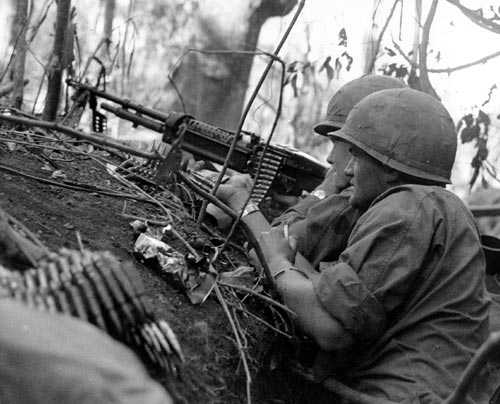
Image Vietnam Memorial
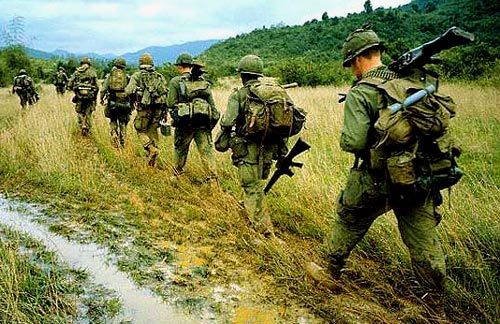
Life in Vietnam during the war was unpredictable and often deadly for the Vietnamese people and American troops. Unlike previous wars, the American army fought in thick jungles against an enemy that was well supplied. Many booby traps were placed around Vietnam during the war, and the American troops, who had difficulty locating the Viet Cong in the jungle, were often captured and fired upon by surprise.
As the war in Vietnam continued through the 1960s, the American public became increasingly uneasy. It was clear to many Americans that Vietnam during the war would not change and neither America nor South Vietnam would win. They argued that a lack of military victories during the war in Vietnam did not justify the large number of American military deaths. While few voiced their discontent when America first entered the war in Vietnam, public protests grew louder and more intense in the late 1960s.
In 1968, the communists carried out one of the most organized military campaigns in the history of Vietnam. In the Tet Offensive, the communists simultaneously attacked the American and South Vietnam forces in about one hundred cities and villages across the south. While the Americans rallied to force the communists’ retreat, Americans were no longer willing to maintain a military presence in Vietnam. Shortly after Richard Nixon became President of the United States, he withdrew troops and ended the Vietnam War even though America did not achieve its goal of halting communist advances.
About the author: She majored in history and international relations in college and loves to travel, read, and learn about other countries.


