• Ancient Digger teaches Archaeology and History to all Ages!

Monday, September 20, 2010

Monday Ground Up: Archaeological Discovery of Viking Artifacts Reveals Facts about Ancient Society


Guest Article By Maria Rainier


Scientists working in Norway’s Jotunheimen mountain range have been reaping the benefits of climate change, taking advantage of warmer conditions to make an exciting archaeological discovery whose implications may help to reconstruct the region’s ancient society.

With glaciers melting quickly enough to reveal layers of ice that have never been exposed before, it’s an archaeological opportunity almost too much to handle. Artifact collection in frozen areas is a delicate process which often requires finding an artifact within a few days of its emergence. The artifact must then be carefully removed, transported to a laboratory, and frozen to keep it from disintegrating. This is especially true of any type of fiber (clothing, rope, and thread), animal skins, feathers, or hair, while wood takes a few years to rot and is easier to manage for archaeologists.

The Viking artifacts being discovered in Norway are predominantly wooden hunting weapons, but archaeologists are still struggling to collect all specimens before they start to fall apart.

Artifacts from Viking Hunters

Archaeologists are quickly learning more about Viking reindeer hunters based on the tools they’re finding in the mountains. The most commonly discovered artifacts are part of an innovative scare tactic meant to drive reindeer toward hidden batteries of Viking archers. This scare tactic involved creating a barrier of wooden stakes spaced about 6 ½ feet apart. Each stake had a foot-long piece of wood tied to its tip so any gust of wind would cause the entire row of stakes to start “flapping,” scaring reindeer toward the waiting Viking hunters.

Most of these archaeological discoveries are incomplete, missing the thread which tied the moving pieces to the stakes, but scientists are hoping to find some intact as they increase their efforts. Bows and arrows and a leather shoe have also been found at the Jotunheimen sites.

Reconstructing Norway’s Ancient Society

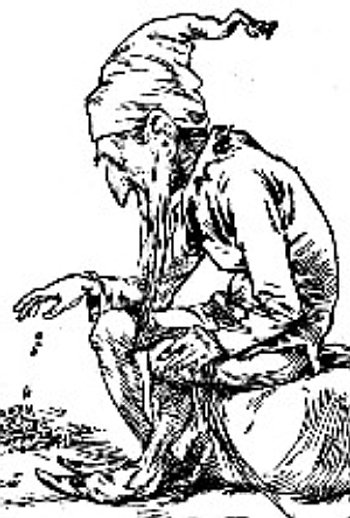
According to Norse mythology, the Jotunheimen mountains were inhabited by the “Ice Giants,” also called Frost Giants or Jötunn (Jotunheimen means “home of the giants”). While they may have been tall in stature, these “giants” weren’t the superhuman entities of lore.

What archaeologists do know about them is that they had an organized society, a conclusion drawn from the way Vikings would have cooperated to create the stake barriers for reindeer hunting. Scientists hypothesize that they hunted in groups of 15 or 20, lying in wait together with their bows and arrows until the frightened reindeer ran within about 65 feet of them. This implies that Norway’s ancient society was characterized by hierarchy, as leadership would have been a necessary part of organizing and executing a collective hunting strategy. The prolific Jotunheimen sites are likely to offer more insights into this ancient society and scientists are working to make more meaningful archeological discoveries.


Bio: Maria Rainier is a freelance writer and blog junkie. She is currently a resident blogger at Online Degrees, researching areas of online colleges. In her spare time, she enjoys square-foot gardening, swimming, and avoiding her laptop.

Sources:

Photo: Marcin Szala, used with permission

Tuesday, February 2, 2010

The Spear Masters


The Spear Masters of the Dinka Tribe of the upper Nile are a hereditary priesthood, and according to mythology, their presence is reinforced by political and religious ideals.

There are several legends of the origins of these spear using masters, one in which includes a lion and a man dancing. The lion demands a bracelet that the man is wearing and he refuses. In return, the lion bits off his thumb in order to claim what he thinks belongs to him and the man dies during the confrontation. Read more about the Spear Masters on Factoidz

Sunday, August 23, 2009

The Monday Ground Up: Celtic Druid Folklore and the Otherworld


Caesar believed that the Celtic Druid's of the Otherworld preached immortality of the soul, and it would allow them to be fierce warriors. However, many believe that their souls migrate to different vessels, allowing them to live for centuries.

This belief of reincarnation is quite different than Hinduistic rituals where reincarnation affected all those that were worthy. The druids believed that their souls, even when they were long gone, would be able to control their body in the otherworld.

The otherworld was believed to be a place where men and women lived in complete happiness in a land that was lush and plentiful. Not to be confused with the underworld which was filled with pale wanderers and gloomy landscapes.

During the 17th century, poets painted the otherworld as a "Land of the Living", where beautiful woman are plentiful and bright birds fly with ease through the river valleys. Once there, you will overcome all. However, when you leave, your hair will turn gray and your skin will shrivel.  

Interestingly enough, when you take note of the lyrics of Irish verse or musical expressions, it’s reaped in color and descriptions of green pastures and marvels of beauty.


Source

It was said to be a world within a world below the ground or under the sea, as was the land of Atlantis. A paradise where one never aged and all that resided were completely equal of value and importance, as was the fountain of youth.

Cave of Cruachan


Source

Rathcroghan


Source

There were passages to enter, or rather secret portholes only allowed by the insight of your mind. The Cave of Cruachan was a possible entrance referenced in the story of Nera’s Adventure.


Source

The otherworld is not free of aggression or war, for many Irish and welsh tales tell of the conquering of Kings or the kidnapping of precious treasures.

In the tale of the Adventure of Laegnaire, a man appears out of mist before the King of Connacht asking for assistance to claim his wife who he has lost in a battle. The son of the King sets out with 50 men to overcome his enemies and reclaim the mans wife. He returns the wife to the King, although he leaves immediately because his men have taken wives from Magh Da Cheo(The Plain of the Two Mists-name given to the otherworld by the Irish) and they wish to stay there to avoid the mortal world.

Newgrange


Source (Dwelling of the Divine Oenghus)

The otherworld has also been clearly referenced as an abode in the Irish countryside where it welcomes limitless guests to feast on whatever they desire. Food is often refurbished by reincarnation. This picture of obscurity is often compared to the “Land of the Dead”.

In the story of the “Destruction of the Hostel of Da Derga”, King Conaire is drawn to a house “bruidhen”, however on his way there he meets the three “Reds”. Their steeds are of the Donn Detscorach from the otherworld. This confirmed that Derga and Donn were one being, the “God of the Dead”, and he who enters his abode is either foredoomed or dead already.

The Feast of Samhain, which happened on the 1st of November was initially where this sombre image of death predominated.


Source

The duration of the Samhain celebration according to the Celts was filled with a peculiar supernatural energy and within that they have concentrated many of their mythical events. During this time, the universe is suspended and all things supernatural and natural have no barriers. There is a “Sidn” that remains open for spirits to move freely amongst the living, sometimes with hostility. Mortals are strongly urged not to venture within its precinct.

In the “Spoils of Annan”, it tells of a rather disastrous expedition by Arthur and his knights. The world becomes a fortress of glass where none of the occupants have a response, and in Celtic traditions this is surely the mark of the dead.

The otherworld has not been widely accepted by scholars with the inconsistencies in the history and the folklore. The belief that only kings and nobles were able to access a world of music and fables and ordinary men were far from it’s reaches being less fortunate in the afterlife, was always questionable.


Iron age Britain was populated by an ancient, indigenous people called the Celts. Spreading from Ireland, across mainland Britain and right into Europe, the Celts were a superstitious people with a rich mythology and ritualistic religious practice. Human Sacrifice in Celtic Britain By CaSundara

Celtic folklore is full of interesting creatures, unusual stories, and superstitions that still fascinate us. Some of those legends still thrive in books, novels, and modern celebrations, keeping a handful of unique Celtic myths familiar to audiences.Celtic Myths: Selkies, Banshees, and Leprechauns By writecorner

Nestled in a ridge near a bend in the Boyne River in Ireland is one of the most amazing examples of ancient monuments that can still be seen today. It is a megalithic passage tomb that predates Stonehenge by roughly 1,000 years. The History of the Newgrange Passage Tomb in Ireland by Shelly Barclay

High stone pillar adjacent to the Druid's Temple near Ilton

"The Druids Temple"
0.68m • © Ken Crosby


A reconstructed Celtic burial mound located near Hochdorf in Germany. Such burials were reserved for the influential and wealthy in Celtic society.


Tuesday, August 18, 2009

Illustrious and Historical Legends, Tales, and Myths of The World


Although myths and fables can be strangely odd in orientation and include mythical creatures and godly beings, they are closely related to religion and endorsed by kings, queens, and priests. In some cases, these myths are so bizarre that they scream fabrication; however most of them are regarded as “a true account of the remote past".

Atlantis is a fabled city on the floor of the sea worn ocean, covered by a massive tidal wave centuries ago. In an attempt to rid the notion that Greeks had accomplished a superior race of man, the Egyptians told Solon the story of Atlantis, where thousands of years before the noblest of men ruled the world. Read More about Myths and Tales of the world

Source

Also check out:

Wednesday, August 5, 2009

Snakes and Mythology: Some Interesting Facts


The symbolism of snakes in past history and present is mixed with uncertainties. Many associate the snake as a messenger for the bringer of death and there are countless cultures that believe the serpent is a symbol of fertility, honor, knowledge, and truth.

Book of Genesis


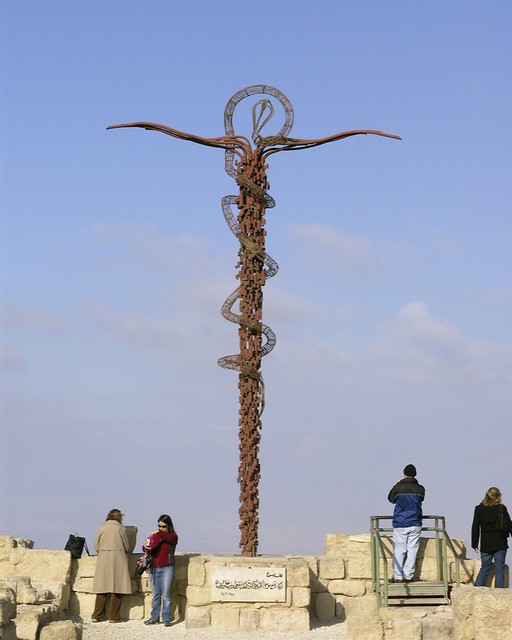
Snakes made their first appearance in the first Book of Genesis 3:1 where a serpent, being a messenger for the devil, tempts Adam and Eve with the forbidden fruit. The snake returns in Exodus when Moses, as a sign of God's power, turning his staff into a snake. When Moses made the Nehushtan, a bronze snake on a pole, it was said that when one peered into the eyes of the staff, it would cure snake bites that plagued them in the desert.

Snakes in Egyptian history


The symbol of the snake in Egyptian history represented the Nile cobra adorning the crown of the pharaoh in ancient times. Snakes were worshiped as gods and were used for ominous purposes: “murder of an adversary and ritual suicide”.

Snakes in Greek Mythology


In Greek mythology snakes are often linked to death and are considered to be symbols of the earth. In ancient Greece, snakes were honored as spiritual healers. In fact, Asclepius carried two snakes knotted together that today represents a symbol displayed on emergency vehicles.

“The Titans are also depicted in art with snakes instead of legs and feet for the same reason—they are children of Gaia and Ouranos(Uranus), so they are bound to the earth.”

India: Land of Snakes


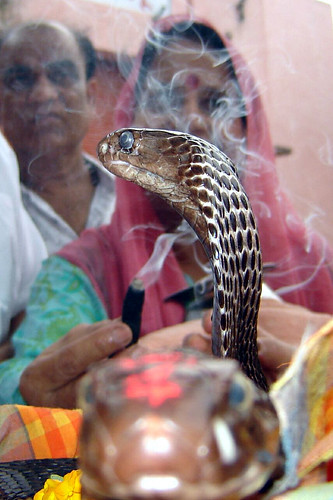
India is often called the” land of snakes”. Snakes are worshiped as gods and the represent fertility, knowledge, and honor. Every year, the Hindu festival called Nag Panchami displays the snakes to be venerated and prayed to.

Ouroboros


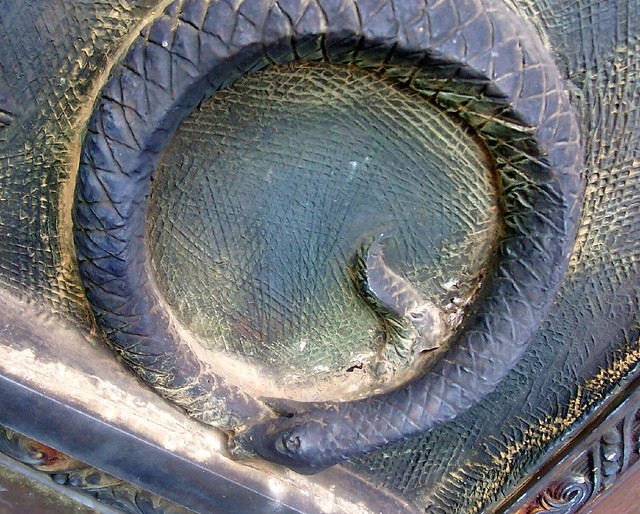
The Ouroboros is a symbol that is associated with many different religions and customs, and is also claimed to be related to Alchemy. The Ouroboros is a snake eating its own tail in the shape of a circle, demonstrating one's own life and resurrection, leading to immortality.


On a side note:
I wanted to let everyone know about my Friends Revolution Blog. If you love it here at the Ancient Digger, let me assure you, you will love it there too. I have a mixed bag of stories from various writers, as well as myself, so head on over and subscribe.

Like Ancient Digger? Why Not Follow Us?


Subscribe Via RSS Feed Follow Ancient Digger on Facebook Follow Ancient Digger on Twitter Subscribe to Ancient Digger Via Email

Get widget

Search


Ancient Digger Archaeology Copyright © 2015 LKart Theme is Designed by Lasantha