• Ancient Digger teaches Archaeology and History to all Ages!

Friday, July 24, 2015

Exploring the Brimstone Fortress in St. Kitts


On a recent cruise to the Virgin Islands,  we visited St. Kitts, and took a tour of the island with Roysten tours. We snorkeled along the breathtaking barrier reef in two different secluded locations, and I had the chance to use my waterproof IPhone case for the first time. By the way, it worked pretty well before I went underwater, but once submerged, the phone didn't work at all. Hmm, perhaps not waterproof after all, or, maybe I misread the box which didn't say anything about taking it 6 ft down to take pictures of a school of tiger barbs. I digress…this is supposed to be about Brimstone Fortress. I'm getting to it.

One of our last stops on our St. Kitts tour was Brimstone Fortress. If you know me at all, you know I love fortifications. From the moment I placed my hand on the coquina walls at the Castillo de San Marcos, and just recently walked the streets of Old San Juan, nestled within its own massive fortification, I was fervently obsessed with the look and structure of these man made marvels. 

Brimstone was nothing short of a wondrous architectural feat. The Brimstone Fortress was constructed between the 1690s and 1790s, and remains of singular importance due to the complete military community that resided there during the 18th century.


I first ventured along the coast, and slowly stepped down into the infantry officer's quarters. This section of the fort was constructed in the late 18th century, around 1791. The famous arches allow for splendid views of the Caribbean.

It was one of my favorite buildings. I got lost, not physically, in the panoramic vistas. This area was reserved for regimental officers, who once resided in the masonry basements, once topped with timber buildings.


Here it was. As I made my way to the steps of Fort George Citadel, I had to take a moment to reflect. The fortress is virtually a man-made out growth of the natural hill. The steps to the top reminded me of the Great Wall of China, however the steps, albeit they were very far apart, and looked seemingly easy to navigate, were quite the contrary. 

I thought, hey, I've been swimming and building muscles, this will be a breeze. Phew, by the time I made it half way up, my heart started beating rapidly, and I had to take a breather. The slope of the steps and the elevation presented quite a challenge, but I pressed on. 

By the time I made it to the top, I had to take five minutes to control my breathing. Funny thing was, well, maybe not too funny, there were people in really great shape climbing this staircase, and they too were huffing and puffing the entire way up, and sharing water at the top. Keep in mind, the citadel is nearly 800 feet high, and one of the earliest surviving examples of a new style of fortification known as the 'polygonal system'. However, I wasn't thinking about the shape, I was thinking, "Man, I'm glad I made it to the top without falling over".

View from the Top of the Citadel: Brimstone Fortress


The walls of the structures are predominantly of stone, laboriously and skillfully fashioned from the hard volcanic rock of which the hill is composed. The mortar to cement the stones was produced on site from the limestone which covers much of the middle and lower slopes. 


By the time I finally caught my breath, I got a glimpse of the mountains, the historical township of Sandy Point, and neighbouring Dutch, English and French islands across the Caribbean Sea. It was spectacular, and mainly because I made it to the top without passing out, and actually got to enjoy it. I was up there nearly 20 minutes before my fiancé appeared. Either he got lost, or he took a breather like I did on the step. Either way, it was well worth the effort.


As educators, historians, archaeologists, and travelers, why is it that we find such joy in touching the oldest of structures? Perhaps we expect to feel the history, or some type of connection to the people that once roamed the grounds of these structures. For me, it really does represent living history. Today, most structures are built, not to last, but for purpose. Just look at the arches. Why was it necessary to create so many? Did the infantry really need that many entrances into the courtyard? Why does the design remind me of Ancient Greece? Ancient Rome?

It seems that all people borrowed from those before them, whether it was the method or mode of construction, or the theory behind the design. Either way, it's rewarding to experience a transfer of knowledge from one century to the next. Thousands of years have passed, and yet these structures all share similar voices. That's one of the things I really love about archaeology, and I love that Brimstone Fortress reminded me of that.

Thursday, November 4, 2010

Great Wall of Croatia


Leave it to RJ Evans over at Kuriositas to teach me, and I'm sure all of you, something new about the Great Wall. It's not the Great Wall of China I'm speaking of, but The Great Wall of Croatia. It's positively medieval at first glance and now I know why, as it dates to the 15th century.

Ston and its neighboring village of Mali Ston have a secret which is visible to all.  Connecting the two is a simply amazing wall, more than five kilometers in length.  The walls circle the village of Ston and then climb up the hill to reach the Pozvizd Fortress.  They then follow a narrow strip of land (an isthmus) to meet with the walls of the village of Mali Stan.
Read This Article :The Great Wall of Croatia via Kuriositas

Sunday, January 17, 2010

Old Fort Park Turnbull Ruins in New Smyrna Beach


After a short day of screening, I accompanied the archaeologist Bruce Piatek to the Old Fort Park in New Smyrna Beach. A far as what type of information was present at the site, well to be truthful, there was none at all. No pamphlets, no plaques or boards stating the history of the site, and no one to talk to about any questions we may have had, and I had plenty.

As far as first impressions, it was evident that this site may have been a part of the Turnbulll Colony, and the theory was that this foundation was the site of his palace overlooking the water. I for one don't believe this theory. It was clearly not used as church, which is another theory, because it does seem there was sections designated for weapons or possibly a lookout area. Also, the walls of the structure are much to thick, as if they were protecting or storing something.

There are no doorways to move from room to room, although after construction of an outer wall was completed during the Great Depression, I can see some new additions blocking off any openings there may have been on the east side. There was also bastion constructed at the same time, which leads me to believe that this may have been a fort.

It really is a mystery, and when I noticed the thick concrete running down the center, I ventured a guess that it may have been used to construct ships.

No further research has been done on this site, as I'm sure, the community believes it's not economically feasible to do so. Although, if the walls were taken down and the site was visible to to traffic, I think it would gain more interest due to the theories surrounding its construction.

One archaeologist believes that this was the original Castillo De San Marco, but no evidence til now has supported his theory.

In 1776, it was suggested that a very large stone building was erected in the vicinity of New Smryna that was built as a "mansion house," but the true function of these ruins is unknown to historians and archaeologists.


This is what we do know:

The Old Fort Park Archeological Site is a historic site in New Smyrna Beach, Florida, United States. On July 10, 2008, it was added to the U.S. National Register of Historic Places.

This property is part of the Archeological Resources of the 18th-Century Smyrnea Settlement of Dr. Andrew Turnbull Multiple Property Submission, a Multiple Property Submission to the National Register.

So what does this look like to you? I would love to hear some of your suggestions, ideas, theories, and questions.

Tuesday, December 15, 2009

Semi Wordless Wednesday: Eilean Donan castle


I just finished up my last final 5 minutes ago and I can finally relax and take joy in the fact that today is a day to just reflect and look at Eilean Castle in Scotland, a fortress built in the 13th century as a defense against the Vikings.

Picture is compliments of Eusebius@Commons


Monday, November 23, 2009

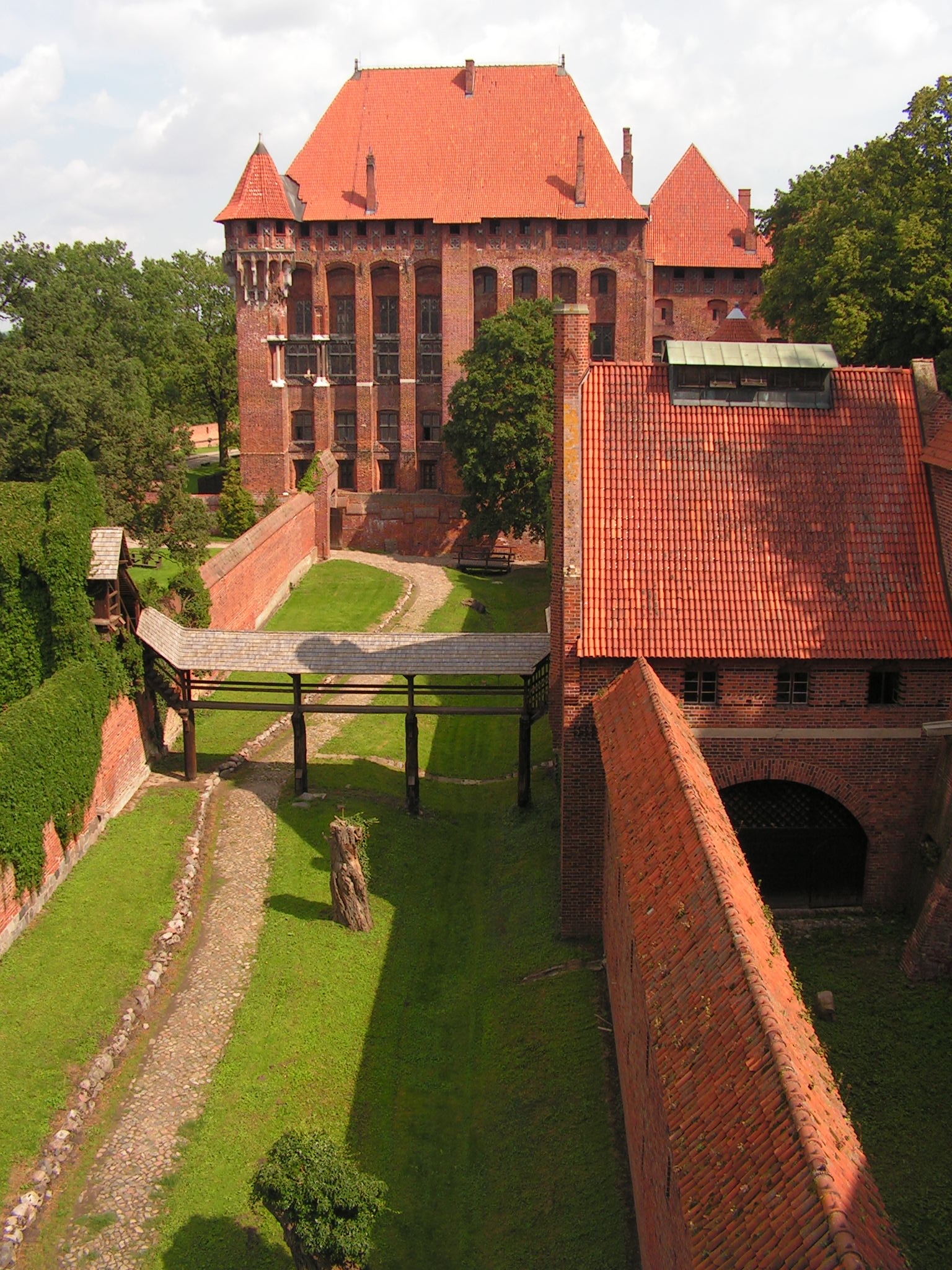
Monday Ground Up: The Medieval Gothic Malbork Castle


The Teutonic Order constructed this medieval fortress in Prussia around the time of the crusades in Ordensburg, naming it Marienburg, or rather "Mary's Castle”. The name was derived from the patron saint the Virgin Mary. Malbork is one of the world’s largest red brick Gothic castles in the world, with a small middle castle nested within the outer walls.

The castle consisted of three separate sections including the High, Middle, and Lower castles, separated by dry moats and towers. It was said at one time the castle held close to 3000 knights and the High Castle enclosure measured 52 acres, which is four times the enclosed space of Windsor Castle.

The flatness of the grounds allowed for easier trading with ships and barges, thus creating a toll stop for passing vessels. The Order imposed a monopoly of amber trade, therefore building their reputation as commercial capitalists along the waterfront.

Around 1410, the castle was besieged when the armies were defeated at the Battle of Grunwald, however Heinrich von Plauen successfully led the defense, resulting in the reconstruction of the city.

During the Thirteen Years' War, the Order could no longer pay its mercenaries, therefore resulting in their transition to Königsberg, giving the castle to the Bohemian mercenaries as payment. King Casimir IV Jagiellon acquired the castle in 1457.

Under mayor Bartholomäus Blume, the city itself resisted the Polish onslaught for three more years, until the Poles captured and hanged Blume in 1460. A monument to him was erected in 1864. Castle and town became part of Royal Prussia in 1466, and served as one of the several Polish royal residences. During the Thirty Years' War, in 1626 and 1629, Swedes occupied the castle, and again from 1656 to 1660 in The Deluge (Polish history) during the Northern Wars.

Around the late 18 century, the Prussian Amry used the castke as a barracks. It wasn't until 1874 that a Prussian architect, David Gilly, surveyed the castle to determine if it should be demolished or what it's use should be left standing. His son created engravings of the castle that were exhibited in Berlin leading to a "rediscovery" of Malborks history.

In the early 1930s the Nazis used Malbork as a meeting site for Hitler Youth and the League of German Girls. It was the Teutonic Castle at Marienburg, Malbork that served as the blue print for the Order Castles of the Third Reich.
The castle has been considerably pillaged,burned, and destroyed, especially due to the aftermath of World War II. It has been rebuilt and restored over the years, so much of what we see today of the outlying structure is new construction.


by MrSco


by lostajy


Resources

Sources

Pictures

Saturday, September 12, 2009

Ruins of Fort Bowie


Fort Bowie is located near Apache Pass in southeastern Arizona. It’s an isolated, historical trip back in time to the old frontier, where wagons were filled with settlers moving from the west and the prairies were flourishing with wildflowers.

Image via Wikipedia

For years, the Apache Indians tolerated Americans, Mexicans, and Spaniards who traveled through the Apache Pass in order to quench their thirst at Apache springs.

However, when their was an influx of settlers during the 19th century and the acquisition of land and property was of the utmost importance, this disrupted the region and the way of life for the Native Americans.

Around 1858, Cochise, a chief of the Chokonen band of the Chiricahua Apache, allowed the construction of a mail post near the Apache spring, which carried mail and passengers from Missouri to California. Read and See more about Fort Bowie in Arizona

Monday, September 7, 2009

Monday Ground Up: Castle and Fortification Hotels


Castles and Forts Converted Into Luxurious Hotels


Dolhousie Castle


The Ramsey Family has held the Dolhousie Castle in possession longer than any castle in Scotland. All that's left of the 0riginal structure are the foundation walls and the dungeons. When the English had gained an upper-hand against Scotland, Dolhousie Castle fell into their hands. Sir William Ramsey led forays against the castle until the English turned it back over.

During a celebration at Roxburgh Castle, which was owned by Sir William Douglas a friend of Alexanders, he scaled the walls and surprised the party goers. Douglas had already grown quite tired of the antics, so when Alexander won appointments by King David, Douglas was so jealous that he plunged a dagger into Alexanders back and threw him into a dungeon at Hermitage Castle and left him there to starve. It was said that close to 450 years later, workers at Hermitage found Alexanders remains.

Uninvited guests were warmly welcomed by hot oil poured on them from above the towers, or they were lowered into the dungeons by ropes.

Now a days, it's more charming and elegant. Oak paneling, canopy beds, a romantic candle lit dungeon for dining, and Tartan panels and bedspreads make you feel like your back in the 15th and 16th century.

Schloss Waldeck

Source

Schloss Waldeck sits high above the Edersee in Germany with a phenomenal view of the Eder River where the medieval past is alive.

In 1120, this fortress was the home of the counts of Waldeck. Large sections were destroyed during the Seven Years War , which explains it's crumbling, dreary condition. The castle was completely abandoned during the 17th century for reasons unknown.

Presently, it's being used both as a hotel and a museum, displaying artifacts from the Waldeck counts and a sorceresses tower, complete with prison cells. Oddly enough, most of the festivities start in the evening when torchlight tours are provided in the 13th century kitchen, dungeons, and jail.

Boldt castle on Heart Island


Shelly Barclay says Boldt Castle is a breathtaking structure on Heart Island on the St. Lawrence River in New York. Heart Island is situated in the picturesque Thousand Islands in Alexandria Bay. For more than one hundred years, Boldt Castle and its outlying structures have graced Heart Island. You would be hard pressed to find a more romantic castle in a more picturesque setting. Like the Taj Mahal before it, Boldt Castle was erected as a monument to a man's undying love for his wife.

The Castle of Taunton


Taunton Castle is the home of Englands oldest fortress. In the Anglo Saxon Chronicles, it was said that a wooden castle was built here in 710 by the King of Wessex. The castle later was burned to the ground and later rebuilt. On the walls of the hotel, you can see the painted arms of the Bishops of Winchester who were granted the property by Queen Frithogytha of the West Saxons.

By 1001, the Danish had already burned the castle down, as well as the city. However, by 1066 another castle had already taken it's place.

Around the 15th century, Perkin Warbeck pretended to be the Duke of York in order to invade England. He tried not once, but twice and failed. While he was attempting to invade, he captured Taunton proclaiming himself King Richard IV. However, when Henry VII came to Taunton he captured Warbeck, who later met his fate in the Tower of London.

Close to 200 years later, the Duke of Marmouth came to Taunton and proclaimed himself King. He was however defeated in the Battle of Sedgemoor, and he and his men were executed by Judge Jeffery.

During the 18th century, part of the fortress was turned into a hotel. During the spring, the outer structure is adorned with wisteria, framing it like a country garden.

The decor is medieval in motif with heavy velvet window panels and antique furnishings. The guest rooms are enchanting with bouquets of local flora and bottles of sherry. It's a perfect destination for historians, honeymooners, and family gatherings.

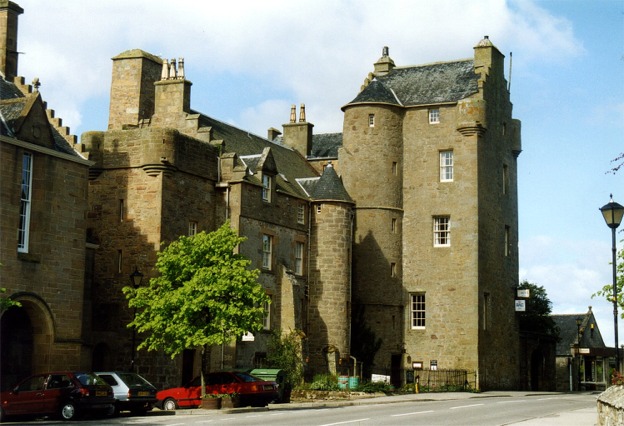
Dornoch Castle


The cathedral and Dornoch Castle were both built by Gilbert Murray in 1224. Hundreds of years later a feud between the Murrays and the Mackays caused Dornoch to be pillaged and the castle and cathedral were burned.

Around 1722, Dornoch was home to the infamous burning of the last witch in Scotland, Janet Horne. She was said to have turned her daughter into a pony and she rode it to the witches coven. The castle was rebuilt and used as a jail, schoolhouse, courthouse, and garrison.

The castle is more bizarre than luxurious with it's winding staircase up to reception and the dungeons used as storage space. The rooms are simple and comfortable with views of the countryside and grounds. Five minutes away is the Royal Dornoch Golf Club which is voted one of the top twenty courses in the world.

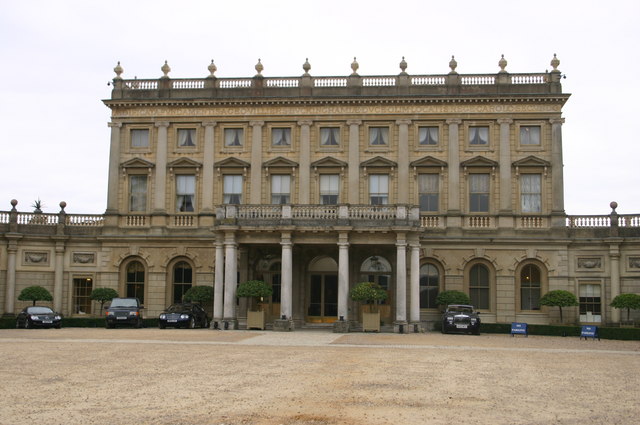
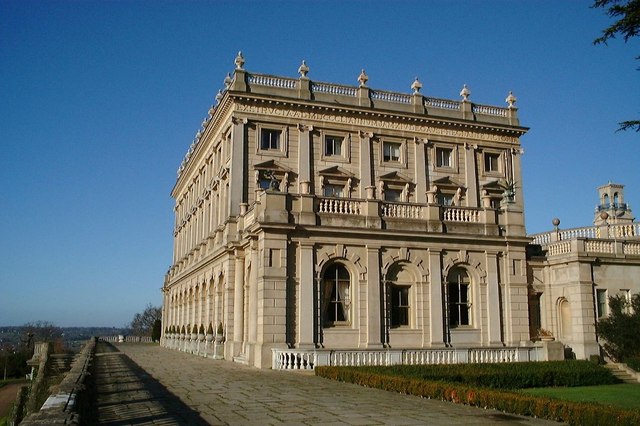
Cliveden-17th Century

The Duke of Buckingham trusted minister of King Charles II needed a place to carry on an affair with the Countess of Shrewsbury. In Britains most famous duels, Buckingham killed the countesses husband with a swift blow to the head. Buckingham was dismissed years later by the king.

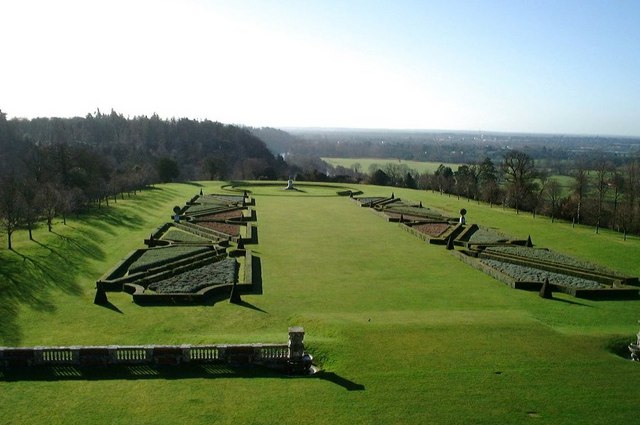
Over the years and with the passing of hands, a dovecote, water tower, and the stables were added. In Britain, Cliveden is associated with the Astor family who purchased the property in 1893 and added gardens and the art found throughout the house.

When Waldorf and his bride Lady Nancy Astor received Cliveden as a wedding present they spared nothing to provide the most lavish of parties. Guests included Henry James, Winston Churchill, Edward Prince of Wales, and many more accomplished individuals.

Presently, this luxurious hotel is a place of solitude and breathtaking scenery. The inner public rooms are adorned with carved wooden columns, molded ceilings elegantly decorated by window panels, such as the Orkney tapestries.

There are four staff members for every room who assist you in unpacking and drawing baths, amongst many other duties.

As for the cuisine, there's one word,"exceptional". Clivedens restaurants are considered the finest in England. To add to this luxurious adventure, Cliveden provides two boats which are available to cruise the Thames. However, if romance is what you crave the Suzy Ann goes out for a pre-dinner champagne cruise during the summer evenings.

Star Castle

Several miles off the Cornish coast, the Scilly Isles tell tales of Celtic legends and holy men. It was estimated that several thousand years ago was the first time men inhabited the area. The area is thriving with lush vegetation, including flowers that grow to seven feet tall.

The Star Castle was built in 1593 during Elizabeth I reign as a defense against the Spanish. When King Charles II was hiding from Cromwell in 1643, he hid in the Star Castle. Following his stay, Blake took over the castle from Sir John Greenville, and then the cavaliers after that. In 1933, King Edward VIII officiated the opening ceremony of the castle as a hotel.

The Star Castle has eight pointed ramparts and is surrounded by a dry moat. It sits on Garrison Hill overlooking the sea and is a short walk to Hugh town. There are two types of accommodations including several rooms with canopy beds and white wash walls with wooden beams. There are also modern garden apartments with verandas and a view of the sea.

More Interesting and Fascinating Destinations


Penelope Sunderland says "Would you like to know what life was like in medieval Ireland? There are several places you can go to visit where a guided tour around old sites will give you a flavor of life in the past. Three good examples in southern Ireland are the castles at Blarney, Bunratty and Cahir." Read more about life in a Medieval Irish Castle


nobert soloria bermosa says "Castles were particularly popular in Europe and in some parts of Asia during the Middle Ages up to the 19th century. They have been built either as fortress or residence of the nobilities. " Read more about the World’s Magnificent Castles: Perfect Tourist Destinations


The Templars erected many buildings in the west including preceptories, churches, and granges for administration purposes. They were simplistic and utilitarian in form with of course a few exceptions. There was no dictated form of Templar church architecture. Read more about the 10 Mysterious and Mystical Templar Castles, Churches, and Fortresses


Sunday, August 30, 2009

Roslin Castle in Scotland


Keeping with my latest obsession with stone freemasonries, forts, and castles, I happen to stumble upon Rosslyn Castle by accident when I was preparing my weekly Monday Ground Up.

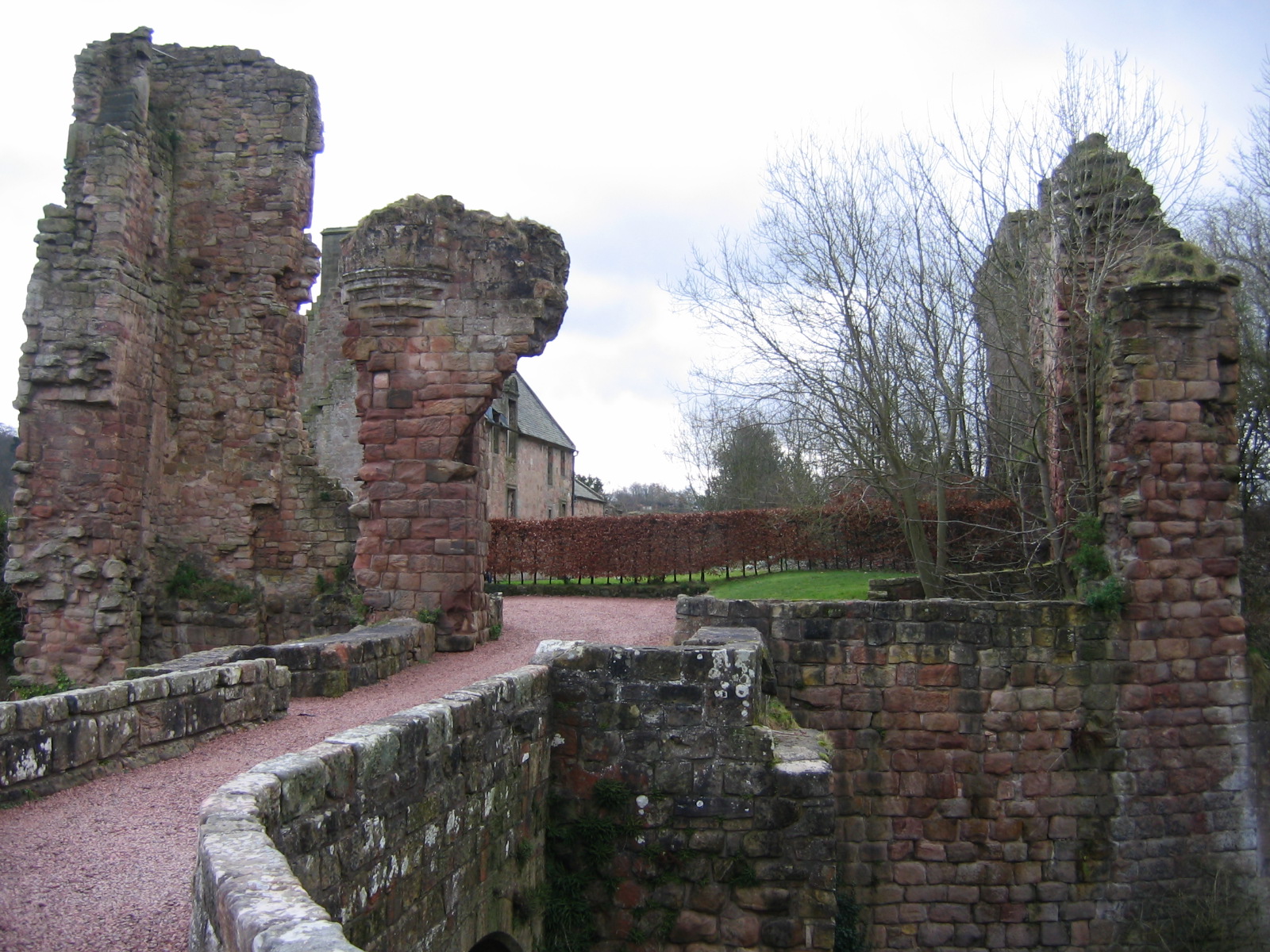
The castle is partly in ruin, but of course that adds to the mystery. Roslin castle is located is a village called Roslin in Midlothian, Scotland. The castle is dated back to the 14th century by the St. Clairs, Earls of Caithness and Barons of Roslin. You may remember that the Sinclair family actually testified against the Templars during their trial in 1309.


The castle was damaged by a domestic fire in 1452, and legend has it that during the domestic fire the Earl was in quite dismay because of his valuable manuscripts, including the Roslin-Hay manuscript, believed to be the earliest extant work in Scots was in danger of being destroyed. However, the they were lowered to safety from a window by his chaplain.

Roslin was more severely damaged by the Earl of Hertford, who burned the castle during the War of the Rough Wooing in 1544. The keep was almost totally destroyed, although its one remaining ruined wall can still be seen.

When the castle was initially in use, there was drawbridge for access to the site. However, after the site was renovated in the 16th century, an elongated, high stone bridge was constructed to take it's place. The upper part of the east range was renovated in 1622, with renaissance details and carvings on the windows and doors.


The current owner, the Earl of Rosslyn, a descendant of the Sinclairs, leases the castle as holiday accommodation via the Landmark Trust.


Resources
References

Photo 1

Source

Like Ancient Digger? Why Not Follow Us?


Subscribe Via RSS Feed Follow Ancient Digger on Facebook Follow Ancient Digger on Twitter Subscribe to Ancient Digger Via Email

Get widget

Search


Ancient Digger Archaeology Copyright © 2015 LKart Theme is Designed by Lasantha