• Ancient Digger teaches Archaeology and History to all Ages!

Tuesday, May 23, 2017

Archaeology News: May 23, 2017


ARCHAEOLOGY NEWS – Ancient Digger brings you the latest archaeology news and headlines everyday of the week!

Washington's birth site more mysterious than thought

On Popes Creek in Westmoreland County, park rangers tell visitors that “George Washington slept here first.” It’s a riff on that old line encountered at innumerable Mid-Atlantic historic sites, but if any place has bragging rights, it’s here—George Washington Birthplace National Monument in Virginia’s Northern Neck. Here on this acreage, the first U.S. president came into the world.

Stone Age 'cult' henge site and human remains discovered near Stratford

A STONE Age ‘cult’ henge site and human remains – which could belong to some of south Warwickshire’s earliest residents – have been discovered close to Stratford. Archaeologists have found the 4,000 year-old remains at a new housing development in Newbold-on-Stour, on fields at Mansell Farm. Experts say it is an ‘important discovery’.

Medieval brewery used by monks discovered by archaeologists on the outskirts of Lincoln

A medieval brewery has been discovered by archaeologists along the route of Lincoln Eastern Bypass.

Ancient Egyptian Pharaoh Carving Found in Looting Hole

Egyptian authorities say they caught looters digging up an ancient stone block carved with an image of a pharaoh. In the city of Abydos, antiquities authorities say they were inspecting an old two-story, mud-brick house when they found that the owner had excavated a hole in the floor.

Space Archaeology 

Archaeologists often spend years digging and hoping they'll find the remnants of ancient civilizations. There's a lot of ground yet to be uncovered. Archaeologist Sarah Parcak says less than 10 percent of the Earth's surface has been explored, so she's leading the way to speed up the search. Parcak uses satellite photos to locate ancient sites and she's finding them -- thousands. It's called space archaeology and it's transforming the field. Sarah Parcak is a professor at The University of Alabama at Birmingham. We met her in Egypt doing what she loves most: digging in the dirt.

Noah’s Ark discovered? Researchers '99.9 per cent certain' of astonishing Biblical find

A team of evangelical Christian explorers found what they claim is “99.9 per cent” certainly evidence of Noah’s Ark beneath snow and volcanic debris on Mount Ararat in Turkey. Noah's Ark Ministries International, a Hong Kong-based documentary team, claim to have found wooden pieces from a structure which carbon dates back 4,800 years and was found around 13,000 feet above sea level.

Tuesday, August 2, 2016

Archaeology News: August 2, 2016


ARCHAEOLOGY NEWS (August 2, 2016)– Ancient Digger brings you the latest archaeology news and headlines everyday of the week!

Prehistoric Native American Fishing Camp Found in New Jersey

Ancient hearths and some 1,300 artifacts, including unglazed ceramics and pieces of soapstone, have been found at an industrial construction site along the South Camden waterfront.

Roman Cooking on Display in Restored Pompeii Kitchen

The Local, Italy, reports that cooking equipment, such as metal grills, pots, pans, and earthenware crocks, have been returned to the kitchen in the Fullonica di Stephanus, a three-story launderette where the garments of wealthy Romans were washed some 2,000 years ago. The equipment was discovered in the launderette in 1912, but had been moved to other areas of Pompeii over the years. The grills were placed over troughs where charcoal fires were lit. Meat, fish, and vegetables were then placed on the grills. Soups and stews were cooked in pots and pans on tripods placed in the coals. “We’re delighted the pieces have finally been put back on display where they were found,” said Massimo Osanna, archaeological superintendent of Pompeii. For more on Pompeii, go to "Family History."

Dark Ages royal palace discovered in Cornwall – in area closely linked to the legend of King Arthur

The mysterious origins of the British archaeological site most often associated with the legend of King Arthur have just become even more mysterious. Archaeologists have discovered the impressive remains of a probable Dark Age royal palace at Tintagel in Cornwall. It is likely that the one-metre thick walls being unearthed are those of the main residence of the 6th century rulers of an ancient south-west British kingdom, known as Dumnonia.

1,000-Year-Old Human Remains Uncovered in Northern Ireland

Excavations on the grounds of an eighteenth-century country house known as Hillsborough Castle have uncovered a skeleton thought to have belonged to a young woman who lived 1,000 years ago.

Illegal structure in Mathura to be razed

Acting on the recommendations of the Archaeology Department of Uttar Pradesh, district authorities have directed police to demolish an illegal structure being constructed by a man close to the heritage memorial of the Bharatpur dynasty.

UTSA students and staff make historic discoveries in Belize

Kathryn Brown, associate professor of anthropology, has been directing a team of researchers at the site of Xunantunich since 2008, investigating the site’s origins and political history. One target of those investigations is El Castillo, a 39 meter tall acropolis which served as the site’s royal palace for decades. Team member and UTSA doctoral student Leah McCurdy has focused her dissertation research on El Castillo, examining the architectural history of this impressive acropolis.

More 1066 artefacts found in York


AN EXCAVATION at Fulford, which precedes the 950th anniversary of the 1066 battle, is turning into the "best imaginable" dig, says archaeologist Chas Jones. He said the dig on the Germany Beck site had led to further finds of tools which were he believed to have been used by medieval armourers to repair dents in helmets and shield-bosses.

Mexico finds water tunnel network under tomb of Pakal

© INAH/AFP

Archaeologists at the Mayan ruin site of Palenque said on Monday they have discovered an underground water tunnel built under the Temple of Inscriptions, which houses the tomb of an ancient ruler named Pakal. Archaeologist Arnoldo Gonzalez said researchers believe the tomb and pyramid were purposely built atop a spring between AD 683 and 702. The tunnel led water from under the funeral chamber out into the broad esplanade in front of the temple, thus giving Pakal’s spirit a path to the underworld.

Oldest Known Evidence of Tobacco Use in North America Found in Ice Age Hunting Camp


Oldest Known Evidence of Tobacco Use in North America Found in Ice Age Hunting Camp
An Ice Age Hunting Camp replete with the bird bones and tobacco has been found in Utah, USA. It is the oldest known evidence of tobacco use found so far.

8,000-year-old cave paintings found in Turkey’s Balıkesir


A number of cave paintings dating back some 8,000 years have been found in Baltalıın and İnkaya caves in the Marmara province of Balıkesir during a field study conducted by Associate Prof. Dr. Derya Yalçıklı from Çanakkale (18th March) University, the Arkeofili website has reported.

The paintings, which date back to the Late Neolithic era, were located in two caves five kilometers apart and were said to be 8,000 years old, marking one of the most important archaeological discoveries made in Anatolia in recent years.

Saturday, February 6, 2016

Archaeology News: February 6, 2016


Ancient Digger brings you the latest archaeology news and headlines everyday of the week!

Roman Fresco Unearthed by London Archaeologists

© New Historian
Archaeologists conducting fieldwork ahead of the construction of a new office development have come across an ornate Roman-era fresco six meters below ground. Museum of London Archaeology (MOLA) remarked in a recent press release that a team of its field archaeologists working at 21 Lime Street had made the discovery, which dates to the late first century CE and was likely created during the first few decades of London’s existence. MOLA note that the ornate fresco, which would have doubtlessly been part of a residence for an affluent Roman citizen at the time, is one of the earliest of its kind to survive from the time period.

Archaeologist to discuss cultural resources of Big Flat Area

MOAB — Colin Ferriman, an archaeologist with Cultural Resources Analysts, will present findings from a study of the archaeology and cultural landscape of the Big Flat area at 3 p.m. on Friday, Feb. 19.

Archaeologists investigate land around Botetourt County slave houses

DALEVILLE Va. -Botetourt County is moving forward with the plan of relocating two slave houses on the former Greenfield Plantation.

Archaeologists discover one of Roman Britain's earliest surviving frescos beneath City of London street


An ornate Roman wall painting buried at the start of a huge city construction project nearly 2,000 years ago has been discovered by Museum of London Archaeology experts near the city’s historic Leadenhall Market.

The decorative fresco, buried in AD 100 by Roman builders flattening land to make way for London’s main civic centre, the second Forum Basilica, was found at 21 Lime Street. Small fragments of Roman wall plaster have previously been found in London, but complete collapsed wall paintings are extremely rare.

Discovery by archaeologists of bashed skull of Queen of Egypt sparks end-of-the world speculations
By Vittorio Her


Archaeologists who are investigating an apparent desecration of the burial site of an ancient Egyptian royal family are warning of the consequences on earth. Among the consequences they warned of are disasters, hinting of end-of-the-world scenarios.

One museum’s tribute to the murdered Syrian archaeologist, Khaled al-Asaad


The days that followed ISIS’s savage murder of the distinguished and widely admired archaeologist Khaled al-Asaad last August were filled with shock and outrage. At the Museum of Fine Arts, Boston, which possesses a world-class collection of ancient art, including 10 funerary sculptures from Palmyra, a group of colleagues sat down to discuss ways we could respond to this horrific crime.

Ancient Egyptian Funeral Boat Unearthed by Archaeologists


Archaeologists from Charles University in Prague have begun to excavate a funerary boat that dates back to the Third or Fourth Dynasty of ancient Egypt, circa 2550 BC. The Abusir region, where the boat was found, is an extensive necropolis of ancient tombs amidst a large pyramid field that lies to the south of Cairo. The sand and lack of moisture have helped preserve a number of artifacts in the Abusir area, but the discovery of a complete funerary boat is extremely rare. A press release from Charles University states:

Archaeologists Find Pool of Siloam, Confirm Gospel of John Accurate


Like so many such finds, it was almost by accident. During construction work to repair a water pipe near the Temple Mount, Israeli archaeologists Ronny Reich and Eli Shukron found "two ancient stone steps." According to Biblical Archaeology Review, "Further excavation revealed that they were part of a monumental pool from the Second Temple period, the period in which Jesus lived." The pool was trapezoidal in shape and 225 feet long.

Wednesday, December 30, 2015

Archaeology News: December 30, 2015


Ancient Digger brings you the latest archaeology news and headlines everyday of the week!

Diplomatic delay in historic church’s restoration

The historic Georgian Osvank Church in the
Turkish province of Erzurum
© Hurriyet Daily News
The Osvank Church, which was built nearly 1,000 years ago in the eastern province of Erzurum, is ready for restoration but still waiting for steps to be taken by Georgian officials before work can begin. The largest church in the region, Osvank was built by the sons of a Georgian king, Bagrat and Davit, in the second half of the 10th century. The church hosts a large number of local and foreign tourists every year.

Roman-Period Altar in Turkey Features Mythical Battle Scene

According to a report in Live Science, villagers discovered an altar dating to the second century A.D. near Turkey’s Akçay River. Hasan Malay of Ege University and Funda Ertugrul of the Aydin Museum wrote in the journal Epigraphica Anatolica that the Greek inscription at the top of the altar says Flavius Ouliades dedicated it to the river god Harpasos. They think the image on the altar—a nude warrior wearing a helmet—may represent Hercules’ son Bargasos battling a many-headed serpent monster with a dagger and a shield.

IS destroyed this ancient monument, so archaeologists are 3-D printing a new one


Giant replicas of an ancient arch in the Syrian city of Palmyra attacked by Islamic State (IS) jihadists will go on show in London and New York next year, organizers said Monday. The full-size recreation of the arch from the 2,000-year-old Temple of Bel will reportedly made using the world's biggest 3-D printer and put on display in London's Trafalgar Square and Times Square in New York in April. IS seized Palmyra, a UNESCO World Heritage Site northeast of Damascus known as the "Pearl of the Desert", in May and beheaded its 82-year-old former antiquities chief three months later.

VU archaeologists discover location of historic battle fought by Caesar in Dutch riverarea

The location of this battle, which Caesar wrote about in detail in Book IV of his De Bello Gallico, was unknown to date. It is the earliest known battle on Dutch soil. The conclusions are based on a combination of historical, archaeological, and geochemical data.

Holme Fen Spitfire archaeologists making 'world first' models

An ill-fated Spitfire and the crater formed when it crashed will to be recreated as 3D models to help archaeologists study what happened. Parts of the plane were excavated from Holme Fen in Cambridgeshire in October, where it crashed 75 years ago. Lead archaeologist Anthony Haskins said a new technique called "photogrammetry" was being used to create the models.

Ancient shepherd's hut dating from more than 4,500 years ago discovered by chance

REMAINS of an ancient shepherd’s hut dating from the Bronze Age – around 4,500 years ago – have been discovered in a Blaenau Gwent valley. The prehistoric hut was discovered on a private farm at the top of the Cwmcelyn valley, near Blaina, and is the first Bronze Age hut to be found in Blaenau Gwent.

Archaeologists Find ‘Impressive’ Ancient Statue That Could Symbolize Jesus or the Flock of the ‘Good Shepherd’

Israeli archaeologists announced Sunday the discovery of a ram statue in the ancient port city of Caesarea they believe may have been meant to depict either Jesus or the Good Shepherd’s flock. “In ancient Christianity Jesus was not portrayed as a person. Instead, symbols were used, one of which was the ram,” excavation directors Dr. Peter Gendelman and Mohammad Hater said in a joint statement announcing the Christmas Eve discovery of the marble ram.

Polynesian Migration Examined With Vanuatu Skulls


A study of the few skulls found among the mostly headless skeletons discovered in 68 graves in a 3,000-year-old Lapita cemetery in Vanuatu suggests that the first Polynesians migrated from Southeast Asia and into Polynesia with little mixing with others.

Archaeologists discover ruins of an ancient Greek port

Recent excavations taking place in an ancient partially-submerged harbor town has led to the surprising discovery of well-preserved wooden caissons, as well as the revelation that the port’s entrance canal was far larger than previously believed. Researchers from the University of Copenhagen have been using cutting-edge techniques to investigate the Lechaion, one of two Corinthian ports active from the 6th century BCE to the 6th century CE. The goal of their expeditions has been to discover the layout and scale of this once bustling harbor town.

Saturday, July 25, 2015

Archaeology News: July 25, 2015


Ancient Digger brings you the latest archaeology news and headlines everyday of the week!

Skeleton of necklace-wearing adolescent child will help archaeologists discover "frenzied" Stonehenge of 4,000 years ago

© University of Reading
Scientists hope to reveal diet, pathologies and date of burial after discovering 4,000-year-old skeleton. The remains of an amber necklace-wearing adolescent child who died 4,000 years ago have been found placed in a fetal position at the bottom of a Neolithic henge near Stonehenge.

Lodi archaeologist sets the record straight on Vikings


Armed with piles of books, Scandinavian-themed T-shirts and dozens of questions, more than 70 Viking enthusiasts crowded into the Lodi Public Library’s Bud Sullivan Community Room on Thursday. They were there to hear Lodi’s Dr. Dayanna Knight, an archaeological illustrator and Viking specialist, give a presentation about the archaeology and history of the Viking age. In a wide-ranging talk filled with information about identity, trade, technology, the History Channel show “Vikings” and Icelandic sagas, Knight took the time to debunk a few myths about the Vikings...

Archaeologists find possible evidence of earliest human agriculture


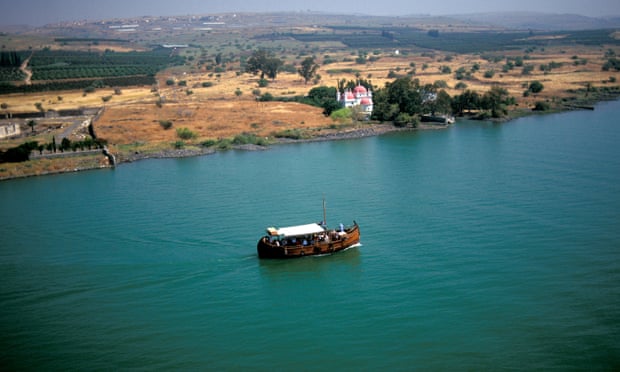
Israeli archaeologists have uncovered dramatic evidence of what they believe are the earliest known attempts at agriculture, 11,000 years before the generally recognised advent of organised cultivation. The study examined more than 150,000 examples of plant remains recovered from an unusually well preserved hunter-gatherer settlement on the shores of the Sea of Galilee in northern Israel.

Archaeologists May Have Been Wrong About Where Alexander The Great's Father Was Buried

The mystery of where Alexander the Great's father, King Philip II of Macedon, is buried just got more mysterious. Philip II was assassinated in 336 B.C., and his young wife Cleopatra Eurydice -- who was not Alexander's mother -- and their newborn child were killed shortly after.

18th century village discovered underneath Montreal interchange

Archaeologists have discovered the remains of an 18th-century village buried beneath Montreal's busiest highway interchange. Over the past few months, construction crews working on the Turcot Interchange have excavated dozens of artifacts. Construction has since been put on hold. Archaeologists say that the crews revealed Saint-Henri-des-Tanneries, a village that was originally formed in the late 1700s and whose economy revolved around the leather trade.

Guatemala: Archaeologists uncover intact Mayan hieroglyphic panels

Ancient Mayan panels dating as far back as the seventh century have been discovered in northern Guatemala, shedding new light on the mysterious civilisation. In total, three ancient Mayan pieces were excavated at the La Corona and El Achiotal archaeological sites in May. The largest of the pieces measures a metre high and features well-preserved ancient Mayan script and stone carvings.

Tuesday, June 30, 2015

Archaeology News: June 30, 2015


Ancient Digger brings you the latest archaeology news and headlines everyday of the week!

Archaeologists keep digging where potentially 2,000-year-old mummy was found

Archaeologists are continuing to search the site of a proposed stone quarry in south Lake County where they found a mummy that could be 2,000 years old. They have secured the mummified human remains and kept them in place while continuing work around them at the construction site, according to the Indiana Department of Natural Resources

Azhagankulam was in the big league

Renewed excavation from May at Azhagankulam village in Ramanathapuram district, Tamil Nadu, has thrown up fresh evidence that it was an important trading post between the Sangam Pandyas and the Romans from circa 50 BCE to circa 500 CE.

Rare ceramic of second century BC found in Chhattisgarh mud fort

Rare ceramic pieces of northern black polished ware (NBPW) dating back to second century BC was unearthed from a 2000-year-old mud fort site at Damroo in Baloda Bazaar-Bhatapara district of Chhattisgarh.

Archaeologists dig in as quarry site search continues

Archaeologists are continuing their investigation of the human remains found at the site of the planned Singleton stone quarry in Eagle Creek Township. Marty Benson, assistant director of communication with the Department of Natural Resources, said Monday there is not much to tell at this point regarding the remains, their origin or age, or how they came to rest on the property.

Countdown starts for Diyarbakır’s World Heritage site bid

Site preparations have finished in Turkey’s eastern province of Diyarbakır, whose ancient sites may soon receive world heritage status. The 5,700-meter long and 12-meter high historical walls, along with the 700-hectare Hevsel Gardens, which are a like an open-air museum and symbol of the city, are waiting for UNESCO’s World Heritage status decision.

Indiana Joneses run hi-tech race against Islamic State

Some of the Middle East's most highly prized archaeological treasures are under threat from the extremist militants of Islamic State (IS). So archaeologists are desperately trying to record as much of these sites as they can. And, in contrast to Indiana Jones and its low-tech bullwhip, they're using the latest technology to do it.

Saturday, May 2, 2015

Archaeology News: May 2, 2015


Ancient Digger brings you the latest archaeology news and headlines everyday of the week!

Stone Age axemen used "complicated thinking", say archaeologists using brain scanning

The craftspeople who made Stone Age hand axes would have required far greater skill than their predecessors needed to create the oldest known tools, according to archaeologists who have concluded that prehistoric practitioners were more than “ape-men banging rocks together”.

The Happisburgh Hand Axe 
© Norfolk Museums and Archaeology Service

Recreating Lower Palaeolithic tools by teaching a group to strike stones, researchers examined brain activity during knapping, which was once carried out by skilled prehistoric people using pieces of bone, antler or stone.

Magnetic Resonance Imaging showed that the process is “complicated” and “nuanced”, says Dietrich Stout, the experimental archaeologist who led the project

Belgian archaeologists discover 4,400-year-old statue of Egyptian pharaoh

A team of Belgian archaeologists unearthed a rare statue dating back over 4,400 years, Egyptian news site Mada Masr reported Tuesday. The statue of Pharaoh Sahure who was the ruler of the ancient Egyptian Kingdom's Fifth Dynasty, was found in the southern Egyptian governorate of Aswan and dates back to between 2487-2475 BC.

Archaeologists Dig Deep At George Washington’s Boyhood Home


When many people think of Washington’s home, they think of Mt. Vernon in Alexandria. But that’s only where he lived lived later in life. Our nation’s first president spent most of his childhood at Ferry Farm in Fredericksburg, Virginia.

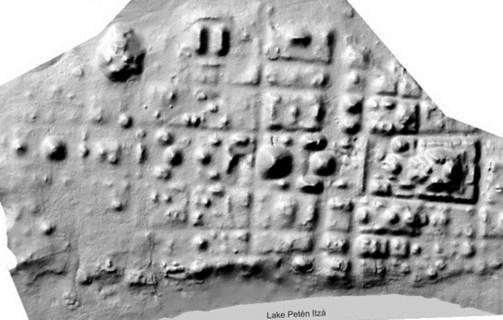
Archaeologists Find Ancient Maya City With a Modern Grid Layout


Timothy Pugh / Queens College
An ancient Mayan city followed a unique grid pattern, providing evidence of a powerful ruler, archaeologists have found. The city, which contains flat-topped pyramids, is being excavated at Nixtun-Ch'ich' in Petén, 
Guatemala.

It was in use between roughly 600 B.C. and 300 B.C., a time when the first cities were being constructed in the area. No other city from the Maya world was planned using this grid design, researchers say.

Archaeologists find ancient skeleton of a man buried with a shield in England


Archaeologists have unearthed the ancient remains of a man buried with a shield in England, which is characteristic of an Iron Age burial belonging to the Arras culture, a civilization that existed in what is now Yorkshire and is known for its impressive burials and grave goods.

Archaeologists Use Digital Technology to Excavate Famous Burial Pit Guarded by Terracotta Warriors


Chinese archaeologists excavating the legendary burial pit of the country's first emperor in the ancient capital of Xi'an are using a digital scanning device to examine the mausoleum where thousands of terracotta warriors stand guard.

Archaeologists Reconstruct Jamestown Church Where Pocahontas Got Married


Instead of digging up remains, archaeologists in Jamestown, Virginia are working on a reconstruction project in bringing back the church believed to be the place where Pocahontas got married. Five years ago, the discovery of Jamestown colony footprint was discovered, and now archaeologists are rebuilding the structure that witnessed the wedding of John Rolfe, a tobacco planter, and Pocahontas, daughter of a Native American chief, in 1614.

Archaeologists Excavate Waterloo Battlefield


Soldiers recovering from post-traumatic stress disorder have joined a ground-breaking archaeological project at the site of the Battle of Waterloo.  British Army veterans and serving soldiers, some wounded in recent campaigns, are working alongside archaeologists to unearth the history of the Battle of Waterloo 200 years on.


Old Kingdom Statue Base Unearthed in Upper Egypt


Met Museum

The Luxor Times reports that the lower part of a rare statue carved with the name of King Sahure, the second king of the Old Kingdom’s Fifth Dynasty, has been discovered at El-Kab. The excavation, conducted by the Belgian mission, is directed by Dirk Huyge of the Royal Museums of Art and History in Brussels.

The statue base was carved from fine-grained sandstone. The complete statue would have depicted King Sahure seated on a throne. There are only two known statues of King Sahure—one of them is at the Metropolitan Museum in New York, and the other is at the Egyptian Museum in Tahrir. For another recent Egyptological discovery, see "18th-Dynasty Tomb Discovered in Luxor."


Thursday, July 17, 2014

Archaeology News: July 17, 2014


Ancient Digger brings you the latest archaeology news and headlines everyday of the week!

Archaeologists Discover 9,000 Year-Old Talisman Meteorite That Was Worshipped By Primitive People


A meteorite fragment dating back 9,000 years was discovered in a shaman's hut by archaeologists, leading to speculation that it was worshipped as a magical object, UK MailOnline reported. Since prehistoric Stone Age humans witnessed the talisman fall from space, it had gained a status of being from another world.

Archaeologists Are Hunting for the Lost French Fleet That Nearly Conquered Spanish Florida


A new archaeological investigation off the coast of Cape Canaveral could shed light on one of the defining moments of Florida's history--when the Spanish definitively kicked the French out of the territory they'd claimed as their own.

When you think of the oldest European settlements in what is now the United States, Jamestown, The Lost Colony, Plymouth and St. Augustine might come to mind. But the French settlement of Fort Caroline, older than all of them, almost never gets a mention.

NC Archaeologist Has Find-Of-A-Lifetime, 3 Years In A Row


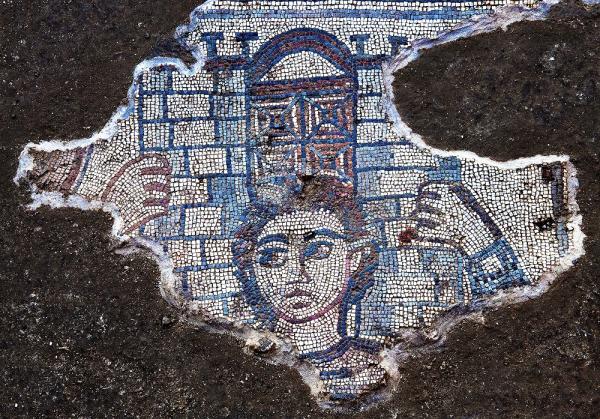
A team of archaeologists turned up another mosaic. Part of the image depicts an elephant with shields tied to its side.

"Nowhere in the Hebrew Bible are there stories with elephants in them," Magness says. "So clearly this scene is not drawn ... from the Old Testament." This is the first time that a non-Biblical story has been found in any ancient synagogue.Jodi Magness suggests that the image might be a depiction of a legend about a meeting between Alexander the Great and a Jewish high priest. This conjecture will require intense study.

10,000yo Indian cave paintings of ‘aliens, spaceship’ puzzle archaeologists

Prehistoric paintings in a cave in India may indicate that alien travelers visited the site eons ago, an archeologist says. The paintings depict what appear as humanoids with featureless faces and a tripod object that could be a vehicle.


Archaeologists to dig at Luas site after 17th Century body find

A team of archaeologists were called to a site outside the front gates of Trinity College Dublin yesterday after the remains were discovered. The alarm was raised after 9am as workers were removing utilities ahead of the installation of the new Luas route. A hip bone and two leg bones were found 1.5 metres underground. They had been buried in a crouching position. An initial inspection revealed the remains could date back to the 17th Century.

Archaeologists Find 8,000-Year-Old Skull, but It’s What Was Inside That Counts

Researchers are not yet sure if it’s human, but an ancient skull found at a Norwegian archaeological dig site is exciting scientists because of what they think they discovered inside — brain matter. The bones, thought to be about 8,000 years old, were uncovered at a camp in Stokke, Norway, and could be evidence of a Stone Age man.

Archaeologists Discover New Extinct Elephant Relative

The new evidence puts the gomphothere in North America at the same time as a prehistoric group of paleo-Indians known as the Clovis culture, whose beautifully crafted projectile points helped bring down giant Ice Age mammals, includingmammoths. This is the first time gomphothere fossils have been discovered with Clovis artifacts.

Cambridge University archaeologists unearth prehistoric bookkeeping system

Excavations have unearthed an ancient token-based recording system which was believed to have been rendered obsolete by the invention of writing.

Like Ancient Digger? Why Not Follow Us?


Subscribe Via RSS Feed Follow Ancient Digger on Facebook Follow Ancient Digger on Twitter Subscribe to Ancient Digger Via Email

Get widget

Search


Ancient Digger Archaeology Copyright © 2015 LKart Theme is Designed by Lasantha