• Ancient Digger teaches Archaeology and History to all Ages!

Saturday, December 31, 2011

U-boat Exhibits and Museums


So what exactly happened to the U-boats after World War II? Many u-boats were used for scrap metal, however some retired to some of the most recognizable and popular museums in the world. People like you and I can take a gander at the accommodations, walk down the tightly constructed decks, and gaze upon the operational equipment used during submarine warfare, that looks almost too complicated to understand.

U-505 at The Museum of Science in Chicago, Illinois

My first experience with a U-boat was at the Science and Industry Museum in Chicago close to 15 years ago. At that time, the German U-505 German Submarine- Type IXC Long Range Attack u-boat exhibit - was kept inside the main museum. The U-505 Submarine was commissioned in 1941 and from there on out, suffered countless malfunctions and a string of bad luck. One account speaks of a commanding officer who committed suicide on board. The crowning blo, however, came when the US boarded the vessel and took possession on June, 1944, NW of Dakar. The US officers found secret documents and confiscated equipment while on board. The U-boat Submarine is surprisingly in pristine condition, completely intact, and is amongst the few surviving U-boats in the world.

U-534  at The Historic Warships Museum, Birkenhead, United Kingdom


The U-534 German Submarine - Type IXC Long Range Attack U-Boat-was commissioned in December 1942. With only a small amount of time spent at sea, she was already spotted by a British Liberator while sailing in the Kattegat, Denmark on 5th May 1945. She was, of course, sailing on the surface along with three other U-boats, making her demise inevitable. The Liberator attacked and promptly sank her with ten depth charges, this came after the first initial nine misses and then a direct hit. There were 49 survivors.

In 1993, she was raised by a Danish consortium Aage Jensen, with the ceremony being witnessed by her own surviving crew and those of the Liberator who sank her. Rumors were swarming at the time that U-534 held a hoard of Nazi gold, prompting immense media coverage. The uboat was empty, however, much to people’s dismay.

U-995 at The Navy Memorial, Laboe, Germany (Laboe, Strandstrasse 92, Germany)


The U-995 German Submarine - Type VIIC/41i was used for submarine warfare and was commissioned in September 1943 with Oberleutnant Walter Köhntopp in command. The heavy duty “work horse”, she was called, is the last surviving of her kind. The U-995 surrendered to the Allies at the end of the war, and was handed to the British as war booty. During her hay day, the U-995 sunk three ships for 1,560 GRT, one auxiliary warship sunk for 633 GRT, one warship for 105 tons, and one ship a total loss for 7,176 GRT. In 1948, she was transferred to the Norwegian Navy before being returned to her homeland in Germany for the symbolic price of one Deutsche Mark. The U-995 is now a museum ship, as tourists can walk through the entire vessel.

U-61 - World War 1 Attack Boat at The Bayerisches Armeemuseum, Ingolstadt, Germany


The U-61- German Type U-57 submarine warfare attack vessel - was commissioned in December 1916. U-61 sank 33 allied ships, totaling 84,564 tons. She also damaged 7 ships of 23,783 tons and the US destroyer USS Cassin before fleeing the fight. After being forced to the surface by depth charge, she was rammed and sunk in March 1918 by US submarine chaser PC-51 with all hands in the Irish Sea. The 88mm deck gun is all that remains of this boat and is on display in Ingolstadt, Germany.

The U-1 at The Deutsches Museum, Munich, Germany


The U-1 German Submarine - Gasoline Powered Boat-was launched in August 1906, however it was never used for submarine warfare. It was used as a training vessel.  “Testing of the U-1 resulted in a collision while on a training exercise in 1919. The U-1 was sold to the Germaniawerft foundation at the Deutsches Museum in Munich where it was restored and can be viewed on display.”


U-9 at The Naval Museum of the Black Sea Fleet, Sevastopol, Ukraine


The U-9 German Submarine - Type IIB Coastal Attack U-Boat Submarine-was commissioned in August 193. The U-9 was a Type II used for coastal submarine warfare, carrying out 19 patrols and claiming 9 ships before being sunk by Russian aircraft on 20th August 1944 at Constanza, Romania. The emblem of the U-9 was the Iron Cross, welded on the conning tower in memory of the first U-9 under Otto Weddigen. You’ ll remember that on September 22, 1914, commander of the U-9 Captain Otto Weddigen, sank three English vessels in less than an hour. The Soviets raised the U-9 in 1945 and the insignia is now on display in Sevastopol, Ukraine.


Brandtaucher - World’s Oldest Diving Boat

The Brandtaucher is the world’s oldest diving boat on display at the Militärhistorisches Museum. The Brandtaucher was built in 1850 by Wilhelm Bauer and is one of the first submersibles which had all the basic elements of a functional submarine and later became a forerunner of the U-boats that we know of.

On February 1, 1851 BrandtaucherOn 5th July 1887, the boat was recovered and today it is on display in Dresden, Germany.


U-2540 at Deutsches Schiffahrtsmuseum (German Maritime Museum) Bremerhaven, Germany

The U-2540 German Submarine - Type XXI Elektroboat-was used as an advanced u-boat submarine, entering service in February 1945. Less than 3 months later U-2540 was destroyed by her own crew. In 1957, she was raised after spending more than ten years at the bottom of the Baltic Sea and returned to service on 1st September 1960 as the research submarine Wilhelm Bauer.

You’ll remember that in 1850, Wilhelm Bauer was asked to design a submarine for the government, incorporating all aspects of the more modern vessels. The Brandtaucher weighed 70,000 pounds, was 28 feet long, and was powered by two sailors turning a tread wheel. U-2540 served in a civilian role under various research projects before decommissioning on 15th March 1982.” On 24th April 1984, she was transferred to the Deutsches Schiffahrtsmuseum (German Maritime Museum) as the Technikmuseum Wilhelm Bauer. U-2540 is the only floating example of a XXI U-boat.”

UB-46 at The Turkish Naval Museum, Istanbul, Turkey


The UB-46- Type UB II Coastal Attack Boat- was commissioned in June 1916, she operated in Turkish waters and claimed 13 ships before hitting a mine in the Black Sea and sinking with all hands in December 1916. None of her 20 men crew survived. The UB-46 was a little more than 121 feet (37 m) in length and displaced between 270 and 305 metric tons (300 and 336 short tons), depending on whether surfaced or submerged. She was equipped to carry a complement of four torpedoes for her two bow torpedo tubes and had a 5-centimeter deck gun. Today, parts of her hull are on display in the Turkish Naval Museum (Demiz Muzesi) in Istanbul, Turkey.

In conclusion, if you haven't seen one yet, and let's face it, you should, it's a wonderful opportunity to experience an important aspect of our history as a nation, and all over the world.

Related Articles

History of the Submarine and German U-Boat Fleet

Cornelius Drebbel, a Dutch inventor working for the English Royal Navy, tested the first submarine on the Thames River in England. Between 1620 and 1624 Drebbel successfully built and tested two more submarines, each one bigger than the last.


Planes used during World War I

Although Kitty Hawk North Carolina would become home to the first manned flight of human kind, the Germans would take these physical parameters into a whole new realm. As the skies offered another battlefield in which to kill and mame, countries that did not embrace this new arena were quickly left behind. During the first world war, the Germans would gain an early edge over most of the Allies as concerned with WWI aircraft. Planes used during World War I became designed around the many German models, which would help the Allies win many later battles of the global war. There are many WWI planes that were important during the war although some played far greater roles than others.


Sources

U-boat 505 Source
UB-46 U-boat 11 October 2009 (© Patrick Costello / Flickr)
U-534 picture via Wikipedia page U 534
Naval Museum of Black Fleet Picture
U-995 Picture via Wikipedia
Brandtaucher - World’s Oldest Diving Boat  Picture via Wikipedia

**This article was part of a compilation of U-boat articles that managed to get lost within the extensive details of the series. I'm presenting it again for you to enjoy!

Tuesday, June 7, 2011

Presidential Hanger at Wright Patterson National Air Force Museum


Only a few hundred people a day have the opportunity to view the Presidential Hanger and Restoration area at the Wright Patterson National Museum of the Air Force in Dayton, Ohio. In fact, you have to arrive quite early to reserve a seat, and when you do, you’ll attend a briefing about procedures and time limits, of which the most important is never taking photographs on the bus in the restricted areas. You will have 45 minutes, no less and no more, to take the tour. It’s not enough time if you ask me. You might have to take three tours just to see the entire area. Although, I was filming and reading the plaques, so it took me a bit longer.

These are the few airplanes and aircraft I was able to see, but there is a virtual tour available on the National Museum of the Air Force which is wonderful if you have a fast internet connection. It took me several days to compile my footage and information on the presidential hanger, so please excuse the missing Monday Ground Up. All of the video footage is mine. Filming inside the planes was a great challenge as the aisles are only 17 inches wide due to the glass enclosures. The majority of the photos were taken with a video camera so please forgive me for the resolution. There’s special lighting inside the hanger for preservation purposes.

Roosevelt’s Douglas VC-54C “Sacred Cow”


Presidential Hanger 1-1 Presidential Hanger 1-2

Presidentil Hanger1


 The C-54 Skymaster was built for President Roosevelt in 1944 and was called the Sacred Cow. The name Sacred Cow was bestowed upon on the C-54 by the ground crew because of the restrictive nature during the war. Any person without access to the plane would refer to it as the “sacred cow”.  White House Press gained knowledge of the term and started using it in their writings about the president. It was never an official name and the press actually discouraged its use, however it became a sign of loyalty and admiration, so most individuals referred to it as the “sacred cow” even still.

Roosevelt's wheelchair
The various modifications made to the exterior of the aircraft made it the first purpose-built presidential plane. A victim of polio, a special elevator was created for FDR behind the passenger cabin to lift him in and out of the aircraft. Roosevelt traveled in the C-54 only once to Yalta in the USSR in 1945 for an international wartime conference.

After Franklin D. Roosevelt died, the Sacred Cow remained in service for 27 months during the Truman administration. In 1947, President Truman signed the National Security Act of 1947 while on board. This act established the Air Force as an independent service of the armed forces. Therefore, the Sacred Cow became the “birthplace” of the US Air Force.

SAM 26000


Pres 2 SAM 26000
Seal Presidential Hanger 2

 The U.S. Air Force Boeing VC-137C aircraft took me close to 20 minutes to go through, as I stopped at every nook and cranny to take a gander at the furnishings. The Boeing VC-137C aircraft was the first jet made specifically for use by the President of the United States. Popularly known as "SAM 26000" (Special Air Mission; tail number 26000), the aircraft has also been called "Air Force One" -- though this designation was used officially only when the president was aboard. SAM 26000, built in 1962, has carried the world’s most esteemed presidents, heads of state, diplomats and other dignitaries and officials, on many historic journeys.


During the 1950s, the call sign of the presidential aircraft was the prefix SAM followed by the aircraft's tail number, and the name "Air Force One" was later chosen to ensure there was no question as to where the president's aircraft was and whether the president was aboard. This aircraft carried eight presidents: Kennedy, Johnson, Nixon, Ford, Carter, Reagan, George H.W. Bush and Clinton. N 1972, the Boeing 707-320 aircraft 27000 became the primary presidential aircraft and 26000 became a back-up, flying vice presidents and other high-ranking government officials.

Most memorable flights


  • SAM 26000 carried President Kennedy to Berlin in 1963, where he declared to West Berliners, "Ich bin ein Berliner," assuring them of continuing United States support in the face of Communist threats and the construction of the Berlin Wall.
  • In 1990, prior to the Gulf War, Secretary of State James Baker went abroad for talks with Iraqi leaders about removing their troops from Kuwai.
  • SAM 26000 flew Kennedy to Dallas, Texas, where he was assassinated on Nov. 22, 1963.
  • Vice President Lyndon B. Johnson was sworn in as the new president aboard SAM26000.
  • SAM 26000 carried John F. Kennedy's body and President Johnson back to Washington, D.C.
  • President Johnson used SAM 26000 to visit U.S. troops in Vietnam during the Southeast Asia War.

Lockheed VC-140B Jetstar


 Presidential Hanger 3The C-140 Jet Star was first flown on Sept. 4, 1957, only 241 days after design completion. Production began in 1960. The USAF bought 16 Jet Stars as C-140As and Bs, the first of which was delivered in late 1961.

“Five C-140As were assigned to the Air Force Communications Command for use in evaluating military navigation aids and operations. Eleven C-140Bs were assigned to the Military Airlift Command for operational support airlift. Six of them were flown as VC-140Bs on special government and White House airlift missions by the 89th Military Airlift Wing at Andrews Air Force Base, Md”.

I didn’t actually get to tour the VC-140B on display, but it has quite a rich history even though it was never the primary presidential aircraft. The VC-140B aircraft carried Presidents Richard Nixon, Gerald Ford, Jimmy Carter and Ronald Reagan. Whenever the President was aboard, it flew under the radio call sign Air Force One.

Harry Truman’s C-118 Independence


Independence C-118 Independence C-118 Truman

Douglas Aircraft  began building Harry Truman’s C-118 Independence  in 1947 as an American Airlines DC-6. The Air Force and White House were demanding a replacement for President Roosevelt’s C-54 Sacred Cow. The name Independence was coined by Sacred Cow pilot Lieutenant Colonel Henry Myers. The name, of course, represents Truman’s hometown of Independence, Missouri, and the patriotism of the United States. The plane’s most historic flight occurred when it carried President Truman to Wake Island in October 1950 to discuss the Korean situation with Gen. Douglas MacArthur.


“Beginning in 1951, the USAF purchased 165 C-118A “Liftmasters” that were about six feet longer than the Independence. C-118As played a key role in “Operation Safe Haven” when 14,000 Hungarian refugees were airlifted to the United States in 1956-1957 {1}.

Lockheed VC-121E “Columbine III”


Columbine

One of my favorite aircraft in the presidential hanger at Wright Patterson was the VC-121E, which was President Dwight Eisenhower’s personal airplane between 1954 and 1961. Eisenhower’s better half  christened it Columbine III in honor of the official flower of Colorado, her adopted home state, in ceremonies on Nov. 24, 1954. The VC-121E Columbine III served as the presidential aircraft until President Eisenhower left office in January 1961. It remained in service transporting government officials and visiting foreign dignitaries throughout the world until it was retired to the museum in 1966.

U-4B Aero Commander


U-4B Aero Commander (1) President Dwight D. Eisenhower used the U-4B from 1956 to 1960 for short trips. In fact, it was the smallest Air Force One, and the first presidential aircraft to have only two engines. The U-4B was also the first presidential aircraft to carry the familiar blue and white paint scheme.

 After President Eisenhower left office in 1961 the aircraft was used for transporting high-ranking government officials. In  1969, it was transferred to the Air Force Academy, where it was used for cadet parachute training and the Academy’s skydiving team. In November 1977 the U-4B was sent to the Nebraska Civil Air Patrol. It was obtained by the museum from a private owner in 1996.

Beech C-45H Expeditor

BEECH C-45 The C-45 was the World War II military version of the popular Beechcraft Model 18 commercial light transport.
A total of 4,526 of these aircraft were built by Beech during World War. There were four versions including the AT-7 Navigator navigation trainer, the AT-11 Kansan bombing-gunnery trainer, the C-45 Expeditor utility transport and the F-2 for aerial photography and mapping.

The AT-7 and AT-11 versions were well-known to WWII navigators and bombardiers, for most of these men received their training in these aircraft. Thousands of AAF pilot cadets also were given advanced training in twin-engine Beech airplanes.

Bell Helicopter XV-3: World’s First Successful Tilt Rotor Aircraft

Tilt Roller Aircraft One of my last stops on the presidential hanger tour, before I was conveniently escorted to the bus, was the Bell XV-3. The Bell XV-3 was the product of a 1951 joint U.S. Air Force-U.S. Army initiative, becoming world's first successful vertical takeoff and landing (VTOL) tilt-rotor aircraft.

By combining the vertical takeoff and hovering capabilities of a helicopter with the speed and range of a fixed-wing aircraft, the XV-3 offered great military potential, but it never went beyond the testing phase.


American Helicopter Co. XH-26 Jet Jeep


American Helicopter Co. XH-26 Jet Jeep (1)

In 1951, the U.S. Air Force initiated the development of a one-man, pulsejet-driven helicopter for observation, liaison and reconnaissance purposes. This aircraft was collapsible and unarmed, and capable of aerial delivery to troops in rugged terrain, and assembled quickly with simple tools. The American Helicopter Division of the Fairchild Engine and Airplane Corp. won the design competition and produced the rugged and uncomplicated Model XA-8. Under the military designation XH-26, the aircraft first flew in January 1952.

Also check out:


Strategic missiles at The National Museum of the United States Air Force

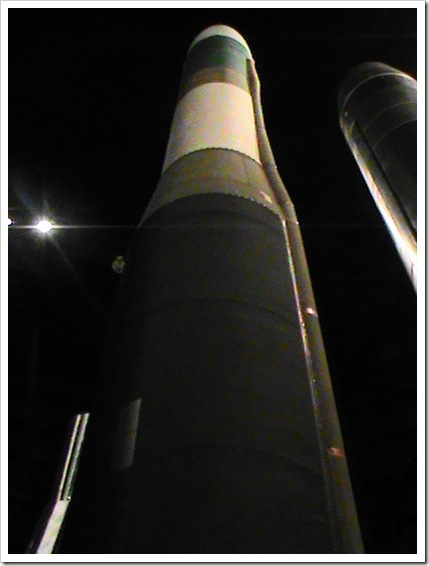
Tourists fly in from all around the world to visit the National Museum of the United States Air Force and who could blame them. The museum is completely free, only taking donations if you’re willing to spare a cent, and all this for a weeks worth of military history. It took me several days to walk the museum, spending most of my time with the Planes from WWI and aircraft from WW2. One of my favorite hangers in the museum is the space gallery, and the focal point is a round room featuring massive strategic missiles. Read More: Ballistic Missiles at Wright Patterson Air Force Base
Caesar’s Creek Ordovician Fossil Hunting

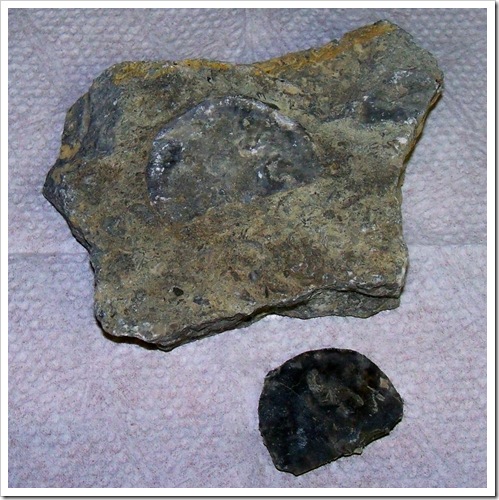
When I was a child growing up in Ohio, my class would take yearly fieldtrips to the Caesar’s Creek Spill off to go fossil hunting. As a child, it was hard to stay focused on the task at hand. We would never read the signs stating we had to leave behind the fossils bigger than our palms, and now that I’m older, I can appreciate why the signs were posted. Read more: Caesar’s Creek Ordovician Fossil Hunting
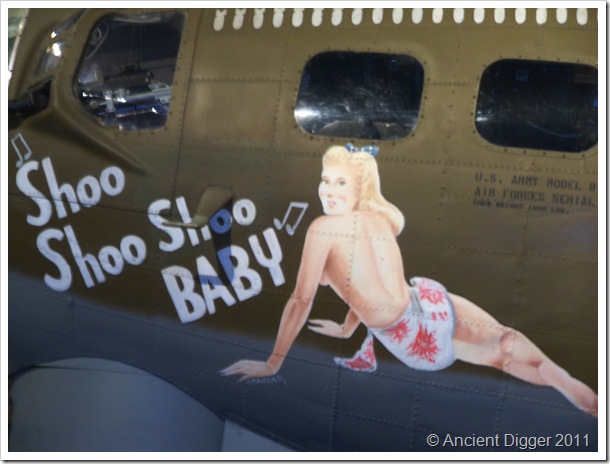
Shoo Shoo Baby: B17G At Wright Patterson Air Force Base

So before I start sharing, I wanted to start off the Wright Patterson Air Force Base Series with the Shoo Shoo Baby B-17G. For those of you plane and aircraft enthusiasts, you already know the B17G Flying Fortress was one of the most famous airplanes ever built. The B17G prototype first flew on June 28, 1935, yet few of the B-17 flying fortresses were flying prior to the United States’ entrance into World War II. Read more:Shoo Shoo Baby: B17G At Wright Patterson Air Force Base Sources

  • C-140 Jetstar info
  • Lockheed VC-121E “Columbine III” info
  • U-4B Aero Commander info
  • Beech C-45H Expeditor info
  • American Helicopter Co. XH-26 Jet Jeep info

Thursday, April 7, 2011

World War I Battleships of the United States


The world’s oceans, seas, rivers, and lakes hold some of war’s most hidden and well kept secrets. From the time the Vikings sailed their small but powerful craft from the fjords of Scandinavia to the mighty aircraft carriers and battleships used during World War I by the United States, boats have helped champion the freedom of nations across the globe. The Spanish Armada and the Queen’s Fleet would bring about change in the depths of the Atlantic by arming their hulls with mortar shattering cannons and crews with muskets. However, one of the largest changes in maritime warfare came with the invention of the large aircraft carriers and WWI battleships equipped with the capability of long distance shelling during the early 1900s.


USS Arizona


USS Arizona MemorialThe USS Arizona would gain its fame early in World War II although it served an important mission World War I naval combat as well. Construction would begin on this Pennsylvania class warship in March of 1913 and would take two years until its completion. The Brooklyn Navy Yard would launch the boat in June of 1915 to begin training missions in and around the East Coast. However, like many other United States battleships, the Arizona would undergo a complete overhaul to be commissioned as one of the naval ships used during World War I. The battleship spent most of its time during the war patrolling the eastern coast from New York south to Florida. Due to the shortage of oil across Europe and most other portions of the world, the oil burning Arizona did not venture into European areas of the Atlantic.

USS Nevada


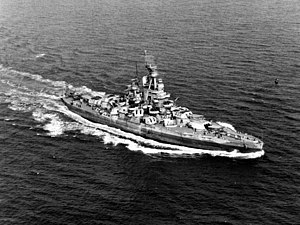
The "USS Nevada was based out of Scapa Flow and was present when the German Grand Fleet surrendered at the end of WW I". The Nevada left the US for Britain on August 13, 1918, the last to join the Fleet.

The ship served during WW II, and was the only American battleship to attempt a sortie from Pearl Harbor when the Japanese attacked on December 7, 1941. After WW II the USS Nevada was the target for the first atomic bomb test at Bikini Atoll where it survived a direct hit of the atomic bomb, to be later sunk by the US Navy in Bikini Lagoon.~© John Carter


Kearsarge Class


USS Kearsarge


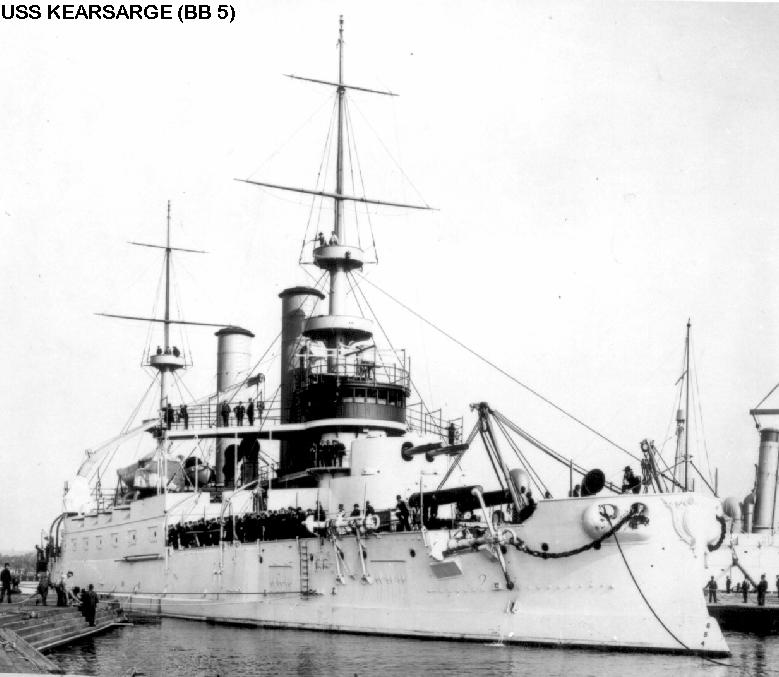
There were only two World War I battleships in the Kearsarge class, which were the Kearsage and the Kentucky. Interestingly, the USS Kearsarge would be the only ship not named after a state out of all United States battleships ever commissioned. It was known for its dual turrets on both top and bottom decks and would be the last to use those guns, which were first created by John Ericsson in the mid 1800s. Due to its armament overload, both the USS Kentucky and Kearsarge would become decommissioned. The Kentucky would be scrapped for its metal and the Kearsarge would be used as a crane ship in a Virginia naval shipyard. Both ships would carry up to 550 men as its length would exceed 350 feet while its beam extended 72 feet across. With a top speed of 30 kilometers per hour, the Kearsarge and Kentucky would be too slow to keep up with Axis’ naval capabilities.


USS New York


USS New York Battleship

Shipped out of the Brooklyn Navy Yard in October of 1912, the USS New York would gain its commission in early spring of 1914 to be one of the many WWI warships to join the British fleet settled in the North Sea. Under the command of Admiral Hugh Rodman, the USS New York would be used as an escort throughout the Atlantic Ocean waters of Europe and would also engage in blockading of the German fleet, which significantly deterred any major offensives by Axis forces. The New York would have two run-ins with German U-Boats, one of which involved an underwater collision that would render two engines useless and reduce the boat’s overall speed to just under 12 knots. The USS New York would see her last mission as a part of an escort for then president Woodrow Wilson, on his journey to Versailles France. Eventually, she would be used as target practice for the testing of atomic bombs and would later be scuttled into the depths of the Atlantic.


USS Virginia


Launched in April of 1904, the USS Virginia would play a pivotal role in WWI naval combat by guarding the shores of the eastern US. With a top speed of 22 miles per hour, the USS Virginia would help secure all German merchant ships residing in the harbors around all Virginia ports at the start of World War I. The Virginia would actively participate in a number of coastal security missions as well as become a flagship under Admiral John Hoogewerff, who was the commander of the first division of naval ships used during WWI. After an active role policing the East Coast, the Virginia would later be used as a training ship for many gunnery divisions operating out of the Norfolk Virginia area. Ultimately, like most other WWI warships, the Virginia would be set to sea and sunk just miles off of the coast of North Carolina at Cape Hatteras.


USS Missouri


Although the USS Missouri was built years before the United States entered into World War I, the ship would regain its commission in April of 1917 to join up with other WWI warships in Yorktown Virginia. The Missouri would mostly be stationed on the eastern coast of the United States to train servicemen. It would also become one of many naval ships used during WWI to escort US merchant ships to and from ports of authority. The USS Missouri would end its wartime action by transporting a few thousand US troops from the port of Brest, France back to the United States. She would be sunk in the mid 1920s to keep within a naval armistice treaty limiting the build-up of naval vessels.


USS Wyoming


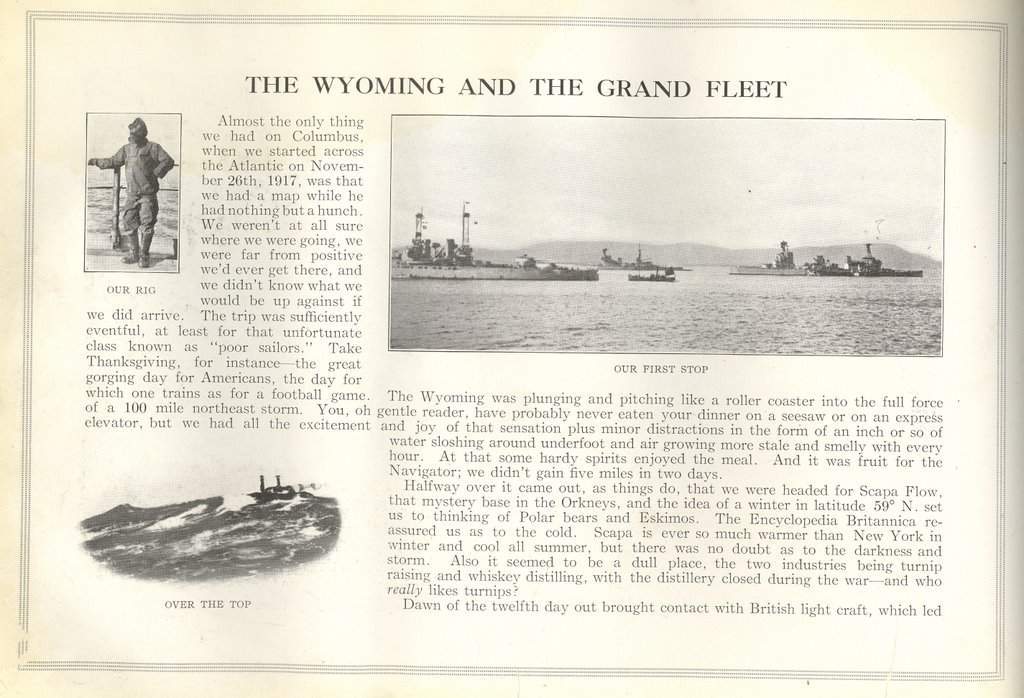
The USS Wyoming would head up Battle Division 9 and sail with the USS Florida, USS, New York and USS Delaware to become part of the British Grand Fleet in December of 1917. The ship would help patrol the waters just off of the English coast around the islands of Scapa Flow and Orkney. The Wyoming would make up the Sixth Battle Squadron and work with English ships for the remainder of WWI. During this time, the merchant sea lanes that allowed the transport of necessary goods between the US and England were constantly under fire from the dreaded German High Seas Fleet. The USS Wyoming would stave off many attacks of German ships while she helped escort mine layers during their missions in the North Sea. The USS Wyoming would see the end of the war and even escort German ships after Armistice Day.


WWI Battleships


As one may come to understand, most US battleships used during World War I saw little active battle. Most usage of US WWI warships were for guardian and escort purposes although ships such as the Wyoming and New York would have to stave off torpedoes and shelling by German naval vessels. It should be noted that escort missions were just as important to the re-supply efforts of the Allies for both military purposes as well as humanitarian efforts. Historians and scholars mostly agree that without the help of the US Navy and its ships, World War I could have had a far different outcome.

Also check out

Planes used during World War I

Although Kitty Hawk North Carolina would become home to the first manned flight of human kind, the Germans would take these physical parameters into a whole new realm. As the skies offered another battlefield in which to kill and mame, countries that did not embrace this new arena were quickly left behind. During the first world war, the Germans would gain an early edge over most of the Allies as concerned with WWI aircraft. Planes used during World War I became designed around the many German models, which would help the Allies win many later battles of the global war. There are many WWI planes that were important during the war although some played far greater roles than others. Read more: Planes used during World War I

The History of the Submarine and the Launching of the German U-boat Fleet

In 1620, Cornelius Drebbel, a Dutch inventor working for the English Royal Navy, tested the first submarine on the Thames River in England. Between 1620 and 1624 Drebbel successfully built and tested two more submarines, each one bigger than the last.

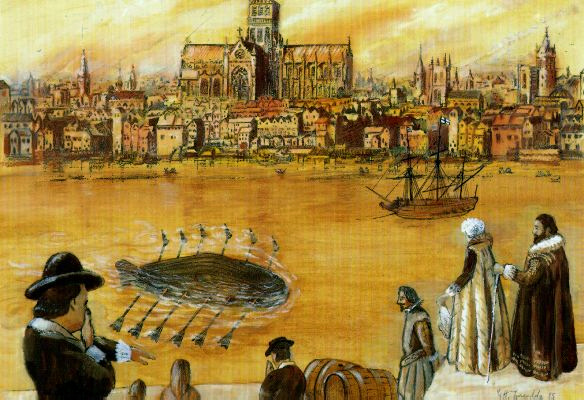
Read more: The History of the Submarine and the Launching of the German U-boat Fleet

What happened to the U-boats after World War II? Part II

Near the end of World War II, Germany took a direct approach to hide and even completely destroy its fleet of U-boats before their surrender to the allies. Operation Deadlight was the code name for the destruction of more than 121 U-boats in abysmal water off Lisahally, Northern Ireland or Loch Ryan, Scotland in late 1945 and early 1946. The remaining 145 U- boats were surrendered to the allies.
Read more: What happened to the U-boats after World War II? Part II

Sources


  1. Navsource.org
  2. USS Nevada Information-Ancient Digger reader and military expert John Carter
  3. USS Arizona photograph
  4. USS Kearsarge
  5. USS New York Photograph
  6. USS Missouri photographs

Thursday, November 18, 2010

Iconic Nazi Propaganda


Guest Blurb By Michael Johnson

Propaganda can be understood as the coordinated attempt to influence public opinion through the use of the media. The word propaganda is derived from the Latin propagare, to propagate or spread, and generally propaganda tries to spread ideologies or belief systems.

 
It is frequently used by political parties and governments to encourage people to accept a political viewpoint.  As opposed to providing impartial information, propaganda presents facts selectively. This amounts to lying by omission – misleading people by leaving certain facts out.

Propaganda was used by the Nazi Party during Adolf Hitler’s leadership of Germany (1933–45). Propaganda was crucial for acquiring and maintaining power, and for implementing Nazi policies. Hitler devoted two chapters of his book Mein Kampf (1925-6) to the use of propaganda. He claimed that he had learnt the value of propaganda as a German infantryman in the First World War, where he had been exposed to very effective British propaganda.

Nazi Propaganda Continued ......From: Nazi Propaganda

Wednesday, August 18, 2010

U-boats after World War II


Due to the amazing response to my first edition of the U-boat history, I decided to follow it up with what happened to the U-boats after World War II.

Near the end of World War II, Germany took a direct approach to hide and even completely destroy its fleet of U-boats before their surrender to the allies. Operation Deadlight was the code name for the destruction of more than 121 U-boats after World War II in abysmal water off Lisahally, Northern Ireland or Loch Ryan, Scotland in late 1945 and early 1946. The remaining 145 U- boats used during World War II were surrendered to the allies.

German U-boat in action 1941


Even after their defeat, the German Bundesmarine still found a way to maintain a navy, even though it was on a smaller scale. They raised two U-boats initially, the Type XXIIIs and a Type XXI, which were repaired. West Germany reentered the submarine market once again in the 1960’s, limited by design criterion including a 450 tonne displacement limit. In an effort to protect against the Soviets in the Baltic Sea, they built smaller submarines enhanced by amagnetic steel to protect against naval mines and magnetic anomaly detectors.


The Type 201 U-boats after World War II, were the first to use amagnetic steel to protect against naval mines. The Type 201 U-boats suffered cracking issues in the hull, sending them into an earlier retirement. The later Type 205 U-boat would use regular steel to combat the issue.

In 1967, 12 Type 205 U-boats were constructed for the German Navy. To maintain their tradition, the first u-boat received the U designation starting with the U-1. The first U-1 was launched in 1906, the boat measuring close to 140 feet long, weighing 238 tons, and could carry 20 men. The new versions were 144 feet long, were 450 long tons surfaced and 500 long tons submerged, and carried 22 men.

The Danish were the first to purchase two Type 205 submarines. When the Type 206 U-boats were assembled, three of them were shipped to the Israeli Navy, thus becoming the Gal class. Germany  realized the power they held in the export business, therefore they continued to develop and improve on each u-boat before the last.

“The 209 diesel-electric submarines were the most popular export-sales submarine in the world from the late 1960s into the first years of the 21st century. With a larger 1,000-1,500 tonne displacement, the class was very customizable and has seen service with 14 navies with 51 examples being built as of 2006.”

The Type 212 U-boats christened the 21st century, making their homes in countries such as Italy, with the Type 214 boats sold to Greece, Turkey, and South Korea. The Type 212 submarines were much safer in design, featuring an air-independent propulsion system using hydrogen fuel cells. This system is cheaper than a nuclear reactor and quieter than both. In July 2006, Germany commissioned its newest U-boat, the U-34, a Type 212.

Final Thought

Many u-boats after World War II were used for scrap metal, however some retired to the many u-boat museums around the world.

Monday, August 16, 2010

Monday Ground Up: The History of the Submarine and the Launching of the German U-boat Fleet


Brief History of the Submarine

In 1620, Cornelius Drebbel, a Dutch inventor working for the English Royal Navy, tested the first submarine on the Thames River in England. Between 1620 and 1624 Drebbel successfully built and tested two more submarines, each one bigger than the last.

Van Drebbel followed his first boat with two others. The later models were larger but they relied upon the same principles. It is reported that after repeated tests, King James I of England rode in one of his later models to demonstrate its safety. But even royal favour failed to arouse the interest of the British Navy. It was an age when the possibility of submarine warfare was still far in the future.~Dutch Submarines

During the 18th century, the Turtle  was designed by David Bushnell which held one person. It was the first submarine capable of independent movement and the first to use screws for propulsion. During the American Revolutionary War, Turtle (operated by Sgt. Ezra Lee, Continental Army) tried and failed to sink the British warship HMS Eagle, flagship of the blockaders in New York harbor on September 7, 1776.

In 1850, Wilhelm Bauer was asked to design a submarine for the government, incorporating all aspects of the more modern vessels. The Brandtaucher weighed 70,000 pounds, was 28 feet long, and was powered by two sailors turning a tread wheel. Bauer had previously created a model of a larger scale submarine that proved to be functional, however the government refused to accept the design. Tanks of sea water would be filled before submersion, allowing the vessel to stay under the water longer. Since the government chosr to deter from this design, the submarine would be flooded with water, instead of just a few tanks to keep it stable. Brandtaucher sank during a test drive; however Bauer still became instrumental in the development of the English and Russian submarine programs. John Holland later invented electric engines, horizontal rudders, and water ballasts.

On August 4, 1906, the first German U-boat, Unterseeboot-eins, was launched at Danzig. The world’s superpowers had no idea, and honestly, were not concerned with the introduction of the new German submarine. World War I would be the first time the fleet of U-boats would make a lasting impression on the outcome of the war, and change the opinions of the English, Russians, French, and Americans.

Check out Submarine History for an extensive history of the Submarine from 1580 on.

The Evolution of the German U-boat Fleet


Great Britain may have paved the way for industrialism during the first revolution, however after 1870; Germany was swiftly replacing Great Britain as the Industrial leader in Europe.

Since the industrial plant had already been established in Great Britain, it was difficult to transition to new techniques and machinery. The Germans, however, built the latest and most efficient manufacturing plants. Since Britain was notoriously suspicious of any new innovations in industry, they chose not to invest in the latest machinery, thus they suffered economically in that aspect. The German industrialists were accustomed to change, so acquiring more capital from banks for expansion was never a concern. Furthermore, German industry was aided by professionals in science and technology who consistently worked with firms to produce the latest in inventions for efficient and economically productive products.~ The Second Industrial Revolution During the 19th Century

Germany saw a need to protect her small coast, especially after gaining new overseas colonies. Trading ships that transported raw materials and industrial goods needed to be protected on the world seas. At the end of the 19th century, William II of Germany recognized the need to cooperate with industrialists, especially considering Germany’s industry rivaled that of England.

At the beginning of the 20th century, the German Navy, although not as large as England’s, had become a bit dangerous in nature. England became aware of this fact, considering its fleets were always as large, if not larger, that the three largest naval powers in Europe combined. Europe immediately started to increase its navy, however in 1905 Grand Admiral Alfred von Tirpitz started working on defensive and offensive submarines.

German industrialist Gustav Krupp funded the new submarine fleet, built by Spanish engineer Raymond Lorenzo d’Equevilley-Monjustin. Monjustin came to Krupp in 1901 with the grandiose idea for double hulled submarines, capable of long range attacks. Originally, Krupp had inquired about the funding from Tirpitz, however Tirpitz believed the vessels would never accomplish a surface vessel attack. How wrong he would be.

With his own money, Krupp funded the entire plan, thus several features of the submarines were dismissed when funding ran out. The first prototype was introduced on June 8, 1903 and measured 13 meters long and traveled 40 nautical km at a surface speed of 4 knots. Submerged, the vessel traveled at 5.6 knots. The first test in 1904 impressed William II, however Kaiser Tirpitz was still quite hesitant in investing money in a vessel not proven in combat.
Interestingly enough, the first submarine was sold to the Russians in 1904 for the Russo-Japanese War, along with three other vessels of the same design-called the Karp Class. The original design was improved once Krupp's engineers started building them for the Russians. In 1905, Tirpitz finally agreed to purchase submarines for the Germany fleet at the price of 1.5 million marks.

The Launching of the German U-boat U-1

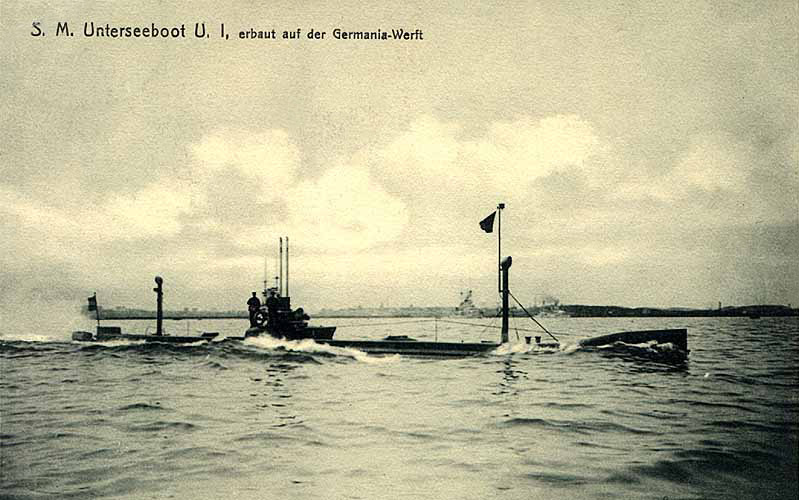
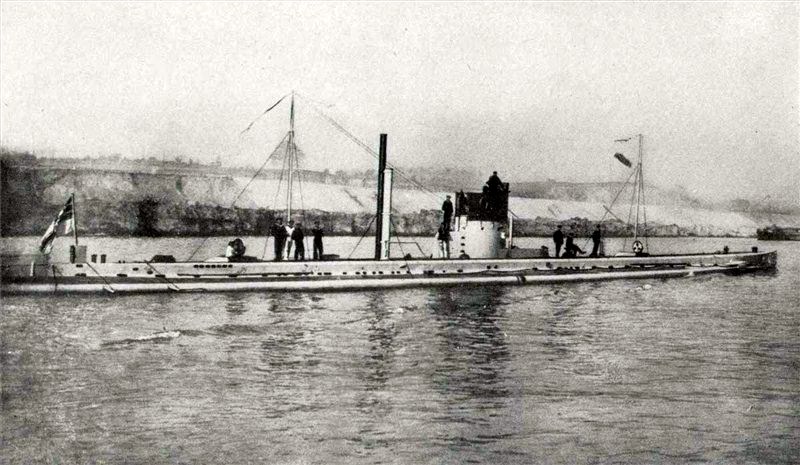
The first U-boat, the U-1, launched in 1906. The boat measured close to 140 feet long, weighed 238 tons, and could carry 20 men. U-1 was armed with a 46 cm bow torpedo tube with three self-propelled torpedoes and an 88 mm deck gun. The U-1 could reach maximum speeds of 10.8 knots on the surface and 8.7 knots while submerged. The cruising range, measuring 2,414 km, made the new U-1 U-boat an important new weapon for Germany.

“Testing of the U-1 resulted in a collision while on a training exercise in 1919. The U-1 was sold to the Germaniawerft foundation at the Deutsches Museum in Munich where it was restored and can be viewed on display.”

World Power Opinions of the U-boat Fleet

German U-boat U-1

Image Via Wikipedia SM U-1

The introduction of the German U-1 was hardly a reason for the largest navies in the world to be alarmed. The Germans had entered the waters a bit too late, especially if they wanted to rival the numbers of vessels in the fleets of the great world powers. At the time, France had 123 submarines, England had 72, Russia had 41, United States had 34, and Germany had 26. This would prove to be a minute issue for the Germans as their fleet continued to grow.


The German U-boat Fleet Commands the Seas

German U-boat U-9


Image Via Wikipedia SM U-9

On September 22, 1914, commander of the U-9 Captain Otto Weddigen, sank three English vessels in less than an hour. England relied heavily on commercial trade, so the sinking of their commercial fleet led to a shortage of essentials that couldn’t reach them. England’s surface waters were now open to German U-boat attacks, and this was an admission the admiralty of England could not ignore.

German U-boat U-17


October 14, 1914, Lietenant Captain Feldkirchner, commander of the U-17, sunk the English steamer, the SS Glitra off the Norwegian coast. In 1907, an agreement at Geneva outlawed surprise attacks on civilian steam ships, however Germany blockaded the British Isles and started sinking commercial vessels. U-17 was decommissioned on 27 January 1919 and sold for scrapping.

German U-boat Attacks RMS Lusitania


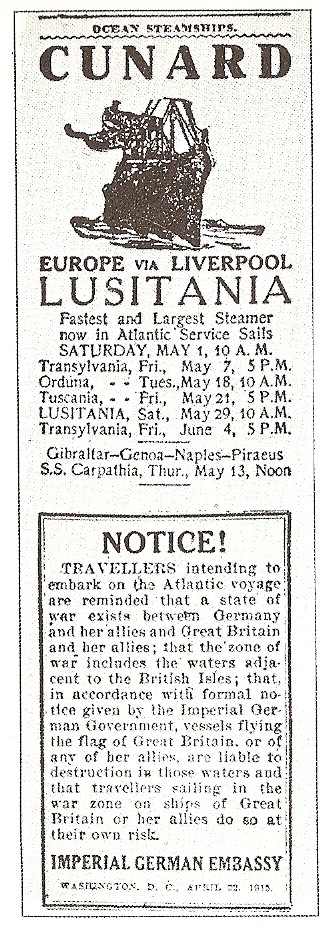
The Lusitania, carrying war supplies for the war effort, had already been warned prior to its final voyage. In fact, the German embassy posted a full page advertisement in the New York Times, warning Americans that German U-boats would be in the water and may attack due to the wartime cargo aboard the ship. Against warnings, the Lusitania sailed. On May 7, 1915, the Lusitania was torpedoed by the German U-boat U-20 under the command of  KL Walther Schwieger, , killing close to 1200 people, 124 of which were Americans. Rumors serviced that blamed German U-boats for the second explosion, after the Lusitania was already sinking. Further investigations, however, proved that the explosion was due to the ammunition aboard Lusitania.

Public outcry and protest by the Americans forced Germany to stop attacks on civilian ships

Image via Wikipedia RMS Lusitania 


The Consequences of the German U-boat Fleet

Fearing the Americans would enter the war, Germany grew desperate. General Erich Ludendorff and Field Marshal Paul von Hindenburg set up a blockade, to render England helpless before America could intervene. Three vessels were sunk forcing President Woodrow Wilson to ask Congress to formally declare war on Germany. This concreted Germany’s defeat in the war.

The ending result and consequence of the launching of the first U-1 set the ground for a major conflict between America and Germany, prior to World War II.


Video Of German U-boat 1940


This German propaganda movie was part of a U.S. Navy archive compiled during WWII, and acquired by Periscope Film. In this film, a German U-boat is shown being resupplied at sea by a Type XIV milkcow submarine. Torpedoes and food are transferred, along with diesel fuel. The U-boat then resumes its hunt for English merchant ships during the Battle of the Atlantic.

Note: Video is in German, however the footage is fascinating, even if you can't understand the language.


(1) "With the downfall of Germany, members of her underseas flet rise to the survace and on radio instructions from Berlin, procede to surrender to Allied naval authorities. The U-358 rides into Cape May, N.J., in the custody of a destroyer escort 'prize' crew. At Portsmouth, N.H., destroyer escorts convoy the U-805 into harbor. The Nazi crew is brought ashore still surly and impudent, only to be whisked off to Portsmouth Naval Prison. Back in ruined Bremen, British tommies discover pre-fabricated sections of submarines, parts of an assembly plan which was calculated to add hundreds of new subs to the German navy." scenes of ruins of Bremen sub shipyard, U-boat prisoners arrive in US., in Portsmouth, arogant captain unrepenitent.(2) Germans Surrender Among Ruins - "Berlin: Air Marshal Tedder, General Spaatz, Marshal Zhukoff and others receive the surrender of General Keitel, Admiral Friedberg and General Stumpf, which commits Nazi Germany to Allied control, ceases hostilities and ratifies the previous capitulations to General Eisenhower and General Montgomery. The Wreckage of Germany - R.A.F. saturation bombings of Hamburg have destroyed the huge ship yards and left all buildings absolutely gutted. Hamburg is ruined. And the question 'What of Berlin?' is now answered. All Nazi government buildings are totally ruined, as are the famous hotels and other buildings which lined her famous boulevards." scenes of Keitl surrenders to Zhukov in Berlin, Russians tour the gutted capital, pictures of destroyed Hamburg; (3) German Loot Discovered - "Reichsbank Cache - Yanks entering the world's largest salt mines at Merkers, Germany are startled to find one hundred tons of gold bullion, jewels, silver currency and priceless paintings by the masters, the cached loot of the Nazis." (4) In The Wake Of Victory - "Eminent people, long held in Nazi prison camps are found at a Villa in the Alps. They include Baroness Schussning, Fritz Thyssen, industrialist, Prince Leopold of Prussia, Anti-Nazi Pastor Niemacher, Lt. John Winant and Lord Lascelles, nephew of King George VI. In contrast at Magebarg, General Dietmars, Nazi broadcaster becomes a prisoner of the Yanks." (5) All Out Air War On Japan - "Aircraft factories near Nagasaki are bombed by B-29s from Guam. From Saipan, a fleet of B-29s pierce clouds of flak over Tokyo to plant tons of bombs on the Jap capital city. Homeward, many of the Superforts are forced down at Iwo Jima, where flak damage is seen to be severe." scenes of map and arial footage of airstrikes on Japan, damaged SuperFortress lands on Iwo Jima. (complete newsreel)

What Happened to The U-boats After World War II? Read Part Two @AncientDigger


Also Check Out:


Planes used during World War I

Although Kitty Hawk North Carolina would become home to the first manned flight of human kind, the Germans would take these physical parameters into a whole new realm. As the skies offered another battlefield in which to kill and mame, countries that did not embrace this new arena were quickly left behind. During the first world war, the Germans would gain an early edge over most of the Allies as concerned with WWI aircraft. Planes used during World War I became designed around the many German models, which would help the Allies win many later battles of the global war. There are many WWI planes that were important during the war although some played far greater roles than others.

Read More: Planes used during World War I

The White Star Line was a British shipping company most famous for its ill fated flag ship the RMS Titanic and World War I sister ship, Britannic.

The White Star Line was originally founded in Liverpool in 1845 by John Pilkington and Henry Wilson. The company's initial focus was on the Australian gold mine trade. In the early 1850's if you had sound ships and ran the Australian route, it would almost be difficult to not succeed. In one month of 1853, no less than 32,000 "get rich quick" hopefuls left port in Liverpool bound or Australia to strike their fortunes in gold. Archived Photography of the White Star Line and Her Ships

She hit an iceberg and sank, in one of the most epic tragedies of all time. Nearly 100 years later tales of the RMS Titanic remains legendary. Perhaps the work of James Cameron and Leo Di Caprio can be credited for bringing the story of this ill-fated trip to mainstream popular culture. Or perhaps, even without a multi-billion dollar blockbuster our morbid human curiosities would still keep us entranced by this sunken piece of history.  Diving the Titanic in Newfoundland


In both cases of Fascist Italy and Nazi Germany, the world war had created high unemployment and dissatisfied veterans. Fascism grew in Italy just as swiftly as Nazism in Germany out of extreme rightist preoccupations with nationalism and, in the case of Germany, racism. One aspect that differed between Fascism and Nazism was the extreme terror put forth by the Nazis against the Jews, however not so much lacking in Fascist Italy. In any case, the condition of the governments at the time made them easy targets for takeover, therefore allowing a new party to emerge that consisted of violent groups, thus ending in superior races that would wreak havoc on society.The Differences and Similarities of Fascism and Nazism


Sources

Pictures under Evolution of the German U-boat Fleet are screen captures from 1940 video of U-boat being refueled and replenished.

Madden, Paul. "Germany Launches Forst U-boat." Great Events. Print.

The Second Industrial Revolution During the 19th Century 

Dutch Submarines

Like Ancient Digger? Why Not Follow Us?


Subscribe Via RSS Feed Follow Ancient Digger on Facebook Follow Ancient Digger on Twitter Subscribe to Ancient Digger Via Email

Get widget

Search


Ancient Digger Archaeology Copyright © 2015 LKart Theme is Designed by Lasantha