• Ancient Digger teaches Archaeology and History to all Ages!

Sunday, May 6, 2012

This post has been deleted


Sorry. This post has been removed.

Friday, July 8, 2011

Vietnam War


Image Vietnam Memorial

When the United States Congress first allowed the American military to send advisers to Vietnam in Southeast Asia, Americans knew very little about the history of Vietnam. Though Americans soon became acquainted with the history of Vietnam and its culture after the United States escalated its involvement in the country’s affairs, the roots of the Vietnam War began during French occupation several years before American involvement.

The French defeated and colonized Vietnam in the nineteenth century and maintained control of Vietnam’s government for approximately sixty years. When Japan invaded Vietnam in 1940, while Vietnam was still under French occupation, Ho Chi Minh rallied support in the northern part of the country and established the Viet Minh, a communist group dedicated to ending the foreign occupation that had existed for much of the history of Vietnam.


After losing an important battle, the French government pulled out of the conflict and ended its occupation. As part of the agreements that took place at the conference in Geneva, Switzerland, in 1954, Vietnam was divided in half, creating North and South Vietnam, and elections were scheduled to take place to determine who would gain control of the country’s leadership.


Image Forgotten Heroes

In the 1950s, the United States was involved in an extended conflict with communist Soviet Union to prevent communism from spreading to other countries, including Vietnam. The United States feared that if elections were allowed to take place, the communists would gain control of Vietnam and represent a new threat to America. With assistance from America, South Vietnam elected Ngo Dinh Diem. During his eight-year term, tensions in Vietnam grew, and North Vietnam organized the National Liberation Front, also known as the Viet Cong, to establish communism in the south following Diem's assassination.

In 1964, the North Vietnamese and a major American naval vessel engaged in a conflict called the Gulf of Tonkin incident. In response, the United States Congress gave President Lyndon B. Johnson the authority to send American troops to Vietnam. The American military’s goal was to provide enough military support to South Vietnam to stop Viet Cong aggression and prevent the spread of communism in Vietnam during the war.

Though the American military gradually increased its troop presence, the Vietnam War did not progress as the American government anticipated. The Americans chose not to attack the communists in the north during the war in Vietnam. While this policy limited America’s involvement in the Vietnam War, it also allowed the communists in the north to maintain their strength and supply the Viet Cong with weapons and food.


Image Vietnam Memorial

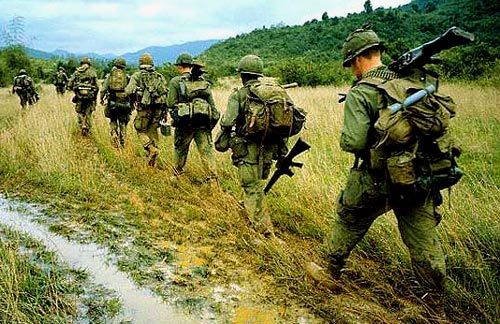
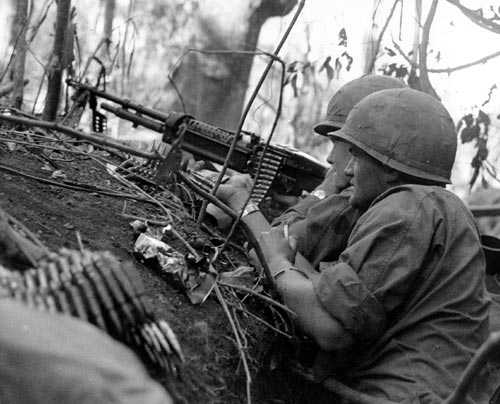
Life in Vietnam during the war was unpredictable and often deadly for the Vietnamese people and American troops. Unlike previous wars, the American army fought in thick jungles against an enemy that was well supplied. Many booby traps were placed around Vietnam during the war, and the American troops, who had difficulty locating the Viet Cong in the jungle, were often captured and fired upon by surprise.

As the war in Vietnam continued through the 1960s, the American public became increasingly uneasy. It was clear to many Americans that Vietnam during the war would not change and neither America nor South Vietnam would win. They argued that a lack of military victories during the war in Vietnam did not justify the large number of American military deaths. While few voiced their discontent when America first entered the war in Vietnam, public protests grew louder and more intense in the late 1960s.

In 1968, the communists carried out one of the most organized military campaigns in the history of Vietnam. In the Tet Offensive, the communists simultaneously attacked the American and South Vietnam forces in about one hundred cities and villages across the south. While the Americans rallied to force the communists’ retreat, Americans were no longer willing to maintain a military presence in Vietnam. Shortly after Richard Nixon became President of the United States, he withdrew troops and ended the Vietnam War even though America did not achieve its goal of halting communist advances.

About the author: She majored in history and international relations in college and loves to travel, read, and learn about other countries.

Tuesday, July 5, 2011

History of the Cold War 1945-1991


Cold War History records a conflict, primarily between the United States and their allies in Western Europe and the Soviet Union and it's allies. The Cold War commenced after World War II and lasted for nearly fifty years. Instead of guns, the weapons used in this “war,” were technology and espionage; however, the threat of Nuclear War from these two super powers impacted life on a global scale, much more than the passive aggression conducted by intelligence services.

The Role of Intelligence Agencies


According to Cold War history, the CIA attempted to obtain control over several intermediary countries, such as Afghanistan, Chad, Grenada, Cuba and Angola, but the major world powers never began an armed conflict against each other. The military units of the two nations participated only rarely in the Cold War. This war was waged primarily by the KGB and the CIA.

Causes of the Cold War


There were many causes of the Cold War, including the following:
  • Political Ideology. The Soviet Union embraced the ideology of communism and wanted to spread this philosophy over the globe. This was a threat to the United States. The United States believed in democracy.
  • America had obtained atomic weapons and this was a threat to the Soviet Union. Both nations were in fear of an attack from the other.
  • The Soviet Union exercised control over Eastern Europe which constituted a threat to the United States.
  • The Russians were afraid America would attack the Soviet Union from Western Europe

Communism


Although history records many causes of the Cold War, one of the primary causes was an argument between the two countries about the political philosophy of communism. While the East embraced Communism, the United States was adamantly opposed to this philosophy of government.


Major Events

McCarthyism and the “Red Hunt”


In 1950, Joseph McCarthy, a Republican senator from Wisconsin, accused over 200 federal workers of being members of the Communist Party. Although Senator McCarthy had no evidence upon which to base these allegations, President Truman initially backed the inquisitions, but eventually distanced himself from the investigations because he felt that they were becoming “witch-hunts.”

The Bay of Pigs Invasion


In 1961, a group of Cuban exiles, supported by the United States, attempted to overthrow the Cuban government headed by dictator, Fidel Castro. The failure of the mission was a huge embarrassment to the Kennedy administration. The Central Intelligence Agency began preparing anti-revolutionary Cuban exiles for a possible invasion of the island several years prior to the Bay of Pigs. The band of soldiers intended to march into Havana. However, within a few hours after the fighting began, it was obvious that the exiles could not win. When the battle ended on April 19, ninety exiles lost their lives and the remainder taken as prisoners.

The Sputnik Crisis


The history of the Cold War is also the history of the beginning of the Space Age.The Space race began in earnest after this, leading up to the Apollo program, and the moon landings in 1969. Sputnik Crises occurred when the Russians launched the Sputnik 1 Satellite. The U.S felt that it was necessary to win the race to space, and so did the Russians. There was serious competition in the race to space, especially between the United States, and the Soviet Union. Sputnik I, the world's first Earth-orbiting artificial satellite, launched on October 4, 1957, and the Space Age emerged. This event gave the impression of a deficit in technological advancement and helped to provide the momentum in spending for technical and scientific projects and educational programs. The United States needed to recover a sense of international respect.

Cuban Missile Crisis


Image Credit

In 1962, the Cuban Missile Crises moved the United States and the Soviet Union close to war. U.S. intelligence services discovered Soviet nuclear-armed missiles in Cuba. During a tense week, President Kennedy imposed a naval quarantine on Cuba and announced that the U.S. would respond to an attack from Cuba as an attack by the Soviet Union. On October 28, Khrushchev backed down and announced to the world that he would dismantle the installations.

The End of the Cold War

The history of the Cold War shows that the conflict began to unravel in the late 1980s during the administration of Soviet leader Mikhail S. Gorbachev. He disassembled the autocratic facets and factions of the Soviet system and tried to integrate the concept of democracy into the political system. The Soviet Union collapsed in late 1991, and 15 newly independent nations emerged, each with a democratically elected, anticommunist leader. Cold War History shows that although no shots were fire, and no physical battles were waged between the two opposing countries, the effects of this conflict brought many changes on both sides.


Effects of the Cold War


  • Both countries created made weapons and missiles
  • NATO and The Warsaw Pact were created
  • The Soviet Union was demolished
  • The Warsaw Pact was eliminated
  • The Baltic States achieved independence
  • Communism was eliminated across the globe
The history of the Cold War ended late in 1991 with the dissolution of the Soviet Union, and the causes of the Cold War are frozen in time. The end of the Cold War opened the door to friendly relations between Russia and the United States and America became a world superpower.

The psychic scars of this period are still felt today. Cold War history shows that during this time, the civilian population in America was encouraged to build personal bomb shelters. Sirens rang out urgently during air raid drills and teachers taught schoolchildren to hide under their desks.

Thursday, April 7, 2011

World War I Battleships of the United States


The world’s oceans, seas, rivers, and lakes hold some of war’s most hidden and well kept secrets. From the time the Vikings sailed their small but powerful craft from the fjords of Scandinavia to the mighty aircraft carriers and battleships used during World War I by the United States, boats have helped champion the freedom of nations across the globe. The Spanish Armada and the Queen’s Fleet would bring about change in the depths of the Atlantic by arming their hulls with mortar shattering cannons and crews with muskets. However, one of the largest changes in maritime warfare came with the invention of the large aircraft carriers and WWI battleships equipped with the capability of long distance shelling during the early 1900s.


USS Arizona


USS Arizona MemorialThe USS Arizona would gain its fame early in World War II although it served an important mission World War I naval combat as well. Construction would begin on this Pennsylvania class warship in March of 1913 and would take two years until its completion. The Brooklyn Navy Yard would launch the boat in June of 1915 to begin training missions in and around the East Coast. However, like many other United States battleships, the Arizona would undergo a complete overhaul to be commissioned as one of the naval ships used during World War I. The battleship spent most of its time during the war patrolling the eastern coast from New York south to Florida. Due to the shortage of oil across Europe and most other portions of the world, the oil burning Arizona did not venture into European areas of the Atlantic.


USS Nevada


The "USS Nevada was based out of Scapa Flow and was present when the German Grand Fleet surrendered at the end of WW I". The Nevada left the US for Britain on August 13, 1918, the last to join the Fleet.

The ship served during WW II, and was the only American battleship to attempt a sortie from Pearl Harbor when the Japanese attacked on December 7, 1941. After WW II the USS Nevada was the target for the first atomic bomb test at Bikini Atoll where it survived a direct hit of the atomic bomb, to be later sunk by the US Navy in Bikini Lagoon.~© John Carter


Kearsarge Class
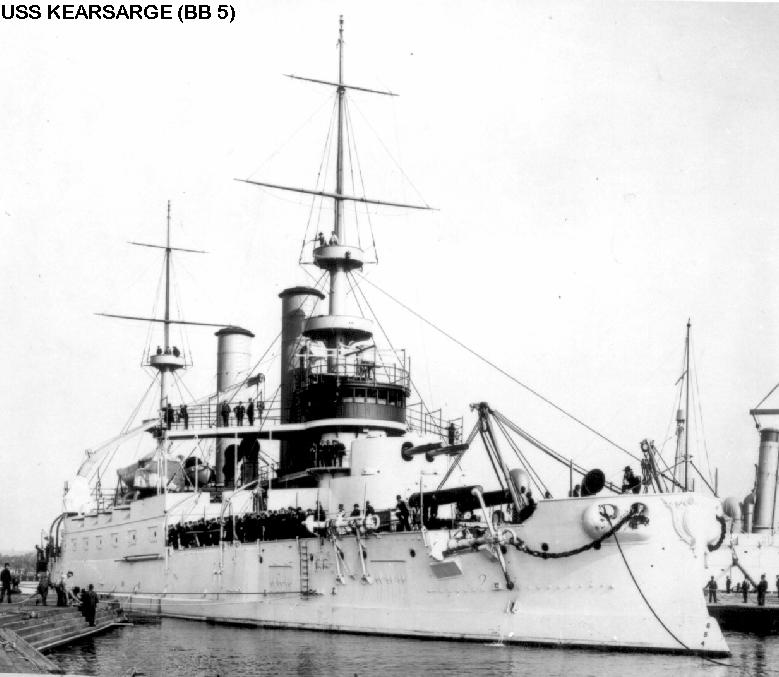

USS Kearsarge


There were only two World War I battleships in the Kearsarge class, which were the Kearsage and the Kentucky. Interestingly, the USS Kearsarge would be the only ship not named after a state out of all United States battleships ever commissioned. It was known for its dual turrets on both top and bottom decks and would be the last to use those guns, which were first created by John Ericsson in the mid 1800s. Due to its armament overload, both the USS Kentucky and Kearsarge would become decommissioned. The Kentucky would be scrapped for its metal and the Kearsarge would be used as a crane ship in a Virginia naval shipyard. Both ships would carry up to 550 men as its length would exceed 350 feet while its beam extended 72 feet across. With a top speed of 30 kilometers per hour, the Kearsarge and Kentucky would be too slow to keep up with Axis’ naval capabilities.


USS New York


USS New York Battleship

Shipped out of the Brooklyn Navy Yard in October of 1912, the USS New York would gain its commission in early spring of 1914 to be one of the many WWI warships to join the British fleet settled in the North Sea. Under the command of Admiral Hugh Rodman, the USS New York would be used as an escort throughout the Atlantic Ocean waters of Europe and would also engage in blockading of the German fleet, which significantly deterred any major offensives by Axis forces. The New York would have two run-ins with German U-Boats, one of which involved an underwater collision that would render two engines useless and reduce the boat’s overall speed to just under 12 knots. The USS New York would see her last mission as a part of an escort for then president Woodrow Wilson, on his journey to Versailles France. Eventually, she would be used as target practice for the testing of atomic bombs and would later be scuttled into the depths of the Atlantic.


USS Virginia


Launched in April of 1904, the USS Virginia would play a pivotal role in WWI naval combat by guarding the shores of the eastern US. With a top speed of 22 miles per hour, the USS Virginia would help secure all German merchant ships residing in the harbors around all Virginia ports at the start of World War I. The Virginia would actively participate in a number of coastal security missions as well as become a flagship under Admiral John Hoogewerff, who was the commander of the first division of naval ships used during WWI. After an active role policing the East Coast, the Virginia would later be used as a training ship for many gunnery divisions operating out of the Norfolk Virginia area. Ultimately, like most other WWI warships, the Virginia would be set to sea and sunk just miles off of the coast of North Carolina at Cape Hatteras.


USS Missouri


Although the USS Missouri was built years before the United States entered into World War I, the ship would regain its commission in April of 1917 to join up with other WWI warships in Yorktown Virginia. The Missouri would mostly be stationed on the eastern coast of the United States to train servicemen. It would also become one of many naval ships used during WWI to escort US merchant ships to and from ports of authority. The USS Missouri would end its wartime action by transporting a few thousand US troops from the port of Brest, France back to the United States. She would be sunk in the mid 1920s to keep within a naval armistice treaty limiting the build-up of naval vessels.


USS Wyoming


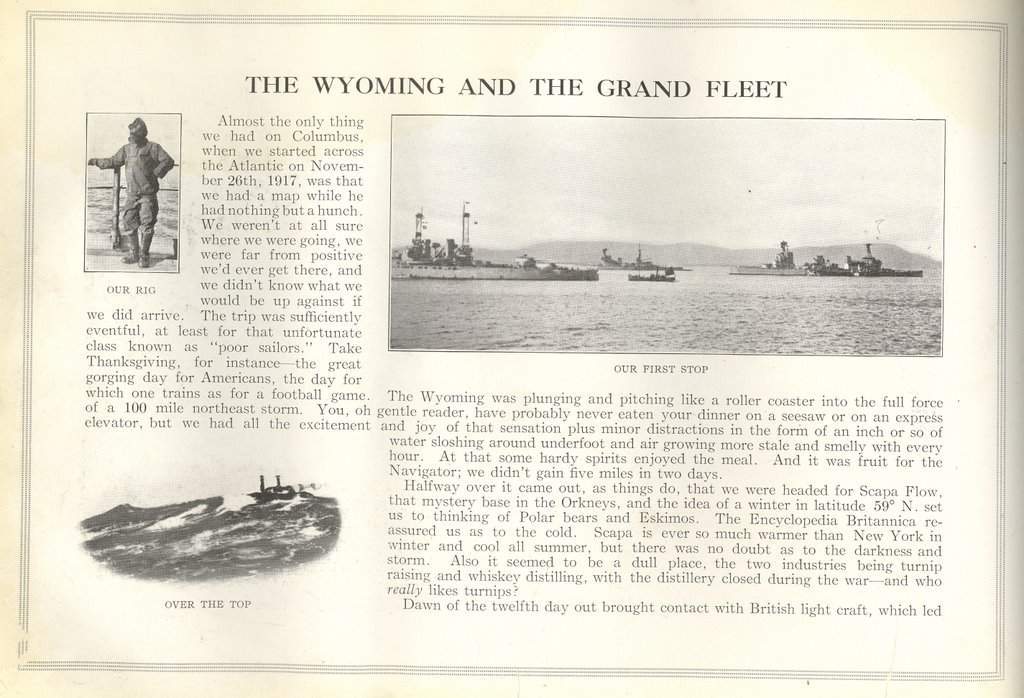
The USS Wyoming would head up Battle Division 9 and sail with the USS Florida, USS, New York and USS Delaware to become part of the British Grand Fleet in December of 1917. The ship would help patrol the waters just off of the English coast around the islands of Scapa Flow and Orkney. The Wyoming would make up the Sixth Battle Squadron and work with English ships for the remainder of WWI. During this time, the merchant sea lanes that allowed the transport of necessary goods between the US and England were constantly under fire from the dreaded German High Seas Fleet. The USS Wyoming would stave off many attacks of German ships while she helped escort mine layers during their missions in the North Sea. The USS Wyoming would see the end of the war and even escort German ships after Armistice Day.


WWI Battleships


As one may come to understand, most US battleships used during World War I saw little active battle. Most usage of US WWI warships were for guardian and escort purposes although ships such as the Wyoming and New York would have to stave off torpedoes and shelling by German naval vessels. It should be noted that escort missions were just as important to the re-supply efforts of the Allies for both military purposes as well as humanitarian efforts. Historians and scholars mostly agree that without the help of the US Navy and its ships, World War I could have had a far different outcome.

Also check out

Planes used during World War I

Although Kitty Hawk North Carolina would become home to the first manned flight of human kind, the Germans would take these physical parameters into a whole new realm. As the skies offered another battlefield in which to kill and mame, countries that did not embrace this new arena were quickly left behind. During the first world war, the Germans would gain an early edge over most of the Allies as concerned with WWI aircraft. Planes used during World War I became designed around the many German models, which would help the Allies win many later battles of the global war. There are many WWI planes that were important during the war although some played far greater roles than others. Read more: Planes used during World War I

The History of the Submarine and the Launching of the German U-boat Fleet

In 1620, Cornelius Drebbel, a Dutch inventor working for the English Royal Navy, tested the first submarine on the Thames River in England. Between 1620 and 1624 Drebbel successfully built and tested two more submarines, each one bigger than the last.

Read more: The History of the Submarine and the Launching of the German U-boat Fleet

What happened to the U-boats after World War II? Part II

Near the end of World War II, Germany took a direct approach to hide and even completely destroy its fleet of U-boats before their surrender to the allies. Operation Deadlight was the code name for the destruction of more than 121 U-boats in abysmal water off Lisahally, Northern Ireland or Loch Ryan, Scotland in late 1945 and early 1946. The remaining 145 U- boats were surrendered to the allies.
Read more: What happened to the U-boats after World War II? Part II

Sources


  1. Navsource.org
  2. USS Nevada Information-Ancient Digger reader and military expert John Carter
  3. USS Arizona photograph
  4. USS Kearsarge
  5. USS New York Photograph
  6. USS Missouri photographs

Like Ancient Digger? Why Not Follow Us?


Subscribe Via RSS Feed Follow Ancient Digger on Facebook Follow Ancient Digger on Twitter Subscribe to Ancient Digger Via Email

Get widget

Search


Ancient Digger Archaeology Copyright © 2015 LKart Theme is Designed by Lasantha