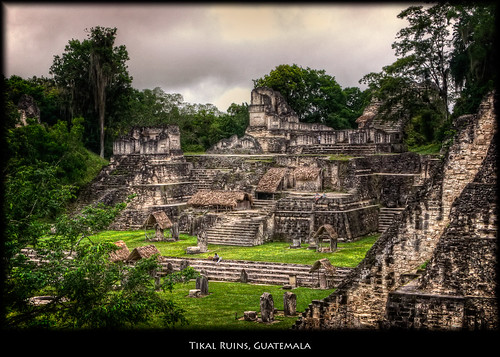
Archaeologists have long known that the Maya were sophisticated engineers, but new excavations at Tikal, Guatemala show the amazing extent to which they were able to manipulate the environment to their advantage, including construction of 260-foot dam that stored up to 20 million gallons of water.
That dam – constructed from cut stone, rubble and earth – stood about 33 feet high and held about 20 million gallons of water in a man-made reservoir. The research, conducted by a multi-university team led by the University of Cincinnati, helps explain how the Maya conserved and used their natural resources to support a populous, highly complex society for over 1,500 years despite environmental challenges, including periodic drought. Studying the Maya may offer some lessons for modern resource management, said lead author Vernon Scarborough, a professor of anthropology at the University of Cincinnati.
“Water management in the ancient context can be dismissed as less relevant to our current water crisis because of its lack of technological sophistication. Nevertheless, in many areas of the world today, the energy requirements for even simple pumping and filtering devices – to say nothing about replacement-part acquisition – challenges access to potable sources,” Scarborough said. “Tropical settings can be especially difficult regions because of high infectious disease loads borne by unfiltered water schemes,” he said.
“The ancient Maya, however, developed a clever rainwater catchment and delivery system based on elevated, seasonally charged reservoirs positioned in immediate proximity to the grand pavements and pyramidal architecture of their urban cores. Allocation and potability were developmental concerns from the outset of colonization. Perhaps the past can fundamentally inform the present, if we, too, can be clever.”
Starting in 2009, the UC team was the first North American group permitted to work at the Tikal site core in more than 40 years.
Detailed in the latest findings by the UC-led efforts are The largest ancient dam built by the ancient Maya of Central America Discussion on how reservoir waters were likely released Details on the construction of a cofferdam needed by the Maya to dredge one of the largest reservoirs at Tikal.
The presence of ancient springs linked to the initial colonization of Tikal Use of sand filtration to cleanse water entering reservoirs A “switching station” that accommodated seasonal filling and release of water Finding of the deepest, rock-cut canal segment in the Maya lowlands “The overall goal of the UC research is to better understand how the ancient Maya supported a population at Tikal of perhaps 60,000 to 80,000 inhabitants and an estimated population of five million in the overall Maya lowlands by AD 700,” Scarborough explained.
“That is a much higher number than is supported by the current environment. So, they managed to sustain a populous, highly complex society for well over 1,500 years in a tropical ecology. Their resource needs were great, but they used only stone-age tools and technology to develop a sophisticated, long-lasting management system in order to thrive,” he said.
The latest research adds to the understanding of how the Maya carefully integrated the built environment – expansive plazas, roadways, buildings and canals – into a water-collection and management system. At Tikal, they collected literally all the water that fell onto these paved and plastered surfaces and sluiced it into man-made reservoirs. The city’s plastered plaza and courtyard surfaces and canals were canted in order to direct and retain rainwater runoff into these tanks. The study also discovered that, to help purify water as it sluiced into the reservoir tanks via catchment runoff and canals, the Maya employed deliberately positioned “sand boxes” that served to filter the water as it entered into the reservoirs.
“These filtration beds consisted of quartz sand, which is not naturally found in the greater Tikal area. The Maya of Tikal traveled at least 20 miles (about 30 kilometers) to obtain the quartz sand to create their water filters. It was a fairly laborious transportation effort. That speaks to the value they placed on water and water management,” said UC’s Nicholas Dunning. “It’s likely that the overall system of reservoirs and early water-diversion features, which were highly adaptable and resilient over a long stretch, helped Tikal and some other centers survive periodic droughts when many other settlement sites had to be abandoned due to lack of rainfall,” said UC’s Ken Tankersley.
Maya water management had implications for the availability of food, fuel, medicinal plants and other necessities.
“Water management by the Maya included irrigation, which directly impacted how many people could be fed and overall population growth,” said UC paleoethnobotanist David Lentz. “Accordingly, it is essential to understand the array of canals and reservoirs at Tikal, which conserved water during the annual dry season and controlled floodwaters during the rainy months,” he said.
“These practices allowed the Tikal Maya to sustain relatively high population densities for several centuries. As it evolved, this system of reservoirs was largely dependent on rainfall for recharging. With the onset of the 9th century droughts however, water supplies dwindled, causing the resource base and social fabric of the Tikal Maya to come under considerable stress. These developments may well have contributed to the abandonment of the city.”
The findings were published this month in the Proceedings of the National Academy of Sciences.
Source: Summit County Voice
That dam – constructed from cut stone, rubble and earth – stood about 33 feet high and held about 20 million gallons of water in a man-made reservoir. The research, conducted by a multi-university team led by the University of Cincinnati, helps explain how the Maya conserved and used their natural resources to support a populous, highly complex society for over 1,500 years despite environmental challenges, including periodic drought. Studying the Maya may offer some lessons for modern resource management, said lead author Vernon Scarborough, a professor of anthropology at the University of Cincinnati.
“Water management in the ancient context can be dismissed as less relevant to our current water crisis because of its lack of technological sophistication. Nevertheless, in many areas of the world today, the energy requirements for even simple pumping and filtering devices – to say nothing about replacement-part acquisition – challenges access to potable sources,” Scarborough said. “Tropical settings can be especially difficult regions because of high infectious disease loads borne by unfiltered water schemes,” he said.
“The ancient Maya, however, developed a clever rainwater catchment and delivery system based on elevated, seasonally charged reservoirs positioned in immediate proximity to the grand pavements and pyramidal architecture of their urban cores. Allocation and potability were developmental concerns from the outset of colonization. Perhaps the past can fundamentally inform the present, if we, too, can be clever.”
Starting in 2009, the UC team was the first North American group permitted to work at the Tikal site core in more than 40 years.
Detailed in the latest findings by the UC-led efforts are The largest ancient dam built by the ancient Maya of Central America Discussion on how reservoir waters were likely released Details on the construction of a cofferdam needed by the Maya to dredge one of the largest reservoirs at Tikal.
The presence of ancient springs linked to the initial colonization of Tikal Use of sand filtration to cleanse water entering reservoirs A “switching station” that accommodated seasonal filling and release of water Finding of the deepest, rock-cut canal segment in the Maya lowlands “The overall goal of the UC research is to better understand how the ancient Maya supported a population at Tikal of perhaps 60,000 to 80,000 inhabitants and an estimated population of five million in the overall Maya lowlands by AD 700,” Scarborough explained.
“That is a much higher number than is supported by the current environment. So, they managed to sustain a populous, highly complex society for well over 1,500 years in a tropical ecology. Their resource needs were great, but they used only stone-age tools and technology to develop a sophisticated, long-lasting management system in order to thrive,” he said.
The latest research adds to the understanding of how the Maya carefully integrated the built environment – expansive plazas, roadways, buildings and canals – into a water-collection and management system. At Tikal, they collected literally all the water that fell onto these paved and plastered surfaces and sluiced it into man-made reservoirs. The city’s plastered plaza and courtyard surfaces and canals were canted in order to direct and retain rainwater runoff into these tanks. The study also discovered that, to help purify water as it sluiced into the reservoir tanks via catchment runoff and canals, the Maya employed deliberately positioned “sand boxes” that served to filter the water as it entered into the reservoirs.
“These filtration beds consisted of quartz sand, which is not naturally found in the greater Tikal area. The Maya of Tikal traveled at least 20 miles (about 30 kilometers) to obtain the quartz sand to create their water filters. It was a fairly laborious transportation effort. That speaks to the value they placed on water and water management,” said UC’s Nicholas Dunning. “It’s likely that the overall system of reservoirs and early water-diversion features, which were highly adaptable and resilient over a long stretch, helped Tikal and some other centers survive periodic droughts when many other settlement sites had to be abandoned due to lack of rainfall,” said UC’s Ken Tankersley.
Maya water management had implications for the availability of food, fuel, medicinal plants and other necessities.
“Water management by the Maya included irrigation, which directly impacted how many people could be fed and overall population growth,” said UC paleoethnobotanist David Lentz. “Accordingly, it is essential to understand the array of canals and reservoirs at Tikal, which conserved water during the annual dry season and controlled floodwaters during the rainy months,” he said.
“These practices allowed the Tikal Maya to sustain relatively high population densities for several centuries. As it evolved, this system of reservoirs was largely dependent on rainfall for recharging. With the onset of the 9th century droughts however, water supplies dwindled, causing the resource base and social fabric of the Tikal Maya to come under considerable stress. These developments may well have contributed to the abandonment of the city.”
The findings were published this month in the Proceedings of the National Academy of Sciences.
Source: Summit County Voice


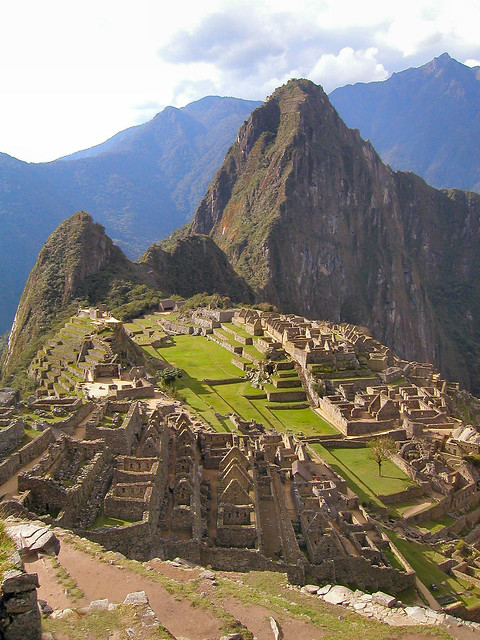
 seemingly escaped discovery. Serving as a prime example of
  , Machu Picchu provided historians with new information about early indigenous society in South America. The site was made a UNESCO World Heritage site in 1983 and was named one of the New Seven Wonders of the World in 2007.
 has been so well preserved, it has provided the most thorough insight into this ancient mega-civilization.