• Ancient Digger teaches Archaeology and History to all Ages!

Wednesday, July 25, 2012

Facts About Julia Domna


Septimius Severus was connected with a family of remarkable Syrian women through the marriage to Julia Domna. Their family had actively pursued a leading role in Imperial politics.  Julia Domna, and her sister, Julia Maesa, were well educated, shrewd, and tough. Their father was the high priest of the sun god Elagabalus (Heliogabalus) at the Arabian city of Emesa in Syria. They were accustomed to power and influence. Julia Domna was very interested in philosophy and religion and patronized pagan sophists.

Julia Domna had enjoyed great influence at the beginning of Septimius Severus’ reign but had been outflanked for a time by the ambitious Praetorian Prefect Plautianus and had devoted herself to creating a circle of influential academics and scholars. She was able to recover her former strength after the fall of Plautianus, to which she had probably contributed through Caracalla, and she had accompanied Septimius Severus to Britain in AD 2081.

After Septimius Severus’ death, Julia Domna had tried to promote the interests of her son, Geta, but failing to prevent his murder, Julia Domna had made the best of it with Caracalla. She accompanied Caracalla to Antioch on his Parthian expedition in AD 215 and died there soon after his assassination from breast cancer. Evidently, however, Caracalla's mother Julia Domna was initially left in peace, but when Julia Domna started to conspire with the military he ordered her to leave Antioch. Macrinus then forced her sister, Maesa, to retire to Syria.

Women of prominent families received more public recognition as patronesses of their communities in Roman Africa than anywhere else in the Empire2.   Septimius Severus had given great public prominence, as Caligula had done with his sisters, to Julia Domna, perhaps because of his own Punic descent form North Africa.

Domna’s likeness was portrayed on several coins portraying her as Great Mother Cybele. On others, she is seated on a throne of Juno, Mother of the Augusti, Mother of the Senate, or Mother of the Fatherland.

  1. Allen M Ward, Fritz M Heichelheim, and Cedric A Yeo, A History of the Roman People, (Upper Saddle River: Pearson, 2010) 377.
  2. Ibid, p 393.

Monday, September 5, 2011

Islands at the Edge of the World – the Canaries Before the Conquest AD


Monday Ground Up Special Edition By Wozniacki


September 4, 2011--Say 'Canary Islands', and most Europeans will have 'all-year-round holiday destination' leap into their minds. For many Americans, the scary phrase 'mega-tsunami' may be conjured up – courtesy of worries that the island's unstable volcanic slopes will one day collapse. But for all their modern-day familiarity as holiday-destinations – or harbingers of doom – when looked at historically, the Canary Islands were always an exotic outpost right on the edge of the map.

Up until 500 years ago, cartographers would draw a line just west of these tiny volcanic fragments, and place on it the label 'here be monsters' – capturing the unknown essence of the oceans stretching westwards off of the map. But although right at the geographic limits of the Old World, for thousands of years, the Canary Islands have been anything but short of history. Before the Spanish planted Castile's flag – as part of their Conquest of the islands in the 15th century – Berbers, Romans, Arabs and even Greeks, may have come to explore these fascinating outposts.

The inhabitants the Spanish found living on the islands when they arrived in 1402, were described as from a different, more primal era. Labeled 'Guanches', the debate has raged ever since their origins. Some had them down as Phoenicians sailors and traders, others as prisoners abandoned by King Juba II of Numidia, back in 100 years BC. But DNA evidence has now conclusively pointed to the original Guanches as being of Berber-descent – an ancient people who lived in the North African mountains.


© R. Liebau (Reconstruction of a Guanche village Tenerife).


The first archaeological evidence left by the Guanches suggests that they arrived sometime before 1000 BC. They bought with them domesticated animals, such as sheep, goats and dogs, as well as grain crops from North Africa – suggesting that theirs was a settlement with a purpose. What is strange is that, for all their sea-faring skills in having to reach the islands – strong currents ensure it is very difficult to make landfall on the Canaries from North Africa. They had lost all ability to sail, even between islands, by the time the Spanish arrived on the scene.

But the ancient world certainly could, and did, reach them. Many think that the home of the nymphs who dwelt in the Garden of the Hesperides, from Greek legend, could have been on these very islands. The first reference in history, though, comes from the Romans. The famous Roman writer, Pliny the Younger, described them as being 'discovered' by the Juba II, King of Numidia, in the first century BC. He had sent an expedition from the dye-making port of Mogador in western Morocco, to explore the islands – perhaps drawn by the peak of Mount Teidu, which is clearly visible from the African coast.
His visit also gave rise to the name of the islands – Islas Canarias. By Pliny's account, Juba II found that the island peoples made use of particularly fierce dogs. So he called them the Islands of the Dogs, canis being the Latin for dog. Archaeologists have since found evidence that the Romans themselves visited on several occasions. Off of the coast of Lanzarote, Roman amphorae, for carrying wine and oils, were found at the site of a shipwreck. And excavations on the same island have found Roman pottery fragments, pieces of glass and metals – all dating to between the 1st and 4th Centuries AD. The Arabs too came to trade with the Guanches.

It appears that these earlier visitors left the peoples of the Canary Islands to themselves – unlike the Spaniards who arrived later. But what was life like for these original peoples? Archaeologists reckon that they lived quite simple lives, from a material point of view at least. Goat, sheep and pigs were all kept, they grew crops on small plots, and lived mostly in caves, or small round stone-huts. But spiritually they had a quite a sophisticated religious world, with a pantheon of deities, spirits and demons. Many gods were acknowledged, relating to the Sun and the Moon, the rain and the mountains. And no observer of the strangely compelling stone-carved hieroglyphics can fail to be touched by the Guanches deep connection to the lands they inhabited.

Politically, there was a definite diversity of approaches taken across the islands. In Gran Canaria, an hereditary autocracy appears to have held sway – but power was passed down through the mother's side of the family. Tenerife was split into 9 small kingdoms ruled by a 'Mencey', as the kings were known, whilst other islands are though to have elected their leaders. It was this cultural and political fragmentation that may ultimately have led to their downfall, however.

The Castillan adventurers who arrived from Spain were superior in both arms, and guile. One by one, each island and kingdom was subjugated in a campaign of violence, that exploited the differences between the different groups. But to their credit, these island peoples did fend off the Spanish Conquest for a century, with little more than Neolithic weapons of stone and wood. That is something that many other indigenous groups in the Americas would find hard to emulate.

And the Guanches are still here. Forgetting all the death, disease and slavery at the hands of their Conquistadors, DNA evidence shows that 10-35% of the genes of islanders comes from the Guanches. It would seems that today's Canary Islander is deeply connected to the original habitants of these fabled isles.


Monday, August 29, 2011

Petra and the Bible


The highly publicized area of Petra has more significance than its modern-day use as a beautiful tourist location that many refer to as the rock-built “rose red” city. Although famously portrayed in such movies as Indiana Jones and the Last Crusade, Arabian Nights, and Sinbad and the Eye of the Tiger, the red city has deep roots in Biblical archaeology. Even so, it continues to be of high interest to many, including world travelers, Biblical Archaeologists and historians.

The city is known for its beautiful rock cut architecture that dates back to the BCE late century. As a semi-fortress, it was attractive to kings because it was easier to control and protect than other nearby geographic locations. The Edomites, Nabataeans and the Romans found it to be of significant economical and archaeological advantage, because of its close 80-kilometer proximity to the Dead Sea and narrow entrance.

The Edomites Run the Red City


Although some historians believe that the actual rose red city may not have been included within Edomite rule, the surrounding area of the city was called Edom, and was ruled by the Edomites beginning near 1200 BCE. The Edomites were a resourceful people and they controlled the majority of the spice trade from South Arabia to the northern area of Damascus. Their society was described as one of distinction and sophistication with creative outlets that included writing, textile production, ceramics and skilled-metal products.

Nabataeans Take Over and Rule


When an Arab tribe called the Nabataeans migrated to Edom in 312 BCE, this forced the wise Edomites into the southern Palestinian area. When this occurred, the Nabataeans began to increase the economic and archaeological advantages that the Edomites had begun. Working to create a flourishing capitol, the Nabataeans extended spice trade acquisition, by lengthening the route to include Northwest Gaza, Palmyra and the Syrian Desert, and the Aqaba area.

They also began to build some of the famous tourist monuments that are now protected as a UNESCO World Heritage Site. The Nabataens began to utilize the red rock as the main resource for territorial expansion. Today, tourist can see the evidence of Nabataen and Roman architecture, including the famous Colonnaded Street, the Temple of Winged Lions, and the great Treasury building.

Other famous sites that are connected to the planned complex include the famous East and West Propylaeum, the upper and lower Temenos and the Great Temple. Yet, one of their most significant advantages in their society was the development of a hydraulically engineered system that helped control winter water, and helped to provide an adequate means of water conservation.

Roman Empire Influences


General Pompey of the Roman Empire was the first in Roman succession to take over the rose red city and surrounding areas. Through his rule, the Romans began to expand the red city capital, and they made it official by calling the provincial area Arabia Petraea. It is estimated that the Roman takeover began between the years of 64 to 63 BCE.

The majority of monuments and tombstones within the red city were primarily made of limestone and sandstone. Although the Romans had their own cultural influences that they brought to the area, they added a mix of both Roman and Nabataean influences to renovate buildings and to add new architectural additions to enhance the city. The King’s Highway or Via Traiana is one of the most fascinating contributions to the rose red city that was left by the Romans.

Herod the Great and other Bible Connections


The red city has held both Christological influences from the Bible and pagan aristocratic influences. With the unearthing of rock-cut monuments and mosaics, these influences have become highly connected with biblical archaeology. Yet, many of the references to the Bible are obscure.

However, many historians of biblical archaeology have connected the red city with the biblical passages found in the 16th and 42nd chapters of the book of Isaiah. In these passages, historians believe these Biblical mention of Selah are actual references to the red city. Yet, there are similar references to the red city in the biblical books of Obadiah and Amos.

Herod the Great ran the Roman Empires and there was strong biblical reference that stated his desire to kill the baby Jesus. Even so, Herod I, as he was known, had familial roots in the red city. He was the second born son, and his father provided service under a high-ranking Nabataean public official. However, Herod's mother, Cypros, was the princess of the red city, Jordan and Nabatia.

Further still, his father was called Antipater the Idumaean, and the Idumaeans were historically considered a direct lineage of the Edomites, which were forced out of the area because of the Nabataeans. Ironically, the biblical passages that historians use to compare the rose red city and Selah as the same city, encouraged those that were persecuted to hide in the Siq, or the very same place where Herod I acquired his familial lineage.

Furthermore, biblical reference to the Siq, the entrance to the red city, describes the location as a dusty sand-prone area. Even today, the Siq is known for its loose sandstone and limestone deposits that are still of great value to archaeologists and scientists that hope to uncover more hidden treasures from Roman, Nabataean and Edomite culture.

Rose Red City Architecture


Rock architecture was the main way that Romans and other ancient societies built structures like Petra. Rock cut architecture is an ancient building process that uses existing rock formations to build living quarters, religious temples and specific-use buildings. Although some forms of this architectural process is still used today to build cliff-hanging houses, the Romans built theaters, cave dwellings and tombs using this method.

Besides the Great Temple and the Treasury building, they also lived among many other astonishing rock buildings as a part of the Colonnaded Street plan. Building construction along this street included the East Exedra with its famous niche of seating, the vaulted chambers and arches of the Theatron and the modern-like Roman-Byzantine Bathing House with its drainage pipes. The city building plan also included the creation of the Great Cistern, the East Triple Colonnade and the Baroque Room Complex. Influences from the Roman Empire and Nabataeans are often blurred within Petra, but what remains is a beautiful contribution to human creativity and perseverance in an area that was unlikely to support life.

All pictures © evkr

Author Bio:

Ms. Leah L. Logan enjoys all types of writing, including article writing, journalism, and ghostwriting. Ms. Logan is a two-time international author with the release of the co-authored books “Removing the Mask: Living an Authentic Life” and “Self Architect: Redesigning Your Life” both edited by Linda Ellis Eastman.

Related Article

Thursday, August 18, 2011

Mysterious Roman Jar Presents a Riddle For Archaeologists


It’s always a surprise to find an artifact packed safety away in museum storage for later investigation. However, what happens when an archaeological piece, such as the 1800 year old Roman Jar discovered in a storage room at the Museum of Ontario Archaeology, turns up broken into dozens of pieces?

The Roman jar discovered measures 40 centimeters tall and was found shattered into an unrecognizable 180 pieces. Even if the jar is fully restored, scientists still have nothing comparable to the artifact to even venture a guess about its history or significance.

"Everyone's stumped by it," Katie Urban, one of the researchers at the London, Ontario, museum, told LiveScience. "We've been sending it around to all sorts of Roman pottery experts and other pottery experts, and no one seems to be able to come up with an example."

The jar was given to the museum in the 1950s by William Francis Grimes. Grimes' team had dug them out of a World War II bomb crater in London, England, not far from an ancient temple dedicated to Mithra, an Iranian god who was popular throughout the Roman Empire.

Read the full story at Live Science

Friday, June 17, 2011

Archaeology News: Roman Diet Exposed in Sewer Excavations


JUNE 17, 2011--Archaeologists working in a system of connected sewers and drains under the ancient town of Herculaneum in the Bay of Naples area of Italy have analyzed the human excrement found there and discovered the diet of ordinary Romans included a lot of vegetables and fruits, especially figs, and protein sources such as sea urchins and dormice.

The archaeologists working on the Herculaneum Conservation Project found the drains by accident while searching for a way to prevent the site from being flooded during heavy rain periods. The system contains the largest deposit of organic matter dating from Roman times ever found. Director of the project, Professor Andrew Wallace-Hadrill, said the discovery was the largest find of Roman waste, but had it been found the past it would have been thrown away because archaeologists did not have the technology available today to analyze it.

Read More: Ancient sewer excavation sheds light on the Roman diet @ PhysOrg

Friday, June 3, 2011

Archaeology News: Ancient Romans Had Aquarium On Board 2000 Year Old Ship


Archaeologists believe a 2,000-year-old ancient Roman shipwreck exhibits evidence of an aquarium capable of carrying live fish on board. The ship dates back to the 2nd century and had a cargo of 600 amphoras which contained salted mackerel, sardines and other fish remains.

Like many household aquariums set up every day, a tube is used to supply the tank with oxygenated water. This particular ancient Roman ship utilized the same principle.

Thursday, April 21, 2011

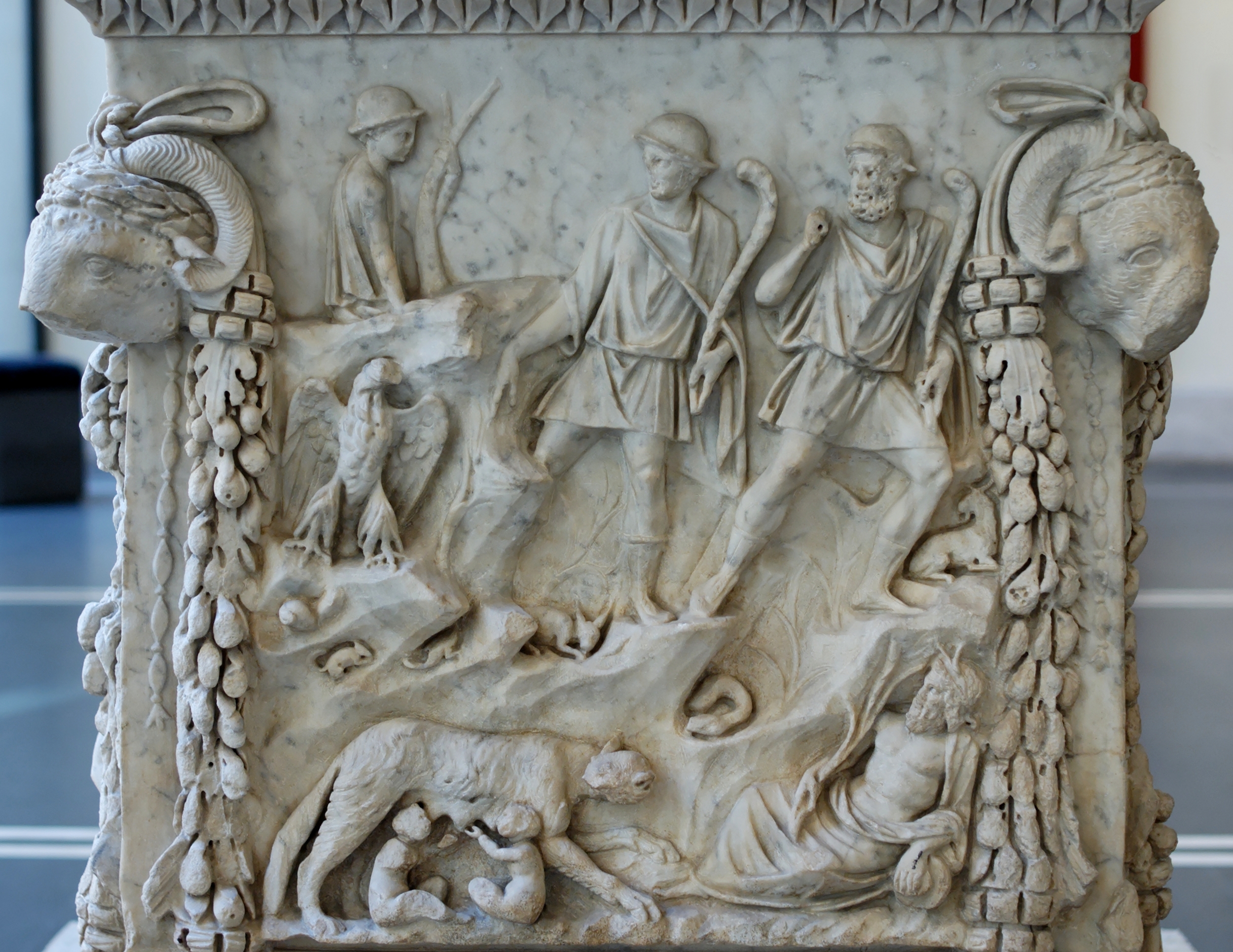
Rome: Romulus and Remus Story


One of the most famous stories of Rome, the history of Romulus and Remus continues to captivate to this day. The history of Romulus and Remus tells the story of how Rome was first founded, and modern archaeology provides tantalizing clues to the legend of these brothers as well.


The story begins in the city of Alba Longa. The Romulus and Remus legend contends that they were the twin grandsons of Numitor, rightful king of the land. The twins appear to be divinely conceived, with a human priestess mother and the god Mars. The history of Romulus and Remus begins with strife, when Numitor’s brother Amulius disposed of him and left the twins to die in the Tiber River as infants. The fates were on the side of the twins, and they survived due to one miracle after another. Instead of drowning, a she-wolf discovered the twins and nursed them as infants, along with the help of a woodpecker that would bring the babes food. Then, they came under the care of a kindly shepherd and his wife, who raised them to adulthood. By another incredible twist of fate, they ultimately ended up being brought face to face with Amulius and were told of their real identities. As natural leaders, the brothers were able to amass a strong following and dispose of Amulius, restoring their grandfather, Numitor to the throne. With their grandfather at his rightful place on the throne, the brothers then decided to found a city of their own.

SHE WOLF nursing her Twins: REMUS and ROMULUS. Roman Commemorative 330 AD.
When faced with the task of locating the site of their city, the brothers were conflicted. Romulus was in favor of building their city on Palatine Hill, but Remus favored Aventine Hill. They decided it would be up to the gods to decide the location of the city and began to look for divine signs. According to the history of Romulus and Remus, each brother saw signs in the form of birds. While Romulus saw more birds than Remus, Remus contended that he saw his first and therefore was in the right. Eventually, work began on the site that Romulus selected, while disputes between the brothers continued to grow. Eventually, these disputes led to brother turning on brother. According to the Romulus and Remus legend, Romulus murdered Remus after his brother mocked a wall that he had built on the site. The city was then named Roma after Romulus and he went on to create the Roman Senate and Roman legions.

Archaeologists and scholars often see the Romulus and Remus legend as an analogy for Roman citizens and the history of the city itself. Although there is little doubt that the city itself garnered its name from Romulus, there is great speculation about his brother Remus and the circumstances of his death. In addition, there is great speculation about whether or not the brothers actually did exist. Scholars commonly accept that the brothers were a myth themselves, and that the city gained its name from the fictional character of Romulus, and the evidence presented by archaeology lends credence to this belief.

For modern visitors, Rome offers up tantalizing archaeology, which hints at the history of Romulus and Remus. Symbolism showing a she-wolf with two infant children abounds throughout Rome. Pliny the Elder even described a statue of the she-wolf that once stood in the Roman Forum. A bronze statue that closely represents the original is on display in the Capitol Museum. Although this statue has been dated to the middle ages and not the antiquities, it is still fascinating to gaze upon a modern reminder of Romulus and Remus legend.

Ancient Rome: The Archaeology of the Eternal City (Monograph, 54)Another recent find in Roman archaeology is commonly recognized as a memorial to the Romulus and Remus legend. Located under Palatine Hill, the site discovered in 2005 has yielded rich finds pointing to the location serving as a memorial dedicated to the brothers during the Roman age. Among the artifacts found were painted seashells, pumice stones and even mosaics. Archaeologists working on a renovation project centered on Emperor Augustus’ palace discovered the cave, which has been closely tied to the Romulus and Remus legend.

Other finds in Modern archaeology have heralded other tantalizing glimpses that support the Romulus and Remus legend as well. In 1988, a wall dating back to the appropriate period was unearthed, fitting nicely into the history of Romulus and Remus. At least one modern archaeologist has even gone so far as to claim it is the very wall depicted in the history of Romulus and Remus.


The history of the city of Rome is closely entwined with the history of Rolumus and Remus. The story of the rise of Rome seems to echo the themes found in the history of Rolumus and Remus, and modern archaeology has found clues that ancient Romans embraced these brothers as their city founders, regardless of fact or fiction.

In addition to these finds by modern archaeology, the theme of Rolumus and Remus has appeared in many different forms of Roman art. From mosaics to coins, the imagery of twin boys being nursed by a wolf has appeared in a vast array of mediums.

The history of Romulus and Remus may be only a legend, but it has been woven into the deep fabric of Roman history and provides an interesting tale to demonstrate the origin of this majestic city.

Saturday, November 20, 2010

Heritage Trust of Lincolnshire's Roman Archaeological Dig


During 1500BC the area of Lincolnshire, soon to become a nature preserve, was flooded by the sea. During the Iron Age the area dried out and was commanded during the Roman period, where herding of cattle and production of salt took precedence.

"Archaeologists from the Heritage Trust of Lincolnshire got the chance to re-visit an area of rich roman history to scour the land for artifacts and treasures from the Roman period before the area was to be turned in to a nature reserve. Tom Hughes went along to join the team and see what they found."

Video is copyright Taken from Lincolnshire Living on Channel 7 (Virgin Media 879/ (www.channel7tv.co.uk)

Like Ancient Digger? Why Not Follow Us?


Subscribe Via RSS Feed Follow Ancient Digger on Facebook Follow Ancient Digger on Twitter Subscribe to Ancient Digger Via Email

Get widget

Search


Ancient Digger Archaeology Copyright © 2015 LKart Theme is Designed by Lasantha