• Ancient Digger teaches Archaeology and History to all Ages!

Wednesday, August 24, 2011

The Act of Cooking is 2 Million Years Old


According to Scientific American, “Human molars and jaws responded to the invention of cooking by getting smaller. Fossils thus indicate that controlled-fire cooking probably originated about 1.9 million years ago”.

We all learn in Human Species that molars decrease in size due to the act of cooking food. The cooked food is ultimately softer and easier to chew which leads to the evolution of smaller molars. 

Researchers therefore compared the molars and body sizes of extinct hominids with modern humans and other primates. Turns out that Homo erectus and Neanderthals had, and modern humans have, molars that are smaller than would be predicted by looking at general primate evolution. The finding is in the Proceedings of the National Academy of Sciences. [Chris Organ et al, Phylogenetic rate shifts in feeding time during the evolution of Homo]

Edited From Scientific American

Wednesday, July 27, 2011

The Laetoli Footprints Explained


The Laetoli footprints are fossils of footprints that look suspiciously like human footprints of today. They appear to be the fossilized footprints of two or three hominids that walked through Laetoli, Tanzania, millions of years ago. The very idea that humanoids were walking upright for as long as these fossils suggest has sparked a great deal of controversy. Creationists typically believe that the Laetoli footprints are not millions of years old and that the footprints are not hominid, but human. Scientists tend to believe that these footprints could not have come from modern man, so it must suggest that hominids have been walking on two feet longer than previously thought.
In 1976, Dr. Mary Leakey was on an expedition in Tanzania with a group of other scientists when he found the Laetoli footprints. They were there to study ancient remains, but they found something equally, if not more, interesting. The group was walking toward Olduvai Gorge together one day during their expedition. Two of the paleoanthropologists began throwing elephant dung at one another and otherwise goofing off. During the action, the Laetoli footprints were literally stumbled upon.

The Laetoli footprints consist of two tracks of about 30 meters. One of the sets of prints is significantly larger than the other. This suggests that there were at least two hominids walking in Laetoli when the prints were made. The tracks were made by either a woman and a man or an adult and a child. There could also be a third set of tracks within the larger set. It looks as if a third hominid, that walked along behind the first two, had stepped in the larger tracks. Dr. Leakey made plaster casts of the tracks and then covered them. She marked the location so they could go back.
The fossils were dated at roughly 3.7 million years old. Most scientists agree that the Laetoli footprints must have come from a hominid species that walked bipedally, as it is obvious that the owners of these prints walked on two legs. Furthermore, it is believed that they belonged to the Australopithecus afarensis species of hominids, the same group that the Lucy Skeleton belongs to.

The Laetoli footprints probably did not come from great apes. Everything from the shape of the foot to the position of the toes suggests that hominids made the prints. The position of the foot from which the creature pushed to walk is also different. As far as being footprints from a human, the feet are much smaller than human feet and not shaped the way that you would expect a modern man’s foot to be shaped. The manner of walking that is deduced from the footprints is very similar to that of Homo sapiens. This makes them an obvious, or at least likely, link in the evolutionary chain.

Creationists, of course, do not believe in evolution. Furthermore, they do not believe that manlike creatures, or any creatures, walked the Earth millions of years ago. So, the date and type of fossils that the Laetoli footprints are, is quite unbelievable to them. They think that many of the dating techniques used by scientists are inaccurate and that the fossil record is misinterpreted by scientists. This is the mystery, or more accurately the controversy, over the Laetoli footprints.

Author Bio

Shelly Barclay writes on a variety of topics from animal facts to mysteries in history. She’s a history fanatic and spends a lot of time reading about history from all corners of the globe and all time periods. I like to spend all of my free time outdoors or in museums. I live on the South Shore in Massachusetts, just outside of Boston. This is the perfect place for someone like myself. Beautiful natural sites and historic city sites are all within a few minutes drive for me.

Sources
  • Pictures © GIRLintheCAFE
  • The Laetoli Footprints, retrieved 11/03/09, sain.sunsite.utk.edu/cgi-bin/textonly/0145/www.bbc.co.uk/dna/h2g2/A94336
  • Peterson, Chris, Laetoli: Footprints in the Past, mnsu.edu/emuseum/archeaology/sites/africa/laetoli2

Sunday, June 26, 2011

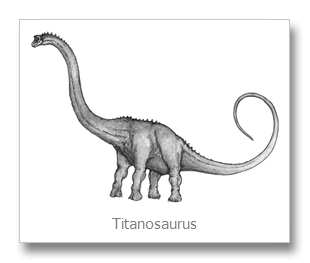
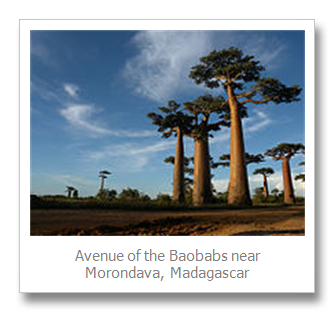
Monday Ground Up: Dinosaurs in Madagascar


Many children enter a phase one time in their life of being dinosaur fans. The shear size and strength that these creatures held is a fascinating draw that makes researching these creatures, not only educational but fun. While not everyone retains their fascination with Paleontology, those who do are the ones to later be found in the field of Archaeology, putting their love of dinosaurs to practical use.


For those dedicated to the fields of Paleontology and Archaeology there is one event that can be an affirmation of the reasons they chose those fields in the first place and that event is the discovery of a new species of dinosaur in Madagascar.


Facts About Madagascar

  • Madagascar is the world's fourth largest island after Greenland, New Guinea, and Borneo.
  • Environmental degradation is a major concern as damaging agricultural practices cause deforestation, soil erosion, and desertification.
  • The island of Madagascar broke away from the African continent 165 million years ago.
  • The first settlers of Madagascar were of African and Asian origin, and 18 separate ethnic groups emerged, derived from an African and Malayo-Indonesian mixture.
  • The island of Madagascar is heavily exposed to tropical cyclones.
  • Most of the population depend on subsistence farming, based on rice and cattle, with coffee, vanilla, and seafood being important exports.
  • French colonial rule began in 1896 and Madagascar gained independence in 1960.
  • About 80% of the animals found in Madagascar do not exist anywhere else on Earth.
  • Over 30 different species of lemurs, including aye-ayes, live in Madagascar. They can travel up to 25 feet in one leap!

Dinosaurs in Madagascar

Just when the idea that all of the species of dinosaur had been discovered, a graduate student from Stony Brook University in New York, Kristina Curry Rogers, made a discovery that would unearth more than a fossil in Madagascar. While discovering the bones was excitement in itself, the final revelation after they were sorted was definitely a bonus. The skeleton was that of a young dinosaur that had lived approximately 70 million years ago which was about the time of the height of the last giant dinosaurs’ development.


While most Paleontology students consider making a discovery such as this a potential career boosting find, this particular discovery was only the beginning. Dinosaur research in Madagascar has yielded the discovery of several new species of prehistoric animals.


David Krause of Stony Brook University and his team have several of these discoveries under their collective belts. Along with the discovery described above, there has been several other species discovered by Krause and his team. Finds such as the Majungasaurus crenatissimus,  Rahonavis, an extinct bird, a Simosuchus or short-bodied crocodile like creature and the Beelzebufo which is a toad that is exactly like the modern day toads, the only difference being they weigh in at a hefty 10 pounds.

The discovery of the Majungasaurus crenatissimus by David Krause was an enormous boost to the field of Paleontology. Majungasaurus crenatissimus was a 70 million-year-old meat-eating theropod dinosaur from the Late Cretaceous period and is a very distant relative of Tyrannosaurus rex. The skull is one of the best-preserved and most complete dinosaur skulls ever found. The replica is approximately 21 feet long and stands about seven feet high.


The find was featured on the  Science Magazine cover on May 15, 1998 and allowed Krause and his colleagues to explain new conclusions about the plate tectonic history of the southern super-continent of Gondwana (a composite continent, made up of South America, Africa, Antarctica, India, and Australia, and Madagascar); and that dinosaurs, like many living animals, were cannibals.

On May 17, Stony Brook University celebrated the installation of an exact replica, the only ne in North America, of the fossil skeleton of Majungasaurus crenatissimus.


"Majungasaurus was clearly the top predator of its time on Madagascar," said Krause. "Interestingly, numerous bones of Majungasaurus exhibit tooth marks that can be attributed only to Majungasaurus itself. This provides the most conclusive evidence ever discovered for cannibalism in dinosaurs," he said.

Although Krause’s team certainly garnered more than their fair share of new species among the dinosaurs in Madagascar, these were not the only new species that were discovered.

Through their hard work and efforts in dinosaur research in Madagascar, Scott Sampson (a dinosaur paleontologist, evolutionary biologist, and educator who divides his work time between scientific research and a variety of education-related projects) and his colleagues from the University of Utah unearthed the Masiakasaurus. While this particular species might have seemed like somewhat of a featherweight among the dinosaurs so far discovered in Madagascar, this 80 pound fellow proved to be a rather formidable opponent, especially since he was a carnivore.

While the discovery of these dinosaurs in Madagascar are definitely important finds for the Archaeology community, the dinosaurs in Madagascar also help give further credence to the long help theory that all of the lands of Earth were once connected.

The dinosaurs that were found may be new species, however, they share certain specialized characteristics with other known predators from other continents. This is more evidence to the idea of a giant connected land mass.


Dinosaur research in Madagascar has helped to yield vital pieces of evidence to support the theory that all of the Earth's land was once one giant land mass. The truly amazing part is that the area of Madagascar has only recently begun to be researched. Considering the wealth of discoveries that have been made so far just imagine the possible discoveries that Madagascar may yet hold.


While the dinosaur research in Madagascar is far from over, the discoveries that have been made at this point hold the possibility of opening up new research in other areas of the Paleontology and Archaeology fields. Among those will, of course, be the theories of a giant land mass. although this is the main theory it will certainly not be the only one to be examined.


Also check out:


Sources


Sunday, June 5, 2011

Fossils 101: Caesar’s Creek Ordovician Fossil Hunting


Written in Stone: Evolution, the Fossil Record, and Our Place in NatureWhen I was a child growing up in Ohio, my class would take yearly fieldtrips to the Caesar’s Creek Spill off to go fossil hunting. As a child, it was hard to stay focused on the task at hand. We would never read the signs stating we had to leave behind the fossils bigger than our palms, and now that I’m older, I can appreciate why the signs were posted.

I was lucky enough to find a sample of every fossil that ever lived in this area. Rather the fossils that archaeologists are aware of. Some of them are quite small and some are broken in pieces, nonetheless, I was lucky to find the samples that I did.

Friday, November 5, 2010

A Scary Archaeological Trip


No, it's not a new discovery, it was just an eye opening experience for me while I was fossil hunting today with the puppies. Like any normal day, I got on my Columbia hiking shoes (no this is not an ad, they're new and I love them *smile*), grabbed my water bottle, and headed down the trail.

I found this area brimming with fossilized bones from animals a few weeks ago and thought, why not explore the evidence a bit further. I had my trowel in hand and the dogs pulling my other arm in another direction. Why, I'm not sure. Imagine two dogs wanting nothing to do with animals bones. It's a bit bizarre to tell you truth, but to be honest, I'm not sure why there are so many in one place. There could be someone living in the forest and this is their so called pit of bones.

No sooner then I tried to start picking around, I felt like I was shot in the shoulder. I've had bee and wasp stinks, but this was worse. I could feel the pain rush down my arm and the right shoulder blade was killing me. I immediately grabbed my shoulder to try and dull the pain. I was looking behind me at the same time and saw nothing and nobody. Needless to say, I started I turned around and started running back home and I don't run.

I just got home an hour ago and looked at my back. There's a huge welt but no stinger inside the wound, as I tried to scrape it with a butter knife. I'm at a loss and a bit freaked out. Either someone doesn't want me near those bones and shot me with a pellet or it was something supernatural.

What do you think? Isn't it strange?

Saturday, June 12, 2010

Maya People Knew about Prehistory


For Palenque inhabitants, marine fossils were the convincing proof of the land being covered by the sea long time ago, and parting from this fact they created their idea of the origin of the world.

MEXICO CITY.- Recent interdisciplinary investigations regarding 31 marine fossils found at Palenque Archaeological Zone, in Chiapas, reveal that Maya people conceived their beliefs parting from this kind of vestiges, so their idea of the underworld was associated to water.

For Palenque inhabitants, marine fossils were the convincing proof of the land being covered by the sea long time ago, and parting from this fact they created their idea of the origin of the world, declared archaeologist Martha Cuevas, responsible, with geologist Jesus Alvarado, of research conducted by the National Institute of Anthropology and History (INAH) and the National Autonomous University of Mexico (UNAM).

Read more about the Maya and their knowledge of Prehistory

Interesting Fact:

La UNAM fue fundada in 1551 en la ciudad de Mexico y es la segunda universidad mas grande en America de Norte.

The Universidad Nacional Autonomo de Mexico was founded in 1551 in Mexico City and is the second largest university in North America.

Monday, March 29, 2010

Monday Ground Up: Charles Darwin And The Theory of Evolution Explained


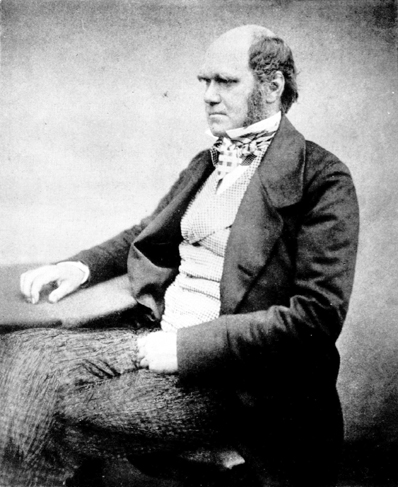
Charles Darwin, although thought of by evolutionists as a genius in his field, lived a lie built on the studies and research of past intellectuals. Darwin’s theories were built upon the findings of those that were given no credit in his published works, therefore he simply organized their thoughts into a book called “On the Origin of Species by Means of Natural Selection". His Theory of Evolution is a myth. It's not true. At least that's what a creationist will say.

Are you kidding me? I'm sure you started reading this and thought to yourself, a theory is already a truth, and you would be right. The Theory of Evolution, which hardly appears in Darwin's Origin of Species book, is a scientific fact, however it took writing this article to find out about the facts behind Darwin's research.

Ultimately, Darwin’s theories and findings were built upon previous conclusions. Darwin’s lust for fame led him to publish his works built on the shoulders of others, thereby allowing his integrity to be questioned by his peers and mentors, and ultimately his informed opinions or hypothesis to be disproved by new evidence using fossil records which was Darwin’s greatest fear.

Darwin's Bibliography

Charles Darwin was born in 1809, and although at the time his grandfather Erasmus Darwin was pioneering the evolutionary movement before his death, Charles didn’t actually read his grandfather’s book until after his death. Erasmus Darwin’s research contained the seeds of almost all the essential principles of modern evolutionary theory including overpopulation, struggle and competition, and selection (Sunderland 14). It would be years until Charles Darwin actually accepted the theories that his grandfather had previously collected, so in the meantime, he settled for university life.

Charles was rather bored and felt that as a student, he was rather dull. He was incapable of mastering a language, although he could memorize forty lines of poetry or verse. He would, however, forget them with a couple days. Charles Darwin’s father, not well-informed of his son’s lack of interest in the area of anatomy, still enrolled him in the medical school at the University of Edinburgh. Not surprisingly, Darwin was completely disgusted and found the lectures to be quite dismal. In his second year, he attended geology and zoology classes, but said in his Autobiography, “they were incredibly dull. The sole effect they produced on me was determination never as long as I lived to read a book on geology or in any way to study science. Yet I feel sure I was prepared for a philosophical treatment of the subject “(Sunderland 16). How odd, that a future evolutionist should find no interest in a profession that characterized his entire existence.

Darwin’s father recognized that he was wasting his life, and so he enrolled him at the divinity school at the University of Cambridge. In the beginning, Darwin didn’t question the existence of God and the Bible, however he did begin to question his beliefs as he embarked down the same mundane and unexciting world he had once experienced at Edinburgh. He did, however, find solace in the collecting of beetles, which some scholars might say brought him fame.

Two years after graduation, he set sail aboard the HMS Beagle as a naturalist in search of the evidence to support what his grandfather had previously studied. The voyage took five years, however after his return to England, those years of research prompted him to accept the idea of naturalism and the origin of all species. Of course, this theory of evolution by the mechanism of natural selection had already been mentioned years prior, so to that end, Darwin did not originate the concept.

Alfred Wallace

On July 1, 1858, Charles Darwin and Alfred Wallace presented their joint paper on evolution at the Linnaean Society in London (Darwin 10). Evidently, Darwin had been discussing his findings with a close group of friends, so the idea of evolution was already on the minds of men. Oddly, Alfred Wallace, another naturalist, wrote a paper in 1858 which described the identical hypothesis being discussed behind closed doors. Darwin read the paper and swiftly published one of his own, leading to the joint meeting in London. This wouldn’t be the first time that Darwin stole the limelight from another colleague. Why you might ask? Simply because Wallace didn't have the money to publish first. Imagine having Wallacinism!

One year later, Darwin published his well-known book The Origin of Species, which simply took every previous notion and finding on the theory of evolution and placed it within the same text. This Pandora’s Box of secrets was what the world was waiting for with baited breath. The question, however, was if Darwin was the first to arrive at such conclusions. He was not.

Close to seven years prior, Herbert Spencer had published a pamphlet entitled “Theory of Population”. Spencer wrote, “those left behind to continue the race are those in whom the power of self-preservation is the greatest—are the select of their generation. (Dagg) Quite a Utopian ideal, and furthermore, it embodied what Darwin had stated within his book The Origin of Species. The idea that a single cell, with certain influences, could become a man in the span of twenty years was not that absurd. Furthermore, if we look forward millions of years, is it possible that one single cell could give origin to the human race? This was the previous conception of Spencer’s life works, occurring before Darwin’s publication ever took place.

Additionally, Jean Baptiste de Lamarke had concluded that certain characteristics could be passed on to the offspring. This was, of course, suggested previously by Erasmus Darwin, the most well-known example being the neck of the giraffe that resulted from stretching to reach higher vegetation during a drought (Sunderland 14). Lamarck criticized evolution, but even so, Charles Darwin often was inclined to use Lamarck’s findings within his book. Once again, the book read as if this was the first time the subject had been discussed, and Darwin conveniently pretended that he had stumbled upon the idea when he was on his five year journey on the HMS Beagle.

Darwin’s principle of preservation, as reverentially stated in his Origin of Species, is what he boldly described as natural selection. The statement clearly reads that Darwin coined the term and there wasn’t a long history of its origins. His failure to acknowledge any previous contributions including Lamarck, Spencer, and even his own grandfather Erasmus, made it seem that he’d laid claim to the theory on his own. His hypothesis, however, lay challenged by a science that he once thought of as dull. In the event that fossils could have been proved as appearing suddenly, without the evidence of a common ancestor, this would have demolished Darwin’s Theory of Evolution.

The Fossil Record
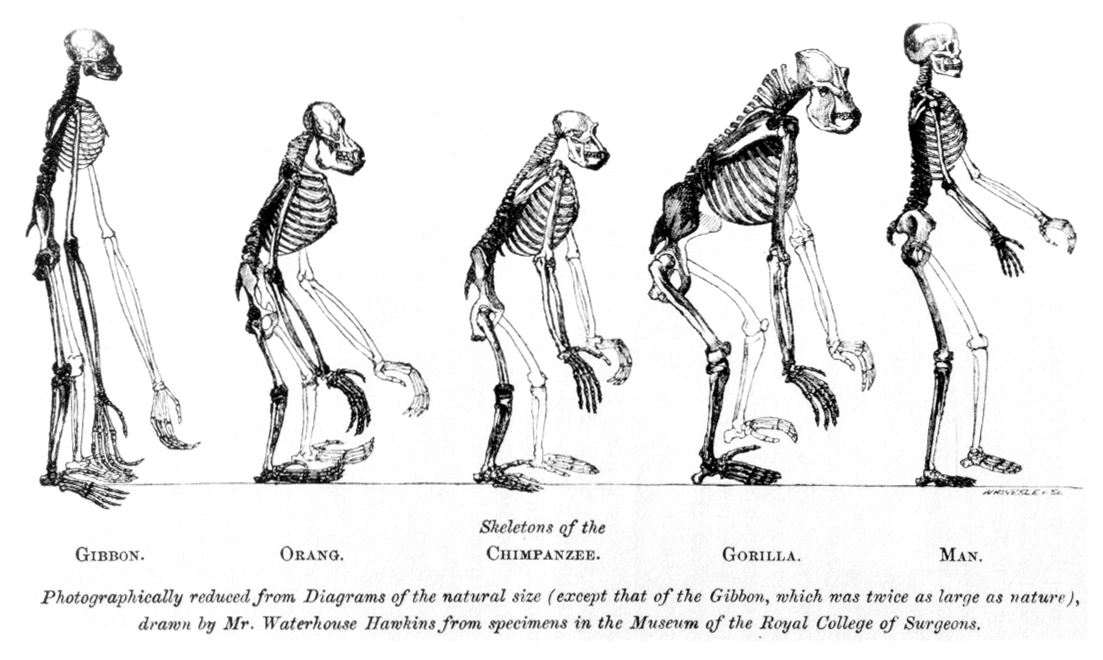
When Darwin initially started to write The Origin of Species, the fossil record was quite lacking in a transitional series of fossils. Some species, such as whales, appeared suddenly within the fossil record, without known ancestors. However, with further investigation, Darwin came to the conclusion that fossils found in adjacent layers had more in common than samples taken from separated geological land masses. Furthermore, the very basis of geological formations is the layers of settlement or rock and the sequence of time in which these layers are gaged. Consequently, when Darwin started to study fossil marsupials, he discovered they were only found in Australia. Since modern marsupials only live in Australia, it would only make sense that the modern marsupials descended from the fossilized ones (Coyne 26). Charles Darwin just couldn’t find enough archaeological evidence to prove that certain fossils descended from common ancestors. The evidence, however, today is changing and evolving.

As paleontologists study transitional forms more in depth, they are turning up several hundreds of fossil samples that have yet to be tested. A problem arises, however, when we look into multicellular organisms. These forms of life only originated in the last 1500-600 million years, and that's just an estimate. Multicellular organisms are comprised of completely different cells and are highly specialized, which of course, doesn’t completely disprove Darwin’s theory.

Over the past couple of years, a gradual change in the species has been found within the lower and upper layers of the stratum. For example, the fossil heart urchin genus Micraster gives an excellent example of continuous evolution of individual characters. The changes, however, appear to be independent of changes in those environmental conditions which have left their mark in the formation of the sediment (Nichols).Subsequently, when paleontologists consider the research that Darwin performed on Trilobites, which basically stated that the fossils must have evolved from a common ancestor long before the beginning of the Cambrian, they find flaws in the research. Further archaeological research has failed to reveal the Precambrian strata rich in fossils of multicellular animals which Darwin believed must somewhere exist (Darwin, and Leakey 163).

Unfortunately for Charles Darwin, geologists have not been able to find fossils from periods earlier than the Cambrian system, therefore his fear that the lack of fossils could ultimately disprove his evolutionary findings is slowly becoming a reality. In Darwin’s defense, however, I lay down this hypothesis. If we consider where the Atlantic Ocean is located and if it was actually a continent at some time, it makes perfect sense that there would be layers of sediment that predate the Cambrian. This would then, quite surprisingly, allude to the existence of a past civilization that surpasses all documented history.

For centuries, the age old debate over evolution and creation has puzzled scholars and influenced scientists and archaeologists to investigate the theories using cold, hard evidence. The problem is, you don't need evidence to prove evolution exists. It's already a fact so what is being tested?

Furthermore, Darwin may have introduced a revolutionary ideal for the masses to ponder, however he did so in an underhanded fashion. Newton may have stood on the shoulders of giants, but he shared that influence with the world. The same cannot be said for Darwin.

Pictures Sources

Darwin at 51
Alfred Wallace
Origin of Species 
Mans Place in Nature

Resources

Coyne, Jerry. Why evolution is true. 1st ed. New York, New York: Viking Pr, 2009. 26. Print.

Dagg, Joachim. "A Theory of Population, deduced from the General Law of Animal Fertility." Victorian Web. Brown University, 31/08/2003. Web. 16 Mar 2010.

Darwin, Charles, and Richard Leakey. The Illustrated Origin of Species. London, England: Rainbird
Publishing, 1979. 163. Print.


Darwin, Charles, and R.R. Company. The Origin of Species. London, England: Signet Classic, 2003. Print.


Nichols, D. "Changes in the Chalk Heart-Urchin Micraster Interpreted in Relation to Living Forms." The Smithsonian/NASA Astrophysics Data System. NASA, 08/11/1956. Web. 16 Mar 2010.

Sunderland, Luther. Darwin's Enigma. Rev. ed. Santee, California: Master Books, 1984. 10. Print.

Like Ancient Digger? Why Not Follow Us?


Subscribe Via RSS Feed Follow Ancient Digger on Facebook Follow Ancient Digger on Twitter Subscribe to Ancient Digger Via Email

Get widget

Search


Ancient Digger Archaeology Copyright © 2015 LKart Theme is Designed by Lasantha