• Ancient Digger teaches Archaeology and History to all Ages!

Thursday, July 8, 2010

John Dowland: Selected Works for Guitar


English composer and lutenist, John Dowland traveled to Paris in 1580 as 'servant' to the ambassador to the King of France, and returned in 1584 a converted Catholic. In 1588 he departed to Oxford for a "Bacheler of Musick" (sic), and in 1592 came his opportunity to perform before Queen Elizabeth herself, when the masque of Daphne and Apollo was presented for her entertainment at Sudeley Castle.

This opportunity was not realized, for when one of the queen's lutenists died in 1594, Dowland applied for the post and was rejected. Dowland speculated bitterly that it was his Catholicism ...

Read More John Dowland: Selected Works for Guitar via Ileen Zovluck

Wednesday, June 23, 2010

Archaeological Discovery: Technology reveals Images of the Apostles in Rome


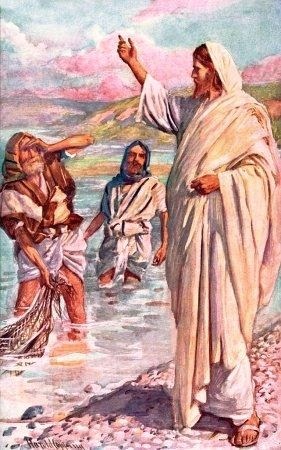
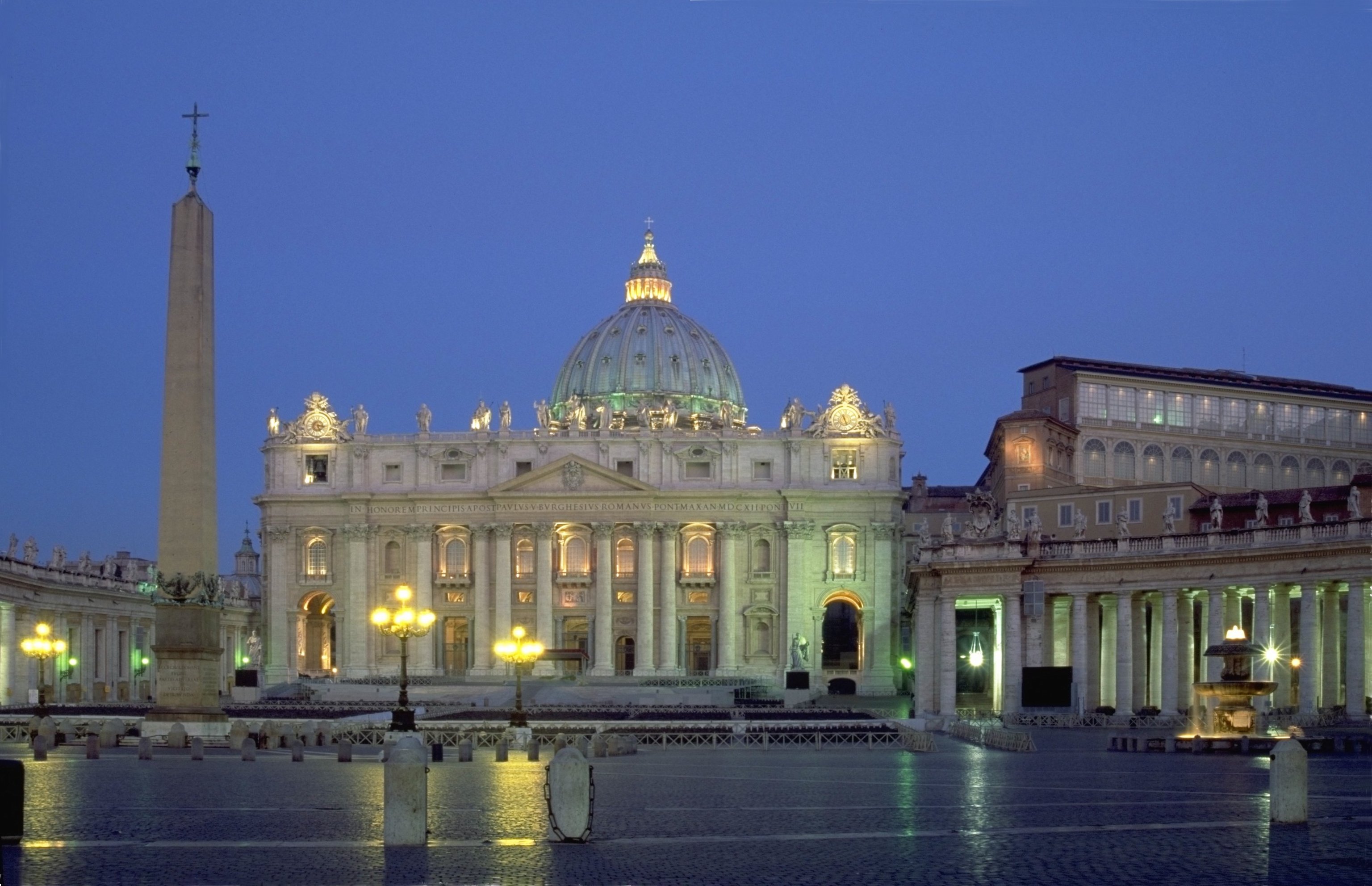
Paul                                  John

Archaeology and technology combine to reveal images of the apostles John and Andrew in an underground burial chamber beneath an office building on a busy street in Rome.

The images, which date from the second half of the 4th century, were uncovered using a new laser technique that allows restorers to burn off centuries of thick white calcium carbonate deposits without damaging the brilliant dark colors of the paintings underneath.

The technique could revolutionize the way restoration work is carried out in the miles of catacombs under the Eternal City.

Check out the entire discovery of the images of John and Andrew on Journal Gazette 

Pictures Courtesy of Wikipedia (not images discovered)

Thursday, January 7, 2010

Save The Magnificent Church of Arc-sur-tille


This breaks my heart. My dear friend Francois Hagnere has started a petition to save the Church of Arc-sur-tille from a horrible fate. This French Neo-Classical church in Burgundy was originally designed by architect and sculptor Claude Saint-Père, and within the structure, there are artistic reproductions of the “Baptism of Christ” by Hyppolite Flandrin, the “Virgin’s Wedding” by Raphael and in the middle the famous “Last Supper” by Leonardo da Vinci. It is imperiled. Let’s save it!

An association: UEPA 50, rue de la Cras, F-21560 Arc-sur-Tille, France is fighting to save this church and restore it. Many personalities and people from all walks of life have signed the petition and donated. I invite you to join them and thus participate in the safeguard of a jewel of architecture. The address of the association site: http://www.uepa.fr/
Read more about the Church of Arc-sur-tille By Francois

Note: The petition is in French, but if you have any questions, feel free to contact Francois and he'll let you know exactly how to go about it.

Friday, December 11, 2009

The Effects of the Reformation After the Split with Rome: The Council of Trent Part Two


At the Council of Trent, Catholic doctrines were reinstated which strictly opposed the Protestant position. The final doctrines were able to reaffirm Catholic teachings including the use of scripture and tradition, which in religious matters the Catholic Church had full control over the interpretation of.

The stress on faith, good works, the seven sacraments, clerical celibacy, and transubstantiation were all upheld.

The most significant decree passed was that of theological seminaries for the training of priests. In actuality, the council was able to solidify the Catholic Church which now possessed a clear body of doctrine and recognized that the popes were head of the Church. The Roman Catholic Church was now one denomination and upheld their strict doctrine which would not be altered for centuries.

The Effects of the Reformation After the Split with Rome: The Papacy Part One

Wednesday, December 9, 2009

The Effects of the Reformation After the Split with Rome: The Papacy Part One


After the split with Rome, creating a new church of England during the reign of Henry VIII, the church underwent positive reforms. With the assistance of the papacy, the Council of Trent was created to resolve religious disputes, and the Jesuits educated the masses in Europe. Catholicism was therefore being revived once again.

The papacy was in serious disarray after its involvement in Italian political and military affairs. However, with the pontificate of John Paul III, the papacy started to grow stronger. His involvement in politics, arts, letters, and his appointment of cardinals solidified his goals.

John Paul III formed a reform commission to study the present condition of the church and recognized the Jesuits at that same time. In 1541, Cardinal Contarmi reached a compromise with Protestant moderates on several issues. However, the Cardinal Contarmi didn't see compromise in the same light, deeming it heresy. He was able to persuade John Paul III to establish the Roman Inquisition to eliminate errors, thereby ruling out Protestant compromise. When he was made pope, he was able to silence the liberal cardinals and create an Index of Forbidden books which listed unwholesome theologians. There was to be no unity of Christian beliefs, thereby solidifying the position of the Catholic Church.

Read Part Two of the Effects of the Reformation

Monday, November 9, 2009

The Monday Ground Up: The Catholic Church During Charlemagne


The Catholic Church at the time of Charlemagne had significant impact on the lives of the Frankish people. There was fusion of cultural ideals which directly influenced family life, sexuality, and the views of children.

Marriages were arranged by the fathers and uncles, and wives were expected to remain faithful to their husbands, even if they kept concubines and remained unfaithful to them. The Catholic Church insisted on blessing the marriage, although at that time, marriage was civil arrangement.

The emphasize on monogamy by the church led to a law, or rather a right to prohibit divorce, even if the woman was sterile or unattractive. This right was not accepted gracefully. This institution, considered to still be a frigid moral establishment, led to the nuclear family, whereby the power of the household went to the eldest woman, although her place as a wife was still dominated by her husband.

Celibacy was stressed as part of the sanctity of marriage, although during the Middle Ages, this proved to be impossible. Thus, the church felt that marriage was the lesser of two evils. Couples could engage in sexual intercourse if married, only if it was fir the purpose of procreation and not pleasure. In this arrangement, contraceptives were forbidden and abortions were frowned upon, even though herbal remedies were often used to prevent contraception.

The condemnation of sexual activity outside marriage also included homosexuality, even though Roman Law had never recognized any difference between heterosexuality and homosexuality. How odd that the evolution and acceptance of homosexuality under Roman Law was never seen as a problem, although today, our law that was derived from the Romans mysteriously excludes homosexual relations.

The Catholic Church listed wergelds, whose size represented a persons worth. In the past, the limiting of children through infanticide was used often by Roman families, however now the adoption of personal worth was used to determine where a child would end up. Males were valued at solidi until they became warriors, then their worth increased to 300.

Females were around 30, then it increased to 250 when they were able to bear children. Unwanted children were abandoned or donated to the Catholic Church and were raised as nuns and monks.

The strict code of law by the church in the Middle Ages led to the development of institutions of marriage and the condemnation of infanticide. Of course, these laws were impossible to enforce, especially when it came to celibacy during the Middle Ages. The way of life was challenged on a daily basis, be it in secret, Germanic peoples still managed to work around the strict control of the Catholic Church and they still do today, trying to avoid their strict ideals and moral codes.


Throne of Charlemagne and the subsequent German Kings in Aachen Cathedral

Like Ancient Digger? Why Not Follow Us?


Subscribe Via RSS Feed Follow Ancient Digger on Facebook Follow Ancient Digger on Twitter Subscribe to Ancient Digger Via Email

Get widget

Search


Ancient Digger Archaeology Copyright © 2015 LKart Theme is Designed by Lasantha