• Ancient Digger teaches Archaeology and History to all Ages!

Friday, April 30, 2010

Focus on History: New History Sites and Bloggers


I absolutely love being a history and travel blogger, as it allows me to meet individuals I would never get the chance to on an everyday basis. In the past two days, two very special sites have landed themselves on the Ancient Digger Blogroll.

The first of these special additions is Border Jumpers, which was an idea from the minds of two very special individuals. You can follow Bernard Pollack and Danielle Nierenberg as they travel in Africa to meet with farmers, activists, non-governmental organization (NGOs), the funding and donor communities, and local, regional, and international press. Their goal is educate the masses about workers and residents and their living conditions, as well as the subject of poverty, and how people in Africa are combating that issue.

Here's an excerpt from their latest post:
We’ve taken some long bus rides in Africa. We spent eight bumpy hours on a bus from Nairobi to Arusha and another eight from Arusha to Dar Es Salaam.

The longest so far, though, has been between Kigali, Rwanda and Kampala, Uganda. As usual, we were looking out the window, admiring the crops growing by the side of the road, desperately trying not to think about how we had to pee, and trying not to panic about how fast our bus driver was maneuvering between other buses, cattle, and street vendors hawking roasted corn, bananas, and pineapples on the side of the road. 
Read more about 1000 Words fr4om Rwanda

Our second new addition is Boatswain and Bateremia . This particular site is run by Jared Wasser and focuses on maritime and naval history,with the added addition of medicine, since Jared is a student of medicine. Together, the two subjects merge to create a fascinating and well written site about the history of maritime medicine.

Here's an excerpt from his latest post:

Rice.  One of the most prominent and relied-upon staples, cooked in any variety of dishes the world over, and a vital source of nutrition for millions of people on our planet.  I love it; one of my favorite foods that, at times, it seems I just cannot get enough of.  However, this seemingly innocuous ellipsoid was, at one point, the source of an illness that ravaged a large portion of the Royal Fleet in the 18th and 19th centuries.  One arguably more virulent and more mysterious than that of even the famous scurvy.  The disease I speak of is called beriberi; an illness which killed many sailors in the age of sail, and perplexed physicians and surgeons for around a century.
Read more about the story of Berberi
Monday, July 20, 2009

Monday Ground Up: Mayan Civilizations-the Evolution


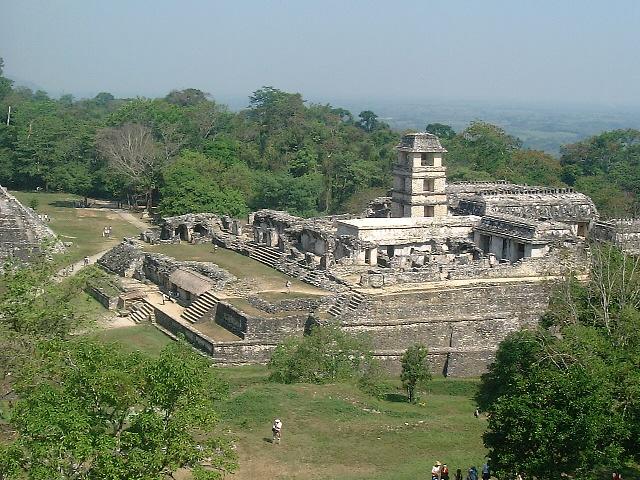
The ruins of Palenque.

The Mayan culture may just be one of the most dynamic representations of rich cultural heritage the world has ever seen. With the civilization came invention, and although advances such as writing, epigraphy, and the calendar did not originate with the Maya, their civilization fully developed them.

The customs maintained are a result of the unification of pre-Columbian and post-Conquest philosophies-structured by the almost total adoption of Roman Catholicism.

According to "accepted history" the first “Maya” settlements were established in around 1800 BC in the Soconusco region of the Pacific Coast. This point in time, known as the Early Preclassic, was characterized by sedentary communities and the introduction of pottery and fired clay figurines.


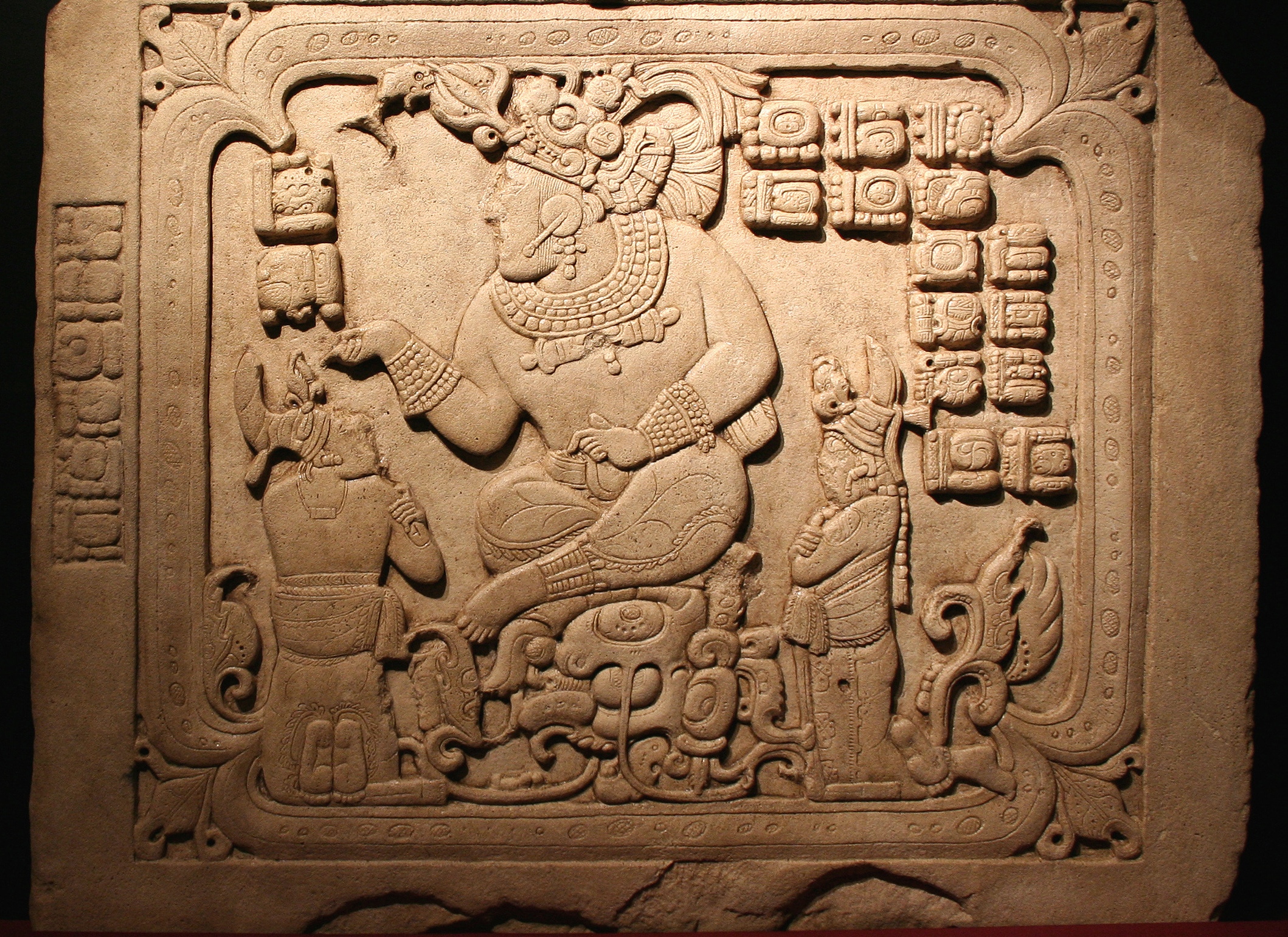
Panel from Cancuén portraying the ruler T’ah 'ak' Cha’an.


During the Classic period, the most monumental of creations took life in the form of stepped pyramids. The Mayan's built pyramids in their religious centers and the accompanying palaces of their rulers. The palace at Cancuen is the largest in the Maya area, though the site lacks pyramids.


The Collapse of Mayan Civilization


The end of the Mayan civilization is arguably one of the most researched collapses in archaeological history. During the 8th and 9th centuries, the surrounding areas were abandoned due to over population, drought, disease, and war.

Ecological hypotheses include environmental disaster, epidemic disease, and climate change. There is evidence that the Maya population surpassed carrying capacity of the environment including exhaustion of agricultural potential and overhunting of megafauna.[3] Some scholars have recently theorized that an intense 200 year drought led to the collapse of Maya civilization.[4] The drought theory originated from research performed by physical scientists studying lake beds,[5] ancient pollen, and other data, not from the archaeological community.

Related Articles

shares his incredible experience in Peru, where romance blossomed in an ancient civilization.

When I heard about the program I was kind of skeptical of my chances. I had never been to Peru. But the grant specifically called for a professor of Archeology willing to teach a course in Ancient Incan construction and then it culminated in a month long work program where the professor and students would act as tour guides and have access for academic study to all parts of the glorious city. More about Machu Picchu


Athena Goodlight from Rizal, Philippines, takes us on an amazingly picturesque journey through the country side. A perspective from an open mind and appreciative traveler.

Athena
presents Exploring the Wonders of the Maya Route posted at trifter, saying, "Stretching from Southern Mexico into Belize and Guatemala, the Maya Route is a region where you can scale jungle-entwined temples by day, then dress up for a sparkling night on the town in seaside resorts or charming cities."
Athena presents Why the Ancient Mayan Culture is So Mesmerizing posted at Trifter, saying, "What makes the ancient Maya culture so mesmerizing today? For some, it’s the beauty: From the graceful pyramids of Palenque, in Mexico, to Guatemala’s Tikal, rising above a green canopy of rain forest, the Maya left behind a stunning artistic architectural legacy."

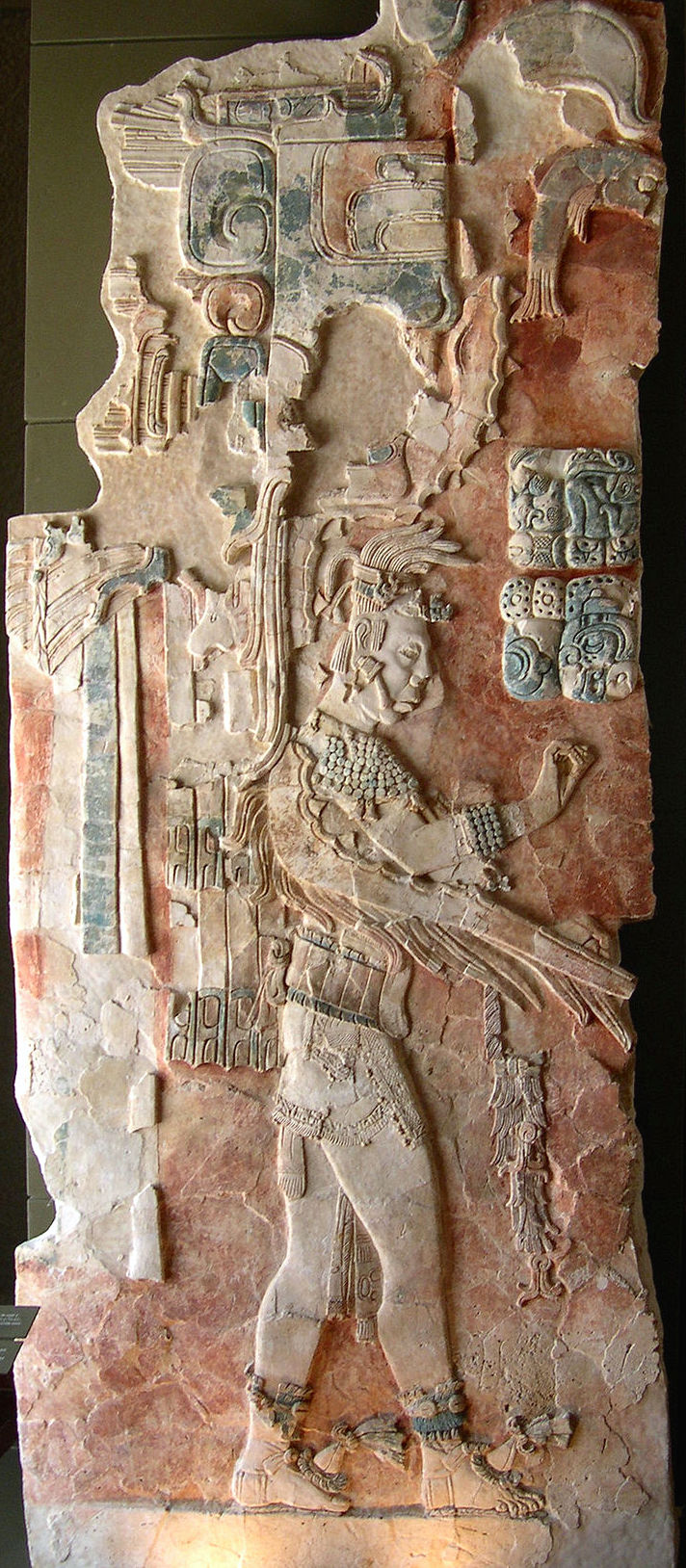
A stucco relief from Palenque depicting Upakal K'inich.


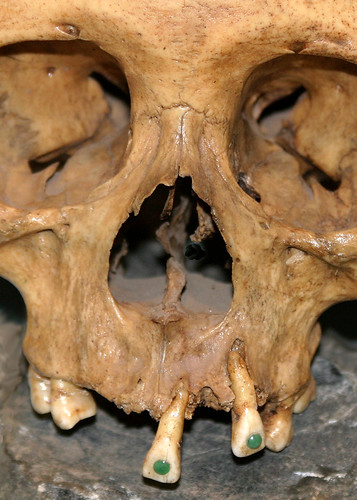
This is on display at the Jade Museum in Antigua, Guatemala. Today, some Mayans decorate their teeth with gold inlays, hundreds of years ago they seem to have used jade. By DavidDennisPhotos.com

Jade Mayan Mask


A jade mask that metaphorically represents the Rain God Chaac, and the Creator God Kukulkan.


A Middle Preclassic palace structure at Nakbé, the Mirador Basin.

Tulum


Tulum is just across the water from Cozumel, Mexico. Postcard type photo...
HDR. Gauss on a bit. Comes across as one of those old colored BW postcards. by joiseyshowaa

Pyramid of Kukulcan


View from the Great Ball Court towards the Pyramid of Kukulcan (El Castillo) and the Temple of the Warriors (to the left). By the time I took this photo there were ever-growing hordes of visitors that made taking a clean shot difficult. In this photo I was able to use this Mayan wall (bottom foreground) to shield out all the gringos. by Rob Shenk

Mayan House


This is a photo of a Mayan house. Most of it's walls have fallen down but you can still see the front stops. Most houses in the Mayan culture look similar to this. By amber.kennedy


National Geographic: Palenque Prized for Unlocking Maya Mysteries

The first published account of this lost city was in 1567, from a Spaniard, Father Pedro Lorenzo de la Nada.Exploring near the Usumacinta River, located in the modern Mexican state of Chiapas, Lorenzo came upon its stone temples and plazas, originally decorated with blue- and red-painted stucco but by then long abandoned by the Maya who built it. Lorenzo gave the grand structure the name Palenque, a Spanish word meaning "fortification."
Read More

By Kelly Hearn


Technorati tags: , .

References
  1. Drew (2004), p.6.
  2. Coe, Michael D. (2002). The Maya (6th ed.). Thames & Hudson. pp. 47.
  3. University of Florida study: Maya politics likely played role in ancient large-game decline, Nov. 2007
  4. Gill, R. (2000). The Great Maya Droughts. Albuquerque: University of New Mexico Press. ISBN 0826321941.
  5. Hodell, David A.; Curtis, Jason H.; Brenner, Mark (1995). "Possible role of climate in the collapse of Classic Maya civilization". Nature 375 (6530): 391–394. doi:10.1038/375391a0.
Edited by Ancient Digger

Monday, July 6, 2009

Lord of the Kula Ring: The Ceremonial Exchange


Trade has been a staple in archaeological civilizations as far back as any archaeologist or scientist can research. Of course, the objects of value and the ceremonial exchanges differed from culture to culture, depending on what was seen as a good trade.

One such fascinating exchange system was of the Kula Ring Exchange, which was a ceremonial exchange conducted in the Milne Bay Province of Papua New Guinea.


Image via Wikipedia

The exchange of the Kula ring includes thousands of individuals from several island communities of the Massim archipelago, just one of the Trobriand Islands.


Image via Wikipedia

Participants of the Kula ring exchange would trade red shell-disc necklaces that were traded to the north and white shell bracelets that were traded to the South. At first, if one of the individuals participating would display a bracelet or armband, what would typically follow was a necklace. Control of the ring exchange was usually handled by the Chief, however in Dobu all men can participate.


What's interesting about this type of exchange system is that the entire experience is meant to enhance the social standing of men in their communities. By providing an enjoyable experience to other parties, the individual participants develop a good working relationship, much like the practice of a small business today. The act of giving an object thats value is downplayed shows greatness and modesty, and therefore this act develops into somewhat of a marriage.

“The Kula ring exhange valuables never remain for long in the hands of the recipients; rather, they must be passed on to other partners within a certain amount of time, thus constantly circling around the ring.” In truth, the more significant you are in a community the more Kula valuables you have. It’s a process of borrowing and holding someone’s “precious”, and then passing it on. The original owner of the valuables is the only one than can sell or destroy their holdings.


Source

The ownership of a particular valuable is, however, often not known. Kula valuables can be exchanged as kitoum in a direct exchange between two partners, thus fully transferring the rights of ownership.


Source

Acquiring the Kula gifts takes money, and a person that seeks to hold a certain valuable must compete with others, offering pokala and kaributu (solicitory gifts) to the owner, thus seeking to persuade him to engage in a trade liaison involving the desired object.

Kula Boat


Source

“The Kula, as Mauss wrote, is not supposed to be conducted like gimwali (barter). The former involves a solemn exchange ceremony, a "display of greatness" where the concepts of honour and nobility are central; the latter, often done as part of Kula exchange journeys, involves hard bargaining and purely serves economic purposes (1990:22-23). Kula valuables are inalienable in the sense that they (or an equivalent object) have to be returned to the original owner. Those who receive them can pass them on as gifts, but they cannot be sold as commodities (except by the one who owns them as kitoum).”


Source

The rules of engagement are not discussed in this type of exchange; however the relationships maintained must be conducive to both the owner and the holder. If in fact the holder keeps the valuable without wanting to give them away, he is seen as shameful, thus creating a somewhat uncomfortable situation, or rather a bad reputation for themselves.

The Kula exchange is simply a way for man to show greatness, the ability to share his wealth while maintaining his social status, and a means to share cultural traditions with other communities.

Also read:

Friday, June 12, 2009

Most Vicious and Cannibalistic Prehistoric Creatures


During the Pre-Historic Era, certain creatures and species were limited in their access to food supplies, and so they were forced to feed on their own kind, giving them the ability to sustain their lives a bit longer.

Majungatholus


In 1998, paleontologist/anatomist Scott Sampson from the New York College found a Majungatholus skull, making it the most well preserved dinosaur skull ever found. Sampson said, "It's the kind of face that only a mother could love. It had textured, convoluted bone all over the surface of the skull which probably had skin tightly adhering to it. It had this horn-like structure on the top of the head between the eyes and another projection at the back of the skull as well."

Image via Wikipedia

Teeth marks along with serrated smaller notches were found embedded on the Majungatholus measuring the same width as the teeth on the dinosaur itself, implying that it may have been involved in a struggle with the same species.

Neanderthals


Around 43,000 years ago, the Neanderthals were turning to cannibalism—even brain-eating. Discoveries of fossil remains suggest that these prehistoric humans looked entirely different from their northern counterparts. The Osteology of this species clearly suggests signs of dismemberment and skinning.

Image via Wikipedia

Cannibalistic actions included cutting of the flesh, using small stone tools and smashing open the skull using larger tools to access the brain and marrow.

Image via Wikipedia


“Reports of the Neandertals (often spelled "Neanderthals") ate their own kind, says paleoanthropologist Antonio Rosas of the National Museum of Natural Sciences in Madrid. Rosas is the lead researcher for the study, which is published today in the journal Proceedings of the National Academy of Sciences.”

Anasazi

MesaVerde


Around 900 AD in the Chaco Canyon, the Anasazi of the southwestern U.S. routinely "processed their colleagues . . . skinned them, roasted them . . . severed their joints . . . and put the pieces into pots. This gives an entire new meaning to vicious and bizarre." Unfortunately, history has continued to be a distressing chronicle of man's inhumanity to man. Today, Chaco Canyon is a Mecca for New Agers. They like to believe that Anasazi existed in full harmony with nature. However, the archaeological evidence is exceedingly “inconvenient for those who argue that man in his natural state was good and that civilization as we know it is evil.”

Cave Bears


Scientists have always believed that these creatures were gentle, feeding solely on vegetables and fruits. However, bones were discovered in the Carpathians - the mountains where Dracula supposedly dwelt – suggesting that cave bears could have also been cannibals. Ongoing studies of their bones and other accessory organs suggest that only a certain cave bear, dwelling in the Carpathians were carnivorous. They had high levels of Nitrogen 15 in their bones, which was highly bizarre considering that cave bears normally had low levels of Nitrogen-15.


Ultimately, Cave bears died out around 20,000 years ago when the ice had dominated the earth.

Wednesday, April 1, 2009

National Geographic Presents: April Fools' Day Facts: Behind the Laughs


The origins of April Fools' Day are shrouded in mystery.

The most popular theory is that France changed its calendar in the 1500s so that the New Year would begin in January to match the Roman calendar instead of the start of spring in late March or early April."

However word of the change traveled slowly, and many people in rural areas continued to celebrate the New Year in the spring. These country dwellers became known as "April fools."

Read More: April Fools' Day Facts: Behind the Laughs

Like Ancient Digger? Why Not Follow Us?


Subscribe Via RSS Feed Follow Ancient Digger on Facebook Follow Ancient Digger on Twitter Subscribe to Ancient Digger Via Email

Get widget

Search


Ancient Digger Archaeology Copyright © 2015 LKart Theme is Designed by Lasantha