• Ancient Digger teaches Archaeology and History to all Ages!

Wednesday, August 24, 2011

Petoskey Stones Are Archaeological Artifacts


Several years ago I was staying in Mackinaw at my mother’s home on the water. On one occasion, I ventured out to the shore and started the daunting task of searching for fossils and shells. I stumbled upon what looked to be a Petoskey Stone, the state stone of Michigan. I was somewhat familiar with the geological make up, consisting of fossilized coral and other sea creatures. However, I never realized what kind of history was hidden beneath the outer core.

© danxcai

The Petoskey Stone is just one example of how sea life through history, captured in fossilized form, can provide insight into archaeological history. More specifically, Native Indian trade and tool making.

Source

The Legend of the Petoskey

According to legend, Petosegay was the child of a descendant of French nobleman and fur trader, Antoine Carre and an Ottawa princess. Petosegay, meaning "rising sun" "rays of dawn" or "sunbeams of promise", was named after the rays of sun that fell upon his newborn face. In keeping with his promising name, Petosegay was a wealthy fur trader who gained much land and acclaim for himself and his tribe. He was remarked upon to have a striking and appealing appearance, and spoke English very well. He married another Ottawa, and together they had two daughters and eight sons. In the summer of 1873, a few years before the Chiefs' passing, a city began on his land along the bay of Bear Creek. The settlers christened the newborn city Petoskey, the English translation of Petosegay.

The Town of Petoskey

Petoskey Stones are typically found in the town of Petoskey where several of the Nick Adams stories describing his summers on Walloon Lake were transcribed by Ernest Hemingway.

Petoskey was also the site where “Calliope”, the protagonist of Jeffrey Eugenides' Middlesex, is involved in some events that take a very severe direction. Eugenides was also known for his 1993 novel, The Virgin Suicides, which gained mainstream interest with the 1999 film adaptation directed by Sofia Coppola.

The town of Petoskey itself is most popular for its Petoskey Stone Festival where citizens celebrate a stone that is strictly native to Northern Michigan. The festival is a one of a kind display of decorative pieces, jewelry, and many other items crafted out of Petoskey stones.

Archaeological History of the Petosky Stone

Image via Wikipedia

Source

Phacopid trilobite from the Devonian

Source

During the Devonian Period, which occurred in the Paleozoic era, the first fish evolved legs and started to walk on land as tetrapods. Various terrestrial arthropods also became well-established. During this period, colony corals covered all of what is now the beautiful state of Michigan. Over time, the corals became fossilized and formed compacted sheets of rocks and were buried for centuries.

SEM image of a hederelloid from the Devonian of Michigan

Source

Later, the stones were formed as a result of glaciation, in which razor sharp sheets of ice plucked stones from the bedrock, grinding off their rough edges and depositing them in the northwestern portion of Michigan.

Source

If you happen to find these stones in dry form, they resemble ordinary limestone. However, when they are polished, the unique patterns emerge, taking on star like patterns with spikes. For the novice Geologist, the more angular in form these stones appear, the younger they are. If you happen to find a rounded and smooth stone, this will indicate that the stone itself has been exposed to more glacial erosion and weathering, and it’s much older than your angular find.

Interesting Fact: The name of the was derived from an Ottawa Indian Chief, Chief Pet-O-Sega. The town of Petoskey was named after him as well.

Friday, June 12, 2009

Most Vicious and Cannibalistic Prehistoric Creatures


During the Pre-Historic Era, certain creatures and species were limited in their access to food supplies, and so they were forced to feed on their own kind, giving them the ability to sustain their lives a bit longer.

Majungatholus


In 1998, paleontologist/anatomist Scott Sampson from the New York College found a Majungatholus skull, making it the most well preserved dinosaur skull ever found. Sampson said, "It's the kind of face that only a mother could love. It had textured, convoluted bone all over the surface of the skull which probably had skin tightly adhering to it. It had this horn-like structure on the top of the head between the eyes and another projection at the back of the skull as well."

Image via Wikipedia

Teeth marks along with serrated smaller notches were found embedded on the Majungatholus measuring the same width as the teeth on the dinosaur itself, implying that it may have been involved in a struggle with the same species.

Neanderthals


Around 43,000 years ago, the Neanderthals were turning to cannibalism—even brain-eating. Discoveries of fossil remains suggest that these prehistoric humans looked entirely different from their northern counterparts. The Osteology of this species clearly suggests signs of dismemberment and skinning.

Image via Wikipedia

Cannibalistic actions included cutting of the flesh, using small stone tools and smashing open the skull using larger tools to access the brain and marrow.

Image via Wikipedia


“Reports of the Neandertals (often spelled "Neanderthals") ate their own kind, says paleoanthropologist Antonio Rosas of the National Museum of Natural Sciences in Madrid. Rosas is the lead researcher for the study, which is published today in the journal Proceedings of the National Academy of Sciences.”

Anasazi

MesaVerde


Around 900 AD in the Chaco Canyon, the Anasazi of the southwestern U.S. routinely "processed their colleagues . . . skinned them, roasted them . . . severed their joints . . . and put the pieces into pots. This gives an entire new meaning to vicious and bizarre." Unfortunately, history has continued to be a distressing chronicle of man's inhumanity to man. Today, Chaco Canyon is a Mecca for New Agers. They like to believe that Anasazi existed in full harmony with nature. However, the archaeological evidence is exceedingly “inconvenient for those who argue that man in his natural state was good and that civilization as we know it is evil.”

Cave Bears


Scientists have always believed that these creatures were gentle, feeding solely on vegetables and fruits. However, bones were discovered in the Carpathians - the mountains where Dracula supposedly dwelt – suggesting that cave bears could have also been cannibals. Ongoing studies of their bones and other accessory organs suggest that only a certain cave bear, dwelling in the Carpathians were carnivorous. They had high levels of Nitrogen 15 in their bones, which was highly bizarre considering that cave bears normally had low levels of Nitrogen-15.


Ultimately, Cave bears died out around 20,000 years ago when the ice had dominated the earth.

Saturday, May 30, 2009

Mysterious Scottish Island and Its History


In Scotland's cold sea waters lay several islands with castles, stone circles, ruins, and plenty of folklore.

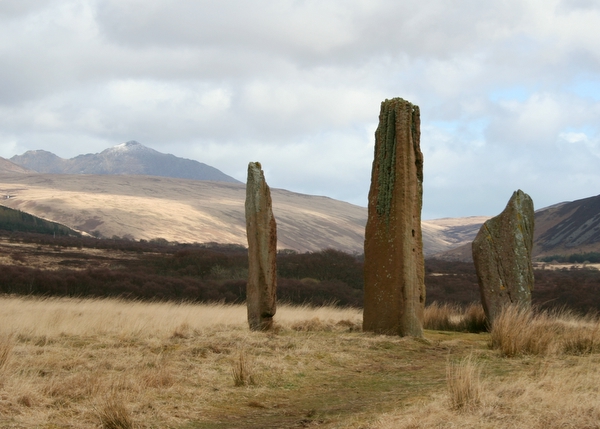
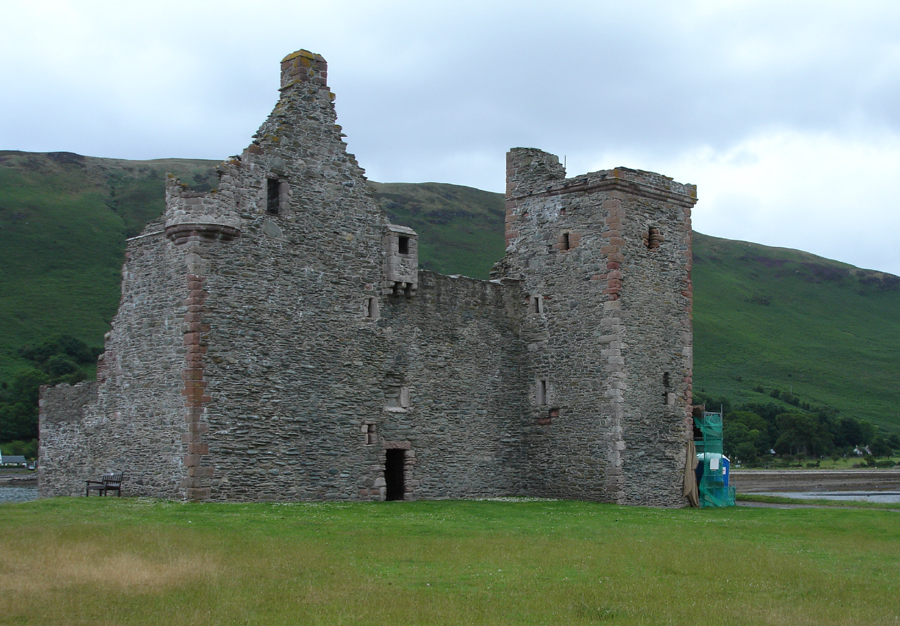
On the Isle of Arran, located off Scotland's southwest coast, travelers can visit Machrie Moor, which boasts several stone circles and some free-standing 18-foot-tall stones. Adding to the island's appeal and mystery is the 16th-century Brodick Castle, which still houses furnishings and art from its many inhabitants; the ruins of Lochranza Castle; and Culzean Castle & Country Park, which features an armory, ruins, and extensive grounds.

Arran is a small island, 20 miles long and 56 miles round, located off the south-west coast of Scotland. Ferries run from the Scottish mainland to the Isle of Arran. Most people reach the island via Ardrossan which has a direct rail service from Glasgow.

History

The first people on Arran to leave visible signs of their life and times here were the Neolithic people, who lived on the island in the period between 4,500BC and 2,000BC. They were farmers, and traces of their field systems have been found on Arran. However, they have left their most distinct legacy on Arran in the form of stone circles, standing stones and cairns. We do not know what these monuments were used for, but it is safe to assume that they had some kind of ceremonial function.


Machrie moor standing stones is a small ancient circle protected by a stone wall. Continue on the footpath and you will reach the main site, three-quarters of a mile across the fields.


Robert Pollock has produced an excellent guide with diagrams which details these and other circles on this site. Two of the circles have recently been excavated, and the amount of peat growth over the original prehistoric ground surface can be seen as a tidemark on the stones. Indeed one of the circles had completely disappeared under the peat.

Druid Stone is likely to be a Neolithic or Bronze age stone, despite its local association with the Iron Age priesthood. A druid was a member of the priestly and learned class in the ancient Celtic societies of Western Europe, Britain and Ireland.

The Ruins of Lochranza Castle are located north of Brodick. The castle was a former hunting lodge of the Scottish Kings. It has been claimed that Lochranza Castle has literary connections, being used as the basis for the castle in the Tintin adventure "The Black Island".


Brodick Castle is made up of red sandstone and it lies at the foot of Goatfell Mountain 1.5 miles out of Brodick; the main port on the Isle of Arran off the west coast of Scotland.

The name Brodick comes from the Norse words, meaning 'broad bay'. Arran means 'peaked island' in Gaelic.


Like Ancient Digger? Why Not Follow Us?


Subscribe Via RSS Feed Follow Ancient Digger on Facebook Follow Ancient Digger on Twitter Subscribe to Ancient Digger Via Email

Get widget

Search


Ancient Digger Archaeology Copyright © 2015 LKart Theme is Designed by Lasantha