• Ancient Digger teaches Archaeology and History to all Ages!

Saturday, December 24, 2011

The Kwakiutl Tribe


Franz Boas’s conducted fieldwork among the Kwakiutl during the19th century, observing the Winter Ceremonial in 1895 and subsequently publishing on it and other topics in 1897. Boas’ work gives us a glimpse into Kwakiutl culture in the last decades of the nineteenth century. Boas believed “the whole problem of cultural history appears to us as an historical problem. In order to understand history, it is necessary to know not only how things are, but how they have come to be”. However, by the time of Boas’s first visit to the Kwakiutl, they had experienced almost a century of contact with Europeans. Therefore his descriptions were not in line with the evolutionary social changes that occured since his last visit.

[Read More about the Kwakiutl Tribe @ Factoidz]

Friday, November 18, 2011

Anthropology Study: Pierre Bourdieu


There is no singular argument I can posit from Bourdieu’s research. It’s evident that Bourdieu believes that anthropology is filled with diabolically obsessing theoretical forces and that culture is neither the “exclusive product of free will nor of underlying principles” (Moore 2009: p326). Culture is not the exclusive product of any such code or rule, but a dynamically changing force, which meets the needs of those who construct the boundaries. I do, however, have several observations.

First, Bourdieu explains the “game”, which is not the individual’s actions or a sole strategy. A game is, in my opinion, a practice and can have such codes and rules. Furthermore, a game can only be won using strategy, and the person who created the rules in the first place often enforces that strategy. Is there confusion in the game? There’s always some level of confusion within strategy, but Bourdieu postulates that strategy exists without confusion. No game, strategy, or practice is without its obstacles in my humble opinion.

Second, Bourdieu had a structuralism agenda. That agenda allowed him to observe Algerian society by contrasting the rudimentary structures of the phenomena in a system of binary opposition. There is nothing wrong with this approach, but it does create contradictory social observations within society. These contradictory results forced, or rather, irked Bourdieu is such a way, that he sought for “perfect coherence in the system” (Moore 2009: p330). He took opposing ideas in structuralism, rather than using ethnographic evidence from Kabyle society.

In actuality, Bourdieu should have used his ethnographic evidence to understand the meanings of east and west and north and south. There were clearly contradictions in the way the Kabyle observed direction and what it meant, from a ritual and social aspect. Yet, Bourdieu believes that the creation of systems of knowledge is always politically based and this is hardly the case, especially when you read the geographic details of specific situations within Kabyle culture. What are some examples of this?

Why is it that seating a guest on the eastern wall is an offense? The Kabyle call this “the wall of darkness” (Moore 2009: p337). You would think, since east is associated with the sun rise, the source of all prosperity and the cardinal direction for ritual, that east would we associated with a completely alternative meaning that Bourdieu has explained. Furthermore, is there an assumption that guests who sit on the eastern wall, which is associated with a sinister area of the house, can remove or derail prosperity from the homeowner?

In essence I believe the Kabyle are a society who make their culture through practice, but I don’t believe that Bourdieu understands the opposing strategies that the Kabyle use to explain simple rituals or rules, because he was seeking equilibrium outside of structuralism. I also believe that Bourdieu is misusing the concept of culture because contradictory situations like the geographical explanations for sharing one’s abode, is not recognized as a masking of a society member’s actual objectives.

Friday, October 7, 2011

Leslie White: Does Technology Define Complexity or the Man?


I didn’t know whether to scream or scratch my head at the fact that anthropologist Leslie White regarded the human race as a uniform quality i.e., as a constant, and, hence, he eliminated it completely from his study . Dealing with the dynamics of society in anthropology, and the people in it, is crucial to understanding the evolution and origin of that culture, yet White focused on “the material, mechanical mean with which man exploits the resources of nature”.

While I don’t dispute the importance of technology and the advancement of it within society, I do believe that approaching technology, and basing it on the cosmological order, is what White’s critics believed, as do I, was just like accessing a virtual scientific world.

If White was to disregard the human organism from his research, than how was he to come to the conclusion that cultural development may be measured by “need serving goods” . Goods produced for the people, who were non-existent in White’s functionalist and scientific approach. Yet, his functionalist methodology dealt with biological advantages and not just technology, so you can see where there’s a sharp fork in the road.

Likewise, White’s idea of culture came from a physicist’s perspective. He even posited that strict laws governed culture. In my opinion, culture is not a scientific experiment seen through the lens of a microscope. Yes, culture determines how biology is expressed and it’s dynamic, but it’s a fluid concept as well, not stymied by one central idea, or even shaped by science. Nevertheless, White takes one position on the idea of energy capture (Physics) in order for human survival. Does energy mean access to technology or money? Power or class standing?

Energy can mean a great many things. White believed people within society with a lack of technology or access to energy, let’s use swineherders as an example, could never achieve greatness, or rather “greatness would never have found them”. Hardly the case I believe. Are there not tribes like the Trobriand Islanders of Papua New Guinea who become great because of the amount of swine they acquire, and actually share with the rest of the village?

Another point of White’s research was his overtly socialist agenda and his commitment to it. While it seems my argument is multilinear (or all over the place for that matter), there is a point in which it becomes unilinear. Culture has a particular path in which it takes using constructs of both society and technology. That pace can vary and cultures don't have to change at all, but my opinion is, White is approaching technology and how culture evolves from it, from a physicist’s perspective.

Ultimately, White studied culture and not cultures, yet culture is not independent of specific societies. Consequently, society may and can be a machine, but can culture be as well? I don’t believe so. Culture is learned and changes over time. It does not operate with the press of a button.

Also check out:

Wednesday, September 21, 2011

Franz Boas: Rejecting Change But Accepting Static Cling


The first thing I look for when reading articles by past anthropologists is an agenda. While it did take me several pages to figure out Franz Boas’ agenda, it pained me to disagree with some of his assertions as I respect Franz Boas and his research. “My parents had broken through the shackles of dogma”. It was this line that led to my argument. I knew his religious upbringing, coming from a wealthy Jewish family, would force him to strike down all ideas of evolutionary processes. Yet, his concentration on the science of anthropology made me realize he was a positivist. Not completely, but partially.

In “Methods of Ethnology”, Boas attacks evolutionary theorists because in reality he supports method without theory, and to my understanding, one cannot exist without the other. Boas supported the Darwinian model of biological evolution but was hostile to its application to social evolution. The term “social organism” comes to mind once again, which combines both evolution and societal issues in one. Why such a favoritism towards the scientific? Can’t anthropology be scientific and unscientific?

Boas believes in “human equality” which essentially explains his attacks on evolutionists. In theory, however, all things are subject to change. Boas’ methods of characterizing anthropology as static undermines what cultural evolution stands for and represents. Furthermore, attacking American anthropological students interested in the “dynamic phenomena of cultural change” is like saying the earth is flat and stays still. Contradicting this statement, Boas believed “the whole problem of cultural history appears to us as an historical problem. In order to understand history, it is necessary to know not only how things are, but how they have come to be”.

In order to study how things have changed, would it not be necessary to study evolution in some aspects? Biological and cultural? If Boas truly believes that society is in flux and is subject to “fundamental modifications”, why does he confuse dynamics in society, rejecting the fact that society changes, instead of attempting to solve fundamental problems in developing civilizations?

While I see there is a method to Boas’ understanding of society as a whole, I don’t see how he could reject the use of theory, which is based on the collection of data. Yes, theory depends on data and analysis, yet Boas implies that theorists are not using it.

Boas seems to be the victim of static cling. Although he’s aware that there are other methods at correcting an assumption, he seems to cling too tightly to his own ideas, which he believes cannot be changed.

Monday, September 12, 2011

Mechanical and Organic Solidarity: One in the Same?


Trying to find a flaw in Emile Durkheim’s research was like examining the fracture lines in a geological sample. You know it’s there, but the definitions are a bit skewed, and detours fill your mind with strife and inquiries. Without the help of Krouber, I would have never had a starting point, and he laid the foundation. Krouber believed Durkheim was a positivist and I firmly believe this notion as well.

Durkheim states, “as long as society is essentially segmental [and solidarity is mechanical] towns do not exist”. I vehemently disagree with this statement. Even if individuals work separately on an occasional basis, it doesn’t necessarily mean a town can’t form. Yet, this statement hardly encompasses Durkheim’s complete view, or separation of societies, based on simple characteristics. Durkheim believes that mechanical solidarity leads to, or is the result of, individualism. Members of the society, therefore, don’t need each other for survival.

He then places Native Americans within this classification, which ultimately perplexed and infuriated me. Native Americans may not have lived in an excepted form of a town, however a reservation, which surrounds a central chief, is the very essence of one. Furthermore, Native Americans hunt as a collective and bring back their kills, which is then divided amongst the people. Can’t a mechanical society form around a central organ, characterized by organic solidarity? Can they do this on their own? Of course they could, but they depend on one another to make the hunt a more sacred experience. Durkheim makes the mechanical classification using no ethnographic analysis.

Durkheim further mentions that “we cannot survive without others”, as our lifeline is based upon the production and reliance on others to produce food, perform certain tasks, and provide us material items. This I do agree with, but why separate mechanical solidarity from organic? All people work separately at some point in their life and their results are presented to a central figure or are performed for a certain purpose. In essence, society is a network of capillaries, connecting to a central organ. All those separate parts act on one another and build upon the reactions to make the organ operate. Can the development of mechanical and organic solidarity only be at the expense of the other? Why separate mechanical solidarity from organic, when societies all operate as living organisms? This question brings up the textual jargon, “social organism”, whereby external forces may lead to homeostasis. Yet, this does not account for conflict which leads to social transformation.

Durkheim doesn’t address origin, but function. He doesn’t answer the question as to why, historically, one society differs from the next, but how it functions and in what way it should be classified. He never mentions conflict or cause, rather comparison of a unit instead of its subunits. Conflict leads to transformation, which leads to classification, eventually giving us an historical basis for comparison. Durkheim never addressed these issues.

Wednesday, September 7, 2011

The Social Organism: A Brilliant Account of Societal Comparison or Purely a Disguised Agenda?


Herbert Spencer associates an organism, which forms a continuous mass, to the formation and separation of society which has dispersed itself over the surface of the earth. While I believe the comparison seems to be purely organic, I can’t help but oppose the underlying agenda of Spencer.

Spencer’s explanation of society as a morphing organism experiencing its own evolution is stymied by the notion that man’s capacity for cerebral thought assigns them a position in complex society. Morgan and Tylor believed in the fundamental similarity of human thought around the world termed the “psychic unity of man”. Subsequently, Spencer, clearly by my understanding, inserts his classifications of mental capability throughout the book albeit perhaps unintended.

Human beings are all wired in the same manner. Cells react to certain stimuli just as the wires in our brain allow for us to watch and learn. There is no computer technician adding extra nerve bundles to create more rapid fire synapses to the upper classes. Does this relate to Spencer’s notion of mental thought? Yes. Spencer goes on to say that “classes engaged in agriculture and laborious occupation in general, are far less susceptible, intellectually and emotionally, than the rest; and especially less so than the classes of higher mental culture”. I disagree with this statement unreservedly. This is like saying any profession which involves physical aptitude is completely excluded from the likes of high society or mental reasoning. Would this imply that people in professions such as anthropology or archaeology are just trained blue collar construction workers with no intellect? Yes, it seems to me, that is exactly what Spencer is alluding to.

Spencer was brought up amongst the “rising middle class”. He never attended a prestigious institution for higher learning and was considered an intellectual outsider. Do I think this upbringing afforded Spencer some sort of agenda into the idea of society as a living organism? This statement merely suggests Spencer’s ethnocentric views on higher society, and I seem to think, that this idea was brought forth because Spencer’s idea of society was “self-taught”. He firmly believed that society could exist without the intrusion of government or the higher powers so to speak. This may be some consensus to this idea, as we all are familiar with one man who was notoriously recognizable because of his socialist views of government and their interference. In essence, Marx and Spencer both agreed that society’s separation of the mentally capable bourgeois was built upon the backs of the less intellectually proficient lower class.

I firmly believe that Spencer did have an agenda with the Social Organism as he fails to confront the fact that societies don’t have a tissue or membrane that can be identified by scientific means. You can’t place a society under a microscope, albeit some individuals might use hypothetical means. You are capable, however, of doing so with organisms.

Thursday, September 1, 2011

The Unseen World: Anthropological Exercise


Religion classes pertaining to particular cultures can be both enlightening and challenging. They seek to emphasis how the unseen world is something we will never know the truth about, yet, they do teach us to think or ponder about what lies in the unseen world. This is what this anthropology exercise is all about. So while I was posited the question and have answered it to fit the ideas that I have, I’ll ask now that you reflect and then comment below with what you think.

What do I believe the unseen world is populated with?

I believe the unseen world is populated by others. It’s hard to assume or assign a person or inanimate object to a place or otherworld. To assign such titles or for me to believe such beings exist would mean that I have faith in something. That something is not something I can title, or rather, I’ll just use the term “otherworld” like the Celts used.

How is the unseen world accessed?

I think this unseen world can only be accessed when you reach transcendence, death, rites of passages, or ritualistic acts of certain kinds. I don’t believe that humans, let’s use a psychic for example, can access this world using crystal balls or tarot cards. I don’t think this “type” of person has the ability to access or the right to access this world.

What is brought back from the unseen world when it is accessed?

This all depends on who is able to access the world. In most cases I think information is brought back in the form of a carrier. This may be a spirit or a message you receive in a dream. Objects in the unseen world are viewable in the un-seeable world to the unseen, but once those objects, whatever they may be, cross over, they can’t be seen. So to put it more simply, totems of significance may cross lines, but cannot be seen.

Monday, April 11, 2011

Monday Ground Up: What Do You Think Were The Best and Worst Aspects of Life In Complex Society?


I was posed this question(Best and Worst Aspects of Life In Complex Society) in a class called Archaeology of Complex Societies. It took me some time to even formulate an opinion as the amount of complex societies is vast, each one complicated in their own way. Each society and their info- structure, social organization, technology, architecture, and access to resources, is like a set of nested tables. One society was built on the next and others rearranged as societies came together because of warfare or environmental pressures.


 Best: Social Equality

Social equality in Mesopotamia complex society for women was virtually equal for both men and women. Women controlled their fertility and marriage was monogamous. If a divorce was sought by husbands and the wife had provided him sons, he forfeited considerable assets and the wife’s dowry was returned. This fact was seen in Knossos as well, as it was remarkably egalitarian between men and women. Women even had social, economic, and political roles as well. In Egypt, although women could not hold government offices, they could handle finances and the household.

In Peru, there was relatively little evidence to suggest social inequality or hierarchy, as people seem to have participated in collective labor without developing strong differences in access to resources.


Best: Infostructure, Trade and Technology

Nothing impresses me more with the planning and development of cities in complex society. Harappan society experienced urban planning, writing, a uniform system of weights and measures, the potter’s wheel, and a waste water system. Mesopotamia had the first writing to serve as record keeping, Cuneiform, Copper metallurgy, Gold, Smelted alloys (copper and tin), and they invented BEER. The Inka had knots for record keeping and taxation (Kepu) and the Maya, hieroglyphics.

As for trade, long-distance trade has been important in the evolution of many states, including those of Mesopotamia and Mesoamerica. Such exchange does develop eventually in all states, but it can follow rather than precede state formation. Mesopotamia and Mesoamerica controlled food production and distribution, which equals power. These societies regulated trade routes in order to suit to own needs, and sometimes, of their people.

In Habuba Kabira, inhabitants were purchasing their food from neighboring cities, thus, Habuba Kabira was mostly inhabited by Sumerians who were not interested in colonizing the territory, but rather using their river access to transport valuable resources south.

In Mesoamerica and Mesopotamia, with the advent of the hydraulic system, the authorities were beginning to control and maintain water as well as personal and group relations. Why is this good? More water=more food=more people. People are able to exploit new environments. In fact, Mesoamerica had “a wide range of resources available from region to region which encouraged exchange among different groups”.


Worst: Social Inequality

In the Dawenkou culture, grave goods painted a considerable picture of inequality as some were filled with jade, tools, ivory, animal bones, and others, were filled with nothing. In the Harappan urban zones, houses with single rooms “crammed together in tenement-like apartment buildings”. However, there were also no palaces in the five large cities that made up Harappan society, so it’s hard to determine the divide in society exactly.

At Teotihuacan, leaders utilized forced resettlement programs after immigrants from surrounding areas and Cuicuilco, populated the large city after the volcanic destruction. Most of the population (extended family) inhabited compounds and nuclear families often took up residence in “smaller sub-patios “in the larger apartment complexes.


Worst: War and Environmental Impact

Archaeological evidence of violence and warfare in Longshan villages turned up burned abodes and burials containing human sacrifices and several scalped individuals. Located between the arms of the Oaxaca Valley were “unoccupied “buffer” zones that archaeologists believe were border areas between competing, and possibly conflicting, political groups”.

At San Jose Mogote a temple was burned, which archaeologically, indicated an elite family was laying claim to the site and used violence to obtain it. At Burial 2 at Teotihuacan, the presence of predators leads many to believe that this offering refers to prowess in warfare. The human sacrifice had hands tied behind their back and was accompanied by a caged puma and wolf. By C.E. 500, temples at Teotihuacan had been burned and looted, possibly the result of a “violent uprising”.


Final Thought

What is evident is that the peoples of complex societies destroyed the environment to support economy via deforestation, soil exhausting, and erosion. We see this in Mesoamerica, China, Olmec, and Cahokia. Consequently, at the site of Catal Huyuk in Turkey, mounds, or “Tells”, rise high above the landscape, and what lies beneath, is thousands of years of garbage and human waste, polluting the earth. Of course, archaeologists view this in another context, calling it stuff or artifacts.

Regardless of impact on the environment, the only way we can examine the past is by looking at people’s garbage, which is representative of cultures across space and through time.

What Do You Think Were The Best and Worst Aspects of Life In Complex Society?

Related Content You May Like


South American Vs Old World Complex Societies: Similarities and Differences

The civilizations of the Old World were in fact derivatives of the first ancient cultures, even dominating their ancient counterparts in Egypt, Mesopotamia, and China. They did so by utilizing new forms of agriculture and technology, improving upon the methods previously noted. The South American societies paralleled the Old World ancient societies in that they exhibited advanced architecture, powerful armies, social hierarchies, and intensive farming systems.


Monday Ground Up: Hunter-Gatherers, Agriculture, and Global Warming

Hunter Gatherers are traditionally described as being highly nomadic individuals that traveled with very  few possessions in a marginal environment. Of course, the factors of the environment directly influenced the ability to be mobile. However, up until the Last Age, we can agree hunter gatherers were highly mobile.

Social Complexity of the Ancients: A Brief Overview

The concept of isolation is among one of the most significant ideas for social complexity, in that all complex societies were never “truly isolated from each other” . If this was the case, all complex societies would or could have, adopted a similar social organization, with the exception of the people living in Shandong Province as the Dawenkou culture, mentioned as having a limited or different access to resources, therefore aiding to a slight variation in organization.

Monday, December 13, 2010

Monday Ground Up: Cultural Innovation and Imitation-Historic Roads to Economic Stability


This is a guest post contributed by Lisco Johnson.

clip_image001

Throughout the millennia there have been thousands of individual cultures – from small tribal groups to cultures that spread across the globe. Just 100 years ago, “The sun never set on the British Empire” with Britain’s expansive commonwealth spread from Australia to India to South Africa across the Atlantic to Canada. Today, the UK, while still an chief player on the world stage, no longer maintains a global empire.

Breaking the Maya CodeCultures are born, grow, thrive and die out for numerous reasons. Between 1000 and 1300 AD, the Mayan culture covered most of current-day Central America and large portions of modern Mexico. The Maya, it could be argued, were the greatest world culture during its Golden Age, yet the magnificent temple cities constructed by the Maya were deserted by the time Europeans arrived in the region in the mid-1400s.
There are many theories why this one-time cultural innovator disappeared – dispersed into the jungles, and then into villages and cities where modern day Mayans still live today. Cultures rise and fall.

Cultures evolve and devolve. All we have to do is glance at the history of humankind to see that even the greatest civilizations rise and fall.

Is there a single characteristic anthropologists turn to attempting to decipher what makes great societies thrive? 

What makes a culture great? In fact there are many, but when given careful scrutiny, we can see case after case of great societies that were innovators of new ideas and new technology, and societies adapting the ideas and technology of “outsiders” for the benefit of the people who comprise the imitative society.

Innovation


Mayan astronomers created a calendar so precise that, once decoded, amazed modern day science. This culture studied the heavens, charted movements of celestial bodies and developed an intricate system of mathematics to record time and events.

At about the same time, European culture was mired in the Dark Ages when innovation was replaced by the simple need to survive. Indeed, there were learning centers in London, Paris and other medieval cities but innovation wasn’t part of the culture in general.

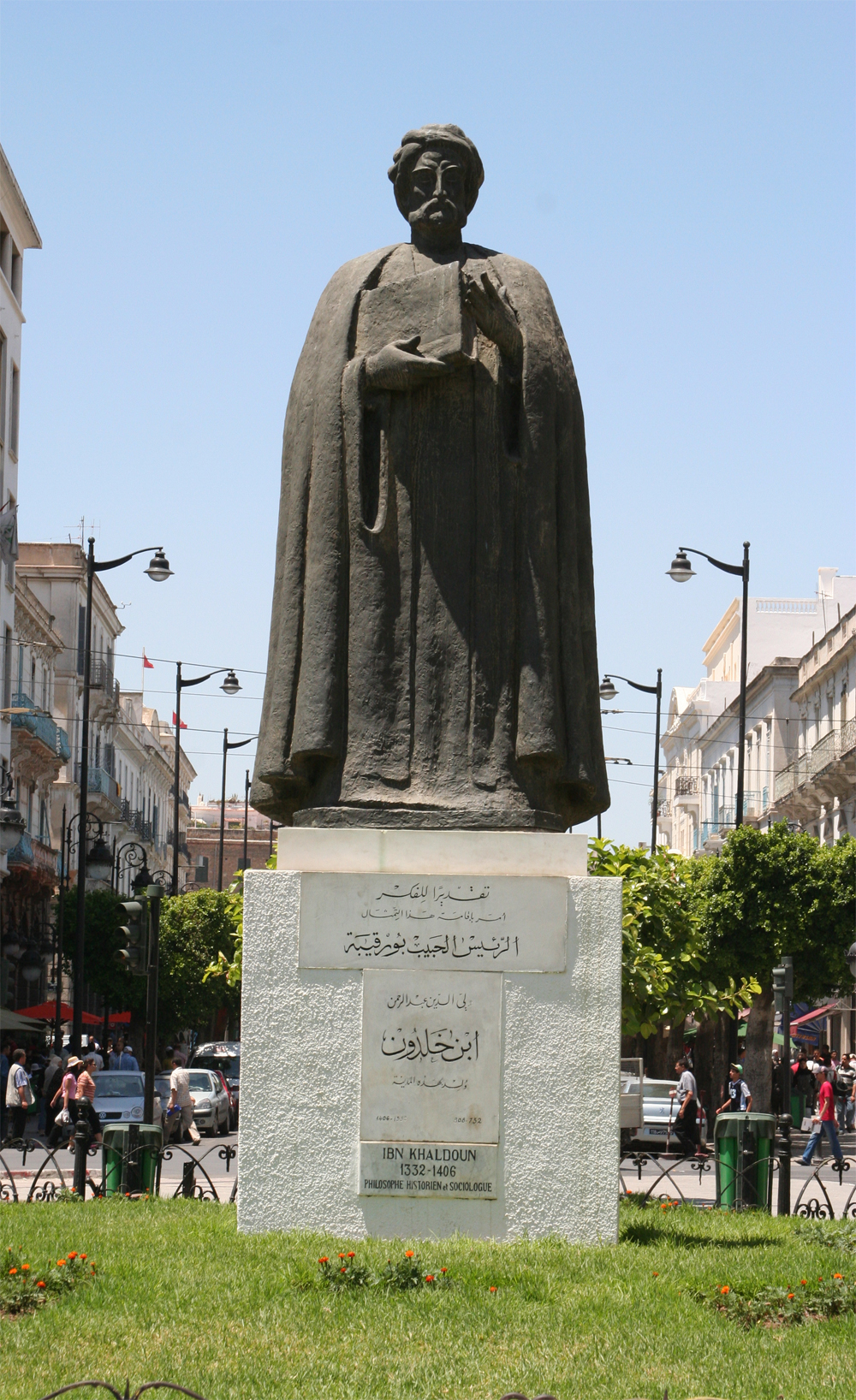
Instead, innovation was taking place on the Yucatan Peninsula and throughout the Middle East where innovative thought led to the creation of algebra (al-jabria) and fundamental social sciences. Idn Khaldun (1332-1406 AD), a great thinker of the time, is credited with the creation of the sciences of economics, the philosophy of history and the scientific method itself.

Khaldun, in his most important writing, The Muqaddimah (1377), lays out testing standards that are still used today in modern research. While Europe was studying pseudo-sciences like astronomy and alchemy, the Middle East was laying the foundation for the work of Sir Isaac Newton in moving forward the world’s body of science.

Innovation occurs during the early days of the great Greek Empire. This was a culture that valued learning and pondered the things its members saw around them. Archimedes defined “displacement” while sitting in a public bath and ran through the streets shouting, “Eureka. EUREKA!” that translates into “I found it.”

Aristotle, Plato, Socrates, Aristophanes and other great minds and great artists moved world culture forward during Greece’s Golden Age of Learning. However, de facto, innovation alone does not sustain a society. And all societies are not innovators. Some have mastered the art of imitation to create sustainable and even robust economies.

Imitation


For centuries Japanese culture demanded of its people an unquestioning acceptance of a strong social contract. The people obeyed orders. They followed instead of led. Individuality was frowned upon. “Fitting in” was woven into the fabric of Japanese society for thousands of years.


The leaders of Japan discouraged innovation and even feared it. This can be demonstrated by the strained history of Japan’s early engagement with the West. In 1853, Commodore Matthew C. Perry arrived in the land of the Shogun. The Japanese referred to these ambassadors as “hairy barbarians.” Instead of embracing the innovation engagement with the West would deliver, Japan remained a closed society until the outbreak of World War II.

After the war, the U.S. pumped billions of dollars in building new factories for the Japanese economy. The U.S. also sent its most innovative, creative minds to Japan to teach this isolationist society modern manufacturing and business development techniques. The Japanese took these assets and, in a single generation, built an economy that provides high-tech electronics, automobiles, heavy equipment and ships to a global market.

However, the Japanese continue to discourage innovation. Fitting in and not making waves is still the centerpiece of Japanese culture. Japanese universities, for example, lag in the implementation of technology on their campuses. Few universities have local access networks in place, though other innovative societies have LANs in secondary schools to encourage the exchange of information essential for innovation.

When China Rules the World: The End of the Western World and the Birth of a New Global OrderChina serves as another example of a nation that imitates rather than innovates. Prior to engagement with Europe and North America, China was a society based on a cult of personality. The Red Guard, the hope for China’s future, waved Mao’s Red Book as they marched in unison before the reviewing stands. Mao’s Great Leap Forward sent university professors to work in the rice paddies. Innovation was absent.
Today, 35 years later, China’s economy ranks just below the U.S. economy in gross domestic product (GDP) and some economists project that China will overtake the U.S. in GDP by the year 2015.

Yet, China does not innovate. It imitates. It adapts business practices employed in Western business communities. It employs technology imported from the EU and U.S. to build computers, manufacture clothing, build consumer electronics and, soon, Chinese- made cars will be sold in the U.S., adding to an already competitive market. In 2009 the U.S. government had to prop up one-time car giant, Chrysler, to prevent one of the “Big Three” auto makers from collapsing under its own weight.

A Country’s Greatness Is Defined By Innovation


China is certainly a powerful country. However, can it be called a great country?

The Chinese government discourages dissent, thus lessening the free exchange of ideas. Search engine giant, Google, no longer serves the Chinese market, pulling out after government censorship became more than Google would tolerate.

Indeed, foreign investment and foreign innovation is welcome throughout China. Many innovative companies from innovative cultures maintain a business presence in this major influence on global economics.
However, China’s government has also declared “internet addiction” to be a mental disorder and has established over 300 “re-education” camps to treat the illness called curiosity. The Chinese people follow. They don’t lead.

China’s power comes from its endless supply of low-cost labor, NOT from its learning centers or cultural centers. The cultural mores of the past remain firmly in place and the government functions in constant fear of another Tiananmen Square uprising among the people.

Countries that foster innovation will continue to grow, though at a slower rate in difficult economic times. These countries produce the tools of tomorrow while those countries that discourage innovation are destined to follow through imitation.

Both innovation and imitation have led to successful, expanding economies. However, looking back through history from an anthropologic perspective, clearly those cultures that encouraged innovation lasted longer and moved the body of world knowledge forward.

Imitation-based cultures have always lagged. They may be powerful. However, it is the fostering of innovation that makes a culture great.

This is a guest post contributed by Lisco Johnson, a history & fitness lover who owns a website offering free tips & articles on how to build muscle

Picture sources


 ©Kassus Statue d'Ibn Khaldoun sur l'avenue Habib Bourguiba à Tunis (Tunisie)

Tuesday, November 9, 2010

Anthropologists Debate: Neanderthal and Human Brains No Longer Similar


I was watching a movie today in an Anthropology class called Neanderthal The Rebirth featured on BBC. Two individual sets of bones were fused together to form an almost complete skeleton of a Neanderthal.

The legs, of course, were a bit shorter, the rib cage flares at the bottom, an indication of the lung capacity and the ability to survive cold climates.

The cranial capacity, however, was compared very closely to modern humans. A endocast was created to study the indentations or imprints left by the brain to study cognitive abilities. There was barely any debate in the mental processing abilities of both modern humans and neanderthals.


Imagine my surprise and disbelief after finding a video today stating neanderthal and human brains are not as similar as once thought.

This video explains the development and research by Svante Paabo of the neanderthal genome at the Max Plank Institution of Evolutionary Anthropology in Leipzig, Germany.

Among humans, however, the internal organization of the brain is more important for cognitive abilities than its absolute size is. The brain's internal organization depends on the tempo and mode of brain development.
Website of the Neandertal Genome project

Monday, November 8, 2010

Monday Ground Up: Isla Del Sol


Isla Del Sol at Lake Titicaca in Bolivia is said to be the location where the sun and moon were born. There are 180 archaeological ruins on the island, all of which have a story and quite a history.

Where Is Isla Del Sol?

Isla Del Sol is located in Lake Titicaca in the Altiplano region of Bolivia and lies close to 12,506 feet above sea level. The island is divided into three parts, with Yumani in the south, Ch’alla in the east, and Challapampa in the north. Isla Del Sol measures 5.5 square miles and takes close to three hours to cross on foot. There’s no cars for transport.

Friday, November 5, 2010

Roman Hairstyle Archaeology


That's right ladies and gentlemen, there's archaeology for every topic you can think of. I was only looking for some sort of new archaeology footage when I stumbled upon this fascinating video about Roman hairstyles. Now gentlemen, I know this may not be a topic of interest to you, but I know many of you adore and love long hair. I know my fiance does. This may be video to pass on to your wife, girlfriend, or fiance, just in case they want to drink in the feminine hairstyles of Roman woman.

This particular style featured in the video is based upon Julia Domna from 192 CE. Empress Julia Domna was the wife of Septimius Severus, Roman Emperor from 193 to 211. Domna is highly recognizable by her hair which was long and curly and very dense. This combination made for a very large Chignon, or a large mass of hair standing out from the head, interwoven in luxurious patterns. Are you intrigued yet?

I'm off to try it myself, as my hair almost touches my hips. Wish me luck!

Wednesday, November 3, 2010

Secondary Burials of Berawan


Western society views funerary practices of non-westerners as odd, bizarre, and unnecessary. However, let's turn the tables and see what the Berawan think is so bizarre about American funerary practices.

Berawan secondary burials involves a sort of storage, if you will, of the remnants of the deceased above ground in a longhouse or upon a platform in the cemetery. The family of the dead will store the corpse in a valuable glazed jar or the coffin left over from the first stage. The entire process usually “lasts at least eight months and sometimes for several years if the close kin cannot immediately afford to complete the expensive final stages.”

Read the full story about the Bizarre Berawan secondary burial @Friends revolution.


Tuesday, October 26, 2010

Ngangas: Who Are They and What Are They Capable Of?


Upon reading "Eyes of the Ngangas: Ethnomedicine and Power in Central African Republic", I was posed to very important questions. If you've never heard of this article, and I'm sure many of you have not, I'll clue you in to the author's background.

Dr. Arthur C Lehman has extensively researched the ngangas, who are traditional healers, acting as the source for Aka Pygmy hunters and their horticultural neighbors, the Ngando of Central African Republic. Lehman traces the mystical powers of the nganga and their ability to reduce tensions in villages, thereby punishing Ngando who have caused the hunters harm.

Sunday, October 17, 2010

Anthropological Study: Krill Oil May Change The Face Of Dietary Habits


Close to 100 years ago, humans were consuming, as well as using the Omega 3 oils as cures. Diets of children and adults consisted primarily of foods high in Omega 3, however today that’s not the case. Historically, what does this mean? It means the majority of the population is not getting the nutrients they need to survive the next 100 years. Children diets today primarily consist of chips, soda, fast food, hotdogs, macaroni and cheese, and chicken fingers. Studies have shown 86% of children are not receiving a balanced diet at school. So would an increase in Omega 3 using krill oil make a difference for these youths? Absolutely!

Upon researching krill oil as opposed to fish oil at krilloil.com, I came to an alarming discovery. First, you’re probably wondering why I was on the site in the first place and what this has to do with history? For me, I’m in the process of losing a substantial amount of weight and I also suffer from intracranial hypertension. This has been caused by years of eating foods rich in fat and tons of carbohydrates. I’ve always had an issue working fish into my diet, however my father swears by it. The history of diets and food has always fascinated me, especially considering I initially went to school to be a chef. So from an anthropological standpoint, I want to learn what people were eating years ago and why they were so much healthier than we are now.

If you are used to fish or fish oil in your diet, you may not be aware of the benefits or lack thereof you’re actually getting. Fish being raised on farms for oil is pumped with chemicals and dyes, which explains the rose or peach color of many fresh fish you see in the market. It’s completely artificial. Furthermore, most fish seen in superstores like cod, orange roughy, salmon, herring, and tuna, are filled with mercury and metal.

If you’re like me and you don’t consume fish, taking a supplement can take the place of the fish lacking in you daily diet. The issue now, however, is when I started taking fish oil pills, I had horrible pains in my lower abdomen. As soon as I stopped, the pains stopped. When I looked into krill, tiny shrimp-like crustaceans found abundantly in the pristine icy waters around the South Pole that make up the largest biomass on earth, I thought these must be more beneficial. I don’t think there’s another place on earth that’s more clean and pure than the waters of Antarctica, and this is where krill these days is coming from.

If you’re still not buying it, let me explain it to all of you that are familiar with the anatomy of the body and how we digest these oils. Krill Oil is structured in phospholipid form and NOT triglyceride form. Our bodies have a difficult time breaking down triglycerides, however the phospholipids in Krill Oil are the exact same types of fats cells in the human body. Therefore Omega 3s can directly enter your body without any additional work or conversion!

It may not be archaeology like we at Ancient Digger usually talk about, however these findings are based upon years of sociocultural history. Our diets have changed and altered out lives, and for me, I’m making a huge change in my dietary habits. Every little bit of knowledge helps.

Wednesday, September 22, 2010

Stereotypes Capture Europe in Color


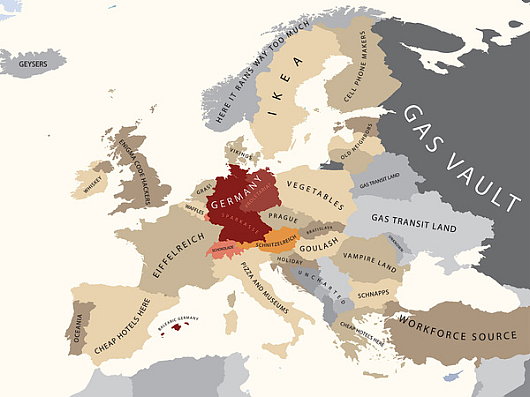
A big part of what anthropologists learn has to do with culture. Culture is learned, not biologically determined. It's hard to put aside ethnocentric views, as what we learn is the only way.  I think this is the reasoning behind these stereotypical maps of Europe. This is how the majority of the world views Europe, reminding us that our personal bias has once again gotten in the way.

Yanko Tsvetkov, a Bulgarian living in Great Britain, created the first map in 2009 in the midst of the energy dispute between Russia and the Ukraine.

“I just created it to amuse my friends but when I put it up on my website so many people liked it that I decided to really focus on the project of mapping the stereotypes based on different places in Europe. I was surprised by the reaction because I never really expected it to take off like this.”

You must see all of those maps at Andrew Cusack's site

Sunday, September 5, 2010

Introducing Ancient Digger's Video TellTales Week


I’m come to the conclusion-I do that often-readers want more than just articles. If you’re like me, sometimes reading a thousand word articles can be a drag when you haven’t had you’re morning coffee. Am I right or am I right?

I want to get you involved as much as possible, as my goal is to make Ancient Digger a multimedia site. What better way to see who my readers are then to start accepting travelogues and video showcases of you on location at a historical site.

Sometimes it’s easier to understand a site or aspect of history when it’s described in another fashion by a different person. Consequently, I can’t be all over the world at all times, but all of you are. This means many of you have access to sites, maybe even a couple miles away from your home.
I want to hear you’re perspectives. You don’t have to be experts. You don’t even have to put yourself on film. I do, however, want to hear some commentary.

My goal is to receive seven videos. I would like to run a new video every day for a week once a month.

Along with the video, I would like you to provide me:
  • A short bio about yourself
  • An introduction for your video
  • A link to your own website or blog
You can send this information to ancientdigger@gmail.com.

I can’t accept every video sent to me and I do apologize ahead of time. Remember I only need seven, so the sooner you can get your video sent to me the better. I may choose to use your video for a later date. If that’s the case, I’ll let you know via email.

This is something I’m trying and if it works, I would like to devote one week out of every month for your travel videos. Just remember, although the videos are about travel destinations, I still need to hear the history. Don’t give me a commercial. Make it personal!

Now you’re probably wondering what you get out of this deal. Am I right? If you said no, I thank you for your generosity. However, I would like to give you something back.

I will be devoting a page just for you. My video tour guides. Your name and a link to your site will reside there permanently, divided by month submitted and the name of your video.

For Example:

September 2010

Lauren Axelrod “Natives of Florida”

Rules For Video Submission

  • Original work only.
  • Video Format needs to be compatible with Vista, Windows 7, and XP. If I can’t upload or embed your video to the site, I can’t use it.
  • No profanity in the video. Keep it friendly to all ages.
  • Please keep the commentary easy to understand.
  • Topic of the video should be about travel, archaeology, anthropology, culture, or history. You know what this site’s about, so stick to the format.
  • Length of the video must be no less than 2 minutes and no longer than 10 minutes.
  • I encourage you to film the video in English. However, if you'd like to film in your native language, I will need the translation for the video or you can add subtitles to the video itself.
  • Please do not submit videos already published to YouTube. I want originals.
  • Submit all videos to ancientdigger@gmail.com. In the subject line put "Video TellTales Week Submission".

Helpful Tips and Extras

  • If you’d like to include friends in the video or family members, it’s entirely up to you.
  • You can use music.
  • You can use a rendering service like Animoto to create your video. I use them all the time. In that aspect, they will provide you en embed code. Copy and Paste. Very easy.
  • Creativity is encouraged. So if I see you in an Indiana Jones hat with a whip, most likely I’ll love it.
  • Videos can be made in Windows Live Movie Maker, Animoto, from a video camera, Webcam, or other video software you may have.

Voting

You are more than welcome to comment on the videos once they are published, however voting will not commence until all seven videos have been posted.

To vote, just sign into the comment system and write vote under your favorite video. You will have until the end of the month to vote and you can only vote once. You can, however, encourage your friends and family to vote and comment.

On the first of the month I will announce the winner.

Rewards


The winner will receive a free Ancient Digger T-shirt, 2 Free months of advertising (banner 125 x 125 or link), and an announcement page with a link back to your site.

For all of my six runner ups, you will still receive a spot on the video tour guide page. Your name, link to your video, and a link to your site will reside there permanently.

Ladies, you can chose a shirt from these pages:


T-shirts
Tank Tops

Gentlemen, you can chose a shirt from these pages:


T-shirts Page 1
T-shirts Page 2

Important Dates:

September 11th Videos Due
September 20th Voting Starts
September 30th Voting Stops
October 1st Winner Is Announced


Please Note: This is an off week for the Monday Ground Up Edition. I'm trying to promote the new Video TellTales Week, so make sure you tell your friends and remember, September 11th will come quite soon.

If you have any further concerns or questions, please don't hesitate to use the contact form.

I'm looking forward to seeing the submissions.

Lauren Axelrod
Owner Ancient Digger

Wednesday, September 1, 2010

Florida's Native People


Image via Wikipedia

Hunter gathers arrived in Florida close to 12,000 years ago when the Florida land mass was much larger and drier. Mega fauna and mammoths were hunted in great herds and grains, nuts, and berries were gathered during seasonal roving. Spears were used to hunt and leather bags were used to cook what was captured, using hot stones. You may know these early tribes as the Paleo-Indians.

Close to 8000 years later, the ice caps started to melt and Florida became what it is today. The Native Peoples started to develop new technology, like the atlatl, a s... Read this article about Native Peoples of Florida

Monday, June 28, 2010

Monday Ground Up: Sumerian Cities


The Sumerian cities were surrounded by walls, much like the Forbidden City, as a way to keep their culture secret and sacred. Sumerian city dwellings were constructed out of sun-dried bricks, including peasant quarters and the larger dwellings of priestly and civic officials.


One of the Sumerian cities, Uruk, occupied an area of 1000 acres enclosed by a wall 6 miles long with defense towers every 35 feet or so। Uruk was founded by Enmerkar who constructed the Eanna temple for the goddess Inanna in the Eanna District of Uruk. In the Epic of Gilgamesh, Gilgamesh builds the city wall around Uruk and is king of the city.

Thursday, March 25, 2010

Eric Whitacre: Uniting the Internet Through Music


Although it's not archaeology, it's still cultures coming together for one common reason, music. Eric Whitacre's Virtual Choir - 'Lux Aurumque'-is burning up youtube and inspiring people from around the globe. The harmonies, the soft eloquent voices, and the soothing mood, creates an astounding and miraculous experience.


I wanted to thank Glenn over at Man-Overboard for finding and posting this amazing piece of artistry.

PRODUCED AND MANAGED BY:
Scott Haines

COMPOSED AND CONDUCTED BY:
Eric Whitacre

Like Ancient Digger? Why Not Follow Us?


Subscribe Via RSS Feed Follow Ancient Digger on Facebook Follow Ancient Digger on Twitter Subscribe to Ancient Digger Via Email

Get widget

Search


Ancient Digger Archaeology Copyright © 2015 LKart Theme is Designed by Lasantha