• Ancient Digger teaches Archaeology and History to all Ages!

Wednesday, July 20, 2011

“The Sounds of Prehistory”


“The Sounds of Prehistory” is a performance that took place at the XXIV Valcamonica Symposium, using Paleolithic musical instruments.

 paleolithic instruments

The Valcamonica Symposia brings out the most skilled specialists in prehistoric and tribal art, but it’s also a platform to share skills and knowledge in an interdisciplinary context, which often includes prehistory, archeology, anthropology, ethnology, story of the art, story of the religions, psychology, philosophy and linguistics. 

The video is in Italian, but the samples of prehistoric music are relatable to all art and music lovers. Enjoy!

Wednesday, July 8, 2009

Polyphonic Musical Composition at Notre Dame


In the central portion of Paris, France there lies an island in the middle of the river Seine. There you will find the huge Cathedral at Notre Dame which was built around 1200 AD. NotreDame is one of the most magnificently architectural locations in all of Europe. It's also a focal point for the first polyphonic music, created in honor of Notre Dame's completion.

In the 12th and 13th centuries, Notre Dame was the focal point of polyphonic music. Polyphony is a texture consisting of two or more independent melodic voices, as opposed to music with just one voice (monophony) or music with one dominant melodic voice accompanied by chords (homophony).

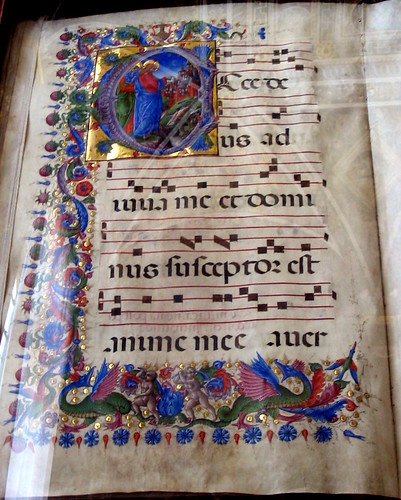
The earliest written sources of music were medieval manuscripts of the late 9th century that contain liturgical texts. Small symbols were used called “neumes that indicated the contour of the melodic lines.

The Cathedral of Notre Dame

 © source

In honor of the construction of this massive structure, two composers created the first polyphonic music in the history of Western music. Leoninus was the eldest son and originally started the collection of polyphonic music that was composed for Notre Dame, adding to the collection by extending the range and scope of the music.

Magnus Liber Organi


The polyphonic musical pieces were made into a compilation of medieval music called the Magnus Liber Organi (Latin for "Great Book of Organum"), known as organum.

Viderunt Omnes


The most famous of the musical compositions was the fourth part of Viderunt Omnes by Perotinus, based on the plainchant of the same name. This chant was meant to be played in the middle of Mass services on Christmas Day.

The most incredible aspect about this musical piece by Perotinus is that, it is built entirely on an ancient structure of musical composition. In addition, the voice parts of the composition were sang entirely by monks or priests.

The evolution of harmony began in the 10th century and it made its way all over the country and the entire world. Not only would your favorite harmonical songs be nonexistent if not for this invention, but our lives would be filled with monophonic music lacking instrumentation and including the voices of monks in unison.

Like Ancient Digger? Why Not Follow Us?


Subscribe Via RSS Feed Follow Ancient Digger on Facebook Follow Ancient Digger on Twitter Subscribe to Ancient Digger Via Email

Get widget

Search


Ancient Digger Archaeology Copyright © 2015 LKart Theme is Designed by Lasantha