Weeks after a 15-20 feet pit was dug up inside the Mecca Masjid complex for building a water tank and local complaints of how it has become an eyesore, the Department of Archaeology and Museums (DAM) which protects the structure, said it has not given any permission.
Any excavation at the Mecca Masjid needs permission of DAM while the Archeological Survey of India which protects Charminar does not usually allow any construction near 300 meters of the historic structure. It has recently issued notices to several groups after finding constructions taking place without permission.
"We will depute an officer tomorrow to check the status of this excavation and will take appropriate action," GV Ramakrishna, director of DAM told TOI, when asked about the dug-up pit at the masjid.
Authorities are building a sump with a capacity of five lakh litres at an estimated cost of Rs 35 lakh to cater to the routine maintenance of the mosque and needs of worshippers. The need for water at the mosque remains critical which was not addressed due to technical problems and the recent spate of communal incidents.
Surprised observers including heritage activists pointed out that despite the plans for the sump being drawn a year ago and execution work starting in September this year, the DAM still remains either indifferent to development activity in the mosque or has been caught napping while cranes and bulldozers are clearing soil and boulders near the proposed tank area.
Officials of the HMWS&SB had no answers when they were asked if they sought permission from DAM but pushed the blame on the roads and buildings department. "We are not certain if permission has been sought from the archaeology department. This is because the work was allotted to us when the R&B department had failed to take it up," an official from the HMWS&SB said, on the request of anonymity.
The official added that he would have to sift through documents to check if DAM's permission was sought in the first place.
After excavation, a concrete bed would be laid which would be followed by laying a steel base for reinforcement.
Meanwhile, chemical conservation of the Mecca Masjid has resumed with fungus, moss and lichen being removed from the maqbara. The marble lattices will also be cleaned using preservatives. According to deputy director Trimurthy Raju, the maintenance work is supposed to be completed by December 20.
"Around 3,600 square metres of the monument will be chemically cleaned. The delay is on account of the more than 100 feet height of the facade and walls. Further, it is required that we carry out work carefully and not at breakneck speed," he said.
Times View
It is surprising that officials of the Department of Archaeology and Museums (DAM) and Archaeological Survey of India ( ASI) were completely in the dark about the dug-up pit inside Mecca Masjid even after weeks of work. The monuments in the Old City, especially the Charminar are not just structures of brick and mortar but entities which narrate true tales of events which have shaped the city and the country and should be protected in a much more serious manner. Authorities should carry out regular trainings of staff on protection of such monuments.
The conference will examine the causes of the English Civil War and discuss in detail some of the most significant battles plus the social, political and historical impact on the British Isles caused by this tumultuous period of conflict. The conference also seeks to educate people about the arms and equipment of the English Civil Wars and the battles made possible by recent advances in battlefield archaeology.
Speakers from the Royal Armouries include:
---Jonathon Riley (Master of the Armouries),
---Thom Richardson (Keeper of Armour)
---Graeme Rimer (former Academic Director).
---£45 including lunch
---£35 including lunch (60+, students & registered unemployed)
A unique handling session, led by specialist curators, will be held on Friday 14 September, 5-6.30pm. A selection of English Civil War objects will be available for close examination. Numbers are limited please book early.---Tickets £10
The Campus Martius Museum located at 601 Second St., Marietta, is inviting kids and adults to come in an learn about archaeology. On January 21, Participants will take part in an artifact identification clinic, lectures, and flint knapping demonstrations. The Marietta College Geology Club will also be showing fossils and dinosaur collections throughout the day, and private collections of historic and prehistoric artifacts will also be on display.
If you're in the area on January 21, check out the schedule at the Campus Martius Museum:
11-noon: Jerry Anderson, archaeologist for the Blennerhassett Historical Foundation, will speak on early archaic people of the Ohio Valley.
1-2 p.m.: William Picard, archaeologist for The Ohio Historical Society, will speak on recent discoveries at Pickawillany, a native village and trading post circa 1750.
2-3 p.m.: Doug Angeloni and Tom Hornbrook will speak on record keeping of historic materials from the Great Trail in the Tuscarawas Valley.
Cost
Admission is $7 for adults, $4 for students and free for children 5 and younger. For more information or if you would like your artifacts displayed, contact Bill Reynolds at 740-373-3750.
More than 500 years ago, the now-desolate Inka city of Huánuco Pampa, located high up in the Andes Mountains in Peru, periodically bustled with tens of thousands of people. But despite its large palace, temples, and public halls, the city was home to only a few hundred year-round guards, administrators, and religious specialists who prepared the massive complex for religious and political festivals that attracted swells of visitors from the surrounding area. A selection of findings from one of the most ambitious archaeological excavations of this unique type of urban center are published in a book recently released by the late Craig Morris, a former curator of South American archaeology and dean of science at the American Museum of Natural History, and his colleagues, R. Alan Covey, an associate professor of anthropology at Dartmouth College, and archaeologist Pat Stein.
Wow, what a great day for archaeology! Ancient Digger brings you the latest archaeology news everyday of the week, and today, it’s hard to keep up. If you’re looking for something to do this weekend, several towns are celebrating archaeology festivals. Check out the headlines below!
Roman jug unearthed at site of new theatre
Archaeologists working on the site of Doncaster’s new civic and cultural quarter, believed to have previously been the site of a Roman cemetery where cremations took place, have unearthed a rare Roman glass jug dating back to around AD150.
Archaeologists Uncover Ruins of Biblical City Shekem in War-Torn Palestine
Archaeologists in Palestine are digging up the ruins of Shekem. The biblical ruin lies inside a Palestinian city in the West Bank, where modern researchers are writing the latest chapter in a 100-year-old excavation that has been interrupted by two world wars and numerous rounds of Mideast upheaval.
Materialism vs. science in archaeology, and the difference it makes
In “First Person: The Bible as a Source of Testable Hypotheses”(Biblical Archaeology Review (Jul/Aug 2011) Hershel Shanks tells a story from Biblical archaeology that explains more than I ever could about how materialism stifles science.
A tiny, 2,000-year-old golden bell was found in a drainage channel near the Old City of Jerusalem. The bell was probably sewn onto the garment of a high official.
Governor stresses for starting Archaeology Department in HPU
The Himachal Pradesh Governor Urmila Singh today stressed the need to start the Archaeology Department in the state university besides introducing tourist guide course to generate employment avenues for youth. Speaking in the inaugural function of the three day long 42nd Foundation Day celebrations of the Himachal Pradesh University here, she said the state was rich in cultural heritage and Archaeology Department could make people aware about the glorious historical background of the State. Singh, who is also the chancellor of the University, said there were plenty of employment opportunities in the tourism sector and added that introducing Tourist Guide Course could help in guiding the tourists coming to the state.
Archaeological neglect: council fined
A charge of unlawfully modifying and damaging archaeological features was brought by the New Zealand Historic Places Trust which says the council should have know a shell midden was located at Maketu the Western Bay, having earlier commissioned an archaeologist to review the archaeology of Maketu, with a report produced in 2003.
Copperopolis to rise again
The remains of ‘Copperopolis’ – once the epicentre of the world’s copper industry – are to be preserved as a major heritage complex on a currently derelict 12 acre site in Swansea, South Wales.
Tidewater Archaeology Weekend
Historic St. Mary's City's annual event will be held from 10 a.m.-4 p.m. July 23 and 24. Visitors can take guided tours of archaeological sites and the archaeology laboratory and discover how researchers learn about the past.
PORTLAND: Explore the treasures of Portland Museum
The secrets and treasures of Portland Museum could be revealed during a family archaeology day.
Several test pits will be excavated in the museum garden, under the supervision of archaeologist Stella de Villiers, where everyone will get a chance to practice digging. They will be explaining how archaeologists record the things they find and there will be the opportunity to have a go at this yourself.
Slideshow: D.C.'s Ancient History
The artifacts, stored at the D.C. Archives, were unearthed as part of archaeological digs tied to the canceled Barney Circle Freeway project. While the Washington Business Journal wasn't able to see or photograph artifacts from that project, D.C. Archaeologist Ruth Trocolli shared some of the city's other antiquities.
First Nation artifacts discovered, divert highway
Archaeologists have found evidence that proves First Nations people were in New Brunswick more than 10,000 years ago.
What Was Machu Picchu For? Top Five Theories Explained
Now one of the most popular tourist destinations in the world, Machu Picchu's original purpose is still unknown—though many archaeologists think they are closer to finding an answer. (Take a Machu Picchu quiz.)
Scarborough's Festival of Archaeology
If you like the strange and spooky, go to Scarborough's Festival of Archaeology. It should appeal to the whole family, with interactive fun, archaeological trials and making your own reconstructed face.
The African-American Civil War Museum in Washington has been going through a major revamping as 2011 marks the 150th anniversary of the north and south's bitter battle between 1861-1865. To learn about the museum's grand re-opening, which is scheduled for July, and the history of African-Americans in the Civil War, guest host Tony Cox speaks with the museum's founding director Frank Smith.
The African-American Civil War Museum in Washington, D.C. is gearing up for a major festival to mark the 150th anniversary of the Civil War. The museum's interactive exhibits tell of the sacrifices that African-Americans have made for freedom. Many of us have been taught about the history of the Civil War, including the Union's bloody victory at Antietam in September of 1862.
The Nieuport 28 was the first fighter airplane flown in combat by pilots of the American Expeditionary Force (AEF) in World War I. The first flight on April 14, 1918 resulted in two victories by Lts. Alan Winslow and Douglas Campbell of the 94th Aero Squadron. The first victories by an AEF unit in fact.
The creativity and super savvy painted body of the the Nieuport 28 was no match for the aircraft’s terrible reputation to shed it’s upper wing fabric on dives. In 1918, many considered the Nieuport 28 obsolete. Yet, there were many famous pilots who faired quite well in this early years plane.
WWI 26-victory ace Capt. Eddie Rickenbacker flew the Nieuport 28 several times during his career. The Nieuport was soon replaced by a less maneuverable aircraft in March 1918 called the SPAD XIII.
The aircraft on display at the National Air Force Museum in Dayton, Ohio is a reproduction. Like many of the planes from the early years hanger, it contains wood and hardware from an original Nieuport 28. The aircraft is painted and marked to represent a Nieuport of the 95th Aero Squadron, Third Flight, as it appeared in July 1918. It was placed on display in May 1994.
When we think of the fighters and gliders of the early years of flight, we hardly picture a sloped wooden seat, made purposefully to seat a pilot and used by the Luftwaffe for training in the late 1930s and into the 1940s. The SG 38 was appropriately named Schulgleiter or "school glider" and the year it first flew, 1938.
The Germans were facing strict limitations on powered aircraft after World War I therefore they turned to gliders for studying aerodynamics and training pilots. In 1933, the DFS or German Research Institute for Sailplane Flight was forced by the Germans to make all gliding activity in Germany centralized. Training gliders, such as the Schneider Schulgleiter SG 38, were developed for both the Hitler Youth Flyers and Luftwaffe.
The Luftwaffe made its appearance in 1935 after the Nazis began their attempt at a rapid large-scale rearmament program. The expansion created a need for safe gliders used for student pilots in training. The The DFS worked with Edmund Schneider, who had opened a glider factory in 1927 and was producing some of the world's best gliders, to design the Schneider Schulgleiter SG 38.
It would appear that the design of the SG-38 was overtly simply and a bit dangerous looking, however the aircraft had to compensate for inexperienced student pilots. Would you believe that this training glider was actually launched with bungee cords from the hillsides of Mount Wasserkuppe in central Germany? The glider only remained airborne for a short time in order to prevent heavy-handed students from over steering and stalling the glider. Eventually, 9,000 to 10,000 SG 38s were built.
After World War II, Schneider moved to Australia and continued to build gliders. This Schneider Schulgleiter SG 38 came to the USAF National Museum in 2010.
Although Kitty Hawk North Carolina would become home to the first manned flight of human kind, the Germans would take these physical parameters into a whole new realm. As the skies offered another battlefield in which to kill and mame, countries that did not embrace this new arena were quickly left behind. During the first world war, the Germans would gain an early edge over most of the Allies as concerned with WWI aircraft. Planes used during World War I became designed around the many German models, which would help the Allies win many later battles of the global war. There are many WWI planes that were important during the war although some played far greater roles than others.
Strategic missiles at The National Museum of the United States Air Force
Tourists fly in from all around the world to visit the National Museum of the United States Air Force and who could blame them. The museum is completely free, only taking donations if you’re willing to spare a cent, and all this for a weeks worth of military history. It took me several days to walk the museum, spending most of my time with the Planes from WWI and aircraft from WW2. One of my favorite hangers in the museum is the space gallery, and the focal point is a round room featuring massive strategic missiles.
Shoo Shoo Baby: B17G At Wright Patterson Air Force Base
So before I start sharing, I wanted to start off the Wright Patterson Air Force Base Series with the Shoo Shoo Baby B-17G. For those of you plane and aircraft enthusiasts, you already know the B17G Flying Fortress was one of the most famous airplanes ever built. The B17G prototype first flew on June 28, 1935, yet few of the B-17 flying fortresses were flying prior to the United States’ entrance into World War II.
I was secretly thrilled as I peered upon the embellished commemoration mask of Tutankhamen. It occurred to me that the thrill of the American archaeologist Howard Carter must have been much more when he discovered the mask in the Valley of the Kings back in 1922. Mainly because this mask was found in the place of the czar, intact, in the burial chamber of Pharaoh himself, together with an immeasurable treasure, and many other useful objects and adornment.
The Egyptian Museum in Cairo keeps 1700 pieces from the tomb of Tutankhamen. The mask of Tutankhamen, an impressive piece of headwear made of 11 kilos of gold and decorated with other precious metals, is that which is given a large share of prominence across the Egyptian Museum. The face on the mask has an almost blank stare, almost distant and empty. The man pictured, supposedly, is that of Pharaoh himself. Incidentally, all the Pharaohs followed this trend: their masks crafted and portrayed as accurately their faces, so that in the time of the hereafter, their souls would easily recognize their bodies.
The Egyptian Museum is at the heart of Cairo, very near the Nile in Midan Tahrir Square, where in early 2011 thousands of people marched out in revolution to successfully overthrow the president, in power for 30 years.
The authorities have discussed whether to transfer the museum to a new building that is close to the popular tourist territory of the Pyramids and the Sphinx in Giza. So far research has revealed that it could take up to ten years to be transferred, so for now, the centennial museum remains, which opened in 1902, and has since then seen many major renovations.
The building is clean, though some would regard it as being old-fashioned and inappropriate, compared to what is expected today from such a museum of international standing. It seems like one of those classic museums of the Tintin books, with many exhibits of various sorts on pedestals, in wood cabinets and behind glass doors. Very few of the exhibits have labels or are identified. The exhibition rooms are very high and expansive, dimly lit, with cluttered closets and boxes that randomly showcase many ancient parts and even more antiquities. The guides say that the museum's collection includes over 100,000 pieces of Egyptian art, although only 12,000 of them are on display. This apparent mass stock pile may have contributed to the disappearance of some of the items stored, which were stolen by an isolated gang of opportunist thieves during the revolution of early 2011.
Nevertheless, visitors enjoy a trip to the museum. I explored the huge colossus of Akhenaten, the pharaoh who was the chief wife Nefertiti and the colossus of Amenhotep. Also at the museum are statues of the rich Prince Rahotep with his wife Nohet, and the fantastic wooden statue of Ka-Aper. This statue from the old kingdom, was discovered made out of wood, is noted for the expression on his face and the depth of the gaze. The eyes have an outline of copper, while the white of the eye is made of quartz crystal, and the corneas of transparent stone, perforated, having been stuffed inside with putty to mimic the life of an eye.
Moreover, the exhibition holds a host of mummies. Visiting a mummy is an experience that provokes uncommon feelings. There are several exposed mummies, quite a few pharaohs, in all different ranges of conditions, yet still astonishing for their age. Traditionally they have all been dead for over 3000 years. The complex technique of embalming is impressive; it was developed by the ancient Egyptians, who relatively succeeded in allowing for their pharaohs to continue surviving through death for probably more than an additional three millennia. Perhaps the most notable of them is the mummy of Ramses, which was discovered in the late nineteenth century.
The Museum of Egyptian Antiquities, which is more commonly known as the Egyptian Museum, is open from 9am to 6pm, though the guards like to anticipate the closing time activity and allow the visitors a considerable amount of time in advance to vacate. The ticket costs 60 Egyptian pounds, but the visit of the royal mummies in the room requires an additional ticket for an additional 100 Egyptian pounds (which at current is about 10 British Pounds), though international currency conversions fluctuate over time.
Due to recent political activity it is recommended to research the conditions of Cairo and obtain suitable trip holiday insurance.
Egyptian jewelry is among some of the most rare and exquisite pieces of ancient history and archaeology every found. Both men and women wore the Ancient Egyptian jewelry, and these personal adornments were not just limited to beaded necklaces and finger rings. Jewelry such as anklets, collars, bracelets, fillets and earrings embodied everyday Egyptian dress, so much so, that even in death the poorest of individuals would still be found wearing a string of beads or a simple bracelet.
Many people are just not satisfied by a photo of historical, natural or artistic items, which is why they visit museums. For those with a strong interest in history and unearthing it, there is nothing quite like the experience of archaeology museums. These museums focus on the field, including archaeological exhibits as a regular part of their offering to the public. Traveling to archaeology museums around the world may not be the easiest task, but the most popular of these museums offer extensive or unique collections, well worth your time.
The National Archaeological Museum of Naples
The National Archaeological Museum of Naples in Italy has one of the world's top archaeological exhibits of Greek and Roman antiquities, particularly those from nearby Pompeii and Herculaneum. Some of the exhibit's features include mosaics, sculptures, glass and silver.
At the museum in Naples, a visitor could expect to see a number of items from or about the historic city of Pompeii that was destroyed by the eruption of Vesuvius in 79 A.D. Among these are the Temple of Isis, which is a special exhibit that includes wall paintings removed from the temple as well as artifacts from it, and a Pompeii model that was created in the 19th century to give an accurate representation of what the city would have looked like prior to the eruption. Additionally, there is a section called the "Secret Cabinet," which contains erotic and sexual items that through archaeology were discovered and preserved, but for some time, such items were deemed inappropriate for the public to view. The "cabinet" was re-opened in 2000, though visitors must be at least 11 years old.
Istanbul Archaeology Museums
The Istanbul Archaeology Museums in Turkey feature a wide array of tools and artifacts through the region's history. The museums' archaeological exhibits include the Kadesh Peace Treaty -- dating to 1258 B.C. and considered the oldest peace treaty in the world -- that was signed between Ramesses II of Egypt and Hattusili III of the Hittite Empire, and the Alexander Sarcophagus, a late fourth century B.C. stone sarcophagus adorned with bas-relief carving of Alexander the Great.
Traveling to archaeology museums around the world, it is uncommon to find one that technically includes three interconnecting museums. The Istanbul Archaeology Museums consists of the Archaeological Museum, the Museum of the Ancient Orient and the Museum of Islamic Art. Together, they house over one million objects that represent nearly all eras and civilization in recorded history.
Peabody Museum of Archaeology and Ethnology
The Peabody Museum of Archaeology and Ethnology in Cambridge, Mass., is one of the oldest museums in the world devoted to anthropology. Affiliated with Harvard University, the museum contains one of the most comprehensive collections of human cultural history in the Western Hemisphere. The museum's archeological exhibits focus on the native people of North America as well as displaying casts from Mesoamerican monuments and objects from the Pacific Islands.
Though some of the museum's artifacts are permanent fixtures, like the Louis and Clark and Hemingway collections, others are part of a rotating schedule of exhibitions. Without traveling to archaeology museums throughout the Americas, a visitor to the Peabody has the opportunity to see one of the largest and most extensive collections of indigenous people of North America and Mesoamerica. Additionally, because of the museum's close connection with Harvard, the collections at Peabody are available for teaching, publication and artistic purposes. Given notice, the museum may grant approval for limited access.
Qin Shi Huang Terracotta Warriors and Horses Museum
Though this may not fit into the same definition with other archaeology museums, the Qin Shi Huang Terracotta Warriors and Horses Museum, which features the now-famous Terracotta Warriors depicting the armies of Qin Shi Huang, the first emperor of China, is a unique type of archaeological museum in its own right. The museum, rather than focusing on numerous archaeological exhibits, centers on the warriors. As the figures remain in the trenches where they were first found by a farmer in 1974, the museum in Shaanxi Province, Xi'an City, Lingtong County, Qinling Town gives the feel of an archaeological dig still in progress.
Devoted to the figures that date from 210 B.C., the pits once held more than 8,000 soldiers, 130 chariots with 520 horses and 150 cavalry horses. Traveling to archaeology museums like Qin Shi Huang can be difficult, which is why a small number of the warriors and a number of artifacts discovered in the area tour countries around the world, giving those of us who have difficulty traveling to archaeology museums in other countries the opportunity to view the life-size figures that guarded the emperor's tomb.
Penn Museum
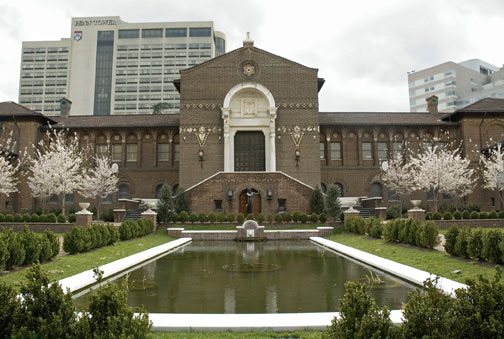
Penn Museum (The University of Pennsylvania Museum of Archaeology and Anthropology) in Philadelphia, Pa., features a variety of exhibits from cultures around the world. A site ideal for those with trouble traveling to archaeology museums in all the countries they may like to explore, long-term archaeological exhibits at Penn Museum include features on Africa, Egypt, Buddhism, Islam and ancient Greece and Rome.
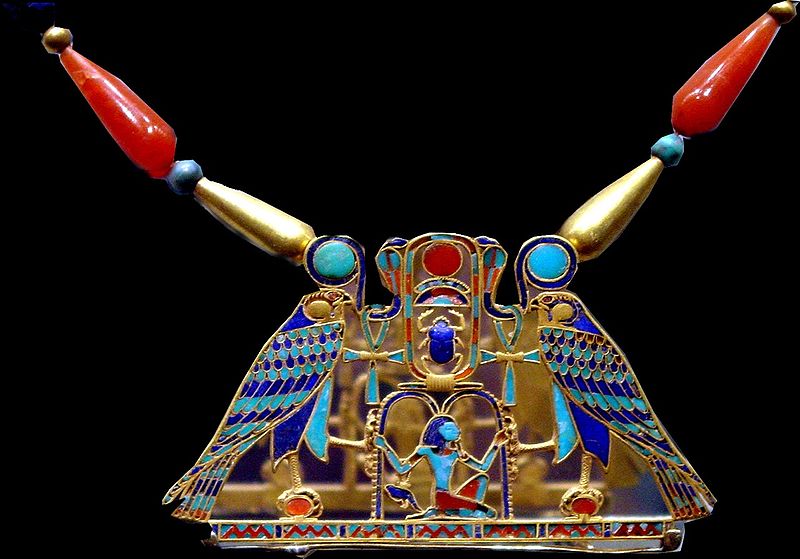
One of the prominent archaeological exhibits at the museum features more than 100 ancient artifacts from the Amarna period in Egypt and the time of Tutenkhamun, some of which have never before been on display. For this ancient culture, this period was a time of religious and cultural experimentation. Another long-standing exhibit contains nearly 25,000 artifacts from excavations in the Levant, which includes areas in modern Israel, the West Bank, Jordan and Lebanon. The collection is the largest from the region in any of the museums in the United States and Western Hemisphere.
The National Archaeological Museum in Athens
The National Archaeological Museum in Athens includes artifacts from a variety of locations in Greece important to archaeology, such as Santorini, Mycenae, the Aegean islands, Delos and the Sanctuary of Artemis Orthia in Sparta. The collection of artifacts from Greek antiquity is considered the richest such collection in archaeology museums worldwide.
Among the 11,000 archaeological exhibits at the museum is the wrongly-named Mask of Agamemnon, one of the most famous pieces in the collection. The museum encompasses sculpture, metalworks and pottery, among other collections, from the archaic period through classical Greece and the Hellenistic era. Like a number of other museums, it does not focus just on the culture of its own country, but has collections of Egyptian and Cypriotic antiquities that were presented to the museum from various donors.
The Petrie Museum of Egyptian Archaeology
Located in London, U.K., the Petrie Museum of Egyptian Archaeology has an estimated 80,000 objects, making up one of the largest collections of Egyptian and Sudanese items in archaeology museums worldwide. It may come as a surprise when traveling to archaeology museums that such a large number of Egyptian artifacts are housed in London, but much of the Petrie Museum's collection comes from documented excavations.
Among this extensive collection are one of the earliest pieces of linen from Egypt, two lions from the temple of Min at Koptos and the earliest example of glazing. Much of the collection consists of firsts, or at least earliest, archaeological finds of their kind.
Kelsey Museum
If your a Classic's buff or love the lives of the ancients like I do, the Kelsey Museum in Ann Arbor, Michigan is a trip you just can't miss. Kelsey Museum "houses a collection of nearly 100,000 ancient and medieval objects from the civilizations of the Mediterranean and the Near East in the William E. Upjohn Exhibit Wing. Aside from the permanent collection, new exhibits are presented on a regular basis at Kelsey.
I'm a bit partial to the seal artifacts found in Iran, such as the Stamp Seal showing Ibex from Tepe Giyan, Iran. Kelsey has an amazing collection of these which I've only begun to investigate.
Visitors are always welcomed if you'd like to check out their visitor information page for more details.
One of my first recollections of a dinosaur exhibit has to be the American Museum of Natural History when I was a child. Of course, you can never forget the large whale floating above your head as you peruse the natural history that surrounds you on every side, but something just draws you in to the dinosaur exhibit. I think this is the case with many natural history museums. It's a childlike fantasy to come face to face with one of these dinosaurs, and as adults, we can still understand the fascination, as we peer into the eyes bones of these massive creatures.
Located in Bozeman, Montana, the Museum of the Rockies hosts an impressive dinosaur fossil collection, found in the mountains of Montana from the Jurassic and Cretaceous periods. Jack Horner, a paleontologist and curator who served as the science advisor for the Jurassic Park films, leads the area dinosaur digs and restoration process at the museum. The exhibit has on display a T-Rex, Triceratops, and Deinonychus, among others.
Currently, the Natural Museum of Los Angeles County hosts a well-regarded dinosaur collection, but it will soon expand its exhibit when its Dinosaur Hall opens this coming summer. According to a Business Wire article, the new Hall will make the Los Angeles museum a world leader in dinosaur exhibits, featuring over 300 fossils and 20 full-body specimens. The museum endeavors to make the public more aware of the process of excavation and preparation, as well as to shed light on how dinosaurs lived, by way of interactive media. Especially notable is its T-Rex adult, Thomas, one of the most complete specimens on the planet.
Although only on display until January, Cincinnati Museum Center debuted an awe-inspiring collection of dinosaur fossils found in the north-central region of China by Chinese paleontologists in 2006. The most exciting part of the exhibit is a rare nest of fossilized dinosaur eggs. For more information, check out this Washington Post article
UMNH has a wonderfully diverse range of dinosaur specimens, mostly from the Late Jurassic period. Many of its fossils were found in the Cleveland Lloyd Dinosaur Quarry in Emery County, Utah, which possesses the densest concentration of Jurassic fossils in the world. The latest additions to its stunning collection are two new species of iguanadonts—a Hippodraco and an Iguanacolossus. Iguanadonts are large, beaked, herbivorous dinosaurs from the Cretaceous period. The skull of the Hippodraco will be on display at UMNH early next year.
The Smithsonian is the veritable granddaddy of American dinosaur exhibits. It dinosaur collection was begun way back in the 1850s. Some of the museum's more interesting and complete dinosaur fossils are its Triceratops, which was for a long time one of the most complete fossils of its kind in the world, its tyrannosaur Gorgosaurus, and a saurapod, Diplodocus.
By-line:
This guest post is contributed by Alvina Lopez. She welcomes your comments at her email Id: alvina.lopez @gmail.com.
The New Acropolis Museum is receiving tons of slack from many archaeologists and residents. The main argument, of course, is about the Elgin Marbles which have been in Great Britain for over 200 years. Dimitrios Pandermalis explains why the marbles should be returned to their homeland.
Dimitrios Pandermalis has been professor of Classical Archaeology at the Aristotle University of Thessaloniki since 1979. Since 1973 he has been Director of the University's archaeological excavations at Dion and conducted extensive programs converting the excavated area into an expansive archaeological and environmental park. From September 1996 to March 2000 he served as National Member of the Greek Parliament and since May 2000 he is the President of the Organization for the Construction of the New Acropolis Museum.
Rob Philpott, the Curator of the National Museum Liverpool, talks about what actually happens at the museum. The video explains the research, fieldwork, and technical aspects about the work that's being done. Philpott also enlightens viewers about the Huxley Hoard, 22 pieces of Viking silver found in 2004.
Definition: An Ancient Digger is anyone, not just an archaeologist, who digs for knowledge, truth, reason, science and education, and strives to share that knowledge with everyone.