• Ancient Digger teaches Archaeology and History to all Ages!

Monday, May 14, 2012

Book Review: The Lost Worlds of Ancient America


This is not another metaphysically inspired adventure saga, based on The Lost Worlds of Ancient America. This book is meant to challenge your prior knowledge of the past; especially where academia based in faith is concerned. The author Frank Joseph urges readers to use their scientific mind to evaluate the information objectively, as this approach, as Joseph describes, is missing from Orthodox scholarship.

When I read books I always look for an angle, and needless to say, one always exists. This book is different. There’s a lesson to be learned, not just from the ancient artifacts that have turned up in the most unforeseen places, but in the presentation. It was Joseph’s intention and his hope that The Lost Worlds of the Ancient America would be…….
 “a catalyst for a new kind of research, free from the narrow-mindedness an academic mind-set that have so far hobbled the healthy growth of archaeology in our country.”
I’m not going to give you longwinded synopsis on the examinations of these ancient worlds, but I will wet your appetite a bit and tell you that you will be surprised. As many of you already know, I will be making my way to Tennessee this summer to teach. Imagine my surprise and delight to hear that the history we associate most with Tennessee, that being the Civil Rights movement is missing a few links. Imagine this movement being tied to a 1st century AD stone discovered in 1889. The Bat Creek Stone was discovered in an undisturbed grave mound and it was initially believed to contain Phoenician characters instead of Paleo-Indian. It gets even better. It is now believed that the characters carved in the stone were written in Hebrew.

At this point I was scratching my head. How did a 1st century stone, written in Hebrew, makes its way into the Americas, and who did it really belong to? Who wrote it and why? Archaeologists Mainfort and Kwas, who initially contested the Hebrew inscription, later conceded that is was Hebrew but the Freemasons carved the characters. For those of you Freemason and Knight’s Templar enthusiasts like myself you’ll agree that both “secret orders”, if you want to call them that, had a connection financially to the Jews. Mainfort and Kwas' judgment is not without merit in my opinion. This is but one story from The Lost Worlds of the Ancient America and it certainly challenged everything I knew, and studied, about American Jews and when they arrived here.

No matter if you’re reading about a Minoan Pendant discovered in Ohio to Anasazi Chocolate, this book will present some of the most surprising and compelling evidence of ancient cultures and advanced technologies that rival even days most complicated of machinery. When I mention evidence I do not mean that the author is trying to sway your opinion in an entirely new direction. Frank Joseph is attempting to give you the tools to have a new perspective, as opposed to basing everything you know, and seem to believe, about a particular subject on the censored history books you’ve previously read in school.

The Lost Worlds of the Ancient America is an easy read, it’s descriptive, simple in its scientific terminology, and there is just the right amount of visuals to spark your interest. It was a pleasure learning something entirely new, and trust me, with my head buried in archaeology and anthropology books for the past couple of years, it's a pleasant surprise to read about a subject, which has been presented in an entirely new light.


This book was presented to me by New Page Books, a division of The Career Press. I did not receive monetary compensation for my review. All opinions are mine.

Thursday, April 21, 2011

Rome: Romulus and Remus Story


One of the most famous stories of Rome, the history of Romulus and Remus continues to captivate to this day. The history of Romulus and Remus tells the story of how Rome was first founded, and modern archaeology provides tantalizing clues to the legend of these brothers as well.


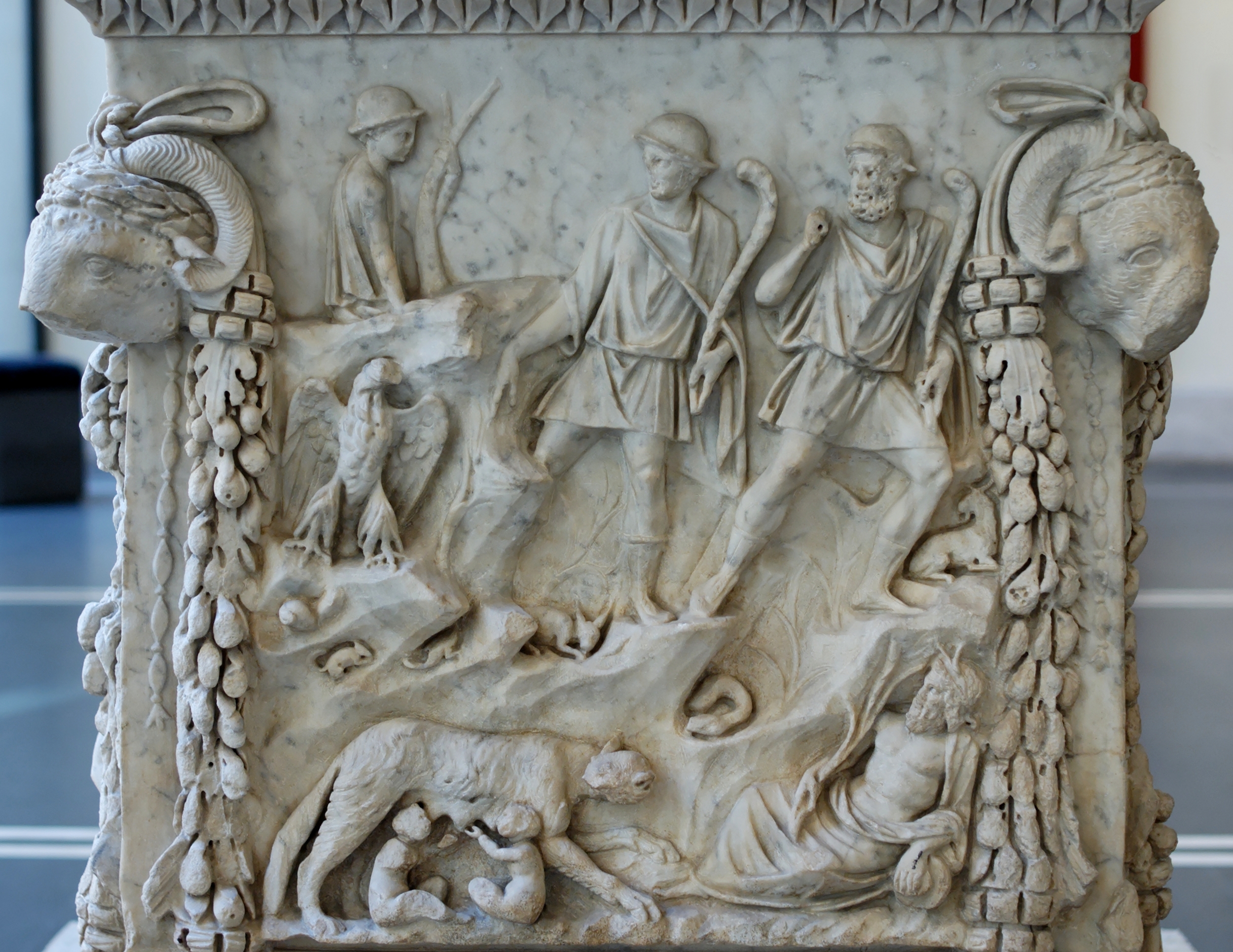
The story begins in the city of Alba Longa. The Romulus and Remus legend contends that they were the twin grandsons of Numitor, rightful king of the land. The twins appear to be divinely conceived, with a human priestess mother and the god Mars. The history of Romulus and Remus begins with strife, when Numitor’s brother Amulius disposed of him and left the twins to die in the Tiber River as infants. The fates were on the side of the twins, and they survived due to one miracle after another. Instead of drowning, a she-wolf discovered the twins and nursed them as infants, along with the help of a woodpecker that would bring the babes food. Then, they came under the care of a kindly shepherd and his wife, who raised them to adulthood. By another incredible twist of fate, they ultimately ended up being brought face to face with Amulius and were told of their real identities. As natural leaders, the brothers were able to amass a strong following and dispose of Amulius, restoring their grandfather, Numitor to the throne. With their grandfather at his rightful place on the throne, the brothers then decided to found a city of their own.

SHE WOLF nursing her Twins: REMUS and ROMULUS. Roman Commemorative 330 AD.
When faced with the task of locating the site of their city, the brothers were conflicted. Romulus was in favor of building their city on Palatine Hill, but Remus favored Aventine Hill. They decided it would be up to the gods to decide the location of the city and began to look for divine signs. According to the history of Romulus and Remus, each brother saw signs in the form of birds. While Romulus saw more birds than Remus, Remus contended that he saw his first and therefore was in the right. Eventually, work began on the site that Romulus selected, while disputes between the brothers continued to grow. Eventually, these disputes led to brother turning on brother. According to the Romulus and Remus legend, Romulus murdered Remus after his brother mocked a wall that he had built on the site. The city was then named Roma after Romulus and he went on to create the Roman Senate and Roman legions.

Archaeologists and scholars often see the Romulus and Remus legend as an analogy for Roman citizens and the history of the city itself. Although there is little doubt that the city itself garnered its name from Romulus, there is great speculation about his brother Remus and the circumstances of his death. In addition, there is great speculation about whether or not the brothers actually did exist. Scholars commonly accept that the brothers were a myth themselves, and that the city gained its name from the fictional character of Romulus, and the evidence presented by archaeology lends credence to this belief.

For modern visitors, Rome offers up tantalizing archaeology, which hints at the history of Romulus and Remus. Symbolism showing a she-wolf with two infant children abounds throughout Rome. Pliny the Elder even described a statue of the she-wolf that once stood in the Roman Forum. A bronze statue that closely represents the original is on display in the Capitol Museum. Although this statue has been dated to the middle ages and not the antiquities, it is still fascinating to gaze upon a modern reminder of Romulus and Remus legend.

Ancient Rome: The Archaeology of the Eternal City (Monograph, 54)Another recent find in Roman archaeology is commonly recognized as a memorial to the Romulus and Remus legend. Located under Palatine Hill, the site discovered in 2005 has yielded rich finds pointing to the location serving as a memorial dedicated to the brothers during the Roman age. Among the artifacts found were painted seashells, pumice stones and even mosaics. Archaeologists working on a renovation project centered on Emperor Augustus’ palace discovered the cave, which has been closely tied to the Romulus and Remus legend.

Other finds in Modern archaeology have heralded other tantalizing glimpses that support the Romulus and Remus legend as well. In 1988, a wall dating back to the appropriate period was unearthed, fitting nicely into the history of Romulus and Remus. At least one modern archaeologist has even gone so far as to claim it is the very wall depicted in the history of Romulus and Remus.


The history of the city of Rome is closely entwined with the history of Rolumus and Remus. The story of the rise of Rome seems to echo the themes found in the history of Rolumus and Remus, and modern archaeology has found clues that ancient Romans embraced these brothers as their city founders, regardless of fact or fiction.

In addition to these finds by modern archaeology, the theme of Rolumus and Remus has appeared in many different forms of Roman art. From mosaics to coins, the imagery of twin boys being nursed by a wolf has appeared in a vast array of mediums.

The history of Romulus and Remus may be only a legend, but it has been woven into the deep fabric of Roman history and provides an interesting tale to demonstrate the origin of this majestic city.

Tuesday, March 8, 2011

Blarney Castle: The Legends and History


The Blarney Castle was constructed in 1446 by Cormac Laidhir MacCarthy, Lord of Muskerry. The tower, which measures 85 feet high, is above the river and curious dungeons and caves reside below. At the time of construction, the MacCarthy family was in power in Ireland. The third Earl of Clancarty and James II were exiled during the 17th century, ending the families hold on Blarney Castle.

Blarney House


The Blarney House, situated 200 yards south of Blarney Castle, was constructed by the Colthurst family in 1874 in the Baronial style. Deterring from the cold and uncomfortable accommodations, the Colthurst family built the house to feel more at home. During the 19th century, wishing steps were created in the gardens. It’s been said in order for a wish to come true you had to negotiate your way down the steps with eyes closed in order for your dream to come true.

The Blarney Stone


The Blarney Castle is most famous for the
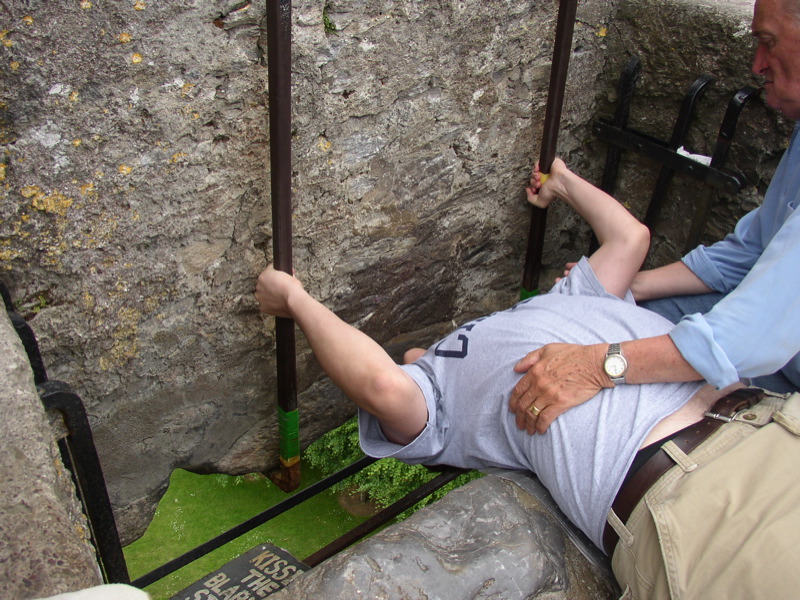
Blarney Stone. One would hang upside down from the battlements after climbing 100 steps to the top, and if a kissed was placed upon the stone, the gift of eloquence was conferred upon them. In 1912, in fact, Winston Churchill kissed the stone, and what came next was history.

“Wishing Steps” At Blarney Castle


The legend of the Blarney Stone is unknown, but folklore tells of Jacob in the Bible, who rested his head upon the stone when he saw angels ascending and descending a ladder to heaven. Some believe the wishing steps in the garden are reminiscent of the ladder as well.


During the Celtic revival, the term Lia Fail was used to describe the illustrious stone by enthusiasts. When High kings were crowned at Tara during Pagan times, the stone would scream when the rightful successor touched it.

Another legend describes a time between Elizabeth I’s reign and Cormac MacCarthy when the queen looked to destroy the power of the Irish lords. MacCarthy was evidently playing deception so the queen remarked that his protestations were “more blarney”.

Today, thousands of patrons walk the grounds of Blarney House and the famous gardens, trying to catch a glimpse of anything out of the ordinary.

Beautifully maintained gardens of lawns, shrubs, flower beds and trees, which gently slope towards the lake, providing a perfect setting for special occasions. Herds of cattle browse peacefully beneath ancient lime, oak, beech and gnarled walnut trees. ~Blarney Castle

Monday, February 8, 2010

Monday Ground Up: Hawaiian Night Marchers and the Ghosts of Hawaii


In every culture throughout history there existed a certain concept of the dead. The Hawaiian concept was more specific with Polynesian ritual and beliefs pertaining to what they called "uhane". On certain occasions, these night marchers would come back for a special procession.

Uhane was not permanently attached to the body and it could exit during the night through the corners of your eyes and it would return before you woke. This spirit was likely to take long trips at night, for a short period of time and this formation of activity would result in vivid dreams and nightmares.Uhane could converse with the sleeper if they needed advice, and this conversation usually took place between Uhane and the sleepers aumakua.

The Underworld

The connection of spirits was usually a path that often happened with death and the resurrection of a person who's time wasn't exactly expired. In death, however, the ahume would leap from the body with its spirit living on, until it reached the Po-the underworld.

The Hawaiian underworld was a leaping place if the Uhane was able to attain it. If the Ihane jumped successfully, it would enter eternity, the realm of the spirits and the ancestral deities. If the spirit had a lived a honest life, it would be welcomed into the realm.

Although this "sea of eternity" was often described as a place with dark seas and a world of spirits, it was hardly envisioned as hell. It was more of a place for new teachings like hula and sports and other entertaining activities.

The under world was ruled by Milu and dead souls would enter Lua-o-Milu through a trail called Mahiki. Of course, these religious traditions and ideals were completely banned in 1820 when Christian missionaries transformed Po into Hell and Milu was consider Satan. Christians believed that Milu had disobeyed his akua and he was sent to the underworld as punishment. This belief is only shared by Christians and post contact Hawaiian writers influenced by missionaries to misrepresent their own culture.

The Ghosts

If the uhane had completed harmful acts and was ignored by their family in life, they were unsuccessful in their jump. They had to live their lives wandering the islands in their spirit form.

These ghosts haunted specific places and they remained miserable. They frequented places they had once dwelled in when they walked in life. At night, they would dine on spiders and moths, and sometimes, they would sneak food from humans when they weren't looking or they were asleep.

They came in the form or shape of a human, only their feet were not visible. Humans were unable to see them, but they knew they were there. In fact, they went to great lengths to protect themselves and their families, tying a variety of leaves from certain bananas at the doorway. They did this night, so not to tempt the ghosts from leaping out while they ate.

Although it was believed that these ghosts could not inflict harm on humans, they would still play tricks. The ghosts tripped people as they walked in the dark, knocked on walls, and threw rocks. They loved to tease tourists, often leading them down the wrong paths. These places were, once known, avoided at all costs.
Even the luminous glow of the Hawaiian waves is said to be cause by ghosts. A man, Punia, captured several ghosts in a net in the ocean and killed then. Their deaths caused the sea to glow at night, and also imparted a strong odor to the fish kala and palani.

The Night Marchers

On some nights, according to the Hawaiian Lunar Calender, there are ghostly processions taking place. These are the night marchers, or rather spirits that have returned in the form of dead chiefs, warriors, priests and priestesses, akua and aumakua.

Any person that witnessed this event was struck dead immediately. However, if the families aumakua was able to protect their living family, no harm would be done.

The procession of the night marchers was lead by torch bearers through the trees to the beating of a drum. If you heard them, you would either hide until they passed or you would lie face down in the dirt, completely naked, and the marchers would pass by in amusement.

Their stay was usually brief and they were gone before the dawn, however on some occasions, they would stay and play sports.

No one really knows why these processions occurred. Perhaps the spirits missed their earthly existence, however it doesn't explain the immediate death to onlookers.

The Hawaiian Ghosts of Today

As more and more developers flocked to the island and started disturbing sacred sites, the stories of ghostly haunts became prevalent. There are reports of a shopping center built directly on top of a sacred burial ground and a hotel built on an old Hawaiian temple. The ghostly activities became so bad that a Kahuna was called in to bless the site. After several attempts, the ghosts disappeared, for now.


Resources

The Hawaiian Hula Dance

Hula was a movement, or rather a celebration, of deities and ritually marked occasions. The dance displayed the history of the peoples and it embodied a wonderfully delightful pastime enjoyed by deities and humans. There are several stories that speak of the origins of Hula, however one is widely accepted, that being the creation of Kapo. Kapo was the first dancer and teacher of the Hula dance, so it’s not at all surprising that the true origin of Hula was traced back to Kapo.The Hawaiian Hula Dance


Sources

Picture Akua

Like Ancient Digger? Why Not Follow Us?


Subscribe Via RSS Feed Follow Ancient Digger on Facebook Follow Ancient Digger on Twitter Subscribe to Ancient Digger Via Email

Get widget

Search


Ancient Digger Archaeology Copyright © 2015 LKart Theme is Designed by Lasantha