• Ancient Digger teaches Archaeology and History to all Ages!

Friday, September 28, 2012

La Bastida Unearths 4,200-Year-Old Fortification, Unique in Continental Europe


The archaeological excavations carried out this year at the site of La Bastida (Totana, Murcia) have shed light on an imposing fortification system, unique for its time. The discovery, together with all other discoveries made in recent years, reaffirm that the city was the most advanced settlement in Europe in political and military terms during the Bronze Age (ca. 4,200 years ago -- 2,200 BCE), and is comparable only to the Minoan civilisation of Crete.
Share This:

The discovery was presented today by Pedro Alberto Cruz Sánchez, Secretary of Culture of the Region of Murcia and Vicente Lull, professor of Prehistory of the Universitat Autònoma de Barcelona (UAB) and director of the excavation. The event also included the presence of Iván Martínez Flores, executive administrator of the research and head of the UAB Area for Strategic Projects.

The fortification consisted of a wall measuring two to three metres thick, built with large stones and lime mortar and supported by thick pyramid-based towers located at short distances of some four metres. The original height of the defensive wall was approximately 6 or 7 metres. Until now six towers have been discovered along a length of 70 metres, although the full perimeter of the fortification measured up to 300 metres. The entrance to the enclosure was a passageway constructed with strong walls and large doors at the end, held shut with thick wooden beams.

One of the most relevant architectural elements discovered is the ogival arched postern gate, or secondary door, located near the main entrance. The arch is in very good conditions and is the first one to be found in Prehistoric Europe. Precedents can be found in the second city of Troy (Turkey) and in the urban world of the Middle East (Palestine, Israel and Jordan), influenced by the civilisations of Mesopotamia and Egypt. This indicates that people from the East participated in the construction of the fortification. These people would have reached La Bastida after the crisis which devastated their region 4,300 years ago. It was not until some 400 to 800 years later that civilisations like the Hittites and Mycenaeans, or city-states such as Ugarit, incorporated these innovative methods into their military architecture.

A Construction Designed for Combat

The fortification of La Bastida is an impressive construction due to its monumentality, the expertise demonstrated in architecture and engineering, its antiquity and because it helps us today to learn about such a distant past which is also easily recognisable in the present. It also represents an innovation in the art of attacking and defending fortifications, especially on the military front. The construction was designed solely for military purposes, by people experienced in fighting methods unknown in those times to the West.

The towers and exterior walls denote advanced knowledge of architecture and engineering, with slopes of over 40 per cent. The lime mortar used offered exceptional solidity to the construction, strongly holding the stones and making the wall impermeable, as well as eliminating any elements attackers could hold on to.

The postern gate, as a hidden and covered entrance, demanded great planning of the defensive structure as a whole and of the correct engineering technique to fit it perfectly into the wall.

Continental Europe's First Bronze Age City

The latest excavations and the result of Carbon 14 dating indicate that La Bastida was probably the most powerful city of Europe during the Bronze Age and a fortified site since it was first built, in circa 2,200 BCE, with a defence system never before seen in Europe.

The fortification was not the only discovery made. From 2008 to 2011, excavations unearthed large residences measuring over 70 square metres distributed throughout the city's four hectares. These large houses and public buildings were alternated with other smaller constructions, all separated by entries, passageways and squares. A large pool held by a 20-metre dyke with a capacity for almost 400,000 litres of water also clearly denotes that the city's population was of a complexity and that it used advanced techniques incomparable to other cities of its time.

The discoveries made at La Bastida reveal a military, political and social rupture: the establishment of a violent and classist ruling society, which lasted seven centuries and conditioned the development of other communities living in the Iberian Peninsula. Overall, archaeologists are redefining what is known of the origin of economic and political inequalities in Europe, as well as military institution and the role played by violence in the formation of identities.

A Unique Archaeological Park in Spain

The excavations at La Bastida are directed by the Research Group in Mediterranean Social Archaeoecology (ASOME) of Universitat Autònoma de Barcelona (UAB), formed by lecturers Vicente Lull, Rafael Micó, Cristina Rihuete and Roberto Risch. The research group receives the support and funding of the Department of Culture Regional Cultural Ministry of Murcia, the UAB, and the Totana City Council. The Spanish Ministries of Industry, Trade and Tourism, and of Economics and Competitiveness also give financial support to the project.

La Bastida will be systematically excavated with the aim of becoming a unique archaeological park open to the public and consisting in a monographic museum, a research and documentation centre, and part of the site open to visitors. Advancing and maintaining this project will depend on the commitment shown by the different public institutions and social agents taking part in the excavation of La Bastida.

The above story is reprinted from materials provided by Universitat Autònoma de Barcelona, via AlphaGalileo.

Source

Universitat Autònoma de Barcelona (2012, September 27). La Bastida unearths 4,200-year-old fortification, unique in continental Europe.

Tuesday, July 10, 2012

Dig Reveals Even More Secrets of Roman Mayport


An even more fascinating picture is emerging of Roman Maryport as excavations reach the halfway point.

The team had already identified at least one “monumental structure” on the hilltop which overlooks the Roman fort and the Senhouse Museum.

But now archaeologists believe that they have found evidence of more than one structure, some of which would have been supported by gigantic timber pillars.

Professor Ian Haynes of Newcastle University, who is leading the excavation, said that a lot of interesting features were coming up under the trowel.

But he was not prepared to “float any hypotheses” about what the structures had been -at least not yet. He said: “We have a lot of features and suggestions of not one but multiple structures coming through.

“What is crucial from an archaeological point of view is that we can see different features inter-cutting one another.”

A closer investigation of how these features relate to one another will help experts to establish a “sequence” or chronology for the site.

At present, archaeologists don’t know which of the structures actually came first.

Prof Haynes said that the picture emerging now appeared much more “complex” than it appeared on the basis of the 2011 excavations.

“What I’m seeing in terms of character and complexity is more exciting,” he said.

However, the excavations have been somewhat hampered by rainfall.

A certain amount of moisture on the ground can make it easier to spot remains but too much can destroy archaeological evidence and delay a dig.

“We are very much at the mercy of the elements,” he added.

Meanwhile, the next crop of volunteers were yesterday gearing up for the excavations.

Graham Ryan, 67, of Beckfoot was also at last year’s Maryport dig and has been involved in excavations at the Roman fort and also the settlement of Vindolanda. He said: “Everybody is excited and perhaps we will know the full story this year.”

Last year’s excavation helped debunk an age-old myth when the team proved beyond doubt that the Roman altars found on the site had not been buried as part of a religious ritual but had been used in the foundation of the hilltop structures now being investigated.

The Senhouse Roman Museum Trust and Newcastle University started the second year of excavation of the Hadrian’s Wall Trust-owned Camp Farm last month.

The Trust-funded excavation is understood to be costing between £60,000 and £100,000.

Source: New and Star 

Sunday, February 20, 2011

Fort Hoskins Reconstruction By Archaeologist David Brauner


Ancient Digger loves a great fort discovery, but how about a fort reconstruction?

For 35 years, archaeologist David Brauner has studied and reconstructed the history of Fort Hoskins, a Civil War-era Army outpost in the Oregon Coast Range that existed for less than a decade before it was decommissioned, dismantled and consigned to the past.

Since 1976, the Oregon State University professor has led five digs at the site 20 miles northwest of Corvallis, unearthing thousands of artifacts from buttons and belt buckles to brandy bottles and chamber pots.

He has mined nuggets of information from official correspondence, military maps, inspectors' reports and soldiers' diaries, patiently piling detail on detail to assemble an ever-clearer picture of the fort in his mind's eye.

With no surviving photographs to compare it to, he thought that mental image was as close as he would ever come to seeing what Fort Hoskins actually looked like - until he saw the painting.

Read the entire story at Gazette Times:  Portrait of the past

Picture © Oregon State

Monday, October 25, 2010

Monday Ground Up: A Guide to French Forts in Canada


This guest post is written by Vinay Shingornikar

This post aims at shedding light on the forts established by French colonists and chartered companies in Canada. The sites range from large citadels to small trade posts that were built in the period of 1640s-1750s. Few forts were captured by the French from rival British fur trading companies. Even though most establishments are reduced to ruins and have disappeared over time, few forts have survived the battles and have been reconstructed.

The French forts in Canada stand testament to the country's history and deliver an insight on regional culture and background. Along with rich history, these windows to the past also present spectacular views and exciting activities for all ages.

French forts in Canada.

Fort St. Anne  Fort Espérance Fortress of Louisbourg 
Bas de la Rivière  Fort Frontenac  Citadelle of Quebec 
Fort Beauséjour Fort Gaspareaux Fort Maurepas  
Fort Boishebert Fort Royal (Plaisance)  Fort Paskoya 
Fort Bourbon Fort Saint Jacques  Fort Richelieu  
Castle Hill  Fort Saint-Jean Fort Rouge  
Fort Chambly  Citadelle of Montreal Fort Rouillé 
Fort de la Montagne  Fort Sainte Anne Fort Sainte Thérèse  
Citadelle of Quebec  Fort Kaministiquia Fort Senneville  
Fort de la CorneFort La Reine Fort St. Pierre 
Fort Dauphin  Fort La Jonquière  Fort Ville-Marie 

Brief information on some prominent historic forts

Citadelle of Quebec (Constructed in 1693)


Quebec City is the only city in North America that still holds its historic city walls. The Citadelle is a part of the city fortifications. Located atop Cap Diamant, it served as a military base and residence for officials. The Quebec Parliament Building and provincial government buildings are located in close proximity to this historic site.

How to reach – Take a flight to Quebec City and head to the Plains of Abraham near the coast. The Citadelle stands adjoining to these plains.

Fort Rouillé (Constructed in 1750)


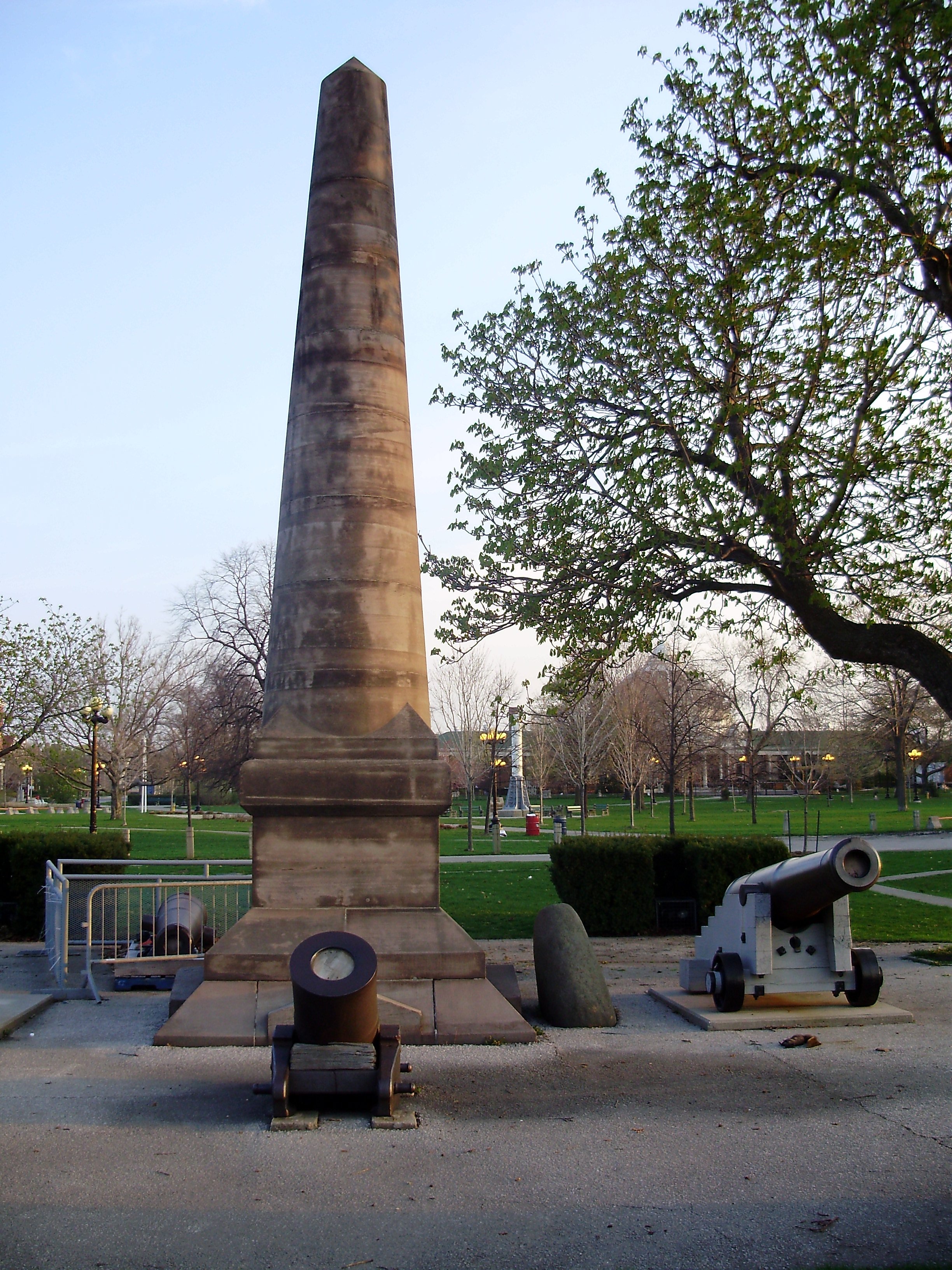
Established around 1750, Fort Rouillé was a French trading post. It was also referred to as Fort Toronto because it is located in Toronto, Canada. In the past, the French fort was surrounded by a wall and housed five buildings, including quarters for soldiers and senior officers. Currently, a large obelisk marks the spot where the fort originally stood.

How to reach – Fort Rouillé is located within the city limits of Toronto. Hence, if you visit Toronto, you can check the site at your convenience.

Fort Senneville (Constructed in 1671)


Fort Senneville was constructed by the Canadiens of New France in 1671. It is one of the most remotely located forts of Montreal, Canada. Formerly, it was highly esteemed for its powerful cannons and wall guns. Fort Senneville was destroyed under the successive British rule in 1776. The ruins have been maintained ever since. It was acknowledged as a historic site in 2003.

How to reach - Fort Senneville is situated near the Sainte-Anne rapids on the Island of Montreal. Hence, head to the southwestern tip of the island if you fly to Montreal and land at the airport.

Fort Saint-Jean (Constructed in 1666)


Originally built by the soldiers of the Carignan-Salières Regiment, Fort Saint-Jean was a part of a chain of French forts constructed along the Richelieu River. Over the years, the fort was reconstructed several times. It is worth noting that the fort sets itself as a military site that has been under constant occupancy for the longest time after Quebec City in Canada. Currently, it houses the Royal Military College of Saint-Jean and is recognized as a National Historic Site.

How to reach – The historic Fort Saint-Jean is located on the Richelieu River. This region falls under the Canadian La Vallée-du-Richelieu Regional County Municipality, Quebec.

Fort de la Montagne (Constructed in 1685)


Fort de la Montagne is also known as Fort des Messieurs or Fort Belmont. It is considered among the oldest structures in the Island of Montreal. Formerly, the fort had four bastions and an array of ramparts and palisades. However, these were destroyed in 1854, leaving behind two towers. In 1982, the surviving towers were identified as historical monuments and were restored between 1984 to 1986.

How to reach – To reach this site, head to the corner of Sherbrooke Street in Montréal city.

Author Bio -Vinay Shingornikar is a popular and accomplished writer having authored a number of articles across a wide variety of online publications. Currently, he is happily employed with Flight Network. Founded in 1998, Flightnetwork.com has grown to become Canada's second most visited online travel agency, specialising in offering highly discounted prices for domestic and international flights, along with hotels, cruises, vacation packages, and car rentals.

Also check out:

Monday Ground Up: Diving the Titanic in Newfoundland

She hit an iceberg and sank, in one of the most epic tragedies of all time. Nearly 100 years later tales of the RMS Titanic remains legendary. Perhaps the work of James Cameron and Leo Di Caprio can be credited for bringing the story of this ill-fated trip to mainstream popular culture. Or perhaps, even without a multi-billion dollar blockbuster our morbid human curiosities would still keep us entranced by this sunken piece of history.

Medieval Castle Casa Loma Castle In Toronto, Canada

One often hears this question asked from visitors from abroad, especially from Europe where kingdoms and castles date back over many centuries. The Canadian Federation occurred on July 1, 1867. -Canada is just not so old to possess many of what we would normally be considered 'castles.'

The Royal Ontario Museum Hosts the Terracotta Army

TORONTO.- The Royal Ontario Museum (ROM) hosts the Canadian premiere of The Warrior Emperor and China’s Terracotta Army from June 26, 2010. Prior to its embarking on a Canadian national tour, the exhibition will be displayed in the Garfield Weston Exhibition Hall on Level B2 of the ROM’s Michael Lee-Chin Crystal until January 2, 2011.

Sunday, January 17, 2010

Old Fort Park Turnbull Ruins in New Smyrna Beach


After a short day of screening, I accompanied the archaeologist Bruce Piatek to the Old Fort Park in New Smyrna Beach. A far as what type of information was present at the site, well to be truthful, there was none at all. No pamphlets, no plaques or boards stating the history of the site, and no one to talk to about any questions we may have had, and I had plenty.

As far as first impressions, it was evident that this site may have been a part of the Turnbulll Colony, and the theory was that this foundation was the site of his palace overlooking the water. I for one don't believe this theory. It was clearly not used as church, which is another theory, because it does seem there was sections designated for weapons or possibly a lookout area. Also, the walls of the structure are much to thick, as if they were protecting or storing something.

There are no doorways to move from room to room, although after construction of an outer wall was completed during the Great Depression, I can see some new additions blocking off any openings there may have been on the east side. There was also bastion constructed at the same time, which leads me to believe that this may have been a fort.

It really is a mystery, and when I noticed the thick concrete running down the center, I ventured a guess that it may have been used to construct ships.

No further research has been done on this site, as I'm sure, the community believes it's not economically feasible to do so. Although, if the walls were taken down and the site was visible to to traffic, I think it would gain more interest due to the theories surrounding its construction.

One archaeologist believes that this was the original Castillo De San Marco, but no evidence til now has supported his theory.

In 1776, it was suggested that a very large stone building was erected in the vicinity of New Smryna that was built as a "mansion house," but the true function of these ruins is unknown to historians and archaeologists.


This is what we do know:

The Old Fort Park Archeological Site is a historic site in New Smyrna Beach, Florida, United States. On July 10, 2008, it was added to the U.S. National Register of Historic Places.

This property is part of the Archeological Resources of the 18th-Century Smyrnea Settlement of Dr. Andrew Turnbull Multiple Property Submission, a Multiple Property Submission to the National Register.

So what does this look like to you? I would love to hear some of your suggestions, ideas, theories, and questions.

Saturday, September 12, 2009

Ruins of Fort Bowie


Fort Bowie is located near Apache Pass in southeastern Arizona. It’s an isolated, historical trip back in time to the old frontier, where wagons were filled with settlers moving from the west and the prairies were flourishing with wildflowers.

Image via Wikipedia

For years, the Apache Indians tolerated Americans, Mexicans, and Spaniards who traveled through the Apache Pass in order to quench their thirst at Apache springs.

However, when their was an influx of settlers during the 19th century and the acquisition of land and property was of the utmost importance, this disrupted the region and the way of life for the Native Americans.

Around 1858, Cochise, a chief of the Chokonen band of the Chiricahua Apache, allowed the construction of a mail post near the Apache spring, which carried mail and passengers from Missouri to California. Read and See more about Fort Bowie in Arizona

Monday, September 7, 2009

Monday Ground Up: Castle and Fortification Hotels


Castles and Forts Converted Into Luxurious Hotels


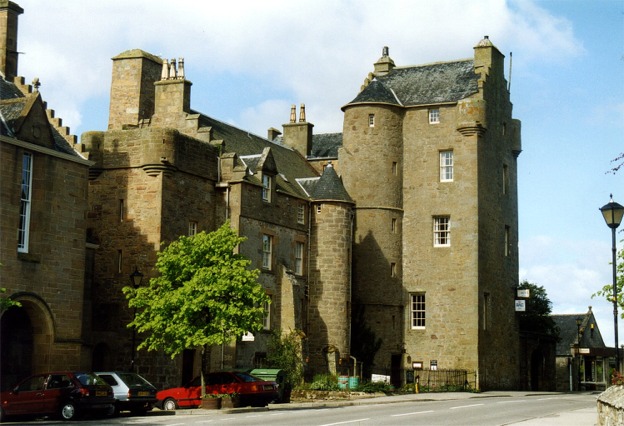
Dolhousie Castle


The Ramsey Family has held the Dolhousie Castle in possession longer than any castle in Scotland. All that's left of the 0riginal structure are the foundation walls and the dungeons. When the English had gained an upper-hand against Scotland, Dolhousie Castle fell into their hands. Sir William Ramsey led forays against the castle until the English turned it back over.

During a celebration at Roxburgh Castle, which was owned by Sir William Douglas a friend of Alexanders, he scaled the walls and surprised the party goers. Douglas had already grown quite tired of the antics, so when Alexander won appointments by King David, Douglas was so jealous that he plunged a dagger into Alexanders back and threw him into a dungeon at Hermitage Castle and left him there to starve. It was said that close to 450 years later, workers at Hermitage found Alexanders remains.

Uninvited guests were warmly welcomed by hot oil poured on them from above the towers, or they were lowered into the dungeons by ropes.

Now a days, it's more charming and elegant. Oak paneling, canopy beds, a romantic candle lit dungeon for dining, and Tartan panels and bedspreads make you feel like your back in the 15th and 16th century.

Schloss Waldeck

Source

Schloss Waldeck sits high above the Edersee in Germany with a phenomenal view of the Eder River where the medieval past is alive.

In 1120, this fortress was the home of the counts of Waldeck. Large sections were destroyed during the Seven Years War , which explains it's crumbling, dreary condition. The castle was completely abandoned during the 17th century for reasons unknown.

Presently, it's being used both as a hotel and a museum, displaying artifacts from the Waldeck counts and a sorceresses tower, complete with prison cells. Oddly enough, most of the festivities start in the evening when torchlight tours are provided in the 13th century kitchen, dungeons, and jail.

Boldt castle on Heart Island


Shelly Barclay says Boldt Castle is a breathtaking structure on Heart Island on the St. Lawrence River in New York. Heart Island is situated in the picturesque Thousand Islands in Alexandria Bay. For more than one hundred years, Boldt Castle and its outlying structures have graced Heart Island. You would be hard pressed to find a more romantic castle in a more picturesque setting. Like the Taj Mahal before it, Boldt Castle was erected as a monument to a man's undying love for his wife.

The Castle of Taunton


Taunton Castle is the home of Englands oldest fortress. In the Anglo Saxon Chronicles, it was said that a wooden castle was built here in 710 by the King of Wessex. The castle later was burned to the ground and later rebuilt. On the walls of the hotel, you can see the painted arms of the Bishops of Winchester who were granted the property by Queen Frithogytha of the West Saxons.

By 1001, the Danish had already burned the castle down, as well as the city. However, by 1066 another castle had already taken it's place.

Around the 15th century, Perkin Warbeck pretended to be the Duke of York in order to invade England. He tried not once, but twice and failed. While he was attempting to invade, he captured Taunton proclaiming himself King Richard IV. However, when Henry VII came to Taunton he captured Warbeck, who later met his fate in the Tower of London.

Close to 200 years later, the Duke of Marmouth came to Taunton and proclaimed himself King. He was however defeated in the Battle of Sedgemoor, and he and his men were executed by Judge Jeffery.

During the 18th century, part of the fortress was turned into a hotel. During the spring, the outer structure is adorned with wisteria, framing it like a country garden.

The decor is medieval in motif with heavy velvet window panels and antique furnishings. The guest rooms are enchanting with bouquets of local flora and bottles of sherry. It's a perfect destination for historians, honeymooners, and family gatherings.

Dornoch Castle


The cathedral and Dornoch Castle were both built by Gilbert Murray in 1224. Hundreds of years later a feud between the Murrays and the Mackays caused Dornoch to be pillaged and the castle and cathedral were burned.

Around 1722, Dornoch was home to the infamous burning of the last witch in Scotland, Janet Horne. She was said to have turned her daughter into a pony and she rode it to the witches coven. The castle was rebuilt and used as a jail, schoolhouse, courthouse, and garrison.

The castle is more bizarre than luxurious with it's winding staircase up to reception and the dungeons used as storage space. The rooms are simple and comfortable with views of the countryside and grounds. Five minutes away is the Royal Dornoch Golf Club which is voted one of the top twenty courses in the world.

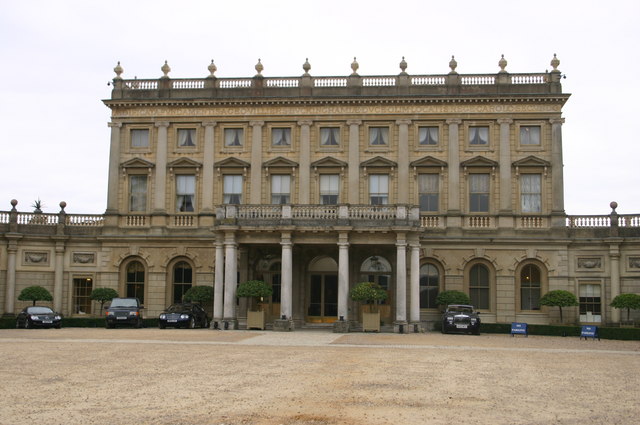
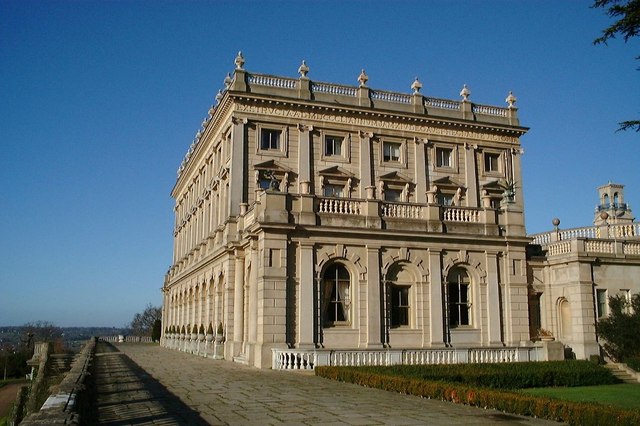
Cliveden-17th Century

The Duke of Buckingham trusted minister of King Charles II needed a place to carry on an affair with the Countess of Shrewsbury. In Britains most famous duels, Buckingham killed the countesses husband with a swift blow to the head. Buckingham was dismissed years later by the king.

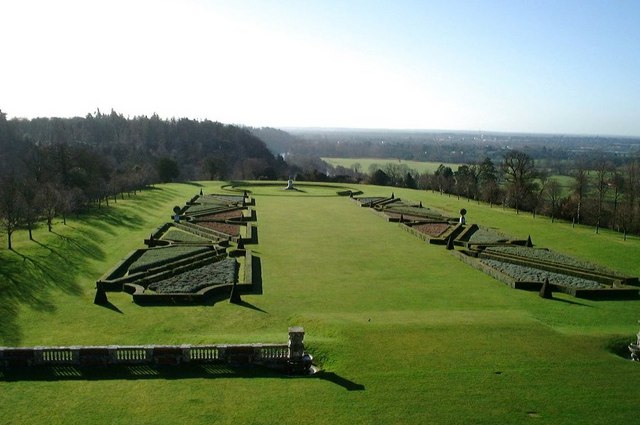
Over the years and with the passing of hands, a dovecote, water tower, and the stables were added. In Britain, Cliveden is associated with the Astor family who purchased the property in 1893 and added gardens and the art found throughout the house.

When Waldorf and his bride Lady Nancy Astor received Cliveden as a wedding present they spared nothing to provide the most lavish of parties. Guests included Henry James, Winston Churchill, Edward Prince of Wales, and many more accomplished individuals.

Presently, this luxurious hotel is a place of solitude and breathtaking scenery. The inner public rooms are adorned with carved wooden columns, molded ceilings elegantly decorated by window panels, such as the Orkney tapestries.

There are four staff members for every room who assist you in unpacking and drawing baths, amongst many other duties.

As for the cuisine, there's one word,"exceptional". Clivedens restaurants are considered the finest in England. To add to this luxurious adventure, Cliveden provides two boats which are available to cruise the Thames. However, if romance is what you crave the Suzy Ann goes out for a pre-dinner champagne cruise during the summer evenings.

Star Castle

Several miles off the Cornish coast, the Scilly Isles tell tales of Celtic legends and holy men. It was estimated that several thousand years ago was the first time men inhabited the area. The area is thriving with lush vegetation, including flowers that grow to seven feet tall.

The Star Castle was built in 1593 during Elizabeth I reign as a defense against the Spanish. When King Charles II was hiding from Cromwell in 1643, he hid in the Star Castle. Following his stay, Blake took over the castle from Sir John Greenville, and then the cavaliers after that. In 1933, King Edward VIII officiated the opening ceremony of the castle as a hotel.

The Star Castle has eight pointed ramparts and is surrounded by a dry moat. It sits on Garrison Hill overlooking the sea and is a short walk to Hugh town. There are two types of accommodations including several rooms with canopy beds and white wash walls with wooden beams. There are also modern garden apartments with verandas and a view of the sea.

More Interesting and Fascinating Destinations


Penelope Sunderland says "Would you like to know what life was like in medieval Ireland? There are several places you can go to visit where a guided tour around old sites will give you a flavor of life in the past. Three good examples in southern Ireland are the castles at Blarney, Bunratty and Cahir." Read more about life in a Medieval Irish Castle


nobert soloria bermosa says "Castles were particularly popular in Europe and in some parts of Asia during the Middle Ages up to the 19th century. They have been built either as fortress or residence of the nobilities. " Read more about the World’s Magnificent Castles: Perfect Tourist Destinations


The Templars erected many buildings in the west including preceptories, churches, and granges for administration purposes. They were simplistic and utilitarian in form with of course a few exceptions. There was no dictated form of Templar church architecture. Read more about the 10 Mysterious and Mystical Templar Castles, Churches, and Fortresses


Saturday, August 22, 2009

Seaside Strongholds in Charente Maritime


The fort was built at the end of the XVIIIth century in order to ensure the protection of the mouth of the Charente, as well as the Royal Fountain. This fountain was erected in 1671 to supply the King’s ships in potable water from a source underneath the river. With those of Brest and Belle-Ile, the Fontaine Lupin remains one of the last three ships watering places of France. The ships built in the Rochefort arsenal all stopped here. The frigate L’Hermione, on which LaFayette set sail to America to help the Insurgents, was also fed here. The fort was built from 1683 to 1686 by the great engineer Vauban (1633-1707)and was listed in 1950. By Francoise Hagnere

Like Ancient Digger? Why Not Follow Us?


Subscribe Via RSS Feed Follow Ancient Digger on Facebook Follow Ancient Digger on Twitter Subscribe to Ancient Digger Via Email

Get widget

Search


Ancient Digger Archaeology Copyright © 2015 LKart Theme is Designed by Lasantha