• Ancient Digger teaches Archaeology and History to all Ages!

Monday, January 16, 2012

Breaking News: The Senator Burns to the Ground


What a shame! In August of last year I wrote an article on The Senator. The Senator at Big Tree Park is one of the largest Cypress trees in America. The Senator was used as a landmark by the Seminole Indians, as well as the other Native American tribes in the area. During the Hurricane of 1925, the top of the Senator was destroyed, lopping off 47 feet of the original 165 feet.

© Ancient Digger

© Ancient Digger


Today, the Senator fell to the ground in a blaze, just minutes from my home.  The Orlando Sentinel is reporting that "they are awaiting a complete explanation for why investigators ruled out arson. If the fire wasn't set, how did it start? It's important to get answers because another massive cypress tree, Lady Liberty, is still standing at Big Tree Park. Though smaller and less elderly (2,000 years old instead of 3,500), it needs to be preserved and protected if security at the park is lacking."


Lats year I shot footage of my trip to the Senator, accompanied by music by Mary Gunderson. You can see it here in all its grandeur. What a sad day for Florida, as part of our history is lost

Friday, May 13, 2011

Seminole War Military Artifacts Discovered in Fort Lauderdale


The first United States stockade named Fort Lauderdale was built in 1838, and subsequently was a site of fighting during the Second Seminole War. The fort was abandoned in 1842, after the end of the war.

Today, archaeologists discovered a huge of chunk of South Florida history in Fort Lauderdale. Military artifacts dating to 150 years ago have been excavated by Robert S. Carr, executive director of Archaeological and Historical Conservancy Inc. of Davie, w isho leading a team digging the site.

As many Floridians already know, there are dozens of forts in Florida that have never been found, so the discovery of Lead musket balls, a kaolin clay pipe fragment and buttons from soldiers' and sailors' uniforms, is pretty exciting for Florida Heritage.

Carr noted:

"We really didn't expect to necessarily find anything because this park has been so developed over the last 50 or 60 years with parking lots and bathrooms". One the location of the fort has been conformed it may be eligible for listing in the National Register of Historic Places. 

"It is exciting, during the 100th anniversary of the city, to find its namesake," said Carr, who hopes to dig up wooden remains of the fort's foundation. "It's the most significant find in Broward County and Fort Lauderdale, and one of the most significant finds in the Seminole Wars era."

Tuesday, March 15, 2011

1100 Year Old Saltwater Dugout Canoe Discovered


Saltwater canoes usually don't survive as drifting up on shore allows the elements to take hold or the ocean simply chews up the vessel.

Harry Koran found the canoe after walking up the shorline of Pinellas County in Tampa Bay. Koran knew it was man made because of the straight lines, slopped sides, and evidence of burning. Dug our canoes were made by the Native Americans by using controlled burns inside the tree. Afterwards, the remains are dug out.

Archaeologists underwent exploratory excavations and sent a piece to the lab for radio carbon dating. The resulting date was 890 AD.

Watch the full video of the history of this vessel and where it's future will be.

Friday, March 4, 2011

Can Humans Survive In An Even Warmer World?


During the Pleistocene ice sheets close to 2 miles thick covered the earth, the ground temperature was much cooler, and sea temperatures were 3 to 4 degrees cooler than they are today.

Change of a single degree in ocean temperature can cause irreversible changes or cessation in the movement of ocean currents. Florida and the Bahamas are a perfect example used to demonstrate the drop in sea level during the Pleistocene.


As you can see by the picture, sea levels dropped close to 300 feet in Florida, exposing larger land mass, aiding large animals in their transition from South America to North America via the Great American Biotic Interchange (Florida Museum).

Pleistocene land mammals were probably the single most important food source for Upper Paleolithic humans. On the contrary, depending on who you talk to today, people are sustaining a healthy lifestyle by living off the land or eating a diet rich in meatless protein, such as legumes.

Grasslands and cooler environments are indeed favorable for large land mammals, as the case was with megafauna during the Pleistocene, but today we don’t depend on them for survival.

Although it’s easy to have faith in humankind that we will find a way in a warmer world, I can’t help but question the actual facts presented by NASA’s Goddard Institute for Space Studies. Read this excerpt from the article, Global Surface Temperature Change, by J. Hansen, R. Ruedy, M. Sato, and K. Lo, and see how your outlook for humans in a warmer world changes.

The 12-month running mean global temperature in the GISS analysis has reached a new record in 2010. The new record temperature in 2010 is particularly meaningful because it occurs when the recent minimum of solar irradiance (defined as the amount of radiant energy emitted by the Sun over all wavelengths that fall each second on 11 sq ft (1 sq m) outside the earth's atmosphere) is having its maximum cooling effect. At the time of this writing (July 2010) the tropical Pacific Ocean is changing from El Nino to La Nina conditions in the tropical Pacific Ocean. It is likely that global temperature for calendar year 2010 will reach a record level for the period of instrumental data, but that is not certain if La Nina conditions deepen rapidly (Hansen et al 2010).

Each decade that passes, global warming continues without any fear of slowing down. Temperature anomalies furnished by NASA and NOAA, effectively illustrate the never declining warming trend of the earth that is occurring on decadal time scales.

In essence, let’s consider our situation here in Florida. When temperatures rise to over 90°, what kind of clothing do you see people wearing? What if the temperature rose to 120°? 150°? and how about 200°? Is there any question in your mind whether you could cope in such conditions?

Unless there’s a way to shield our bodies from the sun, whether that’s by protective clothing or underground living spaces, I fail to see how we’d ever be prepared for such an event. We won’t experience these changes in our lifetime, but generations of humans, plants, and animal species after us might.

This is my opinion. So what's yours? Please leave comments below.

Resources

Global Surface Temperature Change
Florida Image

Tuesday, January 18, 2011

New Colonial Fort Discovered in St. Augustine


Only miles form where I live, there's always archaeological digs going on in St. Augustine, one of my favorite cities on earth. Of course, the greatest attractions for tourists, historians, and archaeologists alike in St. Augustine are the Castillo De San Marco and Fort Matanzas. Imagine my surprise to hear that a new colonial fort may be uncovered in the next few weeks, as archaeologist Carl Halbirt and a team of volunteers is uncovering the remains.

Wednesday, September 1, 2010

Florida's Native People


Image via Wikipedia

Hunter gathers arrived in Florida close to 12,000 years ago when the Florida land mass was much larger and drier. Mega fauna and mammoths were hunted in great herds and grains, nuts, and berries were gathered during seasonal roving. Spears were used to hunt and leather bags were used to cook what was captured, using hot stones. You may know these early tribes as the Paleo-Indians.

Close to 8000 years later, the ice caps started to melt and Florida became what it is today. The Native Peoples started to develop new technology, like the atlatl, a s... Read this article about Native Peoples of Florida

Tuesday, July 27, 2010

Ancient Digger on Location in the Atlantic


On occasion, I do step out of the office and onto a luxurious yacht owned by a friend of my fiance. It wasn't a research trip, more a relaxing opportunity for me to bond with the sea life in open water.

I took a bit of footage and photographs and compiled them into this video with music composed by my dear friend and composer Mary Gunderson. The music is called Elisha's Destiny, Mary's newest composition.

If you haven't noticed already, Mary's been a veteran on Ancient Digger for quite a while. I was one of the first to receive Mary and Shaun's CD "Infinite Garden" which I listen to almost everyday while I'm writing.

Infinite Garden” is a provocative and rousing rendition of musical brilliance. Your soul travels across oceans and to distant lands all while you take in the enchantment of the melodies. The combination of gifted musicians and perfectly formed melodic sounds make Infinite Garden a revolutionary piece of artistry.Yes, I did say that!

This is not a review, but a heartfelt thankyou to Mary Gunderson and Shaun Poore for providing me many relaxing moments while I work tirelessly towards my degree.

Saturday, May 22, 2010

Historical Weaponry in St. Augustine


Tools of Torture

This week has been a trip back into the historically bizarre and unusual. On a whim, I decided to take a road trip to St. Augustine. It wasn't to see the archaeology in the city, like Castilllo De San Marco, which is strange for me. I wanted to experience the truly strange aspects of the oldest city in Florida.

So where did I find myself? Well, Ripley's Believe It or Not of course. I am doing a series of posts on some of the artifacts I'm explored this week in St. Augustine, and the weaponry at Ripley's was more than fascinating.

Chinese Fetters


During the 20th century, several European countries and Japan attempted to exploit China. Japan was notorious for imprisoning and torturing anyone that resisted. The wooden collar fetters, or restraints, were used by the Japanese to transport Chinese farmers to industrial centers.

Medieval Hand Crusher


This hand crusher was used during the Middle Ages to force a confession. The thumb and hand screws were tightened on the criminal until they confessed. Those who did not were crippled. They would have still succumb to a sentence of death for their crimes.

German Execution Axe


Prior to the invention of the guillotine in the 18th century, these long sturdy axes were used by executioners to provide a swift blow to the head. Unfortunately, using this method led to many misses by the executioners, resulting in the horror of needing multiple chops to finish the job.

Also check out Weird and Wonderful Objects From The First Ripleys in St. Augustine Florida at my new website, The TravelSphere.

All pictures taken by Author.

Friday, May 14, 2010

This Day in History: Final Launch of the Space Shuttle Atlantis


The Last Mission of Atlantis


Pictures taken from the deck of Aunt Catfish in Daytona Beach

Space shuttle Atlantis is embarking on its final planned mission. During the 12-day flight, Atlantis and six astronauts will fly to the International Space Station, leaving behind a Russian Mini Research Module, a set of batteries for the station's truss and dish antenna, along with other replacement parts.

Monday, April 12, 2010

Monday Ground Up: Cruger and DePeyster Sugar Mill in New Smyrna


In 1835, the Seminole Indians raided the Cruger and Depeyster Sugar Mill, running off the overseer in the process. They burned the entire complex and destroyed other plantations throughout the region with the assistance of the the sugar mill slaves themselves.

Monday, March 22, 2010

Monday Ground Up: A Photo Tour of Cracker Creek in Port Orange Florida


I set out today to visit Gamble Place at Spruce Creek in Port Orange, Florida today, however the buildings are undergoing restoration and maintenance. To be honest, I thought I had arrived in the wrong place, since I ended up at someones private residence. I did, however, notice a visitor's center at Cracker Creek where I met a lovely lady that explained to me where I was actually at.

Monday, January 18, 2010

Monday Ground Up: The Mystery of the Pyramids Revealed in Coral Castle


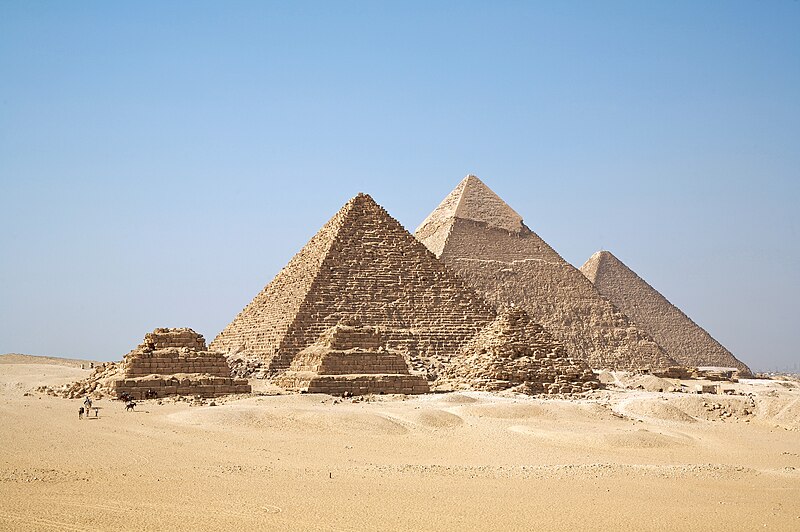
Does the mystery of the pyramids lie at the Gizah Pyramids or Coral Castle?


The architecture of the pyramids is a combination of revolutionary masonry work and a focus on the heavens, in which the structures face the sky in an attempt to possibly appease the gods. So what do the pyramids have to do with Coral Castle in Homestead Florida?

Secret of the Pyramids Lies In Coral Castle


Latvian American Edward Leedskalnin was left by his 16-year-old fiancée Agnes Scuffs in Latvia, just one day before the wedding. He decided to leave for America; however he became ill with tuberculosis . In a miraculous fashion, he healed almost instantaneously, stating the power of magnets allowed his health to once again become stable.
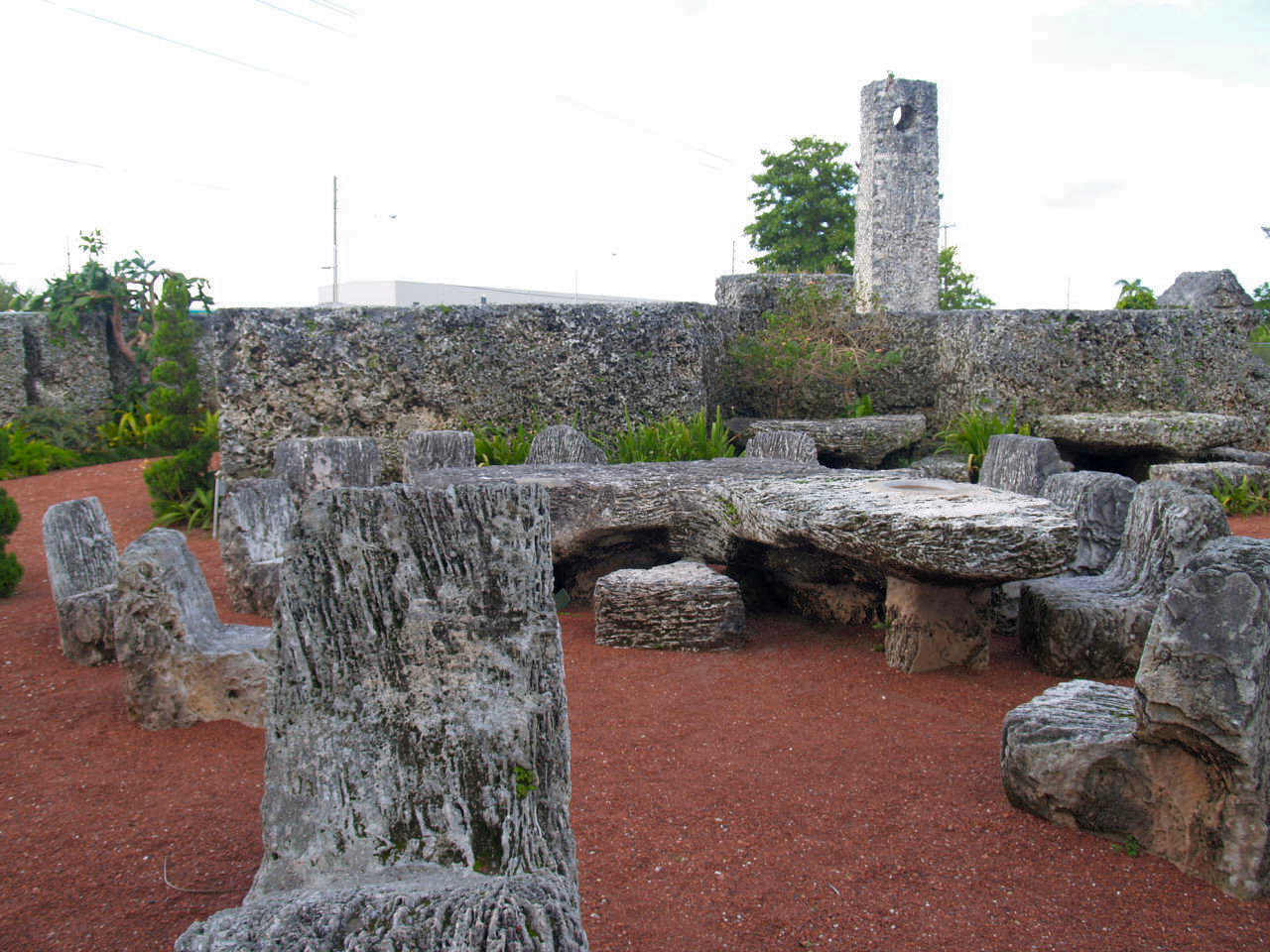


In an effort to forget his past, he began a long journey constructing a castle using hand carved oolite limestone structures, which is a combination of shells and coral. Over a 28 year span, Edward worked tirelessly behind the confines of the castle, free from site. No one really knows how exactly he fashioned all of the intricate carvings and statues, or for that matter, how he was able to move 15 ton sculptures on his own without the help of any equipment. “In fact, the only tool that Leedskalnin spoke of using was a perpetual motion holder.”

Edward charged visitors 10 cents to tour the property, and while he guided them along their journey, allowed them to ask him questions about his Coral Castle. On many occasions, he would tell tourists that his castle was easy to build, if you know how to do it. His answers were vague and his demeanor bizarre, believing that he held the secrets to the pyramids and he would bring them to his deathbed.

The Sculptures at Coral Castle


Like a journey through the garden in Edward Scissorhands, this strange and intriguing site was a wonder of stone furniture and sculptures carved out of one piece of stone and weighing anywhere from 15 to 30 tons.
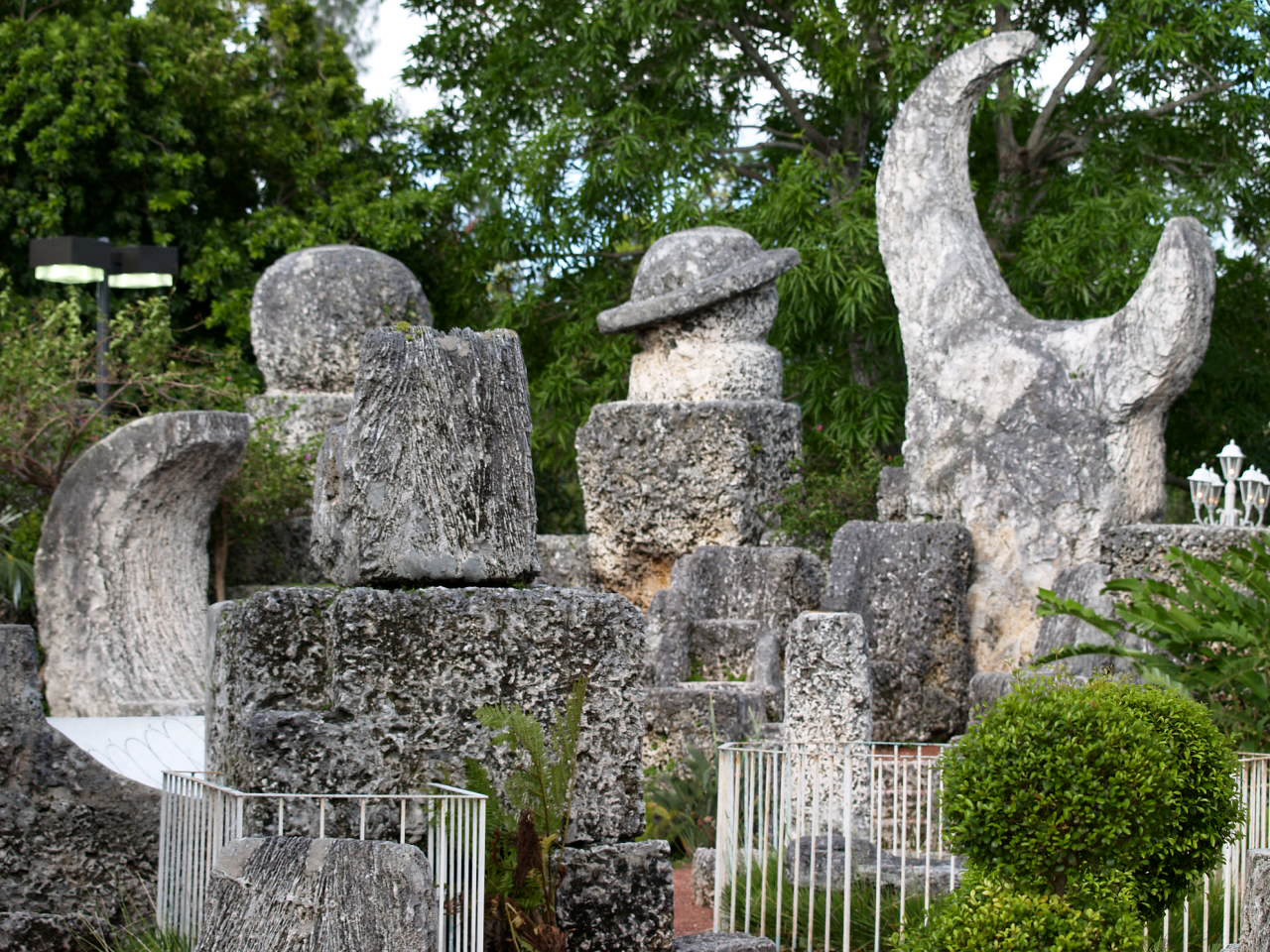


His creations supposedly evolved from some new science of nature, however that secret knowledge was traced back to the ancients when stone blocks were carefully balanced on top of one another without mortar. Even more interesting was the fact it had survived a Category 5 hurricane and never faltered or shifted in any area of its foundation.

It was a positively pre-historic site, where all aspects of furniture, the living quarters, and even the decorative pieces were carved from stone.

Among them are a two-story castle tower that served as Leedskalnin's living quarters, walls consisting entirely of 8-foot high pieces of stone, an accurate sundial, a Polaris telescope, an obelisk, a barbecue, a water well, a fountain, celestial stars and planets, and numerous pieces of furniture. The furniture pieces included are a heart-shaped table, a table in the shape of Florida, twenty-five rocking chairs, chairs resembling crescent moons, a bathtub, beds and a royal throne.

The Secret Door


The most famous of all the structures at Coral Castle was the stone swinging door, which could be conveniently opened by just using your pinky finger. As it turned out, the door operated on a metal rod that had been inserted into the door, which had been drilled from top to bottom by hand. The door sat on a truck bearing that allowed the door to open smoothly, even by a slight change in the velocity of the wind.

Today, the door does not open with as much ease as it used to considering the rod and bearings have been replaced twice. However, with even the best engineers working on the renovations of the door, they still cannot come close to the movement, or lack thereof, of Leedskalnin’s door.

The Conspiracy of Coral Castle

It does seem to be impossible that one man with a hand tool constructed this secret world, however skeptics who have obtained photographs of Leedskalnin at work, pointed out that several tripods made of wood were used to lift the stones into place. This seems completely infeasible considering some of the vertical stones measured higher than the tripod itself. How on earth did Edward Leedskalnin do it?

The Castle's official site states that "Ed did much of his work at night by lantern light. The Coral Castle has numerous lookouts along the Castle walls that were designed to help protect his privacy."

That’s all well and good, but how on earth could he have been in every watchtower and worked at the same time? Was the nature of science on his side or did he really hold the key to the ancients?

Edward himself stated that “he understood the laws of weight and leverage and he also discovered the secrets to the pyramids.” However, was there a secret to the building of the pyramids or was it purely physics?

Sunday, January 17, 2010

Old Fort Park Turnbull Ruins in New Smyrna Beach


After a short day of screening, I accompanied the archaeologist Bruce Piatek to the Old Fort Park in New Smyrna Beach. A far as what type of information was present at the site, well to be truthful, there was none at all. No pamphlets, no plaques or boards stating the history of the site, and no one to talk to about any questions we may have had, and I had plenty.

As far as first impressions, it was evident that this site may have been a part of the Turnbulll Colony, and the theory was that this foundation was the site of his palace overlooking the water. I for one don't believe this theory. It was clearly not used as church, which is another theory, because it does seem there was sections designated for weapons or possibly a lookout area. Also, the walls of the structure are much to thick, as if they were protecting or storing something.

There are no doorways to move from room to room, although after construction of an outer wall was completed during the Great Depression, I can see some new additions blocking off any openings there may have been on the east side. There was also bastion constructed at the same time, which leads me to believe that this may have been a fort.

It really is a mystery, and when I noticed the thick concrete running down the center, I ventured a guess that it may have been used to construct ships.

No further research has been done on this site, as I'm sure, the community believes it's not economically feasible to do so. Although, if the walls were taken down and the site was visible to to traffic, I think it would gain more interest due to the theories surrounding its construction.

One archaeologist believes that this was the original Castillo De San Marco, but no evidence til now has supported his theory.

In 1776, it was suggested that a very large stone building was erected in the vicinity of New Smryna that was built as a "mansion house," but the true function of these ruins is unknown to historians and archaeologists.


This is what we do know:

The Old Fort Park Archeological Site is a historic site in New Smyrna Beach, Florida, United States. On July 10, 2008, it was added to the U.S. National Register of Historic Places.

This property is part of the Archeological Resources of the 18th-Century Smyrnea Settlement of Dr. Andrew Turnbull Multiple Property Submission, a Multiple Property Submission to the National Register.

So what does this look like to you? I would love to hear some of your suggestions, ideas, theories, and questions.

Saturday, September 12, 2009

Ca D’ Zan: Another Ringling Legacy


Ken Bultman says "Established in 1927, the John and Mabel Ringling Museum of Art contains more than 10,000 objects including one of the largest collections of Peter Paul Rubens paintings in the world. In 2007, a $76 million dollar expansion and renovation program was completed making the museum the 16th largest in the U.S. The complex includes the Ringling Brothers Circus Museum and the famous Ca d’ Zan, one facade of which is pictured above." Read more about the Mabel Ringling Musuem

Tuesday, September 1, 2009

Fort Caroline


I was sitting down with my Archaeology mentor today and I explained to her that I was on a hunt for a fort that I could possibly explore besides San Marco's in St. Augustine. Interestingly enough, she had a perfect option for me, and I even had a free ferry ride thrown in.

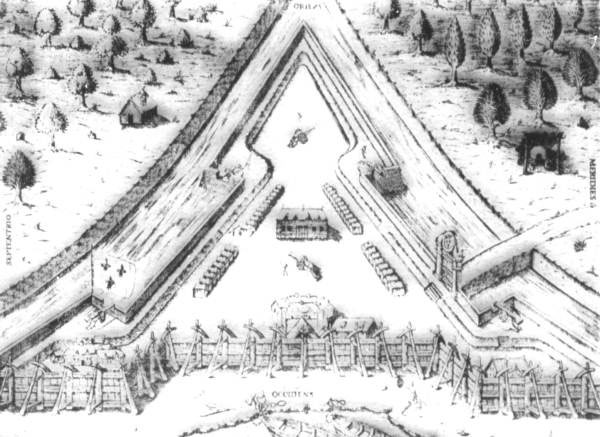
Fort Caroline was the first French colony in the US established in 1564. Its initial use was for a refuge camp for Huguenots which were members of the Protestant Reformed Church of France.

Admiral Gaspard de Coligny and Norman navigator Jean Ribault reached the Saint Johns River around 1562 and then headed North to South Carolina to set up Charlesfort.

In need of supplies, Ribault returned to Europe, but was arrested in England due to complications arising from the French Wars of Religion. Without food or supplies, the colonists resorted to cannibalism while sailing back to Europe.


Meanwhile, Ribaults second in command René Goulaine de Laudonnière, led new settlers back to Florida, where they founded Fort Caroline on June 22, 1564.

Over a year went by, and Fort Caroline was stricken with hunger and revolt. Sensing the underlying weakness of the settlement, the Spanish were keeping a close eye.

Around 1565, Ribault was released and he headed back to Florida with a fleet of ships to take full command of Fort Caroline. Unfortunately, at the same time, the Governor of Florida was sent to destroy the settlement and was met by Ribaults fleet. The latter retreated to St. Augustine.

In the dawn, Menéndez(Governor of Florida) marched his forces overland, launching a surprise dawn attack on the Fort Caroline garrison which then numbered about 200 to 250 people. The only survivors were about 50 women and children who were taken prisoner and a few defenders, including Laudonnière, who managed to escape; the rest were executed.
Ribault and his troops were found at sea, most of their ships destroyed and at the bottom of the ocean. Ribault , under the impression that his troops would be well treated, turned himself over. He was executed, along with all of his troops at Fort Matanza's Inlet(not to be confused with Fort Matanza's).

The fort was completely destroyed and another Spanish fort was built. However, in April 1568,
Dominique de Gourgues led a French force which attacked, captured and burned the fort. He then slaughtered all his Spanish prisoners in horrible revenge for the 1565 massacre.

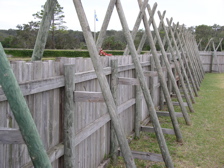
The exact location of the fort was never found, along with any artifacts or bodies. All that remains is a reconstruction of the fort.

Wednesday, August 26, 2009

Forts, or rather Fortifications in Florida


I went on a huge manhunt today, looking for another site to explore nearby, but I failed miserably. Instead , I found myself at the local library reading about the forts I can't find.

Do you really want to know what started all of this?


When I was about 10 years old, my mother brought me to the Castillo de San Marco's in Saint Augustine where I found myself crawling on my knees into the dungeon that was sealed up for 100 years, only to be opened up by American soldiers in 1819. Really Creepy! It was this fortification that made me love Archaeology.

So today, I thought it would be a great idea to embark on a new location, but like I said, I couldn't find one nearby. Even the ones that I did find were virtually impossible to navigate or the remnants of the structures were completely gone, so I would have needed a land surveyor or historian with me to know what is was I was looking at.

I even rummaged through Wikipedia pages and couldn't find one that had any information. And when I say no information, the page was empty. What happened and why are these places not being excavated?

Your thoughts on this?

Read more about the Castillo de San Marco's

Florida Forts

Like Ancient Digger? Why Not Follow Us?


Subscribe Via RSS Feed Follow Ancient Digger on Facebook Follow Ancient Digger on Twitter Subscribe to Ancient Digger Via Email

Get widget

Search


Ancient Digger Archaeology Copyright © 2015 LKart Theme is Designed by Lasantha