• Ancient Digger teaches Archaeology and History to all Ages!

Saturday, March 3, 2012

Anthropology and Education


Hello Ancient Diggers. I would never write a post saying I have not posted in a while because that would be too cliche. I would just like to give you a quick update of some the things happening in my life as an anthropology student, as well as some things I've recognized when it comes to anthropology and education.

As I previously mentioned, I've applied to Teach for America and I'll find out if I have the position on March 6th. I'll also find out where I'll be moving to, so needless to say, this is a very exciting time. This is also my last semester at UCF and I'll be graduating in May. Yippie!

My main reason for applying to Teach For America was because I started to recognize how important anthropology is to education. Understanding people on a global level and assessing their academic abilities based on their backgrounds, gender, and economic status, has become a fascinating and challenging subject for me.

I've realized in my own schooling that professors use tests to verify learning as opposed to accessing for it. I believe that this the main reason there is a such divide in the education system all over the world. Individuals with access to education and highly skilled teachers are already ahead of the curve. However, those of us who are forced to take standardized tests, which measure a lifetime's worth of education in a few hours, is hardly representative of the students we really are and what we are capable of achieving.

Many of you are anthropology students, and in fact, if your focus is archaeology, you can not have context without understanding the inner workings of anthropology. Many of us are driven to dig in the dirt, allowing you to use educated guesses about how people lived, but what about how people live today? There are hundreds of cultures around the world which are dying because no one is documenting their lives, languages, and traditions.

I believe my experiences over the past few months have really opened up my eyes to some serious issues occurring on a global level. I plan on taking the education that I received, as well as the advice that many of you have, to implement changes in the educational systems, as it pertains to dying cultures.

If you any of you are working with some of these cultures on a direct level, I would live to hear about the challenges you are facing.

Friday, November 18, 2011

Best Archaeology Projects and News Feeds on Twitter


Guess what? Twitter is not just for those obsessed with modern technology. For the lovers or students of history, and especially archaeology, there are plenty of places on the web that you can explore the latest news, theories and discoveries. As well as learning about the old ones that you might not know about.

See? The Internet isn't just spam and Lolcats.

twitter feeds

But one rather unexpected place to find information is Twitter, the social networking 160-character site that everyone seems to use. There are a number of news pages, organization accounts and more for you to check out. Here are some of the best that are must follows for any archaeology lover.

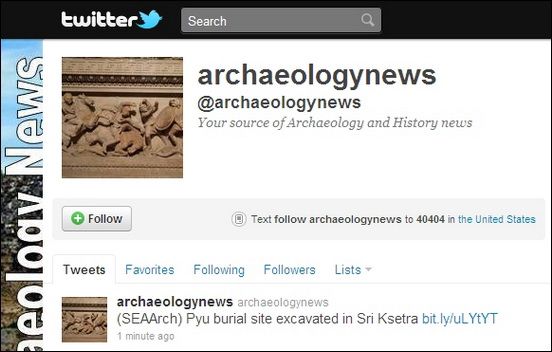
Archaeology News

archaeology news twitter

This is Twitter's home for archaeology and history news. They update often, usually every few hours and sometimes even sooner. They provide a ton of links to interesting stories in the news, often from sources like Topix and EurekaAlert about the latest discoveries and theories.

ArchaeologyDaily

A wider science news source, they provide headlines on archaeology, paleontology, anthropology and fossils. They only update every few days, but when they do they provide a large list of updates through that day. They have a tendency to find more obscure news not usually in the main journals.

Rosella Lorenzi

You might know Rosella from her place on the Discovery News correspondent team. She specializes in archaeology, and provides links to her own stories on Discovery News, among others. She hasn't updated in a few weeks, which is unfortunate. But she is worth a follow.

Talking Pyramids

talking pyramids twitter

Videos, photos and links related to ancient Egypt are regularly shared here. They are big updaters, so you will often get four or five links in a single hour. You can also find some decent reblogs, which give you more information from well known institutes and experts in the field of the Egyptians.

David Connolly

Famous archeologist (who often refers to himself as a "loose canon") David Connolly is very well known for his work in the field. He has his own Twitter account, which he updates almost obsessively with a ton of information from himself and others. He has some great comments on current projects that he keeps people current on. Plus, he occasionally follows.

Culture 24

For a more focused look on overall culture, including museums, galleries and heritage sites, this UK based organization is great to watch. Their updates are a little random, as they will post a dozen links on day and then nothing for a few days. But they have some great information through here.

Campus Archaeology

This is the official Twitter of Michigan State Universities archaeology department. They comment on current projects and studies, recent news, what is going on at MSU and general comments on the field of study.

The Gabii Project

A smallish project based on ancient Gabii in Central Italy, this group of archeologists don't get nearly enough exposure. You can help change that by becoming their Twitter follower. They have a collection of updates on the project itself, while informing of others that need support.

NE Asia Archaeology

These Harvard affiliated archeologists cover NE Asia, specifically China, Japan, Korea, Russian Far East, Eastern Siberia and Mongolia. They update semi regularly with relevant and interesting bits of news in the region, such as the recent uncovering of the oldest known human remains in Japan.

The Archaeological Box

This networking hot spot for archaeological foundations and projects covers news, profiles, events, field schools and study programs, which is aiming to connect people for easier information sharing. They update a lot, and they have some news I haven't seen anywhere else. It is like a hub for various societies.

Conclusion

Twitter

Twitter is an unexpected place to find the latest Twitter news and connect with others who have the same interests. What are some of your favorite social hotspots for archaeology chat? Let us know in the comments.

Jessy is a creative guest blogger for Life Insurance Finder, the free resource on finding best insurance plans. We create lots of educational material as well like this article on Sickness and Accident Insurance.

Image credits: 1, 2.

Monday, March 28, 2011

Monday Ground Up: Anthropological Work of Penny Patterson with Lowland Gorilla Koko


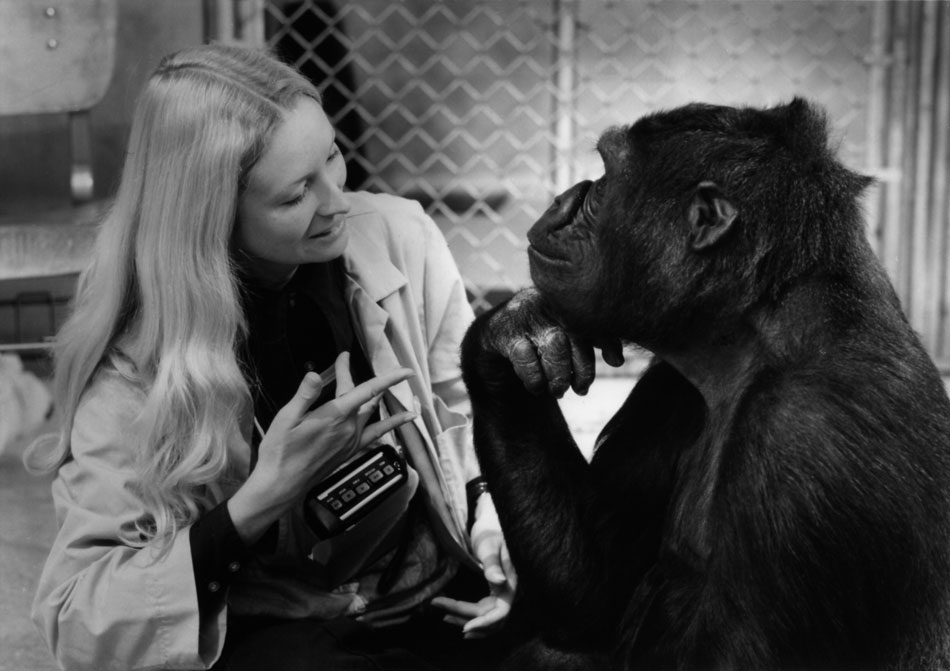
We're all familiar with the gorilla Koko. I grew up in elementary school, middle school, and high school science classes, watching documentaries and reading about this linguistically enabled gorilla, raised in captivity by Penny Patterson. Koko is a lowland gorilla born in 1971 and at the tender age of one, started The Gorilla Language Project with his teachers.


During the course of the study, Koko has advanced further with language than any other non-human. Koko has a working vocabulary of over 1000 signs. Koko understands approximately 2,000 words of spoken English. Koko initiates the majority of conversations with her human companions and typically constructs statements averaging three to six words. Koko has a tested IQ of between 70 and 95 on a human scale, where 100 is considered "normal." Michael, the male silverback gorilla who grew up with Koko, had a working vocabulary of over 600 signs.
Studying gorilla intelligence and behavior will lead to a greater understanding of the species' physical and psychological needs. Only through knowledge can humans take the necessary steps to improve the treatment of captive gorillas and protect free-living gorillas from extinction.~Gorilla Foundation


The amount of effort and research Penny Patterson has completed is astounding, giving us incite into the incredible world of the lowland gorilla. There are, however, several critics of her style, even saying she’s molding Koko to be more humanlike, when in actuality, this is virtually impossible.

I recently watched the movie entitled “Conversation with Koko” which follows Penny Patterson and Koko through a rigorous and daunting anthropological study. I have also read an article by Rebecca Bishop, who has her own incites on the practices used to educate Koko.
Conversation with Koko

The film about Koko features on Penny Patterson’s works, arriving at the conclusion that Koko has a strong sense of self, ego, can be silly, has a sense of humor, and can be stubborn when exchanging information. Patterson believes a relationship based on trust, love, and respect can assist humans in evolving gorillas to become more human. “We are one in the same. We are apes. It’s a surface thing. They are like us inside.”

According to Bishop, this act of gendering and communicating with apes is not a new concept. In fact, it has an interesting resonance with the historical visions of subjects that exist at the edge of animality and the periphery of the human (2010). The Great ape has always assumed a role of the betwixt and between status of EuroWestern imaginary.

Koko is a product of nature and years of evolution, marked by a politics of gender. Bishop further explains that Koko’s affect and desire is always ascribed a historically feminine line of flight, her behaviors and communication. Actions are represented in the context of historical conceptions of gendered subjecthood and assumptions. This subjecthood is inherently tied up in historical discourses, whereby an animal is being forced to assume a new role, or a new species.

When animals are culturally confined to an area, just like any psychological experiment, the subject will never act as normal as they would in their own environment. Furthermore, Koko’s actions will be attributed to a motivation and purpose that fits within a broader conception of females.

According to Bishop, “some have accused the researchers of conducting a populist and sensationalistic science, an ‘academic Barnum and Bailey act’ without strict methodological criteria” (2010).

Researchers were in fact treating the subject (Koko) like a humanized child, whose role is to assume language capabilities and behaviors at a certain age, evoking the same thoughts of twentieth century experiments. Furthermore, researchers are assigning gender roles to Koko; behaviors a culture assigns to the sexes.

In sum, Bishop concludes Koko’s actions are ascribed and based upon gendered assumptions that her researchers have chosen for her.

Does this change your opinion of Penny Patterson's work? Why or why not?
Sources
  • Koko and Penny Patterson Picture
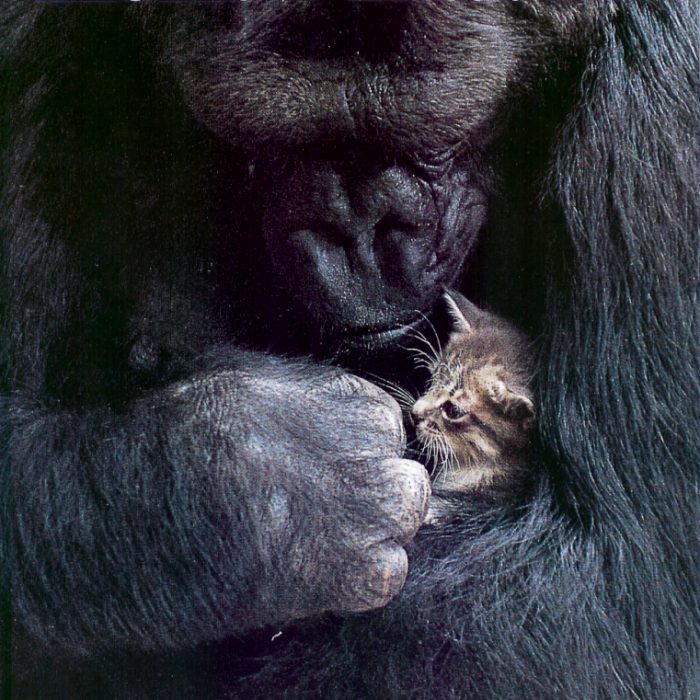
  • Koko and Kitten Picture
  • Bishop, Rebecca, 2010 Some other kind of being: Human nature and animal subjects in ape language research. Massey University. New Zealand.

Saturday, November 27, 2010

Quest For King Solomon's Mines: Featuring Eminent Archaeologist Thomas E. Levy


Watch the full episode. See more NOVA.

It's a Saturday night, and yes, I'm watching NOVA on PBS. I almost couldn't help myself after a colleague sent me the information for the Quest For King Solomon's Mines (follow this link for the full video) on NOVA. Many scholars today question whether King Solomon was a king at all, as no evidence has ever been found by archaeologists, until now.

Mining shafts have been found deep in the deserts of Jordan along with skeletal remains suspected to be Solomon's miners. Could these be the men who held the wealth the Bible chronicles in their hands? Watch and see.

NOVA does a wonderful job in this program, outlining the history of King Solomon, his gold and copper mines, and whether we will ever know the truth about his existence.

Article Blurb via University of California

A new television documentary featuring the work of University of California, San Diego, archaeologist Thomas E. Levy proves that extensive copper production took place in Jordan during what is believed to be the Biblical era of David and Solomon — suggesting that there is some historical veracity to the Hebrew Bible’s (Old Testament) portrayal of their kingdom and that of neighboring Edom in southern Jordan.

A related and newly edited book by Levy — as well as a scholarly paper that appeared last month in a British journal — also advocate for a new high-tech “pragmatic” approach for carrying out historical archaeology in the Levant region of the Middle East, coupled with high precision radiocarbon dating, to ensure objectivity in a discipline fraught with emotional prejudice.

Official Web site of the University of California, San Diego
University of California, San Diego, 9500 Gilman Dr., La Jolla, CA 92093
(858) 534-2230

Copyright ©2010 Regents of the University of California.

Monday, November 1, 2010

Monday Ground Up: Guide To Archaeology and Anthropology Graduate School 101


I recently attended a seminar featuring Dr. John Walker, Professor Peter Sinelli, and Dr.John Schultz from the University of Central Florida. The seminar focused on the Do's and Don'ts of applying to graduate school for archaeology and anthropology and was organized by Hominids Anonymous Anthropology Club.

On one hand it was eye opening. On the other, it was terrifying. My only advice is to take all of this information with a grain of salt, as each school is completely different in their requirements for admission. To be honest, I have a mental picture in my head of the universities I'm applying to, the path I need to get there, and the people that can help me make it happen.

Tuesday, June 8, 2010

Rob Philpott : Head of Archaeology at National Museums Liverpool.


Ask the curator - Rob Philpott from National Museums Liverpool on Vimeo.
ed

Rob Philpott, the Curator of the National Museum Liverpool, talks about what actually happens at the museum. The video explains the research, fieldwork,  and technical aspects about the work that's being done. Philpott also enlightens viewers about the Huxley Hoard, 22 pieces of Viking silver found in 2004.

Tuesday, July 21, 2009

Where to Find the Best Algebra Tutoring


Algebra can be traced to the ancient Babylonians who developed and advanced the arithmetical system , making them able to do calculations in an algorithmic fashion. The Babylonians developed formulas to calculate solutions for problems typically solved today by using linear equations, quadratic equations, and indeterminate linear equations.

Sounds complicated doesn’t it? It doesn’t have to be, trust me. Over the years, I have struggled with Algebra, above all other subjects in my life. I never had the Algebra help I needed to get through the subject with a satisfactory grade, and I think that stemmed from a hearing problem I had as a child. The problem was that I would sit in the back of the class because I was embarrassed to answer any questions.

After stumbling through the subject and not making the grades I needed, I looked for an Algebra tutor for some assistance. I looked online for Algebra 2 help as well as Algebra tutoring, and I found a fantastic site that had all of the necessary tools to get me through the subject with flying colors.

With the help of an online algebra tutor I was able to maintain my grade of a high A all through the semester. Anytime I had a question or concern, I would check out the free online algebra help section and I would be able to access practice tests and problems to prepare for upcoming tests, or any other homework I was working on.

I was quite surprised with myself. You have no idea what you’re capable of when you actually obtain help from a specialist in the area. Now, anytime I need help with higher math I stick to online tutoring.

Thursday, June 18, 2009

The Bizarre and Ghostly Grounds of San Marco's, St. Augustine


St. Augustine is home to some of the most notorious ghost stories and ghost walks in the nation. So, it's only fitting that I would dive into the controversy and visit one of the most famous ghostly locations in the United States.

I remember taking a trip when I was 8 years old with my mom and sister to San Marcos . We examined the separate rooms, the barracks for the troops, and the secret dungeons buried deep within the fort.

Well, I had that pleasure once again today when I explored the grounds 23 years later. It was different this time, however. As my hands grazed across the coquina shells, I could only imagine the time it took to construct such a grand fortress, that had withstood the elements, and stands as solid as it did in the 1600's.

After the 1668 attack of Robert Searle (English pirate), Queen Regent of Spain, Mariana ordered a masonry fortification be erected in order to protect the city. October 1672, construction began on the Castillo de San Marcos. The Castillo de San Marco's was known from 1821 to 1942 as Fort Marion and Fort St. Mark from 1763 until 1784 while under British control.


You might like:

Friday, June 12, 2009

Most Vicious and Cannibalistic Prehistoric Creatures


During the Pre-Historic Era, certain creatures and species were limited in their access to food supplies, and so they were forced to feed on their own kind, giving them the ability to sustain their lives a bit longer.

Majungatholus


In 1998, paleontologist/anatomist Scott Sampson from the New York College found a Majungatholus skull, making it the most well preserved dinosaur skull ever found. Sampson said, "It's the kind of face that only a mother could love. It had textured, convoluted bone all over the surface of the skull which probably had skin tightly adhering to it. It had this horn-like structure on the top of the head between the eyes and another projection at the back of the skull as well."

Image via Wikipedia

Teeth marks along with serrated smaller notches were found embedded on the Majungatholus measuring the same width as the teeth on the dinosaur itself, implying that it may have been involved in a struggle with the same species.

Neanderthals


Around 43,000 years ago, the Neanderthals were turning to cannibalism—even brain-eating. Discoveries of fossil remains suggest that these prehistoric humans looked entirely different from their northern counterparts. The Osteology of this species clearly suggests signs of dismemberment and skinning.

Image via Wikipedia

Cannibalistic actions included cutting of the flesh, using small stone tools and smashing open the skull using larger tools to access the brain and marrow.

Image via Wikipedia


“Reports of the Neandertals (often spelled "Neanderthals") ate their own kind, says paleoanthropologist Antonio Rosas of the National Museum of Natural Sciences in Madrid. Rosas is the lead researcher for the study, which is published today in the journal Proceedings of the National Academy of Sciences.”

Anasazi

MesaVerde


Around 900 AD in the Chaco Canyon, the Anasazi of the southwestern U.S. routinely "processed their colleagues . . . skinned them, roasted them . . . severed their joints . . . and put the pieces into pots. This gives an entire new meaning to vicious and bizarre." Unfortunately, history has continued to be a distressing chronicle of man's inhumanity to man. Today, Chaco Canyon is a Mecca for New Agers. They like to believe that Anasazi existed in full harmony with nature. However, the archaeological evidence is exceedingly “inconvenient for those who argue that man in his natural state was good and that civilization as we know it is evil.”

Cave Bears


Scientists have always believed that these creatures were gentle, feeding solely on vegetables and fruits. However, bones were discovered in the Carpathians - the mountains where Dracula supposedly dwelt – suggesting that cave bears could have also been cannibals. Ongoing studies of their bones and other accessory organs suggest that only a certain cave bear, dwelling in the Carpathians were carnivorous. They had high levels of Nitrogen 15 in their bones, which was highly bizarre considering that cave bears normally had low levels of Nitrogen-15.


Ultimately, Cave bears died out around 20,000 years ago when the ice had dominated the earth.

Thursday, June 11, 2009

Mysterious Inscribed Slate Discovered at Jamestown


Archaeologists from Jamestown have just discovered a 400 year old transcribed slate tablet from America's first English Settlement. The slate is covered with writings, numbers, and drawings of people, plants, and birds that its owner likely encountered in the New World in the early 1600s.

The tablet was found a few feet down in what may be the first well at James Fort, dug in early 1609 by Capt. John Smith, Jamestown's best known leader, said Bill Kelso, director of archaeology at the site. If the well is confirmed as Smith's, it could help offer important insights into Jamestown's difficult early years.

Records indicate that by 1611, the water in Smith's well had become foul and the well was then used as a trash pit. Archaeologists discovered the slate among other objects thrown into the well by the colonists. Read More ~~

National Geographic

Sunday, May 3, 2009

Course Hero: A Virtual Vault of Educational Materials


Resources for students are readily available for course studies, research papers, and notes from lectures. I was on the lookout for a site that made these items available for future classes. In addition, I wanted to hear from the students themselves about how the courses were outlined by the professors and what were the key points I needed to focus on.

I stumbled up Course Hero, a well organized and helpful site that had every resource I needed for my upcoming classes. There were ESM 206 UCSB Lecture Note's, amongst some other courses I was researching.

Also, I when I was looking for some additional materials for a friend that was attending the University of California, taking the same class, I found these notes UCSB ESM 206 University of California Santa Barbara very helpful.

"Course Hero has millions of student submitted documents similar to the one below including study guides, homework solutions, papers, and exam answer keys. Visit our document archives to see a sample list of documents available on Coursehero"

If you are a student looking to connect with other students, or you're just looking for some simple course outlines, this is the site to check out.


Like Ancient Digger? Why Not Follow Us?


Subscribe Via RSS Feed Follow Ancient Digger on Facebook Follow Ancient Digger on Twitter Subscribe to Ancient Digger Via Email

Get widget

Search


Ancient Digger Archaeology Copyright © 2015 LKart Theme is Designed by Lasantha