• Ancient Digger teaches Archaeology and History to all Ages!

Wednesday, August 24, 2011

Petoskey Stones Are Archaeological Artifacts


Several years ago I was staying in Mackinaw at my mother’s home on the water. On one occasion, I ventured out to the shore and started the daunting task of searching for fossils and shells. I stumbled upon what looked to be a Petoskey Stone, the state stone of Michigan. I was somewhat familiar with the geological make up, consisting of fossilized coral and other sea creatures. However, I never realized what kind of history was hidden beneath the outer core.

© danxcai

The Petoskey Stone is just one example of how sea life through history, captured in fossilized form, can provide insight into archaeological history. More specifically, Native Indian trade and tool making.

Source

The Legend of the Petoskey

According to legend, Petosegay was the child of a descendant of French nobleman and fur trader, Antoine Carre and an Ottawa princess. Petosegay, meaning "rising sun" "rays of dawn" or "sunbeams of promise", was named after the rays of sun that fell upon his newborn face. In keeping with his promising name, Petosegay was a wealthy fur trader who gained much land and acclaim for himself and his tribe. He was remarked upon to have a striking and appealing appearance, and spoke English very well. He married another Ottawa, and together they had two daughters and eight sons. In the summer of 1873, a few years before the Chiefs' passing, a city began on his land along the bay of Bear Creek. The settlers christened the newborn city Petoskey, the English translation of Petosegay.

The Town of Petoskey

Petoskey Stones are typically found in the town of Petoskey where several of the Nick Adams stories describing his summers on Walloon Lake were transcribed by Ernest Hemingway.

Petoskey was also the site where “Calliope”, the protagonist of Jeffrey Eugenides' Middlesex, is involved in some events that take a very severe direction. Eugenides was also known for his 1993 novel, The Virgin Suicides, which gained mainstream interest with the 1999 film adaptation directed by Sofia Coppola.

The town of Petoskey itself is most popular for its Petoskey Stone Festival where citizens celebrate a stone that is strictly native to Northern Michigan. The festival is a one of a kind display of decorative pieces, jewelry, and many other items crafted out of Petoskey stones.

Archaeological History of the Petosky Stone

Image via Wikipedia

Source

Phacopid trilobite from the Devonian

Source

During the Devonian Period, which occurred in the Paleozoic era, the first fish evolved legs and started to walk on land as tetrapods. Various terrestrial arthropods also became well-established. During this period, colony corals covered all of what is now the beautiful state of Michigan. Over time, the corals became fossilized and formed compacted sheets of rocks and were buried for centuries.

SEM image of a hederelloid from the Devonian of Michigan

Source

Later, the stones were formed as a result of glaciation, in which razor sharp sheets of ice plucked stones from the bedrock, grinding off their rough edges and depositing them in the northwestern portion of Michigan.

Source

If you happen to find these stones in dry form, they resemble ordinary limestone. However, when they are polished, the unique patterns emerge, taking on star like patterns with spikes. For the novice Geologist, the more angular in form these stones appear, the younger they are. If you happen to find a rounded and smooth stone, this will indicate that the stone itself has been exposed to more glacial erosion and weathering, and it’s much older than your angular find.

Interesting Fact: The name of the was derived from an Ottawa Indian Chief, Chief Pet-O-Sega. The town of Petoskey was named after him as well.

Tuesday, November 9, 2010

Anthropologists Debate: Neanderthal and Human Brains No Longer Similar


I was watching a movie today in an Anthropology class called Neanderthal The Rebirth featured on BBC. Two individual sets of bones were fused together to form an almost complete skeleton of a Neanderthal.

The legs, of course, were a bit shorter, the rib cage flares at the bottom, an indication of the lung capacity and the ability to survive cold climates.

The cranial capacity, however, was compared very closely to modern humans. A endocast was created to study the indentations or imprints left by the brain to study cognitive abilities. There was barely any debate in the mental processing abilities of both modern humans and neanderthals.


Imagine my surprise and disbelief after finding a video today stating neanderthal and human brains are not as similar as once thought.

This video explains the development and research by Svante Paabo of the neanderthal genome at the Max Plank Institution of Evolutionary Anthropology in Leipzig, Germany.

Among humans, however, the internal organization of the brain is more important for cognitive abilities than its absolute size is. The brain's internal organization depends on the tempo and mode of brain development.
Website of the Neandertal Genome project

Monday, March 29, 2010

Monday Ground Up: Charles Darwin And The Theory of Evolution Explained


Charles Darwin, although thought of by evolutionists as a genius in his field, lived a lie built on the studies and research of past intellectuals. Darwin’s theories were built upon the findings of those that were given no credit in his published works, therefore he simply organized their thoughts into a book called “On the Origin of Species by Means of Natural Selection". His Theory of Evolution is a myth. It's not true. At least that's what a creationist will say.

Are you kidding me? I'm sure you started reading this and thought to yourself, a theory is already a truth, and you would be right. The Theory of Evolution, which hardly appears in Darwin's Origin of Species book, is a scientific fact, however it took writing this article to find out about the facts behind Darwin's research.

Ultimately, Darwin’s theories and findings were built upon previous conclusions. Darwin’s lust for fame led him to publish his works built on the shoulders of others, thereby allowing his integrity to be questioned by his peers and mentors, and ultimately his informed opinions or hypothesis to be disproved by new evidence using fossil records which was Darwin’s greatest fear.

Darwin's Bibliography

Charles Darwin was born in 1809, and although at the time his grandfather Erasmus Darwin was pioneering the evolutionary movement before his death, Charles didn’t actually read his grandfather’s book until after his death. Erasmus Darwin’s research contained the seeds of almost all the essential principles of modern evolutionary theory including overpopulation, struggle and competition, and selection (Sunderland 14). It would be years until Charles Darwin actually accepted the theories that his grandfather had previously collected, so in the meantime, he settled for university life.

Charles was rather bored and felt that as a student, he was rather dull. He was incapable of mastering a language, although he could memorize forty lines of poetry or verse. He would, however, forget them with a couple days. Charles Darwin’s father, not well-informed of his son’s lack of interest in the area of anatomy, still enrolled him in the medical school at the University of Edinburgh. Not surprisingly, Darwin was completely disgusted and found the lectures to be quite dismal. In his second year, he attended geology and zoology classes, but said in his Autobiography, “they were incredibly dull. The sole effect they produced on me was determination never as long as I lived to read a book on geology or in any way to study science. Yet I feel sure I was prepared for a philosophical treatment of the subject “(Sunderland 16). How odd, that a future evolutionist should find no interest in a profession that characterized his entire existence.

Darwin’s father recognized that he was wasting his life, and so he enrolled him at the divinity school at the University of Cambridge. In the beginning, Darwin didn’t question the existence of God and the Bible, however he did begin to question his beliefs as he embarked down the same mundane and unexciting world he had once experienced at Edinburgh. He did, however, find solace in the collecting of beetles, which some scholars might say brought him fame.

Two years after graduation, he set sail aboard the HMS Beagle as a naturalist in search of the evidence to support what his grandfather had previously studied. The voyage took five years, however after his return to England, those years of research prompted him to accept the idea of naturalism and the origin of all species. Of course, this theory of evolution by the mechanism of natural selection had already been mentioned years prior, so to that end, Darwin did not originate the concept.

Alfred Wallace

On July 1, 1858, Charles Darwin and Alfred Wallace presented their joint paper on evolution at the Linnaean Society in London (Darwin 10). Evidently, Darwin had been discussing his findings with a close group of friends, so the idea of evolution was already on the minds of men. Oddly, Alfred Wallace, another naturalist, wrote a paper in 1858 which described the identical hypothesis being discussed behind closed doors. Darwin read the paper and swiftly published one of his own, leading to the joint meeting in London. This wouldn’t be the first time that Darwin stole the limelight from another colleague. Why you might ask? Simply because Wallace didn't have the money to publish first. Imagine having Wallacinism!

One year later, Darwin published his well-known book The Origin of Species, which simply took every previous notion and finding on the theory of evolution and placed it within the same text. This Pandora’s Box of secrets was what the world was waiting for with baited breath. The question, however, was if Darwin was the first to arrive at such conclusions. He was not.

Close to seven years prior, Herbert Spencer had published a pamphlet entitled “Theory of Population”. Spencer wrote, “those left behind to continue the race are those in whom the power of self-preservation is the greatest—are the select of their generation. (Dagg) Quite a Utopian ideal, and furthermore, it embodied what Darwin had stated within his book The Origin of Species. The idea that a single cell, with certain influences, could become a man in the span of twenty years was not that absurd. Furthermore, if we look forward millions of years, is it possible that one single cell could give origin to the human race? This was the previous conception of Spencer’s life works, occurring before Darwin’s publication ever took place.

Additionally, Jean Baptiste de Lamarke had concluded that certain characteristics could be passed on to the offspring. This was, of course, suggested previously by Erasmus Darwin, the most well-known example being the neck of the giraffe that resulted from stretching to reach higher vegetation during a drought (Sunderland 14). Lamarck criticized evolution, but even so, Charles Darwin often was inclined to use Lamarck’s findings within his book. Once again, the book read as if this was the first time the subject had been discussed, and Darwin conveniently pretended that he had stumbled upon the idea when he was on his five year journey on the HMS Beagle.

Darwin’s principle of preservation, as reverentially stated in his Origin of Species, is what he boldly described as natural selection. The statement clearly reads that Darwin coined the term and there wasn’t a long history of its origins. His failure to acknowledge any previous contributions including Lamarck, Spencer, and even his own grandfather Erasmus, made it seem that he’d laid claim to the theory on his own. His hypothesis, however, lay challenged by a science that he once thought of as dull. In the event that fossils could have been proved as appearing suddenly, without the evidence of a common ancestor, this would have demolished Darwin’s Theory of Evolution.

The Fossil Record
When Darwin initially started to write The Origin of Species, the fossil record was quite lacking in a transitional series of fossils. Some species, such as whales, appeared suddenly within the fossil record, without known ancestors. However, with further investigation, Darwin came to the conclusion that fossils found in adjacent layers had more in common than samples taken from separated geological land masses. Furthermore, the very basis of geological formations is the layers of settlement or rock and the sequence of time in which these layers are gaged. Consequently, when Darwin started to study fossil marsupials, he discovered they were only found in Australia. Since modern marsupials only live in Australia, it would only make sense that the modern marsupials descended from the fossilized ones (Coyne 26). Charles Darwin just couldn’t find enough archaeological evidence to prove that certain fossils descended from common ancestors. The evidence, however, today is changing and evolving.

As paleontologists study transitional forms more in depth, they are turning up several hundreds of fossil samples that have yet to be tested. A problem arises, however, when we look into multicellular organisms. These forms of life only originated in the last 1500-600 million years, and that's just an estimate. Multicellular organisms are comprised of completely different cells and are highly specialized, which of course, doesn’t completely disprove Darwin’s theory.

Over the past couple of years, a gradual change in the species has been found within the lower and upper layers of the stratum. For example, the fossil heart urchin genus Micraster gives an excellent example of continuous evolution of individual characters. The changes, however, appear to be independent of changes in those environmental conditions which have left their mark in the formation of the sediment (Nichols).Subsequently, when paleontologists consider the research that Darwin performed on Trilobites, which basically stated that the fossils must have evolved from a common ancestor long before the beginning of the Cambrian, they find flaws in the research. Further archaeological research has failed to reveal the Precambrian strata rich in fossils of multicellular animals which Darwin believed must somewhere exist (Darwin, and Leakey 163).

Unfortunately for Charles Darwin, geologists have not been able to find fossils from periods earlier than the Cambrian system, therefore his fear that the lack of fossils could ultimately disprove his evolutionary findings is slowly becoming a reality. In Darwin’s defense, however, I lay down this hypothesis. If we consider where the Atlantic Ocean is located and if it was actually a continent at some time, it makes perfect sense that there would be layers of sediment that predate the Cambrian. This would then, quite surprisingly, allude to the existence of a past civilization that surpasses all documented history.

For centuries, the age old debate over evolution and creation has puzzled scholars and influenced scientists and archaeologists to investigate the theories using cold, hard evidence. The problem is, you don't need evidence to prove evolution exists. It's already a fact so what is being tested?

Furthermore, Darwin may have introduced a revolutionary ideal for the masses to ponder, however he did so in an underhanded fashion. Newton may have stood on the shoulders of giants, but he shared that influence with the world. The same cannot be said for Darwin.

Pictures Sources

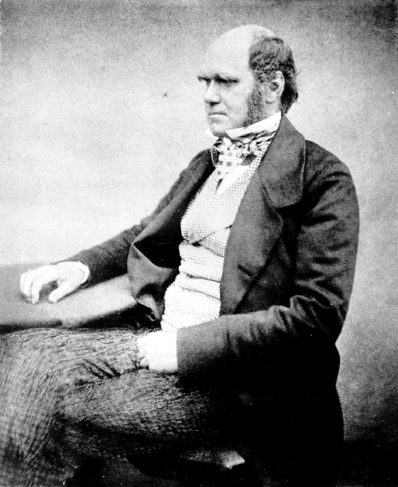
Darwin at 51
Alfred Wallace
Origin of Species 
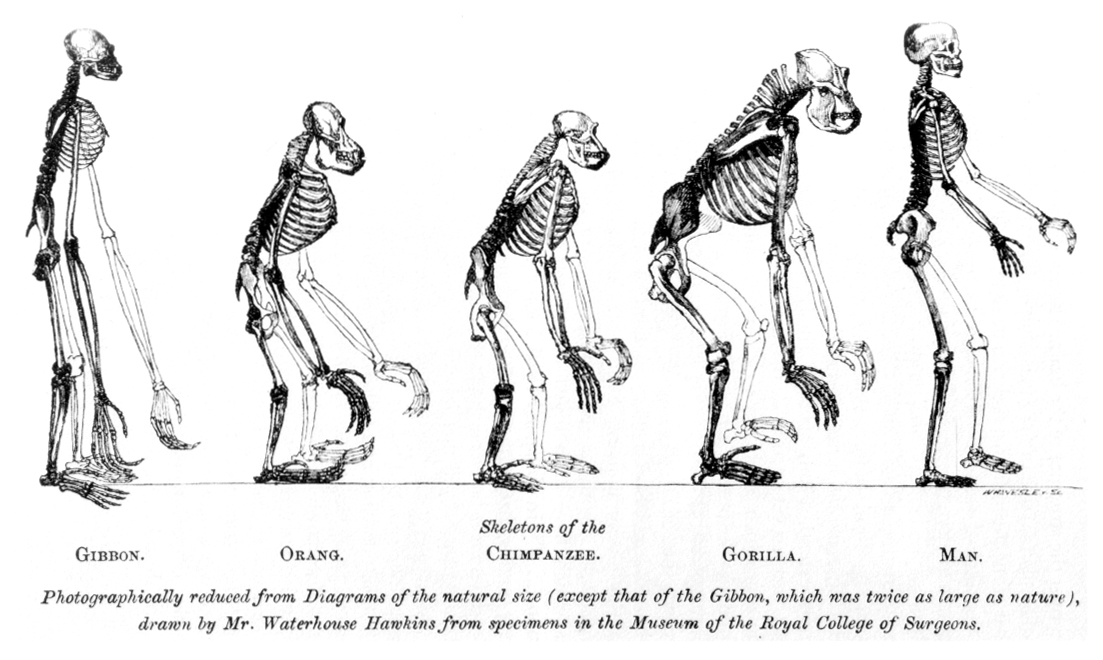
Mans Place in Nature

Resources

Coyne, Jerry. Why evolution is true. 1st ed. New York, New York: Viking Pr, 2009. 26. Print.

Dagg, Joachim. "A Theory of Population, deduced from the General Law of Animal Fertility." Victorian Web. Brown University, 31/08/2003. Web. 16 Mar 2010.

Darwin, Charles, and Richard Leakey. The Illustrated Origin of Species. London, England: Rainbird
Publishing, 1979. 163. Print.


Darwin, Charles, and R.R. Company. The Origin of Species. London, England: Signet Classic, 2003. Print.


Nichols, D. "Changes in the Chalk Heart-Urchin Micraster Interpreted in Relation to Living Forms." The Smithsonian/NASA Astrophysics Data System. NASA, 08/11/1956. Web. 16 Mar 2010.

Sunderland, Luther. Darwin's Enigma. Rev. ed. Santee, California: Master Books, 1984. 10. Print.

Saturday, January 23, 2010

Galileo Galilei: The Greatest Contributor to the Scientific Revolution?


In a recent discussion in one of my classes, I was asked who I believed to be the greatest contributor to the Scientific Revolution? I am a great supporter of the scientists that remained true to their beliefs, and did not fall under the stringent restrictions of the Catholic Church. Galileo Galilei was one such scientist who recognized a problem with the interpretations of physical science and how the Catholic Church viewed them. This was only the beginning of the conflicts between religion and science.

Nature is clearly a phenomenon which was originally derived from the supernatural to the galactic universe. The name itself comes from the Latin word “Natura” or “the course of things”, relating to animals, plants, the sky above, the earth below, the soul of a human being and the aspects of the world. So it’s only fitting that Galileo would revolutionize mathematical reasoning in a way that relates to events in nature and how things move and fall.

His teachers educated themselves by way of the page, lacking of any observations of natural phenomenon. However scholars, who did partake in observing nature, stopped their research there without further experimentation. Galileo invented experiments and considered them necessary to arrive at hypothetical conclusions, whether they discriminated against imagination or the physical aspects of nature was completely relative.

His results were derived from a meticulous mathematical process of testing, and to be completely honest, all experiments scientific, anthropological, political, environmental, etc, go through stringent mathematical models to arrive at several theories. So to call him a conservative would be blatant excuse for an insult. He was an innovator and didn’t hide behind the views of the church, which makes me respect him even more.

He wrote his findings in Italian, which at the time all of the scientists had written in Latin only for the benefit of learned men. However, Galileo wanted all literary minds to enjoy his work, which is a far stretch from Copernicus that remained conservative to appease the ideals of the Catholic Church. What’s that they say? The over conservative ones get left behind.

Hi mind was an array of new phenomena, and his skillful hands were able to invent a telescope to examine all that was unaccepted. His conclusions throughout his life led him down a path that brought persecution down on him, until he spent the last years of his life in seclusion. Galileo sought out the freedom of thought in science, which will in my opinion; makes him the greatest contributor to the Scientific Revolution.

Max Born was quoted as saying “The scientific attitude and methods of experimental and theoretical research has been the same since Galileo and will remain so”.

Picture Source

Friday, July 24, 2009

Photomicrographs and Macro Photos of the Most Astounding Igneous Rocks


What is an Igneous Rock?

Most rocks are aggregates of crystals or grains of one or more minerals. The minerals that make up the structure of an igneous rock can be quite small, although they are still able to be identified.

Ever since the beginning of the Earth, rocks have been the eyes and ears of evolution. Their experiences have been solidly held in a tight capsule, only to be later examined by geologists and researchers. Read More about Igneous Rocks

Wednesday, June 10, 2009

Photography of Utah: Somewhere in the Canyons


Believe it or not, I took these photo's when I was 12 years old. If I had known then what I know now, I would have appreciated them much more.

These photo's are from an old black Kodak camera that I used when I was a kid. I don't think digital camera's were even out yet when I was a kid. In fact, I think the coolest camera to have back then was a Polaroid. You know, the ones that give instant gratification. lol

Sorry for the blur. These pictures are close to 20 years old. Man I'm getting old.

Salt Lake City Utah

Thursday, April 23, 2009

Earthday, Earth Day, Day of Earth


Earth Day was put into place to create awareness and appreciation for planet earth.

In September 1969, a conference took place in Seattle, Washington where U.S. Senator Gaylord Nelson of Wisconsin announced that in spring 1970 there would be a nationwide grassroots demonstration on the environment.

Nelson viewed the stabilization of the nation's population as an important aspect of environmentalism and later said:

"The bigger the population gets, the more serious the problems become ... We have to address the population issue. The United Kingdom, with the U.S. supporting it, took the position in Cairo in 1994 that every country was responsible for stabilizing its own population. It can be done. But in this country, it's phony to say 'I'm for the environment but not for limiting immigration.'"
Senator Nelson first proposed the nationwide environmental protest to thrust the environment onto the national agenda.” "It was a gamble," he recalls, "but it worked."

Let's take this day to celebrate our Mother Earth, and remember that we have been provided a wonderful place to grow, learn, and promote conservation.

Thursday, April 2, 2009

What is the Rosetta Stone?


During the French Occupation of Egypt, Napoleon Bonaparte (1769-1821) led an expedition along the Nile river toward the Mediterranean Sea. Many drawings, chants and stone monuments were discovered. Among these was a Stele (a stone or wooden slab erected for funerals or commemorative purposes).

The stone, made of black basalt, measures 14 feet by 10 feet and weighs 1700lbs. This particular stone found in 1779, has two different languages written on it.

Read More: What is the Rosetta Stone?

[Thanks DA Cornean @ Socyberty]

Tuesday, March 31, 2009

The World's Most Famous Archaeological Underworld


Archaeology is a religion for illuminated individuals, however if you cross the Gods you will suffer the consequences. Many men have risked their lives in pursuit of historical relics, many have never returned.

The Valley of the Kings in Egypt is located on the West Bank of the Nile River within “the heart of the Theban Necropolis”. This illuminated place is said to hold the Wealth of Egypt where Kings and Queens were laid to rest and their treasure was buried with them. Many men have died risking their lives to discover the mysteries of this sacred place, some have never returned.

The Theban Hills by the peak of al-Qurn, known to the Ancient Egyptians as ta dehent is reminiscent of the pyramids of the Old Kingdom.

The location was isolated and protected providing the guards were on duty. Read the Full Story here

Written by the Ancient Digger

Tuesday, March 24, 2009

Spectacular Caves From Around the World


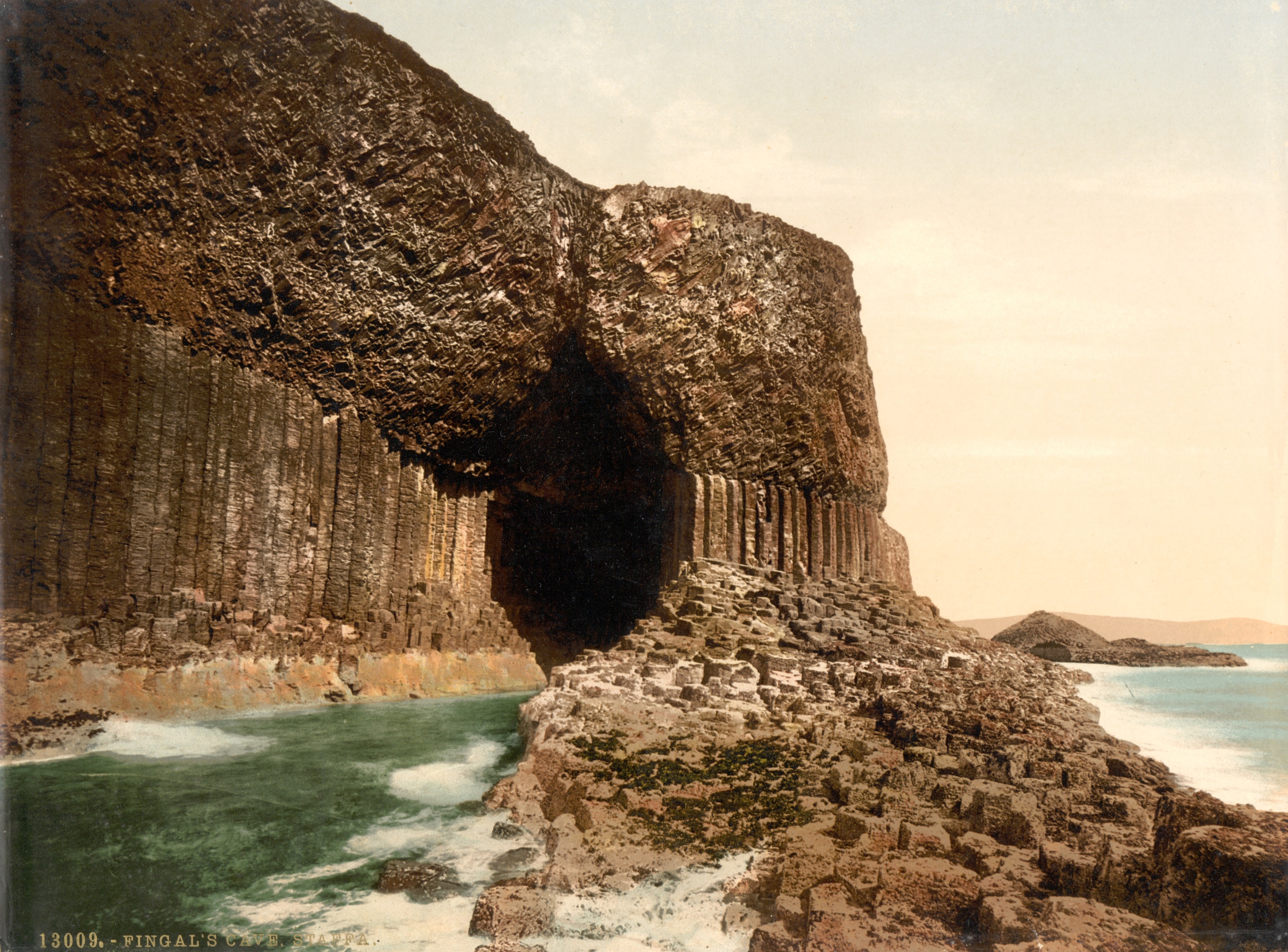
The UK offers lots of scenic views and one of these is the natural wonder - Fingal's Cave. It is a sea cave on the uninhabited island of Staffa, in the Inner Hebrides of Scotland.

The island of Staffa is a small island of Scotland's Inner Hebrides and is most famous for the volcanic rock formations which make up the island. The long columnar rocks with their geometric forms are part of the same formation as the more famous Giant's Causeway in Northern Ireland.

The cave is formed entirely from hexagonally-jointed basalt columns, similar in structure to the Giant's Causeway in Northern Ireland making them a unique tourist spots.

Read More: Spectacular Caves From Around the World

Written By Norbert Bermosa @Scienceray


Monday, March 23, 2009

Fantastic Lava and Explosions


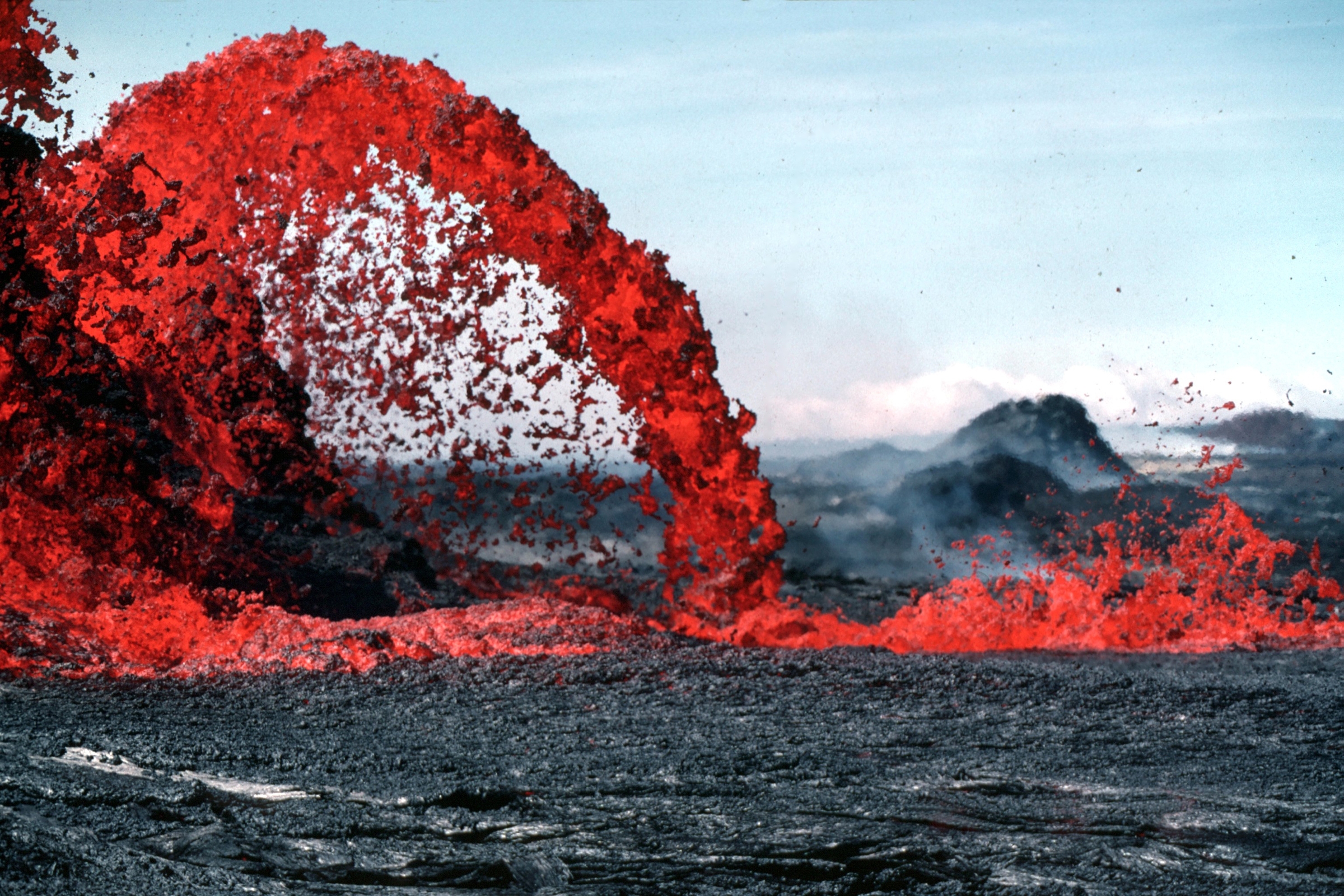
The explosive nature of these fascinating geological mountains provide us with a time line of earth's past, they create chains of living and breathing islands, and they cause deathly destruction to everything they touch.

The violence of a volcanic eruption is based upon many factors including the viscosity of the given magma-the more viscous, the more violent. Viscosity is a measure of a materials resistance to flow, and the thicker it is, the slower is will flow. This works the same way in our bodies when we are dehydrated. The main reason you feel faint during dehydration is that your blood is thicker and it contains less plasma, which ultimately means it lacks enough oxygen to keep you on two feet.  

Read More: Fantastic Lava and Explosions

Like Ancient Digger? Why Not Follow Us?


Subscribe Via RSS Feed Follow Ancient Digger on Facebook Follow Ancient Digger on Twitter Subscribe to Ancient Digger Via Email

Get widget

Search


Ancient Digger Archaeology Copyright © 2015 LKart Theme is Designed by Lasantha