• Ancient Digger teaches Archaeology and History to all Ages!

Friday, July 3, 2015

City of Troy treasures to be housed in Turkish museum


The city of Troy. Some question whether this city was real at all, like the fabled city of Atlantis. The city of Troy is more than real, and now Turkey is taking the steps to share the priceless treasures of Troy from countries scattered around Europe by creating a museum to house the artifacts in the ancient city in the country’s northwest. Construction of the museum began just last year, and works will be accelerated for the repatriation of the Troy treasures from some European countries and Russia.

Located in Tevfikiye village, the Troy Museum is set to be finished by the end of next year. The ancient city receives more than 500,000 visitors every year.

“With a new $25 million tender that will be made in the coming days, we will focus on the ‘fine work’ of the museum. The ministry is also working on projects to bring back the Troy treasures in other countries. When the museum is finished, it will pave way for their return,” Culture and Tourism Director Kemal Dokuz recently said.
Troy Museum
© Hurriyet Daily News

Most parts of the museum construction has been completed. The building will have a closed area of 10,000 square meters, including exhibition halls on a 3,000-square-meter area. Artifacts unearthed in Troy and other archaeological sites in Çanakkale will be displayed at the museum.

Ancient Troy, which received UNESCO world heritage status in 1998, will grow in importance once the museum project is done, according to officials.

It is expected that the number of visitors will exceed 1 million and that Trojan artifacts that were smuggled abroad will return to the country.

According to data from the Culture and Tourism Ministry, Troy ranked ninth on a Turkish list of most-visited museum and ancient sites and eighth on a list of most-profitable sites, Dokuz said. “Troy is a very important brand of Çanakkale. Everyone knows Troy in the world.”

Dokuz said this important brand should be promoted in the best possible way, adding that the ministry had initiated the museum project to promote the treasures of Troy.

The official said the main goal in Troy was to attain the status of the Hagia Sophia Museum, which tops the list of visitor numbers to Turkey, or at least to grab one of the top three places.

The museum is critical in Troy’s efforts to reach the goal, Dokuz said. “When the artifacts return to the country and are put on display at the museum, we believe that Çanakkale will have more importance in Turkish tourism.”

Dokuz said the ancient city’s entrance gates, the surroundings of the Trojan Horse and walking routes had been rearranged. “Three million liras was spent for this rearrangement. Now visitors will be more comfortable when walking around the ancient site. They will get more information about the region.”

Trojan Treasures were smuggled abroad in the 1870s by amateur German archaeologist Heinrich Schliemannn, and they are now in 44 countries, especially Russia.

Source: Hurriyet Daily News

Thursday, December 27, 2012

Hospital Heals Old Artifacts


AA photo
As Turkey’s capital, Ankara is already home to some of the country’s best hospitals. For those tasked with protecting Turkey’s heritage, however, one stands out from the others: the restoration and conservation atelier at the Ankara Museum of Foundational Works – an “old artifact hospital.”

This place is for “the healing of old artifacts,” said Özlem Erdem, one of the specialists that helps restore old artifacts from around the country. “We heal manuscripts from Turkey and even Turkish Cyprus, as well as carpets, kilims and wood artifacts and [artifacts] that are returned to the country after being smuggled abroad.”

Ultimately, the atelier helps clean and preserve Turkey’s ancient heritage for subsequent generations.
Artifacts in the atelier are first documented and photographed before being strengthened according to need, Erdem said. “We complete the work with proper materials and methods and prepare them for exhibition.”

The restoration specialist said many important artifacts from Kütahya, Antalya, Cyprus, Sivas, İzmir, Gaziantep and Kastamonu were undergoing restoration in the atelier, adding that the wood carving works of the Diviriği Ulu Mosque, which is included on the UNESCO World Heritage List, were restored at the atelier.

Erdem is one of the restorers, along with Derya Şan and Ceyda Cüceloğlu.

Foundations Ankara Regional Director Aslan Yıldız said they were proud of having such an atelier to keep historical artifacts alive.

“We can restore all types of historical products here. In this way, we make a big contribution to the budget of the General Directorate of Foundations. We don’t procure services from anywhere else; we restore everything in our own atelier,” Yıldız said.

Yıldız said the establishment of a wider atelier was very important for Turkey because the country is very rich in terms of historic artifacts.

He also said the atelier had acquired a new washing tube for carpets and kilims that can be converted into a desk.

The Ankara Museum of Foundations Works features various examples of carpets collected from all around the country, as well as many other historical pieces. The museum building served as a law school from 1928 to 1941. In 2004, the building was restored to serve as a museum.

Paintings restored in Istanbul lab

Earlier this year in March, Türkiye İş Bankası opened the first painting conservation and restoration laboratory in Turkey as part of Mimar Sinan University with the aim of both supporting art and painting and conserving the country’s cultural heritage.

While the laboratory serves as a scientific base for the conservation and restoration of paintings, it is also becoming a base to raise professional restorers, according to cultural officials.

Source: Hurriyet Daily News

Thursday, July 5, 2012

Missing Codex Calixtinus Discovered in Garage


A priceless 12th-century illustrated guide for pilgrims has been recovered by police a year after it was stolen from the Cathedral of Santiago de Compostela in northern Spain.

The Codex Calixtinus was discovered hidden in the garage of a former employee of the cathedral. The suspected thief, named as Manuel Fernandez Castineiras, had worked as a caretaker and odd-job man for more than 25 years, but was sacked early last year. He had been suing cathedral authorities for unfair dismissal at the time of the theft, on July 5, 2011.

Police arrested Fernandez and his wife, son and son's girlfriend, who are believed to be co-conspirators. The raids also netted other artefacts and €1.2 million ($A1.46 million) in cash.

Source: Sydney Morning Herald


Monday, May 14, 2012

Book Review: The Lost Worlds of Ancient America


This is not another metaphysically inspired adventure saga, based on The Lost Worlds of Ancient America. This book is meant to challenge your prior knowledge of the past; especially where academia based in faith is concerned. The author Frank Joseph urges readers to use their scientific mind to evaluate the information objectively, as this approach, as Joseph describes, is missing from Orthodox scholarship.

When I read books I always look for an angle, and needless to say, one always exists. This book is different. There’s a lesson to be learned, not just from the ancient artifacts that have turned up in the most unforeseen places, but in the presentation. It was Joseph’s intention and his hope that The Lost Worlds of the Ancient America would be…….
 “a catalyst for a new kind of research, free from the narrow-mindedness an academic mind-set that have so far hobbled the healthy growth of archaeology in our country.”
I’m not going to give you longwinded synopsis on the examinations of these ancient worlds, but I will wet your appetite a bit and tell you that you will be surprised. As many of you already know, I will be making my way to Tennessee this summer to teach. Imagine my surprise and delight to hear that the history we associate most with Tennessee, that being the Civil Rights movement is missing a few links. Imagine this movement being tied to a 1st century AD stone discovered in 1889. The Bat Creek Stone was discovered in an undisturbed grave mound and it was initially believed to contain Phoenician characters instead of Paleo-Indian. It gets even better. It is now believed that the characters carved in the stone were written in Hebrew.

At this point I was scratching my head. How did a 1st century stone, written in Hebrew, makes its way into the Americas, and who did it really belong to? Who wrote it and why? Archaeologists Mainfort and Kwas, who initially contested the Hebrew inscription, later conceded that is was Hebrew but the Freemasons carved the characters. For those of you Freemason and Knight’s Templar enthusiasts like myself you’ll agree that both “secret orders”, if you want to call them that, had a connection financially to the Jews. Mainfort and Kwas' judgment is not without merit in my opinion. This is but one story from The Lost Worlds of the Ancient America and it certainly challenged everything I knew, and studied, about American Jews and when they arrived here.

No matter if you’re reading about a Minoan Pendant discovered in Ohio to Anasazi Chocolate, this book will present some of the most surprising and compelling evidence of ancient cultures and advanced technologies that rival even days most complicated of machinery. When I mention evidence I do not mean that the author is trying to sway your opinion in an entirely new direction. Frank Joseph is attempting to give you the tools to have a new perspective, as opposed to basing everything you know, and seem to believe, about a particular subject on the censored history books you’ve previously read in school.

The Lost Worlds of the Ancient America is an easy read, it’s descriptive, simple in its scientific terminology, and there is just the right amount of visuals to spark your interest. It was a pleasure learning something entirely new, and trust me, with my head buried in archaeology and anthropology books for the past couple of years, it's a pleasant surprise to read about a subject, which has been presented in an entirely new light.


This book was presented to me by New Page Books, a division of The Career Press. I did not receive monetary compensation for my review. All opinions are mine.

Wednesday, September 29, 2010

Archaeological Discovery: Gold Adorned Remains of Archaic Woman in Crete


Small gold plaques, 1-3cm-thick, in different forms (square, triangle, and diamond-shaped) were found next to the remains of the woman, discovered a few weeks ago by the team led by archaeology professor Nikolaos Stampolidis. The findings were inside a 2,700-year-old twin tomb, the only one in ancient Eleftherna, located very close to a necropolis of fallen warriors.

Read the full story of this Archaic golden woman

Monday, September 20, 2010

Monday Ground Up: Archaeological Discovery of Viking Artifacts Reveals Facts about Ancient Society


Guest Article By Maria Rainier


Scientists working in Norway’s Jotunheimen mountain range have been reaping the benefits of climate change, taking advantage of warmer conditions to make an exciting archaeological discovery whose implications may help to reconstruct the region’s ancient society.

With glaciers melting quickly enough to reveal layers of ice that have never been exposed before, it’s an archaeological opportunity almost too much to handle. Artifact collection in frozen areas is a delicate process which often requires finding an artifact within a few days of its emergence. The artifact must then be carefully removed, transported to a laboratory, and frozen to keep it from disintegrating. This is especially true of any type of fiber (clothing, rope, and thread), animal skins, feathers, or hair, while wood takes a few years to rot and is easier to manage for archaeologists.

The Viking artifacts being discovered in Norway are predominantly wooden hunting weapons, but archaeologists are still struggling to collect all specimens before they start to fall apart.

Artifacts from Viking Hunters

Archaeologists are quickly learning more about Viking reindeer hunters based on the tools they’re finding in the mountains. The most commonly discovered artifacts are part of an innovative scare tactic meant to drive reindeer toward hidden batteries of Viking archers. This scare tactic involved creating a barrier of wooden stakes spaced about 6 ½ feet apart. Each stake had a foot-long piece of wood tied to its tip so any gust of wind would cause the entire row of stakes to start “flapping,” scaring reindeer toward the waiting Viking hunters.

Most of these archaeological discoveries are incomplete, missing the thread which tied the moving pieces to the stakes, but scientists are hoping to find some intact as they increase their efforts. Bows and arrows and a leather shoe have also been found at the Jotunheimen sites.

Reconstructing Norway’s Ancient Society

According to Norse mythology, the Jotunheimen mountains were inhabited by the “Ice Giants,” also called Frost Giants or Jötunn (Jotunheimen means “home of the giants”). While they may have been tall in stature, these “giants” weren’t the superhuman entities of lore.

What archaeologists do know about them is that they had an organized society, a conclusion drawn from the way Vikings would have cooperated to create the stake barriers for reindeer hunting. Scientists hypothesize that they hunted in groups of 15 or 20, lying in wait together with their bows and arrows until the frightened reindeer ran within about 65 feet of them. This implies that Norway’s ancient society was characterized by hierarchy, as leadership would have been a necessary part of organizing and executing a collective hunting strategy. The prolific Jotunheimen sites are likely to offer more insights into this ancient society and scientists are working to make more meaningful archeological discoveries.


Bio: Maria Rainier is a freelance writer and blog junkie. She is currently a resident blogger at Online Degrees, researching areas of online colleges. In her spare time, she enjoys square-foot gardening, swimming, and avoiding her laptop.

Sources:

Photo: Marcin Szala, used with permission

Monday, August 23, 2010

Monday Ground Up: Mysterious Crypts..... What They Are, Why They Were Used, and Where Can They Be Found


You may be wondering, what exactly is a crypt? Why were crypts used instead of cemeteries? They have such a foreboding reputation, and in most cases, they may have, however there was reasoning behind this. You and I perceive them as creepy. A room breathing and speaking death. A dungeon in the pits of the abyss we’d rather avoid at night. For those that reside in the crypts, they mean something entirely different.

What is a Crypt?

According to Wikipedia, “In architecture, a crypt (from the Latin crypta and the Greek κρύπτη, kryptē; meaning concealed, private) is a stone chamber or vault beneath the floor of a church usually used as a chapel or burial vault possibly containing sarcophagi, coffins or relics.”

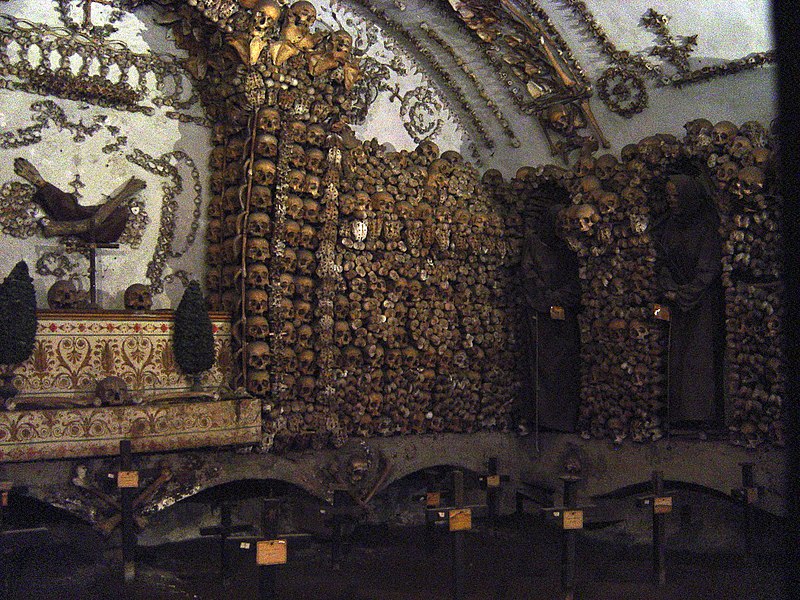
The keyword in this definition is possibly containing, meaning many of the crypts around the world have mummified bodies completely uncovered and in pieces. Hanging on walls. Framing an altar. In some cases, the bones were used for a bannister or staircase. Is this a new form of design? Not exactly.

I believe the bones, and you can tell me if you agree with this, represent the afterlife. They have been left behind, as they served their purpose.

Why Crypts Were Used as Opposed to Cemeteries?

In a practical sense, crypts were used much like cemeteries. To bury the dead. Associations with vampires over the years, however, have cause mixed opinions. This is, of course, because of mainstream media and the Hollywood horror genre in movies and television.

Crypts have been used for centuries for the following reasons:
  • To combat the issue of cemetery crowding, crypts were used.
  • To stop looters or vandals from stealing precious artifacts.
  • To protect the dead from the harsh environment.
  • To preserve a person of significant importance.
  • To furnish an altar only accessible to certain people.
  • To honor the dead.
  • To evoke fear and the possibility of evil, crypts were used.

Personally, I’m a bit fearful of small spaces. Crypts represent the discomfort people feel in the presence of the dead and in small spaces. This proves to you and me, whether we believe spirits are present in these crypts, our human connection with this idea makes us uncomfortable. It’s this idea keeping people away from the crypts. The spirits. The dead. An atmosphere built on a person’s greatest fear.

Where Can Crypts Be Found?

Crypts can be found all over the world in places like:

  • Poland
  • Italy
  • Germany
  • France
  • Switzerland
  • Portugal
  • The Netherlands
  • England
  • Turkey
  • North Africa
  • Romania

Are There Different Types of Crypts?

The answer to the question is yes. There are several types of crypts, those being:

  • Catacombs- are ancient, human-made subterranean passageways for burial or protection. The word “catacomb” is most commonly associated with the Roman Empire.
  • Tombs- a storehouse for the remains of the dead. It’s generally any structurally enclosed interment space or burial chamber, of varying sizes. The word is used in a broad sense to encompass a number of such types of places including: sarcophagi, vaults, rock cut tombs, crypts, monuments, sepulchres.
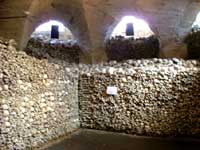
  • Ossuary-a chest, building, well, or site made to serve as the final resting place of human skeletal remains. They are frequently used where burial space is scarce. A body is first buried in a temporary grave, then after some years the skeletal remains are removed and placed in an ossuary. The greatly reduced space taken up by an ossuary means it’s possible to store the remains of many more people in a single tomb than if the original coffins were left as is.
  • Mausoleum-are above ground, free standing buildings, often concrete structures holding family members or one person. A tomb can be found inside a mausoleum.

Four Examples of Crypts Found In Portugal, France, Poland, and Italy


Catacombs of Paris


Catacombs of ParisImage via Wikipedia

You may be familiar with the Catacombs in Paris, which is a series of tunnels, the remnants of France's stone mines, lined with over six million bodies from around the 12th century from the overcrowding of cemeteries during the rise of Christianity. The Catacombs is a form of ossuary, meaning it holds the skeletal remains of humans.

Capela Dos Ossos in Evora, Portugal


The Capela Dos Ossos crypt in Evora, Portugal was constructed around the 16th century. The Capela Dos Ossos is a macabre chapel built by Franciscan monks whom believed life could change in a moment, and they urged others to share in this contemplation during prayer. Read this post about the Capela Dos Ossos

Capuchin Church


The Capuchin Church is a Baroque inspired church built in Bryno in 1604. Capuchin is famed for its crypt, which contained more than 150 friars buried here between 1658 and 1787 during the reign of Emperor Joseph II. Today, there are 24 friars lying on the floor. The friars are fully clothed and their heads rest on bricks. Oddly, their facial expressions remain, as do the religious objects, which have been placed on their chests.

An inscription in the crypt reads:

“What we are, they once were; what they are, we will be.”

What do you suppose it means?

Wola Gułowska

Coffin in a brick-lined crypt under the church...Image via Wikipedia
The Wola Gułowska , built in 1782, is most famous for its miraculous image of the Virgin Mary, recognised in 1982 by the Archbishop Józef Glemp, and a copy of the image of Madonna. Under the church, a small brick lined crypt was built, which contains a coffin and two skulls. In October 1939, Polish soldiers fought the Nazi invaders in the Wola district of Gułowskiej, culminating in the Battle of Kock near the village. A shrine and Museum was erected in the village after the war to remember the fighting.

A Humorous Side To Crypts


Is there a funny side to crypts you may be asking? Well, Dr. Kara Cooney certainly gives her own amusing take on the matter. Dr. Kara Cooney just recently gave a lecture at Tulsa's Philbrook Museum of Art. Cooney is  an expert when it comes to all of those ancient Egyptian crypts that fascinate us. Dr. Cooney has appeared on The Craig Ferguson Show and is on The Discovery Channel presently as well. Video By: Jerrys_Menu

Conclusion

Crypts represent many facets of life, as well as death. Over the centuries, they’ve been used to combat overcrowding of cemeteries, as well as repository units for royal families, monks, priests, and other significant persons.

For you and me, they appear to be small spaces encompassing a part of life we’d like to avoid. For those that reside in the crypts, they may represent completion of a life lived well. With honor. Without malice. A place we should respect.

In your opinion, what is the significance of a crypt as opposed to being buried in a cemetery? I believe they invoke a sense of spirit. You?

Also Check Out:


The Skull Tower archaeological site dates back to around 1809 during the first revolt in Serbia, and was an Ottoman monument intended to mark the empire's success in defeating the Serbian rebels close to Nis in May 1809.Read This Piece About Skull Tower In Serbia
Enhanced by Zemanta

Wednesday, June 2, 2010

Mbamelke African Bronze Judgment Chair


Throughout history, cultures have used various types of torture devices to force the truth, or in this case a confession. Many West and Central African tribes used "judgment chairs" in their criminal trials, chairs that were believed to have the power to the reveal the truth. This intricately decorated chair was used by the Mbamelke of Cameroon. The Mbamelke used separate chairs for both male and females. If you notice, the figures on the chair depict male and female spirits.

The accused was forced to sit in the chair during the trial and if they were found guilty of a crime, such as murder or adultery, they would actually be executed while sitting in the chair. I had the chance to sit in the chair, and for some reason, it just had a sort of macabre feeling about it. Now you know why.

Also check out:

Monday, July 20, 2009

Monday Ground Up: Mayan Civilizations-the Evolution


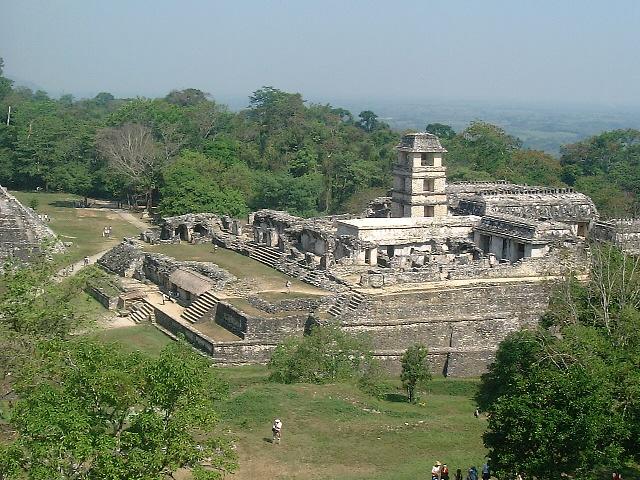
The ruins of Palenque.

The Mayan culture may just be one of the most dynamic representations of rich cultural heritage the world has ever seen. With the civilization came invention, and although advances such as writing, epigraphy, and the calendar did not originate with the Maya, their civilization fully developed them.

The customs maintained are a result of the unification of pre-Columbian and post-Conquest philosophies-structured by the almost total adoption of Roman Catholicism.

According to "accepted history" the first “Maya” settlements were established in around 1800 BC in the Soconusco region of the Pacific Coast. This point in time, known as the Early Preclassic, was characterized by sedentary communities and the introduction of pottery and fired clay figurines.


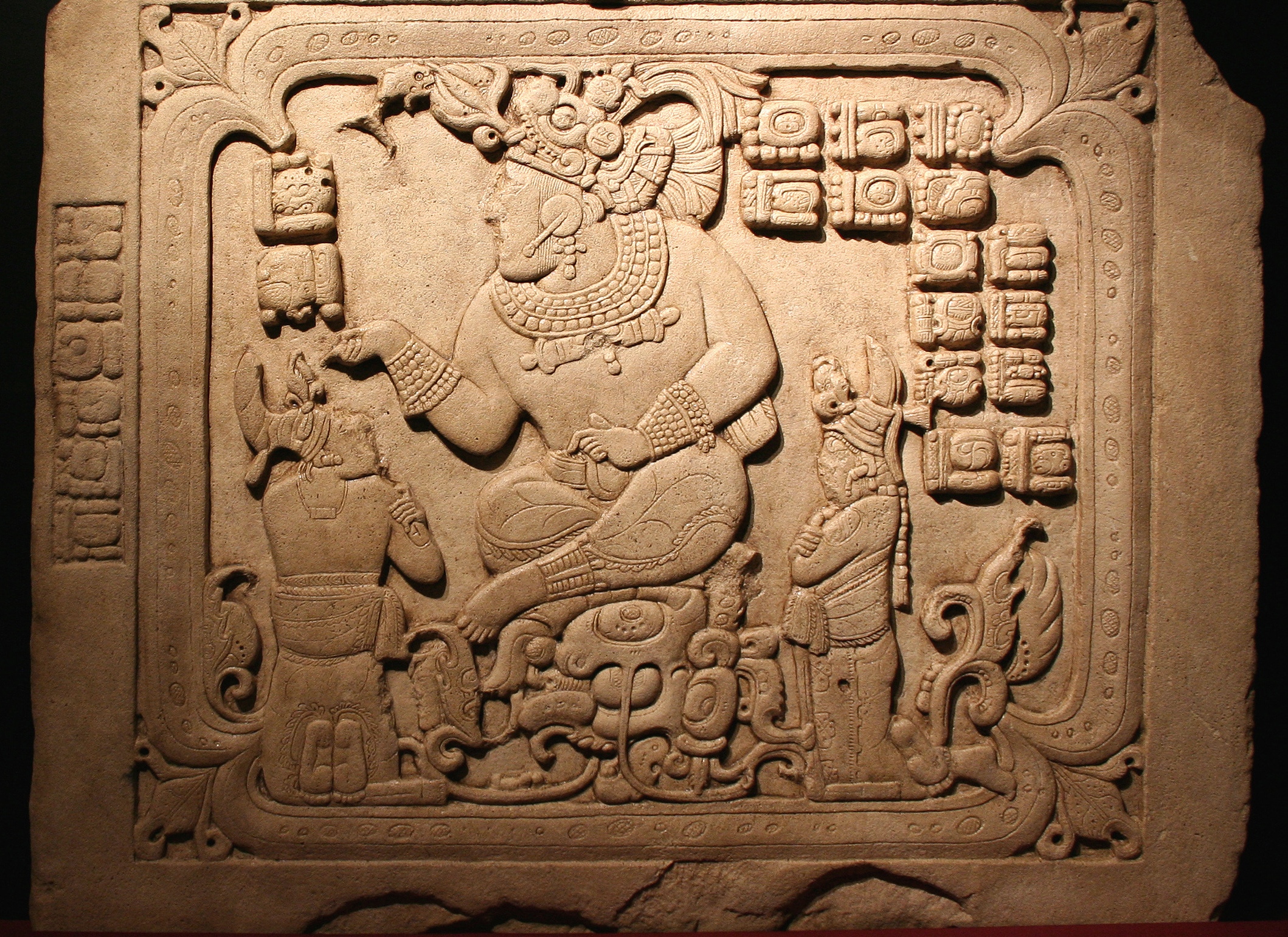
Panel from Cancuén portraying the ruler T’ah 'ak' Cha’an.


During the Classic period, the most monumental of creations took life in the form of stepped pyramids. The Mayan's built pyramids in their religious centers and the accompanying palaces of their rulers. The palace at Cancuen is the largest in the Maya area, though the site lacks pyramids.


The Collapse of Mayan Civilization


The end of the Mayan civilization is arguably one of the most researched collapses in archaeological history. During the 8th and 9th centuries, the surrounding areas were abandoned due to over population, drought, disease, and war.

Ecological hypotheses include environmental disaster, epidemic disease, and climate change. There is evidence that the Maya population surpassed carrying capacity of the environment including exhaustion of agricultural potential and overhunting of megafauna.[3] Some scholars have recently theorized that an intense 200 year drought led to the collapse of Maya civilization.[4] The drought theory originated from research performed by physical scientists studying lake beds,[5] ancient pollen, and other data, not from the archaeological community.

Related Articles

shares his incredible experience in Peru, where romance blossomed in an ancient civilization.

When I heard about the program I was kind of skeptical of my chances. I had never been to Peru. But the grant specifically called for a professor of Archeology willing to teach a course in Ancient Incan construction and then it culminated in a month long work program where the professor and students would act as tour guides and have access for academic study to all parts of the glorious city. More about Machu Picchu


Athena Goodlight from Rizal, Philippines, takes us on an amazingly picturesque journey through the country side. A perspective from an open mind and appreciative traveler.

Athena
presents Exploring the Wonders of the Maya Route posted at trifter, saying, "Stretching from Southern Mexico into Belize and Guatemala, the Maya Route is a region where you can scale jungle-entwined temples by day, then dress up for a sparkling night on the town in seaside resorts or charming cities."
Athena presents Why the Ancient Mayan Culture is So Mesmerizing posted at Trifter, saying, "What makes the ancient Maya culture so mesmerizing today? For some, it’s the beauty: From the graceful pyramids of Palenque, in Mexico, to Guatemala’s Tikal, rising above a green canopy of rain forest, the Maya left behind a stunning artistic architectural legacy."

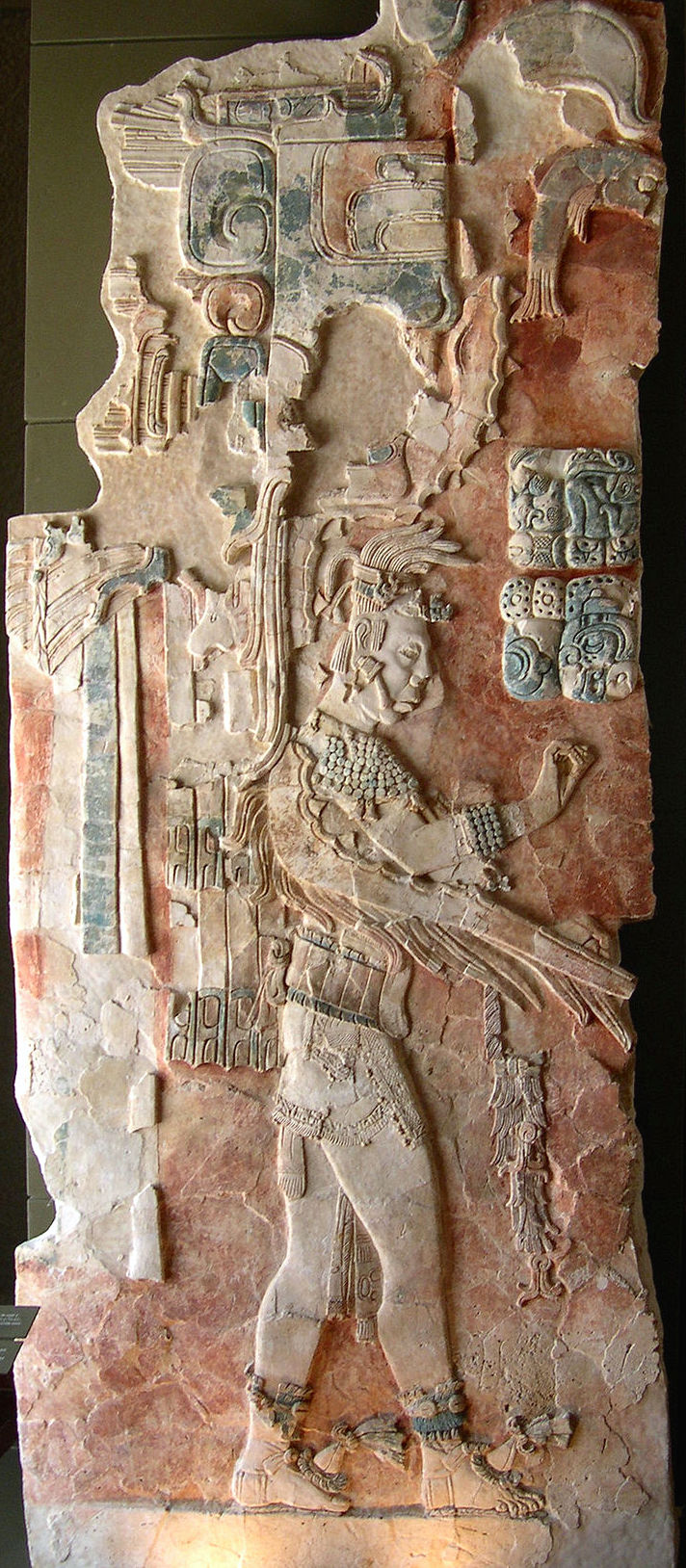
A stucco relief from Palenque depicting Upakal K'inich.


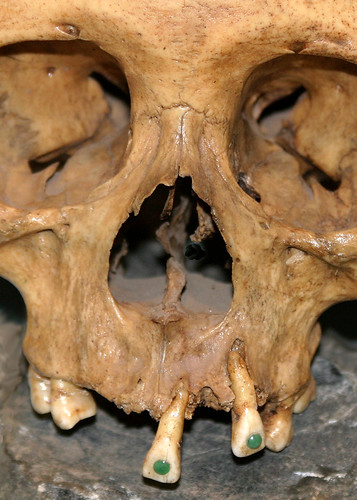
This is on display at the Jade Museum in Antigua, Guatemala. Today, some Mayans decorate their teeth with gold inlays, hundreds of years ago they seem to have used jade. By DavidDennisPhotos.com

Jade Mayan Mask


A jade mask that metaphorically represents the Rain God Chaac, and the Creator God Kukulkan.


A Middle Preclassic palace structure at Nakbé, the Mirador Basin.

Tulum


Tulum is just across the water from Cozumel, Mexico. Postcard type photo...
HDR. Gauss on a bit. Comes across as one of those old colored BW postcards. by joiseyshowaa

Pyramid of Kukulcan


View from the Great Ball Court towards the Pyramid of Kukulcan (El Castillo) and the Temple of the Warriors (to the left). By the time I took this photo there were ever-growing hordes of visitors that made taking a clean shot difficult. In this photo I was able to use this Mayan wall (bottom foreground) to shield out all the gringos. by Rob Shenk

Mayan House


This is a photo of a Mayan house. Most of it's walls have fallen down but you can still see the front stops. Most houses in the Mayan culture look similar to this. By amber.kennedy


National Geographic: Palenque Prized for Unlocking Maya Mysteries

The first published account of this lost city was in 1567, from a Spaniard, Father Pedro Lorenzo de la Nada.Exploring near the Usumacinta River, located in the modern Mexican state of Chiapas, Lorenzo came upon its stone temples and plazas, originally decorated with blue- and red-painted stucco but by then long abandoned by the Maya who built it. Lorenzo gave the grand structure the name Palenque, a Spanish word meaning "fortification."
Read More

By Kelly Hearn


Technorati tags: , .

References
  1. Drew (2004), p.6.
  2. Coe, Michael D. (2002). The Maya (6th ed.). Thames & Hudson. pp. 47.
  3. University of Florida study: Maya politics likely played role in ancient large-game decline, Nov. 2007
  4. Gill, R. (2000). The Great Maya Droughts. Albuquerque: University of New Mexico Press. ISBN 0826321941.
  5. Hodell, David A.; Curtis, Jason H.; Brenner, Mark (1995). "Possible role of climate in the collapse of Classic Maya civilization". Nature 375 (6530): 391–394. doi:10.1038/375391a0.
Edited by Ancient Digger

Friday, July 10, 2009

National Geographic News: Armadillo-like Crocodile Fossil Found in Brazil


An ancient crocodile with armadillo-like body armor (above, a reconstruction of the fossil in an undated picture) roamed the arid interior of Brazil about 90 million years ago, say researchers who found the fossil in São Paolo state.

In addition to its unusual bony shield, the reptile could chew like a mammal, moving its lower jaw forward and backward, researchers said in July 2009. Full Story Here

Monday, June 15, 2009

Six Notable Archaeological Forgeries in History


This post has been removed as the story was linked to a site that is no longer online. I apologize for the inconvenience.

Check out Archaeology.org's extensive list of Hoaxes, Forgeries, Fakes, and Strange Sites:

Archaeology's Hoaxes, Fakes, and Strange Sites


Friday, June 12, 2009

Most Vicious and Cannibalistic Prehistoric Creatures


During the Pre-Historic Era, certain creatures and species were limited in their access to food supplies, and so they were forced to feed on their own kind, giving them the ability to sustain their lives a bit longer.

Majungatholus


In 1998, paleontologist/anatomist Scott Sampson from the New York College found a Majungatholus skull, making it the most well preserved dinosaur skull ever found. Sampson said, "It's the kind of face that only a mother could love. It had textured, convoluted bone all over the surface of the skull which probably had skin tightly adhering to it. It had this horn-like structure on the top of the head between the eyes and another projection at the back of the skull as well."

Image via Wikipedia

Teeth marks along with serrated smaller notches were found embedded on the Majungatholus measuring the same width as the teeth on the dinosaur itself, implying that it may have been involved in a struggle with the same species.

Neanderthals


Around 43,000 years ago, the Neanderthals were turning to cannibalism—even brain-eating. Discoveries of fossil remains suggest that these prehistoric humans looked entirely different from their northern counterparts. The Osteology of this species clearly suggests signs of dismemberment and skinning.

Image via Wikipedia

Cannibalistic actions included cutting of the flesh, using small stone tools and smashing open the skull using larger tools to access the brain and marrow.

Image via Wikipedia


“Reports of the Neandertals (often spelled "Neanderthals") ate their own kind, says paleoanthropologist Antonio Rosas of the National Museum of Natural Sciences in Madrid. Rosas is the lead researcher for the study, which is published today in the journal Proceedings of the National Academy of Sciences.”

Anasazi

MesaVerde


Around 900 AD in the Chaco Canyon, the Anasazi of the southwestern U.S. routinely "processed their colleagues . . . skinned them, roasted them . . . severed their joints . . . and put the pieces into pots. This gives an entire new meaning to vicious and bizarre." Unfortunately, history has continued to be a distressing chronicle of man's inhumanity to man. Today, Chaco Canyon is a Mecca for New Agers. They like to believe that Anasazi existed in full harmony with nature. However, the archaeological evidence is exceedingly “inconvenient for those who argue that man in his natural state was good and that civilization as we know it is evil.”

Cave Bears


Scientists have always believed that these creatures were gentle, feeding solely on vegetables and fruits. However, bones were discovered in the Carpathians - the mountains where Dracula supposedly dwelt – suggesting that cave bears could have also been cannibals. Ongoing studies of their bones and other accessory organs suggest that only a certain cave bear, dwelling in the Carpathians were carnivorous. They had high levels of Nitrogen 15 in their bones, which was highly bizarre considering that cave bears normally had low levels of Nitrogen-15.


Ultimately, Cave bears died out around 20,000 years ago when the ice had dominated the earth.

Thursday, June 11, 2009

Mysterious Inscribed Slate Discovered at Jamestown


Archaeologists from Jamestown have just discovered a 400 year old transcribed slate tablet from America's first English Settlement. The slate is covered with writings, numbers, and drawings of people, plants, and birds that its owner likely encountered in the New World in the early 1600s.

The tablet was found a few feet down in what may be the first well at James Fort, dug in early 1609 by Capt. John Smith, Jamestown's best known leader, said Bill Kelso, director of archaeology at the site. If the well is confirmed as Smith's, it could help offer important insights into Jamestown's difficult early years.

Records indicate that by 1611, the water in Smith's well had become foul and the well was then used as a trash pit. Archaeologists discovered the slate among other objects thrown into the well by the colonists. Read More ~~

National Geographic

Wednesday, May 20, 2009

The Museum of Turin and Its Special Collection


The Museum of Turin is home to one of the most spectacular collections of Egyptian artifacts in the world.

The Egyptian Museum of Turin (the second in the world after the Cairo Museum) was established in 1824, although the University of Turin already owned an important collection of Egyptian material.

In 1824, King Carlo Felice acquired most of the vast collection collected by the Piedmontese Bernardino Drovetti, French consul general in Egypt. During the same year, Jean-François Champollion used Turin collection of papyruses to test his breakthroughs in deciphering the hieroglyphic writing.

The time Champollion spent in Turin examining the texts is also the origin of a legend about the mysterious disappearance of the "Papiro Regio", that was only later found and of which some portions are still unavailable.

In 1833, the collection of Piedmontese Giuseppe Sossio (over 1,200 pieces) was added to the Egyptian Museum. The collection was complemented by the finds of Egyptologist Ernesto Schiaparelli during his excavation campaigns between 1900 and 1920.

The Tomb of Kha was discovered in 1906 during the excavation campaign carried out by the Italian archaeological mission in Deir el Medina. This particular exhibit is the most impressive in the entire museum. The tomb, which dates back to 3,500 BC held several sarcophagi and statues, as well as furniture, garments and grooming items.

Kha was an important foreman at Deir El-Medina where he had been responsible for projects constructed during the reigns of 3 kings: Amenhotep II, Thutmose IV and Amenhotep III .

"entirely covered in gold leaf, except for the eyes, eye-brows and cosmetic lines, which are inlaid--quartz or rock crystal for the whites of the eyes, black glass or obsidian for the irises, blue glass for the eyebrows and cosmetic lines. The eye sockets themselves are framed with copper or bronze. His arms are crossed over his chest in the pose of Osiris, lord of the dead. He wears a broad collar with falcon-head terminals. Below this is a vulture with outstretched wings grasping two shen-signs in its talons."

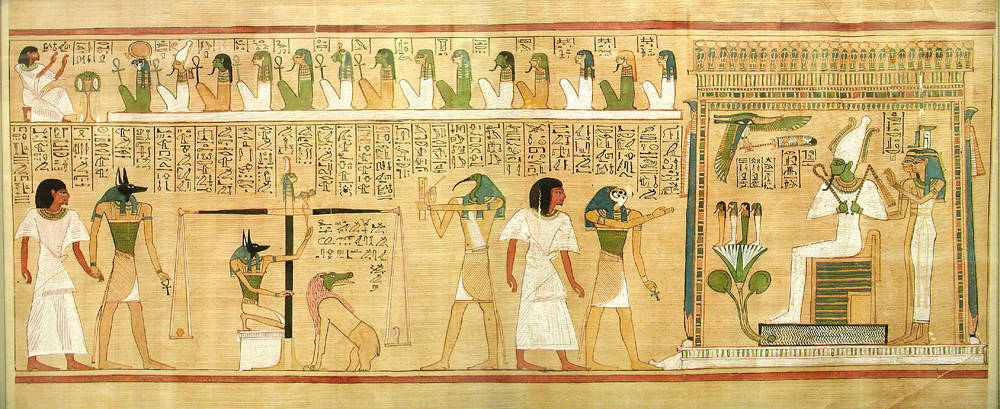
Included in one of Kha's coffins is one of the earliest examples of the Egyptian Book of the Dead.

The Museum of Turin has acquired 3 copies of the Egyptian Book of the Dead including the most ancient copy known. The books were discovered by Schiaparelli in 1906 and til this day they remain displayed in the museum. However, the director has been asked several times to remove them due to their negative energy protruding from the papyrus.

The book of dead was simply the explanation of the afterlife and a collection of hymns, spells, and instructions to allow the deceased to pass through obstacles.

The book of dead was most commonly written on a papyrus scroll and placed in the coffin or burial chamber of the deceased. However, many believe that reading from the scrolls can lead to plague, death, or the end of life as we know it.

Between 1903 and 1920 the Italian Archaeological Mission launched a number of excavations along the Nile, acquiring additional material; new pieces were also added to the museum between 1930 and 1969.

Like Ancient Digger? Why Not Follow Us?


Subscribe Via RSS Feed Follow Ancient Digger on Facebook Follow Ancient Digger on Twitter Subscribe to Ancient Digger Via Email

Get widget

Search


Ancient Digger Archaeology Copyright © 2015 LKart Theme is Designed by Lasantha