The most comprehensive exhibition of Greek art and artifacts ever to tour outside Greece opened at the Field Museum of Chicago on November 25. This highly recommended show will be on view until April 10. From Chicago, it will move to the National Geographic Museum in Washington, D.C. and be on display from May 26 through October 9.
The Greeks were a diverse group of peoples inhabiting mainland Greece and the Greek islands, and, in ancient times, the coast of what is now Turkey. They shared a common language and religion, and many of the same political institutions.
Over the course of the several millennia of their ascendancy, the Greeks passed through a variety of social formations: from early class societies on the basis of the “Neolithic Revolution” in agriculture that began some 10,000 years ago in western Asia to the societies, based to a large degree on slave labor, which provided the material basis for a flowering of Greek culture and politics.
“Classical beauty,” wrote Hegel in his Aesthetics, “with its infinite range of content, material, and form is the gift vouchsafed to the Greek people, and we must honour this people for having produced art in its supreme vitality.”
The Greeks is organized by the Canadian Museum of History and the Hellenic Ministry of Culture and Sports in partnership with National Geographic Society and The Field Museum. The exhibition is co-presented in Chicago by The Field Museum and the National Hellenic Museum. The exhibition is developed by the Hellenic Republic – Ministry of Culture and Sports – Directorate General of Antiquities and Cultural Heritage (Athens, Greece), The Field Museum (Chicago, USA), the Canadian Museum of History (Gatineau, Canada), the National Geographic Museum (Washington, DC, USA) and Pointe-à-Callière, Montréal Archeology and History Complex (Montréal, Canada).
The Field Museum gratefully acknowledges the support of the Chicago Park District on behalf of the people of Chicago.
Whether your traveling abroad this summer, or live close by to these venues and archaeological exhibits, they are certainly worth a peek. I was looking forward to visiting one of the local venues, Mummies of the World, in downtown Orlando. True, Orlando is most known for the parks filled with million upon millions of tourists, however once in a while, a great exhibition will come to town, giving parents something more relaxing to do while Jimmy rides Magic Mountain for the tenth time.
Must See Temporary and Permanent Archaeology Exhibits in 2015
Heritage Awareness Diving Seminar (HADS) St. Augustine, Fl
The Heritage Awareness Diving Seminar is intended to explain the advantages of conserving shipwrecks and other submerged cultural resources, not only to preserve information about our collective past, but also to preserve the vibrant ecosystems that grow around historic shipwrecks. HADS focuses on providing scuba training agency Course Directors, Instructor Trainers, and Instructors with a greater knowledge of how to proactively protect shipwrecks, artificial reefs, and other underwater cultural sites as part of the marine environment. Upon completion of HADS, participants can teach the new Heritage Awareness Diving Specialty Course, approved by PADI, NAUI, and SDI, as well as incorporate underwater historic preservation into other courses.
Mummies of the World-Orlando Science Center Orlando, Fl
Mummies of the World portrays a once-in-a-lifetime collection of real mummies and artifacts from across the globe. This compelling collection, presented with reverence and dignity, includes ancient mummies dating back as far as 4,500 years. A fascinating mix of old and new, this captivating collection bridges the gap between past and present with contributions from 10 world-renowned Institutions and two private collectors.
The Exhibition is open Sunday through Thursday 10 am to 5 pm; Friday & Saturday 10 am to 9 pm. Last entry to the exhibition is 60 minutes before closing.
Pirates of Populonia -- the Myth of Etruscan Piracy in the Ancient Mediterranean Ottawa, ON
Did the Etruscans deserve their reputation as seafaring villains? Jean MacIntosh Turfa, University of Pennsylvania Museum, thinks not. Come and find out why!
Time Exposures: Picturing a History of Isleta Pueblo Museum Exhibit-Heard Museum Phoenix, AZ
In the fascinating new exhibit “Time Exposures: Picturing a History of Isleta Pueblo in the 19th Century”, the people of Isleta Pueblo in New Mexico tell their history and the lasting effects of 19th century changes on their lives today through historic photographs and a variety of media. The story unfolds in three parts: first, Pueblo people describe the year’s cycle as it was in the mid-19th century, then the arrival of Americans and how this disrupted their way of life, and finally they examine the historic photographs as products of Anglo culture and ask what kind of record they really represent.
Extinct Madagascar: Picturing the Island's Past – Field Museum Chicago, IL
You’ll learn how Field Museum scientist Steve Goodman and State University of New York professor Bill Jungers teamed up with artist Velizar Simeonovski to recapture the extinct animals and their habitats by creating digital illustrations—from the bones up.
Mammoths and Mastodons: Titans of the Ice Age– Field Museum Chicago, IL Journey back millions of years ago to when mammoths and mastodons roamed the Earth. Joust with mammoth tusks. Touch colossal mastodon teeth. Confront their fierce neighbors—dire wolves and saber-toothed cats. Discover ancient cave drawings and learn why early humans both hunted and honored these majestic animals. Walk among these larger than life creatures for a day, in the most captivating exhibition since the Ice Age, back at The Field Museum by popular demand.
Before the Dinosaurs: Tracking the Reptiles of Pangaea – Field Museum Chicago, IL Journey across the globe with a Field Museum paleontologist and his team in search of what life was like before dinosaurs roamed the Earth. On this special expedition, see firsthand what it takes to find the perfect dig site and what supplies to pack - then start fossil hunting! See how a single rock layer can preserve hundreds of fossils, and then back in the lab, decide which fossils should be studied first. Examine the subtle features on a fossil bone that scientists use to figure out what species it is and how that species is related to other animals. Explore how the greatest extinction event of all time made room for the animals we know today. And learn how scientific collaborations like this let us unravel the mysteries of the evolution of life on Earth.
Indiana Jones and the Adventure of Archaeology-National Geographic Museum Washington, DC
This first-of-its-kind touring museum exhibition was developed by X3 Productions in collaboration with a team of world-renowned specialists to ensure it presents a factual interpretation of the principles and methodologies of field archaeology. Indiana Jones and the Adventure of Archaeology, presented by the National Geographic Society, immerses you in the science and history of field archaeology. Walk in the footsteps of beloved film hero Indiana Jones as you embark on this interactive museum adventure.
The Crossrail archaeology programme has now reached its half-way point with several valuable discoveries going on display in Westminster.
Rare and priceless finds giving a glimpse of London life through the ages will be shown on Saturday (7) from 10am to 5pm at the Music Room at Grays Antiques, South Molton Lane.
The programme began in 2009 with archaeologists beginning their investigations at Tottenham Court Road, where they excavated the former Crosse and Blackwell factory site.
Since then, they have uncovered finds dating from prehistoric times to the industrial revolution, including Roman artefacts, medieval ceramic wig curlers and more.
Jay Carver, Crossrail's lead archaeologist, said: "Over the past few years we have worked in a range of challenging and constrained sites including busy London streets and abandoned wharves along the Thames.
"This exhibition consists of a selection of our oldest, rarest and most peculiar finds. It will show visitors how life has changed in the capital as well as helping people to understand how archaeologists plan and execute digs."
Eastbourne Terrace at Paddington will be one of the next sites to be studied later this year.
All items uncovered will be donated to the Museum of London or to the Natural History Museum.
Many people are just not satisfied by a photo of historical, natural or artistic items, which is why they visit museums. For those with a strong interest in history and unearthing it, there is nothing quite like the experience of archaeology museums. These museums focus on the field, including archaeological exhibits as a regular part of their offering to the public. Traveling to archaeology museums around the world may not be the easiest task, but the most popular of these museums offer extensive or unique collections, well worth your time.
The National Archaeological Museum of Naples
The National Archaeological Museum of Naples in Italy has one of the world's top archaeological exhibits of Greek and Roman antiquities, particularly those from nearby Pompeii and Herculaneum. Some of the exhibit's features include mosaics, sculptures, glass and silver.
At the museum in Naples, a visitor could expect to see a number of items from or about the historic city of Pompeii that was destroyed by the eruption of Vesuvius in 79 A.D. Among these are the Temple of Isis, which is a special exhibit that includes wall paintings removed from the temple as well as artifacts from it, and a Pompeii model that was created in the 19th century to give an accurate representation of what the city would have looked like prior to the eruption. Additionally, there is a section called the "Secret Cabinet," which contains erotic and sexual items that through archaeology were discovered and preserved, but for some time, such items were deemed inappropriate for the public to view. The "cabinet" was re-opened in 2000, though visitors must be at least 11 years old.
Istanbul Archaeology Museums
The Istanbul Archaeology Museums in Turkey feature a wide array of tools and artifacts through the region's history. The museums' archaeological exhibits include the Kadesh Peace Treaty -- dating to 1258 B.C. and considered the oldest peace treaty in the world -- that was signed between Ramesses II of Egypt and Hattusili III of the Hittite Empire, and the Alexander Sarcophagus, a late fourth century B.C. stone sarcophagus adorned with bas-relief carving of Alexander the Great.
Traveling to archaeology museums around the world, it is uncommon to find one that technically includes three interconnecting museums. The Istanbul Archaeology Museums consists of the Archaeological Museum, the Museum of the Ancient Orient and the Museum of Islamic Art. Together, they house over one million objects that represent nearly all eras and civilization in recorded history.
Peabody Museum of Archaeology and Ethnology
The Peabody Museum of Archaeology and Ethnology in Cambridge, Mass., is one of the oldest museums in the world devoted to anthropology. Affiliated with Harvard University, the museum contains one of the most comprehensive collections of human cultural history in the Western Hemisphere. The museum's archeological exhibits focus on the native people of North America as well as displaying casts from Mesoamerican monuments and objects from the Pacific Islands.
Though some of the museum's artifacts are permanent fixtures, like the Louis and Clark and Hemingway collections, others are part of a rotating schedule of exhibitions. Without traveling to archaeology museums throughout the Americas, a visitor to the Peabody has the opportunity to see one of the largest and most extensive collections of indigenous people of North America and Mesoamerica. Additionally, because of the museum's close connection with Harvard, the collections at Peabody are available for teaching, publication and artistic purposes. Given notice, the museum may grant approval for limited access.
Qin Shi Huang Terracotta Warriors and Horses Museum
Though this may not fit into the same definition with other archaeology museums, the Qin Shi Huang Terracotta Warriors and Horses Museum, which features the now-famous Terracotta Warriors depicting the armies of Qin Shi Huang, the first emperor of China, is a unique type of archaeological museum in its own right. The museum, rather than focusing on numerous archaeological exhibits, centers on the warriors. As the figures remain in the trenches where they were first found by a farmer in 1974, the museum in Shaanxi Province, Xi'an City, Lingtong County, Qinling Town gives the feel of an archaeological dig still in progress.
Devoted to the figures that date from 210 B.C., the pits once held more than 8,000 soldiers, 130 chariots with 520 horses and 150 cavalry horses. Traveling to archaeology museums like Qin Shi Huang can be difficult, which is why a small number of the warriors and a number of artifacts discovered in the area tour countries around the world, giving those of us who have difficulty traveling to archaeology museums in other countries the opportunity to view the life-size figures that guarded the emperor's tomb.
Penn Museum
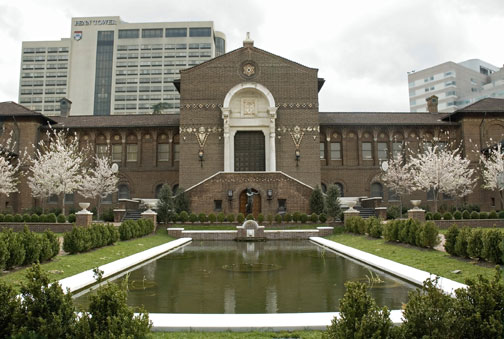
Penn Museum (The University of Pennsylvania Museum of Archaeology and Anthropology) in Philadelphia, Pa., features a variety of exhibits from cultures around the world. A site ideal for those with trouble traveling to archaeology museums in all the countries they may like to explore, long-term archaeological exhibits at Penn Museum include features on Africa, Egypt, Buddhism, Islam and ancient Greece and Rome.
One of the prominent archaeological exhibits at the museum features more than 100 ancient artifacts from the Amarna period in Egypt and the time of Tutenkhamun, some of which have never before been on display. For this ancient culture, this period was a time of religious and cultural experimentation. Another long-standing exhibit contains nearly 25,000 artifacts from excavations in the Levant, which includes areas in modern Israel, the West Bank, Jordan and Lebanon. The collection is the largest from the region in any of the museums in the United States and Western Hemisphere.
The National Archaeological Museum in Athens
The National Archaeological Museum in Athens includes artifacts from a variety of locations in Greece important to archaeology, such as Santorini, Mycenae, the Aegean islands, Delos and the Sanctuary of Artemis Orthia in Sparta. The collection of artifacts from Greek antiquity is considered the richest such collection in archaeology museums worldwide.
Among the 11,000 archaeological exhibits at the museum is the wrongly-named Mask of Agamemnon, one of the most famous pieces in the collection. The museum encompasses sculpture, metalworks and pottery, among other collections, from the archaic period through classical Greece and the Hellenistic era. Like a number of other museums, it does not focus just on the culture of its own country, but has collections of Egyptian and Cypriotic antiquities that were presented to the museum from various donors.
The Petrie Museum of Egyptian Archaeology
Located in London, U.K., the Petrie Museum of Egyptian Archaeology has an estimated 80,000 objects, making up one of the largest collections of Egyptian and Sudanese items in archaeology museums worldwide. It may come as a surprise when traveling to archaeology museums that such a large number of Egyptian artifacts are housed in London, but much of the Petrie Museum's collection comes from documented excavations.
Among this extensive collection are one of the earliest pieces of linen from Egypt, two lions from the temple of Min at Koptos and the earliest example of glazing. Much of the collection consists of firsts, or at least earliest, archaeological finds of their kind.
Kelsey Museum
If your a Classic's buff or love the lives of the ancients like I do, the Kelsey Museum in Ann Arbor, Michigan is a trip you just can't miss. Kelsey Museum "houses a collection of nearly 100,000 ancient and medieval objects from the civilizations of the Mediterranean and the Near East in the William E. Upjohn Exhibit Wing. Aside from the permanent collection, new exhibits are presented on a regular basis at Kelsey.
I'm a bit partial to the seal artifacts found in Iran, such as the Stamp Seal showing Ibex from Tepe Giyan, Iran. Kelsey has an amazing collection of these which I've only begun to investigate.
Visitors are always welcomed if you'd like to check out their visitor information page for more details.
Definition: An Ancient Digger is anyone, not just an archaeologist, who digs for knowledge, truth, reason, science and education, and strives to share that knowledge with everyone.