• Ancient Digger teaches Archaeology and History to all Ages!

Tuesday, May 23, 2017

Archaeology News: May 23, 2017


ARCHAEOLOGY NEWS – Ancient Digger brings you the latest archaeology news and headlines everyday of the week!

Washington's birth site more mysterious than thought

On Popes Creek in Westmoreland County, park rangers tell visitors that “George Washington slept here first.” It’s a riff on that old line encountered at innumerable Mid-Atlantic historic sites, but if any place has bragging rights, it’s here—George Washington Birthplace National Monument in Virginia’s Northern Neck. Here on this acreage, the first U.S. president came into the world.

Stone Age 'cult' henge site and human remains discovered near Stratford

A STONE Age ‘cult’ henge site and human remains – which could belong to some of south Warwickshire’s earliest residents – have been discovered close to Stratford. Archaeologists have found the 4,000 year-old remains at a new housing development in Newbold-on-Stour, on fields at Mansell Farm. Experts say it is an ‘important discovery’.

Medieval brewery used by monks discovered by archaeologists on the outskirts of Lincoln

A medieval brewery has been discovered by archaeologists along the route of Lincoln Eastern Bypass.

Ancient Egyptian Pharaoh Carving Found in Looting Hole

Egyptian authorities say they caught looters digging up an ancient stone block carved with an image of a pharaoh. In the city of Abydos, antiquities authorities say they were inspecting an old two-story, mud-brick house when they found that the owner had excavated a hole in the floor.

Space Archaeology 

Archaeologists often spend years digging and hoping they'll find the remnants of ancient civilizations. There's a lot of ground yet to be uncovered. Archaeologist Sarah Parcak says less than 10 percent of the Earth's surface has been explored, so she's leading the way to speed up the search. Parcak uses satellite photos to locate ancient sites and she's finding them -- thousands. It's called space archaeology and it's transforming the field. Sarah Parcak is a professor at The University of Alabama at Birmingham. We met her in Egypt doing what she loves most: digging in the dirt.

Noah’s Ark discovered? Researchers '99.9 per cent certain' of astonishing Biblical find

A team of evangelical Christian explorers found what they claim is “99.9 per cent” certainly evidence of Noah’s Ark beneath snow and volcanic debris on Mount Ararat in Turkey. Noah's Ark Ministries International, a Hong Kong-based documentary team, claim to have found wooden pieces from a structure which carbon dates back 4,800 years and was found around 13,000 feet above sea level.

Tuesday, August 2, 2016

Archaeology News: August 2, 2016


ARCHAEOLOGY NEWS (August 2, 2016)– Ancient Digger brings you the latest archaeology news and headlines everyday of the week!

Prehistoric Native American Fishing Camp Found in New Jersey

Ancient hearths and some 1,300 artifacts, including unglazed ceramics and pieces of soapstone, have been found at an industrial construction site along the South Camden waterfront.

Roman Cooking on Display in Restored Pompeii Kitchen

The Local, Italy, reports that cooking equipment, such as metal grills, pots, pans, and earthenware crocks, have been returned to the kitchen in the Fullonica di Stephanus, a three-story launderette where the garments of wealthy Romans were washed some 2,000 years ago. The equipment was discovered in the launderette in 1912, but had been moved to other areas of Pompeii over the years. The grills were placed over troughs where charcoal fires were lit. Meat, fish, and vegetables were then placed on the grills. Soups and stews were cooked in pots and pans on tripods placed in the coals. “We’re delighted the pieces have finally been put back on display where they were found,” said Massimo Osanna, archaeological superintendent of Pompeii. For more on Pompeii, go to "Family History."

Dark Ages royal palace discovered in Cornwall – in area closely linked to the legend of King Arthur

The mysterious origins of the British archaeological site most often associated with the legend of King Arthur have just become even more mysterious. Archaeologists have discovered the impressive remains of a probable Dark Age royal palace at Tintagel in Cornwall. It is likely that the one-metre thick walls being unearthed are those of the main residence of the 6th century rulers of an ancient south-west British kingdom, known as Dumnonia.

1,000-Year-Old Human Remains Uncovered in Northern Ireland

Excavations on the grounds of an eighteenth-century country house known as Hillsborough Castle have uncovered a skeleton thought to have belonged to a young woman who lived 1,000 years ago.

Illegal structure in Mathura to be razed

Acting on the recommendations of the Archaeology Department of Uttar Pradesh, district authorities have directed police to demolish an illegal structure being constructed by a man close to the heritage memorial of the Bharatpur dynasty.

UTSA students and staff make historic discoveries in Belize

Kathryn Brown, associate professor of anthropology, has been directing a team of researchers at the site of Xunantunich since 2008, investigating the site’s origins and political history. One target of those investigations is El Castillo, a 39 meter tall acropolis which served as the site’s royal palace for decades. Team member and UTSA doctoral student Leah McCurdy has focused her dissertation research on El Castillo, examining the architectural history of this impressive acropolis.

More 1066 artefacts found in York


AN EXCAVATION at Fulford, which precedes the 950th anniversary of the 1066 battle, is turning into the "best imaginable" dig, says archaeologist Chas Jones. He said the dig on the Germany Beck site had led to further finds of tools which were he believed to have been used by medieval armourers to repair dents in helmets and shield-bosses.

Mexico finds water tunnel network under tomb of Pakal

© INAH/AFP

Archaeologists at the Mayan ruin site of Palenque said on Monday they have discovered an underground water tunnel built under the Temple of Inscriptions, which houses the tomb of an ancient ruler named Pakal. Archaeologist Arnoldo Gonzalez said researchers believe the tomb and pyramid were purposely built atop a spring between AD 683 and 702. The tunnel led water from under the funeral chamber out into the broad esplanade in front of the temple, thus giving Pakal’s spirit a path to the underworld.

Oldest Known Evidence of Tobacco Use in North America Found in Ice Age Hunting Camp


Oldest Known Evidence of Tobacco Use in North America Found in Ice Age Hunting Camp
An Ice Age Hunting Camp replete with the bird bones and tobacco has been found in Utah, USA. It is the oldest known evidence of tobacco use found so far.

8,000-year-old cave paintings found in Turkey’s Balıkesir


A number of cave paintings dating back some 8,000 years have been found in Baltalıın and İnkaya caves in the Marmara province of Balıkesir during a field study conducted by Associate Prof. Dr. Derya Yalçıklı from Çanakkale (18th March) University, the Arkeofili website has reported.

The paintings, which date back to the Late Neolithic era, were located in two caves five kilometers apart and were said to be 8,000 years old, marking one of the most important archaeological discoveries made in Anatolia in recent years.

Saturday, February 6, 2016

Archaeology News: February 6, 2016


Ancient Digger brings you the latest archaeology news and headlines everyday of the week!

Roman Fresco Unearthed by London Archaeologists

© New Historian
Archaeologists conducting fieldwork ahead of the construction of a new office development have come across an ornate Roman-era fresco six meters below ground. Museum of London Archaeology (MOLA) remarked in a recent press release that a team of its field archaeologists working at 21 Lime Street had made the discovery, which dates to the late first century CE and was likely created during the first few decades of London’s existence. MOLA note that the ornate fresco, which would have doubtlessly been part of a residence for an affluent Roman citizen at the time, is one of the earliest of its kind to survive from the time period.

Archaeologist to discuss cultural resources of Big Flat Area

MOAB — Colin Ferriman, an archaeologist with Cultural Resources Analysts, will present findings from a study of the archaeology and cultural landscape of the Big Flat area at 3 p.m. on Friday, Feb. 19.

Archaeologists investigate land around Botetourt County slave houses

DALEVILLE Va. -Botetourt County is moving forward with the plan of relocating two slave houses on the former Greenfield Plantation.

Archaeologists discover one of Roman Britain's earliest surviving frescos beneath City of London street


An ornate Roman wall painting buried at the start of a huge city construction project nearly 2,000 years ago has been discovered by Museum of London Archaeology experts near the city’s historic Leadenhall Market.

The decorative fresco, buried in AD 100 by Roman builders flattening land to make way for London’s main civic centre, the second Forum Basilica, was found at 21 Lime Street. Small fragments of Roman wall plaster have previously been found in London, but complete collapsed wall paintings are extremely rare.

Discovery by archaeologists of bashed skull of Queen of Egypt sparks end-of-the world speculations
By Vittorio Her


Archaeologists who are investigating an apparent desecration of the burial site of an ancient Egyptian royal family are warning of the consequences on earth. Among the consequences they warned of are disasters, hinting of end-of-the-world scenarios.

One museum’s tribute to the murdered Syrian archaeologist, Khaled al-Asaad


The days that followed ISIS’s savage murder of the distinguished and widely admired archaeologist Khaled al-Asaad last August were filled with shock and outrage. At the Museum of Fine Arts, Boston, which possesses a world-class collection of ancient art, including 10 funerary sculptures from Palmyra, a group of colleagues sat down to discuss ways we could respond to this horrific crime.

Ancient Egyptian Funeral Boat Unearthed by Archaeologists


Archaeologists from Charles University in Prague have begun to excavate a funerary boat that dates back to the Third or Fourth Dynasty of ancient Egypt, circa 2550 BC. The Abusir region, where the boat was found, is an extensive necropolis of ancient tombs amidst a large pyramid field that lies to the south of Cairo. The sand and lack of moisture have helped preserve a number of artifacts in the Abusir area, but the discovery of a complete funerary boat is extremely rare. A press release from Charles University states:

Archaeologists Find Pool of Siloam, Confirm Gospel of John Accurate


Like so many such finds, it was almost by accident. During construction work to repair a water pipe near the Temple Mount, Israeli archaeologists Ronny Reich and Eli Shukron found "two ancient stone steps." According to Biblical Archaeology Review, "Further excavation revealed that they were part of a monumental pool from the Second Temple period, the period in which Jesus lived." The pool was trapezoidal in shape and 225 feet long.

Wednesday, December 30, 2015

Archaeology News: December 30, 2015


Ancient Digger brings you the latest archaeology news and headlines everyday of the week!

Diplomatic delay in historic church’s restoration

The historic Georgian Osvank Church in the
Turkish province of Erzurum
© Hurriyet Daily News
The Osvank Church, which was built nearly 1,000 years ago in the eastern province of Erzurum, is ready for restoration but still waiting for steps to be taken by Georgian officials before work can begin. The largest church in the region, Osvank was built by the sons of a Georgian king, Bagrat and Davit, in the second half of the 10th century. The church hosts a large number of local and foreign tourists every year.

Roman-Period Altar in Turkey Features Mythical Battle Scene

According to a report in Live Science, villagers discovered an altar dating to the second century A.D. near Turkey’s Akçay River. Hasan Malay of Ege University and Funda Ertugrul of the Aydin Museum wrote in the journal Epigraphica Anatolica that the Greek inscription at the top of the altar says Flavius Ouliades dedicated it to the river god Harpasos. They think the image on the altar—a nude warrior wearing a helmet—may represent Hercules’ son Bargasos battling a many-headed serpent monster with a dagger and a shield.

IS destroyed this ancient monument, so archaeologists are 3-D printing a new one


Giant replicas of an ancient arch in the Syrian city of Palmyra attacked by Islamic State (IS) jihadists will go on show in London and New York next year, organizers said Monday. The full-size recreation of the arch from the 2,000-year-old Temple of Bel will reportedly made using the world's biggest 3-D printer and put on display in London's Trafalgar Square and Times Square in New York in April. IS seized Palmyra, a UNESCO World Heritage Site northeast of Damascus known as the "Pearl of the Desert", in May and beheaded its 82-year-old former antiquities chief three months later.

VU archaeologists discover location of historic battle fought by Caesar in Dutch riverarea

The location of this battle, which Caesar wrote about in detail in Book IV of his De Bello Gallico, was unknown to date. It is the earliest known battle on Dutch soil. The conclusions are based on a combination of historical, archaeological, and geochemical data.

Holme Fen Spitfire archaeologists making 'world first' models

An ill-fated Spitfire and the crater formed when it crashed will to be recreated as 3D models to help archaeologists study what happened. Parts of the plane were excavated from Holme Fen in Cambridgeshire in October, where it crashed 75 years ago. Lead archaeologist Anthony Haskins said a new technique called "photogrammetry" was being used to create the models.

Ancient shepherd's hut dating from more than 4,500 years ago discovered by chance

REMAINS of an ancient shepherd’s hut dating from the Bronze Age – around 4,500 years ago – have been discovered in a Blaenau Gwent valley. The prehistoric hut was discovered on a private farm at the top of the Cwmcelyn valley, near Blaina, and is the first Bronze Age hut to be found in Blaenau Gwent.

Archaeologists Find ‘Impressive’ Ancient Statue That Could Symbolize Jesus or the Flock of the ‘Good Shepherd’

Israeli archaeologists announced Sunday the discovery of a ram statue in the ancient port city of Caesarea they believe may have been meant to depict either Jesus or the Good Shepherd’s flock. “In ancient Christianity Jesus was not portrayed as a person. Instead, symbols were used, one of which was the ram,” excavation directors Dr. Peter Gendelman and Mohammad Hater said in a joint statement announcing the Christmas Eve discovery of the marble ram.

Polynesian Migration Examined With Vanuatu Skulls


A study of the few skulls found among the mostly headless skeletons discovered in 68 graves in a 3,000-year-old Lapita cemetery in Vanuatu suggests that the first Polynesians migrated from Southeast Asia and into Polynesia with little mixing with others.

Archaeologists discover ruins of an ancient Greek port

Recent excavations taking place in an ancient partially-submerged harbor town has led to the surprising discovery of well-preserved wooden caissons, as well as the revelation that the port’s entrance canal was far larger than previously believed. Researchers from the University of Copenhagen have been using cutting-edge techniques to investigate the Lechaion, one of two Corinthian ports active from the 6th century BCE to the 6th century CE. The goal of their expeditions has been to discover the layout and scale of this once bustling harbor town.

Saturday, July 25, 2015

Archaeology News: July 25, 2015


Ancient Digger brings you the latest archaeology news and headlines everyday of the week!

Skeleton of necklace-wearing adolescent child will help archaeologists discover "frenzied" Stonehenge of 4,000 years ago

© University of Reading
Scientists hope to reveal diet, pathologies and date of burial after discovering 4,000-year-old skeleton. The remains of an amber necklace-wearing adolescent child who died 4,000 years ago have been found placed in a fetal position at the bottom of a Neolithic henge near Stonehenge.

Lodi archaeologist sets the record straight on Vikings


Armed with piles of books, Scandinavian-themed T-shirts and dozens of questions, more than 70 Viking enthusiasts crowded into the Lodi Public Library’s Bud Sullivan Community Room on Thursday. They were there to hear Lodi’s Dr. Dayanna Knight, an archaeological illustrator and Viking specialist, give a presentation about the archaeology and history of the Viking age. In a wide-ranging talk filled with information about identity, trade, technology, the History Channel show “Vikings” and Icelandic sagas, Knight took the time to debunk a few myths about the Vikings...

Archaeologists find possible evidence of earliest human agriculture


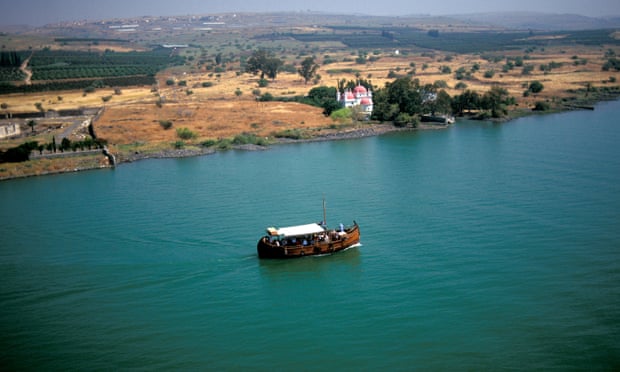
Israeli archaeologists have uncovered dramatic evidence of what they believe are the earliest known attempts at agriculture, 11,000 years before the generally recognised advent of organised cultivation. The study examined more than 150,000 examples of plant remains recovered from an unusually well preserved hunter-gatherer settlement on the shores of the Sea of Galilee in northern Israel.

Archaeologists May Have Been Wrong About Where Alexander The Great's Father Was Buried

The mystery of where Alexander the Great's father, King Philip II of Macedon, is buried just got more mysterious. Philip II was assassinated in 336 B.C., and his young wife Cleopatra Eurydice -- who was not Alexander's mother -- and their newborn child were killed shortly after.

18th century village discovered underneath Montreal interchange

Archaeologists have discovered the remains of an 18th-century village buried beneath Montreal's busiest highway interchange. Over the past few months, construction crews working on the Turcot Interchange have excavated dozens of artifacts. Construction has since been put on hold. Archaeologists say that the crews revealed Saint-Henri-des-Tanneries, a village that was originally formed in the late 1700s and whose economy revolved around the leather trade.

Guatemala: Archaeologists uncover intact Mayan hieroglyphic panels

Ancient Mayan panels dating as far back as the seventh century have been discovered in northern Guatemala, shedding new light on the mysterious civilisation. In total, three ancient Mayan pieces were excavated at the La Corona and El Achiotal archaeological sites in May. The largest of the pieces measures a metre high and features well-preserved ancient Mayan script and stone carvings.

Tuesday, June 30, 2015

Archaeology News: June 30, 2015


Ancient Digger brings you the latest archaeology news and headlines everyday of the week!

Archaeologists keep digging where potentially 2,000-year-old mummy was found

Archaeologists are continuing to search the site of a proposed stone quarry in south Lake County where they found a mummy that could be 2,000 years old. They have secured the mummified human remains and kept them in place while continuing work around them at the construction site, according to the Indiana Department of Natural Resources

Azhagankulam was in the big league

Renewed excavation from May at Azhagankulam village in Ramanathapuram district, Tamil Nadu, has thrown up fresh evidence that it was an important trading post between the Sangam Pandyas and the Romans from circa 50 BCE to circa 500 CE.

Rare ceramic of second century BC found in Chhattisgarh mud fort

Rare ceramic pieces of northern black polished ware (NBPW) dating back to second century BC was unearthed from a 2000-year-old mud fort site at Damroo in Baloda Bazaar-Bhatapara district of Chhattisgarh.

Archaeologists dig in as quarry site search continues

Archaeologists are continuing their investigation of the human remains found at the site of the planned Singleton stone quarry in Eagle Creek Township. Marty Benson, assistant director of communication with the Department of Natural Resources, said Monday there is not much to tell at this point regarding the remains, their origin or age, or how they came to rest on the property.

Countdown starts for Diyarbakır’s World Heritage site bid

Site preparations have finished in Turkey’s eastern province of Diyarbakır, whose ancient sites may soon receive world heritage status. The 5,700-meter long and 12-meter high historical walls, along with the 700-hectare Hevsel Gardens, which are a like an open-air museum and symbol of the city, are waiting for UNESCO’s World Heritage status decision.

Indiana Joneses run hi-tech race against Islamic State

Some of the Middle East's most highly prized archaeological treasures are under threat from the extremist militants of Islamic State (IS). So archaeologists are desperately trying to record as much of these sites as they can. And, in contrast to Indiana Jones and its low-tech bullwhip, they're using the latest technology to do it.

Saturday, May 2, 2015

Archaeology News: May 2, 2015


Ancient Digger brings you the latest archaeology news and headlines everyday of the week!

Stone Age axemen used "complicated thinking", say archaeologists using brain scanning

The craftspeople who made Stone Age hand axes would have required far greater skill than their predecessors needed to create the oldest known tools, according to archaeologists who have concluded that prehistoric practitioners were more than “ape-men banging rocks together”.

The Happisburgh Hand Axe 
© Norfolk Museums and Archaeology Service

Recreating Lower Palaeolithic tools by teaching a group to strike stones, researchers examined brain activity during knapping, which was once carried out by skilled prehistoric people using pieces of bone, antler or stone.

Magnetic Resonance Imaging showed that the process is “complicated” and “nuanced”, says Dietrich Stout, the experimental archaeologist who led the project

Belgian archaeologists discover 4,400-year-old statue of Egyptian pharaoh

A team of Belgian archaeologists unearthed a rare statue dating back over 4,400 years, Egyptian news site Mada Masr reported Tuesday. The statue of Pharaoh Sahure who was the ruler of the ancient Egyptian Kingdom's Fifth Dynasty, was found in the southern Egyptian governorate of Aswan and dates back to between 2487-2475 BC.

Archaeologists Dig Deep At George Washington’s Boyhood Home


When many people think of Washington’s home, they think of Mt. Vernon in Alexandria. But that’s only where he lived lived later in life. Our nation’s first president spent most of his childhood at Ferry Farm in Fredericksburg, Virginia.

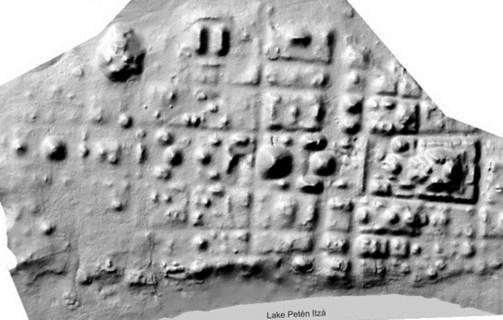
Archaeologists Find Ancient Maya City With a Modern Grid Layout


Timothy Pugh / Queens College
An ancient Mayan city followed a unique grid pattern, providing evidence of a powerful ruler, archaeologists have found. The city, which contains flat-topped pyramids, is being excavated at Nixtun-Ch'ich' in Petén, 
Guatemala.

It was in use between roughly 600 B.C. and 300 B.C., a time when the first cities were being constructed in the area. No other city from the Maya world was planned using this grid design, researchers say.

Archaeologists find ancient skeleton of a man buried with a shield in England


Archaeologists have unearthed the ancient remains of a man buried with a shield in England, which is characteristic of an Iron Age burial belonging to the Arras culture, a civilization that existed in what is now Yorkshire and is known for its impressive burials and grave goods.

Archaeologists Use Digital Technology to Excavate Famous Burial Pit Guarded by Terracotta Warriors


Chinese archaeologists excavating the legendary burial pit of the country's first emperor in the ancient capital of Xi'an are using a digital scanning device to examine the mausoleum where thousands of terracotta warriors stand guard.

Archaeologists Reconstruct Jamestown Church Where Pocahontas Got Married


Instead of digging up remains, archaeologists in Jamestown, Virginia are working on a reconstruction project in bringing back the church believed to be the place where Pocahontas got married. Five years ago, the discovery of Jamestown colony footprint was discovered, and now archaeologists are rebuilding the structure that witnessed the wedding of John Rolfe, a tobacco planter, and Pocahontas, daughter of a Native American chief, in 1614.

Archaeologists Excavate Waterloo Battlefield


Soldiers recovering from post-traumatic stress disorder have joined a ground-breaking archaeological project at the site of the Battle of Waterloo.  British Army veterans and serving soldiers, some wounded in recent campaigns, are working alongside archaeologists to unearth the history of the Battle of Waterloo 200 years on.


Old Kingdom Statue Base Unearthed in Upper Egypt


Met Museum

The Luxor Times reports that the lower part of a rare statue carved with the name of King Sahure, the second king of the Old Kingdom’s Fifth Dynasty, has been discovered at El-Kab. The excavation, conducted by the Belgian mission, is directed by Dirk Huyge of the Royal Museums of Art and History in Brussels.

The statue base was carved from fine-grained sandstone. The complete statue would have depicted King Sahure seated on a throne. There are only two known statues of King Sahure—one of them is at the Metropolitan Museum in New York, and the other is at the Egyptian Museum in Tahrir. For another recent Egyptological discovery, see "18th-Dynasty Tomb Discovered in Luxor."


Thursday, July 17, 2014

Archaeology News: July 17, 2014


Ancient Digger brings you the latest archaeology news and headlines everyday of the week!

Archaeologists Discover 9,000 Year-Old Talisman Meteorite That Was Worshipped By Primitive People


A meteorite fragment dating back 9,000 years was discovered in a shaman's hut by archaeologists, leading to speculation that it was worshipped as a magical object, UK MailOnline reported. Since prehistoric Stone Age humans witnessed the talisman fall from space, it had gained a status of being from another world.

Archaeologists Are Hunting for the Lost French Fleet That Nearly Conquered Spanish Florida


A new archaeological investigation off the coast of Cape Canaveral could shed light on one of the defining moments of Florida's history--when the Spanish definitively kicked the French out of the territory they'd claimed as their own.

When you think of the oldest European settlements in what is now the United States, Jamestown, The Lost Colony, Plymouth and St. Augustine might come to mind. But the French settlement of Fort Caroline, older than all of them, almost never gets a mention.

NC Archaeologist Has Find-Of-A-Lifetime, 3 Years In A Row


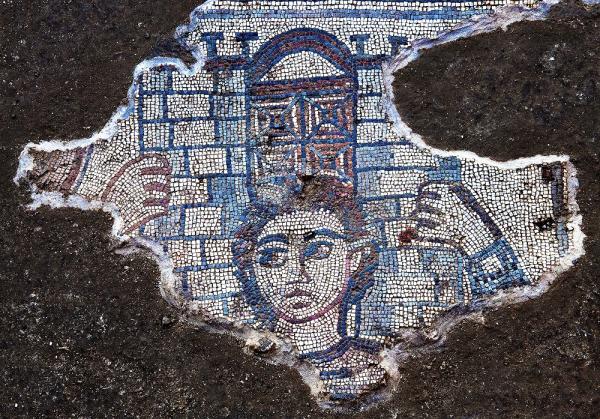
A team of archaeologists turned up another mosaic. Part of the image depicts an elephant with shields tied to its side.

"Nowhere in the Hebrew Bible are there stories with elephants in them," Magness says. "So clearly this scene is not drawn ... from the Old Testament." This is the first time that a non-Biblical story has been found in any ancient synagogue.Jodi Magness suggests that the image might be a depiction of a legend about a meeting between Alexander the Great and a Jewish high priest. This conjecture will require intense study.

10,000yo Indian cave paintings of ‘aliens, spaceship’ puzzle archaeologists

Prehistoric paintings in a cave in India may indicate that alien travelers visited the site eons ago, an archeologist says. The paintings depict what appear as humanoids with featureless faces and a tripod object that could be a vehicle.


Archaeologists to dig at Luas site after 17th Century body find

A team of archaeologists were called to a site outside the front gates of Trinity College Dublin yesterday after the remains were discovered. The alarm was raised after 9am as workers were removing utilities ahead of the installation of the new Luas route. A hip bone and two leg bones were found 1.5 metres underground. They had been buried in a crouching position. An initial inspection revealed the remains could date back to the 17th Century.

Archaeologists Find 8,000-Year-Old Skull, but It’s What Was Inside That Counts

Researchers are not yet sure if it’s human, but an ancient skull found at a Norwegian archaeological dig site is exciting scientists because of what they think they discovered inside — brain matter. The bones, thought to be about 8,000 years old, were uncovered at a camp in Stokke, Norway, and could be evidence of a Stone Age man.

Archaeologists Discover New Extinct Elephant Relative

The new evidence puts the gomphothere in North America at the same time as a prehistoric group of paleo-Indians known as the Clovis culture, whose beautifully crafted projectile points helped bring down giant Ice Age mammals, includingmammoths. This is the first time gomphothere fossils have been discovered with Clovis artifacts.

Cambridge University archaeologists unearth prehistoric bookkeeping system

Excavations have unearthed an ancient token-based recording system which was believed to have been rendered obsolete by the invention of writing.

Monday, June 23, 2014

Archaeology News: June 23, 2014


Ancient Digger brings you the latest archaeology news and headlines everyday of the week!

Archaeologists Return to Ancient Megiddo

Archaeologists are now onsite at Tel Megiddo, in northern Israel, to continue large-scale excavations at what has often been called the "crown jewel" of archaeological sites of the Levant, or Eastern Mediterranean region. Led by well-known archaeologists Israel Finkelstein of Tel Aviv University and Eric Cline of the George Washington University, a team of archaeologists, students, volunteers and other specialists will be excavating where they left off in 2012, when they encountered a large building featuring 18 pillars dated to the Iron Age IIA period, (around 1000 BCE). South of the building they uncovered a hoard of six iron daggers and two bronze bowls, dating to the Iron Age I (1200 - 1000 BCE).

New finds suggest Civil War camp survives

Archaeologists searching for evidence of a landmark Civil War refugee slave camp opened up a new trench last week, adding to the unexpectedly rich catalog of nearly 200 features that have been unearthed since the downtown dig began almost a month ago.

Digging up the history of graffiti in Australia

From convicts to drovers, to today's street artists, graffiti has a long history in Australia and archaeologists are only starting to study it as a continuous body of work. Australians have been etching their thoughts on walls since Indigenous people began drawing on rocks and caves. Archaeologist Ursula Frederick, from the Australian National University, is one of a group of archaeologists collecting the evidence. She has an interest in contemporary graffiti, but has also spent time surveying graffiti at the former Quarantine Station at Sydney's North Head.

Archaeologists reveal treasures found on farm

Artifacts shown to the public at Ridgeway Farm Archaeology Day on Saturday have revealed the farm was the home of a small, poor family more than 2,000 years ago. As Wessex Archaeology began to wind down its operation at the site, Taylor Wimpey invited residents to see what had been found during pre-construction surveys. Excavations have revealed a self-contained farmstead dating from the Iron Age, which ran from 700BC to 100BC.

Further calls for Time Team special to commemorate death of archaeologist Mick Aston

Thousands of Time Team fans have launched a campaign for a special episode of the archaeology programme to be created in memory of former expert Mick Aston.

6,200-Year Old Parasite

Archaeologists have uncovered ancient evidence of infection by a parasitic worm that causes schistosomiasis, a disease that ails millions of people today.The eggs of the parasitic worm were found in a child's skeleton, unearthed in northern Syria, which was deemed to be more than 6,200 years old. The archaeologists said the parasite's eggs were lodged in the pelvic area of the child's skeleton.

Archaeologists seek to solve 400 year old mystery in Plymouth Burial Hill

A team of archaeologists is digging through the sand at the bottom of Burial Hill, hopes set on unlocking a mystery that has intrigued researchers for generations.

After 450 Years, Archaeologists Still Hunting for Magnificent Sultan’s Heart

Was the Ottoman sultan's heart buried on a battlefield nearly 450 years ago? Archaeologists are trying to find out.

Archaeologists hail "magical moment" as rare Roman gold coin found at Vindolanda

Archaeologists thought they had more chance of winning the lottery than finding a gold coin at the Roman site of Vindolanda – until a volunteer from France struck lucky

Archaeologists hope they will discover the 'elusive' Whitefriars beneath Gloucester Bus Station

The remains of the Medieval Whitefriars Friary, which was founded in 1268, is thought to be buried deep beneath the city’s bus station.

Wednesday, February 13, 2013

Ancient Language Computer Program Recreates Sound Of Dead Tongues, Scientists Say


A computer algorithm works almost as well as a trained linguist in reconstructing how dead "protolanguages" would have sounded, says a new study.

"Our [computer] system is doing a basic job right now," says Alex Bouchard-Côté, an assistant professor in the department of statistics at the University of British Columbia and lead author of the paper describing the algorithm. But the program does a good enough job that it may be able to give linguists a head start, the statistician added.

For centuries, scholars have reconstructed languages by hand: looking at the same word in two or more languages and making educated guesses about what that word's "ancestor" may have sounded like. For example, the Spanish word for man ("hombre") and the French word for man ("homme") descended from the Latin word "homo." The way linguists compare words from descendant languages to reconstruct the parent language is called, appropriately, the comparative method.

The early 19th-century linguist Franz Bopp was the first to compare Greek, Latin and Sanskrit using this method. Jacob Grimm, one of the Brothers Grimm of fairy tale fame, used the comparative method to show how Germanic languages developed from a common ancestor.

The difference between that and Bouchard-Côté's program, the statistician says, "is we do it on a larger scale."


As a proof of concept, Bouchard-Côté fed words from 637 Austronesian languages (spoken in Indonesia, Madagascar, the Philippines, Papua New Guinea, Malaysia and more) into the new algorithm, and the system came up with a list of what the ancestor words of all those languages would have sounded like. In more than 85 percent of cases, the automated reconstruction came within one character of the ancestor word commonly accepted as true by linguists.

The algorithm won't replace trained, human linguists, but could speed up language analysis.

Using a computer to do large-scale reconstruction offers another advantage, Bouchard-Côté says: with big data sets, "you can really start finding regularities … You might find that certain sounds are more likely to change than others."

So Bouchard-Côté's team tested the "functional load hypothesis," which says that sounds that are more important for distinguishing two words are less likely to change over time. A formal test of this hypothesis in 1967 looked at four languages; Bouchard-Côté's algorithm looked at 637.

"The revealed pattern would not be apparent had we not been able to reconstruct large numbers of protolanguages," Bouchard-Côté and his coauthors write in the new study.

In addition to simply helping linguists understand how people spoke in the past, studying ancient languages can perhaps answer historical questions.

For example, Bouchard-Côté says, "Say people are interested in finding out when Europe was settled. If you can figure out if the language of the settling population had a word for wheel, then you can get some idea of the order in which things occurred, because you would have some records that show you when the wheel was invented.”

Source: Huffington Post

Friday, January 4, 2013

Archaeology News: January 4, 2013


Renowned archaeologist SR Rao passes away

India’s renowned archaeologist and scholar Professor SR Rao passed away on Thursday at his residence in Jaynagar, Bangalore.

Rao had two major path-breaking excavations to his credit, namely the Harappan port of Lothal and the submerged city Dwarka of Lord Krishna.

Dr Rao had carried out excavation work at north Gujarat’s Siddhpur based Rudramahal site amid protests of local Muslims. He had discovered a mandir within the structure of converted mosque.

Source: Niticentral

Bulgarian Archaeologists Discover Greek Temples of Poseidon and Priapus

Archaeologists in Bulgaria have uncovered two temples honoring Gods of Greek mythology, in the Black Sea town of Sozopol. The temples are said to be in honor of the Greek Gods Poseidon and Priapus, and the discovery of an extremely well preserved altar to the Greek god Poseidon has been located.

Archaeologist Todd Surovell to Speak on Photo Research in Mongolia

Archaeologist Todd Surovell, interim director of the Frison Institute of Anthropology at the University of Wyoming, will give a presentation on his ethnoarchaeological project Saturday at the James Lee Community Center.

Surovell is studying the Dukha nomadic reindeer herders of the Khövsgöl Province of Mongolia near the border with Siberia. In the summer of 2012, he mapped people performing their daily activities, an approach that differs from the traditional method of mapping material remains of the archaeological record. For the project, people were photographed from a variety of angles every two minutes for a month, and time-lapse photography and photogrammetry was used to map the spatial distribution of genders, ages, activities, and equipment in exterior spaces.

The talk will take place at the next meeting of the Friends of Fairfax County Archaeology and Cultural Resources, scheduled for Saturday at 10 a.m. in the Urbanites Room of the James Lee Community Center, 2855 Annandale Road, Falls Church.

Source: Falls Church News Press

Archaeologists rush to save relics in Danjiangkou

Chinese archaeologists are rushing to collect relics in Danjiangkou, an area expected to be cleared and flooded in 2014 to store water for China's massive water-diversion project. The Henan provincial cultural relics bureau said that since an emergency salvage program was launched seven years ago, excavations have been carried out in 123 archeological sites covering 310,000 square meters and 35,000 items have been unearthed.

Source: Global Times

Archaeologists find 800 year old skeletons in Mexico

Archaeologists from the National Institute of Anthropology and History of Mexico found in the center of the country, skeletons of 13 persons, children and adults, estimated to have lived approximately 800 years ago. The discovery occurred when archaeologists supervised the installation of a new drainage system in Cholula, a town about 120 kilometers from Mexico City, the capital.

Stone Figure: Proof That Christians Influenced Mecca?

A new discovery in Yemen may prove that a Christian church existed there and influenced Mecca around the time of the prophet Muhammad, the Daily Mail reports. Paul Yule, an archaeologist from Germany, found the stone carving of a Christian figure in the city of Zafar and dated it to about 530AD. He says evidence from other sites in Zafar indicate that it was home to a vast Arab tribal confederation that ruled even Mecca, about 581 miles to the north.

Chinese archaeologists excavate 3500 kgs of ancient coins

About 3,500 kilograms of ancient coins dating back to around early first millennia AD have been excavated in north China's Inner Mongolia Autonomous Region. The coins were found in three millennia-old coin pits in the ancient town of Huoluochaideng in Ordos City after police cracked three theft cases, Lian Jilin, a researcher with the regional Institute of Cultural Relics and Archaeology said.

Mexican archaeologists have found 60 arrowheads made in the period from 3000 to 4500 years ago.

This time was marked by rapid migration of peoples to the territory of present-day Mexico, resulting in formation of many new settlements. The find was made in the state of Sinaloa, a region known for its petroglyphs - ancient images carved in stone. According to researchers, the new findings may help locate settlements of the ancient people who left the petroglyphs. Besides the arrowheads, scientists were able to find several burial sites dating, possibly, to the 8th – 13th centuries.

Source: The Voice of Russia

Wednesday, December 19, 2012

Prehistoric Humans Cared for Their Sick


Lorna Tilley, The New York Times
While it is a painful truism that brutality and violence are at least as old as humanity, so, it seems, is caring for the sick and disabled. And some archaeologists are suggesting a closer, more systematic look at how prehistoric people — who may have left only their bones — treated illness, injury and incapacitation. Call it the archaeology of health care.

The case that led Lorna Tilley and Marc Oxenham of Australian National University in Canberra to this idea is that of a profoundly ill young man who lived 4,000 years ago in what is now northern Vietnam and was buried, as were others in his culture, at a site known as Man Bac.

Almost all the other skeletons at the site, south of Hanoi and about 15 miles from the coast, lie straight. Burial 9, as both the remains and the once living person are known, was laid to rest curled in the fetal position. When Tilley, a graduate student in archaeology, and Oxenham, a professor, excavated and examined the skeleton in 2007 it became clear why. His fused vertebrae, weak bones and other evidence suggested that he lies in death as he did in life, bent and crippled by disease.

They gathered that he became paralyzed from the waist down before adolescence, the result of a congenital disease known as Klippel-Feil syndrome. He had little, if any, use of his arms and could not have fed himself or kept himself clean. But he lived another 10 years or so.

They concluded that the people around him who had no metal and lived by fishing, hunting and raising barely domesticated pigs, took the time and care to tend to his every need.

"There's an emotional experience in excavating any human being, a feeling of awe," Tilley said, and a responsibility "to tell the story with as much accuracy and humanity as we can."

This case, and other similar, if less extreme examples of illness and disability, have prompted Tilley and Oxenham to ask what the dimensions of such a story are, what care for the sick and injured says about the culture that provided it.

The archaeologists described the extent of Burial 9's disability in a paper in Anthropological Science in 2009. Two years later, they returned to the case to address the issue of health care head on.

"The provision and receipt of health care may therefore reflect some of the most fundamental aspects of a culture," the two archaeologists wrote in The International Journal of Paleopathology.

In the case of Burial 9, Tilley says, not only does his care indicate tolerance and cooperation in his culture but suggests that he himself had a sense of his own worth and a strong will to live. Without that, she says, he could not have stayed alive.

"I'm obviously not the first archaeologist" to notice evidence of people who needed help to survive in stone age or other early cultures, she said. Nor does her method "come out of the blue." It is based on and extends previous work.

Among archaeological finds, she said, she knows "about 30 cases in which the disease or pathology was so severe, they must have had care in order to survive."


Source: The New York Times, The Denver Post

Friday, December 7, 2012

Happy 125th Birthday University of Pennsylvania Museum of Archaeology and Anthropology


On Thursday, the University of Pennsylvania Museum of Archaeology and Anthropology was looking younger than its years.

On the day of its 125th anniversary, visitors gained free admission to a 12-hour celebration filled with behind-the-scenes tours, late-night exhibits and interactive artifacts. Earlier that morning, the museum had stepped into the future with the launch of their new Online Excavation Timeline — an interactive website that allows users to explore the museum’s archaeological expeditions over time.

As visitors entered, the museum’s flagship exhibit, Maya 2012, stood to one side invitingly, while a clock counted in Mayan time just above their heads. The exhibit was half-price all day, and many took the plunge to learn about the complexities of Mayan calendar systems and what that has to do with the supposedly upcoming apocalypse.

In the other galleries, the head curators sat at tables fielding questions from visitors and lecturing to crowds.

While there were families and older adults everywhere, not so many Penn students attended.

Lori Baynard, who brought her young children all the way from the south of New Jersey, said, “I homeschool my kids, so a day like this is a great teaching opportunity.”

The Penn Museum Archives, usually closed to the public, were open all day. Senior Archivist Alex Pezzati and Assistant Archivist Eric Schnittke ran around attending to the gazes of entering visitors.

The room is an old library that has been repurposed as an archive, housing many shelves, old framed portraits and iron spiral staircases leading up to catwalks with boxes and books piled high. Old phonographs played wax cylinders as tour groups perused the shelves.

“I tell people my job is basically being Indiana Jones,” Schnittke said. “This is my favorite room in the whole building.”

A long table at the room’s center laid out Penn Museum expedition records going back to the 1880s. Pezzati was, like all the other museum workers, an unstoppable spout of facts and history, rattling off details about Amazonian trips and Mesopotamian excavations. He traced the Penn Museum’s history from its founding and initial success — under then-provost William Pepper in the 1880s — to its far-reaching influence in the following decades.

The Penn Museum has long celebrated milestones since its 1887 founding. The first major celebration was its 50th anniversary, when the museum published a magazine called “The Museum of Belshazzar’s Sister,” comparing itself to an ancient museum in Babylon. The magazine became a mission statement for the museum and it started a tradition of producing publications at each celebration.

For their 125th anniversary, however, the museum’s traditional publication went digital. The Online Collections Database, released in January, will make public all of its collections and records.

Penn Museum Chief of Staff Jim Mathieu said, “The galleries hold less than one percent of all the stuff the museum holds.” These days, the database contains close to half, or 330,000 records, of everything in the museum. That number will only grow, he added, since archivists are still digitizing artifact cards all the way back to the 1880s.

This task, Pezzati said, “might take decades, even centuries. But we’re doing it.”

There will be some unpublished items, mainly human remains for ethical reasons, but it stands that an overwhelming fraction of the museum’s artifacts will be freely searchable online. The staff wants even more functionality with the database in years to come, including accounts and logins that will allow users to save galleries of examined records. “It’s like people will get to curate their own exhibitions,” Mathieu said.

At 7:30 p.m., the first flashlight tours began. Each visitor — or anyone who could get his or her hands on one — was given a dinky little flashlight and sent with a group into a darkened gallery. Despite the eerie atmosphere, Lara Kindle, a student at the Graduate School of Education, said, “It was a childhood fantasy to have a night at the museum, so I was really happy for this tour.”

The Egyptian tour focused on mummies and mummification, a grisly exhibit made grislier by the dark. A mummy normally exposed by sterile, fluorescent light was made terrifying under the yellow flashlights, and kids running up to cases could be heard running back screaming for their mothers. Penn Museum Consulting Scholar Jane Hill led the tour and said, “People are fascinated with this stuff. Seeing death brings you closer to your own humanity.”

In the end, mostly everyone seemed impressed with the day. Schnittke summed the day up well, saying, “This is still a world-class institution.”

Source: Daily Pennsylvanian 

Monday, October 29, 2012

Archaeology, Paleontology, and Anthropology News: October 29, 2012


Easter Island’s gargantuan stone statues walked. That is the controversial claim from archaeologists who have demonstrated the feat with a 4.4-tonne model of one of the baffling busts. They describe their work in the Journal of Archaeological Science.

Nearly 1,000 statues litter Easter Island's 163 square kilometers, with the largest weighing 74 tons and standing 10 meters tall. Much about the megaliths is mystery, but few of the enigmas are more perplexing than how the statues were shuttled kilometers from the rock quarries where they were carved.

Theirs was the immortal battle: a fierce tyrant battling a defender armed with three lethal horns and protected by a bony frill around its neck. Yet the violent fight between Tyrannosaurus and Triceratops is hardly the stuff of Hollywood hype. Tyrannosaurus bite marks are well known on the fossil bones of Triceratops but, so far, such fossils have always been studied in an isolated manner.

Researchers from Guatemala uncovered the grave of King K'utz Chman, a priest who is believed to have reigned around 700 B.C., at the Tak'alik Ab'aj dig in Retalhuleu in western Guatemala. Packed with jade jewels and other artifacts, K'utz Chman's grave is the most ancient royal Mayan burial ground found to date, investigators said.


On the banks of the Danube, in the northwest corner of Bulgaria, lie the remnants of an ancient Roman settlement called Ratiaria, host to a priceless cultural heritage. Craters pockmark the huge site, evidence of a scourge threatening one of the world's great troves of antiquities: looters digging for ancient treasure to sell on the black market. Archaeologist Krasmira Luka, who heads a team excavating part of the 80 hectare (200 acre) site, says the area has been repeatedly raided by thieves who dig pits looking for ancient coins and jewelry. Everything else, including precious ceramic vessels and other historically significant artifacts, is smashed to pieces.

Twenty-six pieces of ancient Mexican pottery has been recovered in Bigfork as part of a crackdown on smuggling involving more than 4,000 artifacts in several states. U.S. Immigration and Customs Enforcement (ICE) agents announced the seizures Thursday morning. ICE agents tell us the 26 objects have a total value of: $3,245, who add the items were found in Big Fork, and that the gallery assisted ICE with the investigation. No charges were filed.

Iraqi police have confiscated scores of artifacts and arrested two smugglers in the southern Province of Dhiqar, al-Zaman news reported on Monday. The stolen items include rare statues and coins from different periods in Iraq’s ancient history. The two smugglers in question have long been dealing in stolen relics. One police source was quoted as saying on condition of anonymity: “Interior Ministry forces in coordination with the Iraqi army seized 64 archaeological pieces as well as 114 bronze coins in a district of al-Fajir.”

In the course of the excavation process in Can Sadurní cave (Begues), members of the Col-lectiu per la Investigación de la Prehistòria i l'Arqueologia del Garraf-Ordal (CIPAG), together with the University of Barcelona Seminar of Studies and Prehistoric Research (SERP), found the torso, with one complete arm and the initial part of the other, of a human figurine made of pottery. Its chronostratigraphic unit makes it, until now, the most ancient human figurine of the Prehistory in Catalonia; it is dated 6500 years ago.

A new chemical analysis of modern diets suggests Stone Age humans ate less meat than previously thought. The findings, published in the November issue of the American Journal of Physical Anthropology, may explain why many archaeologists estimate that prehistoric people got most of their calories from lean meat or fish when modern humans would be literally poisoned by such a protein-heavy diet.

Giant German hippopotamuses wallowing on the banks of the Elbe are not a common sight. Yet 1.8 million years ago hippos were a prominent part of European wildlife, when mega-fauna such as woolly mammoths and giant cave bears bestrode the continent. Now palaeontologists writing in Boreas, believe that the changing climate during the Pleistocene Era may have forced Europe's hippos to shrink to pygmy sizes before driving them to warmer climates.

With domed heads and thick, bony skull protuberances, pachycephalosaurids are well known by seven-year-olds and paleontologists alike. The dinosaurs are thought to have used their thick domes to headbutt each other, perhaps as part of courtship behavior. But whereas children recreating these vicious displays simply ram plastic models of the animals together in a straight line, a study now suggests that pachycephalosaurs may have bashed one another in a number of different ways.


Friday, September 21, 2012

1,000 Years Old Funerary Chamber Discovered in Michoacan


Photo: DMC INAH. H. Montaño.

The discovery of a funerary chamber of more than a 1,000 years old, in the Archaeological Zone of Tingambato Michoacan, with an unidentified character’s burial, accompanied by 19,000 green stone beads, shells and human bones, is one of the most outstanding results of a special archaeological investigation and conservation project by INAH in five different pre Hispanic sites in this zone.

According to the archaeologists of the National Institute of Anthropology and History (INAH-Conaculta), the architectural complexity of the mortuary chamber and the burial’s wealth (which belong to the Classic period (AD 200-900) indicate that the remains belong to a high ranking character from the ancient metropolis of Tingambato.

The cultural particulars of the burial haven’t been identified yet, but it’s inferred that the chamber matches the funerary traditions of the West, such as shaft tombs and the tombs of El Opeño, although these we built during the Pre Classic period (300 through 200 BC) and continuing through the Classic period (400 through 600 AD). Archaeologist Melchor Cruz, coordinator of the conservation and investigation works of Tingambato, reported that the characteristics that have dominated in Tomb II and the wealth of the burial indicate that Tingambato must have had a major importance in the pre Hispanic culture of this region, which until now “could have been a governing center of the Classic Mesoamerican period, in the central region of what today is Michoacan”.

The funerary space is composed of a sandstone ceiling, these stones were thoroughly worked to make narrow and long shapes, one on top of the other, glued together with mud, and arranged counter clockwise; the walls are covered with a stucco made of vegetable fibers. This sepulcher is added to the one discovered in 1979, Tomb I of Tingambato, by archaeologist Roman Piña Chan. Melchor Cruz said that the quantity of shell beads that were found in the chamber convey possible relation to the ancient settlers of Tingambato with other towns in the coast. Also, it shows that this city could have been a possible strategic point in a commercial route to Cuenca de Patzcuaro.

“The burial’s arrangement was a complete paraphernalia: we found hundreds of beads carved in rectangular and square shapes, snail shells of about two through eight millimeters (0.07 and 0.31 inches) tall; some of those materials were probably used for necklaces and covered the human skeleton up to the thorax and the arms; underneath the individual’s remains we found a layer of sandstone placed on the floor of the funerary chamber.”

It was in July 2011, through the Michoacan Special Project, that after three decades, they renewed the explorations of Tingambato, parallel to the major maintenance work of ancient buildings. The discovery was registered while the grass was being trimmed and remains of pre Hispanic archaeology were being searched for. A worker put his foot in a hole made by a mole and his foot sank 10 centimeters (3.93 inches) until it stopped on hard ground. To verify what this was, archaeologist Melchor Cruz introduced his hand in the hole and touched a piece of sandstone, he then thought this might be a tomb. This is the second tomb that is discovered in this site.

The specialist said that this tomb was different than the mortuary chamber found in 1979 since this one has a more complex structure in the chamber walls, the buttresses of the ceiling and the stucco cover.

Copyright © artdaily.org

Tuesday, September 11, 2012

Archaeologists uncover remains of Stortford "henge"


Archaeologists investigating sites earmarked for thousands of new homes on the town’s ASRs – areas of special restraint – believe they could have found a Neolithic earthwork in the form of a ritual enclosure on the site along the A120 bypass.

The land – ASRs 1 to 4 - is the subject of a planning application by the Bishop’s Stortford North Consortium of developers and as part of the scheme, a series of trial trenches have been dug to investigate and evaluate their historic potential. Similar work is being undertaken on ASR 5, which is the subject of a smaller application by Countryside Properties, close to Hazel End.

A report by the county council’s historic environment unit says:

Although these investigations are still ongoing (some of the trial trenches are visible from the Bishop's Stortford bypass and Farnham and Hazel End Roads), some interesting archaeology has been identified in both prospective development areas. 

Interpretation is tentative at this stage but the Hazel End site, involving trenches on both fields alongside Hazel End Road, has identified the remains of a probable burial mound, of Late Neolithic (c4500-2500BC) or Early Bronze Age date (c2500-1700BC) several ditches, pits and post-holes of probable Bronze Age date, and, in the lower field next to the River Stort, a roughly cobbled surface covered with Late Iron Age and Roman pottery.

 Investigations within the larger area, enclosed by the bypass, have identified an enclosure and ditches of probable Iron Age date (c800-100BC) an enclosure of possible Roman date (further excavation may clarify this) and also another prehistoric burial or possible henge (a ritual enclosure) of late Neolithic or Early Bronze Age date (c3000-1700BC).

This circular, ditched feature appears to contain several cremation burials in the ditch and it has a central feature that may also be a burial. If so, it is potentially, an important find.

The finds would have to be excavated in detail and recorded before new homes could be built. Alternatively they could potentially be protected and preserved – barring new construction. Stonehenge, near Salisbury in Wiltshire, is the country’s most famous henge, but a spokesman for the consortium was clear:

“As expected on a site of this size and in this location – on the edge of a historic town – there’s archaeology but not of any particular significance and it would not prevent development occurring on our site. “As a responsible developer we are responding to the finds by extending some of the trenches to check whether there’s anything else there. “The finds are of local interest, but the condition is such that do not warrant preservation in situ.”

Source: Hetz and Essex Observer

Monday, September 3, 2012

Aphrodisias Excavations Reveal Headless Statues


Hurriyetdailynews
The ongoing excavation works at one of Turkey’s most important archaeological sites, the Karacasu Aphrodisias Ancient City, have revealed two headless statues.

According to information provided by the Culture and Tourism Ministry, one of the statues is in 1.76 meters in height and the other is 1.68 meters. One of the statues holds a roll in its left hand and its right hand is on its chest.

There is a pack of documents behind its left foot, but the fingers and head are broken. The second statue is also headless. Its right hand is broken from the humerus down, and the left hand is broken from the elbow. There is also a pack of documents next to its right hand.

U.S. professor R. Roland Smith is heading the excavations at the site. The city of Aphrodisias, is one of the country’s most visited places. It is included in UNESCO’s world heritage permanent list.

Source: Hurriyet Daily News

Tuesday, August 28, 2012

Archaeology News: August 28, 2012


Photo: Centro INAH Chiapas. 
A monolithic sculpture representing a jaguar lying down, weighing about a ton was discovered recently in the pre Hispanic site of Izapa, in the Soconusco region of Chiapas. The engraved sculpture, estimated to be about 2,000 years old, was found in a riverbed and because of its weight it was not taken out immediately, but until a few days ago. The maneuvers –made by the National Institute of Anthropology and History (INAH – Conaculta)– needed to rescue the piece required more than seven hours.


The southernmost island province of Hainan is rushing to save two large ancient sea salt pans that could date back over 1,000 years, the Hainan Provincial Museum said Monday. The two salt pans, located in two villages of Lingao County with a combined area of 1,700 mu (113 hectares), were originally constructed during the Tang Dynasty (618 to 907 AD), said an archaeologist with the museum. Both salt pans have sustained serious damage, as one was deserted in the 1970s and only small portions of the other remain in use, said the archaeologist. Earlier this month, a group of archaeologists launched field investigations on the two salt evaporation ponds, and they are in the process of making detailed plans to protect the cultural relics. The salt industry served as a pillar industry in ancient Hainan and were a major source of funds to support military expenses at the time.

© Robert Killick
In 1978, during a bitterly cold winter on Jabal Hamrin, a hilly ridge in central-eastern Iraq, a young British archaeologist was investigating a mystery. Dr Robert Killick, 23, was part of the British archaeological expedition excavating a 2300BC Bronze Age grave believed to belong to a chieftain. In the 4 by 5 metre grave, the archaeologists dug up the kind of items one would expect inside most graves of an era that believed in life after death - more than 50 pottery vessels, several spearheads and other weapons. In addition there were the remains of a chariot, for the dead warrior to drive majestically into the other world.

Griffin, the state archaeologist with Oregon’s State Historic Preservation Office, has traveled to one of the least-walked hillsides in Alaska to search for evidence of his species. On a tundra rise with a gorgeous view of Hall Island and a nice panorama of St. Matthew Island, he has today found a fox tooth in a decaying jaw, chips of rock where someone made tools, pottery, a plate-size anvil stone and a yellowed walrus tusk cut with deep grooves.

Volunteers led by a professional archaeologist in September will follow up on historic findings from a dig at Taylor-Bray Farm in Yarmouth Port last year. They will investigate four specific areas in hopes of finding the site’s first 1640s farmhouse and prehistoric Native American campsites. Archaeologist Craig Chartiers, who directed last year’s successful dig that uncovered 2,300 artifacts, said in a phone interview, ”We could see the outline of a home.” That home belonged to Richard Taylor, one of the first settlers who came to Yarmouth from the Plymouth Colony in 1639.

Archaeologists have started the first survey of world’s most northerly Roman fort, in Angus, in a bid to uncover its secrets. The fort, at Stracathro, near Brechin, was at the end of the Gask Ridge, a line of forts and watchtowers stretching from Doune, near Stirling. The system is thought to be the earliest Roman land frontier in the world, built around AD70 – 50 years before Hadrian’s Wall. Stracathro was discovered from aerial photographs in 1957, which showed evidence of defensive towers and several protective ditches.

The son of a descendant of Richard III's eldest sister was on site today as what is believed to be the first ever search for the lost grave of an anointed King of England began in a city centre car park. Canadian-born Michael Ibsen watched as archaeological experts from the University of Leicester used ground penetrating radar equipment to find the best spots to begin their search today at the car park off Greyfriars in Leicester.

Monday, August 27, 2012

Archaeology News: August 27, 2012


tablet from the eighth century BC in an unknown language found at the Ziyarettepe excavation has stirred excitement among scientists. “The tablet in Ziyarettepe is quite important. The first evaluations and translation of the tablet were done in England. However, the first announcements are being made at our museum in Turkey,” said Nevin Soyukaya, director of the Diyarbakır Museum, which is supervising the excavation.

Archaeologists working on digs at the Roman Forum and Odeon sites in Bulgaria’s second city of Plovdiv have unearthed a number of interesting finds from various periods and the city now wants to expand excavations at the Forum site. The Forum site, near the current modern-era central Post Office, dates from the first to second centuries CE. Overall, it covers about 11 hectares, making it arguably the largest such Roman-era forum site in Bulgaria.


Natural gas and archaeology may turn the municipality of Shabla into the pearl of the Bulgarian northern Black Sea coast. Bulgaria’s PM Borissov surprised the small municipality with five presents. "We hope that if conventional gas be extracted in the Shabla region Bulgaria will have no problems with the natural gas supplies in the coming 30-40 years,” PM Borissov stated during his visit to the town of Shabla. At the request of the mayor the high guest made a special gift to Shabla – a big island in the Durankulak Lake. Europe’s earliest stone buildings and the oldest gold artifacts of the so-called European Troy have been discovered here. Borisov explained that so far the cabinet was trying to support archaeological research along Bulgaria’s southern Black Sea coast now time has come to lend a helping hand to the northern regions as well. “Shabla wants to become a magnet for tourists interested in archaeology and your Mayor Raina Bardarova who is a history professor will for sure contribute to it,” Borisov said.


Archaeology: Remembering the Human Element:  Within the relative comfort of a 21st century museum, it is easy to forget the sacrifices, challenges, and dedication involved in the discovery of antiquities. All too frequently when we see glamorous vases, sarcophagi glistening with gold, and jewelry enlivened with lapis lazuli, we assume that these objects tell the entire glorious story of both the civilization that produced them and the excavators who found them. However, the rest of the narrative is frequently full of nuance and intricate details. Along similar lines, the treasures of the Royal Tombs of Ur do not tell the entire story of the expedition; toil, frustration, and uncertainty were as much a part of the excavation as were the exhilaration of finding priceless historical treasures. As a volunteer working on the Ur Digitization Project, I came to understand this lesson more intimately through my discovery of a series of telegrams and letters.

In the summer of 2010, University of Missouri–St. Louis archaeologist Michael Cosmopoulos and his team uncovered the oldest written record in Europe. The rare artifact was unearthed at an excavation site in Iklaina, Greece, where for the past 15 years Cosmopoulos has led a team of students, staff and specialists. Now, thanks to a generous $275,000 grant from the National Endowment for the Humanities, Cosmopoulos, the Hellenic Government Karakas Family Endowed Professor of Greek Studies at UMSL, will continue his summer dig project in Greece. The project serves as a field school for UMSL and other students.


Human bones have been found after a picnic table tumbled into a hole caused by heavy rain and stormwater runoff at Anzac Bay, near Waihi Beach. Western Bay of Plenty District Council's manager of reserves and facilities Peter Watson said police had been to the site, along with council staff, local Maori and a Historic Places Trust archaeologist.

Buried deep under a hill in central China, surrounded by an underground moat of poisonous mercury, lies an entombed emperor who's been undisturbed for more than two millennia. The tomb holds the secrets of China's first emperor, Qin Shi Huang, who died on Sept. 10, 210 B.C., after conquering six warring states to create the first unified nation of China. The answers to a number of historical mysteries may lie buried inside that tomb, but whether modern people will ever see inside this mausoleum depends not just on the Chinese government, but on science.

Tuesday, August 21, 2012

Turkey’s First Archeopark in the NW province of Bursa’s Nilüfer Opens


Houses dating back 5,550 years and other aspects of Turkey’s archaeological history will soon be opened at one of Turkey’s first Archeoparks in the northwestern province of Bursa’s Nilüfer district.

Specialists have been working on the ancient sites of Miletepolis, Apollonia ad Ryndacum and Lapadion in preparation for the opening of the archeopark. Archaeologists have also been focusing their efforts on examining the Aktopraklık Mound, which dates back to between 6500 and 5500 B.C., making it one of the oldest villages in northwestern Anatolia.

Scientists have extracted 15 structures so far and have created an exhibit out of four of them, according to Dr. Necmi Karul at the Prehistory Department of Istanbul University. “Every year with new data, we make changes to our exhibits. In the following days, we are going to introduce the Chalcolithic Era through new exhibits,” the professor said.

 “Even the archeologists have a hard time making sense of the data, but we want to simplify the data to present it to the public. For example, many items are in pieces but when the pieces are put together, they comprise the furnishings for a house,” Karul said.

 “After a nine-year process, we have enough data to make an exhibit out of a village. We added a furnace and storage to the log cabins in the archeopark,” he said.

The excavation work at the site and the preparations for the opening of the archeopark are being supported by the Culture and Tourism Ministry, Istanbul University, Bursa Metropolitan Municipality, as well as some industrialists.

Source: Hurriyet Daily News

Like Ancient Digger? Why Not Follow Us?


Subscribe Via RSS Feed Follow Ancient Digger on Facebook Follow Ancient Digger on Twitter Subscribe to Ancient Digger Via Email

Get widget

Search


Ancient Digger Archaeology Copyright © 2015 LKart Theme is Designed by Lasantha