• Ancient Digger teaches Archaeology and History to all Ages!

Monday, December 17, 2012

Migaloo: World's First Archaeology Dog


Since a canine nose is equipped with some 200 million more olfactory receptors than a human's, scientists are increasingly turning to dogs as field assistants to track and monitor populations of wild species.

Such "conservation dogs" can sniff out creatures as small as a lizard or as large as a gorilla, pinpoint where invasive plants are growing, and even guide marine biologists to fresh whale poop. (See pictures of scat research.) But can a dog smell the past?

Australian dog trainer Gary Jackson of Multinational K9 has trained a black lab mix named Migaloo as the world's first "archaeology dog," able to locate bones that are hundreds of years old. He spoke with National Geographic magazine's Amanda Fiegl.

Read the Story at National Geographic: Meet Migaloo, World's First "Archaeology Dog"

Saturday, August 11, 2012

Ancient Maya Domesticated Wild Turkey 2300 Years Ago


Published online in the journal PLoS ONE, the discovery of the turkey bones at an ancient Mayan archaeological site in Guatemala provides evidence of domestication, usually a significant mark of civilization, and the earliest evidence of the Mexican turkey, Meleagris gallopavo, in the Maya world.

“The discovery of the turkey bones is significant because the Maya did not use a lot of domesticated animals. While they cultivated domesticated plants, most of their animal protein came mostly from wild resources,” said lead author Dr Erin Thornton, a research associate at the Florida Museum of Natural History.

“We might have gotten the timing of the introduction of this species to the ancient Maya wrong by a significant chunk of time,” Dr Thornton said. “The species originates from central Mexico, outside the Maya cultural area. This is the species the Europeans brought back with them to Europe – all domestic turkeys originated from Mexico.”

Using archaeological evidence, comparisons of bone structure and ancient DNA analysis, the scientists determined the turkey fossils belonged to the non-local species Meleagris gallopavo gallopavo, which is native to central and northern Mexico.

The Mexican turkey is the ancestor of all domestic turkeys consumed in the world today and Mesoamerica’s only indigenous domesticated animal. The discovery of the bones south of the turkey’s natural range shows animal exchange occurred from northern Mesoamerica to the Maya cultural region during the Late Preclassic period from 300 BC to 100 CE.

“This research has consequences for understanding Maya subsistence because they would have had access to a controlled, managed resource,” Dr Thornton said. “The turkey bones came from right within the ceremonial precinct of the site, so these are probably the remains of some sort of elite sacrifice, meal or feast.”

The bones were recovered from the El Mirador archaeological site, one of the largest and most developed Preclassic locations found in the Maya lowlands. The site contains massive temple complexes, some of the largest Maya architecture ever constructed.

“Plant and animal domestication suggests a much more complex relationship between humans and the environment – you’re intentionally modifying it and controlling it,” Dr Thornton said.

“Researchers assumed turkey bones previously recovered from Maya sites belonged to the native ocellated turkey, Meleagris ocellata. The new evidence means researchers may need to re-examine previously recovered bones,” said Prof Mary Pohl of Florida State University.

“This study is extremely significant and I think it opens up a whole new perspective on the Maya and animal domestication,” Prof Pohl said. “I find it especially interesting that these turkey bones are in this very special pyramid context because people often think of turkeys as something to eat, but they were probably making some sort of special offerings of them, which would go along with the fact that they brought them in from a long distance.”

Source: Sci News

_______

Bibliographic information: Thornton et al. 2012. Earliest Mexican Turkeys (Meleagris gallopavo) in the Maya Region: Implications for Pre-Hispanic Animal Trade and the Timing of Turkey Domestication. PLoS ONE 7(8): e42630; doi: 10.1371/journal.pone.0042630


Saturday, December 31, 2011

Spotlight on Alan Outram's Work on Horse History


Two years ago, British archaeologist Alan Outram published a paper in the journal Science that offered an important insight into how early civilizations developed.

Outram and his colleagues found evidence that horses had been domesticated 1,000 years earlier than previously thought, by the Botai people in what is now northern Kazakhstan. The researchers found differences in ancient equine bone structure, fossilized teeth that showed signs of human-made bits and the presence of mare’s milk in pottery shards – findings that were reviewed recently in the inaugural issue of National Geographic’s new quarterly magazine, Exploring History.

But Outram, who specializes in zooarchaeology (the study of ancient animal bones), also has a South Dakota connection. For the past eight summers, Outram has led a team of student archaeologists from the University of Exeter to excavate at the Prehistoric Indian Village dig site in Mitchell as part of an exchange program with Augustana College. Recent research, co-written with Landon Karr and Adrien Hannus at Augustana and published in the fall issue of the Journal of Field Archaeology, sheds new light on artifacts found between dwellings at the Mitchell site.

Source Argus Leader

Sunday, July 24, 2011

Madagascar Unmasked and Mystifying


© WildJunket

See, now this is why I love Twitter. It’s amazing, the kind of people you can meet and the places they’ve been around the country.

This particular shot of a dugout boat in Madagascar was taken by Nellie Huang, the founder of WildJunket. As a professional travel writer, she travels around the world with her notebook and camera in hand, to seek out adventurous and quirky corners.
Madagascar is the world's fourth largest island after Greenland, New Guinea, and Borneo. The island of Madagascar broke away from the African continent 165 million years ago. The first settlers of Madagascar were of African and Asian origin, and 18 separate ethnic groups emerged, derived from an African and Malayo-Indonesian mixture. About 80% of the animals found in Madagascar do not exist anywhere else on Earth.

Nellie Huang just visited the island of Madagascar and here’s a snippet from her travelogue,

Over the past few days, we experienced the wilderness of Madagascar – sleeping in the forest, watching lemurs and chameleons in their natural habitat and flowing down rivers on dugout canoes. In the Kirindy forest, we saw the adorable grey mouse lemur upclose and personal and watched sifakas leap from one tree to another. At the Tsingy de Bemahara, we climbed sharp karst rock faces to get a awestriking view of the jungle from above. Back in the town of Belo-sur-Tsiribihina, we wandered through the colorful and bustling central market, taking in Malagasy culture. By the time we got to Morondava, we were thrilled to be feasting on cheap and delicious seafood at Chez Maggie.

Read more: Madagascar Unmasked: Wildlife, Nature and Beautiful People

Thanks Nellie Huang from Wild Junket

More Madagascar articles:

Dinosaurs in Madagascar

Wednesday, June 29, 2011

Ancient Global Warming Clues in the Arctic's Svalbard Archipelago


Polar bears are the draw for most visitors to Spitsbergen, the largest island in Norway's Svalbard archipelago. For geoscientist Lee R. Kump of The Pennsylvania State University, however, rocks were the allure. In the summer of 2007 Kump flew to this remote Arctic Ocean island to find rocks that might offer fresh insights about one of Earth's ancient episodes of global warming: the so-called Paleocene–Eocene Thermal Maximum, or PETM. In that event, some 56 million years ago, global temperatures rose 5 degrees Celsius in the course of a few thousand years—a mere instant in geologic time.

[Thanks Scientific American]

Friday, November 5, 2010

A Scary Archaeological Trip


No, it's not a new discovery, it was just an eye opening experience for me while I was fossil hunting today with the puppies. Like any normal day, I got on my Columbia hiking shoes (no this is not an ad, they're new and I love them *smile*), grabbed my water bottle, and headed down the trail.

I found this area brimming with fossilized bones from animals a few weeks ago and thought, why not explore the evidence a bit further. I had my trowel in hand and the dogs pulling my other arm in another direction. Why, I'm not sure. Imagine two dogs wanting nothing to do with animals bones. It's a bit bizarre to tell you truth, but to be honest, I'm not sure why there are so many in one place. There could be someone living in the forest and this is their so called pit of bones.

No sooner then I tried to start picking around, I felt like I was shot in the shoulder. I've had bee and wasp stinks, but this was worse. I could feel the pain rush down my arm and the right shoulder blade was killing me. I immediately grabbed my shoulder to try and dull the pain. I was looking behind me at the same time and saw nothing and nobody. Needless to say, I started I turned around and started running back home and I don't run.

I just got home an hour ago and looked at my back. There's a huge welt but no stinger inside the wound, as I tried to scrape it with a butter knife. I'm at a loss and a bit freaked out. Either someone doesn't want me near those bones and shot me with a pellet or it was something supernatural.

What do you think? Isn't it strange?

Wednesday, August 5, 2009

Snakes and Mythology: Some Interesting Facts


The symbolism of snakes in past history and present is mixed with uncertainties. Many associate the snake as a messenger for the bringer of death and there are countless cultures that believe the serpent is a symbol of fertility, honor, knowledge, and truth.

Book of Genesis


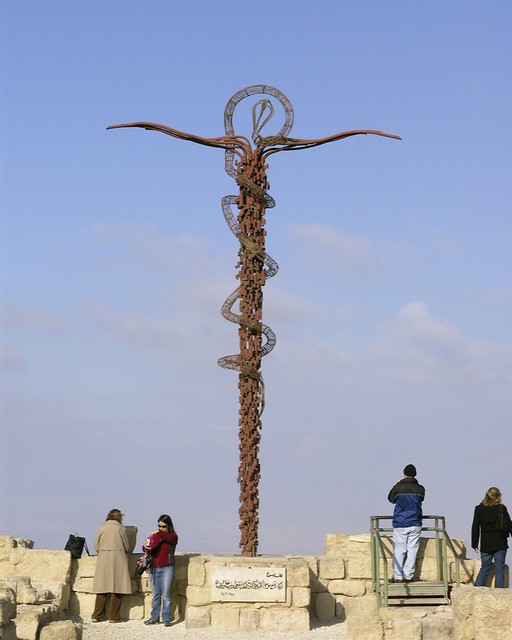
Snakes made their first appearance in the first Book of Genesis 3:1 where a serpent, being a messenger for the devil, tempts Adam and Eve with the forbidden fruit. The snake returns in Exodus when Moses, as a sign of God's power, turning his staff into a snake. When Moses made the Nehushtan, a bronze snake on a pole, it was said that when one peered into the eyes of the staff, it would cure snake bites that plagued them in the desert.

Snakes in Egyptian history


The symbol of the snake in Egyptian history represented the Nile cobra adorning the crown of the pharaoh in ancient times. Snakes were worshiped as gods and were used for ominous purposes: “murder of an adversary and ritual suicide”.

Snakes in Greek Mythology


In Greek mythology snakes are often linked to death and are considered to be symbols of the earth. In ancient Greece, snakes were honored as spiritual healers. In fact, Asclepius carried two snakes knotted together that today represents a symbol displayed on emergency vehicles.

“The Titans are also depicted in art with snakes instead of legs and feet for the same reason—they are children of Gaia and Ouranos(Uranus), so they are bound to the earth.”

India: Land of Snakes


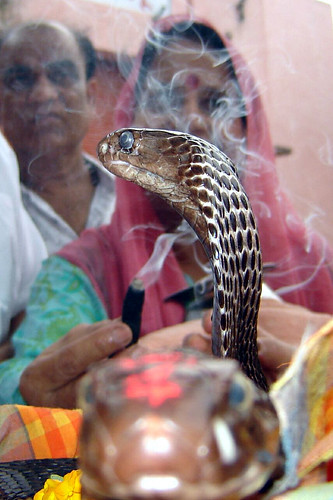
India is often called the” land of snakes”. Snakes are worshiped as gods and the represent fertility, knowledge, and honor. Every year, the Hindu festival called Nag Panchami displays the snakes to be venerated and prayed to.

Ouroboros


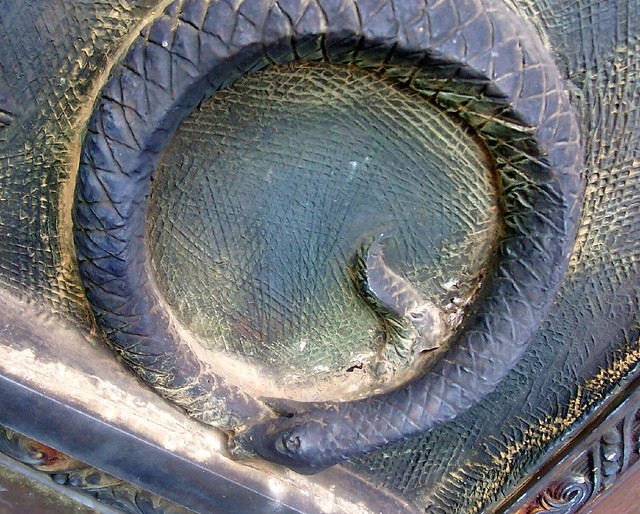
The Ouroboros is a symbol that is associated with many different religions and customs, and is also claimed to be related to Alchemy. The Ouroboros is a snake eating its own tail in the shape of a circle, demonstrating one's own life and resurrection, leading to immortality.


On a side note:
I wanted to let everyone know about my Friends Revolution Blog. If you love it here at the Ancient Digger, let me assure you, you will love it there too. I have a mixed bag of stories from various writers, as well as myself, so head on over and subscribe.

Friday, July 31, 2009

What's A Dovecote?


As a child, I remember my grandfather having a pigeon coop in the back of his Newark, New Jersey home. It was built with wooden boards, had a swinging blue door, and several compartments for the pigeons to sleep and walk around.

Well, as a child, I knew nothing about these creatures or their history. I knew they were unbelievably smart and in some cases lovable, but I never really knew the real story about them. Seeing as how I love history and I just had to get to the bottom of this, I discovered something highly unusual about their residence many years ago.

Dovecote birdhouses were used to house pigeons for food and flesh. At the end of a residence, a square or circular building would be constructed with holes for nesting. These structures were typically used in Medieval Europe, where these signified power and wealth.

Interestingly enough, many of these medieval structures are still standing today in France, the United Kingdom, and Scotland. Read More about Dovecotes

Like Ancient Digger? Why Not Follow Us?


Subscribe Via RSS Feed Follow Ancient Digger on Facebook Follow Ancient Digger on Twitter Subscribe to Ancient Digger Via Email

Get widget

Search


Ancient Digger Archaeology Copyright © 2015 LKart Theme is Designed by Lasantha