The world’s oceans, seas, rivers, and lakes hold some of war’s most hidden and well kept secrets. From the time the Vikings sailed their small but powerful craft from the
fjords 
of Scandinavia to the mighty aircraft carriers and battleships
used during World War I by the United States, boats have helped champion the freedom of nations across the globe. The
Spanish Armada and the Queen’s Fleet would bring about change in the depths of the Atlantic by arming their hulls with mortar shattering cannons and crews with muskets. However, one of the largest changes in maritime warfare came with the invention of the large aircraft carriers and WWI battleships equipped with the capability of long distance shelling during the early 1900s.
USS Arizona

The USS Arizona would gain its fame early in World War II although it served an important mission World War I naval combat as well. Construction would begin on this Pennsylvania class warship in March of 1913 and would take two years until its completion. The Brooklyn Navy Yard would launch the boat in June of 1915 to begin training missions in and around the East Coast. However, like many other United States battleships, the Arizona would undergo a complete overhaul to be commissioned as one of the naval ships used during World War I. The battleship spent most of its time during the war patrolling the eastern coast from New York south to Florida. Due to the shortage of oil across Europe and most other portions of the world, the oil burning Arizona did not venture into European areas of the Atlantic.
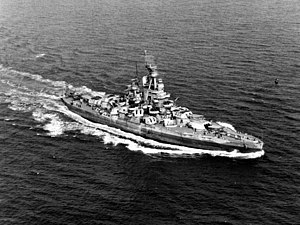
USS Nevada
The "
USS Nevada was based out of Scapa Flow and was present when the German Grand Fleet surrendered at the end of WW I". The
Nevada left the US for Britain on August 13, 1918, the last to join the Fleet.
The ship served during WW II, and was the only American battleship to attempt a sortie from Pearl Harbor when the Japanese attacked on December 7, 1941. After WW II the USS Nevada was the target for the first atomic bomb test at
Bikini Atoll where it survived a direct hit of the atomic bomb, to be later sunk by the US Navy in Bikini Lagoon.~© John Carter
Kearsarge Class
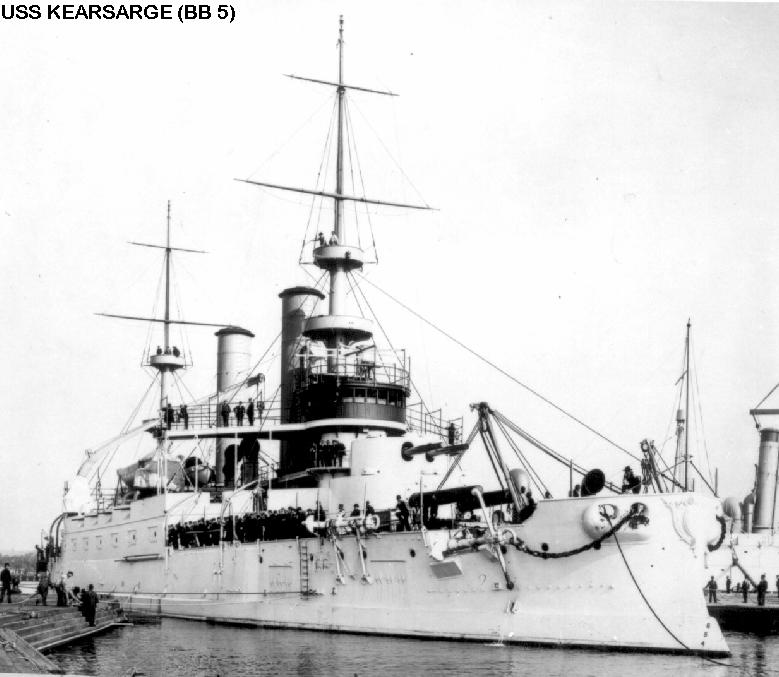
There were only two World War I battleships in the Kearsarge class, which were the Kearsage and the Kentucky. Interestingly, the
USS Kearsarge would be the only ship not named after a state out of all United States battleships ever commissioned. It was known for its dual turrets on both top and bottom decks and would be the last to use those guns, which were first created by
John Ericsson in the mid 1800s. Due to its armament overload, both the USS Kentucky and Kearsarge would become decommissioned. The Kentucky would be scrapped for its metal and the Kearsarge would be used as a crane ship in a Virginia naval shipyard. Both ships would carry up to 550 men as its length would exceed 350 feet while its beam extended 72 feet across. With a top speed of 30 kilometers per hour, the Kearsarge and Kentucky would be too slow to keep up with Axis’ naval capabilities.
USS New York

Shipped out of the Brooklyn Navy Yard in October of 1912, the
USS New York would gain its commission in early spring of 1914 to be one of the many WWI warships to join the British fleet settled in the North Sea. Under the command of Admiral Hugh Rodman, the USS New York would be used as an escort throughout the Atlantic Ocean waters of Europe and would also engage in blockading of the German fleet, which significantly deterred any major offensives by Axis forces. The
New York would have two run-ins with German U-Boats, one of which involved an underwater collision that would render two engines useless and reduce the boat’s overall speed to just under 12 knots. The
USS New York would see her last mission as a part of an escort for then president Woodrow Wilson, on his journey to Versailles France. Eventually, she would be used as target practice for the testing of atomic bombs and would later be scuttled into the depths of the Atlantic.
USS Virginia

Launched in April of 1904, the USS Virginia would play a pivotal role in WWI naval combat by guarding the shores of the eastern US. With a top speed of 22 miles per hour, the USS Virginia would help secure all German merchant ships residing in the harbors around all Virginia ports at the start of World War I. The Virginia would actively participate in a number of coastal security missions as well as become a flagship under
Admiral John Hoogewerff, who was the commander of the first division of naval ships used during WWI. After an active role policing the East Coast, the Virginia would later be used as a training ship for many gunnery divisions operating out of the Norfolk Virginia area. Ultimately, like most other WWI warships, the Virginia would be set to sea and sunk just miles off of the coast of North Carolina at Cape Hatteras.
USS Missouri
Although the
USS Missouri was built years before the United States entered into World War I, the ship would regain its commission in April of 1917 to join up with other WWI warships in Yorktown Virginia. The Missouri would mostly be stationed on the eastern coast of the United States to train servicemen. It would also become one of many naval ships used during WWI to escort US merchant ships to and from ports of authority. The USS Missouri would end its wartime action by transporting a few thousand US troops from the port of
Brest, France back to the United States. She would be sunk in the mid 1920s to keep within a naval armistice treaty limiting the build-up of naval vessels.
USS Wyoming
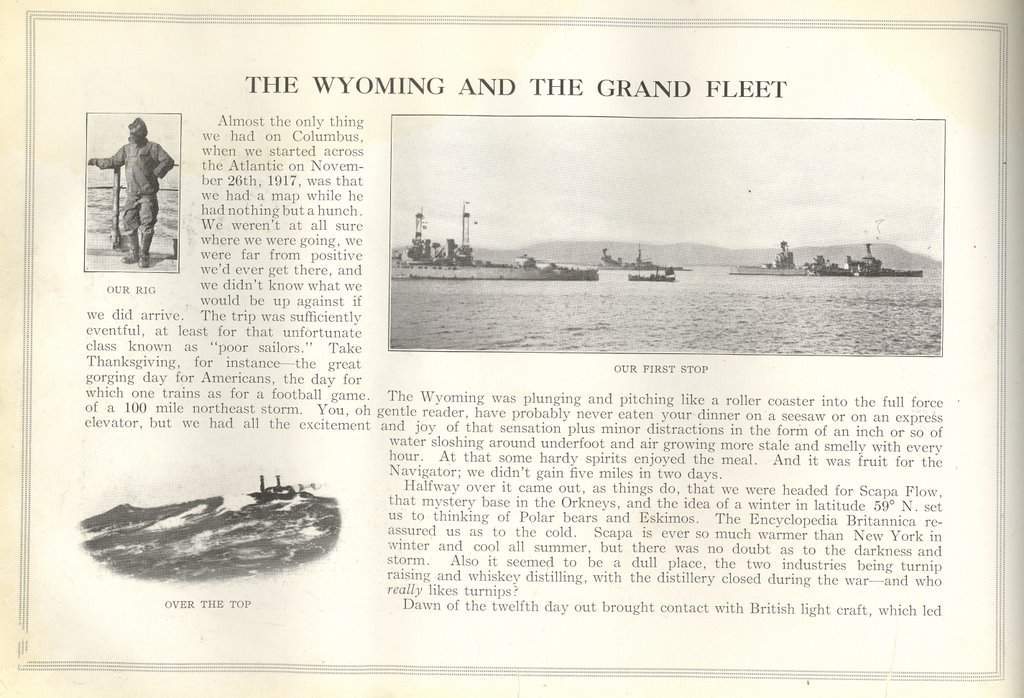
The USS Wyoming would head up
Battle Division 9 and sail with the USS Florida, USS, New York and USS Delaware to become part of the British Grand Fleet in December of 1917. The ship would help patrol the waters just off of the English coast around the islands of
Scapa Flow and
Orkney. The Wyoming would make up the
Sixth Battle Squadron and work with English ships for the remainder of WWI. During this time, the merchant sea lanes that allowed the transport of necessary goods between the US and England were constantly under fire from the dreaded German High Seas Fleet. The USS Wyoming would stave off many attacks of German ships while she helped escort mine layers during their missions in the North Sea. The USS Wyoming would see the end of the war and even escort German ships after
Armistice Day.
WWI Battleships
As one may come to understand, most US battleships used during World War I saw little active battle. Most usage of US WWI warships were for guardian and escort purposes although ships such as the Wyoming and New York would have to stave off torpedoes and shelling by German naval vessels. It should be noted that escort missions were just as important to the re-supply efforts of the Allies for both military purposes as well as humanitarian efforts. Historians and scholars mostly agree that without the help of the US Navy and its ships, World War I could have had a far different outcome.
Also check out
Planes used during World War I
Although
Kitty Hawk
North Carolina would become home to the first manned flight of human kind, the Germans would take these physical parameters into a whole new realm. As the skies offered another battlefield in which to kill and mame, countries that did not embrace this new arena were quickly left behind. During the first world war, the Germans would gain an early edge over most of the Allies as concerned with WWI aircraft.
Planes used during World War I became designed around the many German models, which would help the Allies win many later battles of the global war. There are many
WWI planes that were important during the war although some played far greater roles than others. Read more:
Planes used during World War I
The History of the Submarine and the Launching of the German U-boat Fleet
In 1620,
Cornelius Drebbel
, a Dutch inventor working for the English Royal Navy, tested the first submarine on the Thames River in England. Between 1620 and 1624 Drebbel successfully built and tested two more submarines, each one bigger than the last.
Read more:
The History of the Submarine and the Launching of the German U-boat Fleet
What happened to the U-boats after World War II? Part II
Near the end of World War II, Germany took a direct approach to hide and even completely destroy its fleet of U-boats before their surrender to the allies. Operation Deadlight was the code name for the destruction of more than 121 U-boats in abysmal water off Lisahally, Northern Ireland or Loch Ryan, Scotland in late 1945 and early 1946. The remaining 145 U- boats were surrendered to the allies.
Read more:
What happened to the U-boats after World War II? Part II
Sources
- Navsource.org
- USS Nevada Information-Ancient Digger reader and military expert John Carter
- USS Arizona photograph
- USS Kearsarge
- USS New York Photograph
- USS Missouri photographs

 It would appear that the design of the SG-38 was overtly simply and a bit dangerous looking, however the aircraft had to compensate for inexperienced student pilots. Would you believe that this training glider was actually launched with bungee cords from the hillsides of Mount Wasserkuppe in central Germany? The glider only remained airborne for a short time in order to prevent heavy-handed students from over steering and stalling the glider. Eventually, 9,000 to 10,000 SG 38s were built.


 acquired the Halberstadt CL IV in 1984. The Halberstadt was in dreadful condition and required extensive restoration efforts. The Museum fur Verkehr und Technik in Berlin, Germany, the Smithsonian Institution's National Air and Space Museum and the National Museum of the United States Air Force, worked in a joint venture to restore the Halberstadt CL IV to its former glory.