• Ancient Digger teaches Archaeology and History to all Ages!

Friday, July 3, 2015

City of Troy treasures to be housed in Turkish museum


The city of Troy. Some question whether this city was real at all, like the fabled city of Atlantis. The city of Troy is more than real, and now Turkey is taking the steps to share the priceless treasures of Troy from countries scattered around Europe by creating a museum to house the artifacts in the ancient city in the country’s northwest. Construction of the museum began just last year, and works will be accelerated for the repatriation of the Troy treasures from some European countries and Russia.

Located in Tevfikiye village, the Troy Museum is set to be finished by the end of next year. The ancient city receives more than 500,000 visitors every year.

“With a new $25 million tender that will be made in the coming days, we will focus on the ‘fine work’ of the museum. The ministry is also working on projects to bring back the Troy treasures in other countries. When the museum is finished, it will pave way for their return,” Culture and Tourism Director Kemal Dokuz recently said.
Troy Museum
© Hurriyet Daily News

Most parts of the museum construction has been completed. The building will have a closed area of 10,000 square meters, including exhibition halls on a 3,000-square-meter area. Artifacts unearthed in Troy and other archaeological sites in Çanakkale will be displayed at the museum.

Ancient Troy, which received UNESCO world heritage status in 1998, will grow in importance once the museum project is done, according to officials.

It is expected that the number of visitors will exceed 1 million and that Trojan artifacts that were smuggled abroad will return to the country.

According to data from the Culture and Tourism Ministry, Troy ranked ninth on a Turkish list of most-visited museum and ancient sites and eighth on a list of most-profitable sites, Dokuz said. “Troy is a very important brand of Çanakkale. Everyone knows Troy in the world.”

Dokuz said this important brand should be promoted in the best possible way, adding that the ministry had initiated the museum project to promote the treasures of Troy.

The official said the main goal in Troy was to attain the status of the Hagia Sophia Museum, which tops the list of visitor numbers to Turkey, or at least to grab one of the top three places.

The museum is critical in Troy’s efforts to reach the goal, Dokuz said. “When the artifacts return to the country and are put on display at the museum, we believe that Çanakkale will have more importance in Turkish tourism.”

Dokuz said the ancient city’s entrance gates, the surroundings of the Trojan Horse and walking routes had been rearranged. “Three million liras was spent for this rearrangement. Now visitors will be more comfortable when walking around the ancient site. They will get more information about the region.”

Trojan Treasures were smuggled abroad in the 1870s by amateur German archaeologist Heinrich Schliemannn, and they are now in 44 countries, especially Russia.

Source: Hurriyet Daily News

Wednesday, July 16, 2014

Floodwaters engulf ancient town of Fenghuang


Floodwaters engulfing streets in the ancient
town of Fenghuang, central China's Hunan province. AFP Photo
Wednesday, tens of thousands of people were evacuated from the area when one of China's renowned ancient towns was engulfed in floods.

The old town district of Fenghuang nestles on the banks of a winding river in a picturesque, mountainous part of Hunan province, and boasts stunning Qing and Ming dynasty architecture dating back hundreds of years.

It can attract 30,000 visitors a day and has applied for world heritage status recognition from UNESCO, but pictures showed it inundated, with the central span of a bridge poking up through the waters.

Reports said electricity had been cut off and 50,000 tourists and locals had been evacuated from Fenghuang and the surrounding county.

"Torrential downpours have led to Fenghuang old town becoming a water town," said a posting on a discussion page on the topic set up on Sina Weibo, China's version of Twitter.

[Source: Hurriyet Daily]

Thursday, December 27, 2012

Hospital Heals Old Artifacts


AA photo
As Turkey’s capital, Ankara is already home to some of the country’s best hospitals. For those tasked with protecting Turkey’s heritage, however, one stands out from the others: the restoration and conservation atelier at the Ankara Museum of Foundational Works – an “old artifact hospital.”

This place is for “the healing of old artifacts,” said Özlem Erdem, one of the specialists that helps restore old artifacts from around the country. “We heal manuscripts from Turkey and even Turkish Cyprus, as well as carpets, kilims and wood artifacts and [artifacts] that are returned to the country after being smuggled abroad.”

Ultimately, the atelier helps clean and preserve Turkey’s ancient heritage for subsequent generations.
Artifacts in the atelier are first documented and photographed before being strengthened according to need, Erdem said. “We complete the work with proper materials and methods and prepare them for exhibition.”

The restoration specialist said many important artifacts from Kütahya, Antalya, Cyprus, Sivas, İzmir, Gaziantep and Kastamonu were undergoing restoration in the atelier, adding that the wood carving works of the Diviriği Ulu Mosque, which is included on the UNESCO World Heritage List, were restored at the atelier.

Erdem is one of the restorers, along with Derya Şan and Ceyda Cüceloğlu.

Foundations Ankara Regional Director Aslan Yıldız said they were proud of having such an atelier to keep historical artifacts alive.

“We can restore all types of historical products here. In this way, we make a big contribution to the budget of the General Directorate of Foundations. We don’t procure services from anywhere else; we restore everything in our own atelier,” Yıldız said.

Yıldız said the establishment of a wider atelier was very important for Turkey because the country is very rich in terms of historic artifacts.

He also said the atelier had acquired a new washing tube for carpets and kilims that can be converted into a desk.

The Ankara Museum of Foundations Works features various examples of carpets collected from all around the country, as well as many other historical pieces. The museum building served as a law school from 1928 to 1941. In 2004, the building was restored to serve as a museum.

Paintings restored in Istanbul lab

Earlier this year in March, Türkiye İş Bankası opened the first painting conservation and restoration laboratory in Turkey as part of Mimar Sinan University with the aim of both supporting art and painting and conserving the country’s cultural heritage.

While the laboratory serves as a scientific base for the conservation and restoration of paintings, it is also becoming a base to raise professional restorers, according to cultural officials.

Source: Hurriyet Daily News

Tuesday, June 28, 2011

UNESCO Names New World Heritage sites


The United Nations culture body UNESCO has named World Heritage sites at eight locations across Italy dating from the Germanic Lombard people's invasions of the 6th-8th centuries AD, the UN said.

The eight sites dating from 568 - 774 AD are located in Castelseprio and Gorante Olona and Brescia in Italy's northern Lombardy region, in Cividale del Friuli in the northeastern Friuli district, in Spoleto and Perugia in the central Umbria region, and in Benevento and San Michele sul Gargano in the southern Campania and Puglia regions.

The Coffee Cultural Landscape of Colombia, the Archaeological Sites of the Island of Meroe in Sudan, Jordan's Wadi Rum Protected Area and the Fagus Factory in Alfeld, Germany were also named World Heritage sites at a meeting of UNESCO in Paris taking place through Wednesday.

[Thanks ADNKronos]

Friday, August 6, 2010

SVESTARY Thracian Tomb - The Goldens WONDERS of Bulgarian Archaeology


Bulgaria is often overlooked and underrepresented when it comes to its rich heritage. Bulgarian Archaeological Sites are continuously being uncovered, yet many have no idea that these sites will soon fall into the hands of industry, covered by infrastructure and only existent on archived documents.


The Shvestary village is situated in the Sboryanovo Reserve in the north-east of Bulgaria. The Thracian Tomb, dated to 300 BC, was discovered on this territory of an ancient religious centre in 1982. The interior, consisting of three chambers, includes splendid decoration depicting 10 female figures -- caryatids and a polychrome on the walls.


Extensive examinations of the site have focused on the ancient building and art techniques, assessment of the tomb's condition and the selection of the optimum conservation methods. Selected results of these examinations are presented.

The main preservation measure was construction of a permanent air-conditioned protective building over the tomb, securing a controlled environment.The 'minimal intervention' approach was used in the handling of the interior decorations, restricted to cleaning operations and reintegration of the broken fragments. Due to this 'passive' approach the tomb has retained its authentic appearance. So far, the results are positive for the more than twenty years that have passed since the tomb was found.

The Sveshtary Tomb in Sboryanovo Reserve is situated in the north-east of Bulgaria. On this territory there is an ancient religious centre and many Thracian hills with graves and tombs which were organized into a necropolis in the Hellenic period, 300 BC. In this place, the Thracian Tomb has been the most significant discovery of the last 20 years.The tomb is situated in the south east part of the Guinina Mogila. Its outer dimensions are 767cm x 667cm. It consists of a passage (dromos)leading to a building.

In the building there are three chambers: an anteroom, a side chamber and a central tomb chamber). The construction was built of limestone blocks. Three types of limestone were used: a hard, monolithic variety as block stone for structural building work, a medium hard stone for the inner walls and architectural details and reliefs, and a soft, lighter variety for construction of an upper part of the tomb.The interior includes splendid decoration depicting 10 female figures -- caryatids (Figure3).

The central chamber is decorated with a polychrome, a drawn scene on the arched part of the north-west wall. The tomb is a cultural monument which has been placed under the protection of UNESCO.

The Thracian Tomb has survived under the hill mound for 2,300 years. Over the course of time, the fluctuations in temperature and humidity were very slight, and degradation progressed very slowly

Text via bulgad @YouTube

Monday, April 26, 2010

Monday Ground Up: The Cave of the Apocalypse


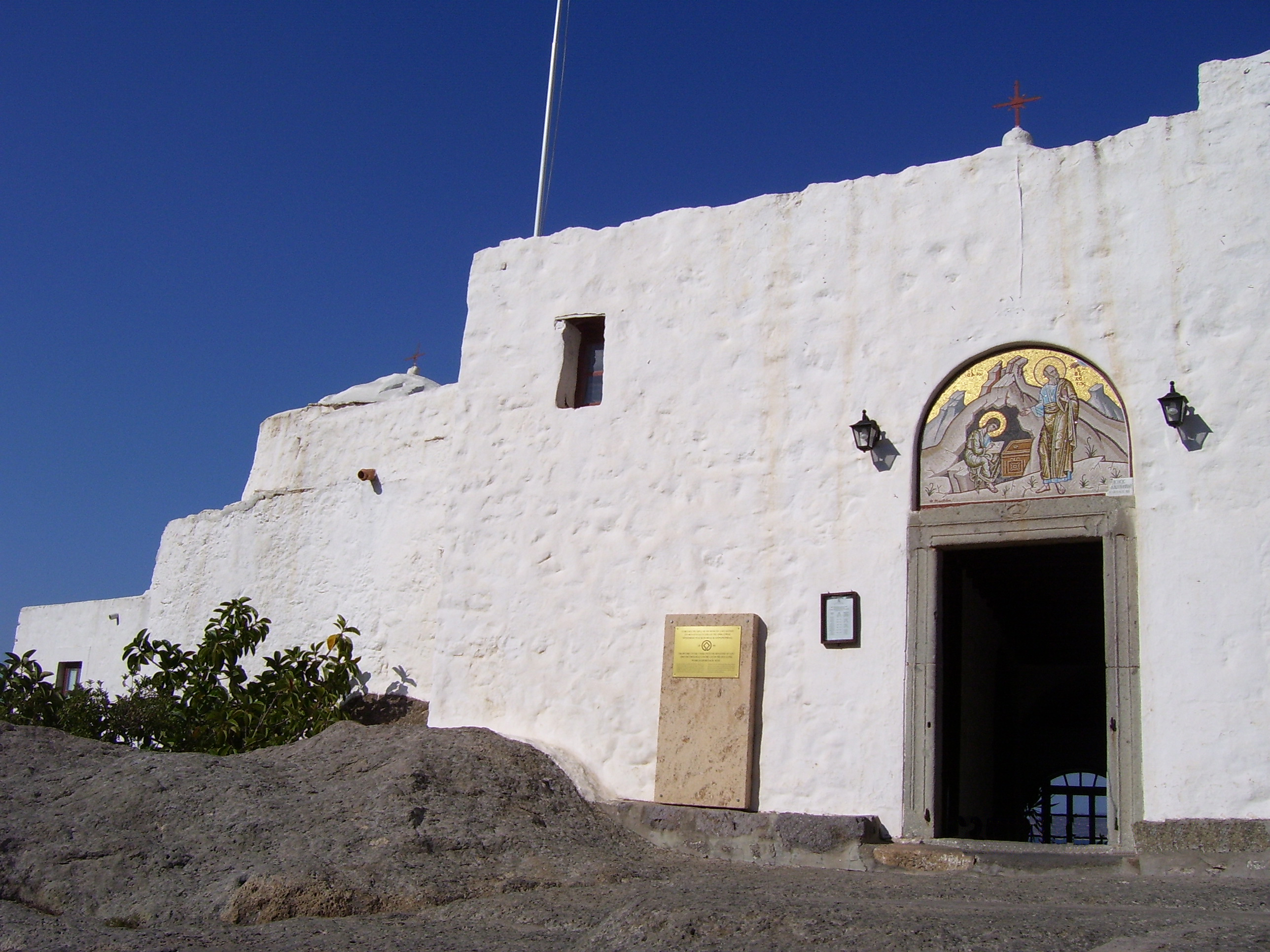
The Cave of the Apocalypse can be found on the rocky island of Patmos, deep within the monastery that surrounds it. Patmos is located north of the Greek Islands, off the southwest coast of Turkey. Many believe that St. John or John the Apostle as most people know him, lived here between Chora and Skala.

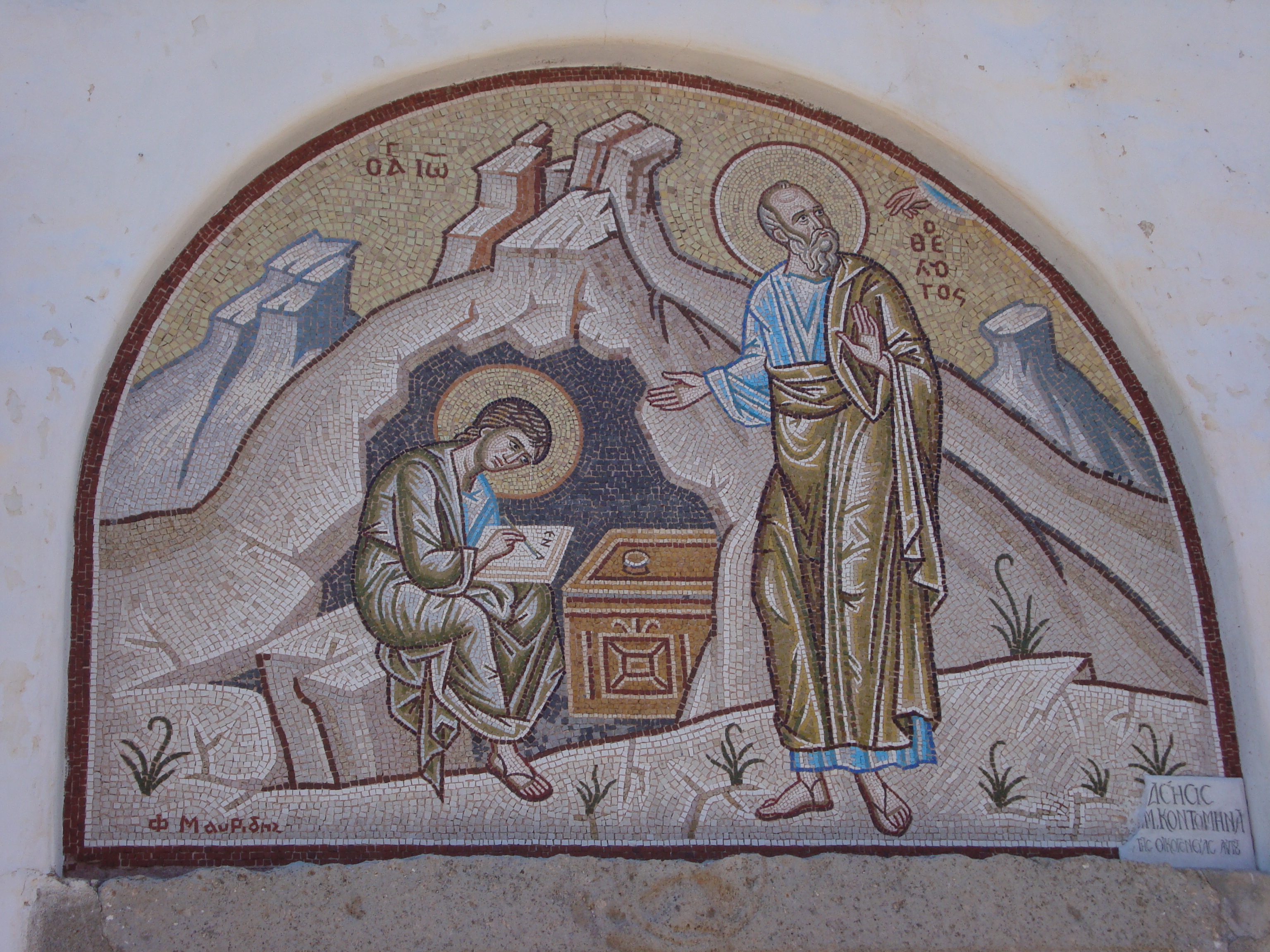
John the Apostle was exiled to Patmos in 95 CE and was there until 97 CE. It was said that he inhabited this cave where he dictated his Gospel and Apocalypse to Prochorus, his disciple. Prochorus later became Bishop of Nicomedia. The Apocalypse, along with its peculiar revelations, was the last book of the Bible to be written.

During the 10th century, the cave became enclosed by a Greek Orthodox monastery to guard its spiritual importance, and of course, to ensure its overall condition and protection. The Cave of the Apocalypse is now a center for Christian pilgrimages.

From an archaeological standpoint, there are indentations in the rock where John may have laid his head. These indentations are now the home of seven silver lights, one which hangs over where he slept. The entrance to the cave boasts an extraordinary mosaic depicting the visions John had seen while in the cave.

Evidence about the history of the Cave of Apocalypse is not, however, conclusive. It is a place that amasses a strong sense of spiritual worship and a feeling that some say is unshakable.

The Cave of the Apocalypse was recognized in 1999 as a UNESCO World Heritage site, and it remains one of the most historically important sites of the Christian world.

Photography and Video of the Cave of the Apocalypse


Picture Sources

Wikipedia

Monday, March 1, 2010

Monday Ground Up: Thingvellir in Iceland


Thingvellir is a national park situated in Bláskógarbyggð in southwestern Iceland, near the peninsula of Reykjanes and the Hengill volcanic area. Not only does this glorious location offer natural landscapes to the many visitors every year, but the site embodies Iceland's political, social, and religious history.

p7180289 clear stream in Thingvellir National Park.

by © susankapl

Thingvellir is the oldest Parliamentary site in the world and is registered on the UNESCO world heritage site. It is this location, on the shores of the largest lake in Iceland, that the first general assembly, or Althing, met in 930 to act as a forum for the Icelandic people.

The assembly, situated comfortably in the open air, would meet two weeks a year and dispute on matters concerning the establishment of laws and debate issues.

The assembly met at the law rock, or Lofborg, and it was here that the main law speaker would proclaim the laws of the commonwealth. The law rock also acted as a site to express particular news, to inaugurate and dissolve the council, and to confirm laws. In 1262, when Iceland swore allegiance to Norway, the rock disappeared. Archaeologists have still continued to search, and they hope with further research that they will eventually find it. Until then, it remains a mystery.

Aside from the fact that Thingvellir was a site of great political importance, it's also a location that has created mass geological interest. It's part of a fissure zone that runs through Iceland and rests on the tectonic plates of the Mid Atlantic Ridge. Fractures in the formation are the size of canyons, and some, have the most breathtakingly clear water.

Legend says that if you drop a coin to the bottom of one of the cliffs-Penny Canyon, your dream will come true.

Photography of ThingVellir

062 - Thingvellir - Oxarafoss 2

064 - Thingvellir - Dorsale, Lago e Bandiera

058 - Thingvellir - Fiume Oxara

041 - Thingvellir - Vista Panoramica sul Lago Thingvallavatn

049 - Thingvellir - Dorsale di Reykjanes 2

051 - Thingvellir - Dorsale di Reykjanes 4

057 - Thingvellir - Dorsale di Reykjanes 6

by © maxfaxpax

More Interesting Related Links:

Switzerland: A Geographical and Economical Revolution of Travel and Responsibility

Thingvellir

Thingvellir on Geographia

Thingvellir on UNESCO Heritage Site

Like Ancient Digger? Why Not Follow Us?


Subscribe Via RSS Feed Follow Ancient Digger on Facebook Follow Ancient Digger on Twitter Subscribe to Ancient Digger Via Email

Get widget

Search


Ancient Digger Archaeology Copyright © 2015 LKart Theme is Designed by Lasantha