• Ancient Digger teaches Archaeology and History to all Ages!

Friday, July 3, 2015

City of Troy treasures to be housed in Turkish museum


The city of Troy. Some question whether this city was real at all, like the fabled city of Atlantis. The city of Troy is more than real, and now Turkey is taking the steps to share the priceless treasures of Troy from countries scattered around Europe by creating a museum to house the artifacts in the ancient city in the country’s northwest. Construction of the museum began just last year, and works will be accelerated for the repatriation of the Troy treasures from some European countries and Russia.

Located in Tevfikiye village, the Troy Museum is set to be finished by the end of next year. The ancient city receives more than 500,000 visitors every year.

“With a new $25 million tender that will be made in the coming days, we will focus on the ‘fine work’ of the museum. The ministry is also working on projects to bring back the Troy treasures in other countries. When the museum is finished, it will pave way for their return,” Culture and Tourism Director Kemal Dokuz recently said.
Troy Museum
© Hurriyet Daily News

Most parts of the museum construction has been completed. The building will have a closed area of 10,000 square meters, including exhibition halls on a 3,000-square-meter area. Artifacts unearthed in Troy and other archaeological sites in Çanakkale will be displayed at the museum.

Ancient Troy, which received UNESCO world heritage status in 1998, will grow in importance once the museum project is done, according to officials.

It is expected that the number of visitors will exceed 1 million and that Trojan artifacts that were smuggled abroad will return to the country.

According to data from the Culture and Tourism Ministry, Troy ranked ninth on a Turkish list of most-visited museum and ancient sites and eighth on a list of most-profitable sites, Dokuz said. “Troy is a very important brand of Çanakkale. Everyone knows Troy in the world.”

Dokuz said this important brand should be promoted in the best possible way, adding that the ministry had initiated the museum project to promote the treasures of Troy.

The official said the main goal in Troy was to attain the status of the Hagia Sophia Museum, which tops the list of visitor numbers to Turkey, or at least to grab one of the top three places.

The museum is critical in Troy’s efforts to reach the goal, Dokuz said. “When the artifacts return to the country and are put on display at the museum, we believe that Çanakkale will have more importance in Turkish tourism.”

Dokuz said the ancient city’s entrance gates, the surroundings of the Trojan Horse and walking routes had been rearranged. “Three million liras was spent for this rearrangement. Now visitors will be more comfortable when walking around the ancient site. They will get more information about the region.”

Trojan Treasures were smuggled abroad in the 1870s by amateur German archaeologist Heinrich Schliemannn, and they are now in 44 countries, especially Russia.

Source: Hurriyet Daily News

Tuesday, February 12, 2013

Body of Donkey Discovered in Salt Cave


In the salt cave (tuz mağarası) of the central Anatolian provinceof Çankırı, the bodies of dead animals do not decompose; rather they are preserved by the atmosphere of the cave, where salt has been produced for 5,000 years, dating back to the Hittite period.

Mummified animals as well as sculptures made of salt
are on display in the cave, where salt has been produced
for 5,000 years [Credit: Hurriyet/AA]
The body of a donkey found 200 years ago in the cave as well as that of a rabbit found five years ago and a snake found two years ago are displayed in the grotto as they were found.

The salt cave boasts Turkey’s largest rock salt reserve and is one of the significant tourism centers of central Anatolia. Many galleries comprise the cavern, from which stalactites and stalagmites of salt are suspended. Exhibiting the mummified animals is one part of a series of projects developed by the Çankırı Governor’s Office to promote the salt cave for tourism.

Mining engineer Murat Danacı, who is responsible for the cave, said the animal bodies are preserved due to the cave’s antibacterial environment: “There is no decomposition here because the life condition is zero in this atmosphere. It is an antibacterial environment; even bugs do not reproduce. There is an old saying: add salt to the wound. People used to add salt to wounds to kill bugs.”

Donkeys used to transfer salt

According to Danacı, a dead donkey was found in the cave as donkeys were historically used to transport mined salt: “Salt has been produced in the cave for nearly 5,000 years. Donkey and horse carriages were used in the past as transfer vehicles. This donkey fell into water and died when it was transferring salt. People found it some 200 years ago and put it somewhere in the cave.” Danacı said that the donkey began to decompose when it was taken from its natural environment, thus was brought back to the cave: “When [people] realized that the donkey did not decompose in the cave, it was taken to the Ankara Mineral Research and Exploration Museum (MTA). It began to decompose there and was returned to its natural environment, the salt cave. Decomposition stopped there,” he said.

He said that a dead rabbit found by workers five years ago in the cave also did not decompose: “The rabbit has been with us since then. We found it in an open place where there is no production and never carried it outside the cave. This is why decomposition was not seen.”

The last creature found and displayed is the body of a snake from two years ago: “No bodies decompose in the environment of this cave because of the salt. The donkey, rabbit and snake were not stuffed. We don’t interfere with these dead bodies,” Danacı said.

Source: Hurriyet Daily News

Thursday, December 27, 2012

Hospital Heals Old Artifacts


AA photo
As Turkey’s capital, Ankara is already home to some of the country’s best hospitals. For those tasked with protecting Turkey’s heritage, however, one stands out from the others: the restoration and conservation atelier at the Ankara Museum of Foundational Works – an “old artifact hospital.”

This place is for “the healing of old artifacts,” said Özlem Erdem, one of the specialists that helps restore old artifacts from around the country. “We heal manuscripts from Turkey and even Turkish Cyprus, as well as carpets, kilims and wood artifacts and [artifacts] that are returned to the country after being smuggled abroad.”

Ultimately, the atelier helps clean and preserve Turkey’s ancient heritage for subsequent generations.
Artifacts in the atelier are first documented and photographed before being strengthened according to need, Erdem said. “We complete the work with proper materials and methods and prepare them for exhibition.”

The restoration specialist said many important artifacts from Kütahya, Antalya, Cyprus, Sivas, İzmir, Gaziantep and Kastamonu were undergoing restoration in the atelier, adding that the wood carving works of the Diviriği Ulu Mosque, which is included on the UNESCO World Heritage List, were restored at the atelier.

Erdem is one of the restorers, along with Derya Şan and Ceyda Cüceloğlu.

Foundations Ankara Regional Director Aslan Yıldız said they were proud of having such an atelier to keep historical artifacts alive.

“We can restore all types of historical products here. In this way, we make a big contribution to the budget of the General Directorate of Foundations. We don’t procure services from anywhere else; we restore everything in our own atelier,” Yıldız said.

Yıldız said the establishment of a wider atelier was very important for Turkey because the country is very rich in terms of historic artifacts.

He also said the atelier had acquired a new washing tube for carpets and kilims that can be converted into a desk.

The Ankara Museum of Foundations Works features various examples of carpets collected from all around the country, as well as many other historical pieces. The museum building served as a law school from 1928 to 1941. In 2004, the building was restored to serve as a museum.

Paintings restored in Istanbul lab

Earlier this year in March, Türkiye İş Bankası opened the first painting conservation and restoration laboratory in Turkey as part of Mimar Sinan University with the aim of both supporting art and painting and conserving the country’s cultural heritage.

While the laboratory serves as a scientific base for the conservation and restoration of paintings, it is also becoming a base to raise professional restorers, according to cultural officials.

Source: Hurriyet Daily News

Monday, October 22, 2012

Castle of Marmaris to be Restored


Officials have approved the restoration of the 500-year old Marmaris Castle and its accompanying museum, rebuilt by Kanuni Sultan Süleyman (Süleyman the Magnificent) during his campaign for the Greek island of Rhodes in 1522.

The Culture and Tourism Ministry has allocated 300,000 Turkish Liras for the restoration of the castle and museum, which is visited by some 60,000 people each year. The cost for the preparation of the restoration project was 40,000 liras and was financed by the Marmaris Port Management.
The museum has a very rich archaeological collection that includes objects unearthed during excavations as well as ones purchased through sales, Marmaris Museum Director Esengül Yıldız Öztekin said.

The museum’s existing arrangement was not in line with contemporary museum design and did not illuminate its visitors, Öztekin said. “The directorate has developed a project for a new arrangement. The project works were finished last year and approved by the Cultural Beings and Museums General Directorate. The project was included in the investment program this year,” the director said.
Öztekin said that the project had been prepared considering the characteristics of the historic castle and that besides merchandising work, new storage would be constructed for the protection of artifacts against a possible earthquake.

Öztekin said that the Cultural Beings and Museums General Directorate closed the Marmaris Museum to visitors from Oct. 18 to April 30, 2013. “Our goal is to display the artifacts in the museum in more appropriate conditions and welcome our guests as a contemporary museum,” she said.
Following the restoration, the museum, home to nearly 12,000 artifacts, will be renamed the Marmaris Archaeology Museum.

The Marmaris Castle was first built by the Ionians in 1044 B.C. and later repaired during the era of Alexander the Great. Süleyman the Magnificent used the Marmaris castle as a military base for his troops. There are 18 houses, a fountain and an arc inside the castle area. The castle was restored between 1980 and 1990 and became a museum in 1991. It has seven indoor areas, two of which are organized as archaeology museums and one as an ethnography museum. The remaining areas are used as art galleries and storage.

Source: Hurriyet Daily News

Monday, September 3, 2012

Aphrodisias Excavations Reveal Headless Statues


Hurriyetdailynews
The ongoing excavation works at one of Turkey’s most important archaeological sites, the Karacasu Aphrodisias Ancient City, have revealed two headless statues.

According to information provided by the Culture and Tourism Ministry, one of the statues is in 1.76 meters in height and the other is 1.68 meters. One of the statues holds a roll in its left hand and its right hand is on its chest.

There is a pack of documents behind its left foot, but the fingers and head are broken. The second statue is also headless. Its right hand is broken from the humerus down, and the left hand is broken from the elbow. There is also a pack of documents next to its right hand.

U.S. professor R. Roland Smith is heading the excavations at the site. The city of Aphrodisias, is one of the country’s most visited places. It is included in UNESCO’s world heritage permanent list.

Source: Hurriyet Daily News

Tuesday, August 21, 2012

Turkey’s First Archeopark in the NW province of Bursa’s Nilüfer Opens


Houses dating back 5,550 years and other aspects of Turkey’s archaeological history will soon be opened at one of Turkey’s first Archeoparks in the northwestern province of Bursa’s Nilüfer district.

Specialists have been working on the ancient sites of Miletepolis, Apollonia ad Ryndacum and Lapadion in preparation for the opening of the archeopark. Archaeologists have also been focusing their efforts on examining the Aktopraklık Mound, which dates back to between 6500 and 5500 B.C., making it one of the oldest villages in northwestern Anatolia.

Scientists have extracted 15 structures so far and have created an exhibit out of four of them, according to Dr. Necmi Karul at the Prehistory Department of Istanbul University. “Every year with new data, we make changes to our exhibits. In the following days, we are going to introduce the Chalcolithic Era through new exhibits,” the professor said.

 “Even the archeologists have a hard time making sense of the data, but we want to simplify the data to present it to the public. For example, many items are in pieces but when the pieces are put together, they comprise the furnishings for a house,” Karul said.

 “After a nine-year process, we have enough data to make an exhibit out of a village. We added a furnace and storage to the log cabins in the archeopark,” he said.

The excavation work at the site and the preparations for the opening of the archeopark are being supported by the Culture and Tourism Ministry, Istanbul University, Bursa Metropolitan Municipality, as well as some industrialists.

Source: Hurriyet Daily News

Tuesday, August 3, 2010

Hattusha (Hattusa) Archaeological Site In Bogazkoy Turkey


Arial View of Hattusha Archaeological Site in Bogazkoy Turkey
Source

The archaeological site of Hattusha is situated in Anatolia, now modern day Turkey. Hattusha sits 90 miles east of Ankara, first occupied in the third millennium BCE.

The Hittites arrived at Hattusha during 1700 BCE and were one of the greatest powers of the ancient world. Ruled by King Hattusili , ruled from 1650-1620 BCE. The Hittites conquered Babylon, overshadowed Troy, and constructed an empire that rivaled the Assyrians and Egyptians.
Hattusha remained a site of great importance for the Hittites until its destruction in 1190 BCE. Later it was occupied by Galatians and Phrygians.

The archaeological site of Hattusha, although smaller is scale as opposed to its counterparts in neighboring areas, does outline several achievements.

Hattusha archaeology site, discovered in the early 19th century, did not gain significant importance until the 20th century when Hugo Winckler and Theodor Makridi Bey conducted the first excavations in 1906, 1907, and 1911–13.

Later, archaeological excavation resumed in 1933 under Kurt Bittel, followed by Peter Neve (site director 1963, general director 1978–94).

One of the most important discoveries at the site has been the cuneiform royal archives of 10,000 clay tablets. One of the clay tablets inscribed included a peace treaty, one of the oldest ever found.

The site at Hattusha also consisted of official correspondence and contracts, as well as legal codes, procedures for cult ceremony, oracular prophecies and literature of the ancient Near East. 

Excavations by archaeologists at Hattusha revealed the size of the city. The city spanned over 450 acres and included seven temples, the largest containing shrines to the weather god, Hatti, and sun goddess Arinna.

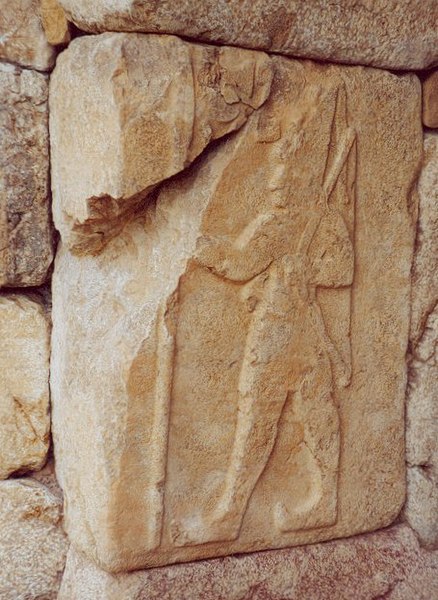
The Hittites excelled at sculpture, taking immense care at crafting the massive guardian spirits which flanked the gateway. These include lions, warriors, and sphinxes.

Hattusha: the Hittite Capital, became a UNESCO World Heritage Site in 1986.

Saturday, July 24, 2010

Archaeological Finds in Turkey


Frommer's Turkey (Frommer's Complete)Canadian archeologists from the University of Toronto are restoration and interpreting an Assyrian tablet from Southern Turkey. The tablet is 43cm long and 23cm wide with 650-700 lines of writing on it and according to archeologist Timothy Harrison, the tablet, dating from about 670 BC, is a treaty between a powerful Assyrian king and his weaker vassal states, written in formal language similar to that used in the Old Testament. The find is just one of a large number of finds from the same site. Over 30,000 artifacts have been unearthed so far.

Read more about the latest archaeological finds in Turkey

Wednesday, June 30, 2010

YekPare: A 8500 Year Old Tour of Istanbul


‘YEKPARE’ (monolithic) from nerdworking on Vimeo.

"Yekpare" is a storyteller which narrates the 8500 year story of Istanbul. The story embraces symbols from Pagans to Roman Empire, from Byzantine Empire to Latin Empire, and finally from Ottoman Empire to Istanbul at the present day. The story is projected on the Haydarpaşa Train Station, as history comes alive in artistic expressions. 

Monday, October 19, 2009

Sorry, Post Removed June 20


Wednesday, July 1, 2009

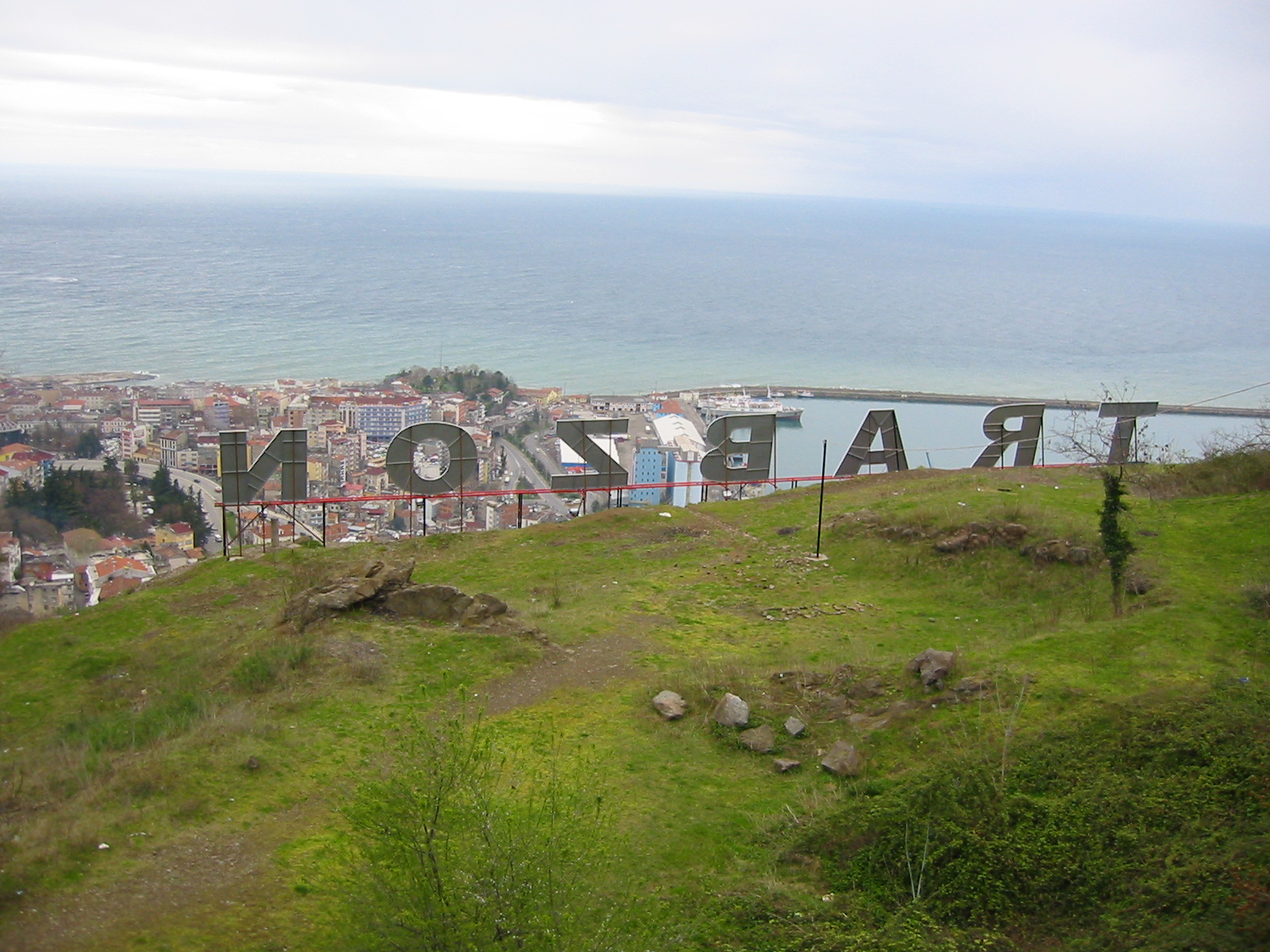
Trabzon Turkey


My research on Turkey has led me to the city of Trabzon, where commerce and trade was flourishing around 756 BC along the shores of the Black Sea.

Trabzon is located on the Black Sea coast of north-eastern Turkey and the capital of Trabzon Province. "Trabzon was a melting pot of religions, languages and culture for centuries and a trade gateway to Iran in the southeast, Russia and the Caucasus to the northeast."


The Venetian and Genoese merchants paid visits to the city and sold silk, linen and woolen fabric. During the Ottoman period, Trabzon, because of the importance of its port, became a focal point of trade to Iran, India and the Caucasus. Trabzon formed the basis of several states in its long history, and was the capital city of the Empire of Trebizond.


Like most Greek colonies, the city was a small commune of Greek life, and not an empire unto its own, in the later European sense of the word. Early banking (money-changing) activity is suggested occurring in the city according to a silver drachm coin from Trapezus in the British Museum, London.

Saturday, March 7, 2009

Post Removed


Post Removed

Wednesday, February 25, 2009

Post removed 101


Post Removed

Saturday, February 21, 2009

The Ancient City of Ephesus


"Ephesus ... was a city of ancient Anatolia. During the period known as Classical Greece it was located in Ionia, where the Cayster River (Küçük Menderes) flows into the Aegean Sea. It belonged to the Ionian League.

Ephesus hosted one of the seven churches of Asia, addressed in the Book of Revelation of The Bible), and the Gospel of John might have been written here. It is also the site of a large gladiator graveyard.

The city was famed for the Temple of Artemis (completed around 550 BC), and both were destroyed by the Goths in 263. The emperor Constantine I rebuilt much of the city and erected a new public bath. The town was again partially destroyed by an earthquake in 614. The importance of the city as a commercial centre declined as the harbour slowly filled with silt from the river.

Today's archaeological site lies 3 kilometers south of the Selçuk district of İzmir Province, Turkey." -
Wikipedia

Read More:Turkey: The Ancient City of Ephesus


Contributed by Emm in London

Also from this writer:

Like Ancient Digger? Why Not Follow Us?


Subscribe Via RSS Feed Follow Ancient Digger on Facebook Follow Ancient Digger on Twitter Subscribe to Ancient Digger Via Email

Get widget

Search


Ancient Digger Archaeology Copyright © 2015 LKart Theme is Designed by Lasantha