Although the Romans had depended greatly on the ideals of the Greeks when adopting their art and literature, they themselves developed some of the most innovative of inventions that succeeded Western Civilization. The evolution of Roman law which brought about the idea of a systematic principle for justification, the invention of roads allowed for easier transit for soldiers and citizens, as well as the construction of Roman bridges that still stand today.
Roman Law

(Hadrian began designing a Pantheon reminiscent of Greek temples and far more elaborate than anything Rome had ever seen. )
At the time, Civil law from the Twelve tables was proving to be inadequate at best, and so the structure of the law was open for change by the praetors. Legal principles were put into place including the preparation of edicts which simply outlines how a particular case should be dealt with. Certain aspects of the laws could be used in particular cases, however as the Roman shortly learned, there were exceptions. The implementation of Natural Law and the Law of Nations were one in the same in the eyes of the Romans, giving them an accuse for systematizing Roman law with the use of philosophical ideals.
Roman Roads
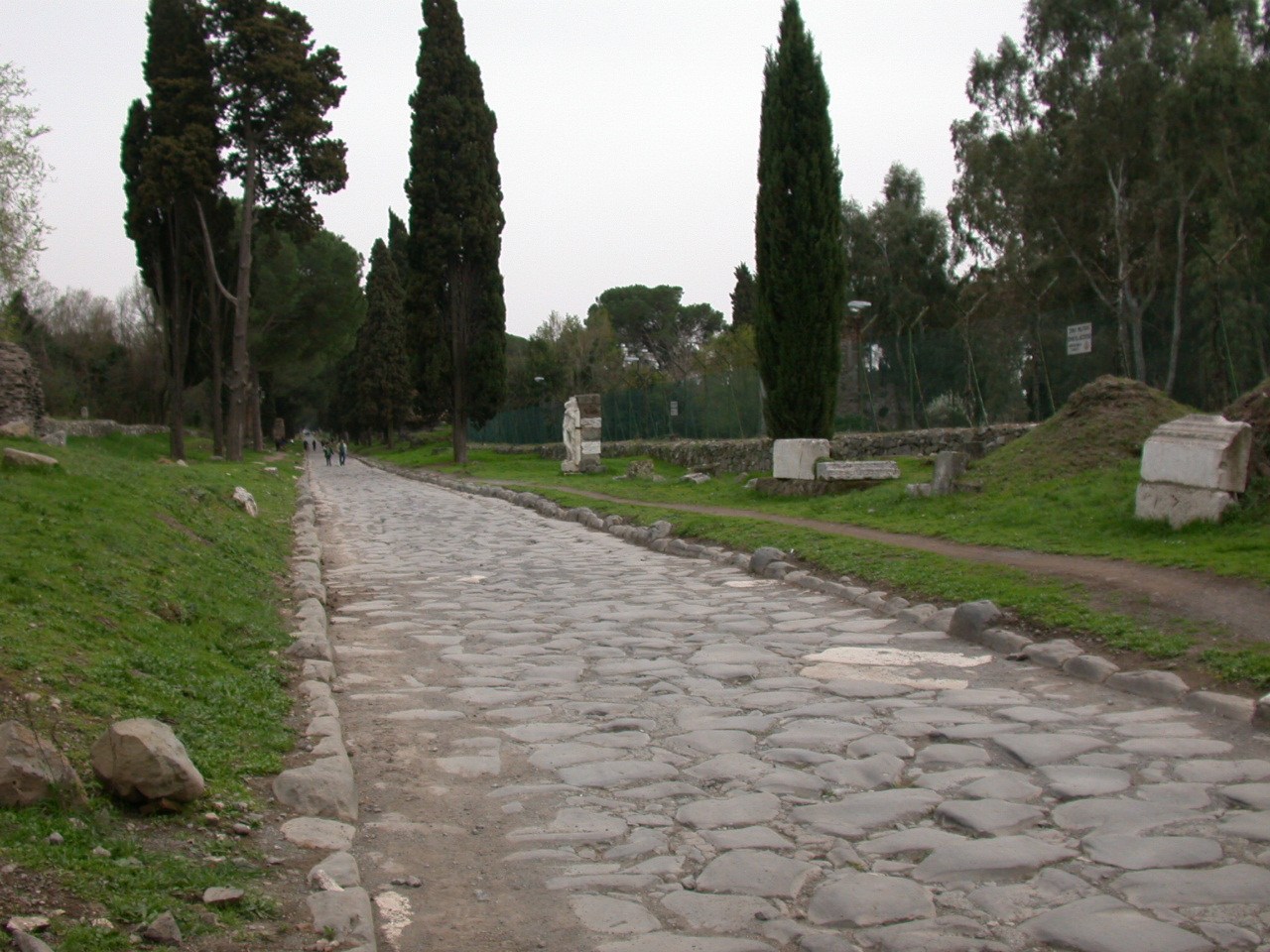
(
Via Appia, a road connecting the city of
Rome to the Southern parts of
Italy, remains usable even today.)
The inventions of roads composed of five layers and one foot thick were constructed for the army. The roads were made by using cement to bind the polygonal blocks together and were layered with a smooth coating of concrete and fitted flint. If the Romans happened to encounter an obstacle, they would engineer a solution to the issue. Bridges and aqueducts were often constructed with firm foundations which deterred any issues of transport for trade or army regiments.
Roman Bridges
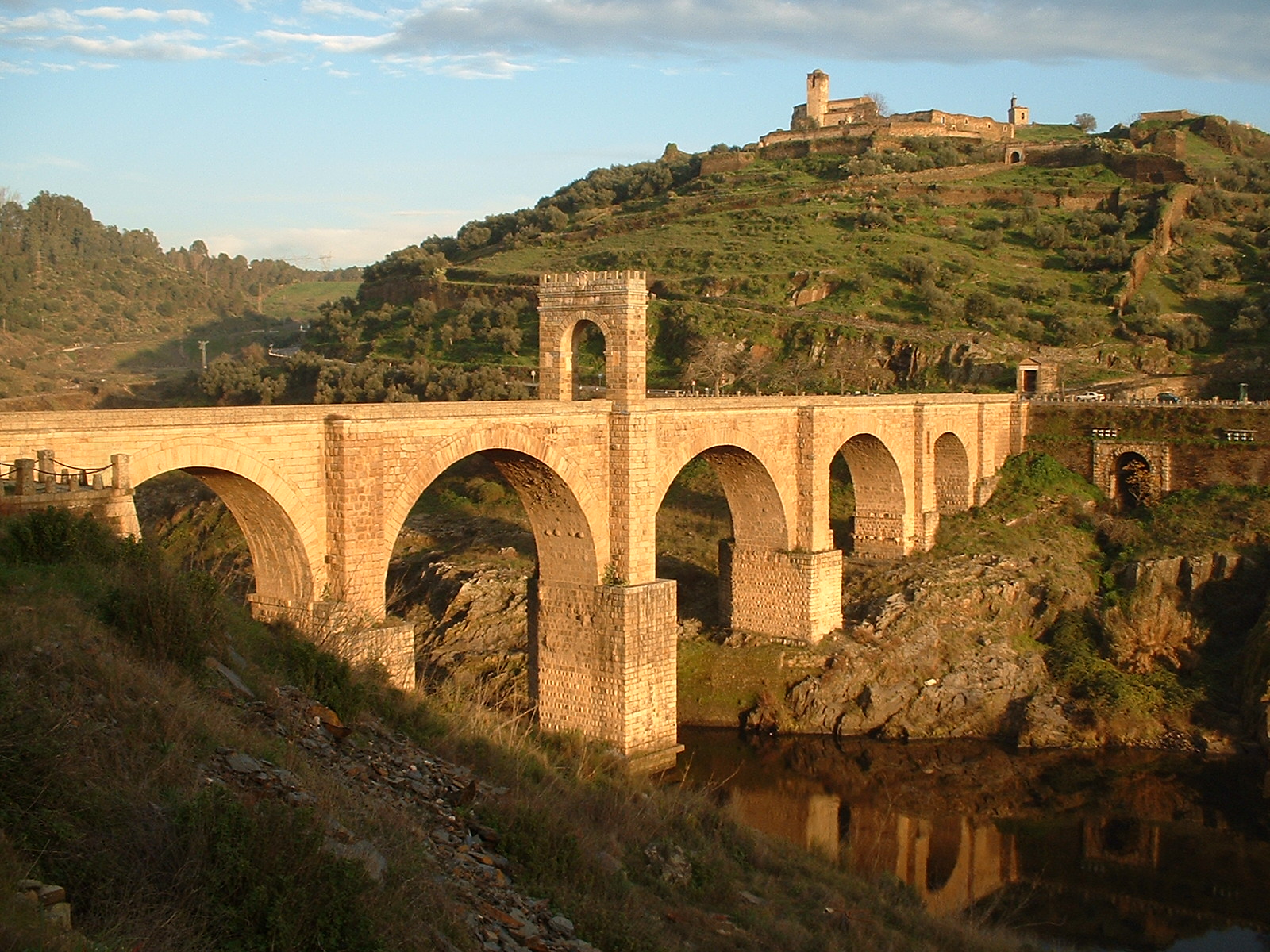
(
Alcántara Bridge in Spain was built by order of Trajan over the Tagus River.)
The Roman bridges were among the first constructed and surprisingly they have been the longest lasting. The bridges were constructed using materials like stone, with the added support of concrete. The largest of the bridges ever constructed was Trajan’s bridge which was also the longest in length. During the Gallic Wars, Caesar's built the two Rhine bridges which were said to be an engineering work of art.
Final Thoughts
The Roman accomplishments in law and engineering have withstood the test of time and have inspired many other cultures. Pliny the Elder described their achievements as improvements on older ideas, however still unique and inventive. If we take into account the institution of law in the United States, the system was clearly mimicked from the innovations of the Romans, as well as the aqueducts in England, particularly Wales, that look almost identical to the Roman construction.
The Inventions of the Romans
Hadrians Pantheon

Hadrian began designing a Pantheon reminiscent of Greek temples and far more elaborate than anything Rome had ever seen. His plans called for an entrance portico, a circular domed rotunda or vault, and a connection between the two. The rotunda’s internal geometry would create a perfect sphere, since the height of the rotunda to the top of its dome would match its diameter: 142 feet. At its top, the dome would have an oculus or eye, a circular opening, with a diameter of 27 feet, as its only light source. Hadrian visualized himself enthroned directly under the Pantheon’s oculus – a near-deity around whom not only the Roman Empire but the universe, the sun, and the heavens obediently revolved.
Colosseum
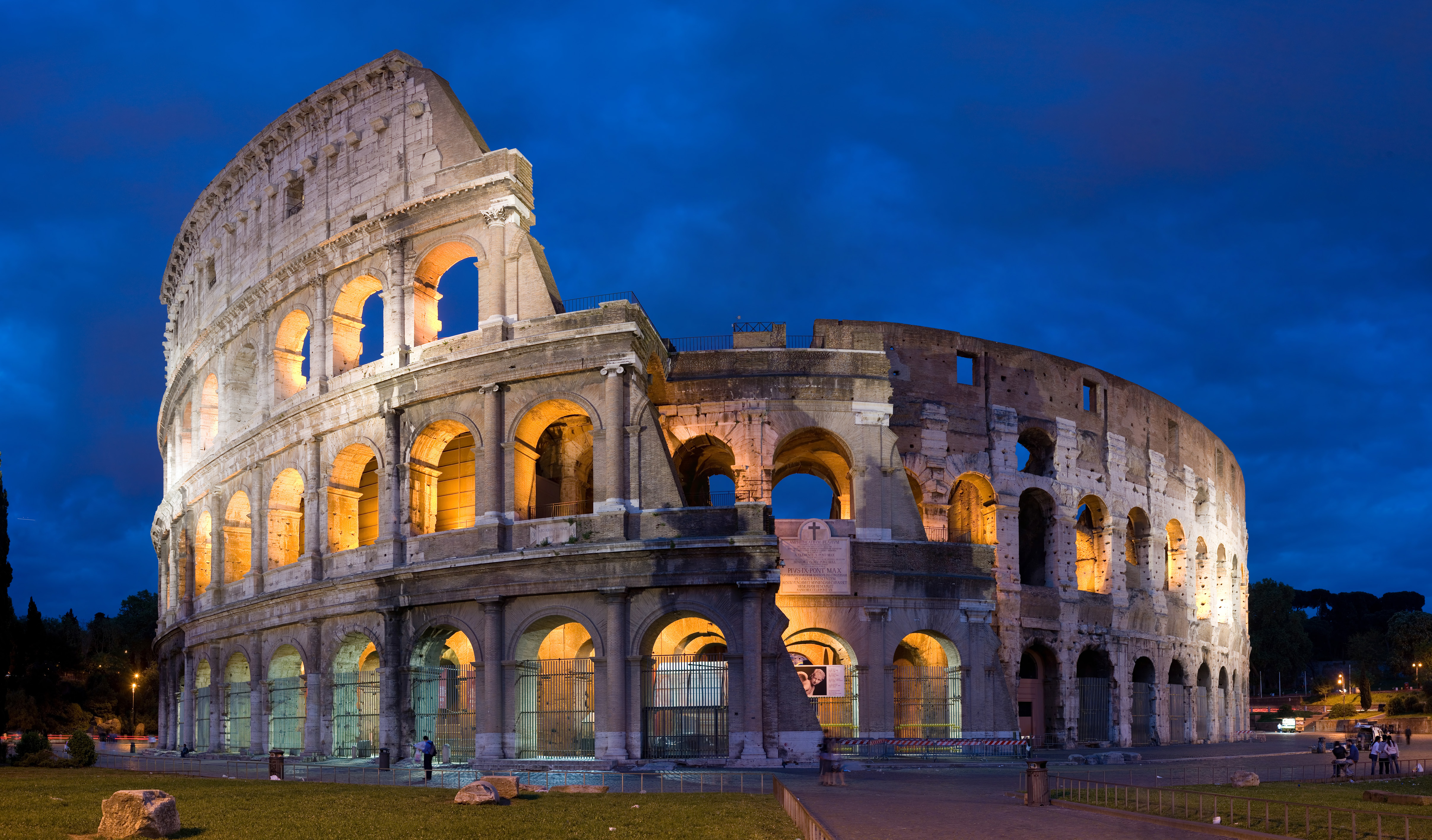

The
Colosseum in
Rome. At one time, this structure actually had a top that was rolled out for inclement weather or control the climate.
Thermae
 Roman public baths
 in
Bath, England. The entire structure above the level of the pillar bases is a later reconstruction.
Picture Credits
Colosseum Pictures
Pantheon Pics
Thermae
Aqueduct
Roman Engineering


 prepares for his 14th year of exploration into the ancient settlements that he uncovered deep in the Cheshire countryside. Balme has made numerous important discoveries from the
  , Bronze Age and in particular the Roman period. His work continues to uncover many more ancient treasures from the earth.

 Roman architecture
 is classical and hardly practical. It could be described as masculine in a sense, with a hint of solitude. No matter how we interpret the structure, we can all agree that it exhibited a solid foundation and architectural form.


