• Ancient Digger teaches Archaeology and History to all Ages!

Tuesday, July 5, 2011

History of the Cold War 1945-1991


Cold War History records a conflict, primarily between the United States and their allies in Western Europe and the Soviet Union and it's allies. The Cold War commenced after World War II and lasted for nearly fifty years. Instead of guns, the weapons used in this “war,” were technology and espionage; however, the threat of Nuclear War from these two super powers impacted life on a global scale, much more than the passive aggression conducted by intelligence services.

The Role of Intelligence Agencies


According to Cold War history, the CIA attempted to obtain control over several intermediary countries, such as Afghanistan, Chad, Grenada, Cuba and Angola, but the major world powers never began an armed conflict against each other. The military units of the two nations participated only rarely in the Cold War. This war was waged primarily by the KGB and the CIA.

Causes of the Cold War


There were many causes of the Cold War, including the following:
  • Political Ideology. The Soviet Union embraced the ideology of communism and wanted to spread this philosophy over the globe. This was a threat to the United States. The United States believed in democracy.
  • America had obtained atomic weapons and this was a threat to the Soviet Union. Both nations were in fear of an attack from the other.
  • The Soviet Union exercised control over Eastern Europe which constituted a threat to the United States.
  • The Russians were afraid America would attack the Soviet Union from Western Europe

Communism


Although history records many causes of the Cold War, one of the primary causes was an argument between the two countries about the political philosophy of communism. While the East embraced Communism, the United States was adamantly opposed to this philosophy of government.


Major Events

McCarthyism and the “Red Hunt”


In 1950, Joseph McCarthy, a Republican senator from Wisconsin, accused over 200 federal workers of being members of the Communist Party. Although Senator McCarthy had no evidence upon which to base these allegations, President Truman initially backed the inquisitions, but eventually distanced himself from the investigations because he felt that they were becoming “witch-hunts.”

The Bay of Pigs Invasion


In 1961, a group of Cuban exiles, supported by the United States, attempted to overthrow the Cuban government headed by dictator, Fidel Castro. The failure of the mission was a huge embarrassment to the Kennedy administration. The Central Intelligence Agency began preparing anti-revolutionary Cuban exiles for a possible invasion of the island several years prior to the Bay of Pigs. The band of soldiers intended to march into Havana. However, within a few hours after the fighting began, it was obvious that the exiles could not win. When the battle ended on April 19, ninety exiles lost their lives and the remainder taken as prisoners.

The Sputnik Crisis


The history of the Cold War is also the history of the beginning of the Space Age.The Space race began in earnest after this, leading up to the Apollo program, and the moon landings in 1969. Sputnik Crises occurred when the Russians launched the Sputnik 1 Satellite. The U.S felt that it was necessary to win the race to space, and so did the Russians. There was serious competition in the race to space, especially between the United States, and the Soviet Union. Sputnik I, the world's first Earth-orbiting artificial satellite, launched on October 4, 1957, and the Space Age emerged. This event gave the impression of a deficit in technological advancement and helped to provide the momentum in spending for technical and scientific projects and educational programs. The United States needed to recover a sense of international respect.

Cuban Missile Crisis


Image Credit

In 1962, the Cuban Missile Crises moved the United States and the Soviet Union close to war. U.S. intelligence services discovered Soviet nuclear-armed missiles in Cuba. During a tense week, President Kennedy imposed a naval quarantine on Cuba and announced that the U.S. would respond to an attack from Cuba as an attack by the Soviet Union. On October 28, Khrushchev backed down and announced to the world that he would dismantle the installations.

The End of the Cold War

The history of the Cold War shows that the conflict began to unravel in the late 1980s during the administration of Soviet leader Mikhail S. Gorbachev. He disassembled the autocratic facets and factions of the Soviet system and tried to integrate the concept of democracy into the political system. The Soviet Union collapsed in late 1991, and 15 newly independent nations emerged, each with a democratically elected, anticommunist leader. Cold War History shows that although no shots were fire, and no physical battles were waged between the two opposing countries, the effects of this conflict brought many changes on both sides.


Effects of the Cold War


  • Both countries created made weapons and missiles
  • NATO and The Warsaw Pact were created
  • The Soviet Union was demolished
  • The Warsaw Pact was eliminated
  • The Baltic States achieved independence
  • Communism was eliminated across the globe
The history of the Cold War ended late in 1991 with the dissolution of the Soviet Union, and the causes of the Cold War are frozen in time. The end of the Cold War opened the door to friendly relations between Russia and the United States and America became a world superpower.

The psychic scars of this period are still felt today. Cold War history shows that during this time, the civilian population in America was encouraged to build personal bomb shelters. Sirens rang out urgently during air raid drills and teachers taught schoolchildren to hide under their desks.

Monday, December 13, 2010

Monday Ground Up: Cultural Innovation and Imitation-Historic Roads to Economic Stability


This is a guest post contributed by Lisco Johnson.

clip_image001

Throughout the millennia there have been thousands of individual cultures – from small tribal groups to cultures that spread across the globe. Just 100 years ago, “The sun never set on the British Empire” with Britain’s expansive commonwealth spread from Australia to India to South Africa across the Atlantic to Canada. Today, the UK, while still an chief player on the world stage, no longer maintains a global empire.

Breaking the Maya CodeCultures are born, grow, thrive and die out for numerous reasons. Between 1000 and 1300 AD, the Mayan culture covered most of current-day Central America and large portions of modern Mexico. The Maya, it could be argued, were the greatest world culture during its Golden Age, yet the magnificent temple cities constructed by the Maya were deserted by the time Europeans arrived in the region in the mid-1400s.
There are many theories why this one-time cultural innovator disappeared – dispersed into the jungles, and then into villages and cities where modern day Mayans still live today. Cultures rise and fall.

Cultures evolve and devolve. All we have to do is glance at the history of humankind to see that even the greatest civilizations rise and fall.

Is there a single characteristic anthropologists turn to attempting to decipher what makes great societies thrive? 

What makes a culture great? In fact there are many, but when given careful scrutiny, we can see case after case of great societies that were innovators of new ideas and new technology, and societies adapting the ideas and technology of “outsiders” for the benefit of the people who comprise the imitative society.

Innovation


Mayan astronomers created a calendar so precise that, once decoded, amazed modern day science. This culture studied the heavens, charted movements of celestial bodies and developed an intricate system of mathematics to record time and events.

At about the same time, European culture was mired in the Dark Ages when innovation was replaced by the simple need to survive. Indeed, there were learning centers in London, Paris and other medieval cities but innovation wasn’t part of the culture in general.

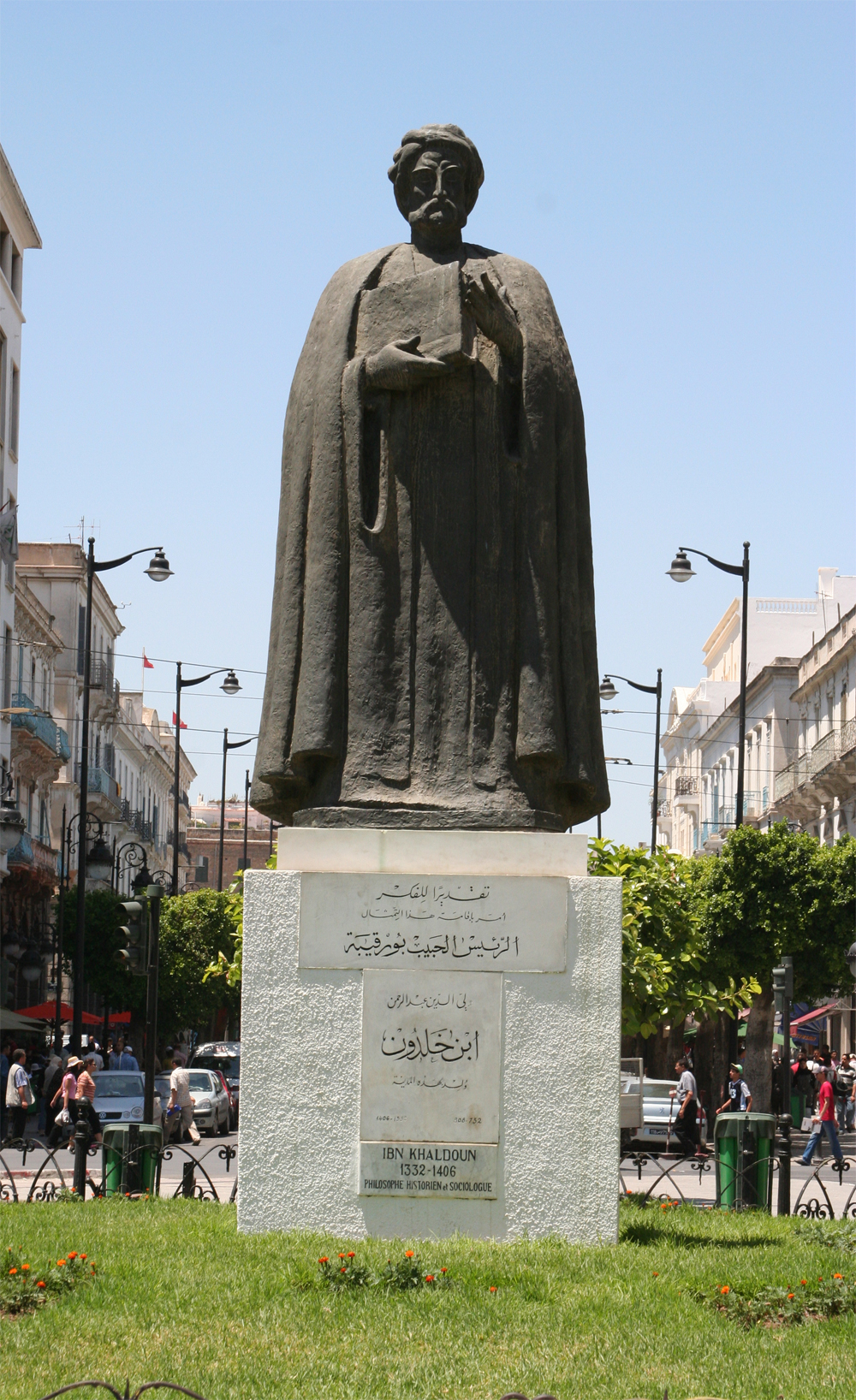
Instead, innovation was taking place on the Yucatan Peninsula and throughout the Middle East where innovative thought led to the creation of algebra (al-jabria) and fundamental social sciences. Idn Khaldun (1332-1406 AD), a great thinker of the time, is credited with the creation of the sciences of economics, the philosophy of history and the scientific method itself.

Khaldun, in his most important writing, The Muqaddimah (1377), lays out testing standards that are still used today in modern research. While Europe was studying pseudo-sciences like astronomy and alchemy, the Middle East was laying the foundation for the work of Sir Isaac Newton in moving forward the world’s body of science.

Innovation occurs during the early days of the great Greek Empire. This was a culture that valued learning and pondered the things its members saw around them. Archimedes defined “displacement” while sitting in a public bath and ran through the streets shouting, “Eureka. EUREKA!” that translates into “I found it.”

Aristotle, Plato, Socrates, Aristophanes and other great minds and great artists moved world culture forward during Greece’s Golden Age of Learning. However, de facto, innovation alone does not sustain a society. And all societies are not innovators. Some have mastered the art of imitation to create sustainable and even robust economies.

Imitation


For centuries Japanese culture demanded of its people an unquestioning acceptance of a strong social contract. The people obeyed orders. They followed instead of led. Individuality was frowned upon. “Fitting in” was woven into the fabric of Japanese society for thousands of years.


The leaders of Japan discouraged innovation and even feared it. This can be demonstrated by the strained history of Japan’s early engagement with the West. In 1853, Commodore Matthew C. Perry arrived in the land of the Shogun. The Japanese referred to these ambassadors as “hairy barbarians.” Instead of embracing the innovation engagement with the West would deliver, Japan remained a closed society until the outbreak of World War II.

After the war, the U.S. pumped billions of dollars in building new factories for the Japanese economy. The U.S. also sent its most innovative, creative minds to Japan to teach this isolationist society modern manufacturing and business development techniques. The Japanese took these assets and, in a single generation, built an economy that provides high-tech electronics, automobiles, heavy equipment and ships to a global market.

However, the Japanese continue to discourage innovation. Fitting in and not making waves is still the centerpiece of Japanese culture. Japanese universities, for example, lag in the implementation of technology on their campuses. Few universities have local access networks in place, though other innovative societies have LANs in secondary schools to encourage the exchange of information essential for innovation.

When China Rules the World: The End of the Western World and the Birth of a New Global OrderChina serves as another example of a nation that imitates rather than innovates. Prior to engagement with Europe and North America, China was a society based on a cult of personality. The Red Guard, the hope for China’s future, waved Mao’s Red Book as they marched in unison before the reviewing stands. Mao’s Great Leap Forward sent university professors to work in the rice paddies. Innovation was absent.
Today, 35 years later, China’s economy ranks just below the U.S. economy in gross domestic product (GDP) and some economists project that China will overtake the U.S. in GDP by the year 2015.

Yet, China does not innovate. It imitates. It adapts business practices employed in Western business communities. It employs technology imported from the EU and U.S. to build computers, manufacture clothing, build consumer electronics and, soon, Chinese- made cars will be sold in the U.S., adding to an already competitive market. In 2009 the U.S. government had to prop up one-time car giant, Chrysler, to prevent one of the “Big Three” auto makers from collapsing under its own weight.

A Country’s Greatness Is Defined By Innovation


China is certainly a powerful country. However, can it be called a great country?

The Chinese government discourages dissent, thus lessening the free exchange of ideas. Search engine giant, Google, no longer serves the Chinese market, pulling out after government censorship became more than Google would tolerate.

Indeed, foreign investment and foreign innovation is welcome throughout China. Many innovative companies from innovative cultures maintain a business presence in this major influence on global economics.
However, China’s government has also declared “internet addiction” to be a mental disorder and has established over 300 “re-education” camps to treat the illness called curiosity. The Chinese people follow. They don’t lead.

China’s power comes from its endless supply of low-cost labor, NOT from its learning centers or cultural centers. The cultural mores of the past remain firmly in place and the government functions in constant fear of another Tiananmen Square uprising among the people.

Countries that foster innovation will continue to grow, though at a slower rate in difficult economic times. These countries produce the tools of tomorrow while those countries that discourage innovation are destined to follow through imitation.

Both innovation and imitation have led to successful, expanding economies. However, looking back through history from an anthropologic perspective, clearly those cultures that encouraged innovation lasted longer and moved the body of world knowledge forward.

Imitation-based cultures have always lagged. They may be powerful. However, it is the fostering of innovation that makes a culture great.

This is a guest post contributed by Lisco Johnson, a history & fitness lover who owns a website offering free tips & articles on how to build muscle

Picture sources


 ©Kassus Statue d'Ibn Khaldoun sur l'avenue Habib Bourguiba à Tunis (Tunisie)

Thursday, November 18, 2010

Iconic Nazi Propaganda


Guest Blurb By Michael Johnson

Propaganda can be understood as the coordinated attempt to influence public opinion through the use of the media. The word propaganda is derived from the Latin propagare, to propagate or spread, and generally propaganda tries to spread ideologies or belief systems.

 
It is frequently used by political parties and governments to encourage people to accept a political viewpoint.  As opposed to providing impartial information, propaganda presents facts selectively. This amounts to lying by omission – misleading people by leaving certain facts out.

Propaganda was used by the Nazi Party during Adolf Hitler’s leadership of Germany (1933–45). Propaganda was crucial for acquiring and maintaining power, and for implementing Nazi policies. Hitler devoted two chapters of his book Mein Kampf (1925-6) to the use of propaganda. He claimed that he had learnt the value of propaganda as a German infantryman in the First World War, where he had been exposed to very effective British propaganda.

Nazi Propaganda Continued ......From: Nazi Propaganda

Monday, April 5, 2010

Monday Ground Up: Otto Von Bismarck: How he Used War to Justify German Unification


Otto von Bismarck was not moved by national unity, although he felt compelled to manipulate it instead of using it for a guide in political affairs. His quest was to obtain internal stability for the Hohenzollern monarchy and more external power for Prussia. However, Austria refused to accept dual supremacy over Germany on a foundation more favorable to Prussia.

Furthermore, had Prussia been more involved with foreign policy, he would have taken a more conservative route. Thus, he would have joined with Austria and Russia against the popular forces in Germany in Europe. He would have simply appealed to the middle classes using a more socialist approach, therefore outflanking liberal opposition. The issue was, however, that Bismarck’s revolutionary and volcanic temperament overshadowed his initial willingness to take the conservative route. Of course, there were greater gains to be had if involved with Germans in an alliance, therefore providing him the means to expand Prussia, and ultimately providing him with a stream of potential power.

Bismarck, seeking a constitutional government, resubmitted the army appropriations bills that was once submitted by William I. The bill sought compulsory military service, therefore if would not only strengthen the military in Prussia, but it was simply encourage obedience to the monarchy. The bill was once again ignored, yet Bismarck chose to collect taxes and reorganized the army. He had not considered war, since he wasn’t naturally a political gambler in any sense, however he did recognize that if all diplomatic alternatives were exhausted and all advantages were on his side, he would choose to wage war.

Since Bismarck's goal was to form a powerful German state, he intelligently recognized that Prussia would only fight one opponent, thus isolating them tactfully. Since the German Parliament was dominated by the Austrians, and he sought to exclude them completely from all German affairs, he persuaded them to wage war on Denmark.

Bismarck realized that if Prussia was to expand to the north, Austria would have to be excluded from affairs in the German Parliament. He conveniently worked on negotiations with Austria, while laying the ground work for their isolation. He forged an alliance with the new Italian state, promising it Venetia in the event that Austria was defeated. He also sought agreements from Russia and France to stay neutral, even promising more territory in the event of defeat.

To the surprise of Europeans, Austria was swiftly defeated, and in turn, was excluded from foreign affairs. Prussia gained the German states north of the Main River, and the southern states were forced to sign military agreements with Prussia, while maintaining their independence. His victory over Austria using military power proved that nationalism and an authoritative government could be combined.

Although France had remained neutral during the Austro-Prussian War, Napoleon III and the French were not happy with the turn of events in Germany. Napoleon sought to humiliate the Prussians, however a hurdle was once again set when Prince Leopold was offered the throne of Spain by William I. The Hohenzollern dynasty would ultimately encircle France, however the French objected to Leopold’s candidacy and forced the king to withdrawal his offer for the throne.

The French considered this a diplomatic victory and forced William I to make a formal apology to France. William I explained the situation to Bismarck in a telegram; however Bismarck edited the letter in an attempt to prod France into a war they couldn’t possibly win. Prussia, along with its military alliances crushed the French forces, and in exchange, France lost the provinces of Alsace and Lorraine to the new German state.

German unity was reached by way of the powerful Prussian monarchy and the army. Liberals rejoiced, even though German unification was possible by way of strong military alliances and an authoritative rule. Germany was now the strongest power in Europe due to the national unification under the strict eye of Otto von Bismarck.

Source

Bismarck Photo

Monday, March 1, 2010

Monday Ground Up: Thingvellir in Iceland


Thingvellir is a national park situated in Bláskógarbyggð in southwestern Iceland, near the peninsula of Reykjanes and the Hengill volcanic area. Not only does this glorious location offer natural landscapes to the many visitors every year, but the site embodies Iceland's political, social, and religious history.

p7180289 clear stream in Thingvellir National Park.

by © susankapl

Thingvellir is the oldest Parliamentary site in the world and is registered on the UNESCO world heritage site. It is this location, on the shores of the largest lake in Iceland, that the first general assembly, or Althing, met in 930 to act as a forum for the Icelandic people.

The assembly, situated comfortably in the open air, would meet two weeks a year and dispute on matters concerning the establishment of laws and debate issues.

The assembly met at the law rock, or Lofborg, and it was here that the main law speaker would proclaim the laws of the commonwealth. The law rock also acted as a site to express particular news, to inaugurate and dissolve the council, and to confirm laws. In 1262, when Iceland swore allegiance to Norway, the rock disappeared. Archaeologists have still continued to search, and they hope with further research that they will eventually find it. Until then, it remains a mystery.

Aside from the fact that Thingvellir was a site of great political importance, it's also a location that has created mass geological interest. It's part of a fissure zone that runs through Iceland and rests on the tectonic plates of the Mid Atlantic Ridge. Fractures in the formation are the size of canyons, and some, have the most breathtakingly clear water.

Legend says that if you drop a coin to the bottom of one of the cliffs-Penny Canyon, your dream will come true.

Photography of ThingVellir

062 - Thingvellir - Oxarafoss 2

064 - Thingvellir - Dorsale, Lago e Bandiera

058 - Thingvellir - Fiume Oxara

041 - Thingvellir - Vista Panoramica sul Lago Thingvallavatn

049 - Thingvellir - Dorsale di Reykjanes 2

051 - Thingvellir - Dorsale di Reykjanes 4

057 - Thingvellir - Dorsale di Reykjanes 6

by © maxfaxpax

More Interesting Related Links:

Switzerland: A Geographical and Economical Revolution of Travel and Responsibility

Thingvellir

Thingvellir on Geographia

Thingvellir on UNESCO Heritage Site

Monday, December 28, 2009

Monday Ground Up: The British Philosopher John Locke


He made perfect sense, at least, that's what he believed when it came to the rights of people. People have the gift of reason and it's up to the government to protect those rights. As individuals we are all deserving of life, liberty, and property. If the government failed to uphold those rights, the people had the power to overthrow the government. If things were only this simple now, how much easier would the world be? What do you think would change if the people had more power to choose?

John Locke was an Oxford academic and a medical researcher whose association with the first Earl of Shaftesbury led him to become a very successful government official. He collected information about the trade within the colonies, he was an economic writer, a political activist, and most importantly, a revolutionary whose cause ultimately triumphed during the Glorious Revolution of 1688, which resulted in the deposition of James II and accession of William III and Mary II to the English throne.

Most of Locke's work is characterized by opposition of authoritarianism which is an emphasis on the authority of state in a republic or union. It is a political system controlled by non-elected rulers who usually permit some degree of individual freedom. This opposition is based on the level of the person and the institution of church and government.

He emphasized the search for reason through truth rather than simply accepting the authoritative opinion or be subject to superstition. It was important to remember the difference between the legitimate from the illegitimate functions of the institutions and to make the distinction for the uses of force against these institutions.

To put it simply, the idea was to encourage human flourishing for the individual and society in respect to its material and spiritual welfare. This, in turn, amounts to following natural law and the fulfillment of the divine purpose for humanity.

When Locke wrote the essay concerning Human Understanding, it revolutionized the limits of human understanding in respect to God, the self, natural kinds and artifacts, as well as a variety of different kinds of ideas. Therefore, this views tells us what we can understand and one cannot.


Source

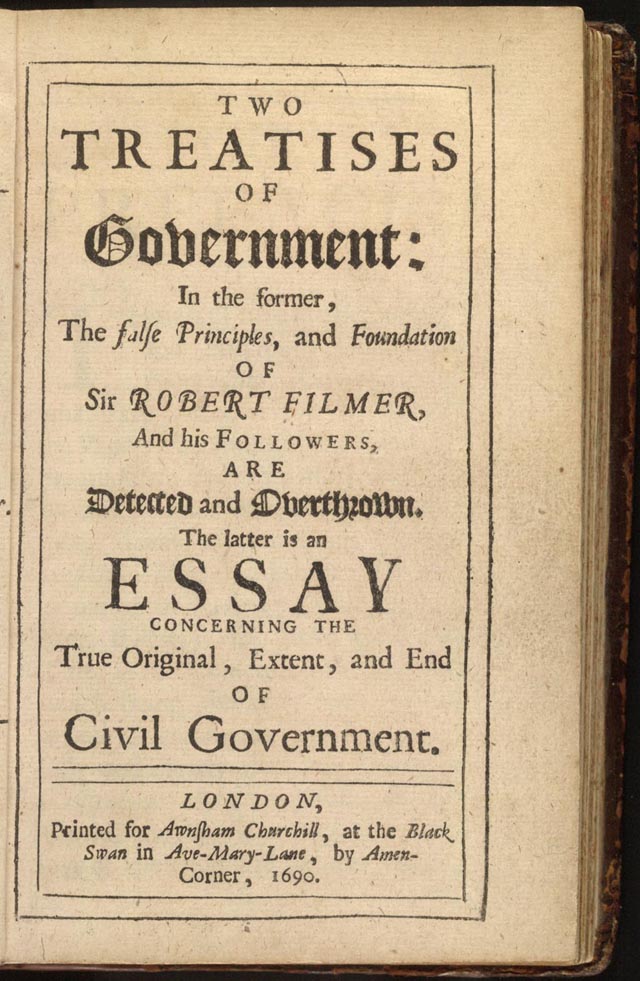
Locke also wrote a variety of important political, religious and educational works including the Two Treaties of Government, the Letters Concerning Toleration, The Reasonableness of Christianity and Some Thoughts Concerning Education.


Source

The Two Treaties of Government attack patriarchalism in the form of sentence-by-sentence refutation of Robert Filmer's Patriarcha and it also outlines a theory of civil society based on natural rights and contract theory.

Video

Check out Discovery Channels presentation of John Locke and His Philosophy

Like Ancient Digger? Why Not Follow Us?


Subscribe Via RSS Feed Follow Ancient Digger on Facebook Follow Ancient Digger on Twitter Subscribe to Ancient Digger Via Email

Get widget

Search


Ancient Digger Archaeology Copyright © 2015 LKart Theme is Designed by Lasantha