• Ancient Digger teaches Archaeology and History to all Ages!

Tuesday, November 15, 2011

Anthropology Study: Shoshoni Transformations


The Shoshoni can change their beliefs and rituals in line with newly received visions or dreams of supernatural power. We see this when individuals receive certain visions in a dream where they are in contact with puha or supernatural power of guardian Spirits. Whereas individuals, in the earlier forms of Shoshoni religion, would seek a vision and receive a guardian spirit, a long and arduous procedure, persons in recent times could use dreams as a means of obtaining supernatural power.

Shoshoni myths are not transformed into ritual behaviors, whereas beliefs are. “Mythology represents an older worldview and thus does not reflect everyday religious reality, with a few exceptions.” The Sundance ritual is based on legend, however it’s a creation of the Plain's religions and has nothing to do with myth. It was developed when the Shoshone were part of the Great Basin cultural area. Consequently, Shoshone take the same approach to animal ceremonialism, which hasn’t actually disappeared entirely, but has been conveniently compartmentalized and reinterpreted to suit the dominant religious pattern, the vision complex.

Shoshoni religion incorporates various historical influences while forming a distinctive worldview. The individual, using a whole worldview, experiences doctrines present in Shoshoni tradition in a completely different perspective depending on certain criterion. The worldview can change depending on environment, social constructs and new cultural practices. As Moore notes, “There is no codified theology," and yet the Shoshoni worldview presents a clear and consistent picture of religious reality. Accordingly, the Shoshoni continued their ancient traditions and rituals, like rites of passage, even after their transformation into mounted, well-disciplined warriors along the lines of Plains Indians.

It was a combination of preservation of rituals and observance, adherence to earlier customs, new worldviews, and overall contact with other tribes, which allowed the Shoshoni to suit or transform their rituals to different situations.

Picture © FirstPeople.us

Monday, April 12, 2010

Monday Ground Up: Cruger and DePeyster Sugar Mill in New Smyrna


In 1835, the Seminole Indians raided the Cruger and Depeyster Sugar Mill, running off the overseer in the process. They burned the entire complex and destroyed other plantations throughout the region with the assistance of the the sugar mill slaves themselves.

Wednesday, April 7, 2010

Who Were the Calusa People?


During the 1500's, the Europeans had already assimilated many tribes and peoples into their own regional culture. However, there was groups living along the Caloosahatchie River and the coast, south of Tampa Bay, that became known as the Calusa, or Caloosa.

Interestingly enough, if we travel to Marco Island, you can see a long chain of shell islands built up and connected by canals. This was the site of a typical Calusa village. When the site was originally discovered, intricately decorated wooden masks were found along the water and in the village.

Monday, December 21, 2009

Monday Groundup: The Impact of the West During the Age of Exploration


During the Age of Exploration, Europe's nations sailed all over the world looking for resources in distant new lands. Spain and Portugal were followed by the Dutch, who by the 17th century built their empire as other colonial powers declined. However, it was the English colonizers who made the greatest impact on the new world, as well as the Africans, and the American natives.

When the Europeans discovered the new world, they brought with them an outpouring of commercial activity and a world market. The Dutch monopolized world trade, although they were still in competition with England and France.

Joint stock companies allowed individuals to trade shares and receive dividends on their investments, while a board of directors ran the company. In order to raise capital for international ventures, the Dutch East India Company opened the spice islands and Southeast Asia to the Dutch.

The implementation of the Bank in Amsterdam created a transfer and deposit system and exchange allowed for trading of stocks instead of goods. This new commercial system was not without its costs. With the new imports of European crops to the New World and the need for heavy slave labor to work plantations, the results were incalculable.
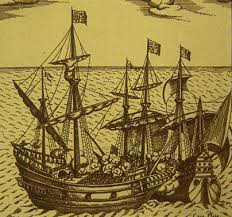
Africans and natives became susceptible to new diseases brought by the Europeans, causing an enormous loss of population and a savagery of sorts in the mist of the work force.


Source

Africans were shipped by boat to work sugar plantations, devastating coastal areas in Africa. The triangular trade connecting Europe, Africa, and the American continent was a major hub of slave trade. Plantations were setup in Brazil and the Caribbean for the growth of cane sugar which required heavy labor and skill.

The Africans were depopulated by the Europeans, depriving families of their children and their strongest workers. Since there was constant movement of slave trading, chiefs were able to attain weapons to partake in warfare against neighboring Europeans. Settlers would often succumb to brutal beatings, and this most often would lead to the slaughter of their entire families, even children.

Black African slaves were largely acceptable in western society, as many Europeans believed that these slaves were inferior beings fit for nothing more than manual labor.

Upon the arrival of Europeans, the native's civilization was virtually destroyed. The population in the New World was decimated by diseases imported from these explorers. Social and economic structures were dissolved and replaced by European institutions including religion, language, and culture.

Spanish and Portuguese settlers were known to partake in sexual activities with natives, but they did marry them as well. The mix of interracial relationships resulted in offspring known as mestizos.

The Age of Exploration changed the world, destroying ancient civilizations with the establishment of new colonies. Local societies and trade patterns were reconstructed to benefit increasing wealth between the New World and the Old World. The European vision was to transform the world in order to embody all aspects of European tradition, culture, and language. In turn, their efforts changed the face of the world.

Photo Credits: Age of Discovery

More Interesting Reading

Prior to age of exploration and discovery, Europeans had scant knowledge about the great globe on which they lived. China and Japan, which few European merchants traded, were like a far-off dreamed land. The Atlantic Ocean had no known boundary on the west, and Africa stretched on southward beyond all human knowledge.

Read more about "What Stimulated The European Explorations" By silverspoon

Like Ancient Digger? Why Not Follow Us?


Subscribe Via RSS Feed Follow Ancient Digger on Facebook Follow Ancient Digger on Twitter Subscribe to Ancient Digger Via Email

Get widget

Search


Ancient Digger Archaeology Copyright © 2015 LKart Theme is Designed by Lasantha