• Ancient Digger teaches Archaeology and History to all Ages!

Thursday, November 29, 2012

Medieval artefacts Discovered at Crannog


Pieces of a medieval board game and 1,000-year-old combs are among rare artefacts uncovered during an archaeological dig that is set to rewrite the history books.

Experts have hailed the finds in Co Fermanagh as internationally significant, claiming they shed new light on life in medieval Ireland and its connection with the wider world.

Iron, bronze and bone ornaments have been discovered at the crannog just outside Enniskillen, along with the chess-like pieces believed to have been part of the game. Parts of log boats, leather shoes, knives, decorated dress pins, wooden vessels and a bowl with a cross carved on its base were also unearthed during the six-month dig.

The style and design of the antler and bone combs suggest influences from northern Europe and indicate that the Fermanagh settlement had international links 1,000 years ago.

The Drumclay Crannog, which is an artificial island built in a lake, is the first of its type to be excavated in the north of Ireland since 1870. Archaeologists believe people may have lived there from 600 AD to 1600 AD, and it was probably the home of a noble family, with perhaps four or five houses inhabited at any time. Parents, grandparents, children and servants would all have stayed on the crannog.

The artefacts uncovered so far date back to 900 AD but there are still a number of layers of settlement yet to be excavated.

Stormont Environment Minister Alex Attwood visited the site on Thursday and announced plans for an open day this Saturday to allow the public to tour the crannog and talk to the archaeologists.

"On my two visits to date, I have found the site, the dig, and the archaeology beyond my imagination, enormously exciting and changing my view of our history and Irish life," he said.

"This is the first substantial scientific excavation of a crannog in Northern Ireland. What has been found has the potential not only to be internationally important but ultimately to lead to a reassessment of life in Ulster in early Christian and medieval times."

Source: Herald Ireland

Thursday, March 17, 2011

An Irish Blessing and Otherworld Story For St. Patrick's Day


One of my most precious pieces from my grandmother is an Irish Blessing encased in an old golden cloth-like frame, with the glass so old, the dust hast clung to it without repeal. I happened to peer at the words today and remembered a time when things were simple.  days were spent watching the horse races with my grandfather and the smells of pierogies and or clams and spaghetti filled the air.

On this special day, I'm wishing you all, with even a smidgen of Irish in you, a Happy St. Patrick's Day!

“May the road rise up to meet you, may the wind be ever at your back. May the sun shine warm upon your face and the rain fall softly on your fields. And until we meet again, May God hold you in the hollow of his hand.”

Here's a bit of Irish history, or rather a favorite tidbit of mine, which I published back in 2009, but I found it was quite appropriate for this special holiday.

The Irish Celtic Otherworld

Caesar believed that the Celtic Druid's of the Otherworld preached immortality of the soul, and it would allow them to be fierce warriors. However, many believe that their souls migrate to different vessels, allowing them to live for centuries.

This belief of reincarnation is quite different than Hinduistic rituals where reincarnation affected all those that were worthy. The druids believed that their souls, even when they were long gone, would be able to control their body in the otherworld.

The otherworld was believed to be a place where men and women lived in complete happiness in a land that was lush and plentiful. Not to be confused with the underworld which was filled with pale wanderers and gloomy landscapes.

During the 17th century, poets painted the otherworld as a "Land of the Living", where beautiful woman are plentiful and bright birds fly with ease through the river valleys. Once there, you will overcome all. However, when you leave, your hair will turn gray and your skin will shrivel.  

Interestingly enough, when you take note of the lyrics of Irish verse or musical expressions, it’s reaped in color and descriptions of green pastures and marvels of beauty.


Source

It was said to be a world within a world below the ground or under the sea, as was the land of Atlantis. A paradise where one never aged and all that resided were completely equal of value and importance, as was the fountain of youth.

Cave of Cruachan


Source

Rathcroghan


Source

There were passages to enter, or rather secret portholes only allowed by the insight of your mind. The Cave of Cruachan was a possible entrance referenced in the story of Nera’s Adventure.


Source

The otherworld is not free of aggression or war, for many Irish and welsh tales tell of the conquering of Kings or the kidnapping of precious treasures.

In the tale of the Adventure of Laegnaire, a man appears out of mist before the King of Connacht asking for assistance to claim his wife who he has lost in a battle. The son of the King sets out with 50 men to overcome his enemies and reclaim the mans wife. He returns the wife to the King, although he leaves immediately because his men have taken wives from Magh Da Cheo(The Plain of the Two Mists-name given to the otherworld by the Irish) and they wish to stay there to avoid the mortal world.

Newgrange


Source (Dwelling of the Divine Oenghus)

The otherworld has also been clearly referenced as an abode in the Irish countryside where it welcomes limitless guests to feast on whatever they desire. Food is often refurbished by reincarnation. This picture of obscurity is often compared to the “Land of the Dead”.

In the story of the “Destruction of the Hostel of Da Derga”, King Conaire is drawn to a house “bruidhen”, however on his way there he meets the three “Reds”. Their steeds are of the Donn Detscorach from the otherworld. This confirmed that Derga and Donn were one being, the “God of the Dead”, and he who enters his abode is either foredoomed or dead already.

The Feast of Samhain, which happened on the 1st of November was initially where this sombre image of death predominated.


Source

The duration of the Samhain celebration according to the Celts was filled with a peculiar supernatural energy and within that they have concentrated many of their mythical events. During this time, the universe is suspended and all things supernatural and natural have no barriers. There is a “Sidn” that remains open for spirits to move freely amongst the living, sometimes with hostility. Mortals are strongly urged not to venture within its precinct.

In the “Spoils of Annan”, it tells of a rather disastrous expedition by Arthur and his knights. The world becomes a fortress of glass where none of the occupants have a response, and in Celtic traditions this is surely the mark of the dead.

The otherworld has not been widely accepted by scholars with the inconsistencies in the history and the folklore. The belief that only kings and nobles were able to access a world of music and fables and ordinary men were far from it’s reaches being less fortunate in the afterlife, was always questionable.


Tuesday, March 8, 2011

Blarney Castle: The Legends and History


The Blarney Castle was constructed in 1446 by Cormac Laidhir MacCarthy, Lord of Muskerry. The tower, which measures 85 feet high, is above the river and curious dungeons and caves reside below. At the time of construction, the MacCarthy family was in power in Ireland. The third Earl of Clancarty and James II were exiled during the 17th century, ending the families hold on Blarney Castle.

Blarney House


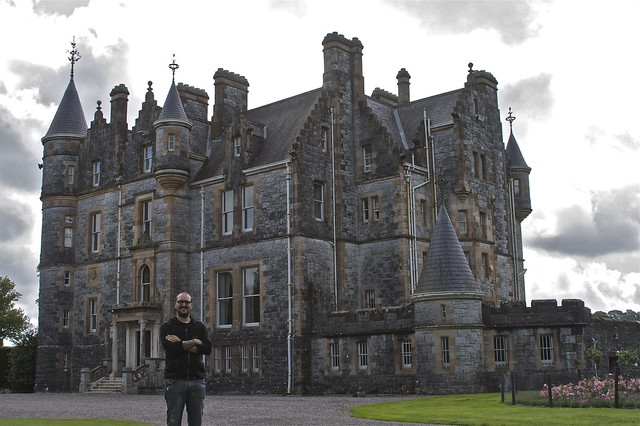
The Blarney House, situated 200 yards south of Blarney Castle, was constructed by the Colthurst family in 1874 in the Baronial style. Deterring from the cold and uncomfortable accommodations, the Colthurst family built the house to feel more at home. During the 19th century, wishing steps were created in the gardens. It’s been said in order for a wish to come true you had to negotiate your way down the steps with eyes closed in order for your dream to come true.

The Blarney Stone


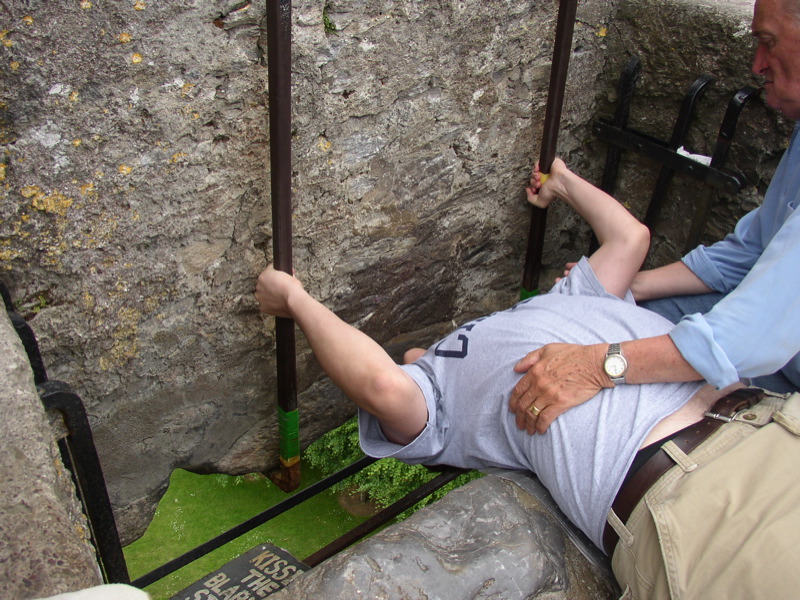
The Blarney Castle is most famous for the
Blarney Stone. One would hang upside down from the battlements after climbing 100 steps to the top, and if a kissed was placed upon the stone, the gift of eloquence was conferred upon them. In 1912, in fact, Winston Churchill kissed the stone, and what came next was history.

“Wishing Steps” At Blarney Castle


The legend of the Blarney Stone is unknown, but folklore tells of Jacob in the Bible, who rested his head upon the stone when he saw angels ascending and descending a ladder to heaven. Some believe the wishing steps in the garden are reminiscent of the ladder as well.


During the Celtic revival, the term Lia Fail was used to describe the illustrious stone by enthusiasts. When High kings were crowned at Tara during Pagan times, the stone would scream when the rightful successor touched it.

Another legend describes a time between Elizabeth I’s reign and Cormac MacCarthy when the queen looked to destroy the power of the Irish lords. MacCarthy was evidently playing deception so the queen remarked that his protestations were “more blarney”.

Today, thousands of patrons walk the grounds of Blarney House and the famous gardens, trying to catch a glimpse of anything out of the ordinary.

Beautifully maintained gardens of lawns, shrubs, flower beds and trees, which gently slope towards the lake, providing a perfect setting for special occasions. Herds of cattle browse peacefully beneath ancient lime, oak, beech and gnarled walnut trees. ~Blarney Castle

Like Ancient Digger? Why Not Follow Us?


Subscribe Via RSS Feed Follow Ancient Digger on Facebook Follow Ancient Digger on Twitter Subscribe to Ancient Digger Via Email

Get widget

Search


Ancient Digger Archaeology Copyright © 2015 LKart Theme is Designed by Lasantha