• Ancient Digger teaches Archaeology and History to all Ages!

Wednesday, July 16, 2014

Floodwaters engulf ancient town of Fenghuang


Floodwaters engulfing streets in the ancient
town of Fenghuang, central China's Hunan province. AFP Photo
Wednesday, tens of thousands of people were evacuated from the area when one of China's renowned ancient towns was engulfed in floods.

The old town district of Fenghuang nestles on the banks of a winding river in a picturesque, mountainous part of Hunan province, and boasts stunning Qing and Ming dynasty architecture dating back hundreds of years.

It can attract 30,000 visitors a day and has applied for world heritage status recognition from UNESCO, but pictures showed it inundated, with the central span of a bridge poking up through the waters.

Reports said electricity had been cut off and 50,000 tourists and locals had been evacuated from Fenghuang and the surrounding county.

"Torrential downpours have led to Fenghuang old town becoming a water town," said a posting on a discussion page on the topic set up on Sina Weibo, China's version of Twitter.

[Source: Hurriyet Daily]

Thursday, May 9, 2013

Sago palms were major plant food prior to rice cultivation in China


According to resent reports, starch granules, discovered on Neolithic tools in China, resemble those of sago palms, bananas, and tubers.
This image shows modern starch
grains from sago palms and ancient
phytolith and starch grains recovered from
 Neolithic tools.

Before rice cultivation became prevalent, ancient populations on the southern coast of China likely relied on sago palms as staple plant foods, according to research published May 8 in the open access journal PLOS ONE by Xiaoyan Yang and colleagues from the Chinese Academy of Sciences in Beijing, China.

Little is known about prehistoric diets of those who lived in southern subtropical China, as the acidic soils and humid climate of the region cause poor preservation of plant remains.

Though literature and archaeological discoveries have suggested that roots and tubers were the staple foods in this region, no direct evidence has so far been found. In this study, researchers analyzed starch granules recovered from Neolithic stone tools used approximately 3,350-2,470 BC, and found these to resemble starches typically found in sago-type palms.

They found that people at this time also likely relied on bananas, acorns and freshwater roots and tubers as important plant foods prior to the cultivation of rice.

Sunday, December 2, 2012

Ancient Palace Uncovered inside Qin Shi Huang's Resting Place


 (AFP Photo / Eric Feferberg)

The remains of a monumental imperial palace have been unearthed at the mausoleum of China's fist emperor, inside his tomb.

It's believed to be the largest complex ever found at Qin Shi Huang's resting place.
An associate researcher at the Shaanxi provincial institute of archaeology, Sun Weigang, told the Xinhua news agency that the courtyard-style palace was estimated to be 690 meters long and 250 meters wide, covering an area of 170,000 cubic meters.

According to the researcher, the palace could shed light on the architectural styles of the Qin Dynasty, highlighting Emperor Qin Shi Huang's wish to continue to live in splendor and luxury even during his afterlife.

The 56-square-km Mausoleum of Qin Shi Huang is the world's largest underground mausoleum, famous for its terracotta warriors discovered in the funerary pits in 1974.

Earlier this year, archaeologists uncovered over a hundred new warriors, along with a dozen of pottery horses, weapons and tools.

Source: RT

Sunday, September 30, 2012

Archaeologists find 2,000 year-old beef portion in ancient tomb in northwest China


Scientists arrived at the conclusion after months of analysis confirmed the substance's makeup, according to Hu Songmei, a paleontologist from the provincial archaeological institute.

Xinhua news agency reports that according to Hu, the beef -- most of which had been carbonised -- is the earliest beef product discovered in China.

The beef was discovered two years ago in a bronze pot placed in a tomb believed to date back to the Warring States Period (475 B.C. - 221 B.C.), said Hu.

The tomb was discovered during a excavation conducted by the institute from 2009 to 2010 in Wanli village in the provincial capital of Xi'an.

"The beef did not shrink, which proves that it had been dried before being put into the pot," said Hu. Bernama

Source: New Straits Times

Friday, July 6, 2012

Earliest Wine in China Discovered in Tomb


Liquid inside an ancient wine vessel unearthed in Shaanxi province is considered to be the earliest wine in China's history, archaeologists told Xinhua Thursday.

The wine vessel made of bronze was unearthed in a noble's tomb of the West Zhou Dynasty (1046-771 BC) in Shigushan Mountain in Baoji city. The liquid is likely the oldest wine discovered in China, said Liu Jun, director of Baoji Archaeology Institute, who is in charge of the project.

The vessel, one of the six discovered in the tomb, could be heard to contain a liquid when it was shaken, Liu said. However, the cover of the vessel was pretty solid and there was no appropriate tools to open it at the excavation site, so the liquid remains a mystery, he said.

During the Shang Dynasty (1600-1046 BC), the dynasty before the Zhou Dynasty, wine became a symbol of corruption as Shang officials used to drink excessively, he said.
The people of Zhou made "prohibition devices" to put on the table to remind people to drink in moderation, he said.

A 95-centimeter-long and 21-centimeter-tall "prohibition device" was unearthed with the wine vessels on June 25 in the same tomb, which is the first of this kind unearthed in Baoji, he said.
Many other bronze devices with inscriptions were unearthed on Thursday.
The excavation work is still underway at the site and more bronze devices are expected to be discovered in the next couple of days.

Source: China Daily

20,000 Year Old Pottery Found in China


One of the pottery fragments found
in Xianrendong Cave (X. Wu et al / Science / AAAS)
Archaeologists have assumed that Xianrendong pottery was produced by mobile foragers who hunted and gathered during the Late Glacial Maximum.

“This new discovery suggests that hunter-gatherers in East Asia used pottery for cooking at least 10,000 years before farming appeared in that part of the world,” said Dr Xiaohong Wu, an archaeologist at Peking University in Beijing, China, and lead author of a paper reporting the discovery in the journal Science.

“East Asian hunter-gatherers may have set up seasonal camps 20,000 years ago, where they made pottery,” added Dr Zhijun Zhao, an archaeologist at the Chinese Academy of Social Sciences in Beijing. “Xianrendong pottery probably had many purposes, including boiling clams and snails.”

The archaeologists also collected about 45 samples of bone and charcoal from soil layers at Xianrendong Cave. Radiocarbon measurements point to initial human use of the cave from about 29,000 to 17,500 years ago.

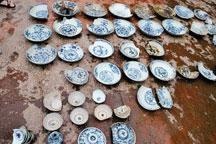
Pottery fragments from Xianrendong cave are 2,000 to 3,000 years older than pottery from another Chinese cave, which had previously held the age record.

“Such research efforts are fundamental for a better understanding of socio-economic change (25,000 to 19,000 years ago) and the development that led to the emergency of sedentary agricultural societies,” said Dr Gideon Shelach of the Hebrew University in Israel, author of an accompanying paper in the journal Science.

“The disconnection between pottery and agriculture as shown in east Asia might shed light on specifics of human development in the region.”

Source: John Shanks (Sci News)

Friday, May 6, 2011

Authorities Take Steps to Protect Underwater Heritage in China


May 6, 2011--China's cultural authorities are tightening safety supervision over the nation's vast number of marine heritage sites, but experts warn that a lack of professional staff and public awareness may slow down efforts to save underwater treasures.

The State Administration of Cultural Heritage (SACH) has announced a pilot program to monitor marine heritage sites in China's coastal provinces, and intend to recruit local authorities to provide long-term protection, China National Radio reported Tuesday.

Non-stop radar scanning and ocean monitoring will be implemented by local marine police to prevent suspicious vessels from entering protected waters, the report said, without giving details of the locations of protected sites.

According to preliminary surveys, China has more than 200 marine heritage sites, some 70 of which are shipwrecks of great archaeological value. 

Pu Gong, a Guangzhou-based researcher, admitted that the move has been prompted by the seriousness of illegal salvage. The pillaging of underwater sites has become so common that sometimes archaeologists discover a site long after robbers have already ransacked it, according to the report. 

Read More:  Authorities Take Steps to Protect Underwater Heritage in China

Thursday, March 24, 2011

South American Vs Old World Complex Societies: Similarities and Differences


MesopotamiaThe civilizations of the Old World were in fact derivatives of the first ancient cultures, even dominating their ancient counterparts in Egypt, Mesopotamia, and China. They did so by utilizing new forms of agriculture and technology, improving upon the methods previously noted. The South American societies paralleled the Old World ancient societies in that they exhibited advanced architecture, powerful armies, social hierarchies, and intensive farming systems.

Agriculture

The Egyptology Handbook: A Course in the Wonders of Egypt (Ologies)In Mesopotamia, China, and Egypt, the citizens were “inextricably tied to the irrigation system fed by the great river through canal systems, controlled by the government” (Wenke and Olszewski 2007). This was not the case in South America, as citizens of the civilization worked as a collective, to provide the community with ample resources.

Relatively simple agricultural villages in South America grew mostly maize, beans, squash, and peppers and the abundance of the Pacific Ocean didn’t require the reliance on one staple crop. Overall the impact on the land was relatively low as opposed to their Old World counterparts, who utilized hoofed animals for intensive agriculture. Domesticates in Peru, or rather the role of these animals (llamas and guinea pigs) is unclear.

Sites like Tucume thrived, raising crops and animals and formulating a complete infrastructure including waterways and manmade watercourses, like the advanced systems we observed in Mesopotamia. The advancement of irrigation in this society located in Peru is fascinating. Why? The extreme environment and dry arid lands required physical and cultural adaptations.

South Americans “partially solved” a long standing Old World agricultural problem regarding tubers, developing a method of freeze drying potatoes for storage. In Old World Africa, the use of tubers was limited, as they were never brought under cultivation. Furthermore, tubers were also under cultivation in ancient China, India, the Near East and the Mediterranean Basin.

In sum: Old World societies relied on one staple crop, whereas South American complex societies saw crops as a supplement, utilizing maize, beans, potatoes, quinoa, fish from the nearby Pacific, and squash, to sustain the populations.

Class and Social Hierarchy 

Culturally, Old World societies were a bit different than South America. There was social inequality as sited by the hierarchical organization of class systems. State religions provided, as Wenke and Olszewski (2007) noted, the “context of life”. We saw temples in Mesopotamia which clearly indicated some sort of social hierarchy. The Shang society was headed by a king, who ruled through hierarchically arranged nobility (p 446). Consequently, the Erhlit’ou culture, as evidenced archaeologically, consisted of large abodes, middle sized lodging, and small villages, suggesting an administrative hierarchy.

There was relatively little evidence to suggest social inequality or hierarchy in Peru, aspeople seem to have participated in collective labor without developing strong differences in access to resources. Michael Moseley suggested that these Peruvian societies living in villages along the water exhibited “simple social stratification” on the basis of fishing.

In the case of Chan Chan, however, there was clear evidence of a class system much like the districts are separated today. Social classes were sectioned off in nine "citadels" where they lived, worked, and carried on with their daily lives. Evidence at Chan Chan’s reflects a strict political and social strategy, marked by the city's division. The Inka were organized into a stratified class society under a monarch.

In sum: The beginnings of South American complex societies may have not exhibited social inequality, however as advanced architecture was created, farming techniques grew more dependent on labor and class divisions became apparent. This movement towards a more hierarchical class based system was seen in the Old World as well. As technology and agriculture became more advanced so did the need for a political entities and polities to control the new system.

Trade

Old World trade typically happened in the lowlands by the river valleys. This was seen in Mesopotamia, Indus Valley, and Huanghe. If we consider Peru, however, there were populations living in both the highlands and lowlands. Two separate environmental zones were utilizing trade, and not always via waterways. In fact, there is no evidence of boats being used along the Andean coast, so we can assume in fact that seafaring trade was absent.

Technology

Unlike the Old World, the Inka were the only Pre-Columbian civilization to lack or develop a written language. Furthermore, the Inkas and the New World civilizations developed or utilized the inventions of the Old World including wheeled vehicles, making farming and trade much for efficient and thus allowing the Old World civilizations to have overwhelming power.

The Egyptians, although many are unaware, were excellent seafarers, building boats for exchange with other societies via waterways. On the other hand, no boats have ever been found at any sites along the Andean coast, therefore we can assume trade was occurring between highland and lowland societies on foot.

Economics

In Old World Egypt, the resources were similar along the Nile Valley and Delta, however in Andean South America, different natural resources, ocean and farm, gave way to an economic advantage when both resources were utilized.

Final Thought

Although the civilizations of the Old World and South America were quite varied, there was a fundamental similarity between the two. The evolution of the “social institution” gave way to exploitation of peoples, even using the excuse that it was the civic or religious duty of the citizens to conform to this new structure.

Resources
  • Wenke and Olszewski: Patterns of Prehistory 2007

Friday, March 18, 2011

Social Complexity of the Ancients: A Brief Overview


The Collapse of Complex Societies (New Studies in Archaeology)The concept of isolation is among one of the most significant ideas for social complexity, in that all complex societies were never “truly isolated from each other” . If this was the case, all complex societies would or could have, adopted a similar social organization, with the exception of the people living in Shandong Province as the Dawenkou culture, mentioned as having a limited or different access to resources, therefore aiding to a slight variation in organization.

What some of these societies do have in common, evidently, is there location, approximate in distance to rivers or water resources. However, Huanghe River’s annual flooding aided in rice production, yet the peoples didn’t depend on this resource, since grain millet (tolerant of dry climates) was grown in the same area as well. In actuality, reliance of some kind on agricultural subsistence, whether millet, pigs, rice, corn, wheat, wild plants and animals, chickens, and so on, were all present.

Social Hierarchy

As evidenced in Mesopotamia, the temples which held the gods, and ziggurats, which on many occasions, state officials called home, were clearly depictive of a social hierarchy.

Erhlit’ou
 
The same can be said for the Erhlit’ou culture, as archaeological evidence consisting of large abodes, middle sized lodging, and small villages, suggesting an administrative hierarchy. Albeit, there’s no written record to suggest this was the actual organization of the site.

Angang

 The Roads of Chinese Childhood: Learning and Identification in Angang (Cambridge Studies in Social and Cultural Anthropology)

Angang exhibited another settlement pattern; however, extensive looting has destroyed much of the evidence. What is evident is that there was a central palace, and several specialty workshops for prized items such as jade, bone, and bronze. If there were craftsmen who made these items then there had to be a central area for them to be accommodated. Although, the manufacture of these particular items was watched closely, so it is possible the individuals who made them resided within the walls of the palace.

Crete

Crete Greece 

The settlement patterns in Crete were a bit more perplexing considering the peoples were living in small villages without clear evidence for political authority extending beyond the village scale.

At the Palace at Knossos, there’s a series of rooms holding storage jars and documents, as well as a room for rituals by gods and goddesses. A throne room is present at Knossos, however there’s no clear evidence of the type of political unit once present. Furthermore, even the villas situated on the outskirts of Knossos have been rumored to be part of agricultural units, but this still does not indicate a single ruler of the area. The Goddess figurine from Knossos is depicted in artwork elsewhere in Crete and at Knossos and probably represents an important early divinity, similar to the Sumerian relation of king and gods.

Uruk


Historians believe priests and priestesses of several early city-states played an essential role in ruling in Uruk. Sumerians believed kings derived their power from the gods, and in so doing, were agents of the gods. Therefore, ruling power was primarily in the hands of kings.

Shang


Wenke and Olszewski (2007) mentioned that archaeological evident and written documents after the Shang period indicate that Shang society was headed by a king, who ruled through hierarchically arranged nobility (p 446). This is further explained by the relationship between the king and Di (god), mirrored by relationships between the king and his living servants and vassals: as the king served Di, so living people served the king.

Burials

The Chinese shared the custom of burials with Mesopotamia, as seen at the Royal Tombs of Ur. Not only were chariots and rice buried with the dead, but ruler’s wives, servants, guards, and other staffs were present as well, to aid him in the afterlife. Oddly, this custom wasn’t widely adhered to in Egypt, as we tend to see more material items: pottery, gold, necklaces, clothing, etc., in the tombs of Pharaohs.

Burials in eastern Crete contained valuable times like gold diadems and other forms of personal adornment. Consequently, the M10 Tomb at Dawenkou exhibited vessels and pig bones from feasting during funerary activities, although the scraps from swine don’t seem like an offering, rather an individual’s attempt to climb the social ladder while erasing someone’s past. Throwing out the garbage per se. Of course, this is not what it seems.

Final Thought

China's political authority consisted of small polities which didn’t span the vast areas like its counterparts in Mesopotamia. Like Egypt, there was evident inequality and large river valleys for trading and irrigation. However, in the case of both Egypt and China, eventually “a geographically large political unit was created. Consequently, social organization in Minoan Crete is poorly understood and within reason. There’s insufficient evidence. Like China, Egypt, and Mesopotamia, there was social inequality and some type of political authority. There were no city-states in Minoan Crete, but rather small polities like China. Authority was rumored to be in the hands of elite families and divinities, rather than one single ruler.

Sources

Bronze Artifact (Bronze two-sided mask, Late Shang Period (c. 1200-1050 B.C.)
Jiangxi Provincial Museum, Nanchang)

Sunday, June 27, 2010

The Royal Ontario Museum Hosts the Terracotta Army


TORONTO.- The Royal Ontario Museum (ROM) hosts the Canadian premiere of The Warrior Emperor and China’s Terracotta Army from June 26, 2010. Prior to its embarking on a Canadian national tour, the exhibition will be displayed in the Garfield Weston Exhibition Hall on Level B2 of the ROM’s Michael Lee-Chin Crystal until January 2, 2011.

The Warrior Emperor and China’s Terracotta Army showcases one of the most significant archaeological finds in history: the 1974 discovery, in Shaanxi province in north-central China, of thousands of life-sized terracotta sculptures of Chinese warriors.

Thursday, April 1, 2010

Secrets of the Silk Road Exhibition


Secrets of the Silk Road from Penn Museum on Vimeo.

In February 2011, the Secrets of the Silk Road exhibition will be coming to the Penn Museum of Archaeology and Anthropology.

The exhibition will include several ancient and well preserved  mummies, all excavated in the vast Tarim Basin desert of East Central Asia—a crossroads of the Silk Road. "Included in the exhibition are three exquisitely diverse mummies—a man, a woman popularly known as the “Beauty of Xiaohe,” and a child, dating back to 1800 BCE to 400 CE." Several artifacts found with these particular mummies will be on display as well.

In  addition, there will be 150 artifacts on display including  jewel-encrusted vessels, masks, jewelry, clothing, highly valued silk and other textiles, wooden and bone implements, and coins testify to the remarkable international trade that passed through the region.

The materials come from the Xinjiang Uyghur Autonomous Region Museum and the Xinjiang Institute of Archaeology in Urumqi in northwest China.

Tickets
Individual tickets go on sale beginning Fall 2010.
Timed ticket prices (includes admission to Museum):
Adult: $22.50
Senior (65+)/Military/Students (full-time with ID): $18.50
Children (6 to 17 years): $14.50

Like Ancient Digger? Why Not Follow Us?


Subscribe Via RSS Feed Follow Ancient Digger on Facebook Follow Ancient Digger on Twitter Subscribe to Ancient Digger Via Email

Get widget

Search


Ancient Digger Archaeology Copyright © 2015 LKart Theme is Designed by Lasantha