Wednesday, September 30, 2009
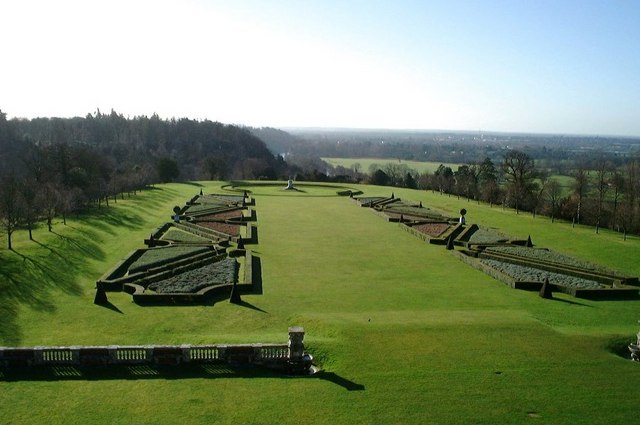
Wordless Wednesday:Valle Crucis Abbey in Wales
Monday, September 28, 2009
Monday Ground Up: The Legacy of Alexander the Great
Alexander envisioned an extensive monarchy fusing Greeks, Macedonians, and the Persians into one ruling class. Of course, with the destruction of the Persian monarchy he was able to spread Greco-Macedonian rule over a larger area. This in itself created more opportunities for engineers, merchants, soldiers, and intellectuals. Although, it does seem that he had the idea to unify his newly won domain, he did so with the spreading of cultural ideals and language.
Alexanders adoptions of eastern cultures and his interest in spreading those ideals allowed his empire to become more diverse in literature, art, and architecture. Therefore the city-centers he had established were springboards for the diffusion of Greek culture.
His vision to form an extensive empire stressed the use of eastern cultures, tied into Grecian art and values, and was executed within the city states formed during his rule.
On his path to culturalization, he made the choice to push east, as far as India. On his way, he established his first series of cities in Alexander in Egypt and he used it as a Greek administrative capital which remains today, one of the most important cities in the Mediterranean world. Alexander added Persian treasures in Susa and Persipolis taking possession of gold and silver after the bloody battle in Gaugamela.
In 330 BC he marched into Pakistan and into the north western area of India where the Battle of Hydaspes River was brutally fought and won. After reaching India, his troops marched tirelessly through the jungles and he meets up with King Taxilus with whom he creates an alliance to defeat Porus.
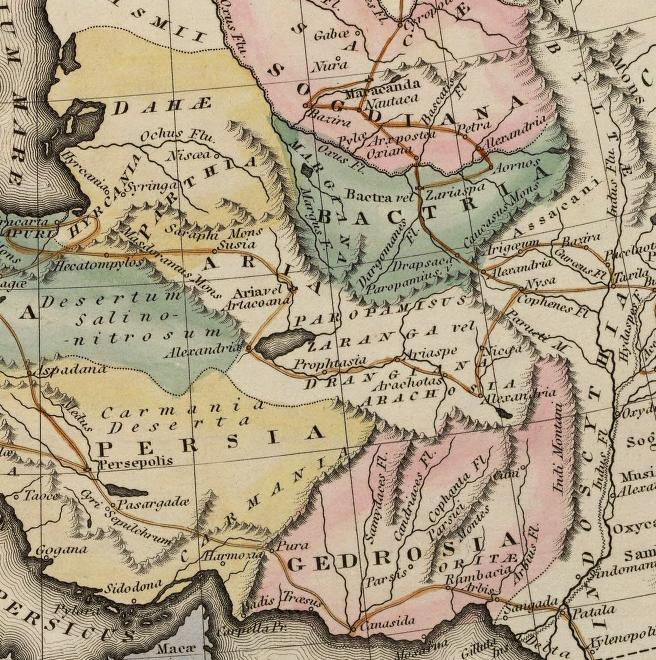
When Alexander finally meets with Porus, he is faced with 200 elephants. There are hundreds of causalities and his troops are mutinied. He has finally decided to return to Babylon.
On the way back to Babylon, he convinces his army to go through the Gedrosian Desert because no one has before. He loses three quarters of his army and they are forced to kill the horses in order to drink their blood to quench their dying thirst. Alexander died shortly after returning to Babylon.
It wasn't until after the death of Alexander the Great that impact was felt on Western Civilization. His empire fell immediately considering it was too diverse and massive for the Macedonian monarchy to control. It was sectioned off piece by piece and given to his generals.
Greek city states that Alexander had founded were embedded with Greek cultures of the region. Therefore, the Eastern cultures influenced the Greeks, with the advent of mystery religions. The spreading of cultural ideals, arts, language, philosophy, and science is truly the legacy that Alexander left.
Art and Culture

Silver coin of Alexander, British Museum
A painting by Charles Le Brun depicting Alexander and Porus (Puru) during the Battle of the Hydaspes
The Alexander Sarcophagus is one of four massive carved sarcophagi, forming two pairs, that were discovered in the necropolis near Sidon, Lebanon in 1887.
Originally thought to have been the sarcophagus of Abdalonymus (died 311 BC), the king of Sidon appointed by Alexander immediately following the Battle of Issus.
More Resources and Links
At the time that Alexander the Great inherited the Macedonian throne democracy with varying degrees of popular participation and influence was practised or at least claimed to be operated in many Greek city-states. As will be examined Alexander the Great’s rule had an impact on the practice of democracy due to the various reasons and factors discussed. Read more about What Was the Impact of Alexander the Great’s Rule on the Practice of Democracy?
- McColl, L. Alexander's Macedonian Army, Clio History Journal, 2007.
- A Bibliography of Alexander the Great by Waldemar Heckel
- Alexander The Great in the French museum Le Louvre
- Alexander, The Great Mystery by T. Peter Limber in "Saudi Aramco Magazine"
- Trace Alexander's conquests on an animated map
- Alexander the Great of Macedon, a project by John J. Popovic
- Alexander in the Punjab. A Photo Essay, photos of all sites Alexander visited
- Alexander the Great Coins, a site depicting Alexander's coins and later coins featuring Alexander's image
Saturday, September 26, 2009
Land Rights and Cultural Differences in Pacific Northwest History

The Russians, Germans, French-Canadians, Scottish, British, Indians and Owyhee all had significant influence of natural resources that became commodities and the commercialization of those resources. Each of these groups of people had an interest in fur-trappings as their main commodity, but according to Jackson & Kimerling , “Most of these northern Europeans groups were farming folk in search of good land, though the Germans were a diverse lot who found a variety of niches to fill”. Read more about Land Rights at Socyberty
Compliments of my dear friend Chris Stonecipher
Friday, September 25, 2009
The Ancient Digger Birthday

glitter-graphics.com
Thursday, September 24, 2009
MSU Excavation Uncovers 16,000 Year old Sand Dunes
Wednesday, September 23, 2009
Why do you Want to be an Archaeologist?
The past few weeks, I have been spending some time investigating the field of Archaeology, meaning the opportunities after I go through 6 years of schooling.I have visited several forums including Archaeology fieldwork and Historum and I have listened to what other students of Archaeology have to say about the field after they graduate.
The consensus seems to be if you really
love the field of Archaeology and Anthropology, and money is really not an issue, than you're making the right choice. In addition, it seems that the more field experience you have and the more years of teaching in a classroom you have under your belt, you're much more likely to secure a well paying position.In my opinion, your life should be spent doing something you really love, and I think that's why I chose this field. Of course, I had visions of Indiana Jones and me in one of those stylish hats with a whip fashioned at my side. That's besides the point. lol
So what have I learned over the past few weeks?
- Find some field work, no matter what it is. Experience is the key here, and if you're not sure about the sub-field you want to study, signing up for different field opportunities will help you decide.
- Stay abrupt to the latest news. Everyday, I visit sites all around the web looking for news about discoveries. So where do you look?
National Geographic
Biblical Archaeology
Archaeological Institute of America
Herald Series UK
Scientificblogging
- Research the best archaeological programs around the country. Don't just settle for a school nearby because money may be an issue. There are so many grants, scholarships, and funds available for everyone that wants to go to school. Make the right choice for you and pick a school that specializes in a field of study that you are interested in. There are no excuses. Put your time in and you'll find the right fit.
- Be willing to travel. This is another issue that I have been seeing with archaeologists that complain that there is no work. Understandably, people do have kids, but this is a field that requires you to travel and take chances. You have to make arrangements and you have to make a conscience decision about whether you can be successful while maintaining a family. There are exceptions and I'm sure many of you have had personal experiences with this; however in my case I have chosen to not have children.
What is it about Archaeology that speaks to you? And what sacrifices have you made to be an Archaeologist?
Wordless Wednesday: The Ribblehead Viaduct in North Yorkshire Northern England.
Monday, September 21, 2009
Monday Ground Up: Sanxingdui Culture
This previously unknown Bronze Age culture was discovered in 1987 by archaeologists. The artifacts found were dated to the 12th and 11th century, although there are absolutely no records of the culture at all.
Sanxingdui is located near Guanghan in Chinese city in Deyang, the province of Sichuan. In 1929, some farmers unearthed some Jade relics that unfortunately fell into the hands of private collectors, so no information was really know about that culture at that time.
Archaeologists searched for years, and up until 1986, they had only found some broken artifacts in a sacrificial pit containing thousands of gold, bronze, jade, and pottery artifacts that had been broken (perhaps ritually disfigured), burned, and carefully buried.
Sanxingdui bronze heads with gold foil masks

The Sanxingdui Culture was highly advanced, using a type of bronze casting to construct the pieces found. Interestingly enough, and this is where the Exorcist comes in, the heads found had angular human features, protruding oblique eyes, and very large ears. Although my visions were from a movie, I do believe that there was a fight between good and evil and the depiction made in the movie was both alarming and had some truth.
Sanxingdui bronze head with characteristic large ears, protruding pupils and elaborate forehead ornament

Based upon the design of these heads, archeologists believe they were mounted on wooden supports or totems, perhaps dressed in clothing. Liu (2000:37) compares these masks with the shi 尸 "corpse; personator" ceremonial representative of a dead relative, and suggests, "It is likely the masks were used to impersonate and identify with certain supernatural beings in order to effect some communal good".So why was this culture never recorded during history and why was it covered up? The sacrificial pits were only hiding broken pottery, however they were burned. This in itself leads me to believe there was some type of cover-up that masked the truth of this secret culture.Sanxingdui bronze eagle head
More Interesting Articles
BradONeill says "A long time ago in a small village on the outskirts of a great city lay a small Shaolin Temple. The Single drop of Dew temple in the village of Wanu. Wanu was a proud village devoted to defense of the large city and the Emperor. All male children from the village and several from surrounding villages were tasked with defending the great city."Read more about the Chrysanthemum in the Forest- Illustrious and Historical Legends, Tales, and Myths of The World
- More About the Finds at Sanxingdui, National Gallery of Art
- Treasures from a Lost Civilization: Ancient Chinese Art from Sichuan, Seattle Art Museum
Sunday, September 20, 2009
Raptorex: T-Rex Ancestor Weighed As Much As A Man

A 9-foot dinosaur excavated illegally from northeastern China and purchased by a private collector who brought it to the attention of paleontologists (hey, they'll return it after they're done) is about the same weight as a grown human yet had still evolved all the hallmark anatomical features of Tyrannosaurus rex - except 30 million years earlier, according to a study in Science. Read more about the T-Rex at Scientific Blogging
Thursday, September 17, 2009
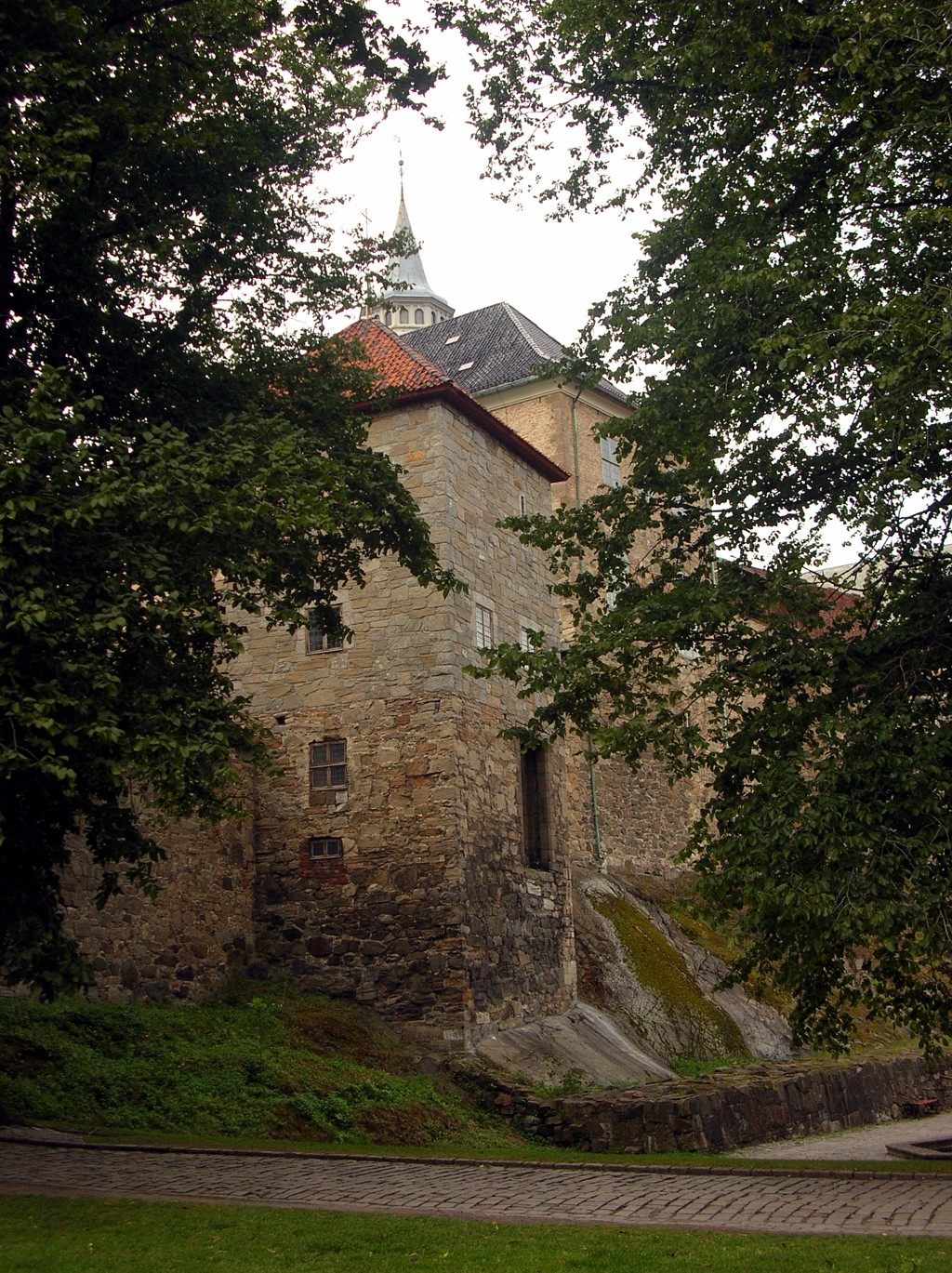
Akershus Castle in Oslo, Norway

The German surrender of Akershus Fortress on 11 May 1945.

Several individuals were executed at Akershus, including Norwegion traders after the war. Among those executed was Vidkun Quisling, who's charges involved his revocation of the mobilization order, his encouragement of Norwegians to serve in the Norwegian SS division, his assistance in the deportation of Jews, and his responsibility for the execution of Norwegian patriots and a number of other charges.Akershus was also used a prison up until the 19th century, housing infamous prisoners such as the "thief of the people" and author Gjest Baardsen.
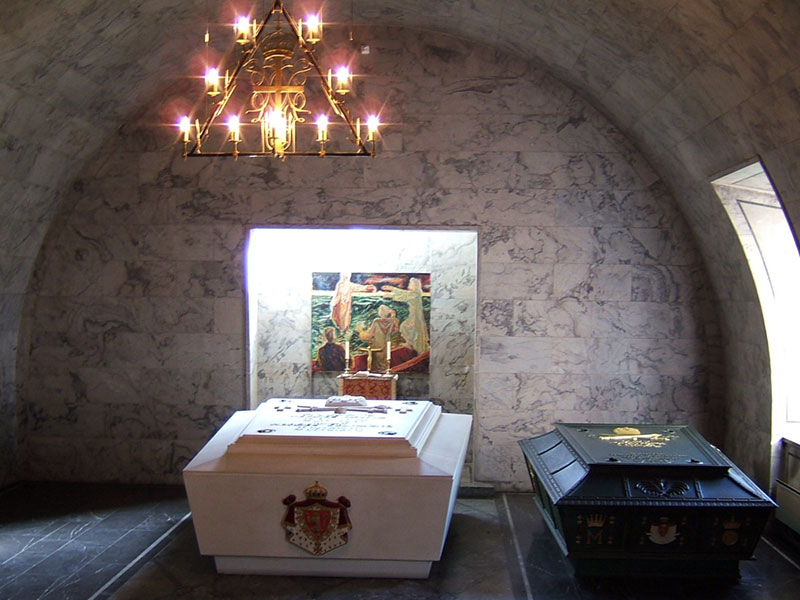
Today, the castle is open daily for visitors until 9pm, however the premises is still being used as a military base. On your tour, you will be able to see Norwegian Royalty which have been buried in the Royal Mausoleum in the castle. They include, King Sigurd I, King Haakon V, Queen Eufemia, King Haakon VII, Queen Maud, King Olav V and Crown Princess Märtha.
Wednesday, September 16, 2009
Tuesday, September 15, 2009
The Smokeless Site of Chimney Rock
Chimney Rock, viewed from the east (Darton, 1897
Chimney Rock was first seen in 1813 by the Astorians of Robert Stuart. However, it wasn't documented until 1827 by Joshua Pilcher, who had journeyed up the Platte River valley to the Salt Lake rendezvous of the Rocky Mountain fur trappers.
The Chimney name came from the Brule clay column that stands 4,226 feet above sea level. The rock is also composed of volcanic ash and sandstone, which has significantly weathered away over the past couple of centuries.
Chimney Rock has been designated a National Historic Site and is today administrated as an "affiliated area" by the National Park Service in cooperation with the Nebraska State Historical Society. Chimney Rock and Independence Rock further west are probably the most famous features along the Oregon Trail.
Monday, September 14, 2009
Monday Ground Up: The Iolani Palace
Governor Mataio Kekuanaoa of Oʻahu built the original structure for his daughter Princess Victoria Kamamalu when he moved his capital from Lahaina to Honolulu in 1845. However, when it was purchased by Kamehameha III, it was renovated into a traditional aliʻi residence, in that the palace itself had no sleeping rooms. Kamehameha preferred to sleep in the grass huts he had built all around the palace grounds. The building was named Hale Aliʻi meaning (House of the Chiefs).
It wasn't until the reign of Kamehameha V that the name of the building was changed to "ʻIolani Palace," after his brother Alexander Liholiho Keawenui ʻIolani (meaning "royal hawk").
The Palace was the official residence of the monarch during the reigns of Kamehameha IV, Kamehameha V, Lunalilo, and the first part of Kalākaua's reign. The palace was simplistic in form and met it's purpose at the time, however it was still the most elaborate structure in the region.
The palace that exists today is the second to sit on the palace grounds. The Iolani Palace in Honolulu, Hawaii was acquired in by King David KalaKaua and Queen Liliuokalani supposedly around 1879. The palace was in horrible condition due to it's turn of hands and lack of upkeep, so King David decided to raise the palace once again.
By 1882, the palace was completely restored, costing only $360,000. Even before the White House in Washington, the Lolani Palace had flushable toilets and telephones, and even electrical wiring.
Iolani Palace also features architecture seen nowhere else in the world. This unique style is known as American Florentine, which simply means it reflects the history of the islands from antiquity through the kingdom era, from its territorial years to statehood and beyondThe architecture is truly ornate in orientation with Corinthian columns, ironwork, floral carpets, and crystal chandeliers in the throne room. The Grand Hall staircase was constructed out Kamani and Koa woods and leads to the second floor.
Visitors to the newly renovated palace can take tours of the kings bedroom, the dining room, the blue meeting room, and the queens quarters(where Queen Kiliuokalani was imprisoned by the Native Hawaiians in 1895 after the second of the Wilcox rebellions).
In the basement is where the most spectacular of sites can be seen including the Hawaiian crown jewels, orders and decorations given by the monarchs, and magnificent regalia worn by the high chiefs of the islands.
The Palace was the seat of government until 1969 when a new state capital was built.
On April 30, 2008, ʻIolani Palace was overtaken by a group of native Hawaiians who called themselves the Hawaiian Kingdom Government to protest what they view as illegitimate rule by the United States. Mahealani Kahau, "head of state" of the group, said they do not recognize Hawaiʻi as a U.S. state, but would keep the occupation of the palace peaceful. "The Hawaiian Kingdom Government is here and it doesn't plan to leave. This is a continuity of the Hawaiian Kingdom of 1892 to today," Kahau said.
The Gates at Iolani Palace
The Royal Arms

The Grand Staircase

The Dining Hall

The Throne Room

Sources
Photo Credits Iolani PalaceInterior shots of Palace
Saturday, September 12, 2009
Ca D’ Zan: Another Ringling Legacy

Ken Bultman says "Established in 1927, the John and Mabel Ringling Museum of Art contains more than 10,000 objects including one of the largest collections of Peter Paul Rubens paintings in the world. In 2007, a $76 million dollar expansion and renovation program was completed making the museum the 16th largest in the U.S. The complex includes the Ringling Brothers Circus Museum and the famous Ca d’ Zan, one facade of which is pictured above." Read more about the Mabel Ringling Musuem
Ruins of Fort Bowie
For years, the Apache Indians tolerated Americans, Mexicans, and Spaniards who traveled through the Apache Pass in order to quench their thirst at Apache springs.
However, when their was an influx of settlers during the 19th century and the acquisition of land and property was of the utmost importance, this disrupted the region and the way of life for the Native Americans.
Around 1858, Cochise, a chief of the Chokonen band of the Chiricahua Apache, allowed the construction of a mail post near the Apache spring, which carried mail and passengers from Missouri to California. Read and See more about Fort Bowie in Arizona
Friday, September 11, 2009
The Lost Adams Diggings
"The Lost Adams Diggings" is the name of a legendary lost gold mine somewhere in New Mexico, United States. In 1864, a teamster listening to the name of Adams (no first name known) and some prospectors were approached by the Mexican Indian "Gotch Ear" in Gila Bend, Arizona. The Indian offered to show them a canyon filled with gold. Together they rode to find the gold; they crossed a road to Fort Wingate where they could go back for supplies when needed, and arrived only ten days later at a canyon with a blind entrance. They followed for some time a Z-shaped narrow trail and then found a creek rich with gold.~~The Lost DutchmanRead more about the Lost Adams Diggings
Thursday, September 10, 2009
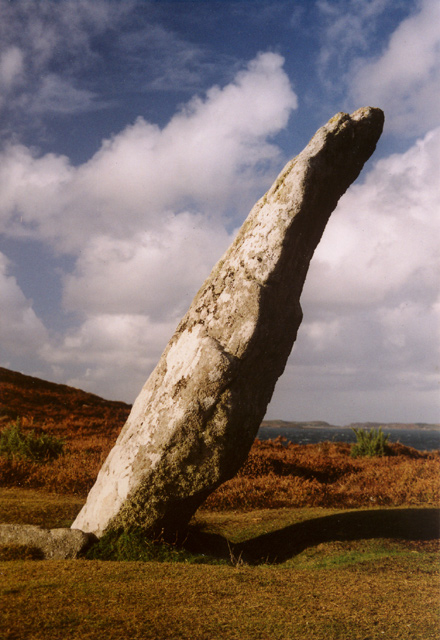
Historical Isles of Scilly
CaSundara says "The Isles of Scilly are located approximately twenty-eight miles South-West of the Southern tip of Cornwall, on the South-West coast of England. These beautiful islands are thought to have once been part of one singular and much larger island, and today, at low tide, it’s possible to walk to and from several of the islands. Ancient Greek records of the discovery of an island, known as Cassiterides (Tin Isles), located in the area by the Phoenicians, and the remains of a prehistoric farm found on a tiny island, too small to house one, would seem to confirm this theory."Read more about the Isles of Scilly

Wednesday, September 9, 2009
Wordless Wednesday: Ruins of Whitby Abbey
Tuesday, September 8, 2009
The Amazing Stories of Cracking Hitler’s Unbreakable Code

Mr Ghaz says "In 1940 Enigma revealed that Hitler had abandoned Operation Sea Lion, his planned invasion of Britain; the next year Enigma helped British warships destroy the battleship Bismarck. When British and American commanders discovered Rommel’s plans, Allied bombers were able to destroy some of the ships carrying Rommel’s troops to North Africa. And in 1944, thanks to Enigma, the Allies knew that the Germans expected the main D-Day invasion forces to land at Calais, not Normandy – and learned exactly what opposition would be waiting for them…The breaking of the Enigma code remained a secret until late 1970’s; even to this day, many details of the equipment and techniques used are not known." Read more about the unbreakable Hitler codes
Monday, September 7, 2009
Monday Ground Up: Castle and Fortification Hotels
Dolhousie Castle

SourceDuring a celebration at Roxburgh Castle, which was owned by Sir William Douglas a friend of Alexanders, he scaled the walls and surprised the party goers. Douglas had already grown quite tired of the antics, so when Alexander won appointments by King David, Douglas was so jealous that he plunged a dagger into Alexanders back and threw him into a dungeon at Hermitage Castle and left him there to starve. It was said that close to 450 years later, workers at Hermitage found Alexanders remains.
Uninvited guests were warmly welcomed by hot oil poured on them from above the towers, or they were lowered into the dungeons by ropes.
Now a days, it's more charming and elegant. Oak paneling, canopy beds, a romantic candle lit dungeon for dining, and Tartan panels and bedspreads make you feel like your back in the 15th and 16th century.
Schloss Waldeck
SourceIn 1120, this fortress was the home of the counts of Waldeck. Large sections were destroyed during the Seven Years War , which explains it's crumbling, dreary condition. The castle was completely abandoned during the 17th century for reasons unknown.
Presently, it's being used both as a hotel and a museum, displaying artifacts from the Waldeck counts and a sorceresses tower, complete with prison cells. Oddly enough, most of the festivities start in the evening when torchlight tours are provided in the 13th century kitchen, dungeons, and jail.
Shelly Barclay says Boldt Castle is a breathtaking structure on Heart Island on the St. Lawrence River in New York. Heart Island is situated in the picturesque Thousand Islands in Alexandria Bay. For more than one hundred years, Boldt Castle and its outlying structures have graced Heart Island. You would be hard pressed to find a more romantic castle in a more picturesque setting. Like the Taj Mahal before it, Boldt Castle was erected as a monument to a man's undying love for his wife.
The Castle of Taunton
Taunton Castle is the home of Englands oldest fortress. In the Anglo Saxon Chronicles, it was said that a wooden castle was built here in 710 by the King of Wessex. The castle later was burned to the ground and later rebuilt. On the walls of the hotel, you can see the painted arms of the Bishops of Winchester who were granted the property by Queen Frithogytha of the West Saxons.
By 1001, the Danish had already burned the castle down, as well as the city. However, by 1066 another castle had already taken it's place.
Around the 15th century, Perkin Warbeck pretended to be the Duke of York in order to invade England. He tried not once, but twice and failed. While he was attempting to invade, he captured Taunton proclaiming himself King Richard IV. However, when Henry VII came to Taunton he captured Warbeck, who later met his fate in the Tower of London.
Close to 200 years later, the Duke of Marmouth came to Taunton and proclaimed himself King. He was however defeated in the Battle of Sedgemoor, and he and his men were executed by Judge Jeffery.
During the 18th century, part of the fortress was turned into a hotel. During the spring, the outer structure is adorned with wisteria, framing it like a country garden.
The decor is medieval in motif with heavy velvet window panels and antique furnishings. The guest rooms are enchanting with bouquets of local flora and bottles of sherry. It's a perfect destination for historians, honeymooners, and family gatherings.
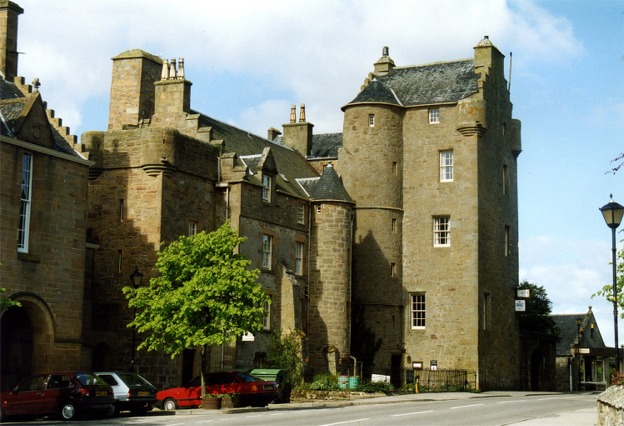
Dornoch Castle

The cathedral and Dornoch Castle were both built by Gilbert Murray in 1224. Hundreds of years later a feud between the Murrays and the Mackays caused Dornoch to be pillaged and the castle and cathedral were burned.
Around 1722, Dornoch was home to the infamous burning of the last witch in Scotland, Janet Horne. She was said to have turned her daughter into a pony and she rode it to the witches coven. The castle was rebuilt and used as a jail, schoolhouse, courthouse, and garrison.
The castle is more bizarre than luxurious with it's winding staircase up to reception and the dungeons used as storage space. The rooms are simple and comfortable with views of the countryside and grounds. Five minutes away is the Royal Dornoch Golf Club which is voted one of the top twenty courses in the world.
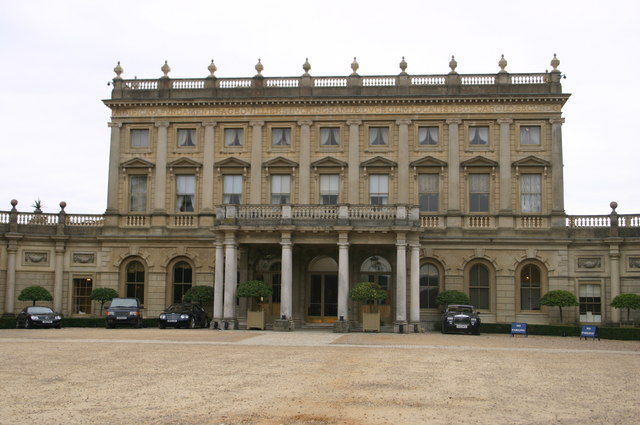
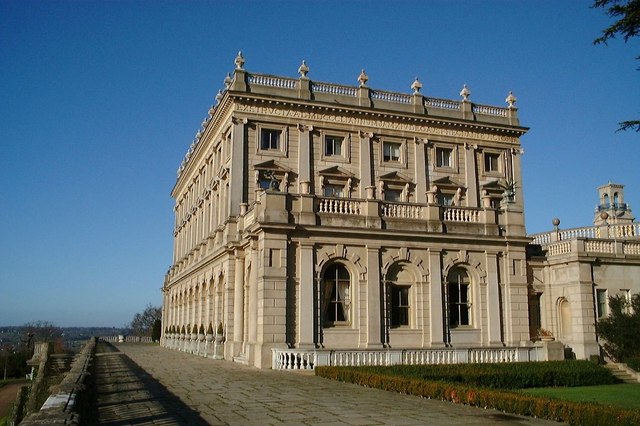
Cliveden-17th Century
The Duke of Buckingham trusted minister of King Charles II needed a place to carry on an affair with the Countess of Shrewsbury. In Britains most famous duels, Buckingham killed the countesses husband with a swift blow to the head. Buckingham was dismissed years later by the king.Over the years and with the passing of hands, a dovecote, water tower, and the stables were added. In Britain, Cliveden is associated with the Astor family who purchased the property in 1893 and added gardens and the art found throughout the house.
When Waldorf and his bride Lady Nancy Astor received Cliveden as a wedding present they spared nothing to provide the most lavish of parties. Guests included Henry James, Winston Churchill, Edward Prince of Wales, and many more accomplished individuals.
Presently, this luxurious hotel is a place of solitude and breathtaking scenery. The inner public rooms are adorned with carved wooden columns, molded ceilings elegantly decorated by window panels, such as the Orkney tapestries.
There are four staff members for every room who assist you in unpacking and drawing baths, amongst many other duties.
As for the cuisine, there's one word,"exceptional". Clivedens restaurants are considered the finest in England. To add to this luxurious adventure, Cliveden provides two boats which are available to cruise the Thames. However, if romance is what you crave the Suzy Ann goes out for a pre-dinner champagne cruise during the summer evenings.
Star Castle
Several miles off the Cornish coast, the Scilly Isles tell tales of Celtic legends and holy men. It was estimated that several thousand years ago was the first time men inhabited the area. The area is thriving with lush vegetation, including flowers that grow to seven feet tall.The Star Castle was built in 1593 during Elizabeth I reign as a defense against the Spanish. When King Charles II was hiding from Cromwell in 1643, he hid in the Star Castle. Following his stay, Blake took over the castle from Sir John Greenville, and then the cavaliers after that. In 1933, King Edward VIII officiated the opening ceremony of the castle as a hotel.
The Star Castle has eight pointed ramparts and is surrounded by a dry moat. It sits on Garrison Hill overlooking the sea and is a short walk to Hugh town. There are two types of accommodations including several rooms with canopy beds and white wash walls with wooden beams. There are also modern garden apartments with verandas and a view of the sea.
More Interesting and Fascinating Destinations
Penelope Sunderland says "Would you like to know what life was like in medieval Ireland? There are several places you can go to visit where a guided tour around old sites will give you a flavor of life in the past. Three good examples in southern Ireland are the castles at Blarney, Bunratty and Cahir." Read more about life in a Medieval Irish Castle

nobert soloria bermosa says "Castles were particularly popular in Europe and in some parts of Asia during the Middle Ages up to the 19th century. They have been built either as fortress or residence of the nobilities. " Read more about the World’s Magnificent Castles: Perfect Tourist Destinations
The Templ
ars erected many buildings in the west including preceptories, churches, and granges for administration purposes. They were simplistic and utilitarian in form with of course a few exceptions. There was no dictated form of Templar church architecture. Read more about the 10 Mysterious and Mystical Templar Castles, Churches, and Fortresses
- Fascinating Castles and Palaces From Around the World
- Haunted Irish Castles
- Five Haunted Castles of Scotland
- The Castles of Wales